
Welcome 👋🏽
This newsletter is the second part of a multi-part series on how I intend to play the AI trade over the next decade.
Part 2: The ETF Trade
Part 3 will be the individual stock trade.
In Part 1, the key point was simple:
I do not want to chase the AI trade at any price.
But now that we have outlined the circumstances that could lead to the next pullback in AI, the next question is:
How do we actually allocate when that opportunity arrives?
I think we can all agree that the AI trade is not going away anytime soon. Goldman Sachs estimates a $7.1T AI infrastructure buildout from 2026 to 2031.
Yes, trillion with a T.
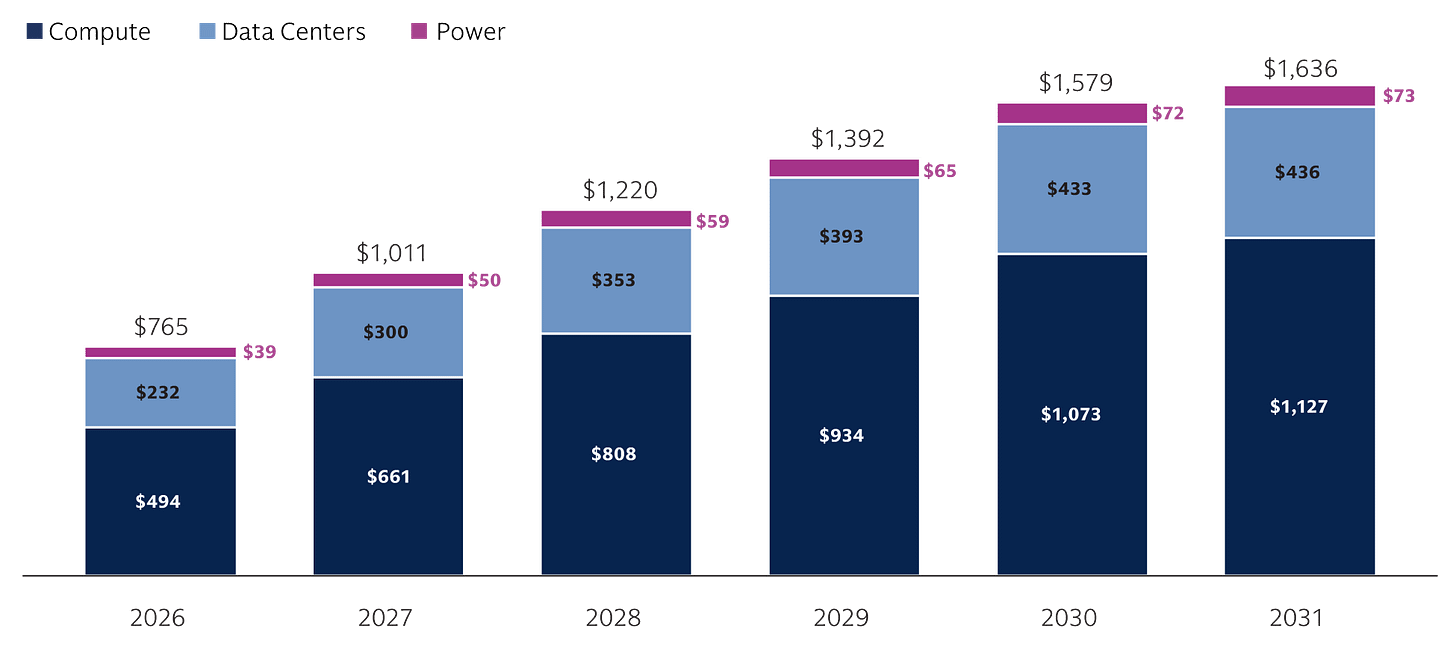
The most significant part of the above graphic is not just the final number. It is the proportion dedicated to data centres and power (30-35%)
The AI trade is moving from software and chips into physical infrastructure.
From a load perspective a data centre is made up of:
servers (GPUs/CPUs) which accounts for 60% of total electricity consumption
storage and memory: 5%
networking equipment (switches, routers): 5%
cooling: ~30%
In power system simulation software, data centre load modelling is split between 60% data centre load and 40% HVAC (heating, ventilation and air conditioning).
This is why “power” is such a bottleneck. Before the AI buildout was a thing there were multi-year delays on some grid equipment. With the AI buildout, this absolutely blows out. The companies that win are the companies that are able to ramp production.
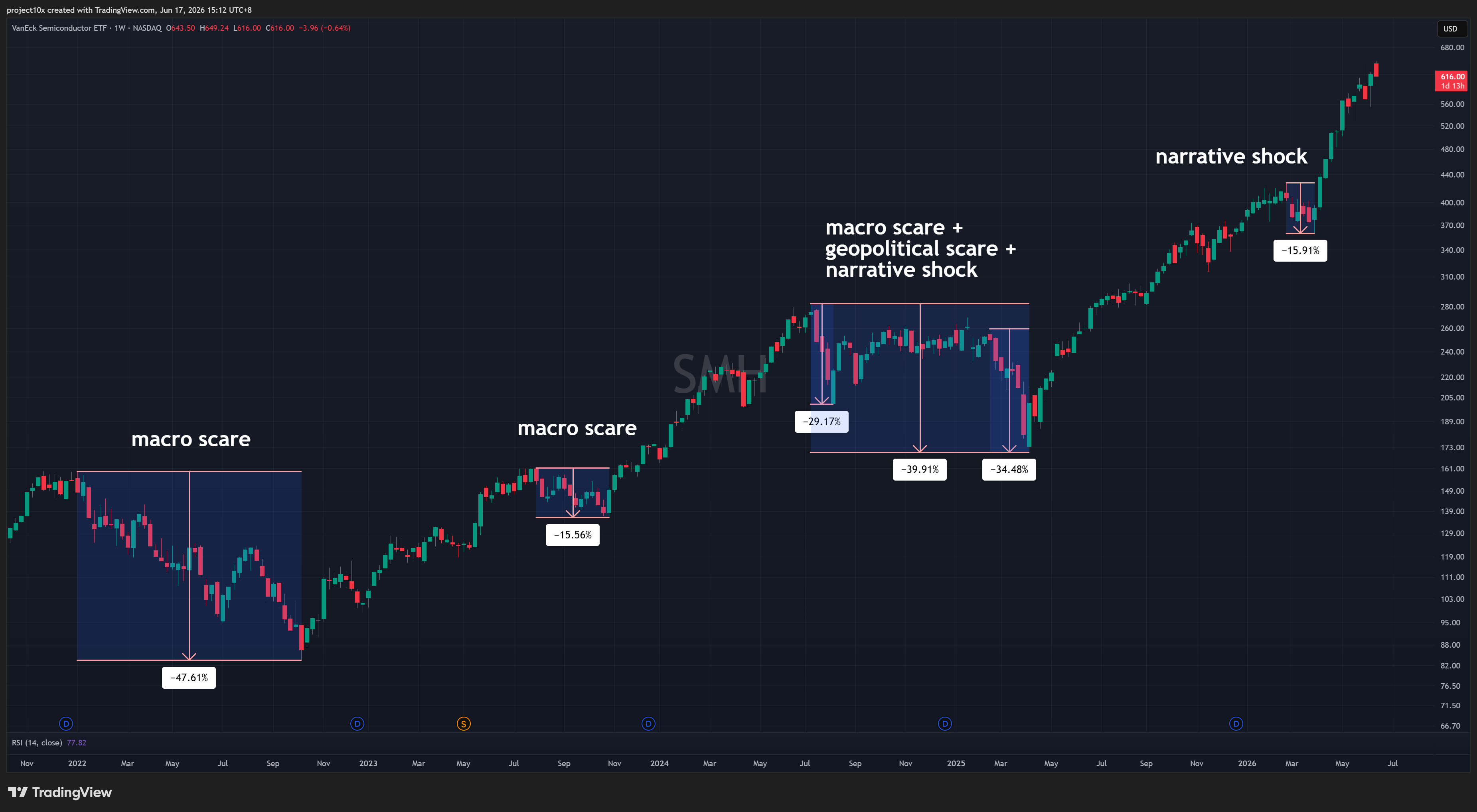
I also think we can agree that this will not move in a straight line.
We will get
pullbacks
narrative shocks
macro scares
periods where investors question whether the spending is too aggressive, whether the revenue is real, whether the power is available, and whether the market has already priced too much in
That is the point of this strategy.
I want a roadmap that lets us capture the bulk of the AI trade without constantly trading around it.
I want to enter at an appropriate time and stay allocated until a major trend-change occurs (more on this later).
I am splitting the ETF trade into three buckets:
Core AI buildout exposure: the part of the portfolio that captures the obvious infrastructure winners without needing to pick the single stock.
Second-order bottlenecks: the parts of the stack that become more valuable as the buildout runs into power, security, cloud and physical infrastructure constraints.
Long-duration optionality: the part of the portfolio that captures robotics, autonomy and AI moving from software into the real world.
To be clear, these are not short-term trading instruments for me.
I am treating these like 5+ year thematic plays that we exit when the thesis breaks or CAPEX rolls over.
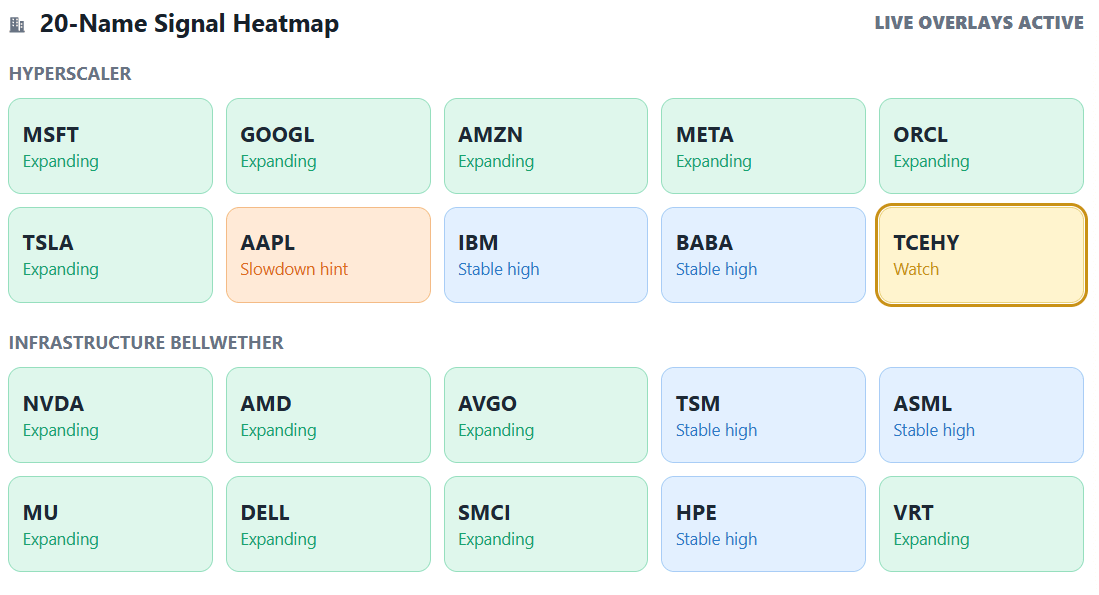
That is why we are tracking CAPEX. CAPEX is the North Star and as long as CAPEX spend is ongoing, so is the AI trade. 👇🏽
The strategy is therefore the following 5 ETFs 👇🏽
Comments
Nothing yet. Say the first thing.
Sign in to join the conversation.