
What’s interesting about this news report in The Telegraph is not so much the headline - another allegation of workplace bullying - but the statements that accompany the story.
These are sadly very familiar and not uncommon.
The Telegraph article reports: “A BBC spokesman said: “While we do not comment on individual cases, we take all complaints about conduct at work extremely seriously and will not tolerate behaviour that is not in line without values.
“We have robust processes in place, and would encourage any staff with concerns to raise them directly with us so they can be addressed.”
The article goes on to discuss a recent independent review report into workplace culture that revealed problems at the broadcaster and talked about the actions of perpetrators:
“They are often in positions where power could be abused. Even though they are small in number, their behaviour creates large ripples, which negatively impact the BBC’s culture and external reputation.
“[The BBC] states it has zero tolerance for unacceptable behaviour, but the words do not align with the actual experience of some people working with or for the corporation.”
Take a moment to let these two paragraphs from the independent cultural review sink in, because they’re not unique to the BBC or the media sector.
Here’s what we have seen over recent years, often from organisations that have had one or more independent reviews into their culture:
leadership figures express statements about ‘zero tolerance’ for poor behaviour
a review indicating that people are afraid to speak up due to fear of inaction, retaliation or being labelled a troublemaker
cases prosecuted severely against some people to make an example. In the rush to judgement, many of these cases involve abuse of process, material unfairness and are subsequently challenged in the courts or later reviews and found to have breached fairness and due process
some cases against people (often in more senior positions) subject to different processes or quietly dealt with behind closed doors - often in ways that contradict the public statements about the organisation’s commitment to zero tolerance.
leaders who may defend their inaction by saying “we’ve had no formal complaints”
repeated employee surveys and subsequent reviews that reveal little change in the fear of complainants that coming forward will not result in retaliation.
people affected by workplace bullying suffering the recognised symptoms of physical and psychological harm, compounded by institutional betrayal and organisations acting in private in ways that differ from their public statements of “zero tolerance”
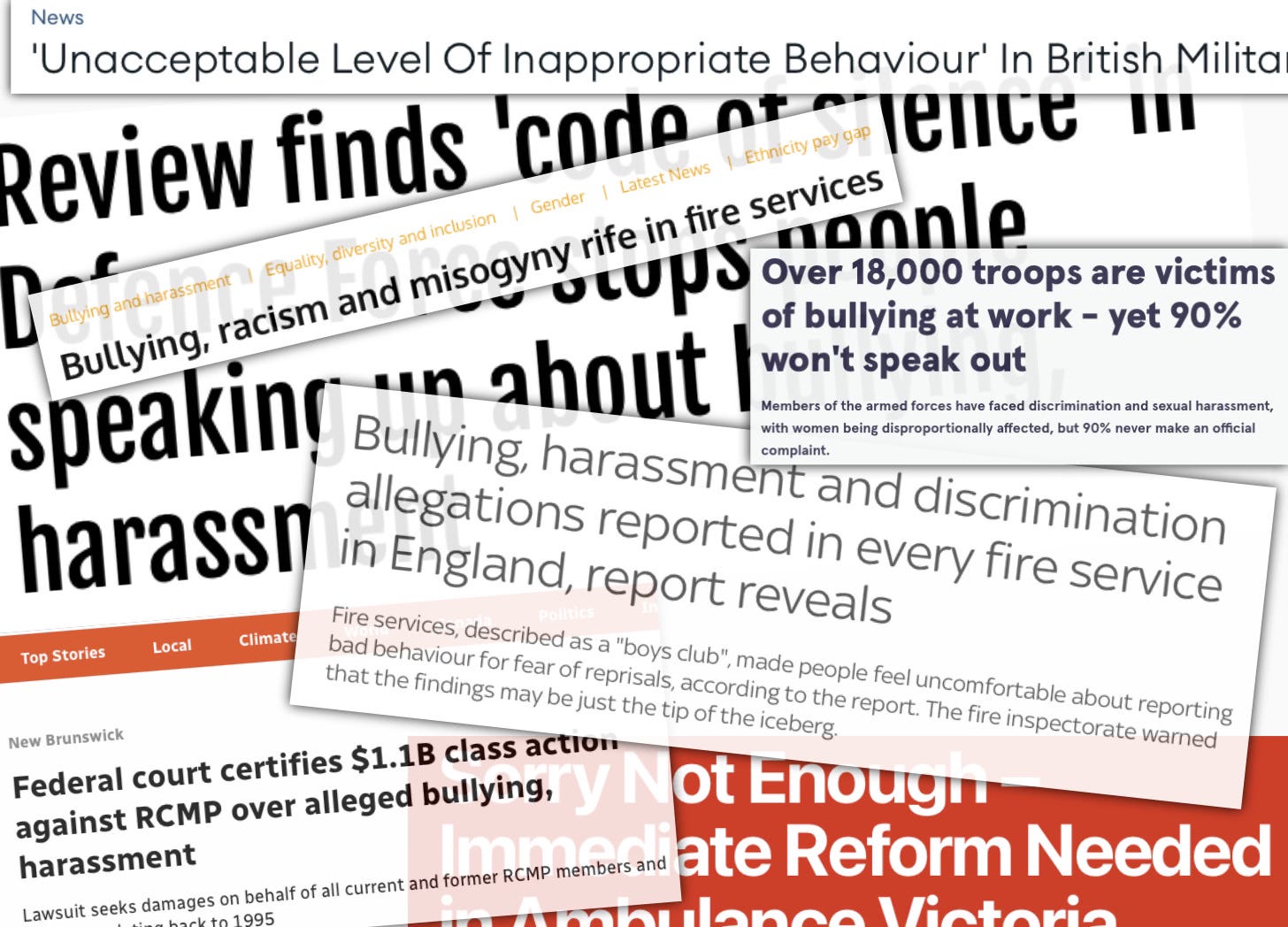
These situations are not unique to a geography or an industry sector. They have been documented across emergency services, the military, media, law and academia to name just a few.
Real change requires a commitment to action, not a commitment to self-preservation of those in power.
Ethical leadership, consistency, transparency and a fair process applicable to everyone - regardless of seniority or rank - are the keys to building confidence and trust in a respectful workplace culture.
Research studies into workplace bullying tell us this isn’t an isolated incident. There’s a predictable pattern to workplace bullying and harassment.
You can find out more by listening to my interviews with leading experts on workplace bullying and cultural change in the Life at the Sharp End podcast
In epsiode six, Associate Professor Dorothy Suskind talks to me about her research into the predictable cycle of workplace bullying and the impact it has on people targeted.
This news article is a useful case study example. See how many of the features of the predictable cycle you can spot in the article, and in the independent review into the culture of this (and other) organisations.
Comments
Nothing yet. Say the first thing.
Sign in to join the conversation.