
Colleges which fail to deliver a return on investment for their graduates have been put on notice.
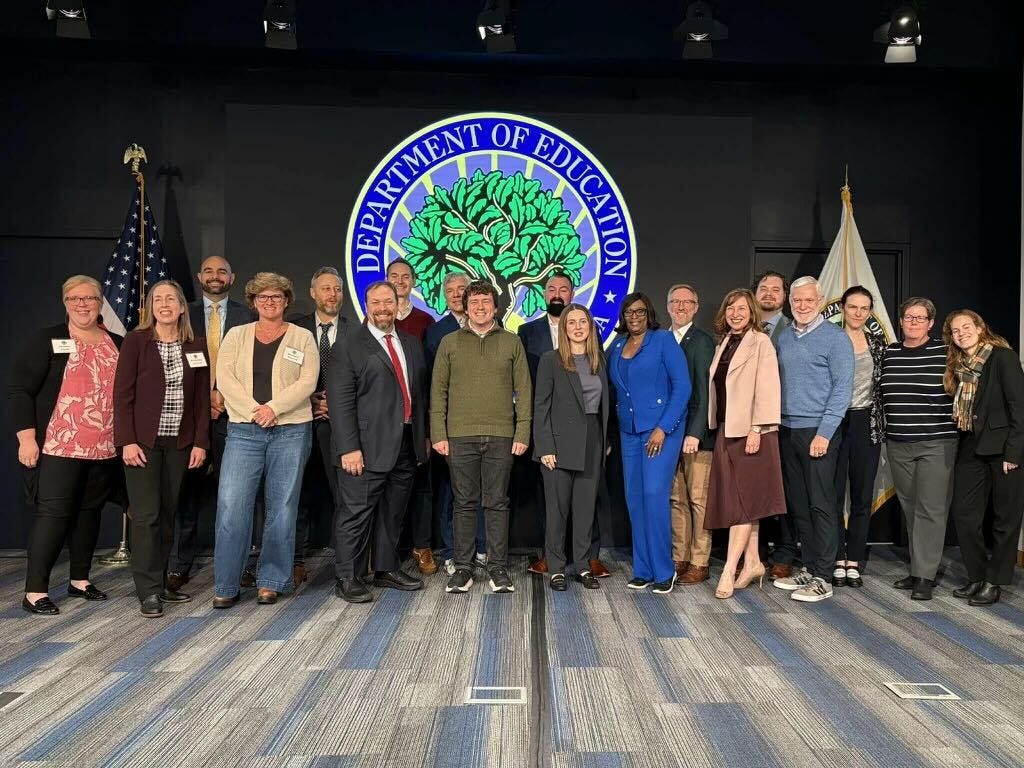
Last week, the Education Department convened a negotiated rulemaking committee to draft implementing regulations for a section of the One Big Beautiful Bill Act (OBBB) that holds colleges accountable for students’ earnings outcomes. The committee—in which I participated as the designated advocate for taxpayers and the public interest—adopted the 64-page regulation by consensus, meaning the Department is bound to use the language we agreed on when it issues a formal proposed rule.
Here are five major takeaways from the rulemaking.
1. Programs will need to pass a harmonized earnings benchmark.
The Education Department’s goal in crafting accountability regulations was “harmonization”—the principle that the same standards should apply to all higher education programs, regardless of the college’s sector or the credential type. To that end, the regulation requires all programs receiving federal student loan funding to pass an earnings test.
The test, colloquially known as “Do No Harm,” requires that the median earnings of students four years after graduating exceed the median earnings of a comparable high school graduate. For graduate programs, students’ earnings must surpass those of a comparable bachelor’s degree holder. The logic is that at the very least, we should expect schools to increase their students’ earnings potential above that of people who never attended college at all.
Programs which fail to meet this benchmark for two of three consecutive years will lose access to federal student loans (but not Pell Grants).
2. Most programs will pass—but some are in the danger zone.
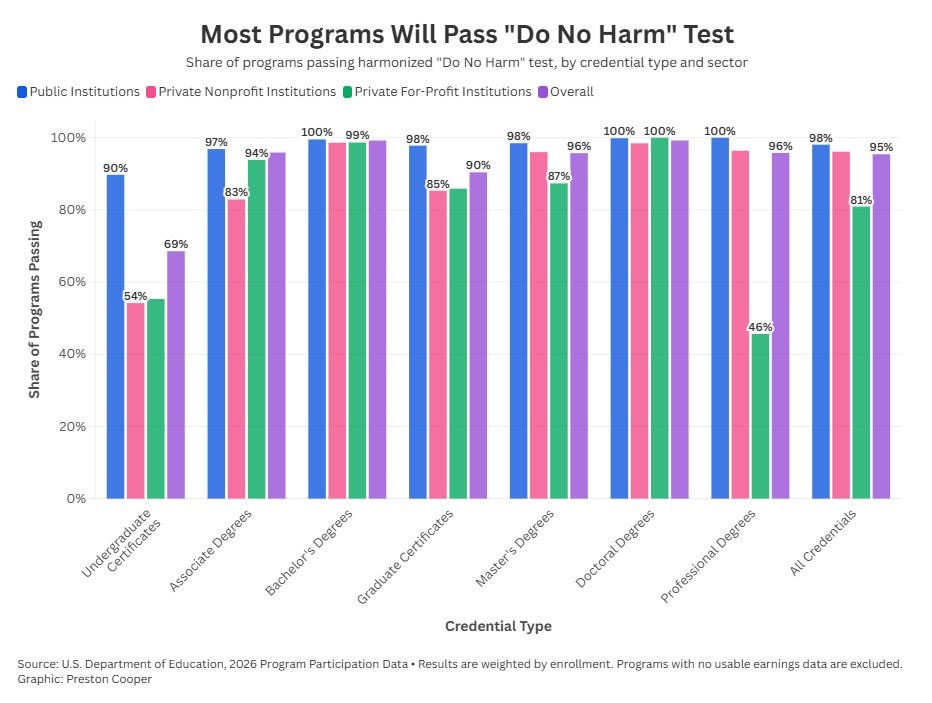
The earnings benchmark is a low bar. Because people who choose to attend college usually have higher earnings potential than those who stop out of education after high school, most programs have a running start on clearing the high school earnings hurdle. Indeed, 95 percent of federally-aided students are enrolled in programs that will likely pass the earnings test, based on preliminary Education Department data.
Still, around 5 percent of programs are heading for failure. Undergraduate certificate programs, especially cosmetology schools, have among the highest expected failure rates. Several two-year and master’s degree programs are in the danger zone as well. (For more on which programs are likely to fail, see this companion post.)
3. Programs likely to fail will have a transition period.
For some degrees and certificates, the writing is on the wall. Some programs have such atrocious earnings outcomes that there is almost no hope of clearing the earnings benchmark. But the regulation helps these programs wind down operations in an orderly manner.
If a program fails the earnings test for a single year, the institution can decide to “teach out” the program using federal student loan funds, even if it continues to fail. Under this option, the school must agree not to enroll any new students in the program, and must complete the teach-out within three years. Students already enrolled in the program at the time it fails may keep using student loan dollars until graduation.
While OBBB did not explicitly outline this option, the rulemaking committee incorporated it as an off-ramp for failing programs to ensure currently-enrolled students can complete their studies.
4. Colleges with many failing programs can lose Pell Grants, too.
Failing programs lose access to federal student loans—but may keep drawing on Pell Grants, which don’t need to be repaid. Several members of the committee expressed concern about this—if a program has abysmal earnings outcomes, why should it receive federal funding at all?
The final regulatory text addresses this concern. If most students at a college are enrolled in failing programs, or a majority of its federal aid dollars flow to failing programs, the Secretary of Education will deem that institution “not administratively capable” and pull Pell Grant funds from the failing programs as well.
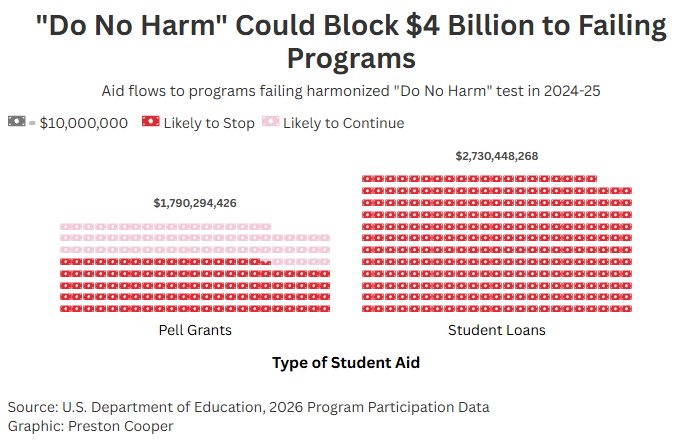
According to the Department’s data, programs expected to fail the Do No Harm test receive $2.7 billion in student loans and $1.8 billion in Pell Grants every year. About $1.1 billion of that Pell volume flows to institutions that the Secretary could deem administratively incapable. In other words, more than half of the Pell Grant flow to failing programs is liable to stop under this new provision—a significant win for taxpayers.
5. The rule can be fully implemented by the end of the Trump administration.
The expected timeline for implementing the accountability system is aggressive. The Department will calculate the first round of performance data in early 2027 and the second round in early 2028. Because a program must fail for two consecutive years to face consequences, low-earning programs will start losing access to federal loans in the 2028-29 academic year—before the end of the Trump administration. This means the rule’s sanctions will “bite” before any future administration, perhaps less enthused about accountability, could take office and reverse them.
Overall, the negotiated rulemaking committee adopted a strong accountability rule that will protect students from taking on debt for low-earning credentials, save taxpayers money on Pell Grants, and provide an orderly process for institutions to wind down failing programs. The regulation represents a meaningful step towards the principle of “Do No Harm”—the idea that college shouldn’t leave students worse off than they were before.
Low-earning degrees will soon lose access to federal loans—is yours on the list? A deeper dive into which programs are likely to run afoul of the “Do No Harm” test, based on preliminary data from the Education Department. Cosmetology programs are especially vulnerable. Overall, the rule is likely to protect over 600,000 students and affect nearly $3 billion in annual student loan volume to failing programs.
Education Department to students: please enroll responsibly. When students file their Free Application for Federal Student Aid (FAFSA), they will now receive a warning if they indicate interest in a college with poor earnings outcomes. The warning could put students off attending low-earning institutions even before the Do No Harm standards take effect. About 1,000 schools will soon have warnings applied: enrolling here could be hazardous to your financial health.
Undergraduate enrollment ticked up slightly in fall 2025, according to the National Student Clearinghouse. High-ROI majors saw the biggest increases.
The increase in student loan delinquency is concentrated among high-income borrowers, according to the JPMorganChase Institute.
Falling standards mean selective college degrees are in danger of losing their power as a signal to employers, writes my colleague Mark Schneider for AEI.
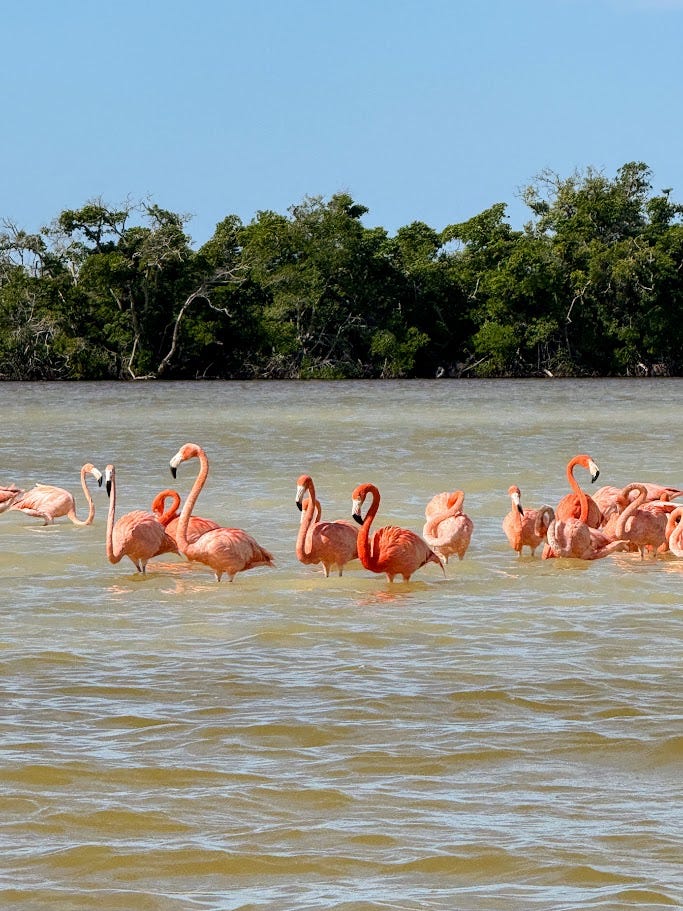
In between negotiated rulemaking sessions, I snuck away to Mexico for a couple weeks of holiday relaxation. I have far too many favorite photos to choose from, but seeing the flamingoes amongst the mangroves of Celestún (near Mérida in the Yucatán) was a highlight.
Comments
Nothing yet. Say the first thing.
Sign in to join the conversation.