
TL;DR: We use points and miles as a practical tool to extend our cash, stay comfortably, and reduce travel costs—not to chase “once-in-a-lifetime” luxury redemptions. In 2025, we spent 79 nights in hotels (about half paid for with points) and saved over $17,000 across our accommodation and long-haul flights. This year is shaping up to look very similar. Here is how we keep our hotel strategy simple, flexible, and sustainable for full-time travel.
Points and miles aren’t a religion for us—they’re a tool in our full-time-travel-living-kit. We aren’t trying to collect and redeem tons of points for nights in an overwater bungalow/once in a lifetime mega redemption or optimize every single redemption every single time. We care about reducing decision fatigue, getting a good/great deal, and making our travels as easy as possible. That means, consistently comfortable beds, reliable Wi-Fi, optimal locations in a city or near an airport/cruise terminal, and useful perks like free nights, early/late check-out, and the occasional upgrade. Free food and drinks are a bonus, but they aren’t a deciding factor for us. If a point redemption saves us real money, fantastic. But, if paying cash for a hotel or booking a full apartment through Airbnb, etc. makes more sense in a particular location, we do it.
If this sounds like something you care about too, before diving into any credit card* or hotel loyalty program, the most important step is asking yourself a few basic questions:
What is most important to you? (Comfort and simplicity vs. free nights, breakfast, lounges, and upgrades?)
How much effort do you want to put in? (Set-and-forget vs. tracking multiple credit cards and loyalty programs?)
What does your travel pattern look like? (A few hotel stays a year vs. long stays and/or moves around the world?)
*Beware, don’t get into this game if you can’t pay off your credit cards in full each month. Otherwise, this quickly becomes a money losing option.
For us, the goal is reducing decision fatigue balanced with keeping our fixed living expenses reasonable.
Trying to earn points everywhere usually means having useless balances scattered across wildly different programs (been there, done that). We now keep our setup focused:
Transferable Points: Earning transferable points with Chase and Amex credit cards and Rove (no credit card required) so we can shift points to airlines or hotels as needed. We hold multiple Chase and Amex cards plus multiple hotel brand specific cards, all acquired when we could get great sign up bonuses.
Our Top Hotel Brands:
Marriott and IHG (tied for first place): Our primary programs due to their massive global footprints, wide range of apartment-style properties, easy to obtain high level status, and excellent credit card sign up bonuses that we’ve been able to leverage into significant free night redemptions.
Hyatt: High quality properties, great customer service, and strong redemption value, though with a smaller footprint and much harder to achieve status.
Best Western & Hilton: Great “gap-fillers.”
Independent Hotels: When we can’t find a good fit using the brands above, we book independent hotels through Rove.
Want to know more about how these brands and more compare across the globe and short cuts to getting status? Scroll down to the end of this post.
Hotel loyalty depends heavily on where you are. In the Americas, US brands are everywhere. In Southeast Asia, IHG and Marriott offer incredible status recognition and value. In Europe, regional options or independent boutique networks often beat traditional US chains.
We use whichever hotel brand in our points stack fits best. If no chain makes sense, we shift to cash bookings via platforms like Rove, Booking.com, or Airbnb.
Our basic rule is simple: earn points/pay cash where hotels are less expensive and spend points on high-cost locations or peak seasons.
Expensive, “Landing Pad,” or Pass Through Cities: Staying in expensive destinations (like we did recently in London or Los Angles), where we want an easy landing for a week or so to find a longer term stay (like we did in Buenos Aires, Warsaw, and Bordeaux), or where we only need to stay for a few nights (like we did pre-cruise in Tampa and Miami), is where hotel points and loyalty shine.
Cash for Budget Regions: This is where we pay cash for brands we are loyal to in order to generate more points.
Quick Valuation Check: We use simple benchmark calculators (like The Points Guy) to confirm we’re getting solid value before clicking “Redeem.”
Keeping track of perks, free night certificates, and points balances can take hours, even with the best tools. But there are quite a few that make this a whole lot easier. These are the systems we are currently using and/or testing out:
AwardWallet: Tracks all our balances, elite status tiers, credit card bonuses, and expiration dates in one place.
CardPointers and Kudos: Helps us keep track of card-specific credits and rotating offers and suggests the best card to use for specific purchases.
MaxMyPoint and Gondola.ai: Great for comparing award night availability and points costs across multiple hotel brands.
Shopping Portals: We route regular purchases and booking stays that may offer additional stacked rewards through shopping portals like Rove and Rakuten to collect extra rewards on spending we’re doing anyway.
New to Rove? Here’s a referral link for 500 points to get you started: www.rove.com/?signup&referralCode=CYLJ2Q1B
Stacking points earnings deals is the real big game hunt for us and where it can get really fun - it doesn’t take that much more time than a simple hotel search and can result in seriously valuable points earnings and cost savings. Let’s look at a real-life example of a recent search I did.
Say we want to book a stay at the Staybridge Suites, an IHG property, in Cardiff, Wales. First, we launch Rove and search for the city, toggle the “Loyalty Eligible” tab, and then click on only the brands we want to search.
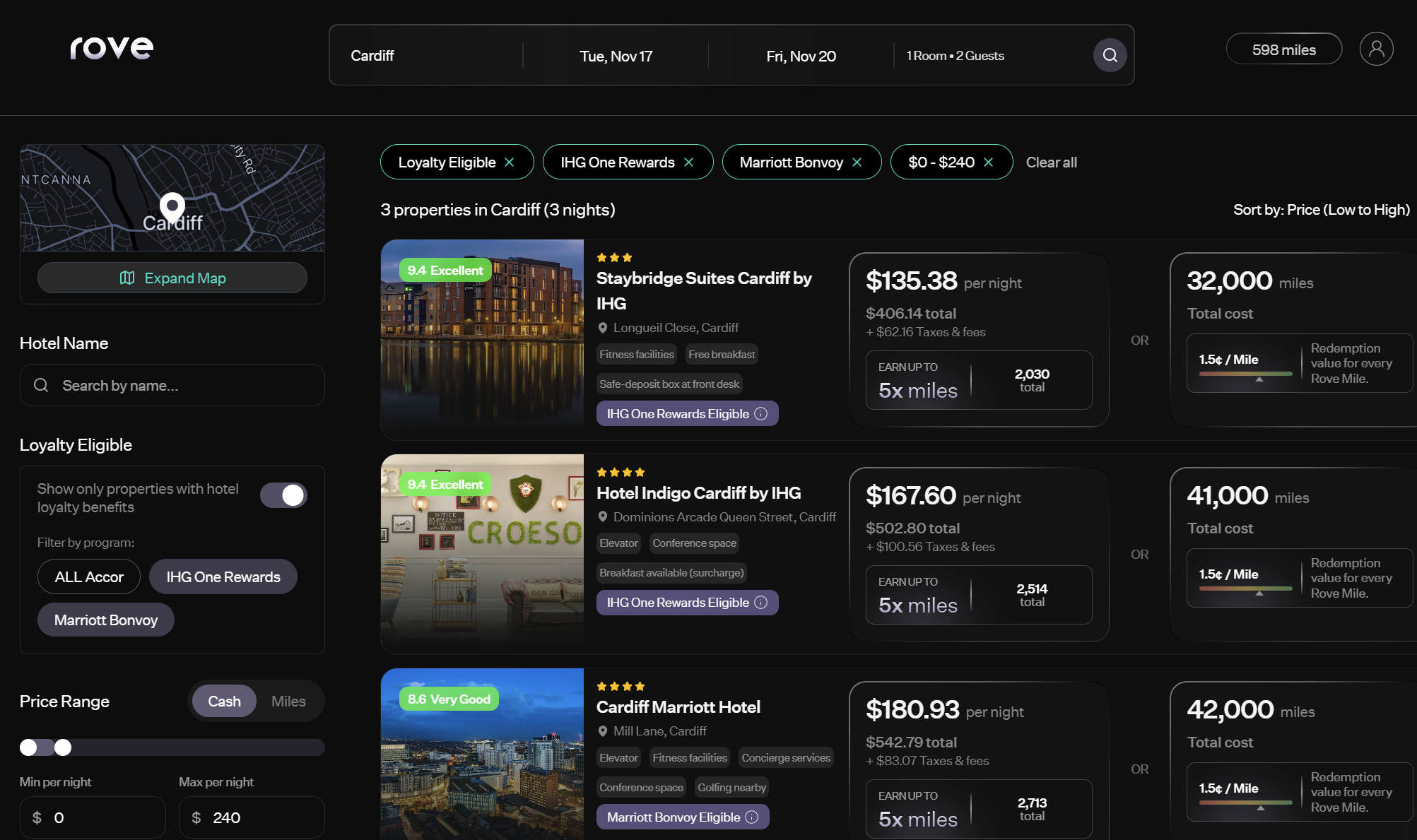
This shows us results which earn us 2030 transferable Rove Miles on the booking while still preserving our elite status and direct loyalty credit, meaning, we ALSO earn 1402 points from the hotel.
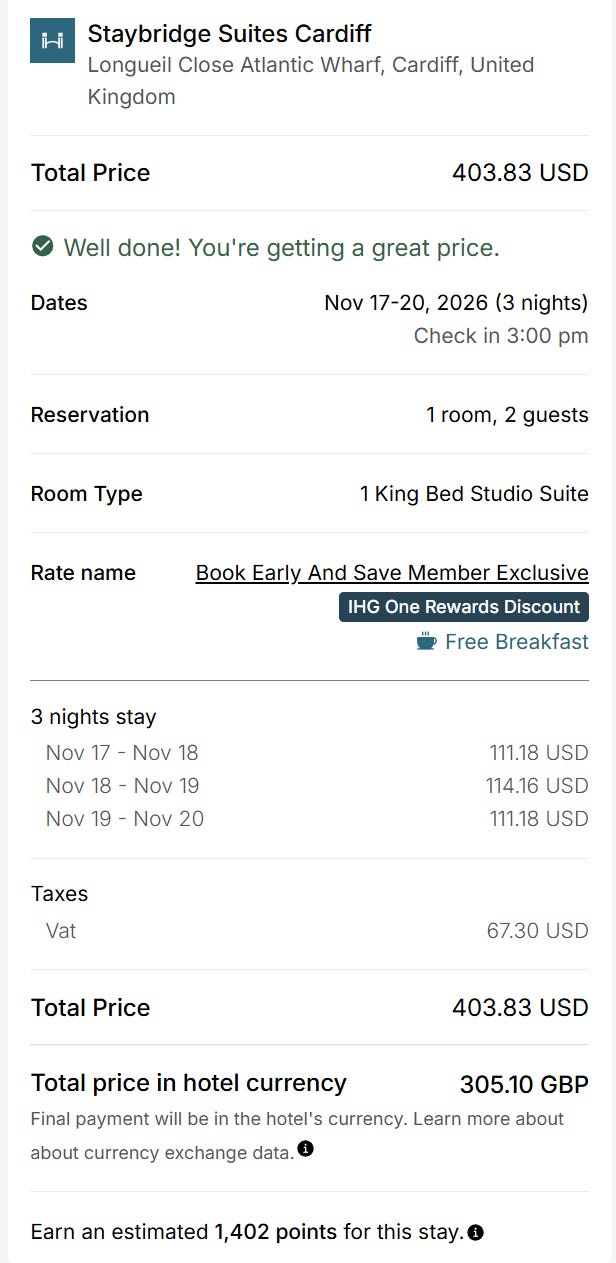
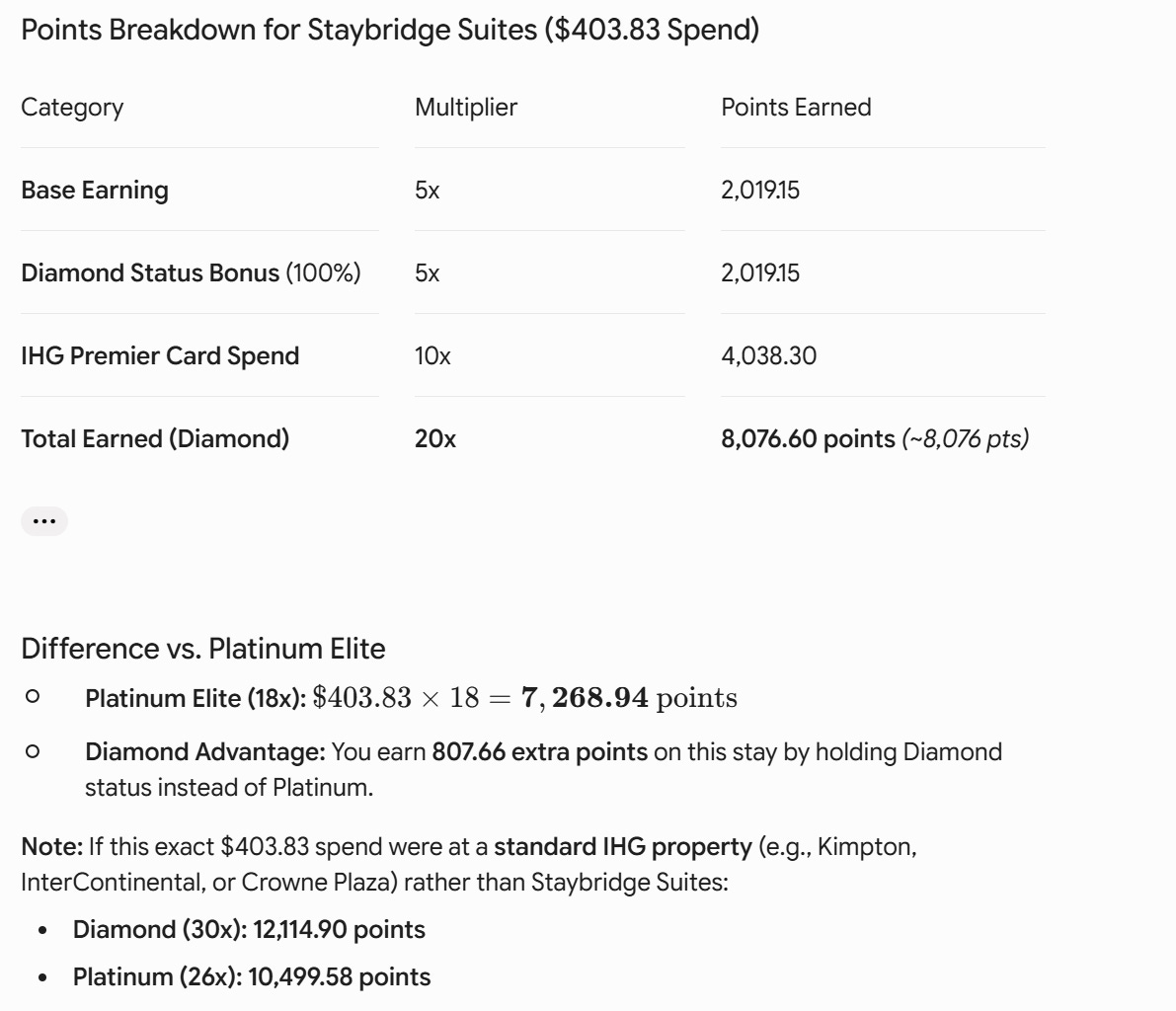
Second, we would pay for the room using our IHG One Rewards Premier credit card. I achieved Platinum status by signing up for this card last year. Thanks to all of our recent stay activity (most of it paid for with the sign up bonus I got for opening the card), I am now at Diamond status. This means even more points earned for this stay.
Finally, we look for opportunistic bonuses, when available, by booking our stay during an active IHG seasonal promo (like their recurring “2,000 bonus points every 2 nights” promotion) or by activating a targeted Chase/Amex Offer on our card for 10–15% cash back.
You don’t need to master every loyalty program or open a dozen cards to make travel significantly more affordable. Pick one or two ecosystems that match where you actually want to go, use tools and bonuses to maximize earning additional points, use points to soften the blow of expensive stops, and keep your system as simple as possible.
If you you’ve done all of this already and want to dive deeper, here are two resources we recommend to get even more out of your hotel points:
Strategic Early Retirement - blog and YouTube resources. Their posts on how they are saving a ton by leveraging IHG, Marriott, and Hyatt, amongst others, are excellent.

Grounded Life Retirement Travel - YouTube. They share a lot of helpful information on how they are leveraging points, credit cards, and hotel loyalty to live almost full time in hotels in Asia and around the world.

We are happy to share several “cheat sheets” we created for our own travel planning: How to Get Hotel Elite Status Without Staying 50 Nights, Extended-Stay & Kitchen-Equipped Brands Comparison, and a Global Hotel Footprint Reference Guide. We’ve broken down global coverage across 9 major hotel chains to help us (and you!) choose the right loyalty stack.
Comments
Nothing yet. Say the first thing.
Sign in to join the conversation.