
Picture this: You’re staying in Scotland, you suddenly need medical advice for an urgent health issue, and you pull out your phone to dial NHS 111 as recommended for international visitors. You press call, and... nothing. The call immediately drops or fails to connect.
That exact scenario happened to us last night, and it exposed a massive safety blind spot in how we and many other nomads and international travelers set up their phones. (We are ok, by the way. Fantastic experience getting care from the NHS that we will share in an upcoming post).
Like many full-time travelers, our phone setup relies on a phone tech stack that works great 99% of the time:

Tello provides a true mobile SIM line (our plan is around $6/month each for 1GB of data, 100 minutes of calling in the US, and unlimited texts) that reliably receives automated bank 2FA texts globally via phone data and/or Wi-Fi Calling. When we travel to the US, we can simply toggle off Wi-Fi Calling, scale up our monthly data tier in the app instantly, and use Tello as our high-speed primary carrier on T-Mobile’s native network. If you want to try Tello for yourself, our promo code will get you $10 off.

For data, we use data-only travel eSIMs like Airalo and Ubigi (there are other great ones out there too like Holafly and Gigsky, but these are working well for us). Levon has Ubigi’s world plan which gives him 5GB for $18 per month and I use Airalo’s Discover Global eSIM with 20GB for 365 days for $66. These global plans are a bit more expensive than if we bought country-specific or regional plans as we traveled, but these allow us to use the same eSIM no matter where we go - they pick up local services as soon as we cross borders and by having 2 different plans, it gives us a bit of redundancy if one of our plans has issues.

We keep a free US VOIP phone number with Google Voice as a back up and as a number for sites that make us sign up for stuff and we’re pretty sure they are going to sell our information which leads to spam calls. Plus, it is easy to use on a laptop/computer vs only phone.
When you’re in the UK and need urgent medical help that isn’t quite a 999 emergency, 111 is the free NHS helpline designed to connect you with a nurse, doctor, or local urgent care center.
However, three-digit short codes like 111 are not standard phone numbers. They rely on local cellular network routing:
International Phone Services (e.g., Tello): When roaming on a foreign SIM, your phone attempts to process 111 through your home carrier’s routing logic rather than passing it directly to local UK cell towers. Because 111 isn’t a valid international number format, the network drops the call. Even adding country codes and international dialing numbers have no effect - the calls simply won’t go through.
Data-Only eSIMs (e.g., Airalo, Ubigi): Services that provide internet data without a native voice line don’t have a cellular dialer attached to a local network.
Virtual Phone Apps (e.g., Google Voice): VoIP apps operate over Wi-Fi or mobile data. Because they lack physical cell tower location integration, virtually all consumer virtual number providers block short-code dialing.
If you find yourself needing medical assistance in the UK without a local voice line, here is how to navigate the system:
If someone is severely injured or their life is at risk, dial 999 directly from your phone’s regular keypad. International safety regulations require all mobile networks to connect 999 calls over whichever cell tower is closest, regardless of whether your foreign SIM has roaming active or even has a local signal.
If you only have a data connection, do not bother trying to dial 111. Instead, open your browser and go straight to 111.nhs.uk (or nhsinform.scot if you are in Scotland). The online portal walks you through a quick symptom assessment. If your situation requires medical evaluation, the system will either recommend a local pharmacy or suggest you go directly to your closest NHS medical facility.
The most reliable way to avoid this safety gap entirely is to include an additional local cellular eSIM to your phone tech mix. Most late model phones now allow for multiple eSIMS. Providers like giffgaff or spusu in the UK offer month-to-month plans via eSIM for non-residents. For roughly £5 to £10 a month, you get a full package: local UK data, an authentic +44 phone number, and native voice connectivity that connects to local short codes like 111 without issue.
Both giffgaff and spusu are top-rated MVNOs (Mobile Virtual Network Operators) in the UK that cater exceptionally well to non-residents. Neither requires a UK credit check or a permanent local residential address, and both allow instant setup via eSIM before or after you arrive in the UK.
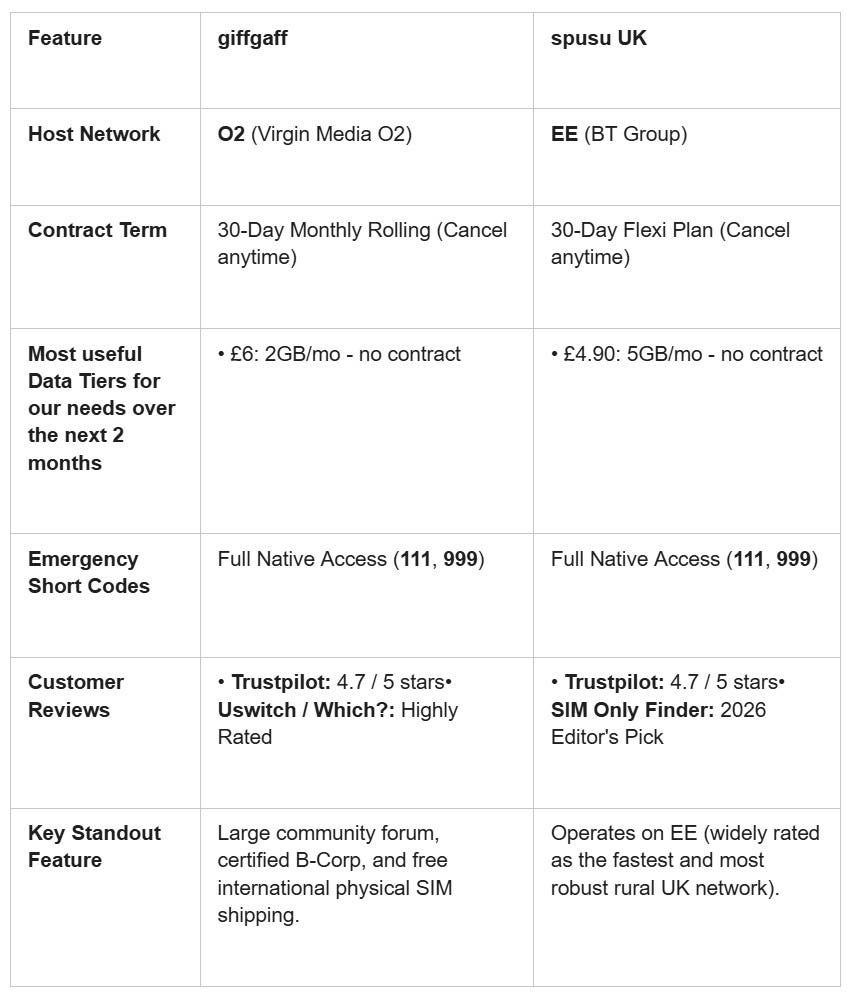
Mobile coverage in the UK varies significantly by region—especially if you’re traveling through rural Scotland, Wales, or national parks.
spusu (EE Network): EE consistently holds the widest overall 4G landmass coverage in the UK. Because EE builds out infrastructure for the UK’s national Emergency Services Network, it generally offers the strongest signal in remote rural areas, coastal paths, and highland glens.
giffgaff (O2 Network): O2 provides excellent coverage across cities, towns, and transit corridors. In dense historic centers, O2’s lower-frequency signal penetrates thick stone buildings effectively, though it can trail EE in deep rural or mountainous terrain.
Before You Buy: Check the exact postcodes of your accommodations, national parks, or road-trip stops using the free Ofcom Official UK Coverage Checker. Ofcom is the UK’s independent telecom regulator, providing unbiased coverage maps. Here’s what the maps looks like for EE vs O2 for our Airbnb and neighborhood:
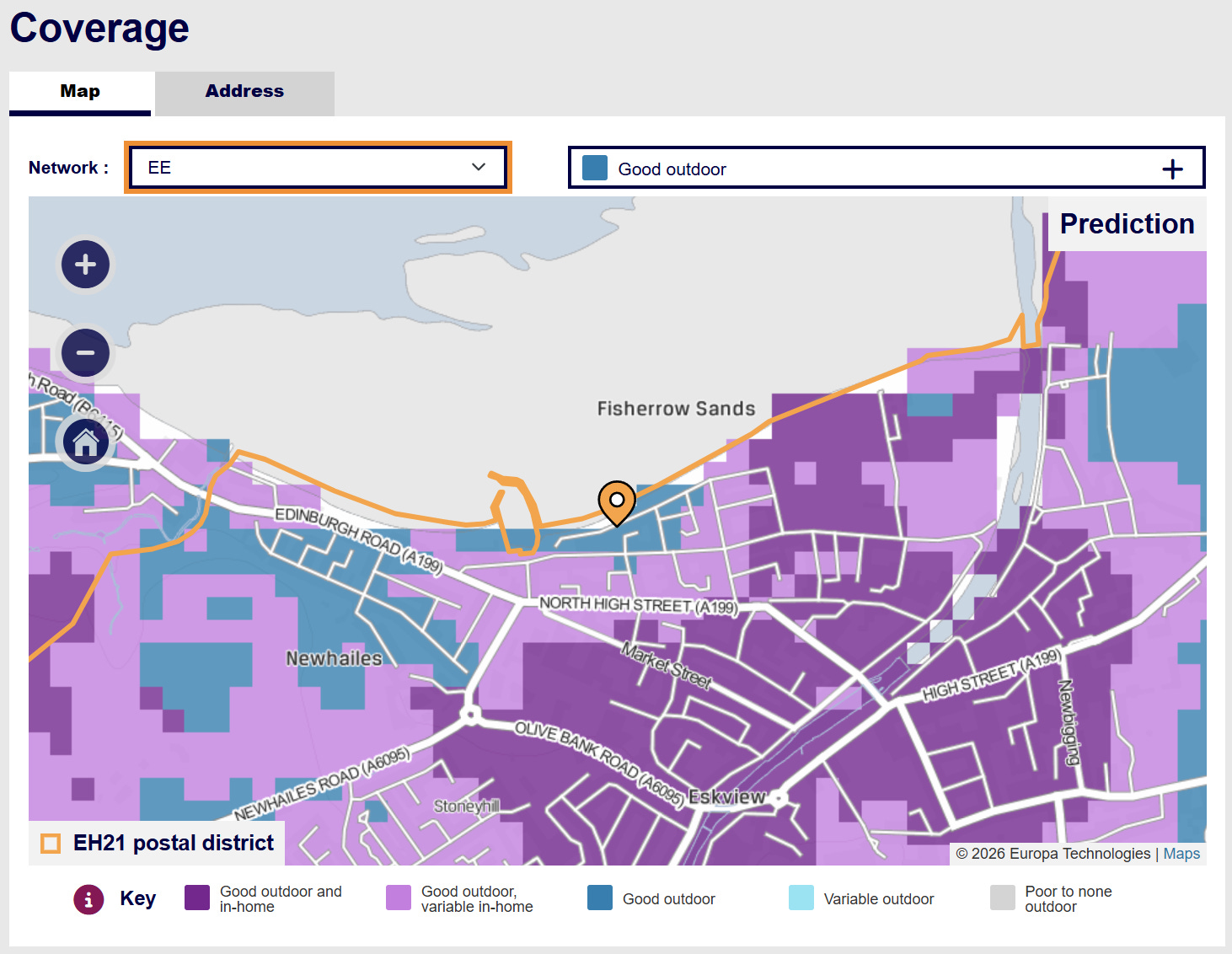
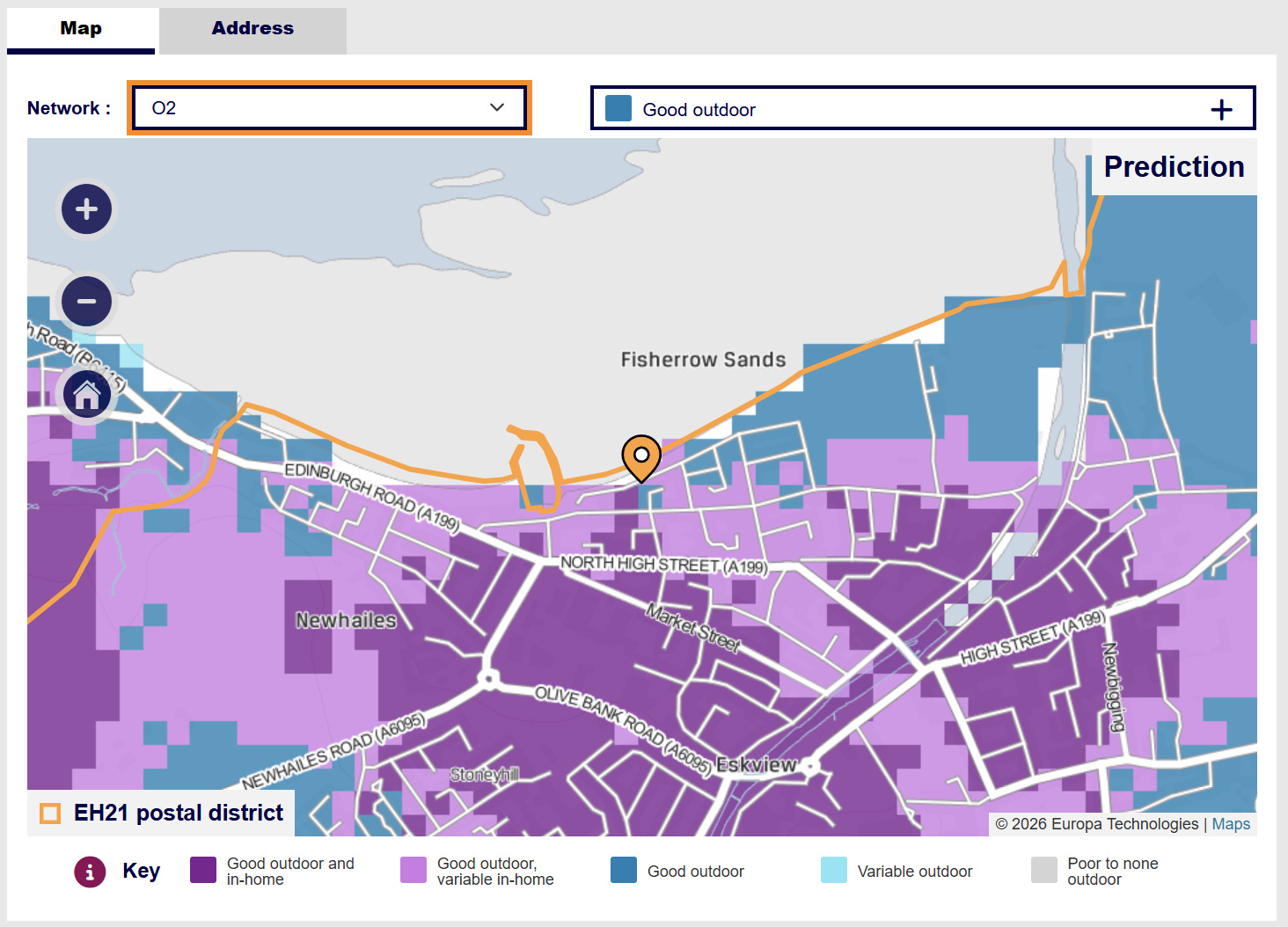
I ended up going with spusu’s £4.90 plan since we plan to do more remote exploring over the next two months. Of course, I will report back if I end up with additional thoughts worth sharing!
Before heading off on your next international trip, take five minutes to prep your phone for health and safety:
Research local short codes: Know the local equivalents for both life-threatening emergencies (e.g., 999 in the UK, 112 in Europe) and non-emergency medical advice.
Bookmark health portals: Save local health assessment sites (like 111.nhs.uk or nhsinform.scot) to your mobile browser before traveling.
Add a local carrier eSIMs to your phone tech mix: Pick a cheap local carrier eSIM (like giffgaff or spusu in the UK) that includes native voice service alongside data. This might not be necessary for everyone, but this is now going into our permanent travel plan.
Have you needed to access emergency medical services by phone in your travels? We would love to know more about other experiences and get our community’s shared wisdom for other countries!
Comments
Nothing yet. Say the first thing.
Sign in to join the conversation.