
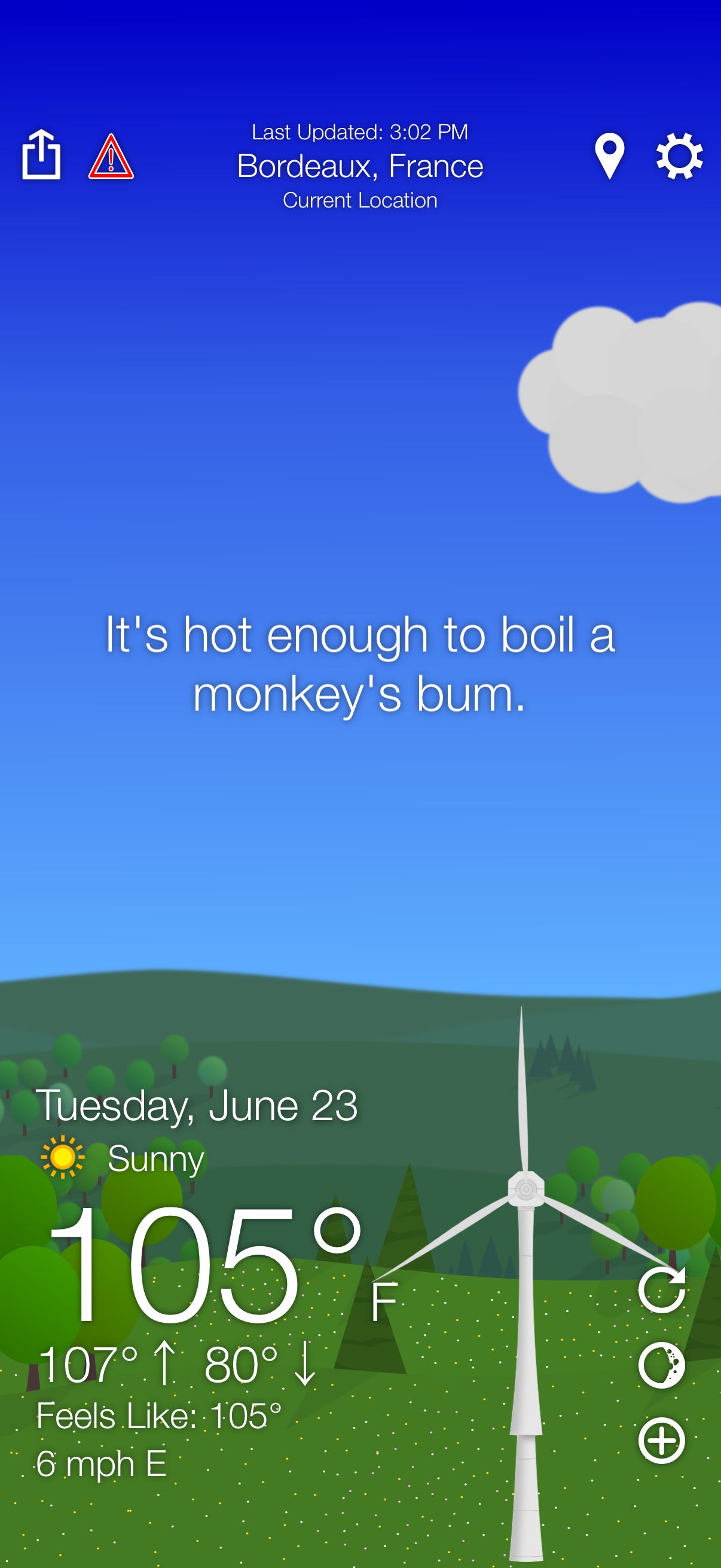
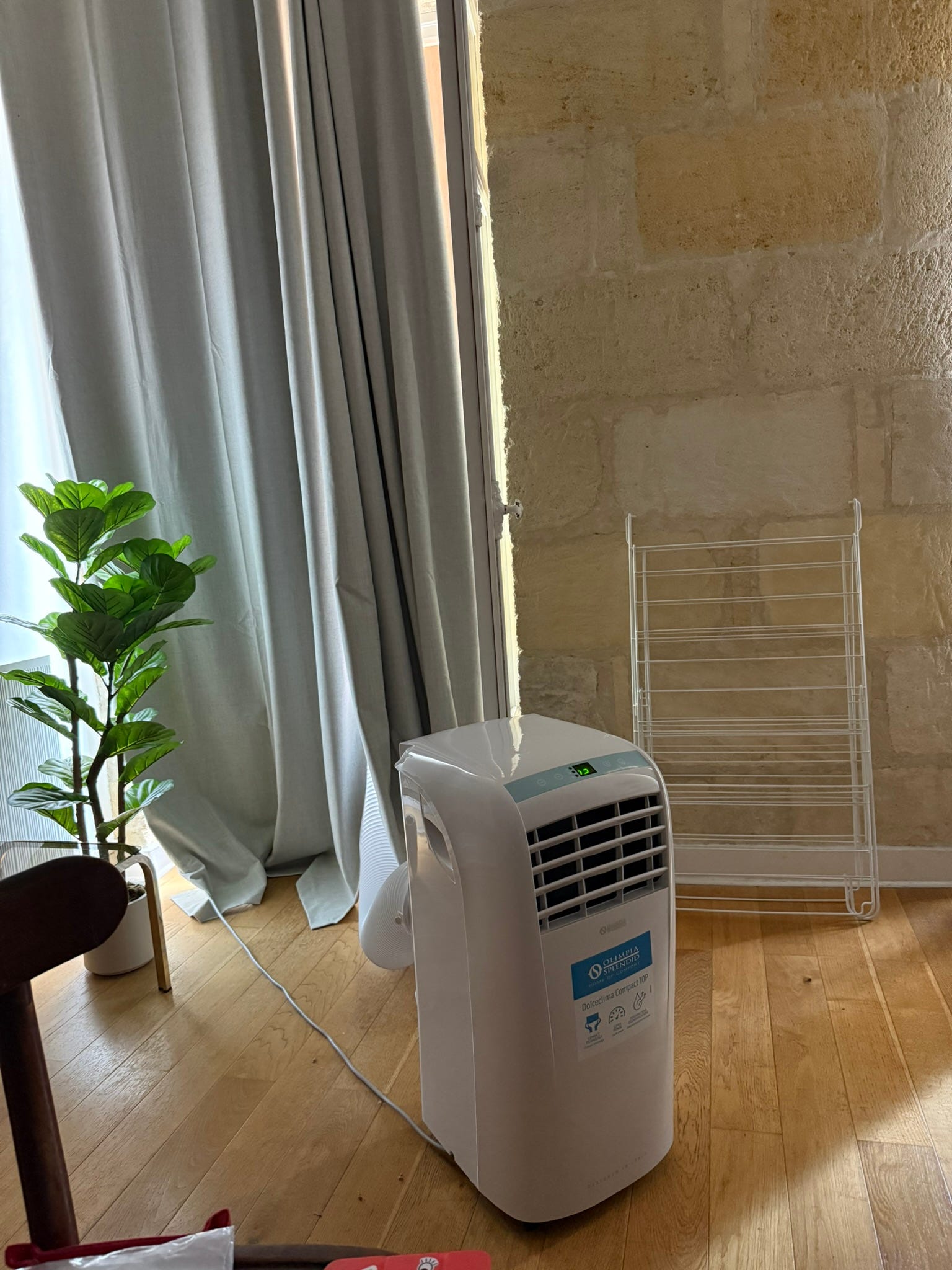
I meant to be finished with our next post by now — the one about how we use points and miles to help pay for our housing while we travel. But it’s been so hot here that I can’t think about anything except the weather. Multiple days in the triple digits will do that to me. We’re in Bordeaux’s second historic heatwave since arriving in mid-May, and it was pure dumb luck that we rented an apartment with a portable AC unit and a sofa bed. The unit is just powerful enough to cool the living room, which has become our 24/7 refuge until the weather breaks.
We didn’t see the first heatwave coming, or at least we weren’t actively tracking it. But the second one came with just enough warning for us to put our systems in place to stay cool, fed, and hydrated for days on end — even if that meant camping out in the living room and eating the coldest food we can find in a two block radius.
This latest heatwave sparked a lot of conversation over wine at Le Bar à Vin last Friday night with new friends who have made Bordeaux their permanent home in the last year, one who is considering it, and two who have just arrived. Can we still trust historical temperature norms? Should we be looking instead at averages and extreme-weather alerts from the last three to five years? If we’re chasing 75-degree weather, is Bordeaux — and maybe France or Western Europe more broadly — still a realistic destination?

That sent me down a research rabbit hole. I thought a quick question to AI would solve it. But there isn’t a simple dataset that captures recent heat extremes in a way that makes it easy to compare year to year. So I pulled together what I could from WeatherSpark.com, Meteoblue.com, Copernicus Climate Change Service, current reporting, and a handful of other weather sources.
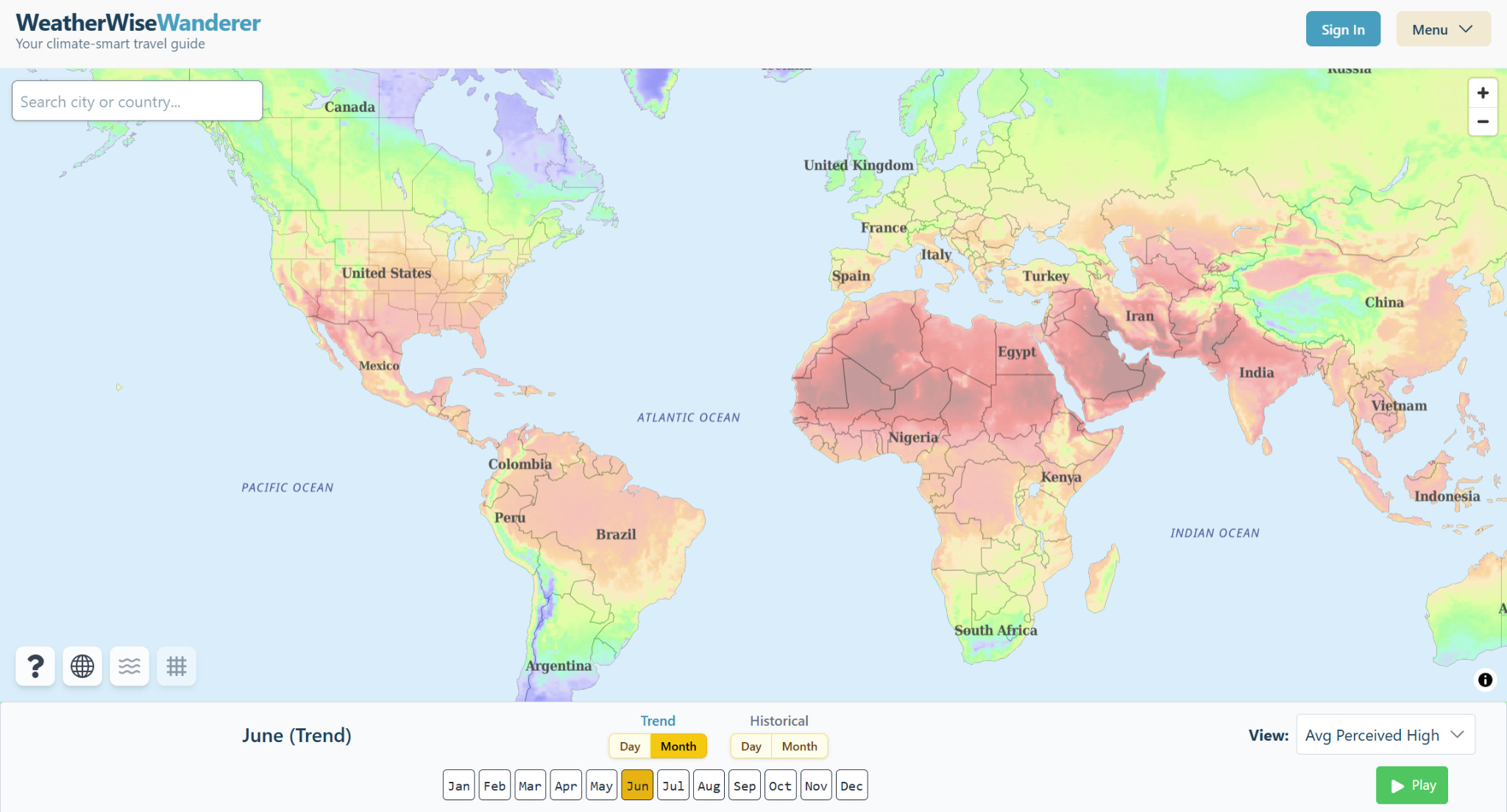
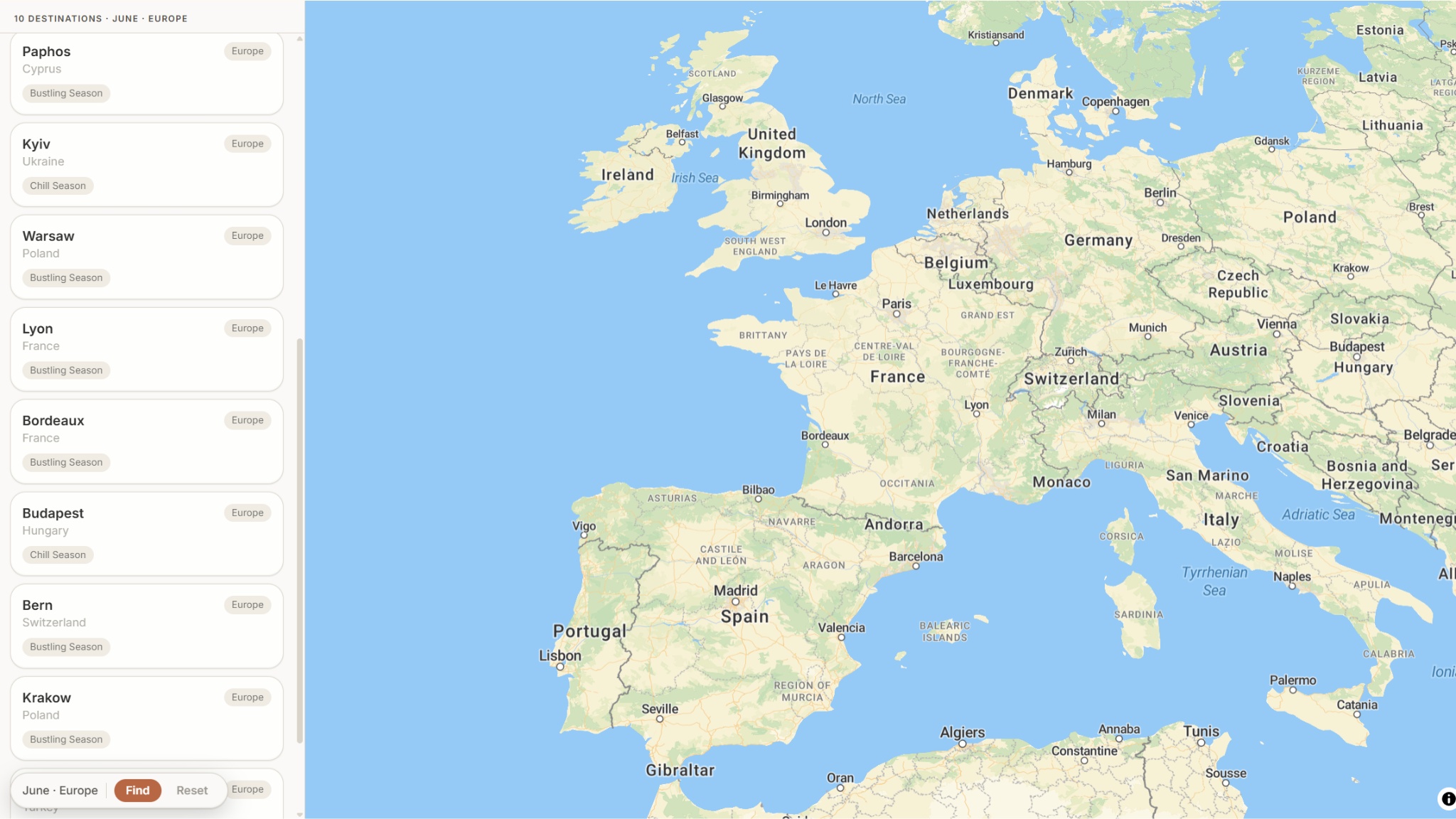
I want to share two tools developed by our community that we now use constantly when thinking about future travel: WeatherWiseWanderer, which maps global comfort zones using a decade of feels-like temperature trends, and Travel With Goldilocks, created by our dear friend Natasha at Batch Processing, which helps identify our ideal times to travel to countries by month, season, and temperature range.
Are we overreacting to an anomaly, or is this part of a bigger trend?
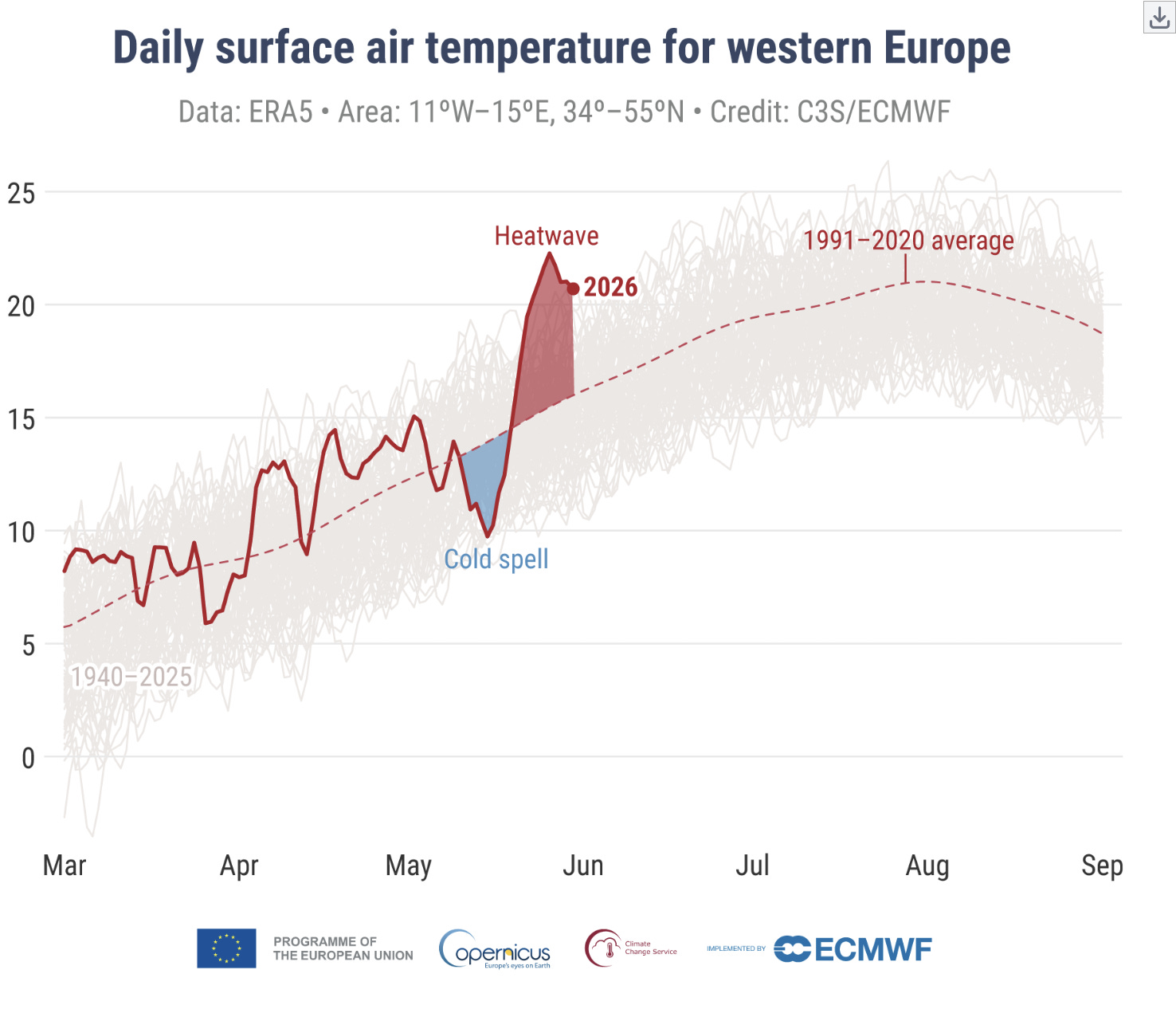
In Bordeaux, the answer may be a little of both. Recent research shows western European heatwaves are rising much faster than in the rest of the Northern Hemisphere mid-latitudes, and Copernicus reported that late May 2026 brought one of the most intense early-season heatwaves ever observed in western Europe.
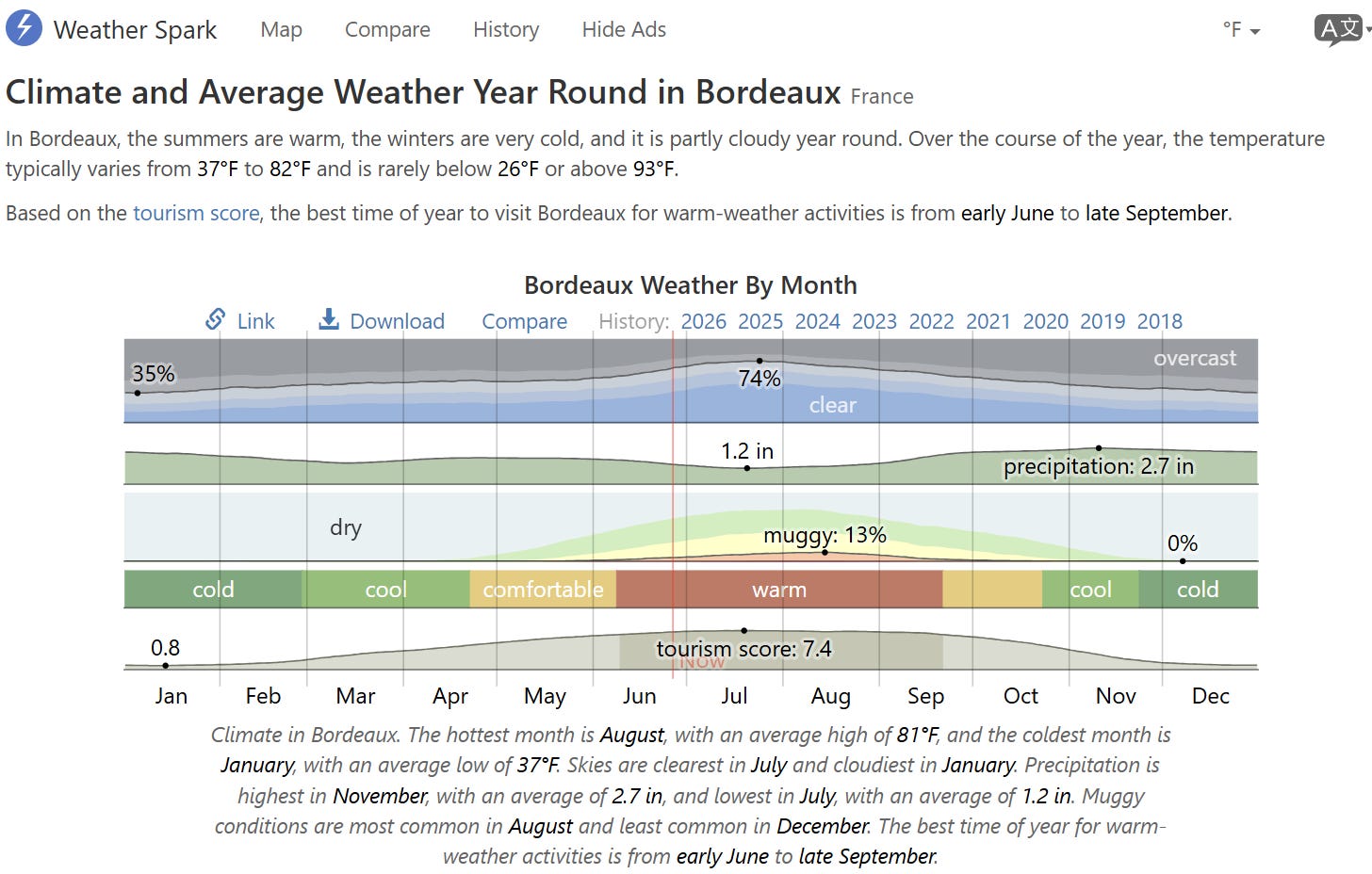
If we only consider historical data, Bordeaux is the ideal place for us to spend our summers if not most of the year. The weather, along with the amazing vibe, beautiful city, great transportation, a friendly and welcoming community, and lots to see and do and eat, Bordeaux has become one of our favorite places.
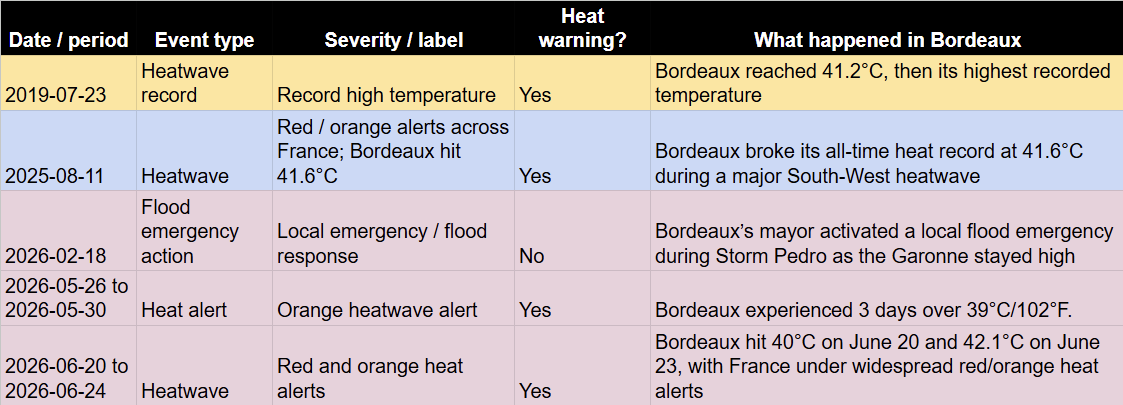
But can recent extreme weather trends tell us something about the future? In the last 5 years, there have been 4 extreme heat alerts - 2 of them since we arrived here less than 2 months ago.
What about future trends?
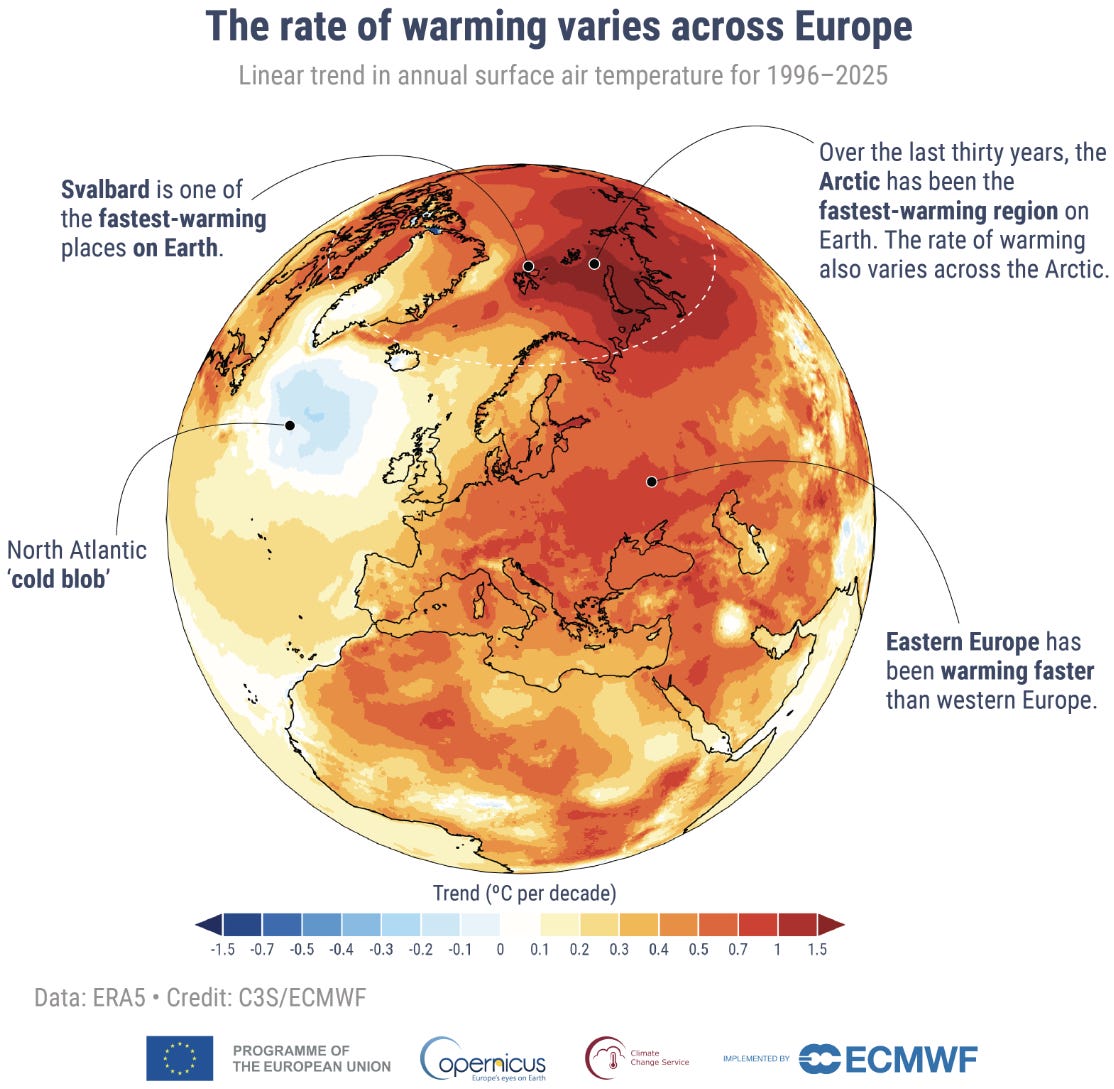
I asked Perplexity AI this question and here’s what it came up with: Most operational agencies and research groups expect the next 1–3 years to be warmer than average across Western Europe, with increased odds of seasonal extremes (heat and drought in summer, and enhanced storminess and heavy precipitation risk in winter), driven by the developing El Niño and ongoing background warming from climate change.
Why experts say that
El Niño increases the probability of a stronger Atlantic jet stream and altered storm tracks in winter, which tends to bias western Europe toward milder, wetter, and stormier winters in many models and seasonal forecasts.[cpc.ncep.noaa]
Climate model ensembles and European seasonal outlooks show elevated temperature anomalies through the next 12 months, and a higher chance of extreme heat and reduced frost days across much of Western Europe.[climate.copernicus]
Several forecast groups and independent climate analysts also flag an increased drought/heat risk for parts of continental Europe in summer (especially central and western areas) because El Niño, a North Atlantic warm-hole pattern, and warm sea surface anomalies can combine to favor ridging and reduced summer rainfall in some scenarios.[climateimpactcompany]
Regional expectations
France & Benelux (Belgium, the Netherlands, and Luxembourg): Higher probability of wetter and stormier winters and warmer summers, with pockets of summer dryness and heightened drought risk in central/western France in some model runs.[climateimpactcompany]. Southern France is expected to see more frequent heatwaves and occasional drought spells, along with rising wildfire risk, though less extreme than Iberia or parts of the central Mediterranean.[eea.europa]
UK & Ireland: Increased odds of a milder, wetter winter with a more active storm track; summers lean warmer than average with elevated heatwave risk.[climatestrategies]
Scandinavia & Northern Europe: Winters may be milder but precipitation responses are variable; summer temperature anomalies trend positive but rainfall outlooks are uncertain.[climatestrategies]
Spain & Portugal are expected to see more intense heat, longer droughts, and rising wildfire risk, especially inland and in the south.[climatechangepost]
Italy & Greece are expected to remain major heat hotspots, with more frequent heatwaves, more hot nights, and persistent drought stress in the south and on the islands.[climatechangepost]
What does that mean for our travel to Europe in the future?
Climate stress is no longer just a weather story — it’s a mobility story. Climate-related heat, drought, water stress, and wildfire risk are increasingly shaping where people can comfortably live, work, and travel.
We love Bordeaux, and we’re not ready to give it up — but we are ready to be more selective about when we spend time here and the rest of Europe. For now, that means thinking more seriously about shoulder seasons and shifting even more toward early spring and late fall. And likely heading further into northern Europe in the summers, staying in the cool of the Mexican highlands, or heading to the global South to enjoy their mild winters. It’s getting harder to ignore what climate change means for our everyday comfort.
We know how fortunate we are to be able to change course when a place becomes uncomfortable. That kind of flexibility is a privilege, and it’s one we don’t take for granted. For many people here — and for millions more around the world — there is no easy escape from extreme heat, rising costs, or homes that no longer feel livable.
How we can make a difference
We’re doing what we can to reduce the impact of our own travels. We try to reduce emissions first by choosing direct flights when we can and traveling slower. For the emissions we can’t avoid, we are going to start looking for verified offset options. One resource that looks promising is Sustainable Travel International, which offers a travel footprint calculator and offset options tied to climate projects.
We’re also adding three organizations into our regular donation plan. These organizations work on solving climate related challenges and providing resources for people who need them in emergencies.
World Central Kitchen provides fresh meals to communities hit by humanitarian and climate-related crises, often getting food to the front lines within hours.
The International Rescue Committee helps refugees worldwide plus vulnerable communities responding to climate shocks through resilience, water, livelihoods, and emergency programs, while also advocating for longer-term climate solutions.
The International Red Cross and Red Crescent network responds to emergencies, supports recovery, and helps people prepare for future disasters.
Donations, monthly giving, and sharing their work are all meaningful ways to help them reach people faster when extreme weather hits.
We would love to know how are you changing your own living and traveling plans to compensate for changing climates in the comments below.
Comments
Nothing yet. Say the first thing.
Sign in to join the conversation.