
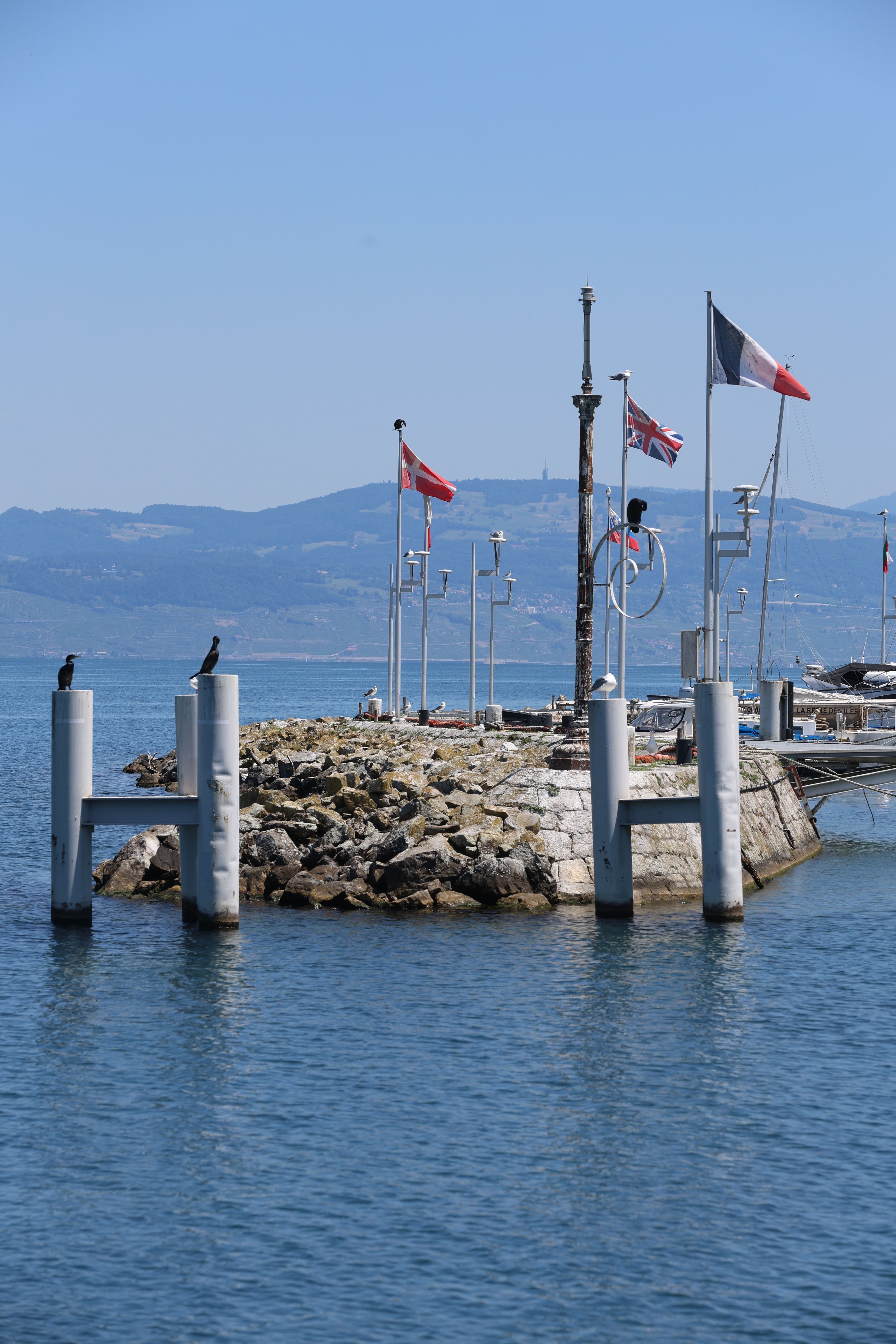
Photo by Ann H from Pexels: https://www.pexels.com/photo/scenic-pier-with-flags-in-evian-les-bains-france-33034736/
Wrong, and wrong again
The most revealing thing the G7 did at its summit in Évian-les-Bains this past week was argue about whether to start a committee. France, holding the rotating presidency, wanted a permanent secretariat to oversee the bloc’s critical-minerals plan across presidencies as they pass from one host to the next. The Trump administration said no, preferring fast bilateral deals it controls. The seven agreed on a target (no single country supplying more than 60 percent of their rare earths) by 2030 — and then could not agree on who, if anyone, would be responsible for implementing it.
The lack of coordination on these issues in the West is tiresome to watch, in large part because it’s a fight over semantics, held by people who have not yet diagnosed the disease. The West still misunderstands its own dependence in two ways at once, and the secretariat dispute is a symptom of both. It thinks the problem is mines. And it thinks the answer is a meeting.
The chokepoint is chemistry, not geology
Start with the misdiagnosis, because it is the deeper one. Rare earths are not rare — cerium is more common in the earth’s crust than copper — and they sit under California, Australia, and a dozen other friendly jurisdictions. The dependence was never about who owns the dirt; it runs entirely on who turns the dirt into oxide, the oxide into metal, the metal into a magnet. China refines roughly 90 percent of the world’s supply, and an Australian mine today still ships much of its ore to China to be processed, because there is nowhere else to send it.
So when a Western government races to open a mine and cut a ribbon, it is paying for the visible, easy half of the chain and leaving the hard half for someone else to figure out. The dependence exists because of the lack of refining capacity. A target that counts tons out of the ground measures the thing that was never scarce.
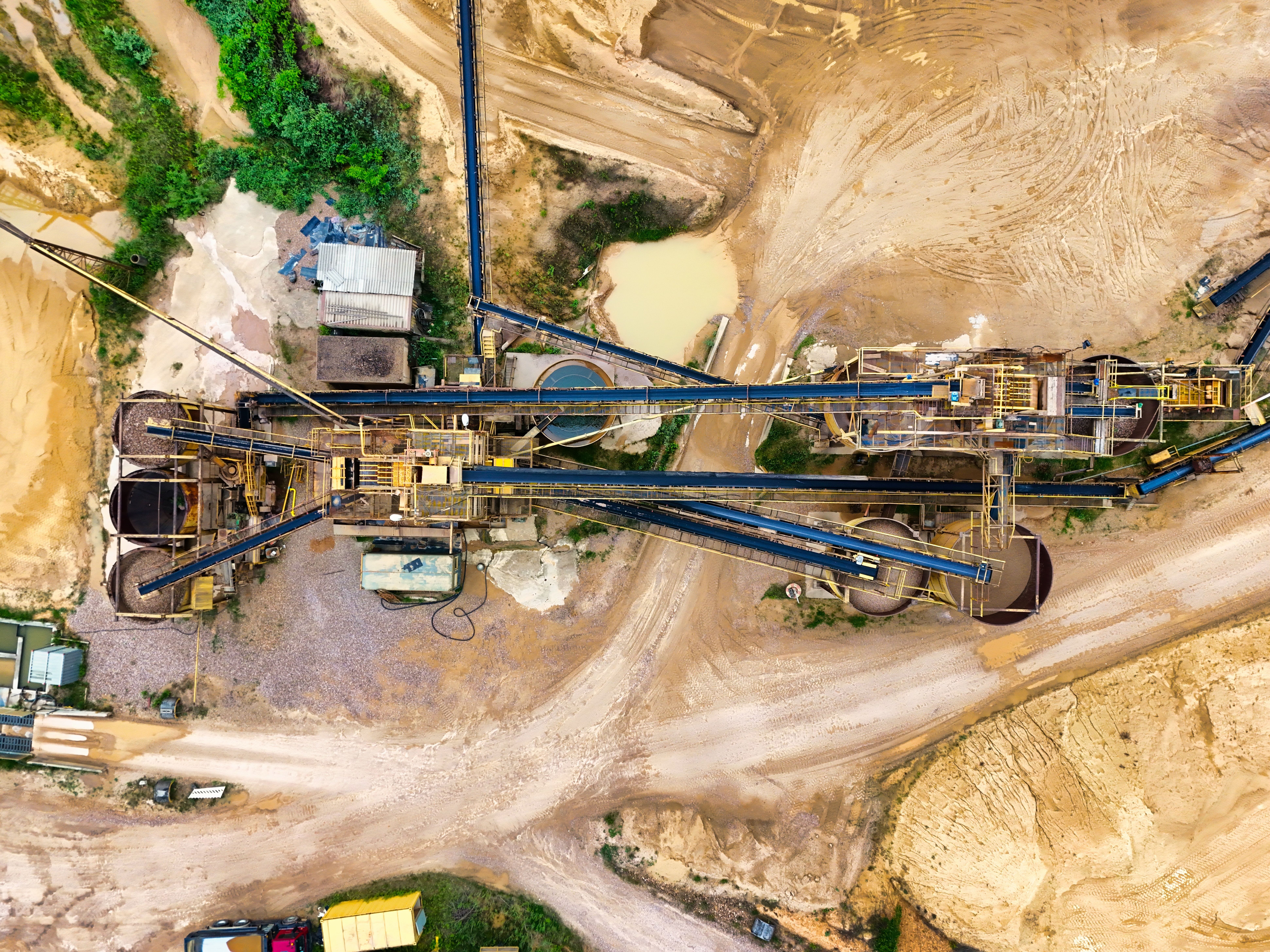
Photo by Volker Braun from Pexels: https://www.pexels.com/photo/aerial-view-of-industrial-mining-site-with-machinery-32507735
China’s whole supply chain fits on one chart
Now the second misunderstanding. China’s advantage isn’t held in any single mine or refinery; it lives in the fact that mining, refining, magnet-making, and battery assembly all answer to the same plan, coordinated as one instrument and switchable on or off in an afternoon. Deng Xiaoping reportedly told aides in 1992 that “the Middle East has oil, China has rare earths,” and the country then spent three decades building every link in the chain and wiring them together. When Beijing widened its export controls last year to cover any foreign product containing even a trace of Chinese-processed material, the threat worked because it owns every step of the process.
Set the Western answer beside that. The Canada-led production alliance unveiled its first round late last year: more than two dozen projects across nine countries, unlocking about C$6.4 billion. It is a real start, and it is barely two days of the Pentagon’s budget, scattered across a continent of separate firms and jurisdictions, facing a rival whose entire production chain reports to one head office.
The committee is the tell
The honest counter-case is that the West should not want to be China. Central coordination is how you get gluts and white elephants. One might say that markets, not secretariats, are supposed to route around chokepoints, and a bilateral deal that buys a mine’s output at a floor price puts steel in the ground faster than any office in Paris. That is true as far as it goes, but it forgets why refining concentrated in China in the first place: the work is filthy and unprofitable for years, and no private firm builds it without someone guaranteeing the output will not be undercut the day it opens. That guarantee is exactly the expensive, unglamorous commitment the G7 just showed it cannot agree to make. The argument over the secretariat is not a sideshow. It is the whole problem in miniature: a coalition that cannot decide whether to have an institution will not out-coordinate one that already is an institution.
So forget whether the communiqué sounds strong. Watch out for two things in the coming months and years. Does a single Western government fund refining capacity rather than another mine? And does any institution survive long enough to hold a price floor when China next lets prices fall to drown a new Western refinery in its crib? Until one of those happens, the West has agreed on a number and a deadline and almost nothing else.
Sources: Reuters (via Mining Weekly, 17 Jun 2026); Mining.com; Bloomberg (17 Jun 2026); CSIS; Clark Hill PLC; Government of Canada (g7.canada.ca) and Mining Weekly (3 Nov 2025).
Comments
Nothing yet. Say the first thing.
Sign in to join the conversation.