
This is the first dispatch in a series of essays about the Second Missile Age. Here we stay with strategic weapons—strategic bombing in World War II and later ICBMs and SLBMs. Theater missiles and air-breathing weapons will be tackled later in the series.
FORTY-TWO PERCENT OF THE BOMBS dropped on Germany by American air forces in 1944-1945 landed more than five miles or eight kilometers away from their targets.1 Those which landed within an eight kilometer radius on average landed four kilometers from target. This implies a circular error probable (CEP) of roughly six kilometers. Recall that CEP is the radius of the circle that contains half the hits on average. It is the fundamental measure of weapon accuracy.
To give you a sense of what this number means, here is a simulation of 100 weapons aimed at Times Square with a CEP of six kilometers. We show the five boroughs to scale. As you can see, many fall outside Manhattan. The odds of hitting a missile launcher, a tank, or even a building located at Times Square with a weapon of this accuracy are remote.
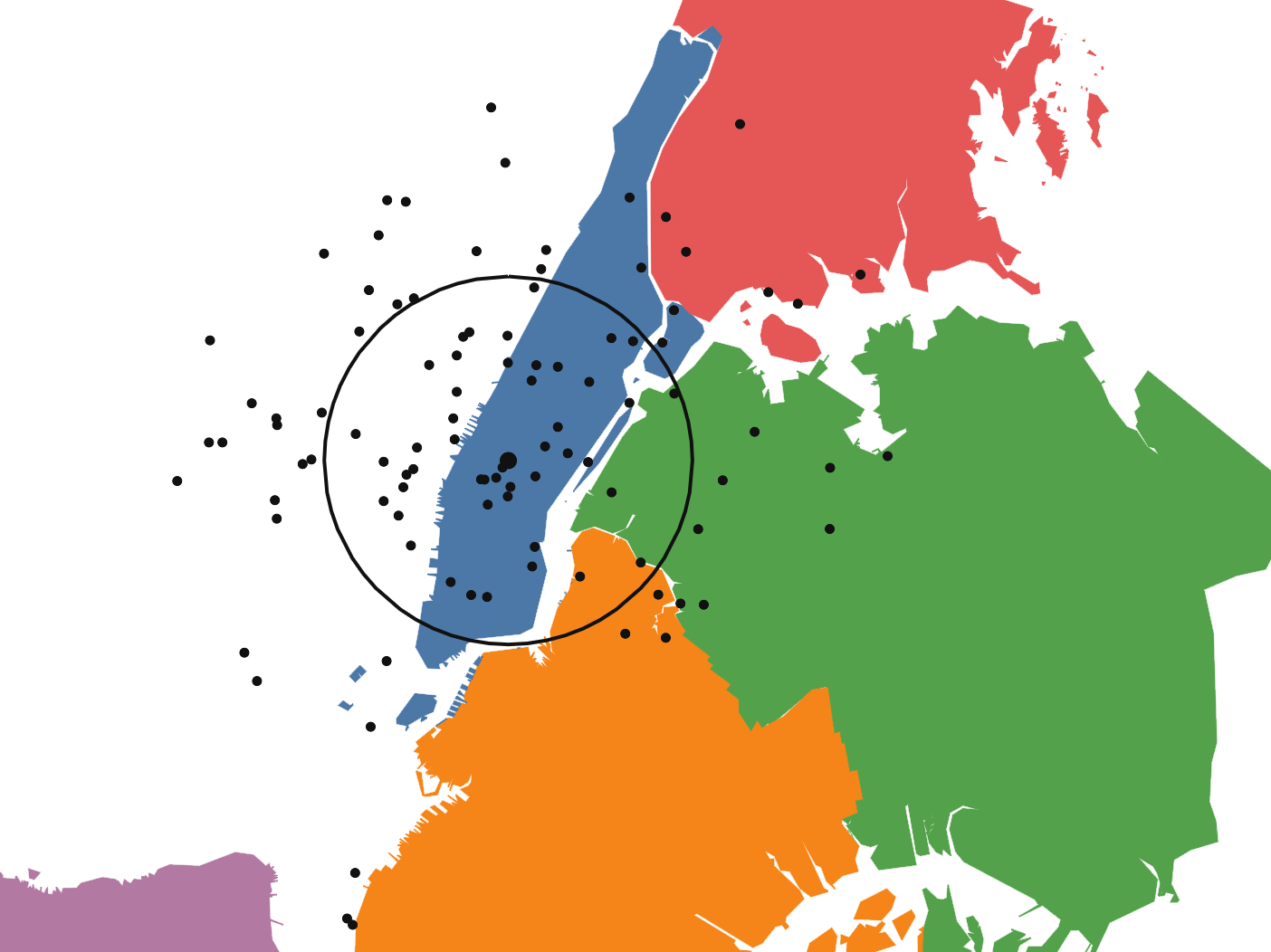
During World War II then, the bombing accuracy was so poor that all bombing was area bombing. No point targets could be attacked directly. If one wanted to hit a rail yard, say, one basically had to carpet bomb it. With enough sorties, the rail yard could perhaps be put out of commission until it was repaired by the enemy.
‘A decision from the air’, the holy grail of the proponents of strategic air war, was simply not feasible during World War II. Eventually, the Americans gave up the pretense of precision bombing and joined the British in simple area attacks for ‘moral effect’. They just unloaded their weapons on cities, often missing them by miles. So, strategic bombing during World War II was a pure terror weapon. One that failed comprehensively to achieve any strategic effects whatsoever.
By the Vietnam war, bombing accuracy had improved considerably. Over the course of the 1965-1968 air coercion campaign against North Vietnam called Rolling Thunder, average CEPs declined from 230m to 115m. The following shows a simulation of a bomber with a CEP of 200m.
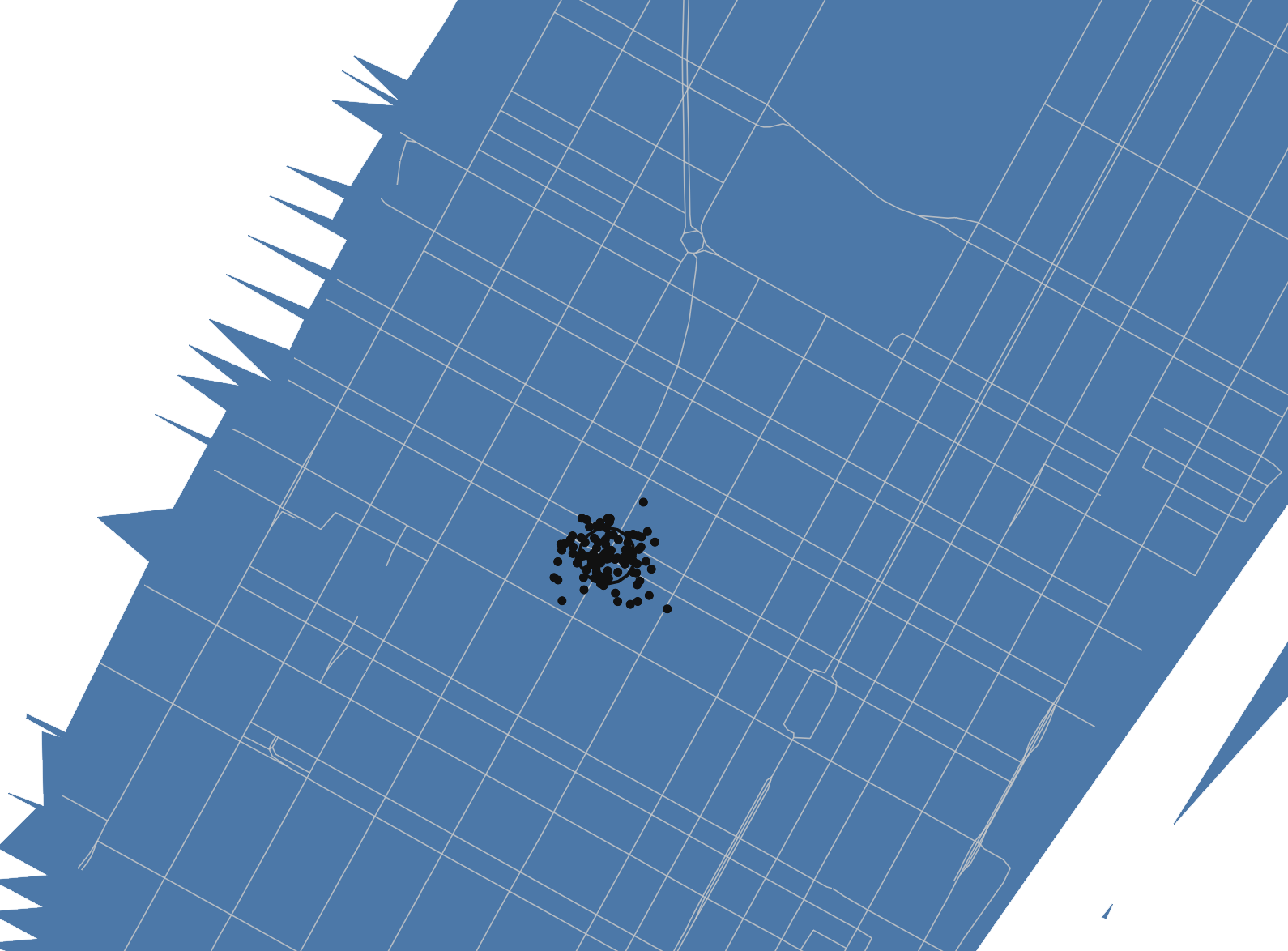
This is vastly more accurate than World War II. Attacking point targets was becoming possible in a way that was simply not on the table at midcentury. Still not good enough to destroy a tank-sized target, but with a few sorties one could destroy a bridge or a ball-bearing plant located there.
US pilots flew a million missions during Rolling Thunder, dropping three-quarters of a million tons of weapons. It was an abject failure. In the end, Johnson threw up his hands and shut down the whole campaign just to get Hanoi to the table.
Nixon’s Linebacker campaign is sometimes rated by air coercion enthusiasts — and even by Robert Pape — as a success. But as John A. Gentry notes, this is incorrect. Linebacker was also an unambiguous strategic failure.2 Linebacker could only bring Hanoi to the table but not coerce it into making any concessions whatsoever. The US still suffered a humiliating defeat. North Vietnam got US forces to leave South Vietnam without withdrawing its own forces—and then promptly conquered the country without much further ado.
Gentry does not tell us the CEP of US air-to-ground weapons in Linebacker. But we know that laser-guided bombs were being used at this time. These were the first precision-guided weapons to be used in combat. By the Gulf War, the CEP of air-to-ground weapons had fallen to just 3m or 10ft.
Comments
Nothing yet. Say the first thing.
Sign in to join the conversation.