
There are books that haunt you days, months, years after you’ve turned the final page. A Little Life by Hanya Yanagihara is one such book—an unforgettable, devastating, and profoundly moving novel that left an indelible mark on my psyche. And yet, despite its brilliance, I find myself unwilling—perhaps even unable—to review it. Not because it isn’t worth discussing, but because it demands something from its reader that feels impossible to distill into mere critique.
“At its core, A Little Life is not just a novel—it is a descent. A descent into Jude St. Francis’s unfathomable suffering, a spiral of abuse so relentless it sometimes makes the reader feel physically ill.”
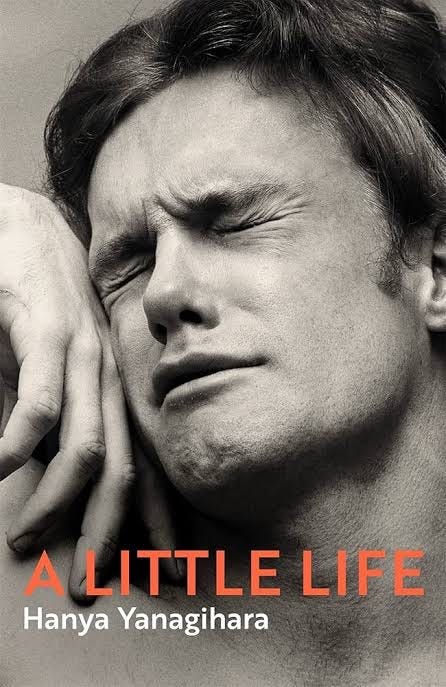
To start, Yanagihara’s storytelling is astonishing in its boldness. She does not shy away from the grotesque, the painful, the suffocating weight of trauma. The novel, in its most unrelenting form, explores friendships in all their beauty and ugliness, love in its most conditional and unconditional manifestations, and the human condition pushed to extremes until humanity itself feels almost lost. Her prose is rich and immersive, pulling readers into a world that is as captivating as it is unbearable.
But at its core, A Little Life is not just a novel—it is a descent. A descent into Jude St. Francis’s unfathomable suffering, a spiral of abuse so relentless it sometimes makes the reader feel physically ill. His pain is unyielding, unbearable at times, a wound that festers despite the love surrounding him. And yet, those who love him—his friends, his adoptive father, the people who should protect him—fail him in ways that feel as tragic as they are inevitable.
It is not just Jude’s suffering that makes this book so difficult to critique, but the way it forces its readers to suffer alongside him. There is no reprieve, no glimmer of hope that things will get better. Instead, Yanagihara asks us to sit in the discomfort, to acknowledge that for some, life is a series of unending horrors. It is a bold artistic choice, one that some see as exploitative and others as unflinchingly honest.
I could write pages praising Yanagihara’s ability to craft a novel that evokes such visceral emotions. I could analyse the way she deconstructs the notion of resilience, how she presents trauma not as something that can be neatly overcome but as a force that reshapes a person’s entire existence. I could discuss how the book made me feel dizzy at times, the sheer weight of it pressing down on me with every new revelation of Jude’s suffering. But to what end? What does a review accomplish for a book like this, when the experience of reading it is beyond articulation?
Some books are meant to be discussed, dissected, debated. Others demand something different from us. A Little Life is not a book I can review; it is a book I endured. And that, in itself, is the highest testament to its power.
(Written by Lora Nay, a poet, freelance writer, and biotechnologist with a passion for literature, nature, and storytelling. Nay’s poetry, book and movie reviews, along with reflections on pop culture, can be read on her blog and Instagram)
No posts
Comments
Nothing yet. Say the first thing.
Sign in to join the conversation.