
Curated by Pan Macmillan India
Great literature leaves an imprint not just on the hearts of its readers, but on the very fabric of cultural memory. They transcend time, addressing the fears, hopes, and realities of their time and providing insight that continues to resonate for generations to come. Certain books are so in tune with the zeitgeist of their era—or so masterful in articulating timeless human experiences—that their ascent into the realm of modern classics is not just likely, but inevitable.
Here are 10 books from the 21st century that have already carved their names into literary memory, and will continue to echo for generations to come.
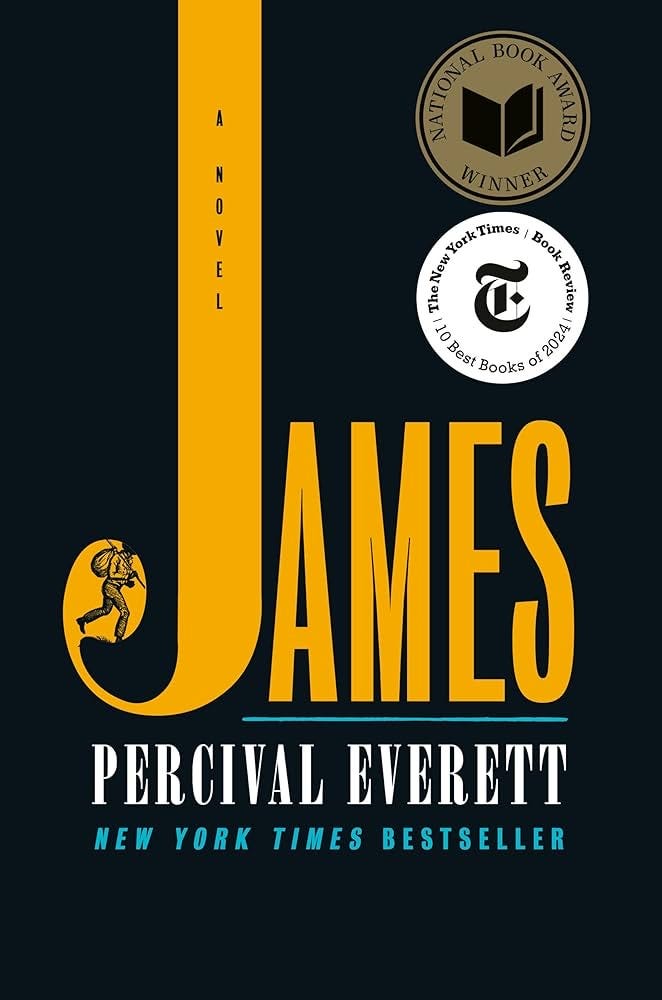
James by Percival Everett (19th March, 2024)
In James, Percival Everett delivers a searing, genre-defying reimagining of Adventures of Huckleberry Finn—this time from the perspective of Jim, the enslaved man so often relegated to the margins of Twain’s narrative. With fierce intelligence, satirical sharpness, and emotional clarity, Everett reframes one of America’s most iconic literary texts, turning it inside out to expose the brutal realities of racism, freedom, and identity.
What makes James a triumph is not just its bold literary conceit, but how skilfully Everett balances reverence and rebellion—honouring the legacy of American storytelling while issuing a powerful challenge to its omissions. In doing so, he does more than re-contextualise a classic: he reclaims it, reshapes it, and, in the process, gives us a new one. This is literature at its most urgent and transformative—unflinching, inventive, and destined to be remembered.
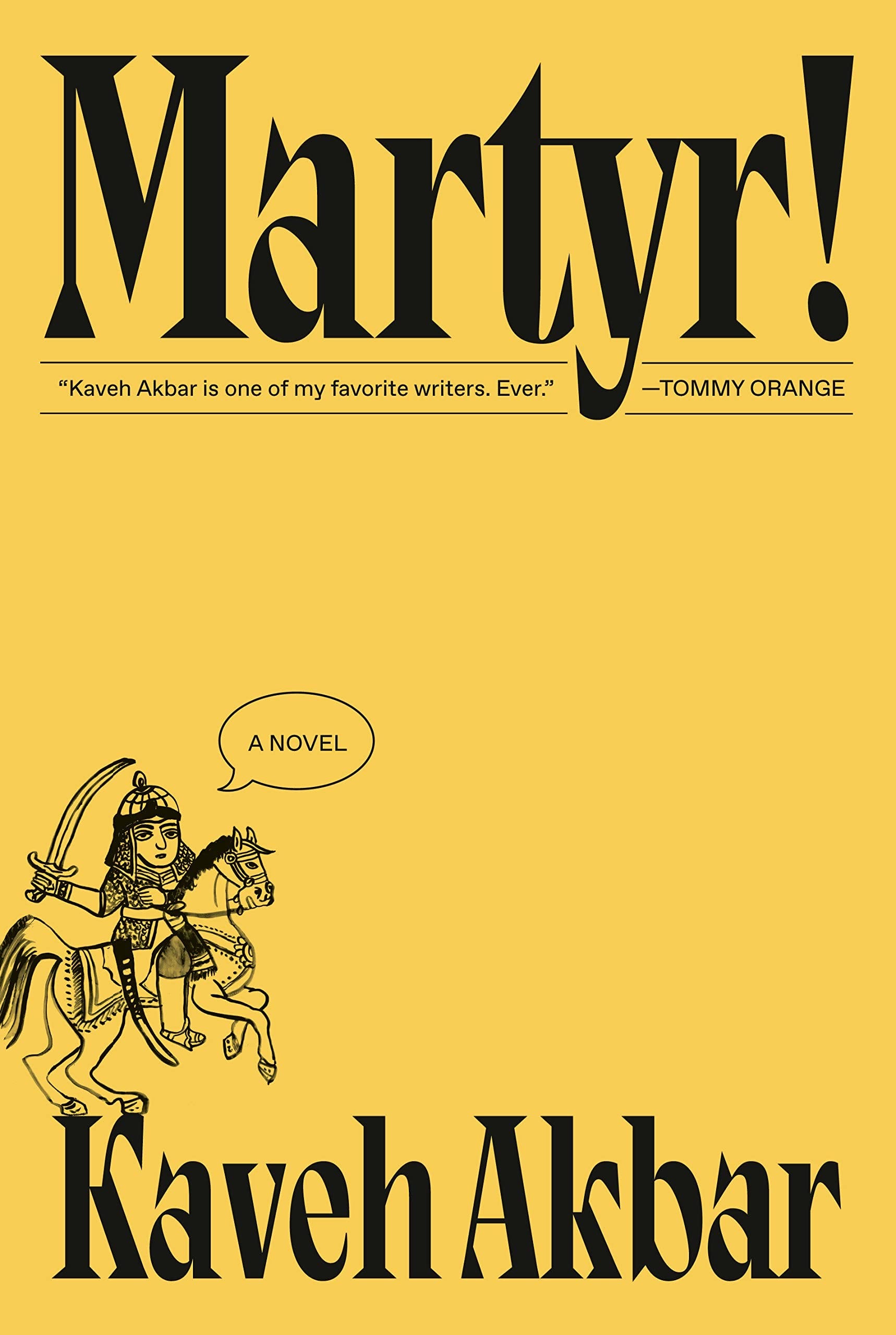
2. Martyr! by Kaveh Akbar (18th January, 2024)
Kaveh Akbar, best known for his piercing poetry, makes a stunning leap into fiction with Martyr!, a novel as luminous as it is unflinching. The story follows a young Iranian American man navigating grief, addiction, and the fragmented legacies of faith and family. Akbar’s prose hums with lyricism—his sentences are as sharp and intricate as verses, often blurring the line between poetry and narrative.
At its core, Martyr! is an exploration of how we make meaning in a world that constantly challenges our sense of purpose. With dreamlike interludes, wry humour, and haunting observations, the novel examines martyrdom not just in the political or religious sense, but as a metaphor for living honestly and vulnerably in a fractured world.
Akbar interrogates identity with tenderness and clarity, asking questions that resonate deeply in today’s cultural and spiritual climate. This is a novel for seekers—for those who long for a language big enough to hold contradiction, beauty, and loss. With its introspective depth and emotional intelligence, Martyr! feels destined to be remembered as one of the defining literary works of the 21st century.
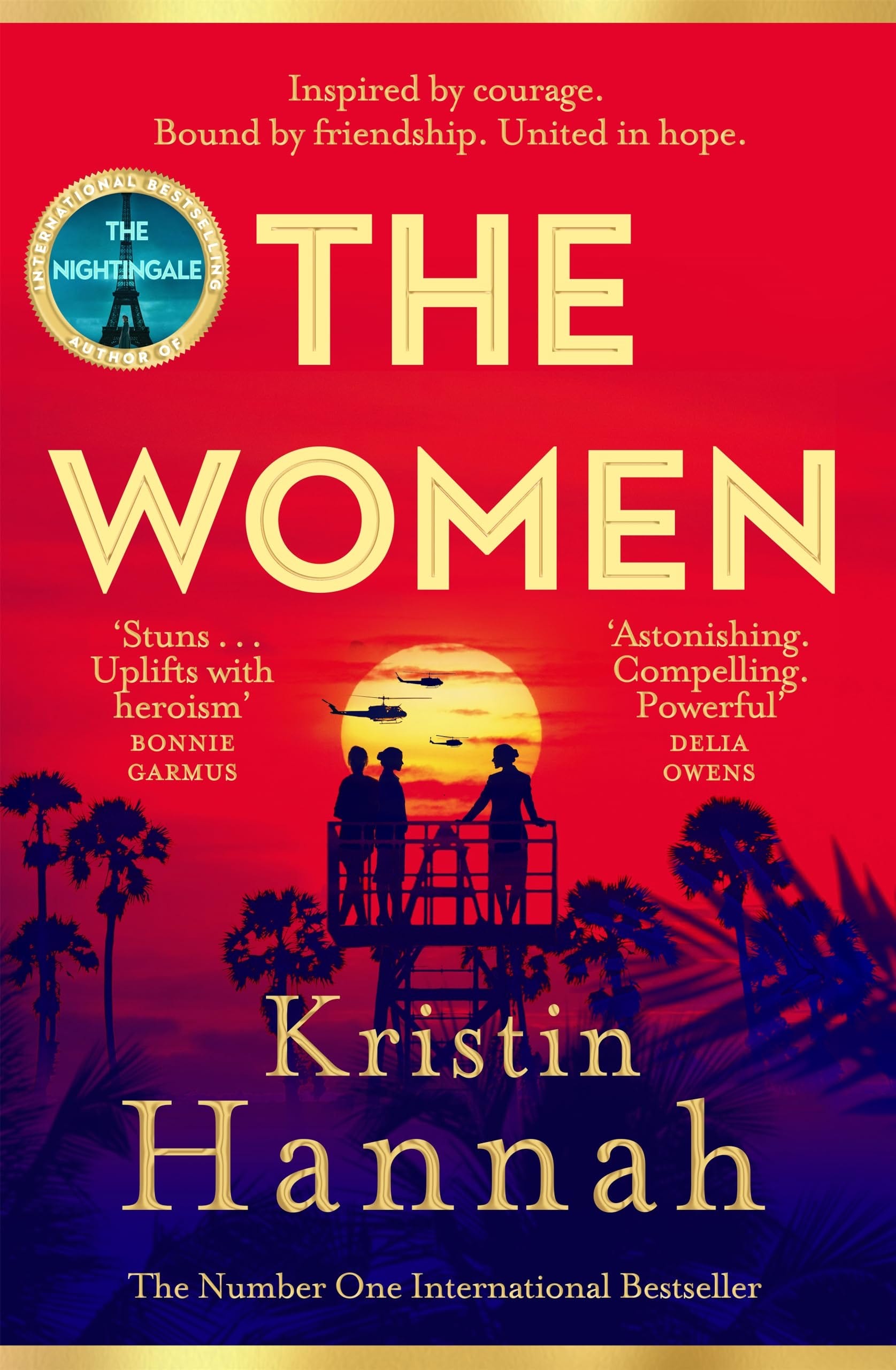
3. The Women by Kristin Hannah (6th February, 2024)
Kristin Hannah returns with what is arguably her most ambitious and powerful novel to date. The Women sheds light on the overlooked and underrepresented experiences of American women who served as combat nurses during the Vietnam War—a chapter of history too often omitted from the broader narrative.
Through the eyes of Frankie McGrath, a young woman from a sheltered, patriotic background, Hannah plunges readers into the chaos, brutality, and emotional devastation of war. What begins as a journey of idealism and duty quickly unravels into a harrowing exploration of trauma, betrayal, and resilience. Frankie’s transformation—from a naïve volunteer to a hardened veteran struggling to find her place in a world that refuses to acknowledge her sacrifice—is rendered with heartbreaking intimacy.
Written with honesty, vivid detail, and Hannah’s signature emotional depth, The Women is both a gripping historical drama and a deeply personal reckoning with the cost of erasure. It reclaims a forgotten piece of women's history with empathy and urgency, reminding us that the stories of those who have been silenced deserve to be heard. A profound, necessary addition to the canon of war literature, The Women stands as an enduring testament to courage, sisterhood, and the fierce, unyielding will to survive.
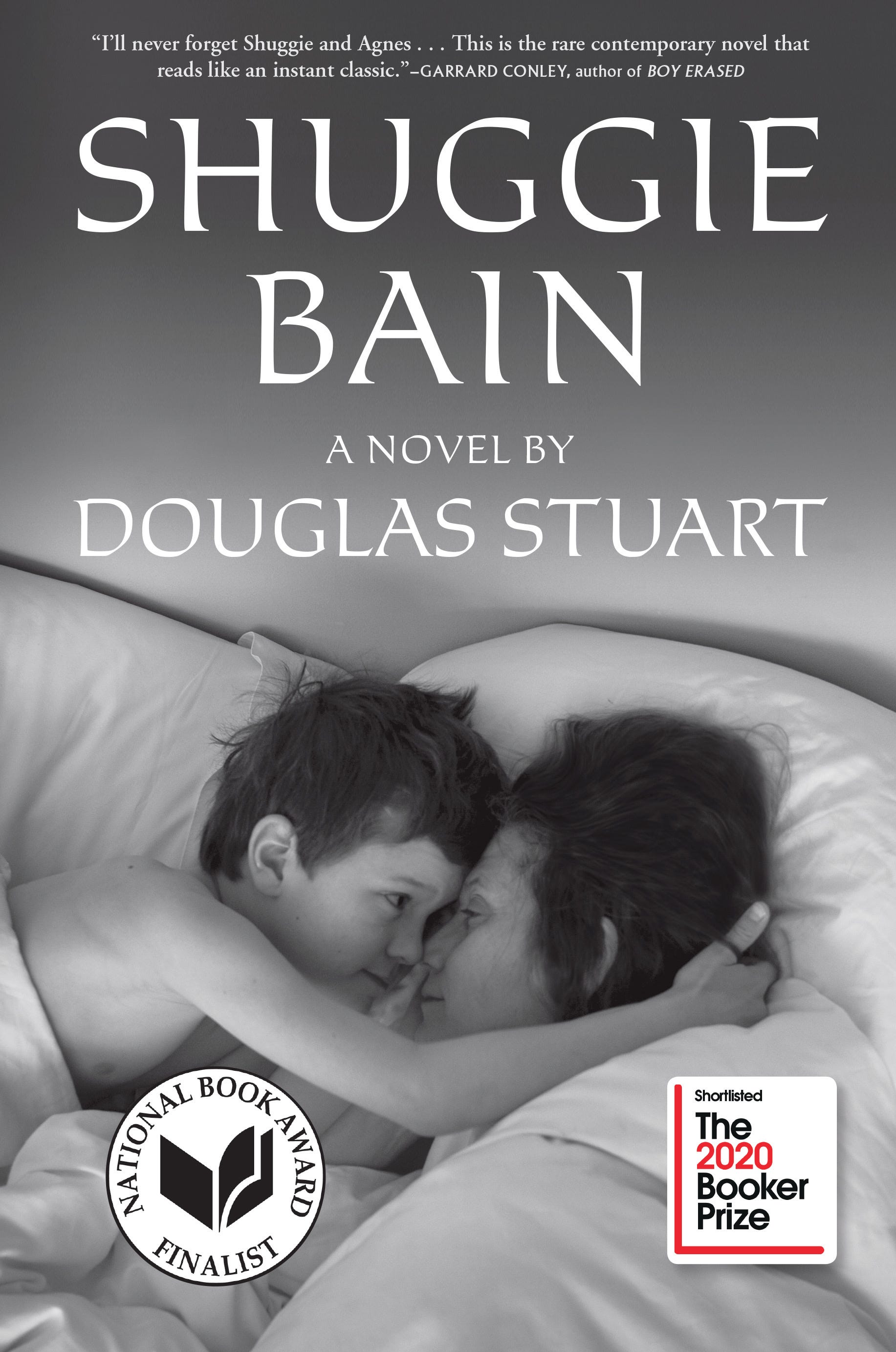
4. Shuggie Bain by Douglas Stuart (11th February, 2020)
Winner of the 2020 Booker Prize, Shuggie Bain is a raw and unforgettable debut that chronicles the complexities of love, poverty, and resilience amidst the harsh backdrop of 1980s working-class Glasgow. At its core is young Shuggie, a tender, effeminate boy navigating a world that is often unkind to difference, while fiercely devoted to his beautiful but alcoholic mother, Agnes. Their relationship—achingly intimate and heartbreakingly fraught—lies at the heart of the novel’s emotional power.
Douglas Stuart’s prose is both lyrical and emotional, capturing the everyday indignities of life under economic hardship with a Dickensian eye for social realism and moral depth. Yet, amidst the grit, there’s deep compassion—moments of humor, beauty, and hope that flicker like light through grime-covered windows.
This is a novel that doesn’t just tell a story—it carves itself into the reader’s consciousness, asking difficult questions about love, dignity, and survival. A modern classic in the making, Shuggie Bain is a testament to the enduring strength of the human spirit, and a work destined to leave a lasting imprint on contemporary literature.
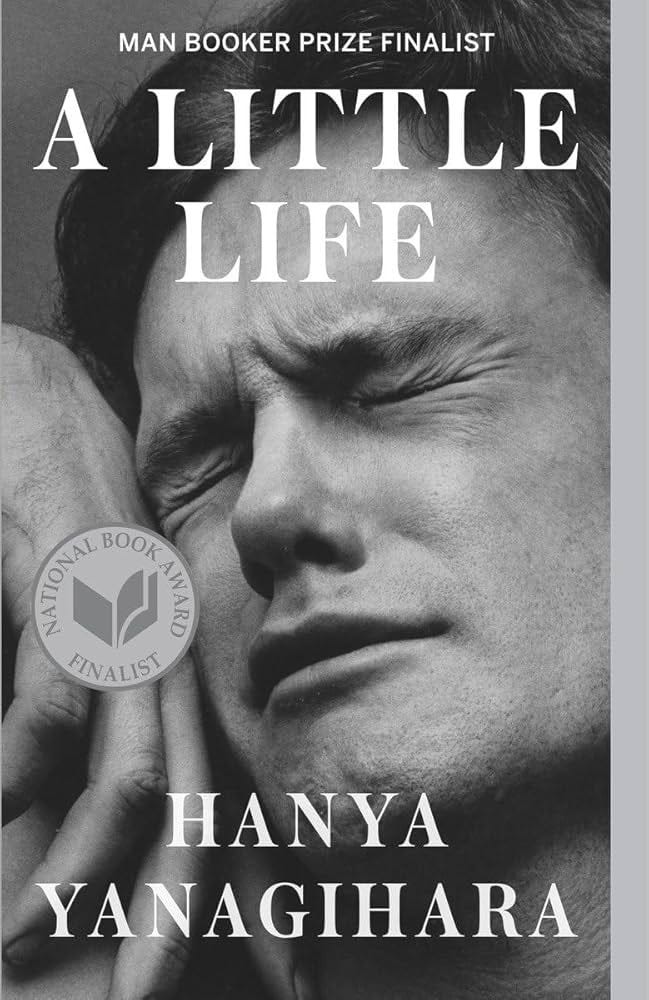
5. A Little Life by Hanya Yanagihara (10th March, 2015)
A Little Life is not merely a novel—it’s an emotional reckoning. Spanning decades, this sweeping story follows four college friends navigating adulthood in New York City, with a haunting focus on Jude St. Francis, a brilliant but tormented man whose traumatic past slowly unfurls across nearly 800 pages. Yanagihara’s prose is both lyrical and haunting, immersing readers in a world of suffering, love, and resilience.
The novel has divided audiences since its release—some hailing it as a masterpiece of modern fiction, others critiquing its relentless depiction of pain. But whether you’re moved or emotionally undone by it, A Little Life is impossible to forget. Its psychological intensity and raw emotional honesty have made it a defining novel of the 21st century, one that readers continue to gift, grieve over, and return to in hushed reverence. With its exploration of friendship, trauma, and the fragile beauty of chosen family, it’s already etched its place as a modern classic.
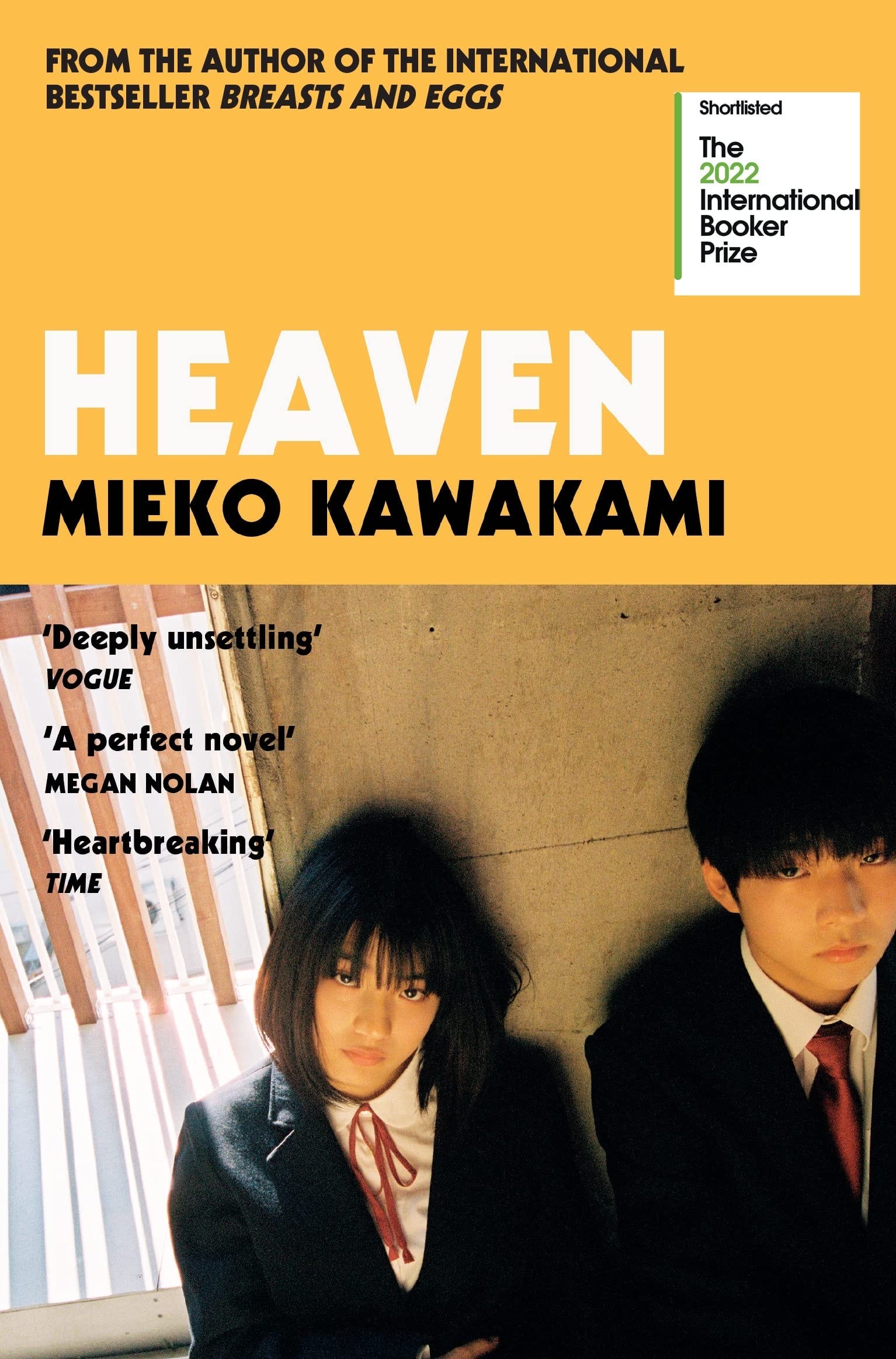
6. Heaven by Mieko Kawakami (September 2009)
A profoundly unsettling and tender novel, Heaven explores the interior world of a 14-year-old boy who is relentlessly bullied at school, and his growing, secretive friendship with a girl who suffers a similar fate. Kawakami’s minimalist prose cuts with quiet precision, laying bare the raw nerves of adolescent pain, isolation, and the longing to be seen. But Heaven is not merely a story about bullying—it is a philosophical meditation on the nature of suffering, the boundaries of endurance, and the desperate search for meaning in an indifferent world.
Through piercing dialogues and intimate reflections, Kawakami questions the morality of survival and the very idea of justice, offering no easy answers. The novel’s restraint is its greatest power; every emotion is distilled, every silence loaded. Heaven may be slim in length, but it carries a staggering emotional and intellectual weight, securing its place as a modern masterpiece in contemporary world literature.
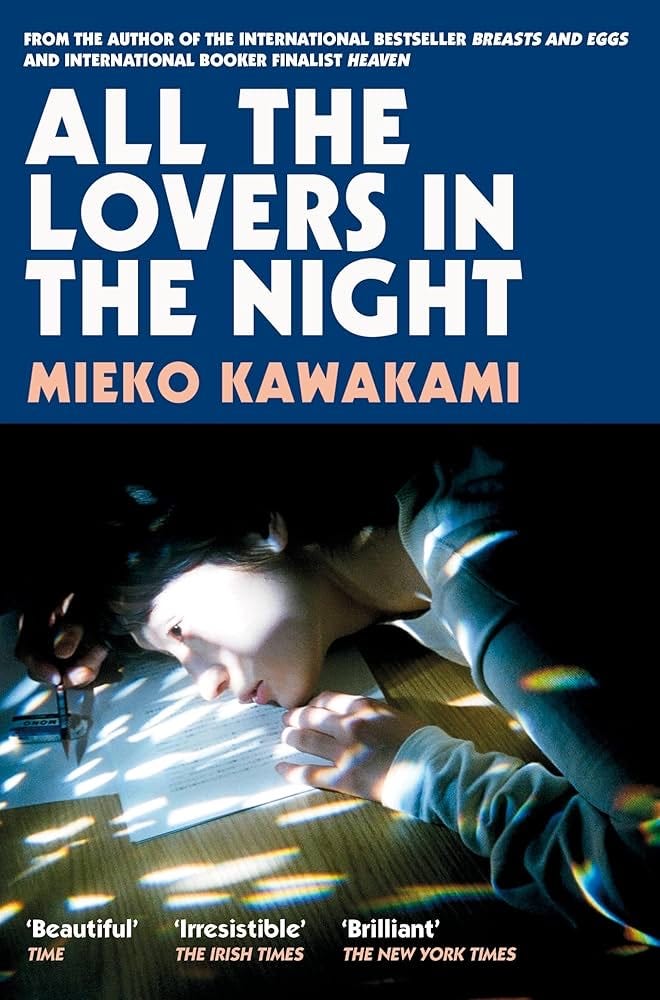
7. All the Lovers in the Night by Mieko Kawakami (13th October, 2011)
All the Lovers in the Night by Mieko Kawakami (13th October, 2011) is a quietly powerful meditation on solitude, femininity, and the aching hunger for connection in contemporary urban life. Set against the backdrop of Tokyo’s glittering anonymity, the novel follows Fuyuko Irie, a shy and socially withdrawn proofreader, whose solitary routine is disrupted when she begins to confront the emotional hollows in her life.
Kawakami’s prose—gentle, precise, and often haunting—peels back the layers of everyday existence to reveal the quiet desperations and flickers of hope that define human experience. The novel is as much about the rhythms of city life as it is about the internal landscapes we inhabit: ones shaped by memory, shame, longing, and the strength required to seek something more.
With her characteristic emotional clarity and empathy, Kawakami crafts a story that is both deeply introspective and sharply observant of the pressures placed on women in society. A luminous and quietly devastating work, All the Lovers in the Night firmly cements Kawakami’s place in the modern literary canon.
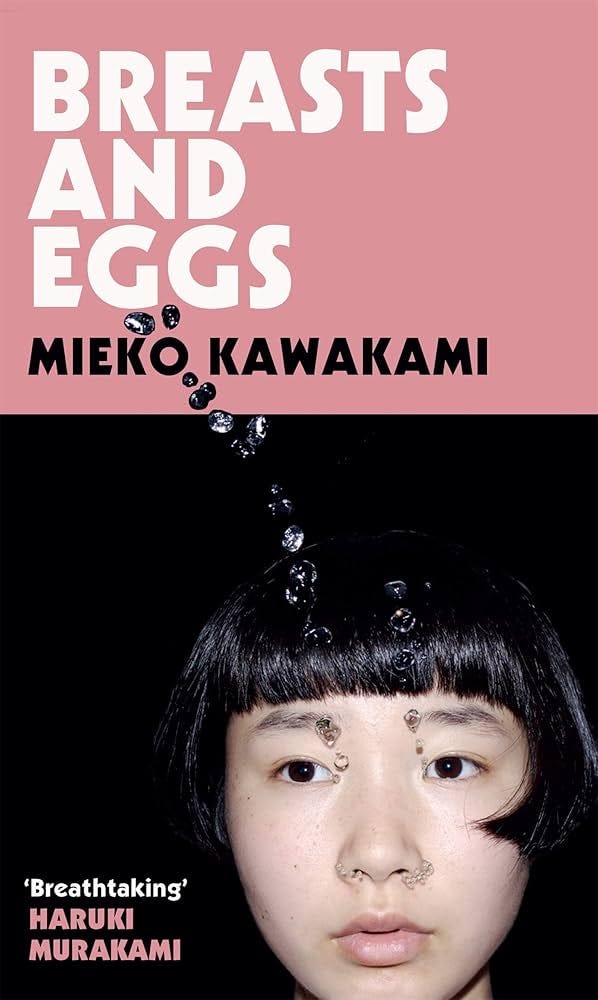
8. Breasts and Eggs by Mieko Kawakami (6th February, 2012)
Breasts and Eggs by Mieko Kawakami is a quietly radical, deeply intimate portrayal of womanhood in contemporary Japan. Originally published on 6th February, 2012, this novel explores the complexities of female identity, body politics, motherhood, and economic precarity through the lives of three women—a Tokyo-based writer, her sister who is considering breast enhancement surgery, and her adolescent niece struggling with her own bodily discomfort and sense of self.
With prose that is at once lyrical and unflinchingly honest, Kawakami peels back the layers of societal expectation and personal desire. Her narrative moves between deeply philosophical and starkly mundane, grounding abstract themes in the everyday lives of her characters. Told with a distinctly feminist voice, the novel critiques patriarchal structures while honoring the quiet resilience of women navigating them.
Breasts and Eggs is not just a literary triumph but also a cultural landmark—bold in its subject matter and tender in its execution. It has secured Kawakami’s place as one of the most important Japanese writers of the 21st century, and this novel is widely regarded as one of the defining literary works of our time.
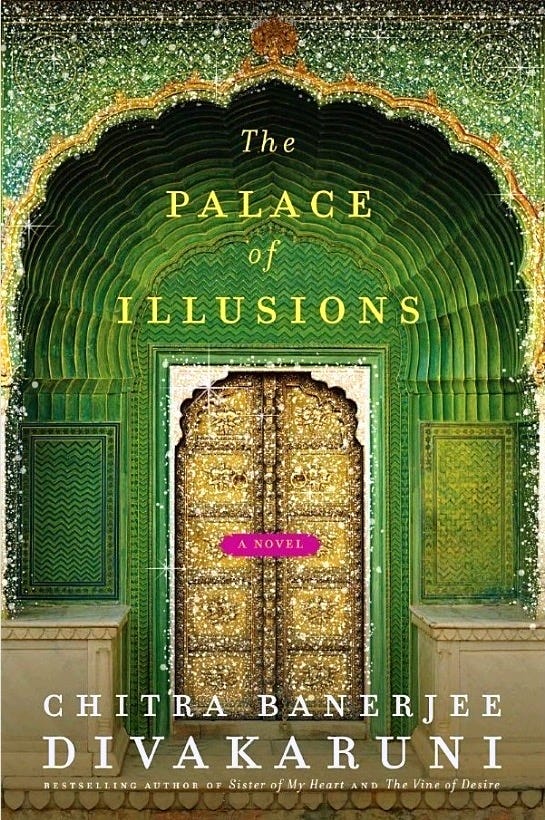
9. The Palace of Illusions by Chitra Banerjee Divakaruni (1st January, 2008)
The Palace of Illusions by Chitra Banerjee Divakaruni, published on January 1st, 2008, is a breathtaking retelling of the ancient Indian epic, the Mahabharata, from the perspective of one of its most enigmatic and controversial characters, Draupadi. Through this reimagining, Divakaruni breathes new life into a well-known story, offering a narrative that is both deeply personal and universally resonant.
The novel is a triumph of feminist myth-making, as it reclaims Draupadi's voice—one that has often been silenced or misunderstood in traditional tellings. In The Palace of Illusions, Draupadi is no longer just a pawn in the hands of fate and the male figures around her; she is a woman with agency, intellect, and emotional complexity. Divakaruni’s portrayal of Draupadi as a strong, defiant, yet vulnerable character offers a nuanced exploration of identity, power, and destiny.
The prose in The Palace of Illusions is lush and lyrical, drawing readers into a world where the divine and the mortal are intricately intertwined. The novel’s mythic richness is evident in its vivid descriptions of ancient kingdoms, grand palaces, and magical occurrences, but it is the modern perspective that truly makes this retelling stand out. By weaving together themes of love, ambition, betrayal, and resilience, Divakaruni brings relevance to Draupadi’s story, making it feel as if it could belong to any time or place.
Divakaruni’s masterful storytelling ensures that The Palace of Illusions will be cherished as a modern classic, transcending cultural boundaries and resonating with readers across generations. Its exploration of myth, identity, and the intricacies of human emotion guarantees that it will continue to be a timeless work of literature, treasured by readers of all backgrounds.
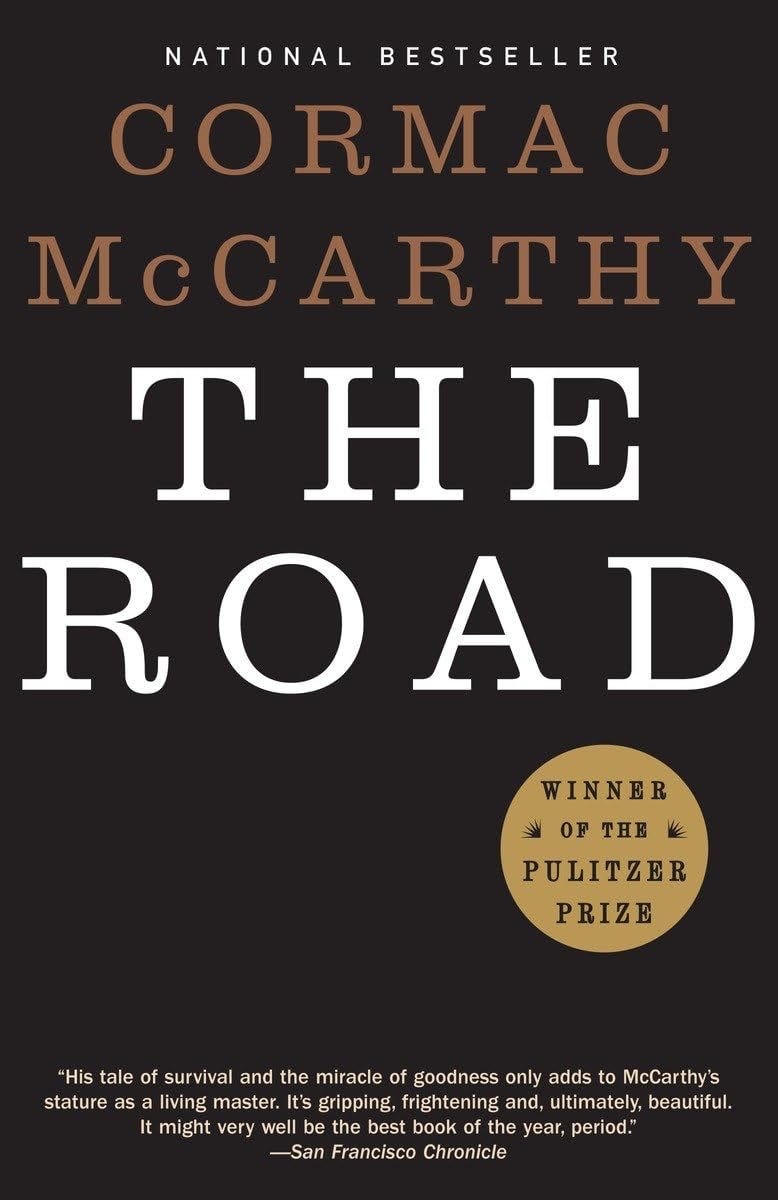
10. The Road by Cormac McCarthy (26th September, 2006)
In The Road, Cormac McCarthy delivers a haunting, spare, and profoundly moving narrative that explores the rawest depths of human survival and love in the most desolate of circumstances. Set in a bleak, post-apocalyptic world, the novel follows a father and his young son as they navigate through a ravaged America, devoid of life and hope, where every step forward seems like a struggle against an indifferent, decaying world.
McCarthy’s prose is famously minimalist, and in The Road, this stripped-back style serves to intensify the emotional resonance of the story. There is no extraneous detail, no hopeful flourishes—just the bare essentials of survival and the relationship between father and son, each moment heavy with the weight of existence itself. The lack of quotation marks and the fragmented nature of the dialogue adds to the raw, almost dreamlike quality of the narrative, leaving readers with a sense of isolation and despair that mirrors the characters' journey.
At the heart of The Road is the unbreakable bond between the father and his son. The father’s love for his child is palpable, even as he is worn down by the harsh reality of their world. It is in their quiet conversations and the small acts of care for one another that McCarthy illuminates the true power of love and human resilience in the face of unimaginable loss. This father-son relationship is what anchors the story and provides its emotional core, turning a narrative about survival into one about hope, however fleeting it may seem.
Winner of the Pulitzer Prize for Fiction, The Road is a meditation on the human condition, touching on themes of survival, morality, and the deep, often contradictory nature of hope. McCarthy’s depiction of a world stripped of everything—except the fundamental drive to endure—has earned it a place among the most powerful and essential works of contemporary literature. In its stark beauty, The Road stands as a modern classic, its haunting vision of love and loss staying with readers long after the final page is turned.
Which one of these future classics is already a favourite of yours? Or is there one you think deserves to be on this list? Let us know in the comments! 📚
Happy reading—and happy World Book Day! 🌍✨
No posts
Comments
Nothing yet. Say the first thing.
Sign in to join the conversation.