
Here’s the definition of “native plants” I use when there’s a reason to talk about them with my friends and neighbors: native plants are plants that evolved along with, and are important for, local wildlife.
If the person’s vaguely interested, I might also offer that native plants have important roles in our ecosystems, that birds need the food and habitat they provide, or that some bees have evolved to only use the pollen of specific native plants.
One must be a little cautious with one’s unsuspecting conversation partners. Because native plant talk has a whiff of advocacy. Not just any plants, native ones. They’re what you should plant. Not those other plants. Advocacy when you’re not expecting it can be grating. And I assume that most people in casual conversation about their gardens are not expecting it.
Sometimes, at nurseries, I see someone pick up some lovely-looking seedling, admire it. I see myself racing toward them, hurdling shrubs, upsetting the annuals tables, shouting desperately to the consternation of other shoppers, “No! Not that one! It’s from the other side of the world and it colonizes woodlands to the detriment of our native groundcovers!”
I suppress the impulse, but it’s there. At least my heart’s in the right place.
The crux of native plant advocacy is that native plants support more local wildlife than nonnative plants do. The entomologist Doug Tallamy is probably most responsible for popularizing this notion. For example, in Bringing Nature Home (2007), he describes this ecological “cascade”:
Plants “eat” sunlight
Caterpillars and other insect herbivores eat plants
Birds feed caterpillars to their young
Now, none of the living things in this cascade want to be eaten. Plants, for example, defend themselves chemically. To eat them, you need to evolve a way to deal with those chemicals. So insect herbivores are less likely to eat plants they didn’t evolve with.
For example, the Norway maple, one of the most popular trees to plant in the U.S., supports maybe a dozen types of caterpillar. By contrast, our native red maple supports more than 100. Norway maples are, as the name suggests, a European species.
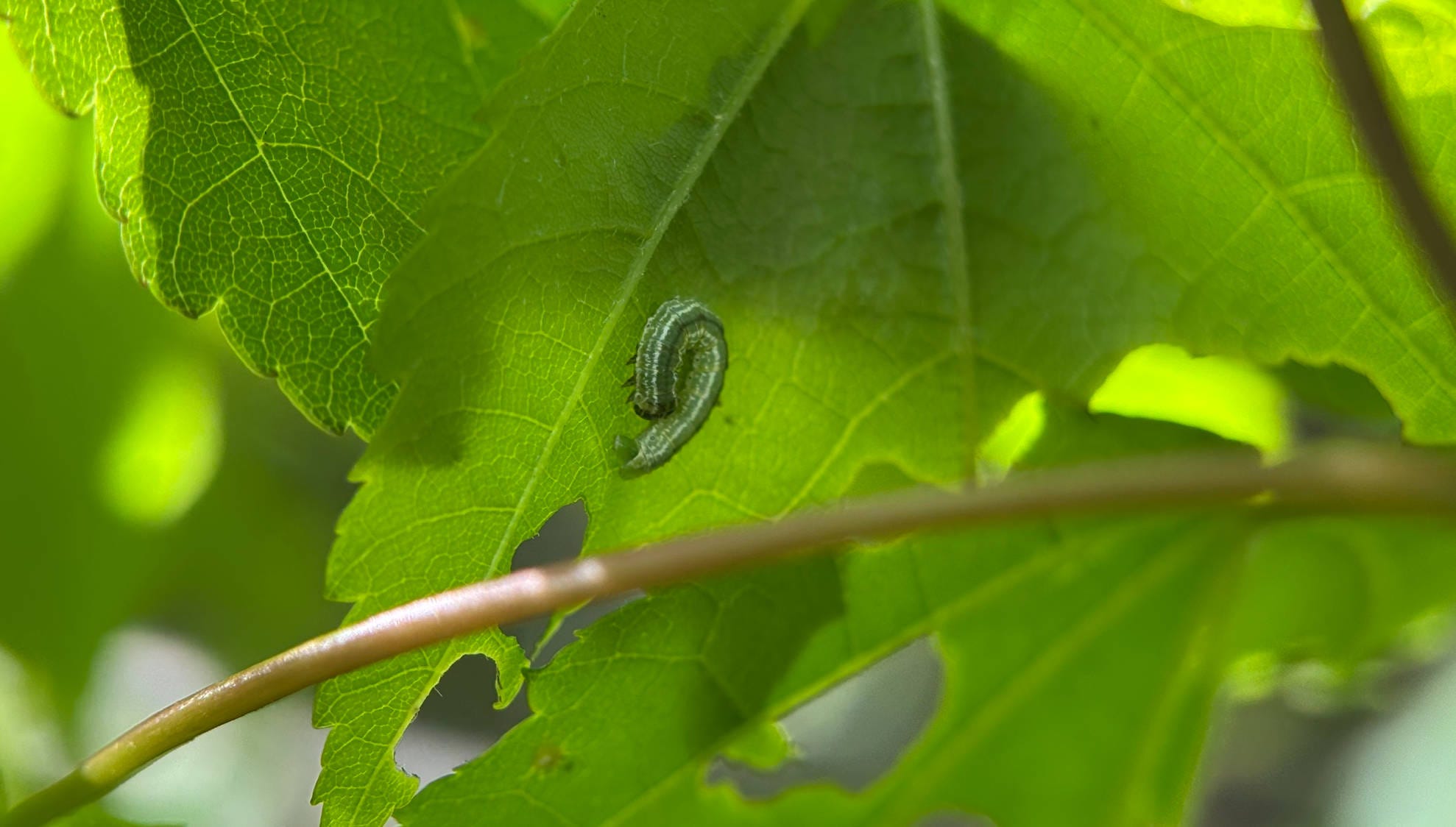
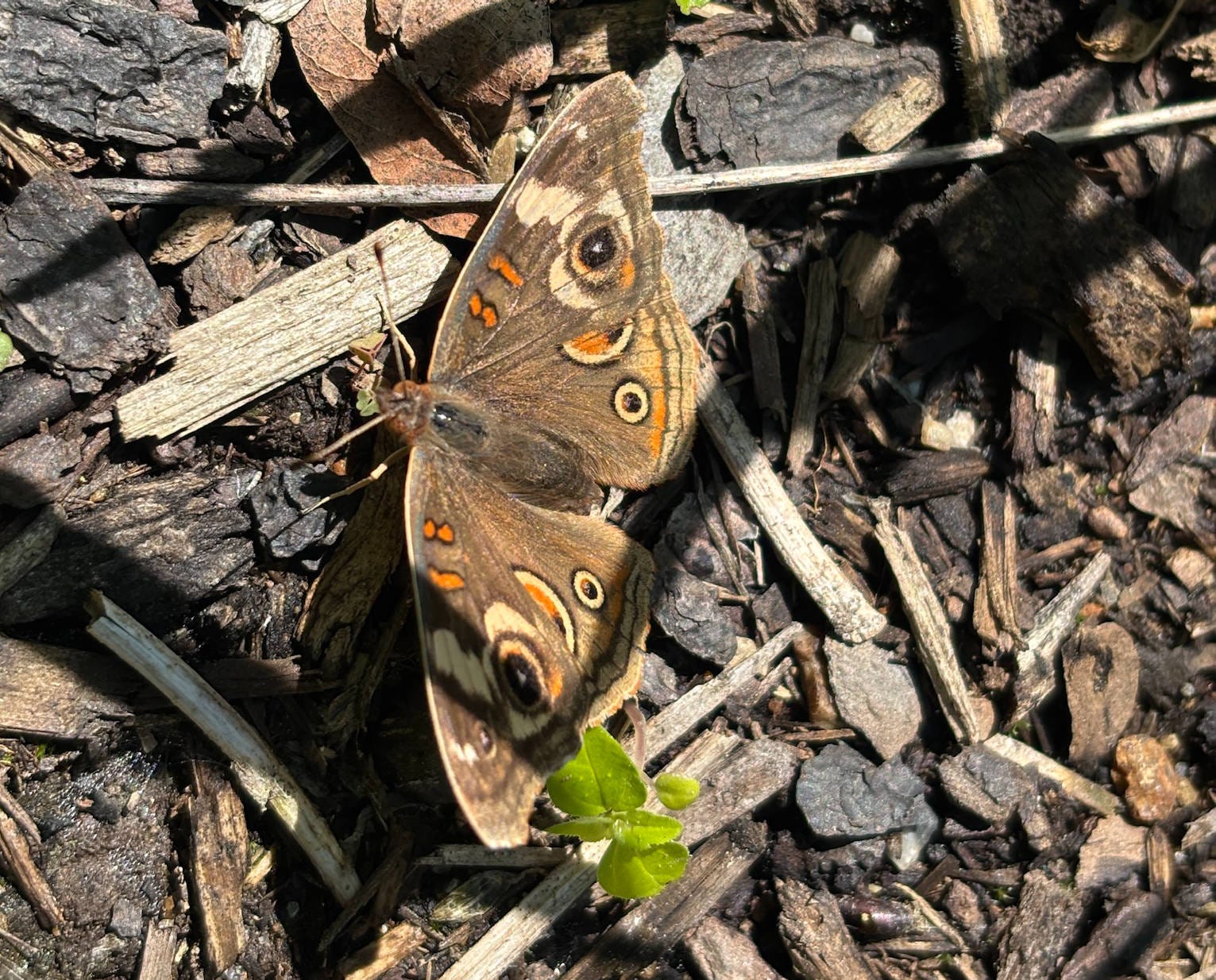
Caterpillars are not the only beneficiaries of native plants. There are specialist bees that need the pollen of a few native plants (or just one). There are also gall wasp larvae, sawfly larvae, beetles, and aphids that rely on the plants they evolved with.
Most people I speak with aren’t super enthusiastic about aphids or anything involving the word “larvae.” This is probably why native plant enthusiasts, including Tallamy, focus on the more charismatic beneficiaries of native plants.
Probably the most popular example of “why native plants” is the Carolina chickadee. These birds feed their young caterpillars, spiders, and other soft-bodied insects. And they do it a lot. The oft-repeated number is that it takes 6,000-9,000 caterpillars to raise a clutch of Carolina chickadees. (More on this range later.)
So you can’t raise chickadees without a lot of insect biomass around. And native plants are, leaf for leaf, better producers of insect biomass than non-native plants. They make more caterpillars, spiders, and soft-bodied insects available for chickadee chicks.
So far I’ve written a lot about things eating and getting eaten. But “native” and “nonnative” seem more like labels for “it’s from here” and “it’s not from here.” Are we talking about ecosystems or where plants live?
The answer’s both. Obviously, plants don’t care about state or country boundaries, and neither do the things that eat them. But geography’s a good proxy for “evolved alongside local wildlife.” Black cherry (Prunus serotina) is an important tree for many plant-eating insects near me. I don’t need to know what they all are. Which is good, because it’s surprisingly hard to get an answer to the question, “Name all the bugs that eat this tree.”
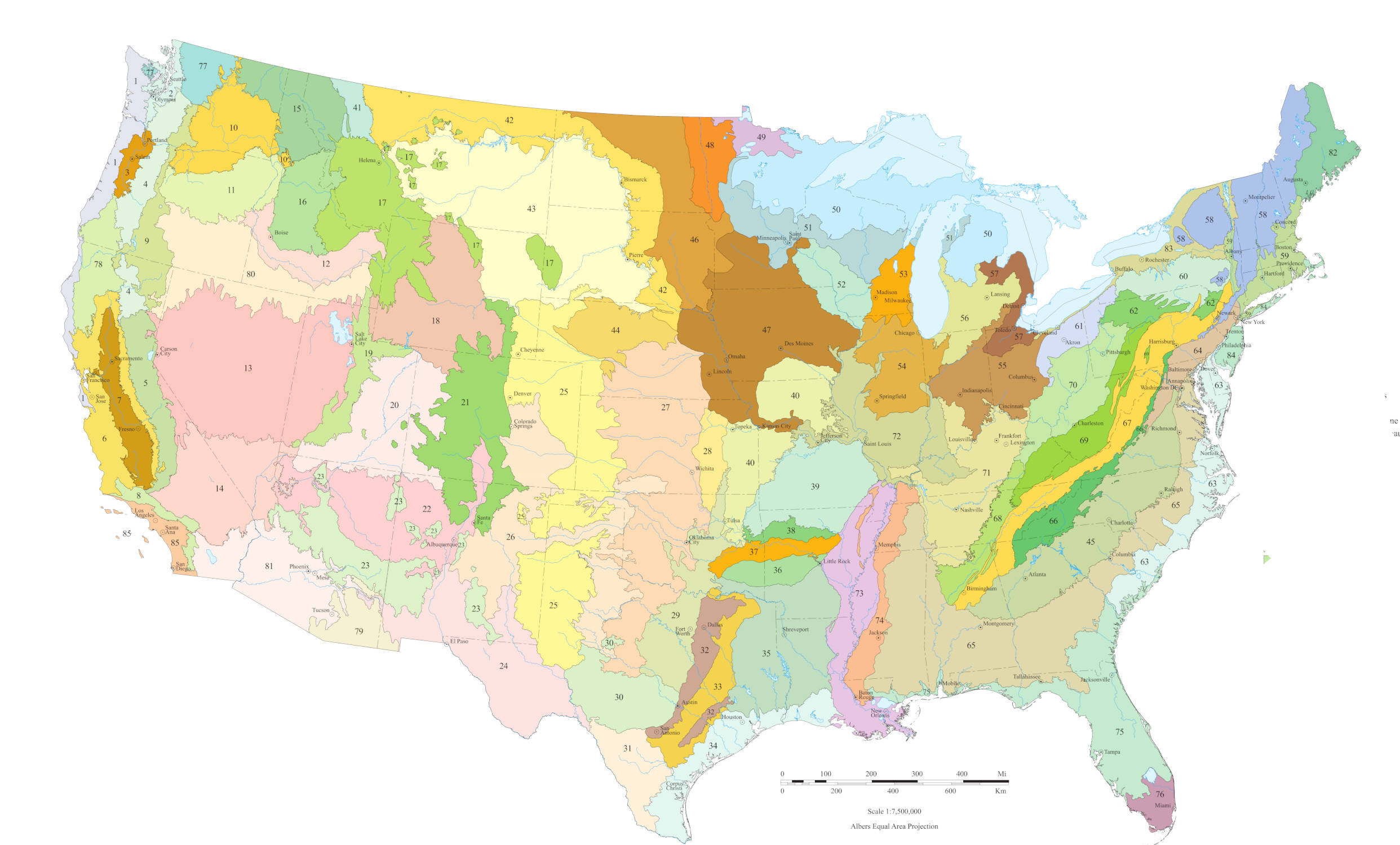
Real nerds will use something called an ecoregions map to learn where plants evolved. An ecoregion’s a region where the conditions are fairly similar. You can do this on a large scale, like “eastern temperate forest,” which covers the easternmost third of the U.S. Or you can look at a much smaller region, such as the “coast range,” which covers a narrow strip of the U.S. west coast. (These are called level 1 and level 3 ecoregions respectively.)
The science behind native plant gardening is relatively new. It’s built on much older ideas, such as that insects evolved to overcome plants’ chemical defenses and that baby birds eat a lot of insects. But the specific body of research that powers today’s native plant advocacy is fairly recent.
A good chunk of native plant gardening talk has been generated by Tallamy and by people who studied or worked with him at the University of Delaware. These latter include Desirée Narango, Karin Burghardt, Adam Mitchell, Kimberley Shropshire, and Emily Baisden. The papers they authored, many with Tallamy as a contributing author, are more or less the foundation for native plant gardening today.
For example, Burghardt’s 2009 paper, one of my first encounters with this research, found that caterpillars (and birds) were much more common on native plants than nonnative plants. Narango’s research has found that the “abundance of both caterpillars and spiders declined as nonnative plant biomass increased” and that “curbing the spread and use of non-native plants” helps prevent insect populations from falling. Another of Tallamy’s students, Ashley C. Kennedy, conducted research on the importance of caterpillars for nesting bluebirds.
Other pockets of researchers beyond Tallamy and his collaborators have also emerged. For example, there’s Annie White’s dissertation on natives vs. cultivars (plants we’ve bred or selected to look a certain way), and the trial gardens at the Mt. Cuba Center. I wrote about their goldenrod trial a few weeks ago.
This work is less diverse than we’d like. It’s mostly conducted in the U.S. mid-Atlantic and northeast by a small, mostly-interconnected group of people. This isn’t sinister; it’s how academia works. You dedicate your life to researching something, and therefore others who are interested tend to seek you out.
But as a consumer of this research, I do wish there was more argument and disagreement. That’s how tires get kicked and knowledge made.
A 2015 Royal Horticultural Society (RHS) paper tested if there was a difference in insects “associating” with native and non-native plants in the U.K. They found that flowers provided resources for pollinators “regardless of the plants’ origin,” that “natives and near-natives” drew the most pollinators, and that exotic plants could “extend the flowering season.”
This paper focused on pollinators, not caterpillars. It also took place in another country. Those differences are good, even critical for what we know. And their results suggest, “Actually, exotics do have a place in the garden.”
Another example: a paper about coral vine (Antigonon leptopus) invading a Caribbean island ecosystem found that insect populations didn’t fall where the vine invaded, but they did change. They became “nearly indistinguishable” wherever the vine took over. This means some species suffered while the ones that happened to be well adapted to the vine thrived. This is a result that says nonnatives reduce insect diversity, not insect counts.
And finally, let’s return to the 6,000-9,000 caterpillars needed for a Carolina chickadee brood. This range number, which Tallamy cites in a 2021 paper, is based on a 1961 study by Richard Brewer. Brewer observed Carolina chickadees feeding their young about 2.6 times per hour for each chick. This 6,000-9,000 range is cited all over the place. (Google the phrase 6,000-9,000 insects.) And yet if you do the math using Tallamy’s constraints (16-18 days of feeding, feeding from 6 a.m.-8 p.m., 6-8 chicks per nest), the range should be 3,600-4,800 per brood.
This doesn’t change the main argument. Carolina chickadees feed their young a lot of insects, and native plants make this possible. But it’s a little scary how many places simply cite 6,000-9,000.
This is the uneven ground where advocacy adopts scientific findings. It’s also one reason we should root for more research and more perspectives. Currently, a few outsized studies and people dominate the landscape and tend to dictate the “conversation.”
The most forceful, or at least most cited, critique of native plant enthusiasm comes from Arthur Shapiro, a specialist in butterflies and moths at University of California, Davis. In 2003, he co-authored a paper that found that 34% of butterfly species used nonnative plants as host plants. He argued that ecosystems are more adaptable than native plant enthusiasts give them credit for.
It’s important that Shapiro did his research in California, a landscape highly modified by agriculture, and very different from Tallamy’s context in Delaware. This is the kind of opinion diversity that native plant discussions need. They push conversations forward. For example, Tallamy has responded to this, saying that Shapiro’s examples demonstrate host-range expansion, not host switching. Most insects, he argues, need to evolve, which takes time.
Another common critique of native plants is that “native” and “nonnative” are arbitrary categories, and the world is not so black and white. Peter Del Tredici, former senior scientist at the Arnold Arboretum, articulates a good version of this argument. He proposes that
any plant that can be documented as growing spontaneously in North America prior to 1800 should be considered a naturalized “American archaeophyte” with all the rights and privileges associated with being native.
It’s time for “amnesty” for the dandelion: while it’s “considered an invasive species by some people,” we should acknowledge that it’s been here in the U.S. for hundreds of years.
One last critique comes from people who, I suspect, conflate the often xenophobic politics of immigration with the language of “nonnative” and “invading” plants. If a plant’s here, this argument says, it must deserve to be here. It’s “natural.”
But the majority of nonnative plants didn’t choose to come here. They were brought here, usually by people in the horticulture industry, or perhaps by colonists, and often for ornamental or agricultural purposes. So if you take this position, you should at least wrestle with the idea that people moving plants around the world is fundamentally different from evolution doing it. (And yes, people are animals, but which other animal has a horticultural industry?)
Having acknowledged that nuance and critiques exist, I’d now like to do some eye rolling. As we’ve established, native plants are part of a larger conversation around preserving ecosystems. The major challenges within that conversation aren’t really the subject of argument. They’re also broader than just “plant native plants.”
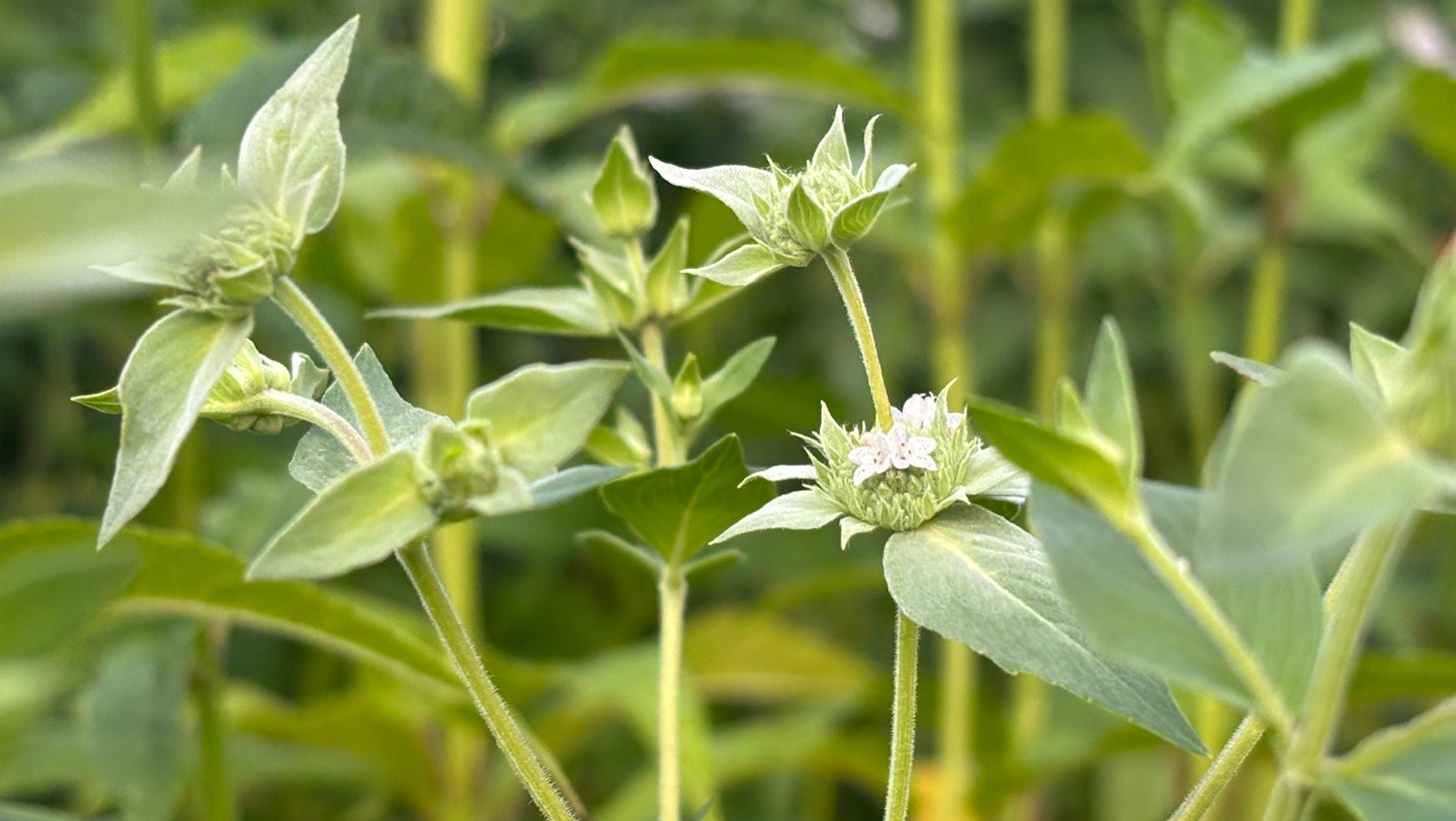
For example, nobody’s scrunching a brow about if white oaks are native all along the U.S. east coast (they are). Or if goldenrods support a tremendous number of insects (they do), or if wild strawberry (Fragaria virginiana) is an ecologically beneficial groundcover across most of the U.S. (it is).
But this is not what the critiques of native plants tend to focus on. People like to say, “What’s the threshold for how long you have to ‘evolve’ with wildlife to be ‘native’?” Or “what counts as ‘local wildlife’?”
There’s a time and place for such questions. It’s called graduate school. But they’re questions about the edges, not the really important stuff at the center. The conversations I have with my neighbors in the suburbs are about things like spraying for mosquitoes and not raking away all the leaves. Maybe I get the chance to recommend—or on a really good day, give away—a plant.
With respect to Dr. Del Tradici’s dandelions: no native plant gardener I’ve met cares much about dandelions. The real dandelion haters are the lawn fetishists. Native plant enthusiasts are a lot more irritated by lawn fetishists than dandelions.
Which points to something funny. Native plant enthusiasts tend to talk about a lot of things other than just native plants. We might group these issues together under a banner like “suburban land management,” which is perhaps less interesting than “native plants.” They include things like reducing the size of your lawn, not spraying for mosquitoes, and not raking away all the leaves. It makes sense that native plant enthusiasts care about these issues. They, like choosing native plants, are a reaction to typical suburban landscaping practices. Tallamy’s books are full of suggestions like, "turn off lights at night” and “reduce the use of pesticides.”
This is one obvious reason there’s potential, sometimes explicit, conflict when native plant lovers talk about native plants. The native plant lover thinks many typical suburban gardening practices are bad. The implication of my definition of a native plant—things local wildlife need—is that choosing a nonnative when you could choose a native is a missed opportunity. Thus these conversations include an element of judginess, of “you did it wrong.”
Of course, native plant gardeners are also gardeners. We enjoy zinnias and strawflowers and cosmos. We’ve probably put in a hosta or two. Most of us know that replacing an entire lawn in one single project is a recipe for overwhelm. And we love talking about the plants we love. We usually try to be practical about The Work.
Most of my neighbors don’t spend a lot of time thinking about supporting insects and birds. (And I don’t likely spend as much time as they’d like thinking about the subjects they care about and advocate for. There’s only so much time in the day.) These folks might dedicate the minimum possible energy to their outdoor spaces, just enough to “fit in” with the culture of their neighborhood. Perhaps they pick out something pretty on a whim at the hardware store every so often.
This type of person, I think, changes when the plant inventory at Home Depot changes, or when their neighbors’ yards change. The “native plant conversation” with this person might be that they compliment some little meadow area I have when they walk by with their dog. “Do you want one of the yellow ones?” I say. “Bees love them!” That’s a highly successful “native plant conversation.”
Is this sad? Perhaps a little. It’s always a little sad to learn that the person you’re speaking to is less enthusiastic than you about something you care about. But it does help set expectations about what a reasonable level of enthusiasm, interest, and action might look like.
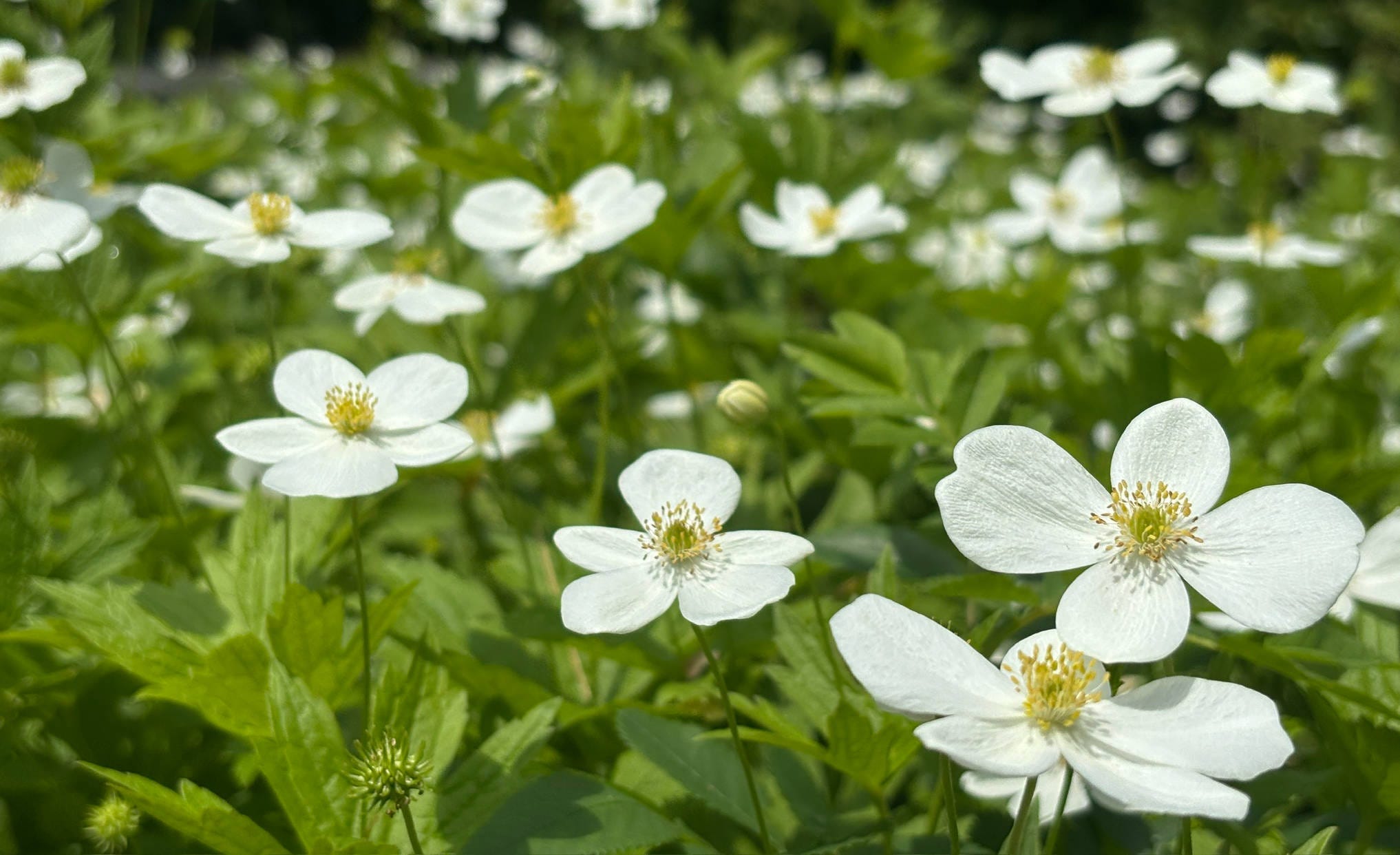
I recently had a neighbor tell me he wants to remove “all that stuff at the back of the yard that’s an eyesore.” He was talking about a stand of mugwort (eastern Asia and north Africa, listed as invasive in several states) that crosses our properties. Of course I want to help with this. I’ll even suggest a few native replacements that are a little easier to manage, that don’t look like “an eyesore.” I don’t need to mention ecoregions at all—if I can help myself.
At least my heart’s in the right place.
No posts
Comments
Nothing yet. Say the first thing.
Sign in to join the conversation.