
January is all about reconnecting with our feet, and this conversation wouldn't be complete without addressing the role of footwear.
If you're someone working on strengthening your core or you often experience foot cramping, it's essential to recognize how improper footwear can detrimentally impact your foot's structure, leading to system-wide repercussions. Such footwear not only has the potential to weaken your core but also heightens your risk of foot cramps with each step. Continue reading to learn more.
We'll begin by exploring foot cramps. Dr. Ray McClanahan, an esteemed podiatrist and the inventor of our studio’s favorite toe spacers, Correct Toes, divides the causes of foot cramps into two categories: 1) medical reasons, such as electrolyte imbalances, poor circulation, side effects of medications, and nerve issues; and 2) muscle imbalances caused by inadequate footwear.
While medical reasons are legitimate, Dr. Ray notes that most foot cramps stem from muscle imbalances caused by improper footwear. This is a common observation at Pilates in Common as well. New Pilates practitioners who haven't yet strengthened their feet or switched to our recommended footwear brands tend to experience more frequent cramps. To learn more about Correct Toes, how to select properly fitting shoes, or to discover our favorite footwear brands, check out our blog post “Pilates for Your Feet!” This post also includes a video with exercises to help correct common muscle imbalances found in the feet.
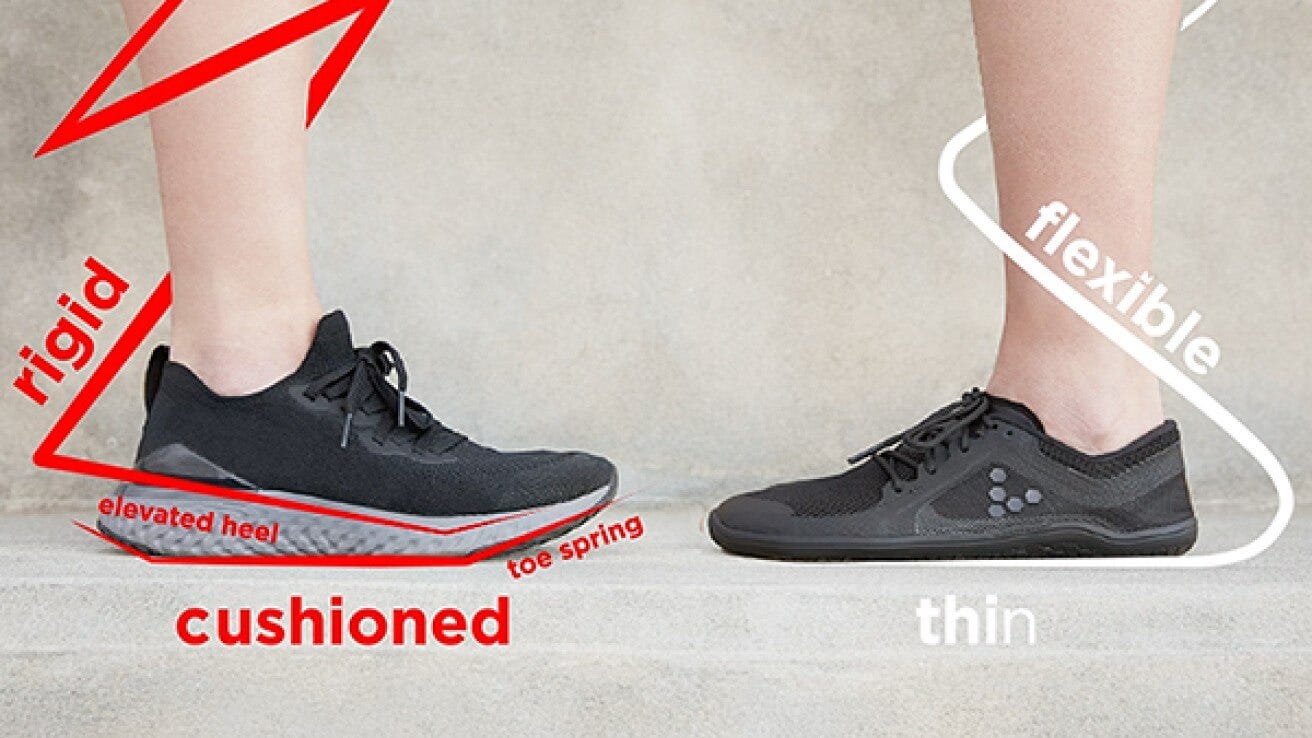
How exactly do conventional shoes cause muscle imbalances? There are three notable differences between a conventional shoe (left) and a minimalist or "barefoot" shoe (right) in the picture above:
Elevated heel: The left shoe has an elevated heel, often marketed as beneficial. This design keeps the calf muscles contracted, leading over time to chronically shortened muscles. Shortened calves impair your ability to flex your ankle, a key component of proper gait that allows you to lift your foot. Insufficient ankle dorsiflexion forces other muscles, often the hips, to compensate—resulting in "tight" hips that are more about foot-originated muscle imbalances than actual hip problems.
Toe Spring: This feature, typically touted as beneficial, holds your toe joints in prolonged extension (toes pointing upwards). The right shoe, lacking a toe spring, allows the toes to remain flat, promoting healthier foot mechanics. Prolonged toe extension from toe springs can lead to shortened toe extensors on the top of your foot, potentially causing hammer toes as the body compensates by trying to flex the bottom of the toes.
Cushion: Thick cushioning in shoes is promoted for comfort but disrupts the natural gait cycle. The soles of your feet are packed with nerve endings that sense the ground, providing crucial sensory feedback to your brain for movement initiation. Excessive cushioning mutes this feedback, diminishing proprioception and altering your body's natural movement patterns.
TL;DR: Conventional shoes with elevated heels, toe springs, and thick cushioning can cause muscle imbalances by shortening calf muscles, holding toe joints in extended positions, and muting sensory feedback from the feet. These features disrupt natural foot mechanics and gait, leading to compensatory changes in other muscles, like the hips, and altering overall body movement patterns.
These imbalances can escalate up the kinetic chain. When the feet suffer from muscle imbalances or are constrained by improper shoes, instead of feet propelling you forward, you might find yourself arching your mid-back to "hoist" your body forward. This arching leads you to move from your stomach rather than your feet, overstretching the front of your diaphragm and compressing the accompanying posterior side of the thoracic spine. The diaphragm, crucial for both respiration and core stability, becomes over-lengthened, impacting its function and your overall core strength. For a concise overview and visual explanation on this concept, check out this video:
If you're experiencing foot cramps, tight hip flexors, or back pain, reconsidering your footwear could reveal how a change at the base can bring system-wide benefits from the bottom up.
Did this blog post spark your interest? Learn more about our Pilates Studio by visiting out website at www.pilatesincommon.com or check out our YouTube channel here. Subscribe below for alerts on new posts!
No posts
Comments
Nothing yet. Say the first thing.
Sign in to join the conversation.