
ANNOUNCEMENT FOR PAID SUBSCRIBERS ONLY: Our next LIVE one-hour chat will take place on Tuesday August 11, 2026, at 11am Eastern.
Please reserve your spot today by sending me an email to confirm!
The “Whopper Guarantee “Building Trust or Just Hype
Burger King wants you to believe it just invented something revolutionary. On July 20, the company announced that any customer unhappy with their Whopper can get it remade on the spot and walk away with a coupon for a free one on their next visit, redeemed via a QR code tucked inside the box. It’s called the “Whopper Guarantee,” and it’s rolling out alongside a new manager role, the “Your Way Champion,” a dedicated staffer whose whole job is to make things right when they go wrong. In their press release announcing the new role they frame the position as “a reimagined restaurant manager role designed to empower restaurant leaders and put the guest experience first”. Simply put, it renames the title of store manager, giving them new uniforms and a new mandate to take better care of their customers and be guest-facing. Wait! Isn’t that what any good restaurant manager is supposed to do anyway?
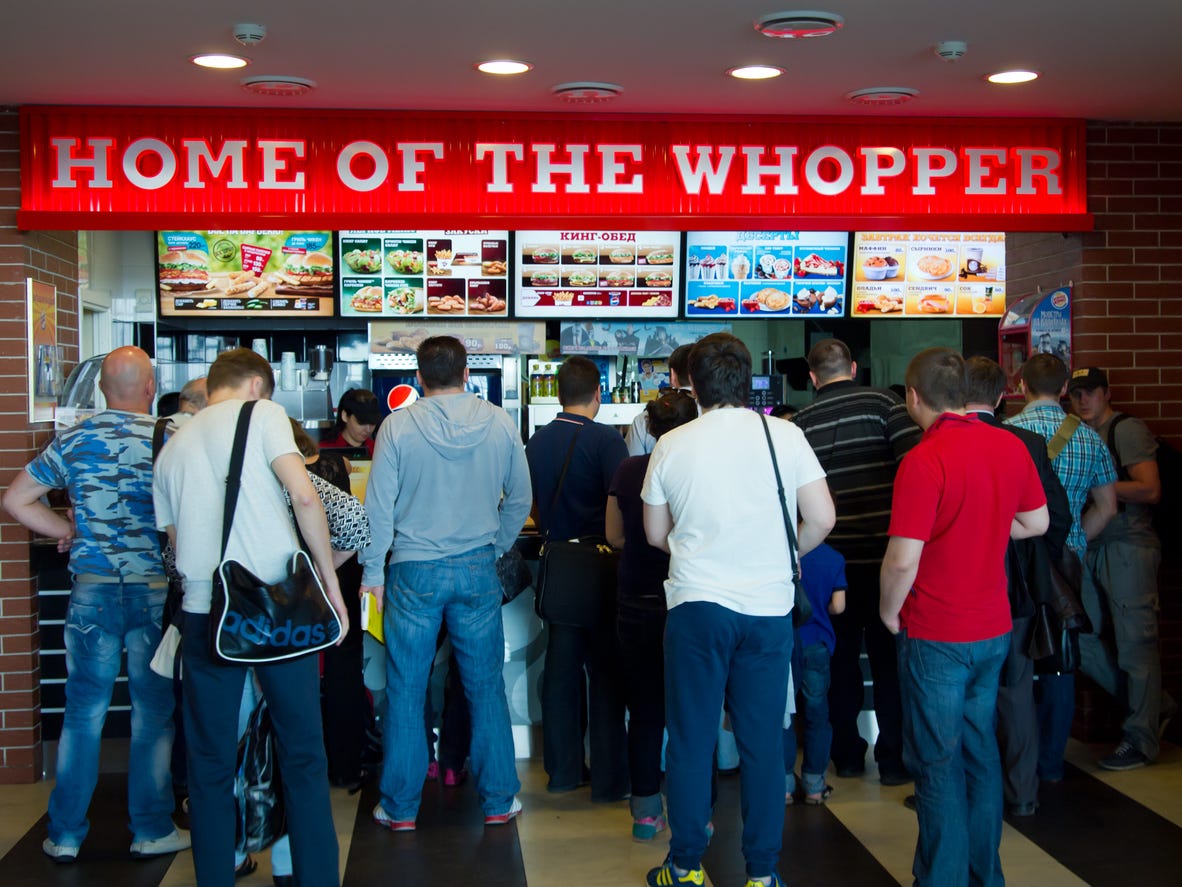
Walk into almost any fast-food restaurant in America and tell the counter person your sandwich was wrong, cold, or just not what you expected, and nine times out of ten, they’ll fix it or refund you. No QR code, no fine print, no press release required. It’s an unwritten rule that’s existed for decades, the same informal contract we have with the supermarket down the street: if the product disappoints, you bring back the receipt (or don’t even need one) and you get your money back. Grocery retailers have quietly operated this way forever, some formalizing it, like Aldi’s “Twice As Nice” guarantee, which refunds and replaces a product with a receipt and the empty package within 90 days.
When I worked at McDonald’s as a 16-year-old, and later at Howard Johnson’s during college summer breaks, we were trained the same way: if a customer complained about their food in any way, you gave them their money back or you replaced it, full stop. It’s just the basic understanding that a dissatisfied customer walks out the door and doesn’t come back, so you make it right on the spot. That was standard operating procedure decades ago, and its still how most fast-food counters handle a complaint today, guarantee or no guarantee.
What Burger King is actually doing is going one better than that old training-manual rule: instead of just remaking the sandwich or refunding it, they’re also handing you a coupon for an extra Whopper on a future visit– the lure to come back for a second (free) sandwich in the future.
What Burger King has done is to take a service norm that already existed informally and repackage it. This is smart marketing. What’s left is a satisfaction guarantee wrapped around a single menu item, with fine print, that excludes the Impossible Whopper and the Whopper Jr., runs only through August 31, and limits redemptions at one code per phone number. This is a promotional campaign using a satisfaction-guarantee as a short-term headline.
The Whopper is Burger King’s most beloved item and, according to The Takeout, sells around 1.3 billion units a year worldwide. It’s the flagship, the thing Burger King most wants people to order, and the sandwich its brand equity is built on. A guarantee on the Whopper protects and promotes the crown jewel; a guarantee across the entire menu of chicken sandwiches, nuggets, fries, shakes and more, is a very different cost and operational proposition, and one that dilutes the focus on the one item Burger King most needs you to associate with quality. Don’t expect the guarantee to expand chain-wide beyond August 31st. This is about defending and re-energizing the Whopper specifically, not about Burger King becoming the fast-food industry’s refund department.
I am concerned about what wasn’t said in the press release. Is BK corporate is subsidizing these redemptions or is it leaving the 19,000 independent franchisees to absorb the cost of every remake and every free Whopper coupon at the register? There is no clarification on the website or in the press, and this is important. In franchising, companies tend to announce loudly when they’re picking up a tab that would otherwise land on operators; the absence of that language here suggests this is likely running through store-level P&Ls, the same way most national promotions do. Back in 2019, Carrols Restaurant Group, the chain’s largest operator, disclosed an $8.2 million net loss for the year tied to a Whopper value-meal discounting error, after mis-stacked promotional discounts wiped out roughly $12.4 million in restaurant sales over several months. That was a systems mistake rather than a guarantee program, but it’s the clearest illustration on record of how quickly a national Whopper promotion can hit a franchisee’s bottom line, and the National Franchisee Association (an independent trade organization that primarily represents and advocates for Burger King franchisees in the US and Canada) exists in large part to represent operators when headquarters designs an offer that hits their bottom line.
Guarantees on signature items follow a competitive logic: once one major chain puts its flagship product behind a public promise, it becomes harder for rivals to stay silent, especially with order accuracy and consistency being the exact complaints customers have been airing across the entire QSR category. Watch for a McDonald’s Big Mac guarantee, a Wendy’s Baconator promise, or something similar from Popeyes or Chick-fil-A around their signature sandwiches within the next year. Burger King is also explicitly framing this as a play to win back customers from McDonald’s.
McDonald’s is going to jump on this. I say that with real confidence, because we’ve already watched this exact dynamic play out this year and it was Burger King throwing a quick punch at McDonald’s. Back in early February, McDonald’s CEO Chris Kempczinski posted a promotional video of himself taste-testing the chain’s new Big Arch burger, taking a noticeably tiny bite and repeatedly referring to the sandwich as a “product.” The clip sat largely unnoticed for weeks before it went viral in early March, drawing waves of mockery across social and traditional media alike, and Burger King didn’t let the moment pass. Within days of it blowing up, BK president Tom Curtis posted his own video taking a large, sauce-smeared bite of the newly revamped Whopper, quipping that the only thing missing was a napkin which was widely read as a direct jab at Kempczinski. Wendy’s and KFC piled on with their own taste-test videos within the same week. The lesson for the Whopper Guarantee: Burger King has already proven this year that it moves fast and publicly when there’s an opening against McDonald’s. There’s no reason to think McDonald’s, still smarting from the Big Arch episode, would sit quietly while BK claims the “we stand behind our food” ground first. After all, as the saying goes, revenge is sweet and it comes quickly when your competition is watching your every move.
Back in 1989 Hampton Inn gave away roughly $6 million in free rooms to guests who invoked its 100% Satisfaction Guarantee and tracked more than $41 million in repeat business directly attributable to it, a nearly seven-fold return. By 1994 alone, Hampton estimated the guarantee contributed $12 million in net incremental revenue in a single year, with company research finding that 9% of guests who knew about the guarantee but never used it said it was the reason they chose Hampton over another hotel in the first place. The cost of honoring every claim ran to just about 1% of total revenue. That’s eye-opening and cost-effective.
Domino’s built its brand in the 1980s on a “30 minutes or less” delivery guarantee, complete with the Noid character warning you not to slow the driver down. Domino’s dropped the guarantee in the early 1990s after a string of lawsuits tied to delivery drivers speeding to beat the clock, including a fatal accident that led to a multimillion-dollar verdict.
On the consumer psychology side, a peer-reviewed study of French shoppers found that a money-back guarantee measurably increased preference for a retailer’s private-label orange juice over a national brand, proof that a guarantee can function as a quality signal, not just a refund policy, especially for every day, low-risk, repeat-purchase categories like food. Aldi has said as much directly about its own guarantee: Bridget Kozlowski, the company’s director of communications, told Parade that the “Twice as Nice Guarantee was inspired by the commitment Aldi has to quality and customer satisfaction,” and reflects the company’s confidence in the private-label products that make up roughly 90% of what’s on Aldi’s shelves. Marketing trade coverage points to the same trial-risk logic for Olipop’s 45-Day Satisfaction Guarantee, which lets a shopper try a new flavor with a refund, replacement, or flavor swap if it disappoints. Both are consumer product examples of the same idea driving the Whopper Guarantee: lower the perceived risk of trying something, and you improve trial and reorder rates.
The Whopper Guarantee is smart, low-risk marketing and presumably will cost Burger King very little. Most customers won’t invoke it, and those who do get a free sandwich that costs the company pennies on the dollar relative to a lost customer. All the while it generates positive press coverage, social chatter, and a renewed reason to talk about the Whopper - specifically at a moment when Burger King desperately wants to bring traffic back to its restaurants.
Will it move the needle on Burger King’s traffic and same-store sales? Modestly, and mostly among people who were already Whopper eaters and needed a reason to come back rather than defect permanently to the Golden Arches. The bigger and more interesting story is whether Your Way Champion an actual, accountable, in-restaurant service recovery is well executed and becomes permanent. Burger King just told 1.3 billion annual Whopper buyers it’s betting on both.
Give credit where it’s due: New Jersey Governor Mikie Sherrill signed the Fair Price Protection Act into law this week, and in doing so made the Garden State the first in the nation to combine two things consumer advocates like me have been pushing for years: a ban on surveillance pricing, and a moratorium on electronic shelf labels (ESLs) in grocery stores. I’ve been writing about the opportunities and risks of algorithmic and personalized grocery pricing for a long time, and I want to say clearly: this is a big deal, and Sherrill deserves real credit for signing it.
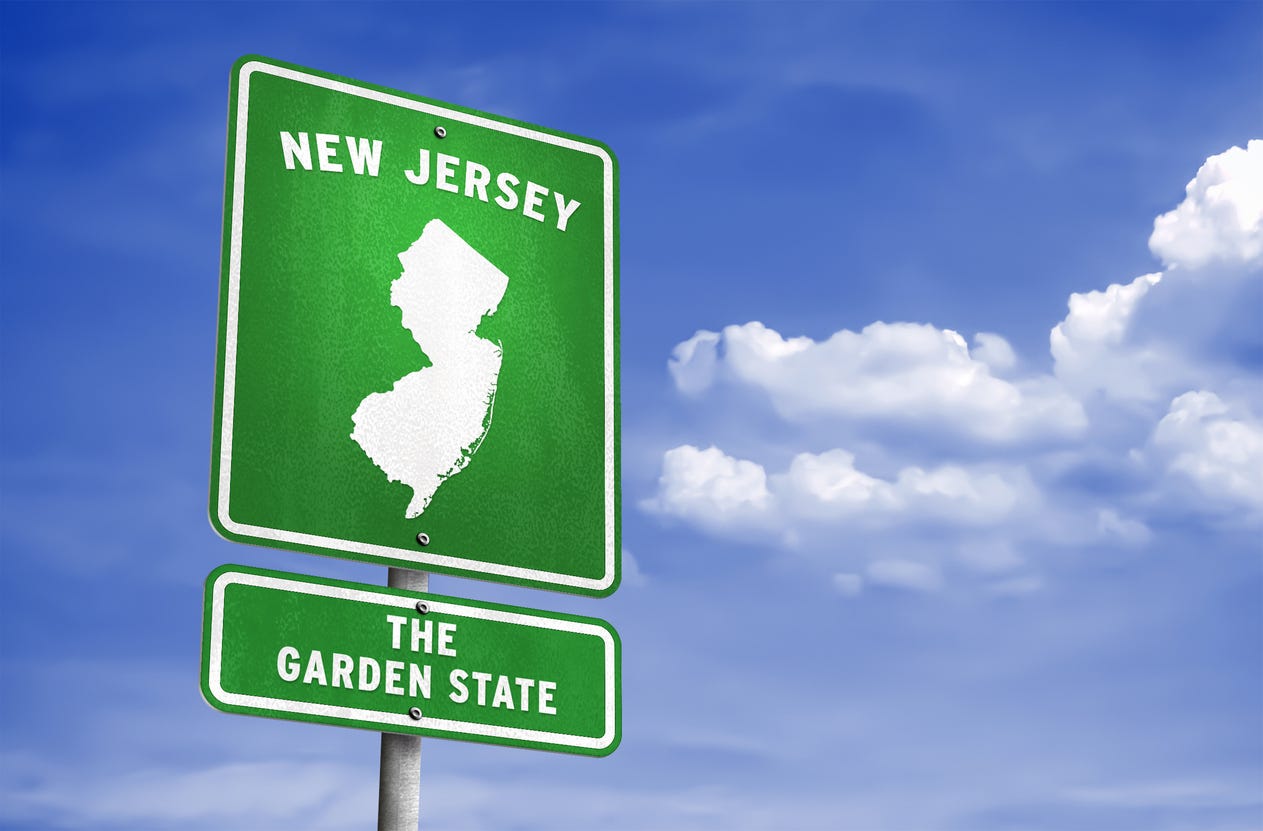
The Fair Price Protection Act makes it an unlawful practice under New Jersey’s Consumer Fraud Act for any retail food store or third-party grocery delivery platform to use personalized algorithmic pricing, surveillance pricing, or any pricing strategy that varies the price of groceries based on a shopper’s personal data. Going a step further it includes based on a shopper’s personal data - browsing history, real-time location, inferred family size, income. On top of that, the law imposes a one-year moratorium on the new use of electronic shelf labels statewide, the digital screens that let retailers change prices instantly from a central computer instead of swapping paper tags by hand. Existing ESLs already in stores can stay, but retailers can’t newly deploy them for the duration of the moratorium. Importantly, the law does carve out normal, legitimate discounting: bona fide sale prices, loyalty program benefits, and pricing for broadly defined groups like teachers, veterans, or senior citizens are all still allowed. It’s a ban on secretly charging two different people two different prices for the identical carton of say, eggs, based on what a company’s algorithm has decided they’re willing to pay.
New Jersey isn’t the very first state to touch this issue. Maryland and Connecticut both passed surveillance pricing bans earlier this year, and New York’s version is currently sitting on Governor Hochul’s desk. But New Jersey is the first to pair the surveillance pricing ban with an actual moratorium on the ESL hardware itself, which is why the UFCW and other advocates are calling it a first-of-its-kind law. Banning surveillance pricing addresses the practice; pausing ESL rollout addresses the infrastructure that makes the practice easy to scale in the first place.
This legislation has been building for months, not appearing out of nowhere. Twelve states, including New York, have introduced bills to ban electronic shelf labels and surveillance pricing in grocery stores and California, Illinois, and Massachusetts are all actively weighing similar legislation New Jersey’s law now becomes the template other state legislatures will study, in the same way Maryland’s and Connecticut’s earlier bills shaped New Jersey’s own drafting process. Expect the ESL moratorium piece specifically to be the more contested addition as other states debate their own versions it’s one thing to ban a pricing practice, it’s another to pause a piece of retail hardware that companies like Kroger, Walmart, and Amazon-owned Whole Foods have already invested heavily in rolling out.
I’d also flag that this fight isn’t without real industry pushback. The National Grocers Association, which represents independent grocers, sent Governor Sherrill a letter on July 17 asking her to amend the bill before signing, specifically requesting the removal of the ESL moratorium, arguing it could create unintended consequences for independent retailers trying to compete. The New Jersey Food Council raised similar concerns that the bill’s language could inadvertently sweep up personalized coupons and loyalty rewards that shoppers actually want. Sherrill signed it anyway, which tells you where she’s placing her bet on the affordability politics of this issue.
A GBAO Strategies survey conducted for the UFCW found that 58% of Americans say digital price tags would make them less likely to shop at a store that uses them, while just 3% said ESLs would make them more likely to shop there. On the pricing question specifically, 65% of respondents believe stores would use digital price tags to increase prices, versus only 3% who think they’d be used to lower them. And when asked directly, 67% supported banning both electronic price tags and surveillance pricing outright. That’s a consistent, strong majority of skepticism, and it isn’t confined to one political party; the pollster noted the numbers don’t vary meaningfully across party lines.
The empirical research on actual pricing behavior doesn’t support the fear driving that skepticism, at least not yet. Researchers at UC San Diego’s Rady School of Management studied five years of pricing data at a grocery chain before and after it adopted electronic shelf labels and found virtually no surge pricing before or after the switch with essentially no meaningful change in pricing behavior at all. The study’s authors argue grocery is a thin-margin, loyalty-dependent business, and unexpectedly hiking prices on shoppers risks sending them straight to a competitor. Exactly the dynamic that should, in theory, keep this technology from being abused the way critics fear. Kroger has publicly and repeatedly denied using its digital tags for surge pricing.
I’ve spent decades covering how retailers price groceries, and I think what’s happening here is more about consumer trust that’s already been badly eroded by years of inflation, shrinkflation, and the sense that shoppers are being quietly nickel-and-dimed. Since 2019 grocery prices are up 33 percent!
A UC San Diego study examined data of one chain over five years and found no price gouging. But that was one chain in the infancy of Electronic Shelf Labels. My question is a simple one. Once the technology is in place, who’s to say that on a hot summer day the price of cold beverages isn’t increased? Consumer trust doesn’t wait for peer-reviewed studies to catch up, and 58-67% of Americans telling pollsters they don’t trust this technology, consistently, across multiple survey waves, is a signal retailers dismiss at their own risk. Sherrill and the New Jersey Legislature just bet that getting ahead of that distrust, even at the cost of pausing a technology retailers say is mostly benign, is good politics and good policy. Watch New York, California, and Illinois closely. If Hochul signs New York’s version in the coming weeks, this stops being a New Jersey story and becomes a Northeast corridor story, and from there it moves fast.
Thanks for reading The Lempert Report!
📣 BOOK PHIL FOR YOUR FALL 2026 EVENT
For more than three decades, Phil Lempert has helped food industry audiences see what’s coming before it arrives — in consumer behavior, supply chain, retail strategy, and the forces quietly reshaping the grocery store. If your conference, company meeting, or industry event needs a keynote that connects the dots between data, culture, and the shelf, Phil is booking fall 2026 and early 2027 dates now.
Topics include:
• The Five Forces Reshaping Food — and What Retailers Must Do Now
• Consumer Trust in the Age of AI, Misinformation, and Label Confusion
• The GLP-1 Revolution: How Weight-Loss Drugs Are Rewriting the Grocery Store
• The Polycrisis Shopper: Understanding Today’s Stressed, Savvy Consumer
Each of Phil’s presentations are customized to your organization and audience needs!
Comments
Nothing yet. Say the first thing.
Sign in to join the conversation.