
On July 24, USDA said it’s lifting the ban on Mexican cattle imports. The ban has been in place more than a year. The Douglas, Arizona port reopens August 24, two New Mexico crossings to follow later. Notice who’s missing. Texas. The biggest cattle state in the country doesn’t have a reopening date at all, and nobody in Washington DC seems to be in a hurry to give them one.
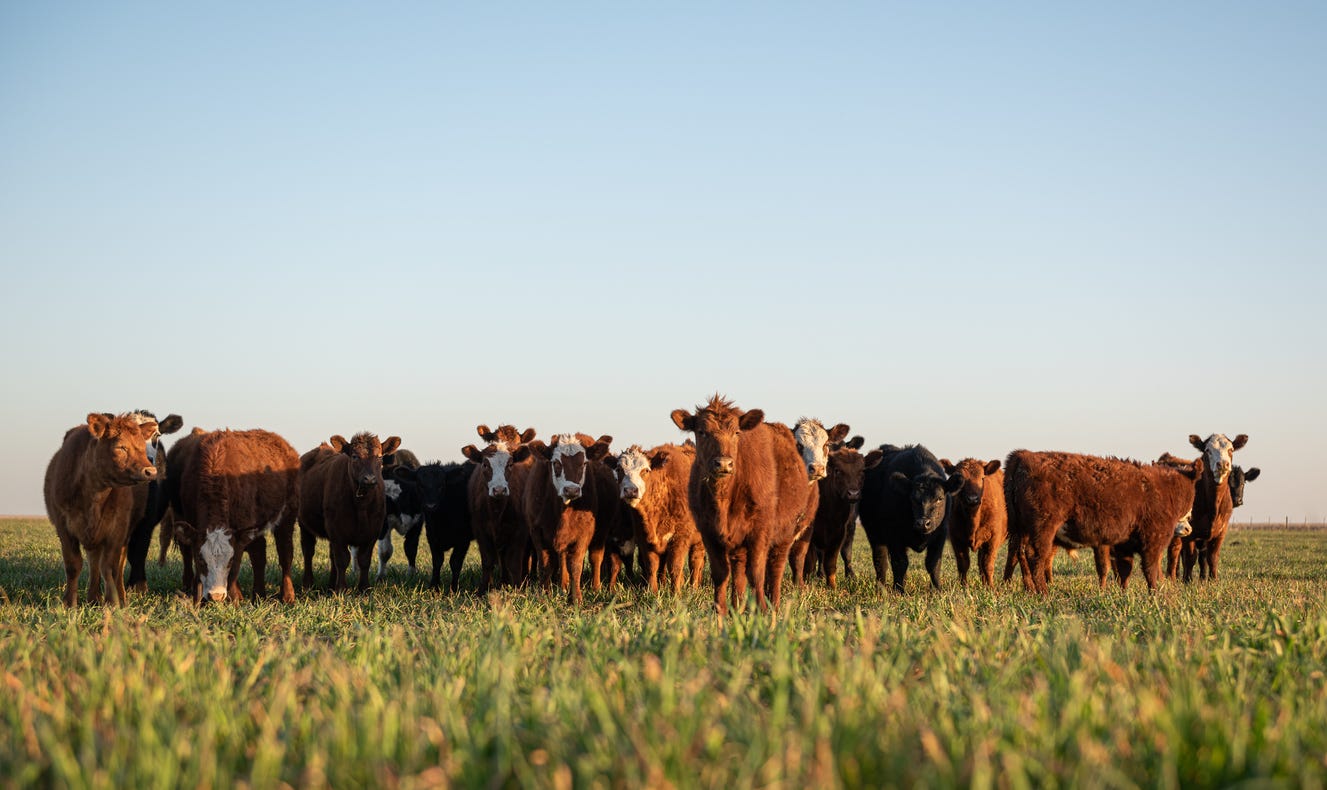
The ban was supposed to keep out the New World screwworm, a parasite whose larvae burrow into living flesh and can kill an animal if nobody catches it in time. Sounds like something out of a horror movie, and it basically is one if you’re a rancher. Screwworm showed up on Texas farms and in southeastern New Mexico in June, first U.S. detections since 2017. And here's where things stand as of this weekend: 42 confirmed cases since the outbreak started, 41 of them in Texas, one in New Mexico. Only nine are still active. That's actually the number that let Rollins say yes to a reopening date at all — nine active cases is a very different conversation than forty-two, and it's worth remembering that distinction next time someone tells you the outbreak is "over" or "out of control." It's neither. It's contained, barely, and containment is not the same thing as solved.Now the border’s reopening, not because anyone solved the screwworm problem, but because keeping it shut wasn’t solving it either, and beef prices kept climbing.
Agriculture Secretary Brooke Rollins held the line for a long time. Even after she admitted that the ban was helping push beef prices to record levels. That put her at odds with her own administration who wanted this done months ago, ahead of the midterms. Texas Agriculture Commissioner Sid Miller called the move welcome, and also said it's too late. His words, not mine: "USDA has spent more than a year reacting instead of getting ahead of the problem." Hard to argue with him on that one when his own state is still sitting on the sidelines.
Let’s look at the big picture, because the U.S. numbers only tell half the story. Mexico's outbreak has spread to 29 of its 32 states, with something like 1,792 active cases south of the border right now. Forty-two cases here against nearly 1,800 there, that's the gap USDA is trying to manage, and it's also why Douglas is going first instead of anywhere else. USDA has flagged Sonora and Chihuahua as its lowest-risk states, the two with the strongest animal-health infrastructure on the Mexican side, and Douglas happens to sit right across from Sonora. This is USDA betting on the state actually built to catch this thing before it crosses.
I sold canned meats and cheeses through the Hunts Point and Newark meat markets for years before I ever wrote a word about food for a living, back when a handshake closed more deals than a contract did. One thing you learn fast in that business: where an animal is born and where it ends up on someone’s plate are two completely different chains of custody, and everybody outside the industry conflates them.
What’s crossing at Douglas isn’t a truck full of steaks. It’s live feeder cattle, i.e. young calves. Mexico has supplied somewhere close to 5 percent of U.S. feedlot placements over the past decade, more than a million head in a typical year before the ban, according to Mississippi State University Extension. Those calves get fattened on American grain, in American feedlots, slaughtered in American plants, under the same FSIS inspectors checking every other animal in the building. By the time that calf is finished, the food safety system covering it is ours.
FSIS runs periodic equivalence audits of Mexico’s inspection system, the one SENASICA administers, checking that it still lines up with U.S. standards. The most recent one on file covered a site visit from June 9 to July 3, 2025, and it didn’t flag major problems, in fact auditors described Mexico’s system as providing the same level of oversight FSIS expects domestically. Mexican plants shipping boxed beef straight into the U.S. need TIF certification, Mexico’s top federal sanitary standard, plus USDA sign-off on top of that. That’s a different pipeline than the feeder cattle crossing at Douglas, and honestly the more reassuring one, since it involves finished product inspected on both sides of the border rather than a live animal that still has months of life left in an American feedlot. That is, as long as there are inspectors at the border! Let’s not forget FSIS has lost somewhere around 900 employees since the start of this administration, roughly 9 percent of its workforce, and the 2027 budget proposal doesn't restore those positions. APHIS, the agency that actually does the screwworm surveillance and import inspection at these reopening ports, lost something closer to 20 percent of its staff in just the first few months of 2025. Meanwhile, complaints about the safety of meat, poultry, and egg products jumped almost 40 percent last year, from 1,443 to 2,016, according to a federal report covered by Investigate Midwest. The result: the agencies responsible for catching a problem, whether it's clenbuterol, screwworm, or something in the future, are doing it with fewer people than they had a year and a half ago.
The feeder cattle lane is where one real example lives: clenbuterol. Illegal here, illegal in Europe, but it’s shown up in parts of Mexico’s cattle feed supply, and it’s been tied to real human illness outbreaks and not just hypothetical ones. The U.S. Cattlemen’s Association put this on record back in 2020, pushing APHIS and FSIS for a full re-verification of equivalence on that specific point. I haven’t found anything suggesting clenbuterol is an active concern in this particular reopening, but my real concern is USDA’s inspection staff is already stretched thin, and if volumes come back as fast as the industry wants, that’s what I’m watching carefully.
Short answer: probably, but not for the reason most people think, and there’s less real data than you’d expect for a question this common. I can’t find a controlled sensory panel on “Mexican beef” versus “American beef”.
The topline is that its a breed story. And a cow’s diet story. Mexican production runs heavy on Brahman, Indo-Brazilian, Criollo-type cattle which zebu breeds built for hot, dry range, mostly grass-finished. American production runs Angus and Hereford, grain in a feedlot. Grain gets you the marbling that tastes rich and buttery. Grass on native pasture gets you something leaner, firmer, more mineral, gamey if you want to use the word tasters use and chlorophyll derivatives in the forage apparently have something to do with it. Corriente beef, a range breed you’ll find on both sides of the border, has scored right alongside Certified Angus Beef on aroma and flavor in trade tests, held up just as tender or better.
This is the part retailers and foodservice buyers should care about most, and it’s less encouraging than the headlines suggest. The border closure pulled roughly 1.2 million head out of the U.S. feeding system, according to CattleFax, and analyst Randy Blach has been telling the industry for months that reopening the border would eventually pressure prices back down, but not fast. Feeder cattle are still trading in the $360 to $370 range per hundredweight, and one Arizona port bringing back a fraction of that lost volume in phases isn’t going to undo a 74-year inventory low overnight.
None of this is really a safety story or a flavor story, not for most of what’s crossing at Douglas next month. Those calves spend the bulk of their lives here, eating our grain, checked by our inspectors, same as any other steer born in Nebraska. What this actually is, is a supply story, and a slow-moving one. U.S. cattle inventories are at a 74-year low. This reopening starts with one port in Arizona. While Texas, the state that would actually move real volume, keeps waiting. Watch for whether Texas gets its own port date before USDA’s next quarterly Cattle on Feed report — that’s the number that will actually tell us whether this reopening moved anything at all.
Comments
Nothing yet. Say the first thing.
Sign in to join the conversation.