
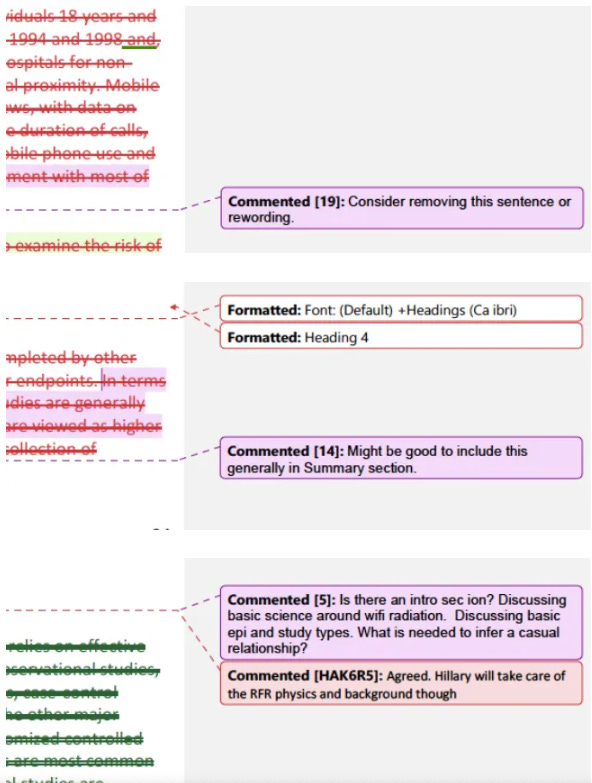
As discussed in Peter Anthony Cowan’s first article in this series, on New Year’s Eve, 2020, the Oregon Health Authority released a biased report basically dismissing the risk of harm to Oregon’s 600,000 schoolkids from the WiFi, tablets, laptops and cell phones proliferating in their schools. As detailed in May 2021 in my evisceration of the OHA effort published by The Washington Spectator, an OHA scientist deleted from the report’s first draft – simply crossed out – vast troves of evidence of potential risk from the Electromagnetic Fields (EMF) and radiofrequency radiation (RFR) these devices emit and receive. The OHA report was condemned by scientists worldwide who called for its retraction.
OHA has never challenged my article. Its sole response was to wish me “a great rest of the week.” But the article did outrage RFR safety advocates nationwide. It also caught the attention of Sen. Michael Dembrow, then the Chair of the Oregon Senate Committee on Education. One issue was that OHA withheld that damning first draft, dated November 3, 2020, from an avowed advocate’s public records request, a crime that Oregon officials ostensibly take seriously.
As confirmed by OHA, many harrowing statements – page after page discussing journal articles that found evidence of increased risk – were deleted by Deputy State Epidemiologist Ali Hamade, Ph.D. They vanished, never to be seen again. This ‘truth-telling’ first draft of the literature review was the document withheld. It blatantly contradicted the final report’s conclusion that there was insufficient evidence of RFR in schools being associated with adverse health effects. The evidence the first draft contained does not appear in the subsequent four drafts sent to RFR safety advocate Cynthia Franklin, Director of Consumers for Safe Cell Phones. Nor does that evidence appear in the final report.
In the fall of 2021, Sen. Dembrow posed eight trenchant questions ex officio to OHA, including how should Oregon employ the precautionary principle to lessen children’s exposure in schools, and what steps did OHA recommend to follow up the report.
Dembrow also asked, “Why was the first draft withheld from a formal public request for all drafts of the report?” OHA plucked a reply from air with no basis in reality – what on the playground is known as a lie. Yeah, a flat-out lie in writing to one of the two or three most important people in the state regarding schoolkids’ health.
OHA’s reply to Dembrow was attached to an email October 18, over the signature of an OHA Government Relations Senior Policy Advisor:
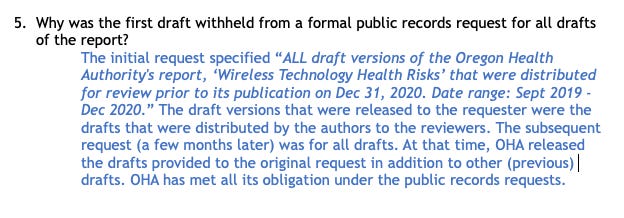
“The initial request specified ‘ALL draft versions of the Oregon Health Authority’s report, ‘Wireless Technology Health Risks’ that were distributed for review prior to its publication on Dec 31, 2020. Date range: Sept 2019 - Dec 2020.’ The draft versions that were released to the requester were the drafts that were distributed by the authors to the reviewers.”
Not true, as we will see. And yet knowing that, or so she should, just last week here in 2026, current OHA Director Sejal Hathi, M.D. dismissed the issue by doubling down on OHA’s 2021 response to Dembrow.
That one or more OHA staffers withheld that damning first draft while fulfilling Franklin’s public records request is surprising since, theoretically, a bad actor could go to jail for up to a year for violating the public records laws. While prosecution is almost unheard of, a government official might lose their job. The shibboleth of government transparency is honored in Oregon, or so we like to pretend.
In this case, however, when presented in 2021 with email and other documentary evidence that an alleged crime had likely been committed, the powers that be up and down the ranks of state government shrugged and turned away.
The first draft, the one with all the deletions of published papers’ links to potential harm, actually was distributed for review, and therefore, according to the language of her request, should have been sent to Franklin. André Ourso, JD, MPH, OHA’s Administrator, Center for Health Protection (a senior executive running six OHA departments in 2021), received a copy of the first draft, read it, and commented on it. He was not the author.
We know it was “distributed for review” to Ourso – as Franklin’s request delineated – because he made three comments on the first draft, as OHA acknowledges.
Wrestling with the story as April turned to May in 2021, I posed yet another series of questions to OHA, this time a dozen, including number six:
“QUESTION (6.) Who wrote the Green and Purple editorial bubbles in the margins of the report’s first draft, dated 11/3/20? Other editorial bubbles in that draft bear the initials “HAK” [Ali Hamade] – 29 of those – and “BRB” for intern Blake R. Buchalter, etc. But the Green and Purple bubble editorial comments in the 11/3/20 draft bear no initials. Who wrote the Green bubbles? Who wrote the Purple bubbles?”
On May 3, Jonathan Modie, OHA’s Lead Communication Officer, answered: “Purple is Andre Ourso; green is Ali Hamade.”
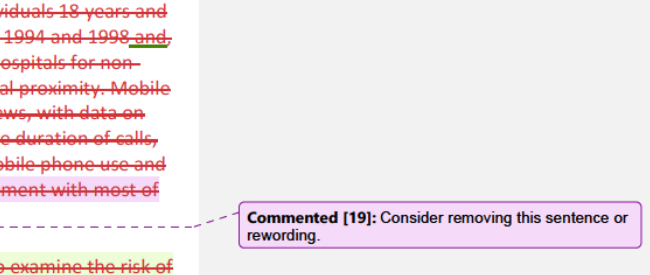
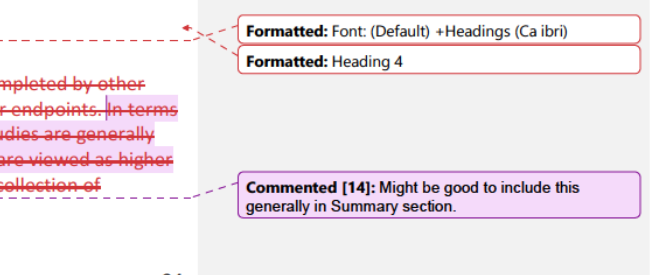
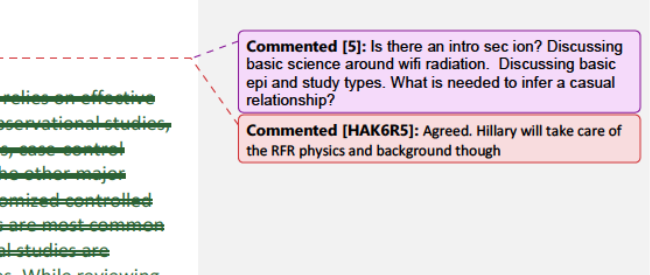
Not vast input, true, but the three purple editorial bubbles OHA identified as Ourso’s work prove that the first draft was distributed to him. That he offered editorial comments proved that he ‘reviewed’ it.
It was also distributed to intern Blake Buchalter and ‘reviewed’ by him; he offered many editorial comments. (Buchalter’s work, along with another intern’s, was overseen by Hamade and a second OHA staffer.)
In 2021 and 2026, both Buchalter and the second intern, who I see no reason to name fully, offered no reply to requests for comment. In 2021, I contacted Ourso, Hamade and Dean E. Sidelinger, MD, the State Epidemiologist, some dozen times each to no reply.)

I tried for weeks to determine how the first-draft withholding had occurred and what the consequences might be, emailing numerous detailed queries to OHA. Getting nowhere fast with OHA, I decided to broaden my inquiry. I first contacted a state police detective, then a senior assistant attorney general, then finally Governor Kate Brown’s General Counsel and Chief of Staff.
The legal issues regarding the document withholding are delineated in a query I emailed on April 14, 2021 to Lieutenant Cord Wood, an Oregon State Police detective in the Northwest Region. (I didn’t yet know that Ourso had authored the purple editorial comments, but that didn’t hobble my inquiry unduly.)
That’s because I did have, which I attached to my message to Wood, two emails Hamade sent in January regarding the records request. One of the OHA managers I’d been importuning was Central Operations Manager Keely L. West, J.D., a lawyer who oversaw records requests, among other functions. On April 8, I copied her on a pointed set of questions I sent to OHA’s then Director, Patrick Allen. The next day, OHA dropped the veil, West sending me a three-page PDF of Hamade emails. Veil dropped, Ali Hamade ended up under the bus. (I also sent Wood the report’s first draft so he’d know what the ruckus was all about.)
As West’s PDF showed, Hamade sent his first email January 13 to Ourso, two junior members of the SB 283 report team, and to Jeanne Windham, OHA’s Public Records and Internal Litigation Process Coordinator, a solid professional and former Montana state representative. Hamade was replying to a request that morning from Windham for “draft versions of this report.” Windham noted that the requester, Franklin, was associated with Consumers for Safe Cell Phones.
Hamade quickly replied:
Thanks, Jeanne.
All, I spoke with Jeanne for clarification. I have put what I understood to be the relevant ones – close to final drafts – in the following folder.
Please take a look and let me know if this makes sense or if you think some should be added or removed.
This was followed by a link to a folder Hamade labeled, in part, “completed report drafts.” (Though the word, “completed” perhaps served to try to cover Hamade’s tracks, the issue was moot since Windham informed him she could not open the folder.)
On January 20, Hamade sent a second email to Windham, Ourso and others, this time attaching the report’s last four drafts – anodyne compared to the damning first draft. He wrote:
I’m assuming that all are fine with the attached drafts.
If there are others, please let me know.
Thanks,
Ali
My query to Wood contained both of Hamade’s emails in the three-page attachment from Keely West that I sent him.
Hamade no naif, his emails are absurd, though they may have served to give Ourso and the others a heads-up. Either way, he was the Deputy State Epidemiologist with a Ph.D. and a post-doc Certificate in Risk Sciences and Public Policy. And he’d previously worked in senior positions in public health for the City of New York and the state of Alaska. Regarding the first email, he knew you can’t choose “relevant” drafts or add or remove drafts.
And the second, January 20 email in effect seems to say, look what I’m doing here, I’m assuming you’re all OK with this – right? Asking the others if there are any other drafts was, frankly, laughable. Hamade had made hundreds of editorial comments on the missing first draft. (And though I didn’t yet know it when I emailed Wood, Ourso had also commented on the first draft.)
My email to Wood discussed this and outlined two state laws. ORS 192.329, which requires all copies of a requested record to be given, and 192.355, which requires the dissemination of “preliminary” public records barring specific circumstances that don’t apply to drafts of a state health report. What’s more, 192.329 requires that if any record is deemed exempt from disclosure, the requester must be informed of their right to appeal. OHA sent Franklin no such notice.
(That the first draft was not exempt from disclosure is borne out by the fact that though it was withheld from Franklin in January, it was disclosed to me in March of 2021.)
In a subsequent email to Wood, I referred him to the state Attorney General’s Public Records and Meetings Manual from June 2019, pages 86 - 90. Referring to ORS 192.355, the manual states, “[D]rafts or incomplete records are not inherently exempt from disclosure.” It adds that legal withholding must be “based on something more than potential embarrassment to the public body or staff.”
Despite all that I laid out for him, the state cop wasn’t interested. Here’s his reply, sent to me May 7:
“Dan,
I have reviewed the information you provided and investigated the circumstances. I do not see evidence to support that a criminal offense occurred as alleged. It appears that Ms. Franklin asked for drafts circulated for review, which she received. The November 3, draft was not circulated to the review committee, but is notated by the author.”
No signature, no indication of his command, Good Night and Good Luck. (He also wrote that Franklin could appeal, and that any further questions on my part should be directed to OHA or the state Attorney General.)
First off, there was no review committee. Various folks lent their name to a faux review process, but there was no committee. (Two senior OHA staffers were roped in as ‘reviewers’ after the report was “set in stone,” I was told. But they did their fan dance weeks apart and offered no edits. See this Living Energy series, Part 4.)
What’s more, a glance at the report’s November 3 first draft that I sent Wood would alert him to editorial comments in three different colors. Three different commentators meant, in Franklin’s language, that this draft was distributed for review. More happened than it getting “notated” by some unidentified single author. Wood’s reply indicates no apparent investigation on his part directed to OHA, nor does it withstand scrutiny. There was no reply to three voice-mails last week here in 2026 left on Wood’s current work phone requesting comment.
But Wood’s email was at least germane – in the ballpark, anyway. Not so the response from the Oregon Department of Justice. Figuring his office a good place to start, I emailed Andrew C. Foltz, a Senior Assistant Attorney General and the DOJ Public Records Counsel.
The first line of my email: “I write regarding an instance of the withholding of a politically charged document by the Oregon Health Authority – an instance of withholding that OHA acknowledges.”
Betting that Foltz knew the law, I cut to the chase, cut and pasting twelve questions I had worked up and already sent to the Oregon Public Records Advocate. (The advocate properly replied that such alleged potential criminal matters fell outside his purview.) So some of my twelve questions to Foltz mistakenly referenced the Public Records Advocate. He still got the drift.
Here are the relevant questions I posed to Foltz, questions 8 through 12:
“QUESTION # 8: If it turns out an OHA staffer knowingly effected the withholding of a public document, what will be the response of the Public Advocate? [Cut-and-paste mistake, should read Attorney General.]
QUESTION # 9: If a state employee did knowingly withhold, should that person be dismissed?
QUESTION # 10: If a state employee did knowingly withhold a politically charged document in the arena of a risk assessment by the state’s public health agency regarding the health of almost 600,000 Oregon schoolkids, should that person face criminal prosecution under ORS 162.305 – see “conceals”.
QUESTION # 11: If concealing or withholding is indicated, what is the Public Advocate’s stance towards pursuing dismissal? [Same mistake, this sentence.]
QUESTION # 12: Prosecution?
I would like to interview you by phone, please. To fuel that interview, could you please type answers below the questions above into a reply email.
I appreciate DOJ’s attention to this matter, Mr. Foltz. It seems of some importance, and I look forward to hearing from you.”
Despite my inconsequential cut-and-paste errors, the sentence just above that concluded my email made my interest in the DOJ’s response clear.
Here’s Foltz’s eventual reply: “Good morning Mr. Forbes. I am unable to comment on this matter or address your questions.” Further straining his typing fingers, he referred me to the AG’s press office.
I then heard from the AG’s Communications Director, Kristina Edmunson. Though her words were in English, they might as well have been Venusian for all the sense they made:
“It’s always good to hear from you. I think perhaps you are trying to reach the Public Records Advocate? Andy Foltz manages and processes DOJ’s public records. It does not sound like the records you are trying get are from Oregon DOJ. Of course, if you have been withheld records from OHA, you are welcome to submit an appeal.”
Patting me on the head on my way out the door, she offered the URL to make an appeal. Foltz is an officer of the court and a senior DOJ attorney. He was copied on Edmunson’s reply and knew I was not trying to obtain any records. Rather, I was alerting the state Attorney General’s office to an alleged potential crime. Despite holding down a serious job, he allowed a spokesperson to fabricate a meaningless reply so they could go their merry way. At least Lt. Wood pretended to address the issue at hand.
Finally, in mid-August, I reached out to several people in Gov. Kate Brown’s office (along with OHA’s director and the chair of the Oregon Health Policy Board, the legislatively mandated oversight body for OHA) with a number of concerns about the report, including the withholding. Among my fifteen questions to them, here’s the second, right up top. Linking to my WashSpec article, I wrote:
“My article in The Washington Spectator indicated numerous failings in this report and indeed an alleged crime (punishable by up to a year in jail) allegedly committed by a senior OHA staffer regarding the improper withholding of public documents. I quote emails in this regard.
QUESTION # 2: In the absence of any disciplinary action in this matter from OHA Director Pat Allen, is it not incumbent upon OHPB to address this issue?”
Should OHPB shirk responsibility, as indeed it did, the same question was implicitly posed to several members of the governor’s staff who received the email, including Chief of Staff Gina Zejdlik and General Counsel Dustin Buehler (like DOJ’s Andrew Foltz, an officer of the court).
Not a peep from any of them. Last week here in 2026, Buehler ignored voice-mails on his office phone at DOJ where he now works. I was unable to contact Zejdlik, though I left a message for her at a prominent Portland nonprofit where she’s a board member.
I approached these various organs of state control and administration since, rather than come clean, rather than discipline the alleged withholder in their midst, OHA flailed about, shrinking from resolute or even coherent action. Then and now, 2021 and 2026, OHA conjured various replies hoping they would fly, and I’d go away. Permit a few examples:
I reached out to Windham, who certainly seems aboveboard. On March 23, 2021, I emailed her attaching the report’s four last drafts that activist Cynthia Franklin had sent me, saying (with Franklin’s permission) that I’d gotten them from her. And I asked:
“[T]he four working drafts of the report attached are the only versions that OHA has in its archives – correct?
Question (2.) That is, is there any version of the OHA report prior to the one dated in its URL 11.09.20?
(3.) And is there any version of the OHA report after the one dated 11.20.20?
(4.) If so, can you please send me these versions of the report -- if indeed they do exist, which they may well not.”
Not going down on the ship alone, Windham wisely informed several senior staffers of my request, including Sidelinger, Ourso, Hamade and Jonathan Modie’s boss, Communications Director Robb Cowie. And so the next day, March 24, Windham informed me there were no drafts after the last one dated November 20. But oh, by the way, there is a draft, which she sent me, dated November 3, 2020, “that was inadvertently omitted from the prior request.”
And astonishment fell upon me when I saw the first-draft Swiss cheese Hamade had made. Along with how does someone just willy-nilly delete reams of evidence from a health-risk report soon to be submitted to the legislature, how also does it go missing from a public records request? So, on March 30, I emailed Windham to ask who she had contacted by phone or email when fulfilling Franklin’s request back in January. And, my second question March 30: if it was by email, I requested that she send me those emails that had produced the last four drafts, but not the first.
Near 7:00 p.m. on Friday, April 2, Modie replied oddly enough that he did not check with Windham as to what actually happened. This despite the fact he was under no deadline from me to respond to questions posed more than 48 hours before his reply; no pressure to respond without checking with Windham.
Modie wrote that he “suspect[s]” the theory he posits below is what happened, but he does not know:
“I can’t confirm this as Jeanne is out of the office at the moment, but I suspect she requested OHA’s Information Systems do an ‘eDiscovery’ search of OHA’s email, and that she did not request the material directly from OHA staff since that’s unnecessary when an eDiscovery search is initiated. I do know that Jeanne did, however, send a courtesy email to the following OHA staff on 3/23/21 to let them know about the request:” And he named Sidelinger, Ourso, Hamade, Cowie and himself, among others.
While documents the size of the report’s five drafts may be passed around as emailed attachments, the shared DHS/OHA Records Retention and Management Policy states (13.c.) that “The email system is not an archiving tool.” Again, why didn’t Modie just get in touch with Windham to ask her rather than resort to a suspicion that she might have used email despite the fact that it’s formal OHA policy that email is “not an archiving tool”?
As to my second question, whether emails, copied to Windham or not, had indeed yielded a withheld first draft, Modie offered this (mentioning the Information System):
“Assuming OIS did, in fact, perform an eDiscovery search of OHA emails in response to Jeanne’s request, we can get you a copy of the email she submitted to OIS requesting the eDiscovery search.”
That’s quite an assumption regarding a highly theoretical request. But no matter. Modie never sent me a copy of the putative Windham email requesting a hypothetical eDiscovery search.
It’s worth noting that when Windham did propose to do eDiscovery for two subsequent searches of email I was considering, she alerted me to that fact ahead of time and told me it was both costly and time consuming.
The first eDiscovery she told me about concerned a request I made on March 22, 2021. I asked for emails to/from Ourso, Hamade, Sidelinger and others containing the terms SB 283, etc. Windham replied the next day. “I will submit an eDiscovery request for responsive emails to your request. This normally takes two to three weeks, at which time I will provide to you a cost estimate for completing the request.”
And on October 27, 2021, also in reply to my request for emails, Windham wrote, “As I stated in my earlier email, results normally are returned within two to three weeks, at which time I will provide to you a cost estimate to process your request.... And as I explained in earlier requests, while Oregon Health Authority waives the costs of most requests, we do not do so for eDiscovery requests. However, for members of the media and non-profit organizations, costs in excess of $100 will be reduced by half.”
So, two requests for a search of emails, and two prospective replies from Windham. Both spoke of a delay of two to three weeks, both spoke of the payment needed to fulfill the request. (One would have cost a few hundred dollars, the other, $3,500.)
But she alerted me to none of that when supposedly using eDiscovery as Modie suspected. Rather than just ask the staff involved for the drafts, for some reason she sent them a moot, “courtesy email.”
Roughly a week later that April, the day after I emailed Director Allen some charged questions, OHA Central Operations Manager Keely West coughed up Hamade’s two emails from January – the emails detailed above. But West did OHA no favors by telling me, “Staff provided those drafts they understood to be responsive.” Well, staff is not allowed to make that determination, as West the Juris Doctor in charge of public records at a multi-billion-dollar state health department knows.
West told me further that “staff indicated this earlier draft might not have been included because it did not go through a full review process.” That also doesn’t cut it: Franklin asked for all drafts distributed for review, not all drafts that had a review completed (which never actually happened). As West also presumably knows, absent specific circumstances that don’t apply here, ORS 192.355 requires the dissemination of “preliminary” public records. Other folderol from West followed, including the whimsy that “OHA is committed to transparency.”
The irony grows richer still since West is the administrator whose name, email and phone is listed as the overseer of the OHA Records Retention and Management Policy that says, “The email system is not an archiving tool.”
Oregon’s kids’ health potentially at risk, none of this is academic. Found just below an April 2020 memo (pages 284 – 285) regarding “SB 283 Intern Kick Off Meeting Preparation,” comes a big-picture discussion of the report here at the project’s start. This OHA document says, “the results of [the SB 283 review] could be used by schools to take measures to reduce harm to children if there is an indication of harm.”
But Oregon officials did not want to take any measures to reduce harm. Therefore, the report couldn’t endorse the fond, foolish notion of possible increased risk. And pages of evidence indicating harm were crossed out.
That the Original Sin here, OHA scrambled, too few fingers for the dike. Sen. Michael Dembrow, then the Chair of the Oregon Senate Committee on Education, asked a pointed question about why the evidence-laden first draft was withheld from Franklin. As mentioned above, on October 18, 2021 OHA replied:
“The initial request specified ‘ALL draft versions of the Oregon Health Authority’s report, ‘Wireless Technology Health Risks’ that were distributed for review prior to its publication on Dec 31, 2020. Date range: Sept 2019 - Dec 2020.’ The draft versions that were released to the requester were the drafts that were distributed by the authors to the reviewers.”
Clever that, conflating “for review” and “reviewers.” But no matter, because Ourso read the withheld draft – he wasn’t an author, it was distributed to him, and he made comments on it. He ‘reviewed’ it. OHA knew all this, of course, as did anyone who took the time to plow through my WashSpec article.

OHA Director Sejal Hathi, M.D. took the helm in November 2023, well after the debacle of the SB 283 report’s publication – a document decried by scientists worldwide – and the subsequent withholding of its damaging first draft from a records request. Last week, I alerted Hathi by voice-mail and email to my assertion that OHA’s October 2021 statement to Dembrow about the withholding was false. I asked to interview her or the OHA Senior Policy Advisor who communicated with Dembrow’s office.
I said, “I would like to discuss the fact that this reply actually does not hold water as my article will demonstrate based on OHA emails and documents.” OHA’s press office merely replied that it stood by its statement to Dembrow. No discussion of the matter at hand – about what you’d expect from D.C., maybe, but not necessarily Salem.
Also informed last week that a current senior member of her staff may have committed a crime in their official duties prior to her tenure, Hathi’s reply was to have Modie express the hope that I “Have a great rest of [my] week.” Such the boss’s turning of a deliberate blind eye to the charge that she may have an alleged malefactor on her staff. Well, the evidence, based on emails seems unassailable. The responsibility to address it rests on Hathi’s shoulders. New boss same as the old boss.
As Part 1 of this series demonstrated, OHA apparently can scrub a legislatively mandated health-risk report from its website without a whisper. Down the Memory Hole, redolent of the current Environmental Protection Agency.
Here in Part 2, the public records law argued for some semblance of adherence. But that’s only if those entrusted to enforce it care to do their jobs. Part 3 looks at the nothing-burger reaction by OHA’s official oversight body, the Oregon Health Policy Board, to the public outrage greeting the report. Part 4 undresses the report’s sham review.
Daniel Forbes’s novel, a dystopian noir entitled Derail this Train Wreck, was sparked by an NYPD assault on he and his wife at New York’s Lincoln Center at an Arlo Guthrie concert of all things. (Free-speech case law was made, and they paid.) He testified before the House and Senate at hearings his journalism caused, castigating the White House after exposing its $24-million of sub rosa propaganda inserted into television scripts to demonize marijuana. His scoops on a glass factory spewing arsenic and hexavalent chromium into the air helped change Oregon state policy; scoops on lead dust from housing demolitions helped change policy in Portland.
The investigation continues Peter Anthony Cowan’s personal website, where the documentary record behind this series is laid out in full. Each entry below opens an interactive page where you can step through the evidence yourself.
The Removal Record — Every URL OHA pulled offline, its current status, and the date of its last live capture. Tracks the original February 25, 2026 cleanup and every subsequent removal since.
Inside the Drafts — The line-by-line first-draft change log of OHA’s SB 283 report: every deletion in red, every margin note, every sentence cut on the way to “insufficient evidence.” Read the version that came first.
The Investigation Timeline — The full chronology, from the 2011 lawsuit to the 2026 removal. Every key date in legislation, manipulation, concealment, and recovery, in one navigable sequence.
OHA’s Response — The full text of the agency’s account of the February 2026 removal, including the inquiry sent to OHA’s press office, the response, and the Web Governance Plan policy cited as authorization.
No posts
Comments
Nothing yet. Say the first thing.
Sign in to join the conversation.