
By Jean-Philippe Steeger What if the current breakdown is not a problem to be solved but a thermodynamic condition being met?
The post-war world order is breaking down. And with it, the leadership practices, investment certainties, belief systems, and stories of eternal progress that sustained that order across much of the Western world and beyond. What does it take to develop resilience, and how do we invest into what can last?
With the acceleration of geopolitical, economic, ecological, and social crises, we are witnessing an upward trend of reactionary forces, scapegoating, and attempts at conserving what is already breaking down. Many “transformative” approaches and pioneer projects end up failing or being absorbed by business-as-usual.
We see this clearly:
• Largely uncoordinated, siloed movements of changemakers that too often reproduce the very logic of separation they were built to overcome as evidenced by the fragmentation of the global movements to protect life on Earth (climate, degrowth, green growth, ESG, sustainability, regeneration…) often unable to weave a complementary narrative in which different approaches and roles can co-exist.
• Investments not reaching the most transformative projects, absorbed instead by incumbent actors. For instance, less than 2% of global climate finance currently reaches indigenous and community-led land stewardship, despite their land protecting 80% of remaining biodiversity.
• Extractive systems absorbing challenging paradigms, approaches, and narratives: from greenwashing in corporate sustainability reporting, to “regeneration-washing” appearing in real estate and food branding, to the co-optation of DEI frameworks into compliance exercises stripped of their structural critique.
• Brilliant, deep, ambitious founders and leaders are burning out, insufficiently held and supported. A 2023 survey by the Climate Psychology Alliance found that over 68% of climate and sustainability professionals reported symptoms of chronic stress and disillusionment, describing a sense of “running on empty” in the face of systemic inertia.
For those who have been working on future-fitting businesses and organizations for such turbulent times, what looks like a current “backlash” in sustainability, impact, and regeneration is also a chance to look at what’s most essential today: what will survive breakdowns and be constitutive for what’s next to come.
In this article, drawing on the work of Prigogine and Stengers, I explore the leadership capabilities needed to shift from a broken system to a spontaneously reorganizing new order — such as an ecocivilization as laid out in Jeremy Lent’s new book or the pluriversal vision of Sahana Chattopadhyay.
I apply these insights to Transition Network International, a movement I have worked with through re:storied. As one of the largest decentralized movements worldwide working towards a more sustainable and regenerative world, I believe such movements are likely to play an even more central role in distributing knowledge, practices, and narratives through what comes next.
Finally, I expand on the kinds of organizations and practices most likely to survive these times of collapse, asking what it takes to steward them. In the logic of thermodynamics, I explore the choreographic notion of the “negative space” as a cultural space of potential.
This “negative space” can be pictured as the dormant, yet unmanifested energy in the collective — and I would add more-than-human — subconsciousness. It is from that space that the future we will see will emerge, as a recomposition of past patterns. New in its composition, yet ancient in what it is made of.
For leaders, it means moving into that space with an enriched and embodied cultural repertoire of being and acting in the world. It’s the stories, gestures, postures, dreams, and memories we choose to consciously cultivate that will form the fabric of a future pluriversal ecocivilization.
Similar to mycelium in a forest exchanging and storing information and resources, what if the regeneration of our economy and culture could also access such a network of living intelligence? What if we were able to collectively embody such mycelial intelligence that makes forests grow 10x faster than those without such networks?
With Ecosystem Choreographies, I am exploring a language, a practice, and a living library for developing such a cultural repertoire. It’s the “cultural soil” we can draw nourishment from, archetypal intelligence providing information on the roles needed in a given ecosystem, and collaborative synergetic structures between actors, among others.
“An ecology of practices does not have any ambition to describe practices ‘as they are’; it resists the master word of a progress that would justify their destruction. It aims at the construction of new ‘practical identities’ for practices, that is, new possibilities for them to be present, or in other words to connect. It thus does not approach practices as they are — physics as we know it, for instance — but as they may become. The ecology of practice is a non-neutral tool as it entails the decision never to accept Capitalist destruction as freeing the ground for anything but Capitalism itself.”
Isabelle Stengers
Stengers’ framing is a scientific and political anchor for what follows. The ecology of practices she describes comes with a posture of embracing the unknown, the becoming, the emergent properties of life. It’s cultivating that capablity that Ecosystem Choreographies is designed for – in an embodied, dynamic, and collective way.
The choreographic approach I develop is designed to connect the spaces of transformation with individual and collective bodies through choreographic movements that draw both on the capacity to move spontaneously and on existing ways of moving — the “cultural repertoire” for acting in different situations, beyond extractive and exploitative modern traditions.
What happens when a system collapses and new ways of organizing emerge? And what is the role of leaders in these in-between times?
In complexity theory, drawing on thermodynamics, highly structured and complex systems can break down when facing perturbation, stress, and uncertainty. In such situations, they can reorganize at a higher level of complexity. That means that today’s extractive global economy can reorganize into something else.
Nobel Laureate and chemist Ilya Prigogine’s and philosopher Isabelle Stengers’ work on complexity shows how a system in a state far from equilibrium (e.g. our broken economic system) transitions through dissipative structures (e.g. pioneering sustainable and regenerative movements, organizations, and business ecosystems) when there is fluctuation — that is to say disturbance and instability (e.g. supply chain collapse, pandemics, geopolitical conflicts).
Prigogine and Stengers identified four conditions that are necessary for a new system with new structures to emerge. With a cultural lens, I explore what choreographic leadership capabilities are needed to steward and work with each of these conditions.
The pioneer system must exchange with its environment
The dissipative system or structure — which may be a pioneering regenerative movement — is defined by Prigogine as an open system that exchanges energy, matter, and information with the external environment. These systems are constituted of “giant fluctuations maintained by flows of energy and matter,” drawing from their environment.
It is a system that operates far from a (thermodynamic) equilibrium state. That is to say, there is disorientation, stress, and perturbance of old ways of doing. In contrast, closed systems that are largely self-referential and relying on their own resources tend toward dissolution.
For leaders, this means that siloes, monocultural approaches, and self-referential behaviours carry great risks of obsolescence. Like-minded “bubbles” in sustainability, circular economy, and regeneration lose their resilience and adaptability by clinging to narrowly defined boundaries and practices. This can include isolated ecovillages, narrow (often highly technical and procedural) understandings of what it means to be a “sustainability professional,” or pioneer projects that fail to integrate into existing communities and places.
Through virtue signalling, greenwashing and their cousins, and the pretence of innovation (when in fact reproducing past patterns), this openness can be simulated rather than actually embodied. In particular through AI, closed, self-referential systems can give the impression of being “open to the world” when in fact most of their data comes from a small demographic group.
Choreographically spoken, the “dancers” — leaders, workers, those you work with — are moving around in space, receptive to what is going on. They are able to see and integrate the movements of others, thereby enriching their own dance. They don’t stay only with the dancers they are used to dancing with, but also try dancing with others.
• Sensing the cultural soil: Developing the deep listening capacity and ability to understand the “cultural soil” we’re working with, intellectually, emotionally, and somatically
• Reading the field: Identifying what kind of (archetypal) roles and (synergetic) structures already exist or could become possible in that cultural soil
• Listening for latent potential: Understanding what lies dormant in that cultural soil, drawing on (collective) memory, latent belief systems and narratives, and the accessible cultural repertoire for action
This openness to the richness and diversity of the latent cultural repertoire of the people and places we work with needs to be metabolised before moving into a new state of order.
Transition Network International’s very DNA is based on this structural openness, by bringing together permaculture practitioners, sustainability advocates, artists and craftspeople, as well as connected sustainable and regenerative businesses. Its founding principle that resilience is built through diversity and connection, not uniformity speaks that logic of openness.
The System Must Be Sufficiently Destabilised
According to Prigogine and Stengers, “we now know that far from equilibrium, new types of structures may originate spontaneously. In far-from-equilibrium conditions we may have transformation from disorder, from thermal chaos, into order. New dynamic states of matter may originate, states that reflect the interaction of a given system with its surroundings.”
In equilibrium states characterised by comfort, stability, and mild perturbations, systems return to their prior states. The disturbance gets absorbed, business-as-usual returns. We can observe this in how recovery narratives after each recent shock — the 2008 financial crisis, the Covid-19 pandemic — were quickly framed as a “return to normal” by incumbent institutions, even as the underlying conditions worsened.
The science offers an answer to how we know when a system has crossed the threshold into true far-from-equilibrium territory: the system is sufficiently destabilised when its regulatory mechanisms can no longer absorb fluctuations back to the prior state. It’s when the “return to normal” after each shock takes longer, costs more, and eventually stops happening altogether. By Tainter’s measure of diminishing marginal returns, the investment required to maintain the old order begins to exceed any benefit it returns. The indicators are now accumulating: each economic crisis taking longer to resolve than the last; each climate event requiring greater emergency expenditure; each social fracture demanding more political energy to manage.
Inherent to human cultures is the great ability to adapt to new circumstances, including normalising harmful patterns. It’s what psychology calls desensitisation, and climate psychology calls the Shifting Baseline Syndrome.
Today’s attention economy, increasingly shaped by big tech companies, profits from keeping the modern patterns of disembodiment, dissociation, and dislocation alive, selling solutions to the felt scarcity it amplifies. Painkiller marketing for civilisational pain.
In industrial societies like those of Europe in particular, climate impacts, wars, and social conflicts are still largely framed as something far away, “out there,” despite Europe being the fastest-warming continent, already seeing 80% of natural habitats in bad or poor condition. The dominant narrative is living in the past, and the gap towards the lived experience of people is filled by opportunists of decline, from far-right populists to mental health pandemic profiteers.
Furthermore, those at the bottlenecks of decision-making in business, media, and politics are often the most insulated from experiencing the consequences of their decisions. The “bunkerised imagination” of incumbent power, its assumption that the next order can be designed from behind protected walls, stands in stark contrast with the thermodynamic reality: the new order will emerge from the open, the porous, the interconnected.
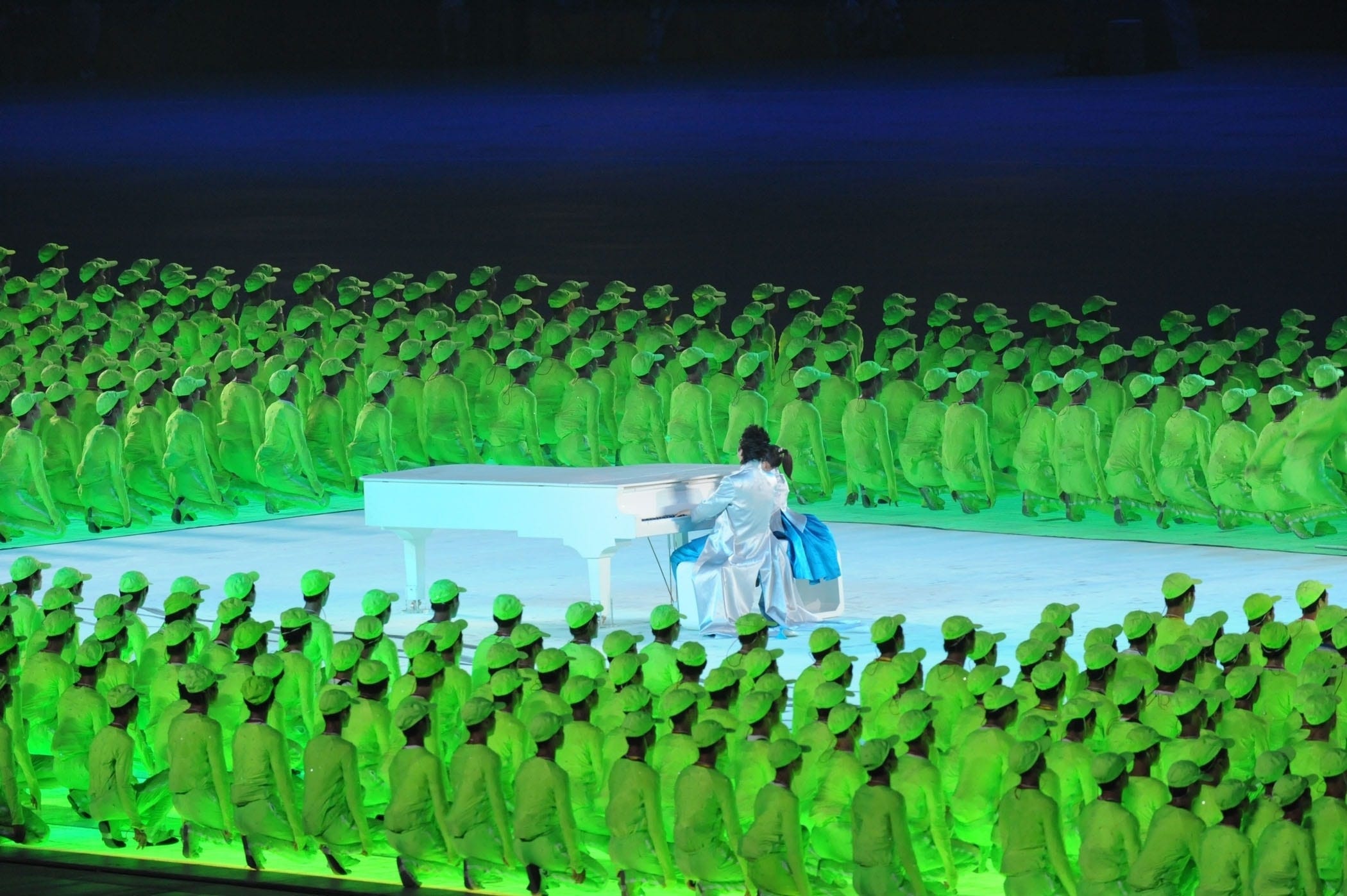
Choreographically spoken, the usual, repetitive, industrial patterns of moving are disaggregating. The “dancers” — people, organizations — are no longer following the prescribed movements. It becomes chaotic and everyone starts doing their own thing, before a new choreography is forming.
(cf. Choreographic Stewardship Strategies)
• Flowwarding: Enabling flow when unexpressed emotions block collective movement (not being able to feel the pain of nature, of marginalised communities), e.g. through The Trickster archetype
• Hospicing: Tending what’s dying with care, ritualising the death of modern belief systems and embodied practices, e.g. through The Hospicer archetype
• Spacemaking: Holding space for diverse perspectives depicting a mosaic of a modern world in breakdown, e.g. through The Elder archetype
In the case of Transition Network International, the founding ethos itself is grounded in the reimagination of a world that is crumbling. This implies hospicing old narratives and holding spaces for new, community-anchored and place-based visions to emerge; visions capable of holding people and nature together. Their Inner Transition strand addresses the psychological and emotional work of release that is as necessary as the practical work of rebuilding.
The System Must Have Feedback Loops
Dissipative structures in nature are governed by nonlinear feedback loops that adapt and improve the flows of resources and information, thereby building resilience. The system is learning from its own activity.
In linear systems, when you increase the input, you increase the output proportionally. Nonlinear systems are different: small perturbations can have cascading effects, and outputs feed back into inputs in ways that are amplified, dampened, or transformed. The system becomes generative rather than merely productive.
Most businesses, organizations, and public authorities today are organised in increasingly ineffective linear ways. In most manufacturing, there is high dependency on constant input and little flexibility in changing production flow. Strategic plans, business processes, political programmes, and the logic of GDP growth all follow a linear logic. With increasing instability and perturbation, at a certain point they won’t be able to absorb shocks anymore.
For leaders, this means diversifying organizational learning, building processes that allow for more exchange with the environment, and enabling the decomposition of parts of the organization so that it can eventually re-compose into new configurations (e.g. modularizing production, rather than relying on fragile supply chains).
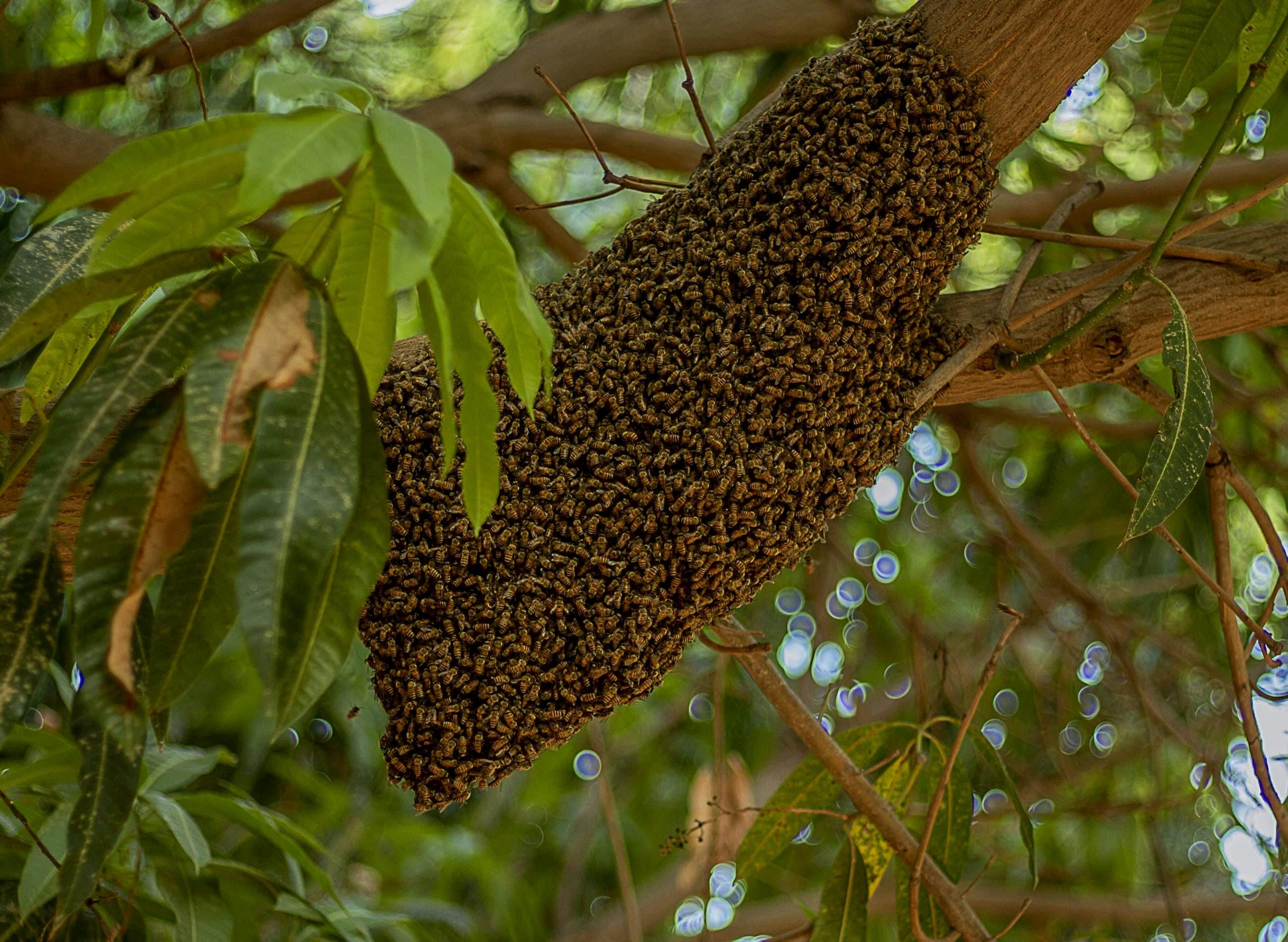
Picture the phenomenon of swarming in bees. A new hive is forming and about 3–5% of bees are recruited to scout for a new nest. They explore the best possible site, returning to dance their waggle dance. When more than 80% of bees are convinced of the best location, danced with excitement by multiple scouts, the hive moves. The decision is distributed, feedback-rich, and irreversible.
Choreographically spoken, there are “freeriders,” pioneers, spaceholders, bridge builders, and edgewalkers moving between fields of work, organizations, and departments. They help integrate learning processes, bring new practices, and filter what works and what doesn’t.
• Designing integration cycles: Creating dedicated times for reflection and integration of learning, alongside moments of deliberate openness to information and practices from outside the organisation
• Space for pollinators: Ensuring that ideas, practices, and stories circulate both within and beyond the organisation — people who “fly” between what exists rather than functioning in a box
• Distributed leadership: Parts of the organisation become more autonomous, learning to deal with local challenges by themselves, thereby increasing overall resilience to systemic shocks
Transition Network International and its members across the world host conversations, community events, storytelling sessions, and more. They are providing space to integrate experiences and learnings, and to practise what it means to distribute leadership in place-based projects. The network’s Open Space Technology and peer-learning circles are structural feedback mechanisms: they allow local experimentation to flow back into global pattern-recognition.
The Decisive Moment
When a system is far from equilibrium and the old order is no longer working, even small fluctuations can be amplified, self-organising into a new order. Small different actions, small new ways of being, small new conversations can tip the whole system into a new configuration.
This can happen at the moment of bifurcation points, when the old system no longer holds and one path is chosen over a number of other equally possible paths. This is where different possibilities, new ways of organising, being, and acting emerge. Individual action, or that of small groups, becomes amplified, becoming orientative for others.
“Never doubt that a small group of thoughtful, committed, citizens can change the world. Indeed, it is the only thing that ever has.” Margaret Mead
The new order then starts shaping the functions beneath it. That means that elements of the old system survive, but their roles or functions in the system change and are recomposed. Just as the Roman roads, Latin language, and Christian ecclesiastical structures persisted after the fall of the Empire, but now served entirely new configurations of social organisation.
Such bifurcation points call for practices, ways of relating, cultural forms, rituals, and collaborative structures that are able to self-organise and contribute to a new whole. At these moments, practices from subcultures, indigenous peoples, and pioneering regenerative organisations become orientative for the wider field.
Choreographically spoken, those who have been moving differently, who have practised diffractive movements with different stories, embodiments, and ways of being can take a leadership role in such moments. They are moving into the “negative space” of potential, where energy wants to move. And it is not an empty space: the cultural repertoire (often not yet conscious) becomes an orientation for others. Archetypal roles, synergetic ways of organising, and the capacity to work with local cultural soil all become decisive.
• Diversifying (archetypal) embodiments: Becoming conscious of the cultural repertoire that is accessible, practising different roles (choreographic styles), and different relationships to space (cultural soil)
• Re-composing (archetypal) constellations: Understanding compatibilities and complementarities of archetypal roles for given situations and contexts
• Narrative-Weaving: Bringing different worldviews, beliefs, and practices together to diversify cultural repertoire and help the new system consolidate
In the case of Transition Network International, perhaps unlike most other movements due to its international spread, decentralised structure, and force of narrative, the movement is able to integrate different worldviews, practices, and narratives through community and place-based action. As such, it may play a key role as an “information node”: a living archive of bifurcation intelligence from which other actors at decisive moments may draw inspiration and practical guidance.
For leaders, investors, and community builders who would like to focus their time, energy, and (financial) resources on what will survive the current turbulent times, the exploration of the four conditions points toward what may guide us today: the safest bet is to invest in what already works with little input from the old system — in the pioneers, models, businesses, and ecovillages that have already proven they are able to survive, and thrive. While failure is likely, those able to embrace failure and continue their journey are most likely to develop what it takes to move through the chaos.
“If you experiment, you have to fail. By definition, experimenting means going to territory where you’ve never been, where failure is very possible. How can you know you’re going to succeed? Having the courage to face the unknown is so important.”
Marina Abramović
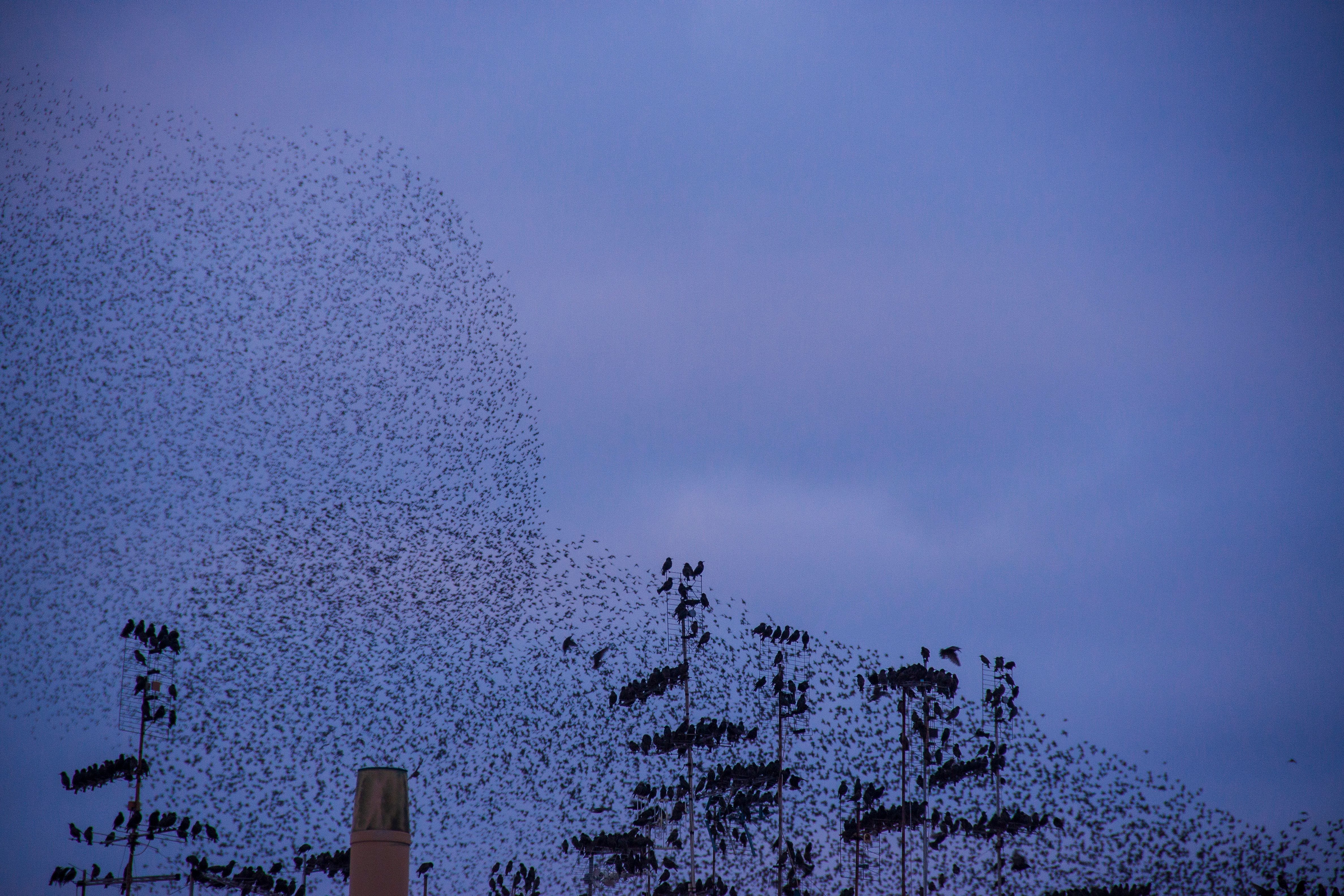
In choreographic terms, this means investing into the pioneering cultural soils, the transformative archetypes, and the synergetic collaborative structures that are able to re-organise through shocks. Developing the capacity to self-organise, to re-assemble, to attune to changing conditions, to form new movements of change is the choreographic leadership capability I believe we need cultivating today. Like a bee swarm re-assembling to create new hives.
This is the “negative space” of potential: reactivating a cultural repertoire drawing on the diversity of human and more-than-human cultures, composting what must be released, and choreographing what wants to emerge.
What if we could embody that choreographic and collective power able to withstand the breakdown of modern systems, and seeding what comes next?
Based on the insights from the four conditions, patterns emerge on what kind of practices and structures survive such breakdowns.
What survives:
1. Low-input, high-feedback enterprises. The businesses that survive and seed new order are those that require minimal external energy subsidy to maintain themselves. These include regenerative agriculture, local food systems, cooperative infrastructures, and repair economies. They generate their own energy flows from within the ecosystem they serve.
2. Relational capital over financial capital. At bifurcation points, Prigogine showed that “the role of individual behaviour can be decisive.” Trust networks, community bonds, and relational webs become the actual currency of resilience. Businesses and cultural practices whose primary asset is deep relational embeddedness in a community or bioregion hold value that survives the collapse of financial abstraction.
3. Knowledge and practice that is embodied and transmissible. Skills that live in bodies and relationships such as crafts, ecological knowledge, somatic practices, regenerative design methodologies are not dependent on digital or financial infrastructure. They travel through apprenticeship and community. They are what Prigogine would call autocatalytic: they reproduce and amplify themselves from within.
4. Platforms for pattern amplification at bifurcation moments. Punctuated collapses can provide catalysts that introduce more adaptable and resilient systems to a dominant regime. By evaluating the landscape of systemic alternatives against the evolving parameters of the global polycrisis, we can identify which transformative social innovations are more likely to succeed because they are more fit under specific systemic constraints.
5. Cultural practices that metabolise disorientation. The cultural practices and organisations that will seed the next order are those with the capacity to hold people through the chaos without suppressing it. They can compost grief, meaning-loss, and disorientation into new coherence. This is precisely what Cœureographers is designed to hold: the leadership capabilities that are able to steward this transformation, from composting the old towards re-composing into new forms of being, organising, and creating value.
Comments
Nothing yet. Say the first thing.
Sign in to join the conversation.