
By Jean-Philippe Steeger
Can your work succeed without embracing pain?
Beyond the manufactured pain of trauma-mining marketing and the performed suffering of virtue signalling lies the real, unmediated experience of being alive in a world that is genuinely suffering. How can we choose to stay present to it rather than reach for the nearest anesthetic?
This question sits at the heart of what I call the ecology of pain: the cultural space and conditions needed to welcome historically unprecedented, inflationary, and intensive personal and collective pain as crucial information pointing toward what transformational work needs to focus on.
For those of us doing sustainability and regenerative work, it is a familiar tension between marketing-as-usual, missing opportunities, and real impact. The difference lies in welcoming pain in ways that cultivate genuine capacity for transformation, and speaking to their pain in ways that keep them dependent, numbed, or temporarily relieved while the root causes deepen.
Mass extinction. Wars. Mental health pandemics. The world is in pain. And yet, we are witnessing mass delusion, escapism, and painkilling instead of an embrace of that pain. This “painkiller” approach has become predominant beyond just marketing, public relations, and politics. It is culturally shaping everything from medicament use and consumption behaviour to how we relate to each other and to the living world around us.
Rather than outsourcing this healing work to, often individualized, therapy alone, this article asks how we can learn to welcome collective, often rejected pain as the entry point for sustainable and regenerative work, especially when nothing else sticks, when resonance ripples into nowhere.
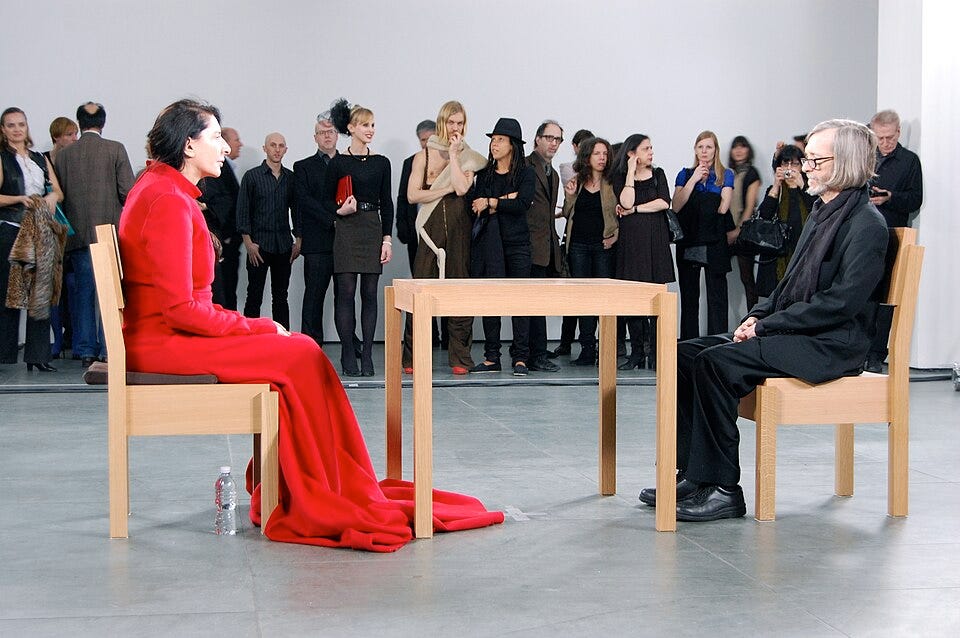
“As long as you make an identity for yourself out of the pain, you cannot become free of it. As long as part of your sense of self is invested in your emotional pain, you will unconsciously resist or sabotage every attempt that you make to heal that pain. Why? Quite simply because you want to keep yourself intact, and the pain has become an essential part of you. This is an unconscious process, and the only way to overcome it is to make it conscious.”
Eckhart Tolle
In our bodies, pain functions as a neural protection message that urges us to move away from damaging situations and to care for injured parts. The remembered experience of pain also acts as prevention, shaping future responses to similar situations.
But pain is more than protection. It is reconnection to the whole of an organism, a community, an entire ecosystem. Pain is the information of healing. It asks what relationships need restoring, what balances have been disrupted.
Its clarifying power can shed light on how a wound is connected to the broader organism, and which root causes need tending for genuine recovery to begin. Listening to the pain of those we work with, rather than rushing to relieve it temporarily, can reveal what parts of the cultural body need healing and what conditions need to be cultivated for resilience to grow.
This understanding recognizes that pain, when welcomed rather than suppressed, becomes a compass. As Joanna Macy writes, welcoming the pain of being in the world is the first step in healing our relationship with the world: through empathy, listening, and embracing what has been forgotten, repressed, or silenced.
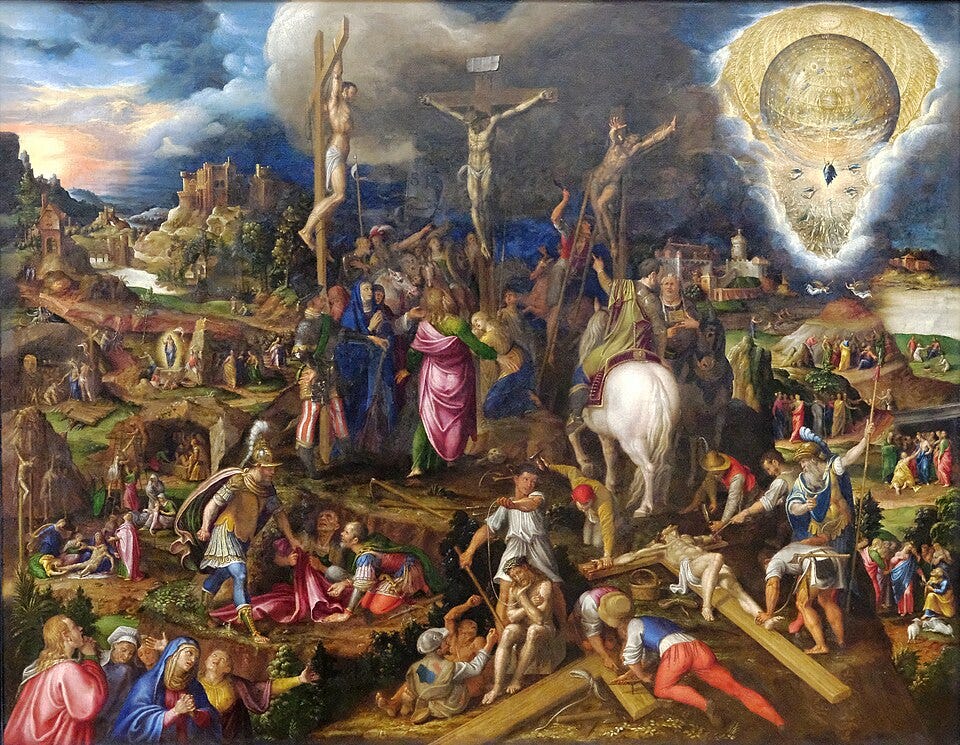
Despite collapsing ecosystems, a burnout pandemic, and accelerating destruction visible almost everywhere, business-as-usual dynamics remain stubbornly alive. They are maintained by a cultural sophistication of avoiding, numbing, and symbolically outsourcing pain. These patterns are particularly present in cultures of Christian and colonial lineage, which have long practised the externalisation of suffering, despite the existence of contemplative and empathic practices in Christianism.
Marketing’s “success story” has refined the art of putting its finger in the wound. “Painpointing” speaks to the dis-ease, problems, and traumas of potential clients by promising solutions, or at least relief. Just as our health systems often leave underlying conditions untouched in favour of operational quick-fixes, painkiller marketing keeps a hurtful business-as-usual not only alive but actively pleasurable to maintain.
Here are the dominant painkiller strategies:
Anesthesia
Avoiding feeling pain and addressing root causes through compensation and surface-level behaviour.
Perhaps not coincidentally, some of the countries with the greatest consumption of painkiller medications — France and the USA — are also home to some of the greatest gaps between the national narrative inhabitants tell themselves and how the rest of the world perceives them. Here, the relation to pain and historical trauma is the most distant, requiring the cultivation to a different relationship to pain, and ultimately death.
Escapism
Redemption promises of a world without pain, from digital addictions to space colonization fantasies.
The modern economy runs on this script: the redemption promise. Become better. Optimize, upgrade, solve. The hero-billionaire as saviour of a “wild”, uncivilized world. Escapist narratives are easy to sustain only when a central authority holds narrative monopoly. This was the Church in the Middle Ages, or big tech billionaires on their own social media platforms today. It raises the question of how to enable homecomings, incl. in narrative strategy.
Outsourcing
Prentending pain is something just others face, next to displacing problems and responsibilities to others, usually without direct relationship.
Most people know “not in my backyard” as a response to renewable energy infrastructure. But the pattern runs through most supply chains today: exploitation and pollution are moved toward the most vulnerable populations and ecosystems, those without advocates or regulatory protection. What’s needed is reestablishing connection in chains of anonymity – through stories from farmers and workers, shorter value chains, and an understanding how we contribute to violent systems.
Delaying
Pushing resolution into the future, often legitimized by more pressing issues in the present.
Net-zero by 2050. Alcohol abstinence starting January. These commitments may or may not feel genuine in the moment of making them. The challenge is that they are made without transforming the conditions that generated the need for them, meaning the delay itself accumulates cost, incl. ecological, social, and psychological.
Invisibilizing
Those who visibly express pain are systematically ignored to avoid confronting its source.
Whether the LGBTIQ movement reminding us that love exceeds social conditioning, youth movements campaigning for a liveable future, or women in politics confronting structural inequality: strategies of invisibilization consistently amplify dominant power structures, often while even claiming to speak “on behalf of” those they’re erasing.
Instrumentalizing
Speaking to pain with opportunism, without care for healing.
Far-right movements have become masters of this: channelling real economic anxiety, cultural dislocation, and social precarity toward scapegoating rather than structural transformation. But instrumentalization isn’t limited to the political right. It increasingly appears anywhere pain is deployed as leverage rather than met with genuine care.
Trauma-Mining Marketing
The most sophisticated form of painkillerism is what I call trauma-mining: the algorithmically accelerated, culturally deep-rooted practice of marketing scarcity-compensation by activating and sustaining traumatic wounds in consumers.
Trauma-mining doesn’t solve any problem but keeps people in a dependency loop that repeatedly activates trauma to sell temporary relief.
Young girls: Unreachable beauty ideals, anorexic social media content, or tradwife trends are all running on the premise of never being good enough. Platforms like TikTok and Instagram have industrialized this loop.
Young boys: AI girlfriends designed around toxic masculinity ideals, positioning a controllable robot as preferable to a real relationship. The underlying wound: profound uncertainty about what healthy masculinity is.
LGBTIQ communities: Highly toxic dating apps that have replaced community spaces with data harvesting and violence exposure, reproducing queer loneliness while profiting from it. The closure of LGBTIQ bars and clubs which once spaces of genuine belonging has been filled by Grindr and co.
Women: The impossible figure of the “perfect” wife, mother, and career professional, sustained by advertising, media, and the persistent gap between what employers promise and what they deliver. The tradwife trend is its reactionary shadow.
These aren’t marketing failures but marketing successes by design, emerging from within a paradigm that profits from pain without being accountable to healing.
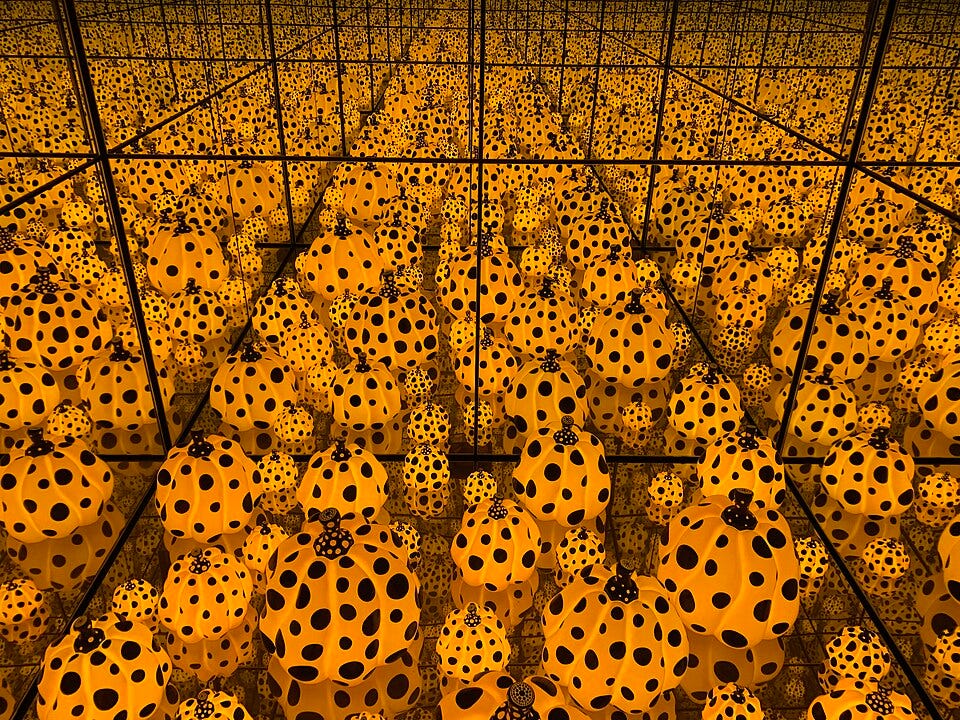
What if today’s pain points were not problems to be solved but signals pointing toward what our collective body most needs? Toward what we need to learn to collectively attune to – to choreograph together?
What if, instead of maps of wounds to exploit, they were invitations to listen, as the nodal points in the web infrastructure of a world being born beyond collapse?
The concept of the ecology of pain emerges from this reframing. It builds on Cultural Soil Analysis as part of the Ecosystem Choreographies framework (explored in depth here), by understanding key stress points and intervention points among specific cultural fields, audiences, and places that are characterized by distinct “soil patterns” and pain expressions.
Just as a healthy ecosystem contains a diversity of organisms that process nutrients, manage stress, and maintain resilience, a healthy cultural ecology contains the diversity of voices, stories, roles, and practices needed to metabolize collective pain and generate new vitality from it.
When that ecology is impoverished, when pain is systematically suppressed, instrumentalized, or numbed, it doesn’t disappear. Like soil deprived of decomposers, it compacts and hardens. The nutrients locked inside become unavailable. What could have been composted into wisdom becomes toxicity.
Perhaps our generation is waking up to the fact of inheriting millennia-old undigested traumata of genocides, ecocide, wars, forced displacement, and broken lineages.
Perhaps those of us who grew up with fractured relationships to indigenous wisdoms have built our entire cultural identity on that unprocessed pain. It has shaped our stories, belief systems, daily gestures, and postures. It determines what we see, what we can imagine, what we consider valuable, and what we consider impossible.
Consider subcultures that define themselves against the mainstream, like punk, metal, or rap, with varying degrees of metabolizing the experience of marginalization that their music holds. Or German post-war culture largely built on the shame of the Nazi era, still affecting Germany’s relationship to Israel today. Or a US culture in persistent denial of its original escape from European violence, sustaining a freedom narrative that cannot see the unfreedom it perpetuates through its own colonial legacies.
Rather than rejecting or reinforcing the pain, we can learn to accept and welcome it. By “moving through” the pain rather bypassing it, we can access deeper parts of ourselves (read my articles on “shadow mainstreaming”). This curious welcoming of unpleasant realms can shed light on shadow dimensions that block us, that make us sick, that prevent genuine transformation from taking root.
It is in learning to welcome our shadows that we may find the place of greater peace and creative capacity. It is the cathartic movement through pain that can show us the path to healing. Pain is an indication that a personal or collective body is out of balance. It can point, with precision, to where healing is needed and what conditions need to change for thriving to become possible.
Rather than diagnosing pain points to sell painkiller solutions, Cultural Soil Analysis addresses both the short-term need (alleviating immediate pain) while working on the conditions conducive to healing and thriving over the longer term, including, crucially, by promoting the agency of those we serve.
Drawing on the metaphor of soil health (explored in depth here), I assess cultural ecosystems across five criteria. They each reveals how pain manifests and accumulates in a cultural field:
1. Narrative Diversity
Multiple belief systems and worldviews coexist and cross-pollinate, forming a narrative-based ecology of meaning-making. When one narrative monopolizes the field — whether extractive growth, victimhood, or salvation by technology — imagination compacts and meaning withers. Pain signals narrative monoculture through the disappearance of genuine surprise, humour, grief, and wonder. The same tropes, the same heroes, the same solutions get repeated across sectors. Cultural innovation breeds at the narrative ecotones — where two ecosystems meet — yet these are precisely the spaces that monoculture eliminates.
Diagnostic question: How monocultural are narratives here? Where are the narrative ecotones — and who are the edgewalkers dancing between them?
2. Porosity
Ideas and practices can breathe. There’s room for contradiction and complexity. Space for newcomers — their contributions welcomed, grounded, and grown. When cultural soil is compacted — sealed by fear, institutional rigidity, or protective postures born from historical betrayal — pain has nowhere to go. Dissent, grief, paradox, and experimentation are squeezed out. What remains looks stable but is brittle: a surface that resists everything, including what would nourish it.
Diagnostic question: Is there space for dissent, contradiction, grief, or paradox? Can newcomers actually contribute — or does the field close around its own protective barriers?
3. Moisture
Emotional literacy and affective resonance are present. Work flows naturally, meandering through challenges. Confluencing collaborations are possible because there’s trust. When moisture is absent — when emotional and somatic ways of knowing are filtered out in favour of pure cognition and rigid rules — pain dries into rigidity. Historical trauma that hasn’t been collectively digested creates parched cultural ground where nothing new can germinate. Mental health crises, relational breakdown, and the inability to grieve are all symptoms of dried soil.
Diagnostic question: Are emotional and somatic ways of knowing welcome, or is everything filtered through cognition and rigid rules? What historical trauma hasn’t been digested?
4. Structure
Composted layers of memory and meaning nurture thoughts, feelings, wisdom, and actions in the present, connected through meaning-making structures. When ancestral mycorrhizae are severed — when threads to ancient, indigenous, place-based, queer, feminine, and relational ways of knowing are cut — pain expresses as rootlessness. People reinvent from scratch what was already known. They repeatedly fall into patterns they lack the historical perspective to recognize. The present floats untethered from the accumulated wisdom that could anchor it.
Diagnostic question: How intact are the ancestral mycorrhizae? What invisible threads to indigenous, place-based, relational ways of knowing have been severed — and which ones are quietly regenerating?
5. Microbial Life
The balance of relationships between subtle actors, traditions, and more-than-human influences below the surface. When the cultural microbiome is disrupted — when extractive habits, supremacist residues, and colonial narratives haven’t been composted — pain operates invisibly. Toxins perdure beneath the surface, shaping interactions, possibilities, and power dynamics in ways that resist conscious examination. The most dangerous cultural pathogens are the ones that have become so normalised they’re no longer perceived as harmful.
Diagnostic question: What toxins perdure? Which extractive habits and colonial narratives still operate invisibly? What supremacist residues haven’t been composted?
What if we approached our fields of work as we would a living ecosystem in distress intervening with the sharp attunement of acupuncture needles? Sensing the meridians, the blockages, the places where gentle pressure might release what has accumulated and restore flow?
Drawing on diverse therapeutic traditions (including Ayurveda and acupuncture, which I’ll explore in a later article), here is a brief summary of the seven choreographic strategies for addressing imbalances, pain, and stuck dynamics in the cultural fields you work within. You can find the full guide here.
1. Narrative-Weaving (for monocultural soil)
When one story dominates and crowds out other ways of making sense of the world, bringing different worldviews into dialogue can diversify the cultural repertoire. This isn’t about tolerance of difference — it’s about the regenerative power of genuine encounter between perspectives that have never met.
In practice: Facilitating cross-cultural conversations, bringing indigenous epistemologies into dialogue with scientific frameworks, creating containers where practitioners from different traditions can discover unexpected resonances.
2. Space-Making (for compacted soil)
Compacted soil can’t breathe, can’t absorb water, can’t support root growth. When cultural fields have been under too much pressure — from urgency, from scarcity, from the weight of accumulated crises — ideas and people need space to breathe before anything new can emerge.
In practice: Holding retreats that resist the agenda. Facilitating slow conversations. Creating formats where the pressure to produce is explicitly suspended, and emergence is allowed to surprise.
3. Flow-Warding (for dried or stuck soil)
When unexpressed emotions — grief, anger, shame, longing — have nowhere to go in a cultural field, they block collective movement. People stay stuck in patterns they can see are harmful but cannot seem to exit. Flow-warding creates the conditions for these stuck emotions to move.
In practice: Ritual and ceremonial processes. Grief circles. Art-based facilitation. Working with the body as well as the mind in leadership and organizational contexts. Creating explicit permission for what is usually unnamed to finally be named.
4. Remembrance-Structuring (for disconnected soil)
Modern culture has systematically severed connections to ancestral wisdom, place-based knowledge, and the long continuity of human experience. When a cultural field has lost access to its roots, it reinvents from scratch what was already known, and repeatedly falls into patterns it lacks the historical perspective to recognize.
In practice: Cultural archaeology — recovering forgotten histories, honouring those who did this work before us, integrating indigenous and traditional knowledge into contemporary practice. Oral history projects. Lineage work.
5. Archetypal Constellations (for all soils)
Every ecosystem needs diversity of roles — decomposers as much as producers, edge species as much as keystone species. When a cultural field is dominated by one archetype — too many pioneers with no settlers, too many challengers with no builders — it lacks the complementarity needed for systemic health.
In practice: Mapping which archetypal roles are present and which are absent in your ecosystem. Cultivating the underrepresented. Bringing in different kinds of intelligence — the dreamer, the pragmatist, the elder, the child — into processes that have become too homogeneous.
6. Hospicing and Midwifing (for nutrient-poor soil)
Some elements of a cultural field need to die for the field to regenerate. Others are struggling to be born. The hospice worker tends what is dying with care, preventing unnecessary suffering while allowing natural completion. The midwife creates the conditions for what is emerging to arrive safely.
In practice: Supporting organizations, initiatives, or paradigms that have reached their completion to end with grace rather than collapse. Creating protected conditions for nascent work that isn’t yet strong enough to survive in the open field. Holding both simultaneously without collapsing them.
7. Mycelial Networking (for siloed initiatives)
When wisdom and resources are locked within silos — initiatives doing related work without knowing each other exists — the cultural field cannot metabolize its own intelligence. Mycelial networking builds the connective tissue that allows learning, resources, and solidarity to flow.
In practice: Convening unlikely allies. Building learning communities across organizational and ideological boundaries. Creating platforms where practitioners doing adjacent work can discover the complementarities between them.
If you’re doing sustainability, regenerative, or impact work, you’re almost certainly navigating pain-related dynamics in the fields you serve, whether you’ve named it that way or not.
The crucial question is whether your work is speaking to it in ways that cultivate genuine capacity for transformation, or in ways, however well-intentioned, that replicate the painkiller patterns you’re trying to move beyond.
There is a different way of moving through and beyond that pain, a choreography: it lives in how you attune to your field’s pain (Cultural Soil Analysis), how you embody your response to it (Style), and how you articulate the transformation you’re enabling rather than just the problem you’re solving (Seeds).
Trauma-mining marketing asks: What wound can I activate to create urgency?
Cultural pain acupuncturing asks: What is this pain pointing toward? What wants to heal? And what conditions need to be present for that healing to become possible?
The shift from the first question to the second is the shift from extraction to regeneration. From painkilling to genuine transformation.
It’s also, practically speaking, the shift that allows your work to be recognized as strategically necessary rather than compassionately optional. Because when you can articulate the healing your work enables and not just the pain it addresses, you make visible something decision-makers can recognize as essential infrastructure for the world they’re trying to build.
The place to begin isn’t with your audience, but yourself. From there, you can carefully listen to your audiences.
What pain in the world do you feel most viscerally? Where does your body respond, in what parts does it tighten, grieve, ignite when you encounter the places your work is trying to address?
That visceral response is an attunement signal. It’s how you know which part of the cultural ecology you’re called to serve.
The challenge and practice is learning to stay present to that signal without being overwhelmed by it. To use it as information rather than identification. To let it guide your work without becoming its hostage.
The Attunement Gap is the first of three gaps I’ve identified in regenerative practitioners’ work, is precisely about developing this capacity: reading your field’s pain with care, precision, and ecological intelligence rather than instrumentalizing it.
Understanding which gap is most present in your work is the first step.
Take the Three Gaps Diagnostic (20 minutes, free): https://form.jotform.com/261095162526052
You’ll receive:
Your scores across Attunement, Embodiment, and Value
Identification of which gap is most present in your work
Specific practices you can begin immediately
And if you want to explore how Cultural Soil Analysis and cultural pain acupuncturing might shape your specific communications and offers, the Choreographic Resonance Assessment maps your current choreography across all six moves: Soil, Style, Story, Seeds, Synergies, Stewardship.
Book a Choreographic Resonance Assessment: https://tidycal.com/1xgwkjn/assessment
This article is part of an ongoing series on Ecosystem Choreographies. Related reading: From Survival Mode to Ecosystem Choreography and Moving Beyond the Bubble.
References:
Macy, J. & Brown, M. (2014). Coming Back to Life: The Updated Guide to the Work That Reconnects. New Society Publishers.
Tolle, E. (1999). The Power of Now: A Guide to Spiritual Enlightenment. New World Library.
Steeger, J-P. (2025). “From Survival Mode to Ecosystem Choreography.” Perspectivist Agency Substack.
Steeger, J-P. (2026). “Moving Beyond the Bubble.” Perspectivist Agency Substack.
Comments
Nothing yet. Say the first thing.
Sign in to join the conversation.