
Why does the work of brilliant, transformative, and deep founders often not take root?
As many as 90% of startups fail. Common reasons mentioned include running out of money, being in the wrong market, a lack of research, bad partnerships, ineffective marketing, and not being an industry expert. What gets less talked about is the failure of the very operating model of entrepreneurs and startups: the approach to growth, the learning journey, the inner resilience and embodiment of being a founder, the actual listening capacity to clients and their needs, as well as what “good” partnerships actually are.
Entrepreneurship and startup culture largely draw on unvalidated (behavioralist) assumptions in management theory, the myth of the heroic “genius” founder, and often abstract models to “scale fast, fail fast” that in reality lead to burnout. Furthermore, they aren’t built to deal with a VUCA world: volatile, uncertain, complex, and ambiguous.
How many books about business success and entrepreneurship are written by people who have actually managed and led a business for many years?
Being an entrepreneur is inherently dynamic, requiring learning, attunement to new conditions, creating and adapting structures, and developing resilience and stamina in moving forward in a healthy rhythm. Furthermore, for those who care about leaving a healthy legacy for communities, places, and the planet, there is a need to design the work in a way that contributes to the vitality of the natural, social, economic, and cultural systems it is part of.
That’s why Ecosystem Choreographies works like a dynamic operating system: an iteration weaving between the inner aspects of work, the market, and the offer. It allows adapting the own “work choreography” to the succession phase of the business or organization, to changing audience segments, and to the evolving inner clarity that may emerge on that journey.
So what is the difference between the standard operating model of founders and startups, and the Ecosystem Choreographies approach with its 7 moves, concretely?

The very ground from which work becomes possible is mostly ignored by entrepreneurial guidance: silence, rest, wintering, and “just being”. Before diagnosing the market, before naming the audience, before designing the offer, before even knowing what you are building it is a precondition for actually being able to receive the field you’re working on.
In Ecosystem Choreographies, Silence is not absence. It is the negative space from which all choreography becomes possible. The space of potential. In music, the rest is not empty: it is where the previous phrase lands and the next one breathes. In dance, it’s where the bodies “want to” move. In ecological systems, the dormant seed is already doing its work.
Pioneer founders who tend to take root most durably have developed an unusual capacity to be still and receptive facing a field they don’t fully understand. Attending to what the market is not saying as clearly as what it is, to what potential collaborators are circling without naming, to what the body registers as resonance versus performance. The latent, the inexplicit, the unconscious, the alluded, the homorous escapes even the best algorithms.
In entrepreneurial terms, it is the precondition for not projecting your solution onto a field that hasn’t asked for it yet.
What is waiting to be listened to, before you speak?
Choreographic Style and Story
In most guidelines, books, and advice to entrepreneurs, you can find something about an open mindset, positive attitude, motivation, and endurance. While these may be valid, they contribute to projecting a (mythologized) picture of the ideal entrepreneur as a hard-working hero climbing mountains. If you’ve been to startup pitches, you may feel the quite narrow understanding of the “entrepreneurial spirit.”
In the transition to an entrepreneurial journey, whether through incubators, trial and error, entrepreneurship literature, or ten-step guidelines to success, what is often absent is the personal journey, the life wisdom, the unique personal calling animating that pathway.
With Ecosystem Choreographies, I therefore ask: what kind of latent wisdom and capabilities wait to be composted before going on that journey? Accessing the archetypal roles we are able to play, the wisdom to be remembered, and the stories that can hold guiding knowledge are an important starting point.
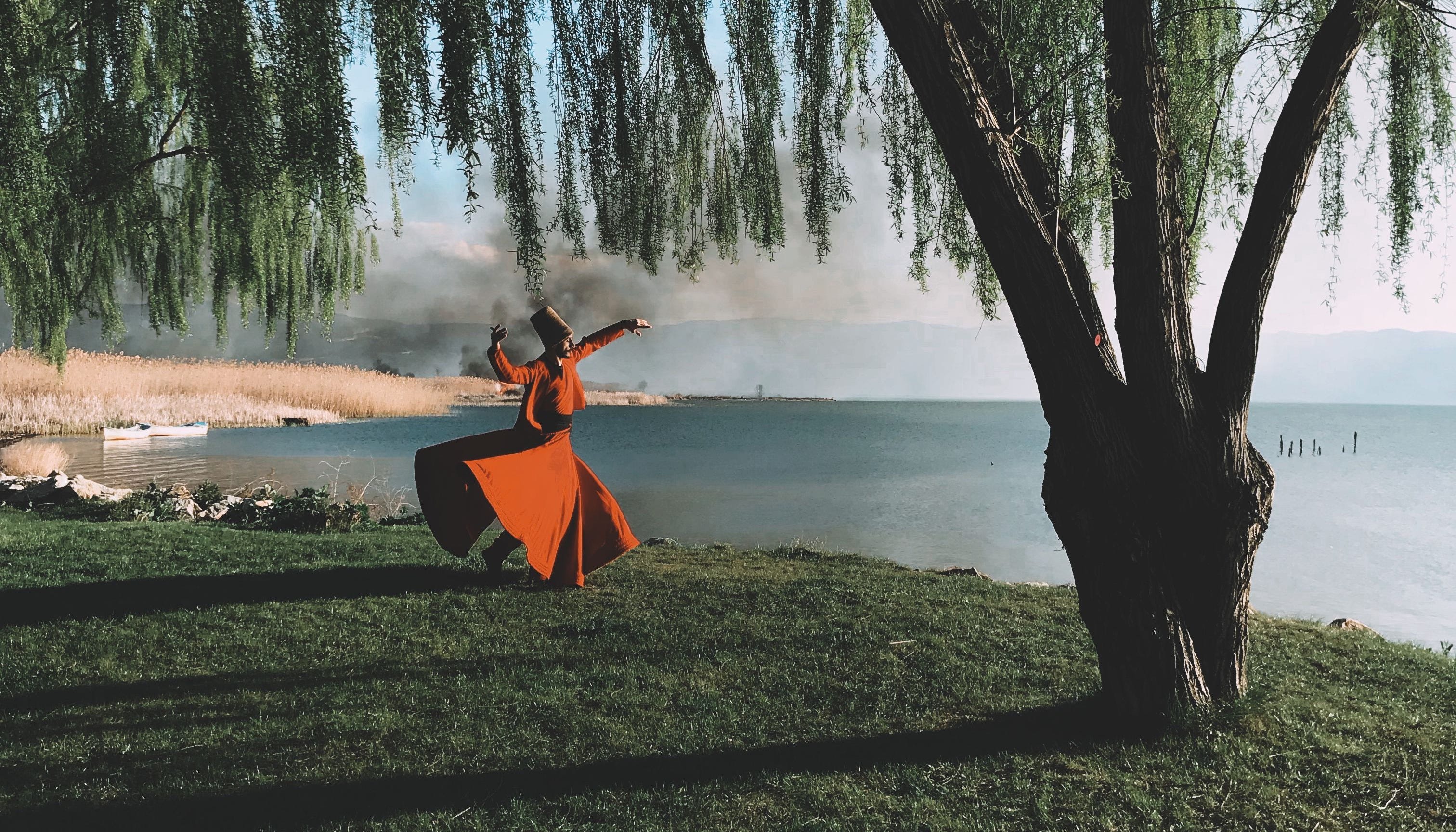
The Pioneer archetype, in its very essence, is not the hero on the mountaintop. In ecological succession, pioneers are the first species to move to disturbed or bare ground: lichens on volcanic rock, fireweed after a forest fire. They are not less sophisticated than the mature forest that may eventually follow. They are differently sophisticated. Their intelligence lies in tolerating conditions that would stop most other life forms, in fixing nitrogen and breaking rock so that something richer can come later.
A pioneer founder is ecologically analogous. The capability is in being at home at the threshold, in the in-between, in conditions that have not yet stabilized. The archetype is not the conqueror of the mountain but the dweller of the ecotone: the edge species that makes new soil.
What is waiting to be composted from your life journey, which will serve you in a different way on your new endeavor?
Choreographic Soil
Paradoxically, innovation ecosystems often reproduce the very siloes that limit innovation. Predefined funding lines, checkbox criteria to be met, focus on sectors that won’t exist tomorrow. In sustainability innovation, that can mean choosing to focus on environmental OR social impact, as though the distinction were given by nature rather than by administrative norms.
Furthermore, the entrepreneurial culture of “like-minded” people is too often quite monocultural. In US venture capital, Black and Latino founders received only 1% and 1.5% respectively of total venture capital. Women-founded teams received only 1.9% of VC funds.
That affects how businesses and organizations serve their fields of work. Today, that relationship is largely mediated by data analytics, extractive in its appropriation of attention and labor for profit, and one-sided in its broadcasting logic.
With Cultural Soil Analysis, I help founders and organizations develop a deeper understanding of the reality of those they work with: the worldviews and narratives they hold, the emotional waters they navigate, the space for innovation they’re open to, and the capacity to adopt new patterns of thinking, being, and acting.
This reading moves across five dimensions: the narrative diversity of the field (whether multiple worldviews cross-pollinate or one frame dominates), its porosity (whether new ideas can breathe and contradiction can be held), its moisture or emotional literacy (whether affective and somatic knowing is welcomed as legitimate), its structure or memory layers (whether composted history is still nourishing present action), and its microbial life or subtle dynamics (what is happening beneath the visible surface, whose voices are marginalised and taking their knowledge with them).
The soil conditions determine not just what might grow, but how it needs to be introduced, at what pace, and through what relational approach.
How are you listening to the needs and aspirations of those you work with?
Choreographic Seeds
Whether from funders or from incubator programs, entrepreneurs are often advised to create a business strategy and plan with KPIs and a roadmap. This is probably one of the safest routes to failure, since it runs counter to the need to sense the field, to experiment iteratively with what works and what doesn’t.
This can mean launching multiple small offerings, conversations, and interventions rather than betting everything on one perfectly designed program. It means reading the resonance of the audience and field of work and adapting accordingly, rather than investing a lot of time and effort into getting the field to adopt your solution. To use the agricultural analogy: using lots of fertilizers and pesticides for the crop you want, rather than planting locally adapted crops that the soil can actually hold.
Choreographically spoken, it means designing your seed of change in a way that can be received. The Resonance Value Compass guides this seed design as a value proposition, asking how the offer speaks to remembrance (root value), what potential it opens (aspirational value), what needs it addresses (practical value), how it works (methodological value), and how it is experienced (experiential value).
A fractal offer principle and example is useful here: testing your work through exploratory (sales) interviews and conversations, a free resource that reflects the essence of your work, a short trial programme for instance. Tested with different audiences. Seeds from the same plant.
How can you iterate on designing seeds of offering with a minimum viable structure while testing them playfully within different contexts and with different audiences, sensing what works?
Choreographic Synergies
Relationship-building is key. And yet relationships often remain transactional and interest-led. This affects trust, long-term outlook, and the transformative power of collaboration. Furthermore, transactional collaborations are most likely to fail precisely because the conditions for them to last are not being nurtured: community, shared narratives, a shared belonging to place.
In modern culture, the available forms of working together are deeply limited. There is the hierarchy of masses with a leader on top (schools, corporations, administrations), the motorway of progress with people following legal orders and protocols (production lines, administrative procedures), the polarization of belonging siloing people into categories (nationalities, political family, social class, department), and the atomization of being isolating people on behalf of a higher ideal or order (ideologies, dogmas, authorities).
Since there is no widely shared cultural access to other forms of living and working together, approaches like sociocracy or holacracy are most likely to fail: the cultural soil is not fertile to them. While they offer an alternative to modern constellations, their mode of organizing is equally reductive, often centering around the circle or multiple circles.
With Ecosystem Choreographies, I propose practicing movement archetypes: ways of collaborating together whose selection depends on the ecological succession phase, the cultural soil conditions, and the archetypal roles present.
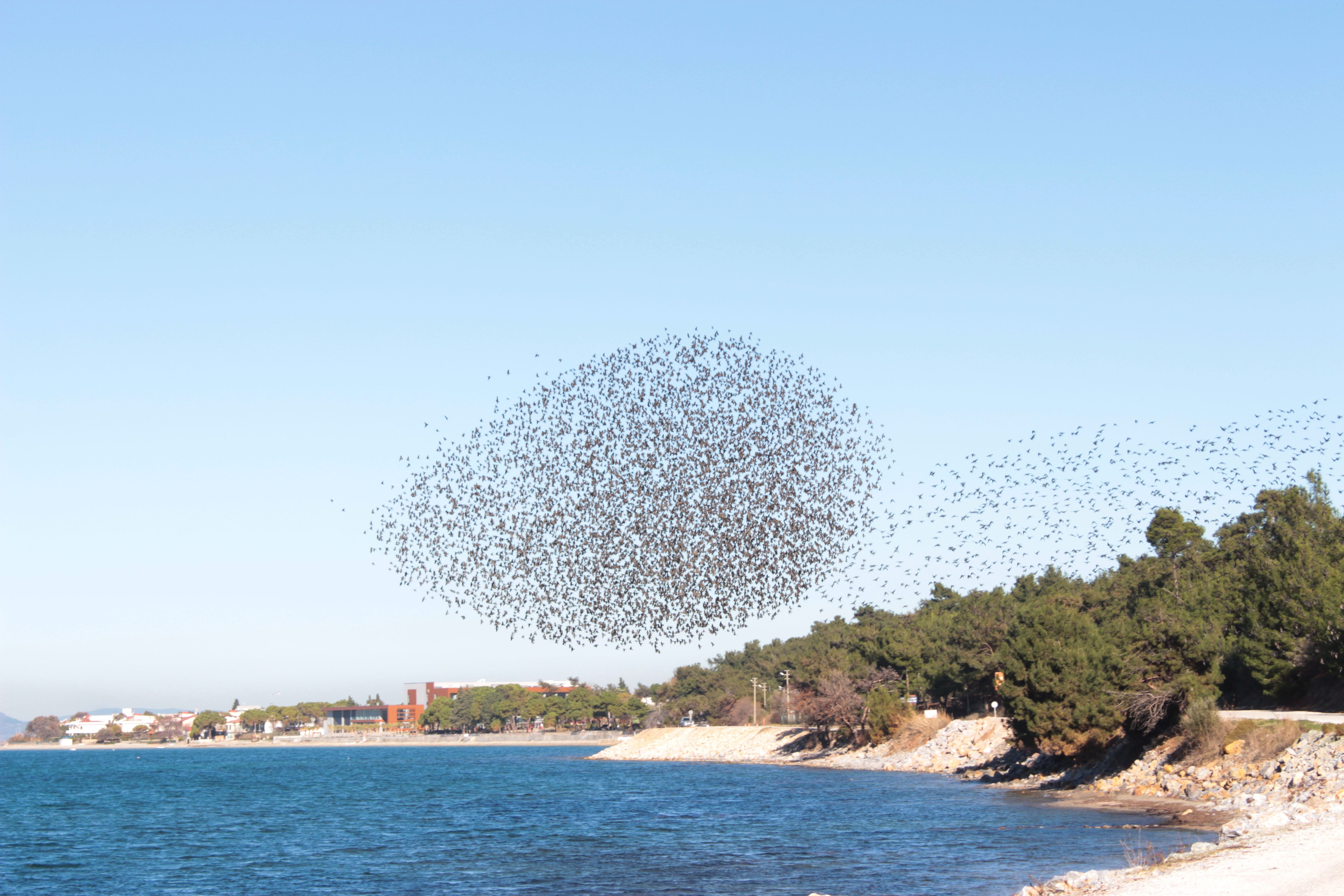
For instance, pioneering businesses are unlikely to be able to create complex collaborative structures like an ant colony. However, they would be able to create simple synergetic collaborations like Lichen (with three complementary roles), or Flocks (where coordination emerges from a few shared principles rather than centralized direction). Once more developed, these constellations can evolve further, adapting to changing circumstances, available resources, and new audience segments.
Choreographic Stewardship
In the early stages of a business or project, the right balance between structure and openness needs to be found: to be able to test something, and to be able to learn and evolve. That means iterating and practicing the choreographic moves shared earlier, ensuring that there is a dance between what is emerging, how it resonates, and where the pull is.
By trying out multiple seeds, experimenting where they land and where not, it becomes possible to transfer the elements that work to other contexts, assembling them into a differently packaged offer. By doing this, the level of attunement to the soil, the quality of the seeds, and the clarity of presence improve over time.
Choreographic stewardship means leading the movement of development by discerning between helpful and unhelpful dynamics. If dynamics are draining, costly, and not going anywhere, it may be worth shifting the choreography. If dynamics are flowing, they may be able to branch out like a river and fertilize new fields, audiences, and offers.
Lichen doesn’t fail when the rock is slow to break. It is doing its work.
When a pioneer founder’s work isn’t rooting and resonate, three orientations (or gaps) tend to reveal where the choreography may have stalled.
Attunement: Finding Your Soil
Offering without genuinely understanding what the field can actually receive. The work stays in bubbles. It speaks to the like-minded. It circulates within the existing innovation ecosystem without reading the soil conditions that determine what that ecosystem can hold. The Soil and Silence moves are underactivated.
Embodiment: Moving From Presence
A story that people don’t feel. Narrative and presence are misaligned. The white papers are excellent; the in-person engagement is tentative. There is a gap between what the founder knows and what she is willing to embody, partly because the archetype being performed (the credentialed expert) is not the archetype she naturally carries. The Style and Silence moves are underactivated.
Value Proposition: Letting the Seed Land
Transformation appears distant or irrelevant. The offer speaks compellingly to where the field needs to go and how the methodology works, but says very little about the root value animating it, or the experiential value: what it actually feels like to be accompanied through it. The Seed and Story moves are underactivated.
Most projects carry all three to some degree. The diagnostic question is which gap is primary and blocking the others.
None of these gaps require becoming someone different. They require composing the choreography differently: reading the soil before entering it, embodying the archetype the field actually needs rather than the one the sector rewards, telling a story that speaks to the full range of what the work touches.
The shift is not in the substance. It is in the dance.
If you want to explore where your own choreography may be stalling, you can take the free “Choreographic Checkin - Where Does Your Work Want to Move” test here.
Jean-Philippe Steeger works at the intersection of regenerative systems thinking, narrative intelligence, and cultural choreography. He is the founder of Perspectivist and re:storied.
Comments
Nothing yet. Say the first thing.
Sign in to join the conversation.