
A big advantage of a challenging gardening year is that it brings successes and failures into sharp focus. It’s not just those plants that are struggling or even dying that stand out, it’s those that are truly thriving. If we judge great plants on their performance above all other considerations, those that do well across a wide range of conditions are the ones that should gain recognition.
I’m sure that the majority of gardeners would agree with this sentiment. However there is an awkward problem with sticking rigidly to this; we may very well have to face up to the fact that a currently unpopular species or even whole genus might warrant a higher status than is currently afforded to them. It’s hard to ignore how well Buddleja davidii – a much maligned plant in the worlds of both puritanical ecologists and ever-so-tasteful gardeners – is doing this year despite such difficult conditions. Dare we give buddleja a reprieve because it has performed so reliably?
There’s more to buddlejas than just Buddleja davidii. There are a great number of species that are very different to the ubiquitous davidii, although many are nowhere near as resilient. Start talking about ligustrums, the privets, and we’re heading into the realm of dull utility shrubs. We might use privet as a hedging plant but there can’t possibly be a privet worthy of specimen status, surely?
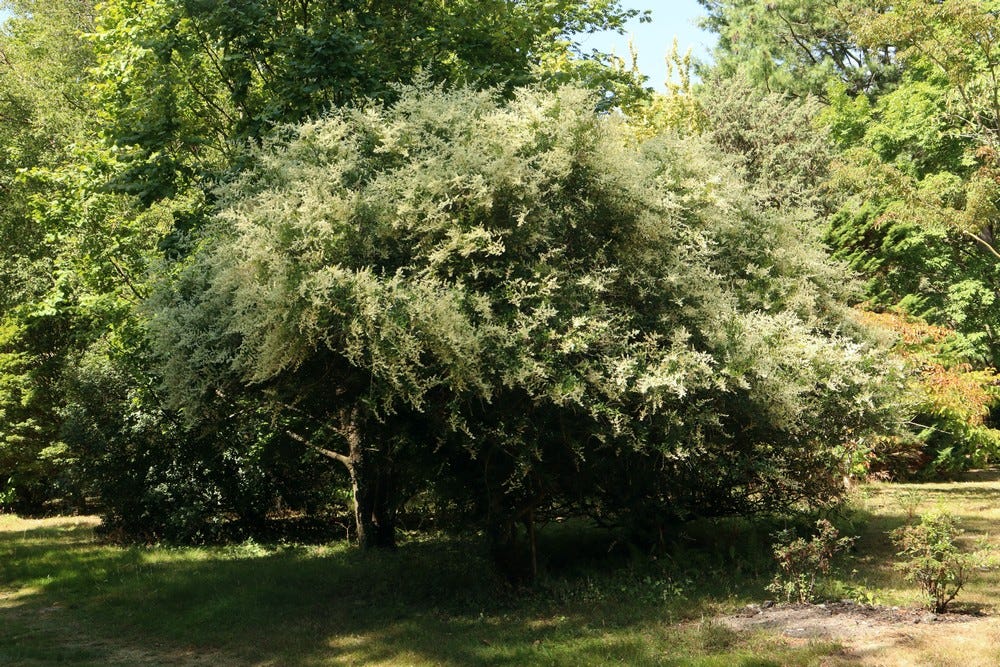
Making genus-wide assumptions about plants is a risky business. Assume that the privets are not worthy of your attention and you miss out on a few absolute gems, like Ligustrum quihoui. This Chinese and Korean privet species, currently not very widely grown, is a world apart from the often neglected privet hedges of suburbia.
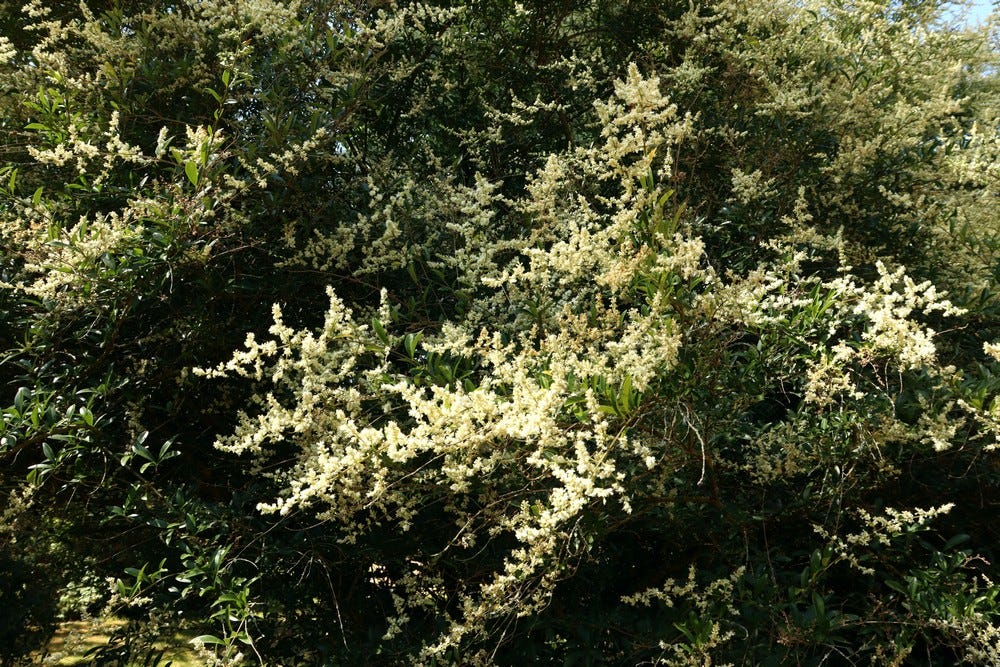
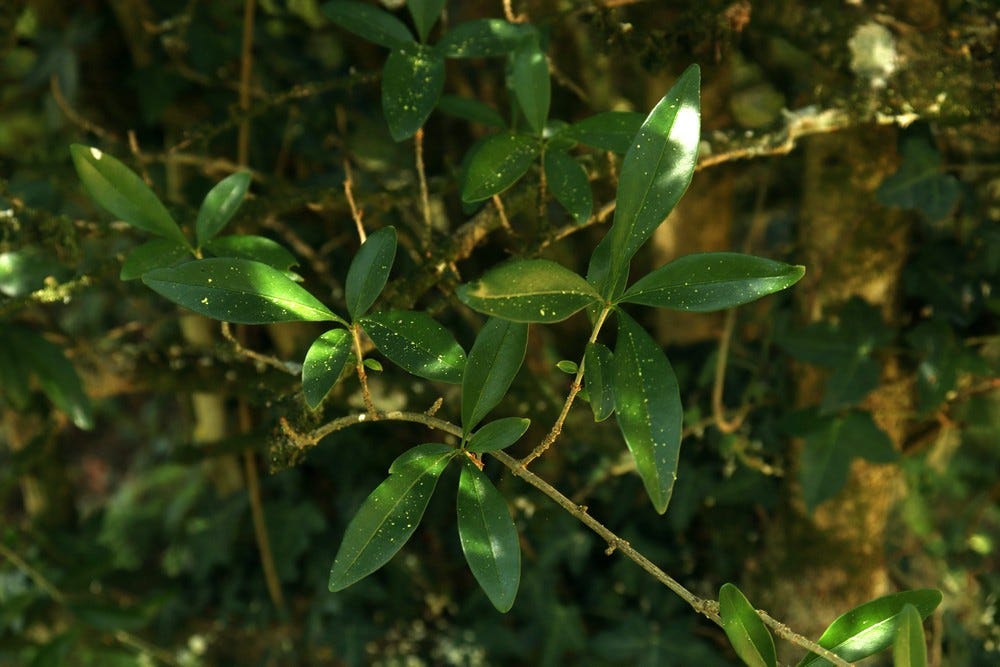
Ligustrum quihoui is a semi-evergreen to evergreen species with smallish, narrow, dark green foliage. In August or September it bears astilbe-like plumes of white flowers which are scented enough for its fairly pleasant perfume to travel on the air. You can smell this shrub from a reasonable distance but you will hear it from further away; Ligustrum quihoui is popular with bees, hoverflies and butterflies, all of which will swarm around its nectar-rich flowers. These are followed, usually, by small black fruits that will be eaten by birds.
Maybe the fruits of Ligustrum quihoui don’t have viable seed, or maybe the seeds need certain conditions to germinate. I think more likely the latter as this species can apparently become a bit of a nuisance in the hot conditions of the southeastern USA. Certainly this hasn’t been the case in the UK or Europe to date; has this species been more popular in the US and had a greater number of ‘parents’ to seed from I wonder? This species is probably too marginally grown elsewhere to be an issue, or there is something peculiar to the climate of the southeastern US that favours it.
Ligustrum quihoui is probably hardy across most of the UK, down to USDA hardiness zone 6, although flowering is probably better during a warm summer in the cooler regions.
It’s not a big shrub, making around 3m or 10ft in height and a bit wider, and I have absolutely no reason to believe that it wouldn’t be absolutely fine being pruned. Out of flower it’s certainly not all that exciting as shrubs go, but that does mean that it’s not an eyesore. Personally I’d let Ligustrum quihoui grow to a good size and then introduce a viticella clematis to it; a well-chosen clematis flowering through the privet would look fantastic, and then the clematis will continue the season of interest after the privet has finished flowering.
Thanks for reading Pen And Trowel. This post is public so feel free to share it.
No posts
Comments
Nothing yet. Say the first thing.
Sign in to join the conversation.