
As if day after day of heat and drought wasn’t bad enough there was an eclipse to add to the pervasive sense of apocalyptic doom.
Usually it’s a bit of a joke in the South West of the UK that whenever something interesting happens in the sky it turns cloudy. Much as a 95% eclipse of the evening sun was an exciting spectacle I would, selfishly, have relished some rain instead. As it was I stood on a hillock near my home and took it all in. I was too disorganised – read swamped by other things – to get myself some eclipse glasses to actually watch the event itself. I had the idea that maybe a lens filter for the camera might be a good idea; as it was they were all sold out and I don’t own a lens that would show the sun as anything more than a dot in the sky, so I guess that saved me some money. I’m sure there will be plenty for sale on Ebay now the event has passed.
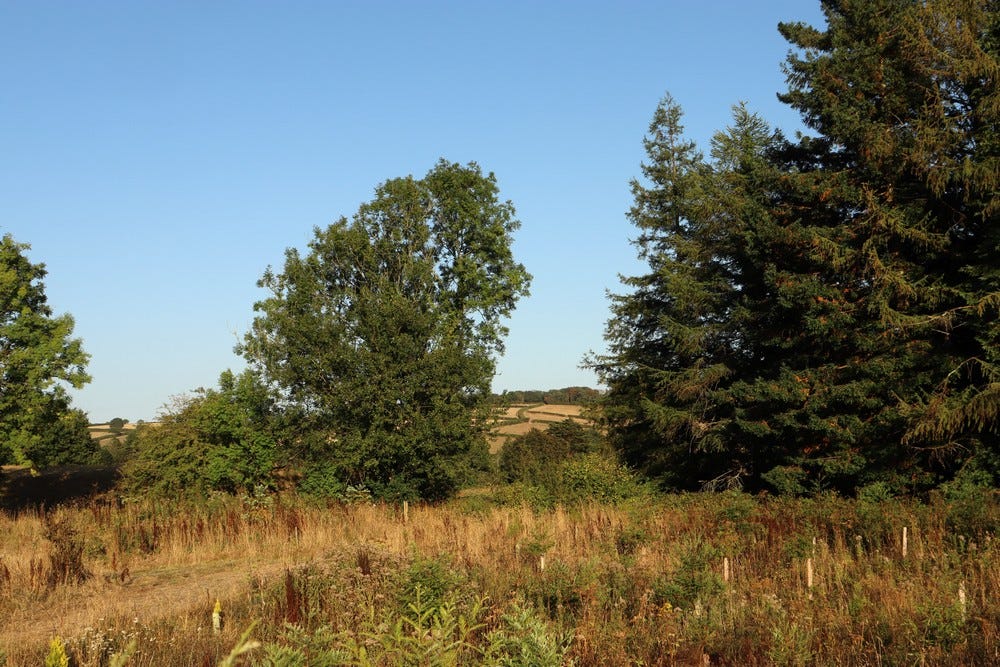
Nevertheless the experience was interesting. As the moon moved into position in front of the sun I suddenly became aware of how quiet it had become. A noisy crow called out from the trees but the smaller birds were silent, as – possibly more remarkably – were the chirruping grasshoppers in the long grass all around me. The light turned golden for a few minutes and then peculiarly dull for a bit before turning golden again as the moon moved away. I was expecting it to be darker, but instead it was as though the day had an extra dusk and dawn but without a night in between.
I’ve pretty much stopped enjoying gardening at the moment. Each day has been spent desperately trying to keep a different garden alive. It’s been interesting of course to see gardens under stress like this: I wrote about Ghost Gardens recently but there are also other phenomena also happening. It’s been fascinating to see how certain plants perform in certain places, with some doing very well while others have suffered badly. There are many variables at play, including how cool and shady a position is, the nature of the soil, and of course whether or not the plant itself is inherently resilient.
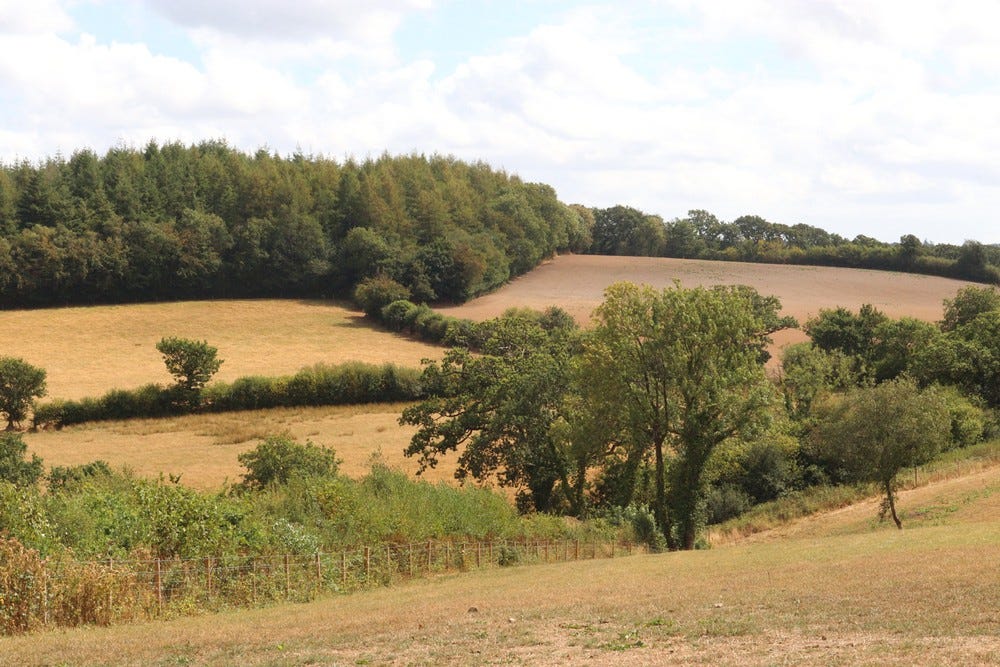
I’ve recently heard it said that Cornish gardens should be purged of rhododendrons, camellias and hydrangeas as in the future climate change will make them ungrowable. Sorry to say I have little time for such childish oversimplification. This year’s remarkable weather has certainly put plants under pressure, but should we really be ripping out certain plants today because they might not be grown in the future?
The challenges of the future will be met by gardeners, but I would argue that the best course is to allow gardens to evolve rather than seeking to change them suddenly and extensively. I have doubts that the current rash of ‘future gardens’ will still exist in 10 years let alone 50 years, especially in their present forms. Popular as it is to try and bypass the course of time I think gardens that evolve gently will be the ones that persist into the future. If plants die then we replace them with something else, but in the meantime we work with what we’ve got. There are always people in horticulture desperate to make a name for themselves; making bold new changes gets you noticed and there’s every chance that people might call you clever, while gently steering a garden through challenging times comes with little chance for recognition.
We must diversify our gardens. You don’t have to be a close follower of climate data and predictions to know that some years are better than others, that some plants succeed in conditions where others struggle. I was going to say where others fail here but that’s not the right word. Plants that fail tend not to be replaced like-for-like. Few gardeners are silly enough to keep replacing the same plant every time it dies. To do so would be a waste of resources and would deny the gardener the opportunity to grow something new.
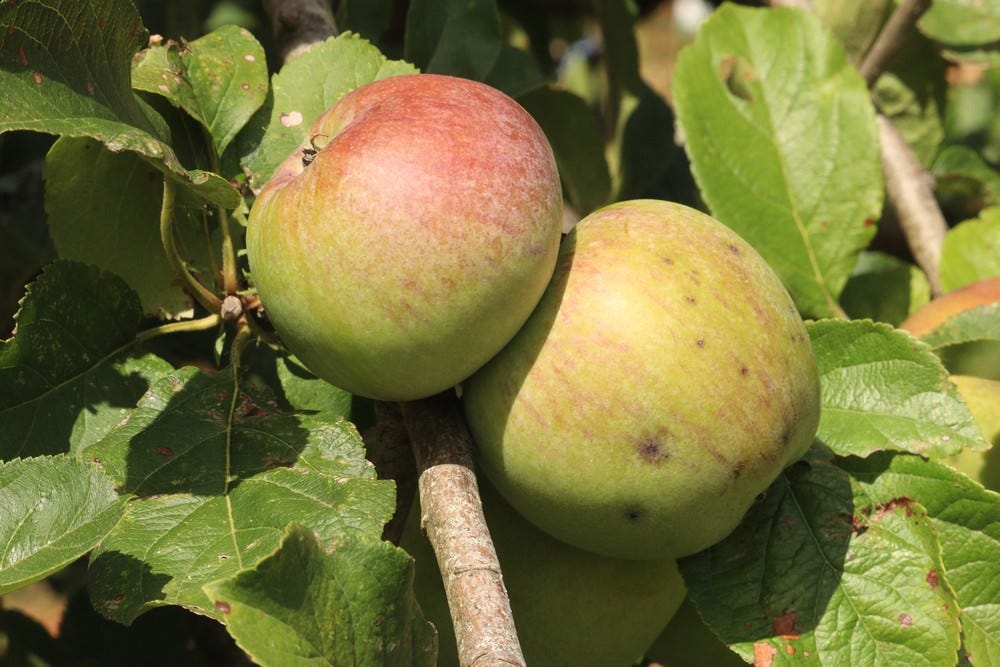
For every genus, species or cultivar struggling this year there are others that are thriving or at least surviving. Very few gardens are genuinely facing total destruction despite the hostile weather conditions. Some plants are doing well, some are struggling and a few won’t survive at all.
I recently saw a social media post from someone who has visited the famous garden at Sissinghurst. They decided to share their views online and, intentionally or not, triggered a conversation about what is horticulturally acceptable during exceptional conditions. Rather as expected, the garden at Sissinghurst is looking rather crispy this year; this upset visitors who expected the garden to still look pristine. It’s naïve to assume that because a garden like Sissinghurst is considered to be iconic that it is immune from the ravages of an exceptional summer. It’s also unfair to suggest that the current state of the garden is down to wanton neglect by Sissinghurst’s gardeners.
What few outside the gardening world appreciate is that water won’t always save a garden under heat stress. There comes a time for many plants, especially herbaceous plants, when watering puts plants under additional pressure; they’re struggling to maintain themselves in relentless heat and sunshine, then their root systems are deluged with water in the mistaken belief that water will save them. Imagine handing a glass of water to someone who is on fire and you get the idea.
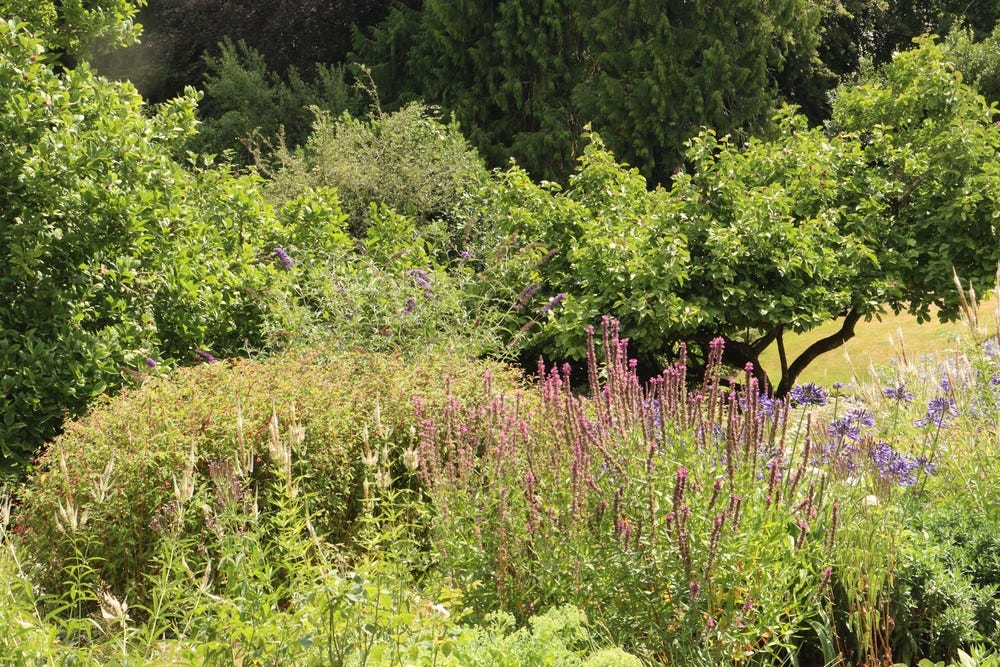
To most gardeners and garden visitors a garden under stress is ugly at best, if not distressing. I get it: we spend so much time and money on our gardens only to watch as nature – which we’re supposedly supporting through at least some of our efforts – destroys all our hard work. We feel sad when we see plants in distress and we want to help. However we also have a deep sense that healthy and happy gardens must look perfect. It’s a logical attitude from a culture of gardening where generations of gardeners have sought perfection.
What if we dislodge this idea and instead look at successful gardens as being those that bounce back after periods of stress? Rather than being sad that a garden is stressed and struggling we focus on celebrating the fact that it will rejuvenate when conditions improve. This does not mean abandoning gardens to their fate – Sissinghurst has certainly not been abandoned – but instead is about accepting that sometimes plants just don’t look at their best.
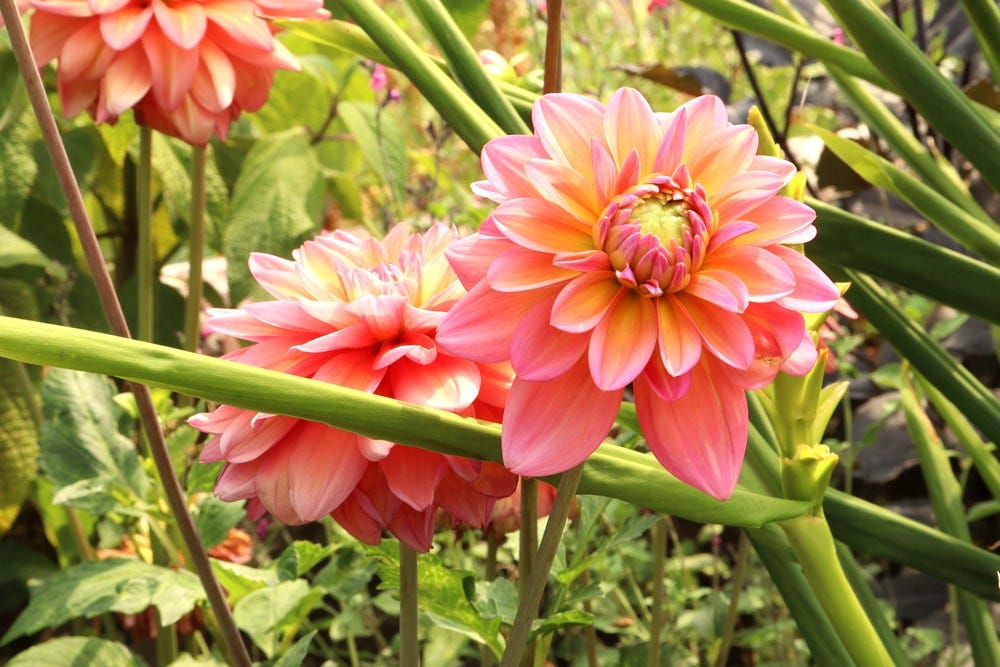
In fact plants quite often don’t look at their best. During a wet summer a lot of the summer classics like roses, phlox, dahlias and so on can look remarkably bad, their flowers ruined by heavy and persistent rain while their leaves are food for slugs and snails that relish those conditions. Yet there are seldom complaints about this. I wonder if the sort of garden visitors who complain about gardens not being perfect don’t visit gardens in the rain? Maybe it’s believed that rain is something that cannot be avoided but drought can be mitigated, if only the gardeners were better at their jobs?
If we are indeed going to have more of these hot and dry summers then we will have to be more understanding, to accept that sometimes things are going to look less than perfect. There will need to be greater robustness from those responsible for fielding complaints, with permission to push back against complainants with unreasonable expectations. There will be allegations of neglect by those who don’t appreciate that water – and the time to apply that water – is not just a resource that can be plucked out of the ether whenever things get tough. Irrigating big gardens requires quite substantial infrastructure and, as I’ve said above, is not always the best option when conditions turn more extreme.
This summer has certainly been my toughest yet. Gardening has stopped being about joy and is now more about endurance, and my energy levels are waning. Some days it’s only bloody-minded determination that keeps me going.
Anyone who wants to tell me how good gardening is for your mental health can sod off. There’s a world of difference between looking after your own garden – where you have greater freedom – and gardening as a career. The mental health benefits of gardening seem to rely heavily on you being able to focus on the nice bits; keeping your garden on life support is not in any way relaxing. I would go as far as to say that it’s incredibly stressful and probably not all that good for your physical health, let alone your mental health.
All I can say is that those of us subjected to this year’s drought have come too far to give up now. Yes some things will die and we will feel sad about that, but our gardens will persist and things will improve. But I don’t think hearty optimism is what we need right now: we need to acknowledge that actually many of us are having a very tough year in our gardens. Non-gardeners can just shrug and move on, but gardeners are tired and worn out but still doing whatever we can to keep going, defiantly pushing on until the good times return.
But for now things are very tough and there appears to be little respite for many of us for a while.
Thanks for reading Pen And Trowel. This post is public so feel free to share it.
No posts
Comments
Nothing yet. Say the first thing.
Sign in to join the conversation.