
Roses must surely be firmly on the top 10 list of the most popular garden plants. Taking the genus as a whole I doubt there is anyone out there who truly hates or even strongly dislikes roses, save possibly a handful of agitators seeking their own publicity.
Human culture has long been threaded with roses. They have been mentioned in plays and literary works through the ages, and featured in great works of art. Roses have been used as herbal treatments and in foods, and even just grown because they’re pretty. I will fully stand up for the right of any gardener to be less keen on certain types or colours of roses, but there are so many different roses that I doubt anyone couldn’t pick out at least a handful of roses that suit their tastes.
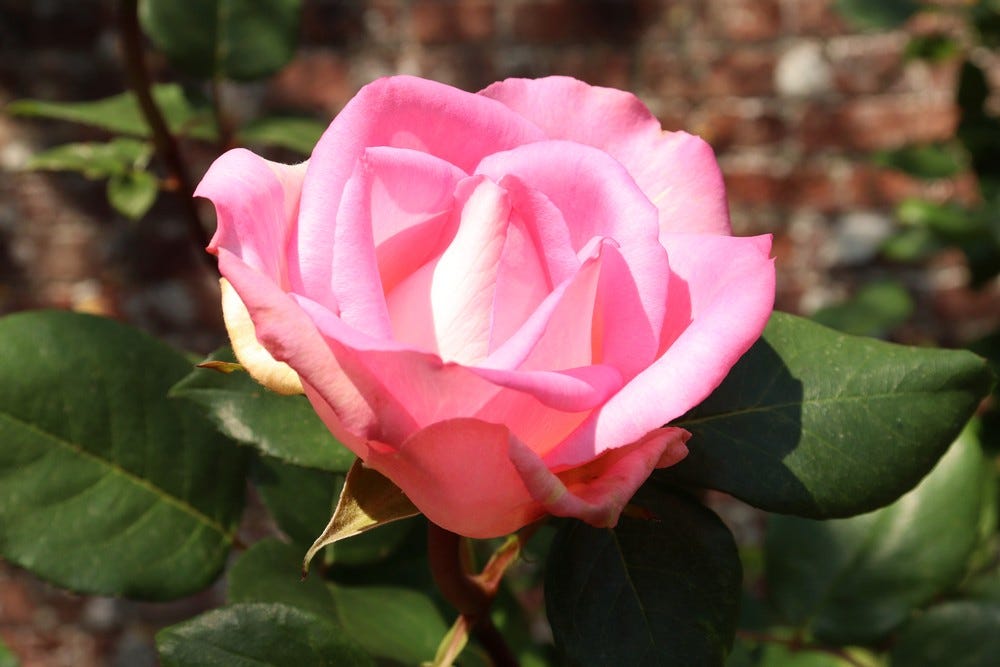
I broadly group roses into two types: wild-looking and border roses. The wild-looking roses are those that look like they belong in nature. These might not always be single flowered species roses but they will have smaller flowers and be mainly loose semi-doubles and singles, and always fairly modestly coloured. The border roses on the other hand often have larger and more contrived flowers, from the flamboyant doubles to the somewhat rigid hybrid teas, and tend to be more extravagantly colourful. These are of course very broad and informal groupings, based more on how I would likely use them in the garden rather than following any of the universally approved categories. Ramblers, climbers and shrub roses sit in both camps, but I might put the subtly coloured rambling Rosa ‘Paul’s Himalayan Musk’ in the wild-looking roses but the bright pink rambler ‘Dorothy Perkins’ in the border category for example.
It’s all arbitrary really; rules are there to be broken. ‘Paul’s Himalayan Musk’ looks absolutely amazing scrambling through a hedge or some smallish trees as a wild rose would, but there’s no reason why I would have to shy away from doing the same thing with ‘Dorothy Perkins’ if her bright pink flowers would also work in that position.
What I do fairly universally is to treat roses rather cruelly. Blasphemy! How could any self-respecting gardener be mean to such a beautiful and iconic garden plant?
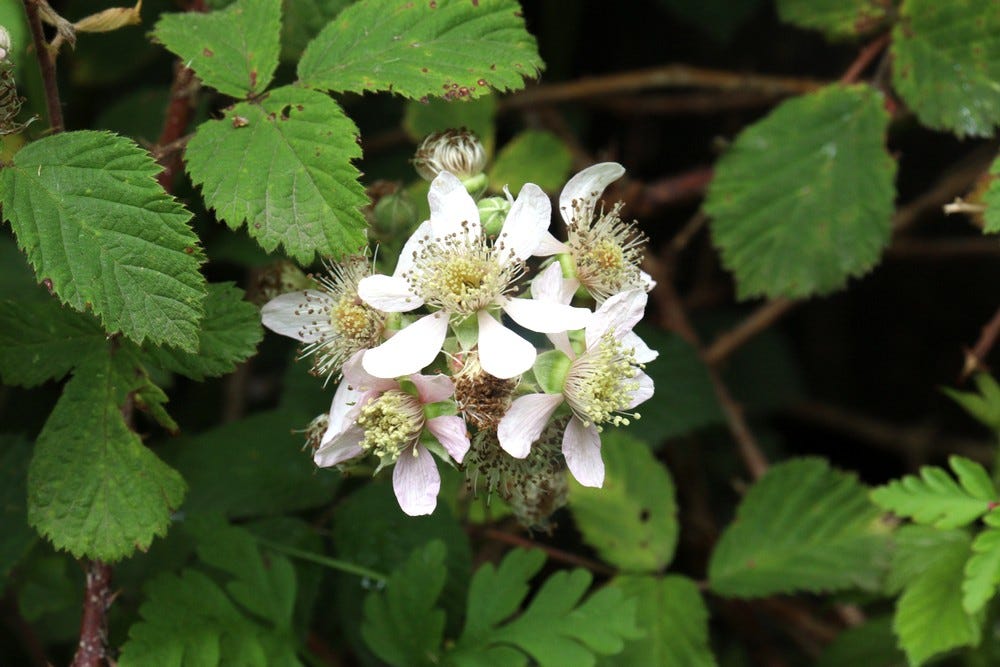
The answer is that for all their charm and good breeding the rose is only one step removed from the wild brambles. Wild roses – the species from which we ultimately get our refined garden varieties – are brutal opportunists in the wild; when ground is disturbed the roses move in quickly to occupy that space and to take advantage of the opportunity before other woody plants can move in. Their thorns protect them from most herbivorous animals, and if they’re not rambling off into nearby trees then they’re making impenetrable thickets.
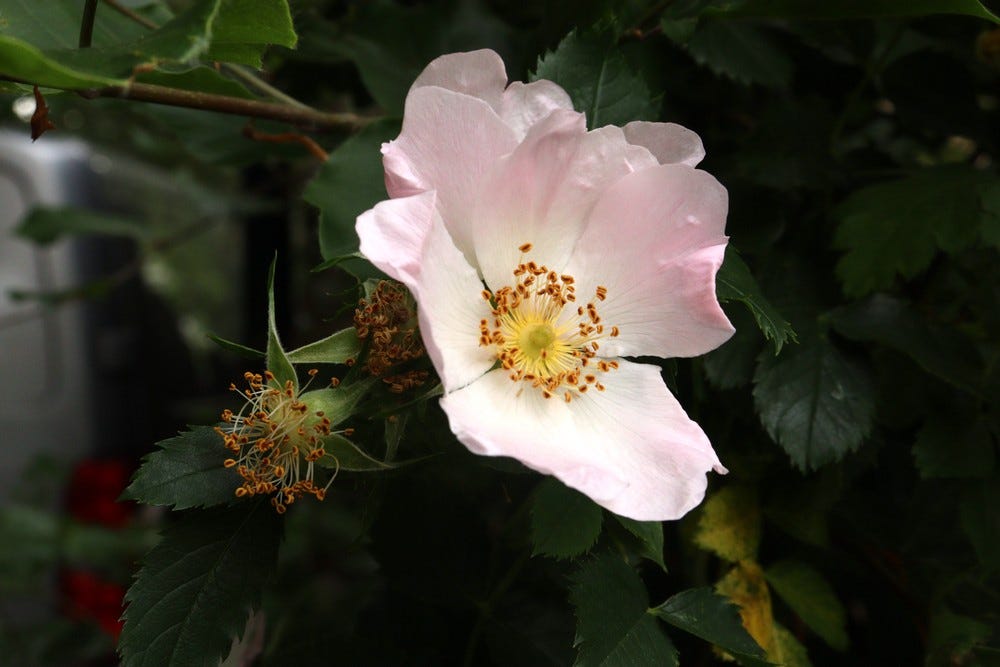
Our British native dog rose, Rosa canina, is every bit the opportunist. If there is a gap in a hedge or thicket of trees then it will grow happily. And so it should; it doesn’t flower for long and its flowers are small and simple, yet Rosa canina is every bit as beautiful in its way as any other rose. I’ll tell you something else about the dog rose: it’s rare to see this species troubled by pests and diseases. Exotic garden roses can often suffer from fungal complaints or problems with sap-sucking insects, but the dog rose is usually clean and healthy. This got me wondering why. One very plausible option is that because the dog rose is native it is better adapted to shrug off problems. Another option is that because this species is so often found growing in the unimproved soil of wild places it has an inherent toughness about it as a result of its conditions.
I used to be an avid rose feeder when I started growing them, really buying in to the conventional wisdom that roses can be hungry feeders so we must give them as much plants food as they can take. When I worked for two glorious weeks at the then iconic Bridgemere Garden World in Cheshire as part of my school work experience I was sent to work with someone who was renewing the rose beds in the show gardens. Out came the old roses and in went new, with barrowloads of manure to feed them and hopefully keep the dreaded rose replant disorder at bay.
Feeding roses definitely works. They can be hungry or even gluttonous feeders, and it is undeniably true that you will get more flowers if you feed them than if you don’t. However if you feed your roses well you will also encourage soft growth that’s perfect for pests and diseases. Even in the most open and aerated of conditions a rose with lots of soft growth is going to be more prone to problems. And how much growth do you really want if it means the rose flops over to cover other plants, or even your path or lawn?
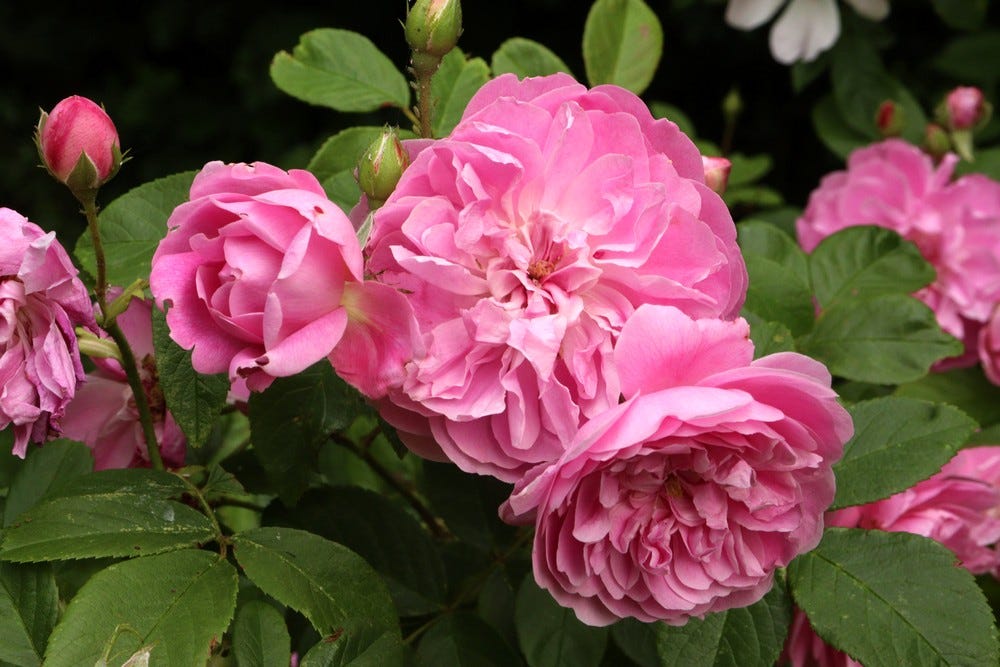
There comes a point when compromise becomes desirable. By easing back on the feeding and accepting a reduced number of flowers you also don’t have to put up with quite so much soft growth or quite so many aphids and leaf spots.
I tend to take this idea to an extreme and give roses little more than a bit of water during their first year after planting. The resulting progress is slow but steady; I could push the plant to produce lots more flowers early on in its life, but the benefit of being mean is that the plant’s growth is slow and resilient. I don’t know how many roses I have under my care across the in excess of 45 acres I’m currently responsible for, but I can tell you exactly when I last sprayed garden roses for pests or diseases: never.
Before I observed the fact that Rosa canina was rarely troubled by pests and diseases and before I applied my theory that roses should be treated less well, I bought bottles of various treatments for fungi and insect pests so that I could keep roses at their best. These have since been disposed of, unopened, because they went out of date and I haven’t replaced them. If I did have a problem with roses then I might consider my options, but in 11 years of growing roses in gardens across an often mild and wet area – perfect conditions for so many rose problems – I’ve not had any need.
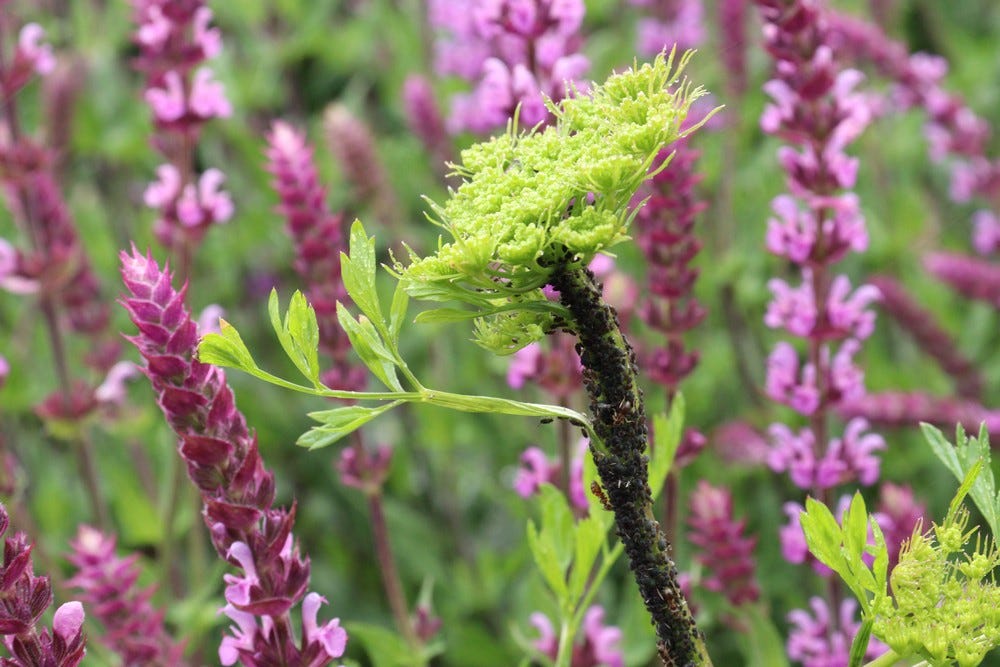
That’s not quite true; I’ve had some spotting on leaves and I’ve had some aphids, just not to the point where I’ve even toyed with the idea that I should do something about them. I dare say there will always be some imperfection on roses, and any plant for that matter, but I tend not to be too precious about the occasional blemish. The problem with seeking absolute perfection in the garden is that it will always illude you. There will always be something that wants a tiny nibble from a leaf here and there, or sucking sap from a stem somewhere else, if you look hard enough. To obliterate such things with the aim of creating a sterile space would end up leaving the garden open to all manner of problems, so we learn to tolerate and don’t let such things bother us.
I aim for both resilience and beauty with the roses I care for. I encourage roses to fend for themselves so that in the long run they will produce good displays of flowers without me needing to do too much to them. The idea of staking roses to stop them flopping is something that just doesn’t work for me, and I’m certainly not interested in the constant cycle of feeding and spraying roses that was accepted practice just a few years ago. If nothing else I just don’t have the time.
Good genes certainly help when it comes to beauty. Rose breeding has been a human endeavour for centuries and the result has been a mind boggling range. I have on my shelves some old annuals of The Royal National Rose Society; in those pages are an enormous number of names, some of which remain popular today while others have fallen from cultivation, usually as they end up superseded by an improved form or alternative. While I accept that it’s important to keep our horticultural heritage alive and not allow all of our old garden plants to be overtaken by modern – and not always improved – alternatives, not every old plant is worth keeping hold of. A rose that can only be kept alive through constant care and the application of a cocktail of chemicals to keep various pestilences at bay is not a good rose, no matter how pretty the flowers.
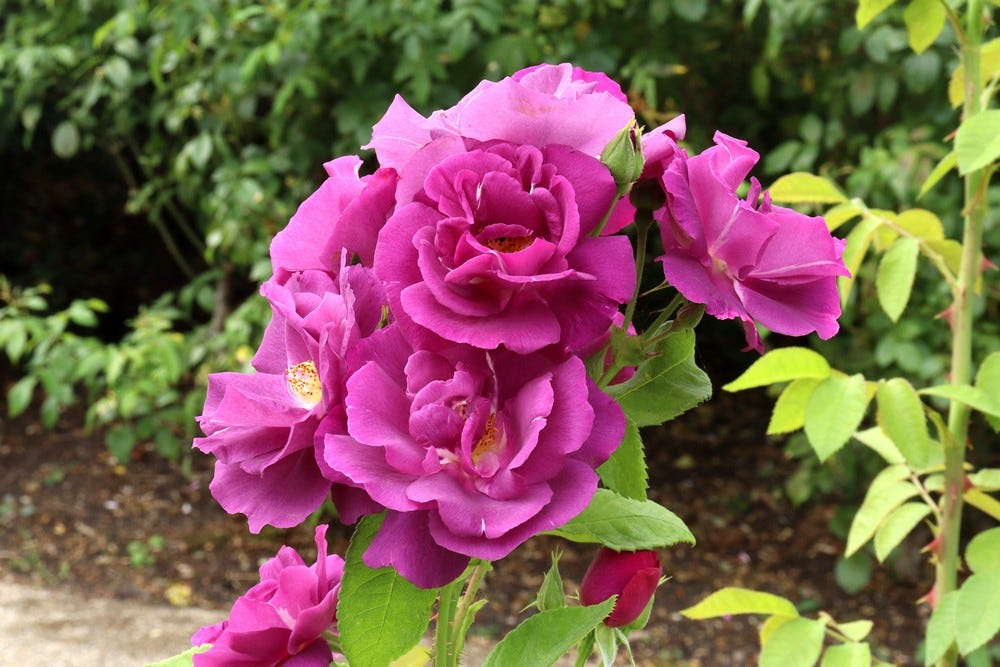
Enthusiasts of old roses might well make certain allowances for something truly precious. The biggest and most universal allowance is for a much shorter flowering season; modern rose breeding has long been aiming for an ever-lengthening season and better quality of flowering, but also stronger stems and better disease resistance. The aim is for the gardener to spend more time enjoying their roses and less time having to care for them.
Pruning still gets done of course, and I suppose some gardeners might accuse me of being a bit hard on roses even here. By far the worst roses I’ve had to deal with are the ones that have been neglected or not pruned hard enough. The reverence roses are afforded tends to mean gardeners fear pruning lest they get it wrong, but the truth is that with all but the youngest and smallest roses your pruning can range from firm to brutal. I never prune shrub roses by half, always by thirds. Generally the bushier floribunda roses get pruned by about a third because they’re seldom inclined to produce all that much growth each year, but with more vigorous roses I cut them down to about a third of their height. If I’m feeling particularly mean that ‘third’ might be closer to a quarter.
When it comes to ramblers and climbers I will happily remove two thirds of their stems each winter. They respond very well, sending masses of new shoots to replace that which was stolen from them while they were dormant. I’m not averse to fairly hard pruning in summer either if it’s needed; what’s seldom appreciated is that those nice compact roses bought in full flower from the nursery during summer are often on their second or sometimes third flush of growth by they time they’re bought. If they weren’t pruned during their growing season they would be far too big to fit in your car!
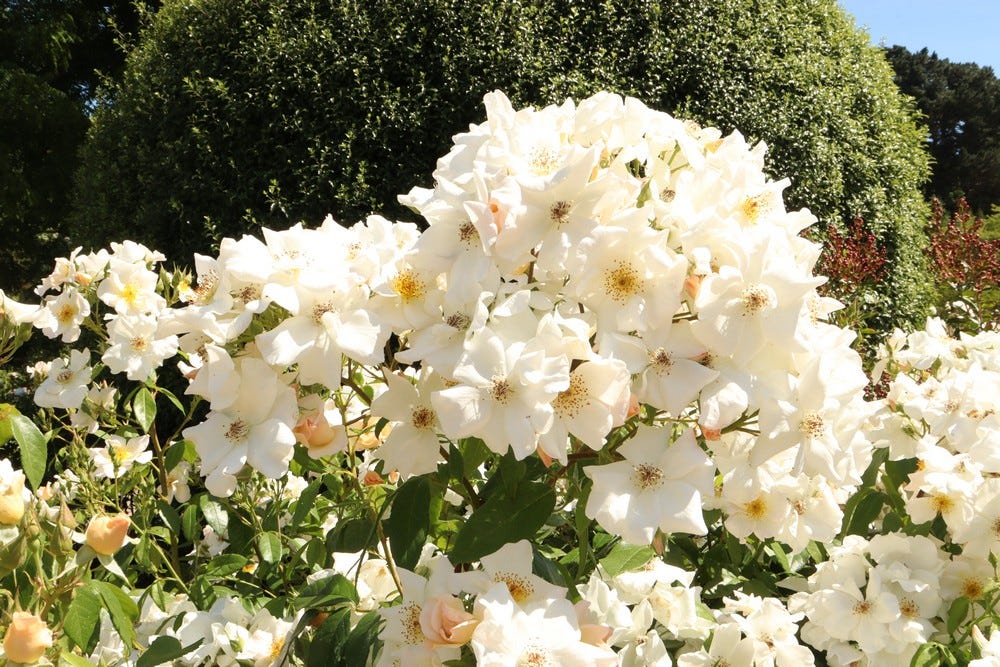
This again is where I think of roses as one step removed from wild brambles. If you hack brambles to the ground they will reshoot – remember to only prune above the graft union with your roses – and so often the more you attack them the better they grow. Leave brambles to make a thicket and they lose their energy, grow thick and woody, and then they will eventually die out. If they’ve spread themselves they will make new colonies which will also eventually lose their energy and die. Without intervention the bramble is always on the move, destined for a nomadic life of creating new colonies as it gives up ground elsewhere.
Roses that are not treated firmly are destined for the same decline. They will not live forever and, if not rejuvenated by the courageous gardener, they will eventually become woody and will fade away. No amount of cutting to an outward bud will save you if the plant goes too far. You can cut them, slash them, use hedge trimmers on them and even call in agricultural flails if the operator can keep the blades at the right height, but whatever you do just don’t treat them nicely.
Being mean to plants seems rather unnecessary in what is already a cruel world. Part of the catharsis of gardening comes from the fact that we can be unguardedly generous and kind to our plants in a way that we might not be able to in the wider world. They in turn reward our efforts with flowers, fruits and abundant growth. The problem is that all too often this abundance becomes entirely reliant on the gardener; if the gardener is not there with mulch and food and water the plants end up struggling as they try to adapt to their new realities. This is particularly obvious in gardens across those parts of Britain where challenging conditions have brought about sudden changes due to restrictions on water usage.
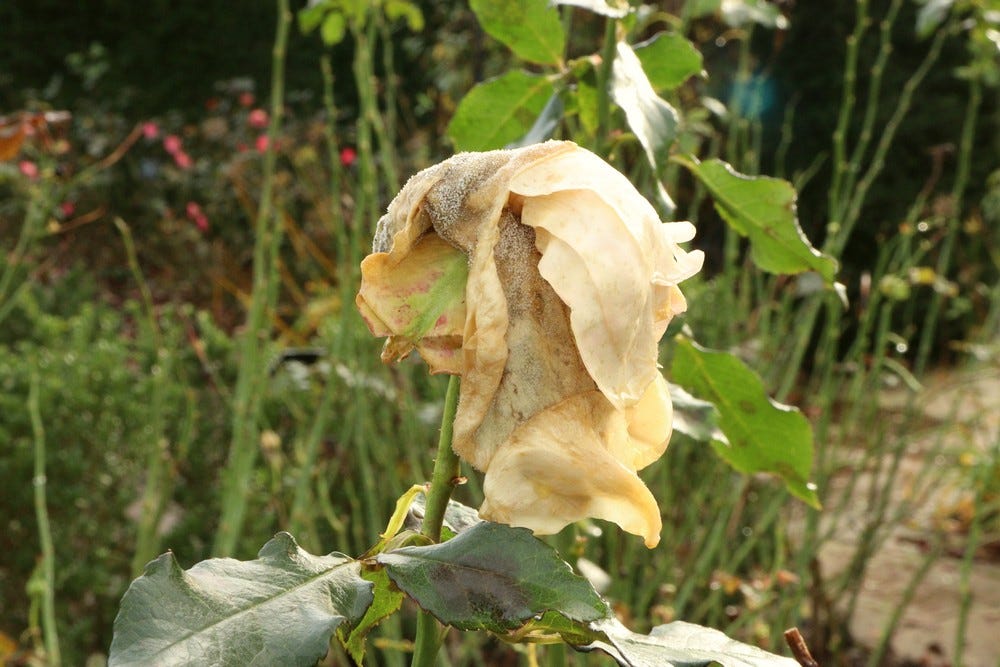
I suppose I’m probably not being mean to plants at all; instead I’m giving them tough love. I want plants to survive and thrive without me. My role as gardener is more about guiding the garden and its plants in a particular direction, not fussing over things. I may intervene if a plant really needs help or if another is a little too enthusiastic, but beyond that my role is about helping the plants to be at their best.
And crucially it is at their best, not my vision of how they should perform. If that means roses having fewer flowers but being able to weather any challenge that come their way then I know I’m doing my job properly. Beyond the roses this principle of encouraging plants to stand on their own roots as it were, to not rely on the interventions of the gardener, is rapidly becoming a cornerstone of modern gardening. It’s not about ‘neglect’ or being ‘mean’, but is instead about encouraging plants and gardens to be resilient on their own terms. We might have to change our ideas of what constitutes the perfect garden, but as we do so we take gardening from a chore-based activity and allow ourselves to embrace the idea that gardening should be about creativity and appreciation rather than a series of jobs we need to do.
Thanks for reading Pen And Trowel. This post is public so feel free to share it.
No posts
Comments
Nothing yet. Say the first thing.
Sign in to join the conversation.