
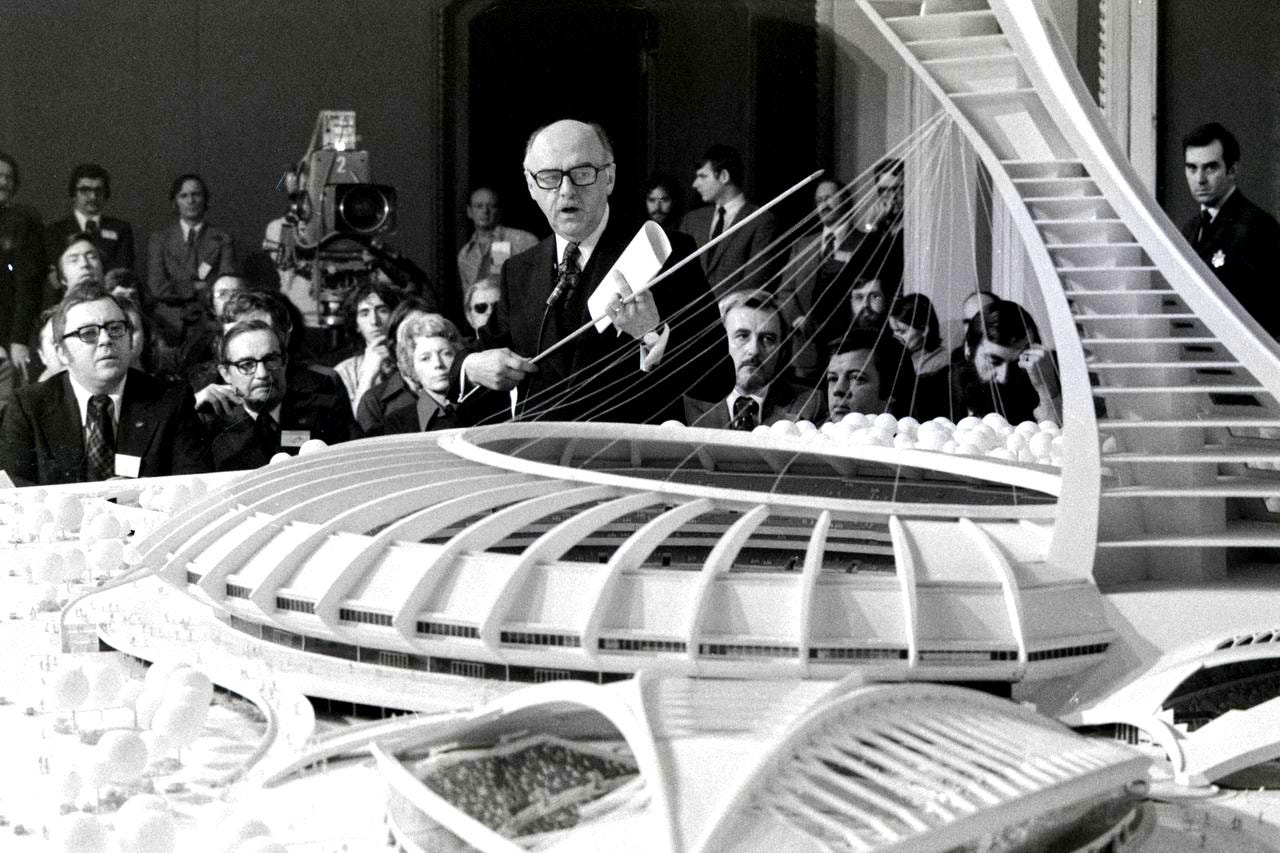
On Wednesday the Orchestre symphonique de Montréal continued a late-summer tradition by playing a free outdoor concert next to the Olympic Stadium in the city’s east end. It was a special occasion, marking the 50th anniversary of the Games of the 21st Olympiad, which took place a half-century ago in July 1976.
I skipped the concert, but the best available review says it was “perfect.” This sounds plausible: in its fifth season under music director Rafael Payare, the OSM is firing on all cylinders. But it’s odd to perfectly commemorate the Montreal Olympics, because they were not a perfect event. Fortunately another summer-long commemoration casts its memories in a harsher light.
Earlier on Wednesday, for the second time, I visited Montreal 1976: An Olympic Feat, the main summer exhibition at the McCord-Stewart Museum, across Sherbrooke Street from the main McGill University campus. McCord-Stewart is Montreal’s social-history museum, a modest outpost with a jumbled history and an expansion plan that’s currently on hold. Since she arrived in 2023 the museum’s president, Anne Eschapasse, has had some success giving it a sense of purpose and momentum. Never more so than with the Olympic exhibition. Curated by Christian Vachon and project managed by Catherine K. Laflamme, it is a master class in cutting to the chase.
Almost from the moment Montreal was announced as 1976’s Olympic city in 1969 to the moment the flame was lit in a beached concrete whale of a stadium, the Olympics were a mess. The Games themselves brought their share of glory, to Nadia Comaneci, Bruce-or-Caitlyn Jenner, Vasily Alekseyev, Canada’s lone most memorable silver medalist Greg Joy [UPDATE: I am reminded Canada had five silver medals in 1976. Sorry about that. As I say, I was 11 at the time — pw] and others. But getting that far was work, and the hangover after would crush a young provincial government and set the stage for one of Canada’s many national-unity showdowns.
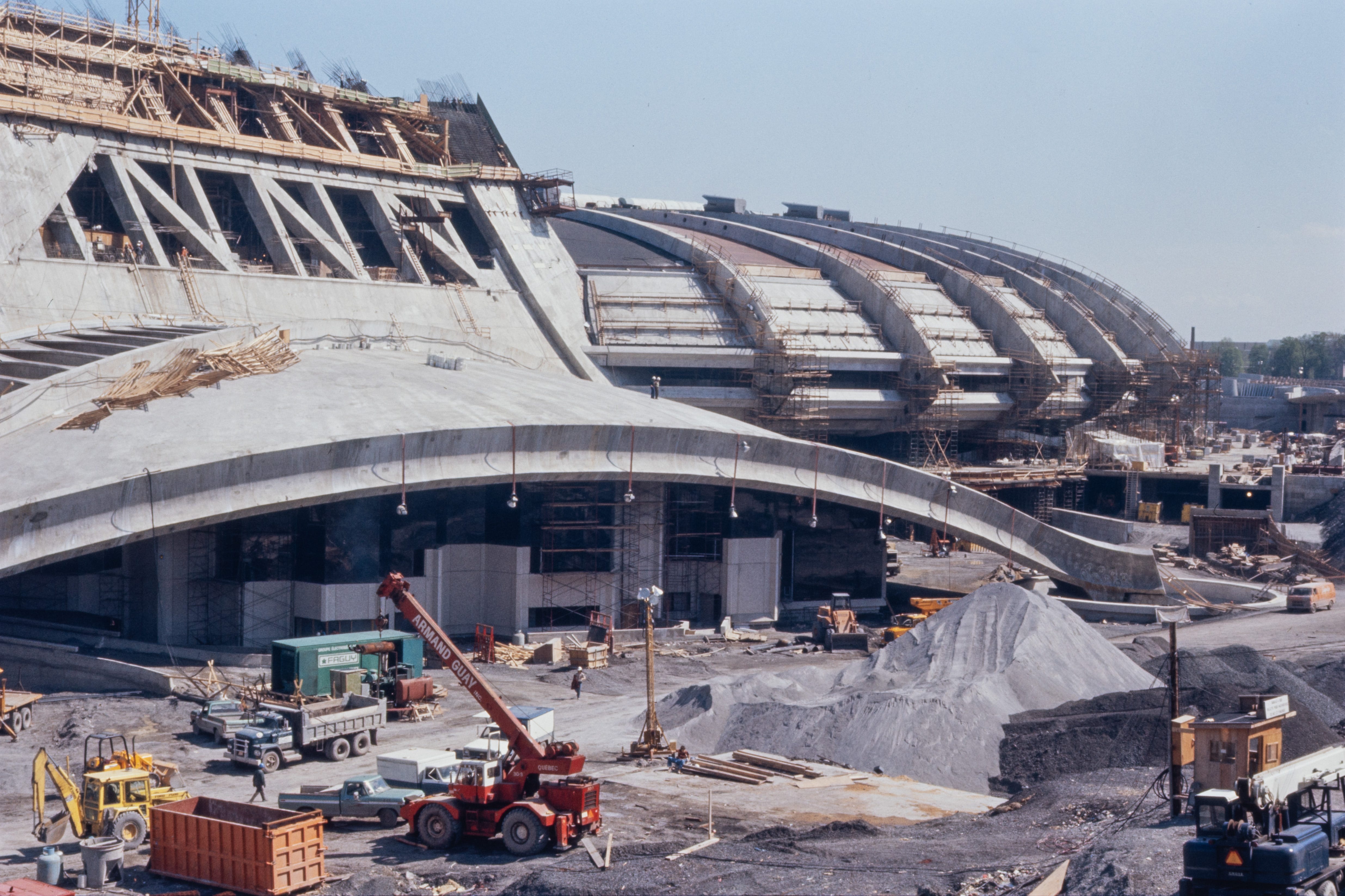
Conceived as a triumph of technocratic competence and global comity, the Montreal Games instead turned into one damned thing after another, a litany of cost overruns, social tension, ham-handed crackdowns by clownish city fathers, fear and anger and futility.
In hindsight, it’s all so familiar. In the last decade, people in my line of work have taken to fretting about “state capacity,” which is the cruelly limited ability of governments and societies to do things. But at the time it must have been terribly chastening, a cosmic rebuke to the hubris of the fussy men in suits who thought history had so organized itself as to ensure their victory.
Fittingly, An Olympic Feat depicts glorious athletics only in the exhibition’s last room, with much more space devoted to design and branding on one hand, and chaos and conflict on the other. The very first panel in the exhibition sets the scene. “Construction was already behind schedule by 1973,” it reads, “plagued by inflation due to the oil crisis, two major labour strikes, and a culture of corruption fuelled by mismanagement and a lack of oversight. The mayor’s obsession with Montreal’s image led to an ‘Olympic clean-up’ campaign characterized by censorship and the repression of community groups.”
Comments
Nothing yet. Say the first thing.
Sign in to join the conversation.