
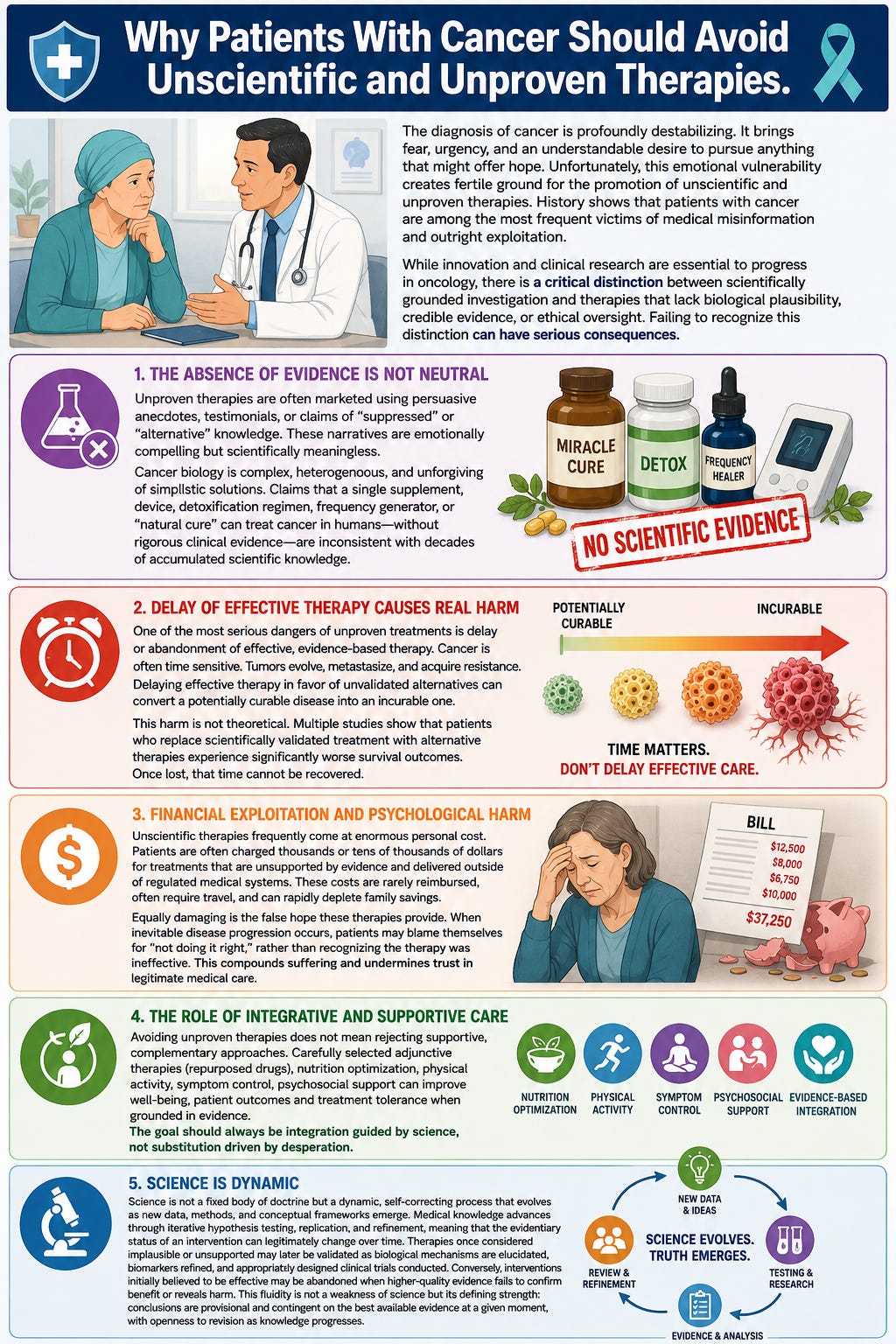
This article is Part 1 of a two-part series on cancer interventions that lack scientific evidence or may cause harm.

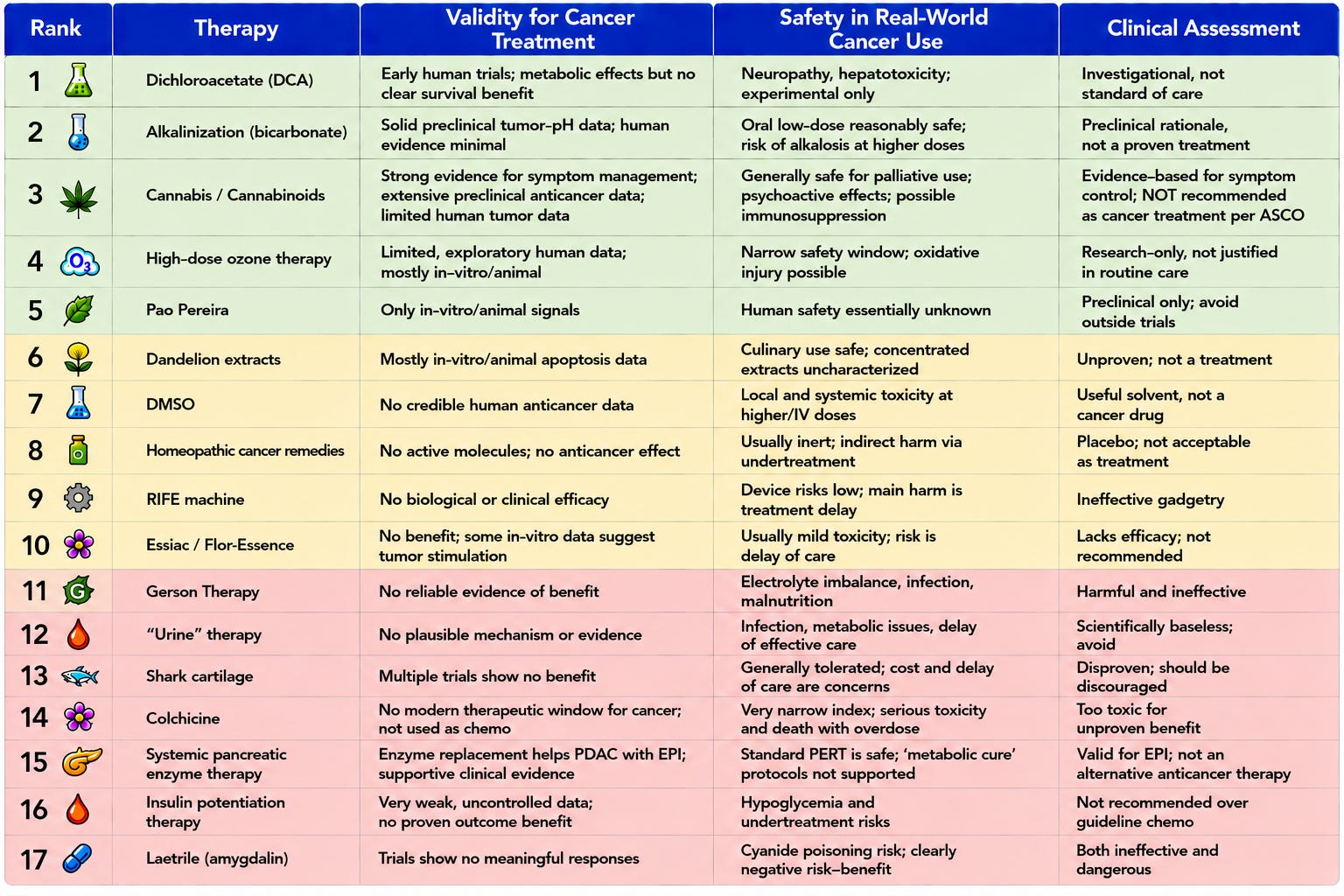
Green = investigational; Yellow weak/preclinical; Red = disapprove/dangerous
The Warburg effect is mediated in part by cancer cells inactivating a key enzyme complex called the pyruvate dehydrogenase complex (PDC), which acts as the control point for the entry of pyruvate into the mitochondria.(1) Cancer cells turn off PDC by upregulating pyruvate dehydrogenase kinase (PDK). Inhibition of PDC in the cancer cell is the key step in metabolic reprogramming. The glycolysis inhibitor dichloroacetate (DCA) inhibits PDK. The inhibition of PDK by DCA results in diminished glycolysis in the cancer cell, forcing the cancer cell to use oxidative phosphorylation in the mitochondria as the main source of ATP. (1, 2) There is limited data to support the use of DCA. Case reports have demonstrated “long-term stabilization” of patients with metastatic melanoma, colon cancer, and non-Hodgkin’s lymphoma treated with DCA. (3-5)
An oral dose of 1,000 mg daily or 500 mg three times daily has been recommended. DCA is described as toxic to multiple organs, including liver, kidneys, and nervous system, in toxicology reviews. The major limitation of DCA is that it is a well-known neurotoxin. Chronic DCA exposure can cause a length‑dependent sensory > motor neuropathy, with paresthesia, numbness, pain and distal weakness; it is typically reversible or partially reversible after dose reduction or discontinuation.(6) Severe encephalopathy has also been described. (7) In experimental animals, chronic DCA produces elevation of liver enzymes, hepatotoxicity, and even hepatic neoplasia at doses like those used in humans.(8) In clinical use for metabolic disorders and in oncology trials, mild, asymptomatic transaminase elevations have been reported; clinically significant liver injury appears uncommon but remains a theoretical concern, especially with long‑term therapy.
DCA is available as a dietary supplement, though its use as a compounded medication has been discontinued by the FDA based upon a review in which it determined that there was insufficient evidence for its use in cancer. The FDA expressed the view that the evidence of benefit and concerns about potential toxicity if not properly dosed, did not outweigh the evidence favoring the use of approved chemotherapies or other agents for cancer.
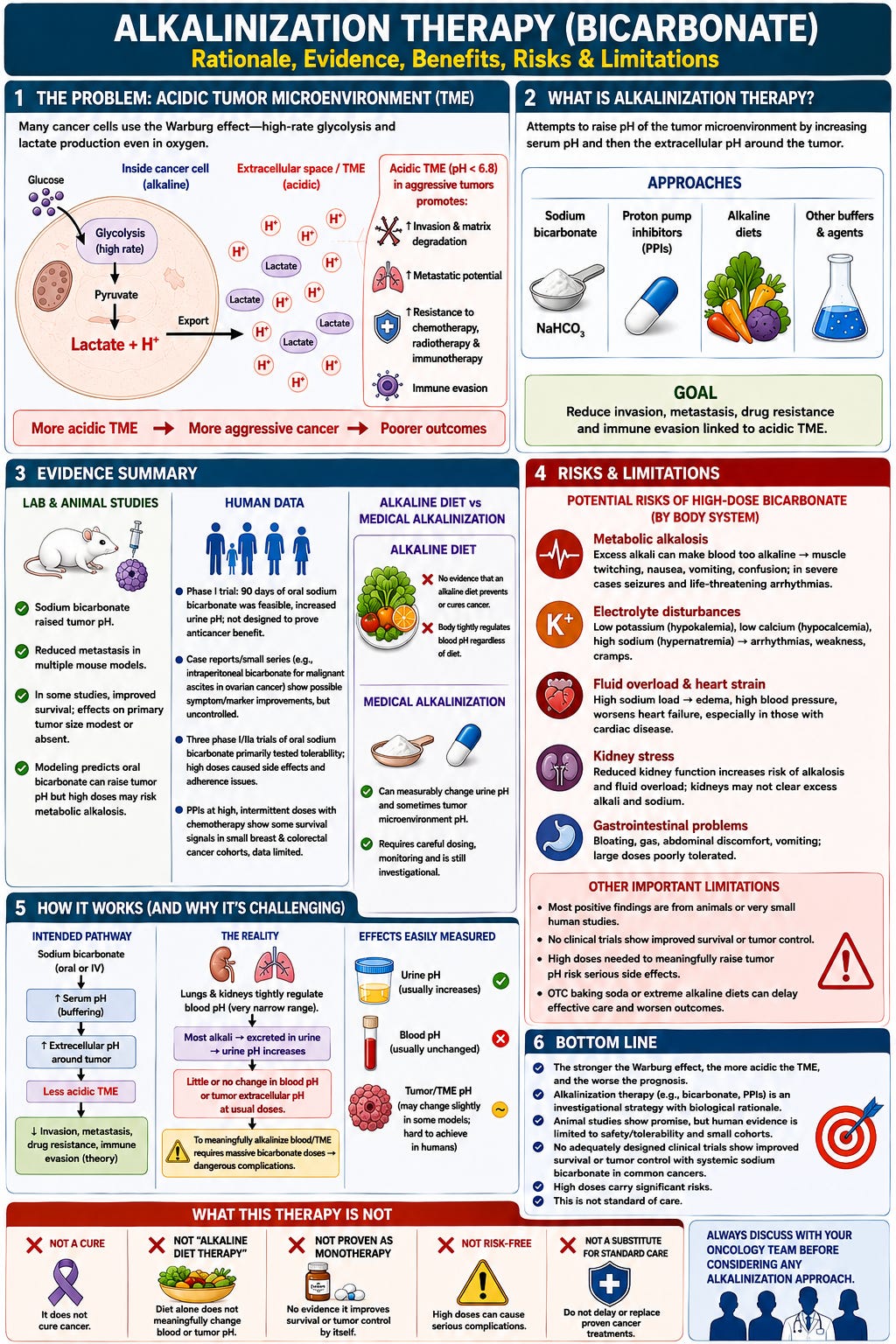
Alkalinization therapy for cancer is an experimental approach that aims to neutralize the acidic tumor microenvironment (TME), usually with agents like sodium bicarbonate or proton pump inhibitors, however it is not proven to improve patient outcome and remains outside standard treatments.(9)
The Warburg effect is the tendency of many cancer cells to rely on high‑rate glycolysis and lactate production even when oxygen is present. This metabolism generates lactic acid and protons (hydrogen ions), which are exported from the cell into the surrounding tissue. As a result, the tumor microenvironment (especially the extracellular space) becomes acidic, often with pH values below 6.8 in more aggressive tumor. (10) lactic acid production, which makes the space around tumors acidic while keeping the inside of cancer cells relatively alkaline.(10) There is substantial evidence that a more acidic tumor microenvironment promotes several aggressive features:
Increased local invasion and matrix degradation, consistent with the “acid‑mediated invasion” hypothesis.
Greater metastatic potential: in breast‑cancer models, tumors that acidify their environment more strongly produce more lung metastases.
Enhanced resistance to chemotherapy, radiotherapy, and some immunotherapies.
Because of these effects, tumor acidity arising from Warburg‑type metabolism is increasingly recognized as a negative prognostic factor and a driver of disease progression.
What alkalinization therapy is
“Alkalinization therapy” attempts to raise the pH of the tumor microenvironment by increasing serum pH and then the extracellular pH around the tumor.
“Alkalinization therapy” includes alkaline diets, oral or intravenous sodium bicarbonate, proton pump inhibitors, and other buffers intended to raise extracellular pH in and around tumors.(11)
The goal is to reduce invasion, metastasis, drug resistance, and immune evasion that are linked to acidic TME.(9)
Evidence from lab and animal studies
In multiple mouse models, sodium bicarbonate raised tumor pH, reduced metastasis, and in some cases improved survival, although effects on primary tumor size were modest or absent.(12)
Modeling work predicts that oral bicarbonate can effectively raise tumor pH but that human doses high enough for strong effects may risk metabolic alkalosis, especially in vulnerable patients.(13)
Human data
A small phase I trial in cancer patients tested long‑term oral sodium bicarbonate and focused on safety; it showed that 90 days of use at moderate doses was feasible and increased urine pH, but it was not designed to prove anticancer benefit. (ClinicalTrials.gov NCT02531919)
Case reports and very small series (for example, intraperitoneal bicarbonate for malignant ascites in ovarian cancer) suggest possible symptom and marker improvements, but these are uncontrolled and exploratory.(11)
A 2022 review of alkalizing agents notes that three phase I/IIa trials of oral sodium bicarbonate (including NCT02531919 and NCT01350583) primarily addressed tolerability and showed that high doses can cause significant side‑effects and adherence issues, limiting long‑term use. (13)
Other analyses emphasize that while bicarbonate can raise tumor pH in animal models, translation to humans is constrained by the risk of metabolic alkalosis at doses needed to meaningfully alter tumor pH.(12)
Proton pump inhibitors given at high, intermittent doses with chemotherapy have shown some signals of improved progression‑free and overall survival in small breast and colorectal cancer cohorts, but data are limited. (13)
Alkaline diet vs medical alkalinization
Reviews report no evidence that an “alkaline diet” alone can prevent or cure cancer; the body tightly regulates blood pH regardless of diet.(10)
While vegetables are beneficial for many reasons, their benefit is nutritional, not because they “alkalize the blood.”
In contrast, medical alkalinization (bicarbonate, PPIs, other buffers) can measurably change urine and sometimes microenvironmental pH but requires careful dosing and monitoring and is still investigational.(12)
Risks and limitations
High doses of sodium bicarbonate can cause metabolic alkalosis, fluid overload, electrolyte disturbances, and strain on the heart and kidneys, especially in older patients or those with kidney or cardiac disease (ClinicalTrials.gov NCT02531919).
Most positive findings come from animals or very small human studies; there are no clinical trials showing that alkalinization therapy alone improves patient outcomes or survival in common cancers.(9)
Over‑the‑counter use of baking soda or extreme alkaline diets instead of proven treatments can delay effective care and worsen outcomes.(14)
“Tumor Alkalinization” is an unphysiological and counterintuitive intervention.
The lungs and kidney tightly regulate blood pH within a very narrow range. Consequently, attempts to “alkalize the serum and tumor microenvironment” with alkali (bicarbonate) most frequently results in alkalinization of the urine with no change in blood pH or that of the extracellular space. The only was to alkalinize the blood and extracellular space is to administer massive volumes of bicarbonate (either orally or intravenously). This is a dangerous practice which will result in the following complications:(12-14)
Metabolic alkalosis: Excess sodium bicarbonate (baking soda) or other alkaline agents can make the blood too alkaline, leading to muscle twitching, nausea, vomiting, confusion, and in severe cases seizures and dangerous heart rhythm problems.
Electrolyte disturbances: High alkali intake can cause low potassium (hypokalemia), low calcium (hypocalcemia), and high sodium (hypernatremia), which increase the risk of arrhythmias, weakness, and cramps.
Fluid overload and heart strain: Oral or IV bicarbonate carries a high sodium load and can worsen edema, raise blood pressure, and exacerbate heart failure, especially in people with cardiac or kidney disease.
Kidney stress: Patients with reduced kidney function may not clear the excess alkali and sodium, making alkalosis and fluid overload more likely and more dangerous.
Gastrointestinal problems: Baking soda can cause bloating, gas, abdominal discomfort, and vomiting, and large doses can be poorly tolerated.
Conclusions
The stronger the Warburg effect, the greater the export of lactate and H⁺, leading to a more acidic tumor microenvironment, which is generally associated with increased invasiveness, treatment resistance, and poorer clinical outcomes
There are no adequately designed clinical trials demonstrating that systemic sodium bicarbonate therapy improves survival or tumor control in common cancers.(14)
❌ Not a cure
❌ Not “alkaline diet therapy”
❌ Not proven as monotherapy
❌ Not risk-free
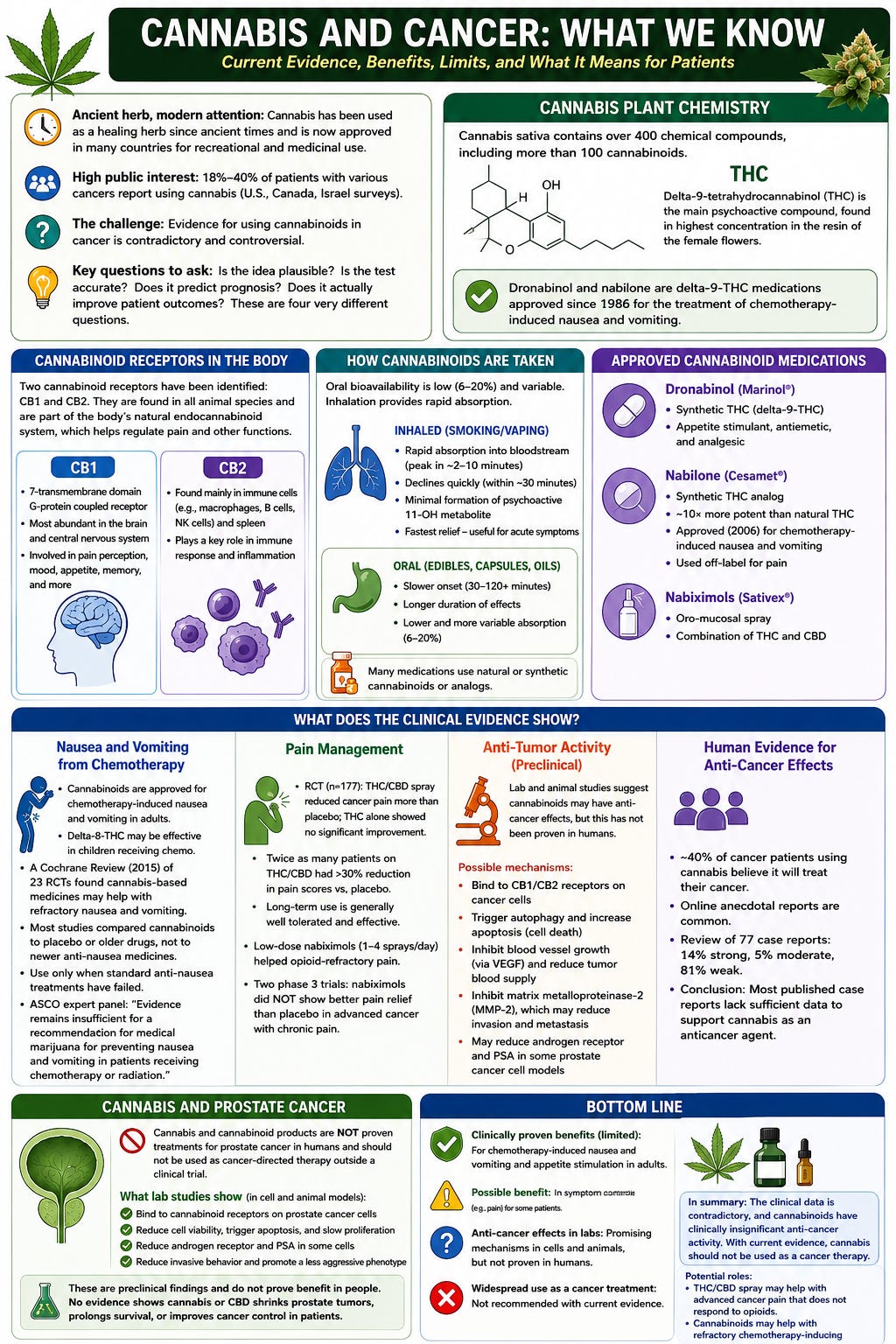
Cannabis has been used as a healing herb since ancient times and is currently approved in many countries for recreational and medicinal use. There has been extraordinary public interest in the use of cannabis and cannabinoids for the treatment of cancer and cancer-related side effects. The prevalence of cannabis use in patients with a variety of malignant diagnoses ranges from 18% to 40% in surveys conducted in the U.S., Canada, and Israel. (15) Despite the public enthusiasm for the efficacy of cannabinoids in treating cancer, the evidence supporting the use of cannabinoids is contradictory and controversial. (16)
The Cannabis sativa plant contains over 400 different chemical compounds. Over 100 of these are 21-carbon terpenophenolic cannabinoids. Delta-9-tetrahydrocannabinol (THC), the main psychoactive component, is found in the highest concentration in the resin exuded from the flowers of the female plant. Dronabinol and nabilone are delta-9-THC medications that have been licensed and approved for the treatment of chemotherapy-induced nausea and vomiting since 1986.
Two cannabinoid receptors have been identified in the human body — CB1 and CB2. These are 7-transmembrane domain G-protein coupled receptors. (15) The CB1 receptor is one of the most densely populated receptors in the human brain. The CB2 receptor was initially detected in macrophages and the marginal zone of the spleen, with a high concentration in B lymphocytes and NK cells. The receptors have been identified in all animal species. Animals have these receptors not because they were meant to use cannabis, but because, like endogenous opioids, endogenous cannabinoids also exist. It has been suggested that the reason for the existence of the system of endocannabinoids and cannabinoid receptors is to facilitate the modulation of pain.
Orally ingested cannabis has low (6–20%) and variable bioavailability. (16) When inhaled, cannabinoids are rapidly absorbed into the bloodstream (with a peak concentration of about 2 to 10 minutes, declining rapidly for 30 minutes) and minimally generate the psychoactive 11-OH metabolite. Smoking remains the most common and fastest route of administration and is especially helpful for the treatment of acute symptoms. There are many medications based on natural or synthetic cannabinoids or cannabinoid analogs. (16) Dronabinol (Marinol®, Mariette GA) is a 9-tetrahydrocannabinol (THC), used as an appetite stimulant, antiemetic, and analgesic. Nabilone (Cesamet®, Aliso Viejo CA) is a synthetic THC analog in oral form that is 10 times more potent than natural THC, approved in 2006 for chemotherapy-induced nausea and vomiting, and which has been used off-label for pain. Nabiximols is a mixture in an oro-mucosal spray form of THC and cannabidiol (CBD).
As of 2026, FDA-approved cannabis products and state-licensed medical marijuana have been moved to Schedule III; other cannabis remains Schedule I pending a broader DEA rescheduling decision expected later this year.
Cannabinoids have demonstrated efficacy in the treatment of chemotherapy-induced nausea and vomiting in adults and in appetite stimulation in adults. (17) Delta-8-THC was reported to be an effective anti-emetic in children receiving chemotherapy. (18) A Cochrane Review published in 2015 that included 23 RCTs concluded that cannabis-based medicines may be useful in treating refractory chemotherapy-induced nausea and vomiting. (19) Most of the anti-emetic research that was conducted compared medical cannabis treatment to placebo or various neuroleptic drugs. However, these studies did not compare cannabinoids with the anti-emetogenic new medicines, as the potential role of smoked marijuana in treating chemotherapy-induced nausea and vomiting. Thus, cannabis should be prescribed as an anti-emetic drug only when conventional anti-emetogenic treatment has failed. (16) Indeed, the American Society of Clinical Oncology convened an Expert Panel that concluded that “evidence remains insufficient for a recommendation regarding medical marijuana for the prevention of nausea and vomiting in patients with cancer receiving chemotherapy or radiation therapy.” (20)
A randomized, placebo-controlled trial that included 177 patients with cancer pain who experienced inadequate analgesia despite chronic opioid dosing showed statistically significant pain reduction with THC/CBD compared with placebo, while the THC group showed a non-significant improvement. (21) Twice as many patients taking THC/CBD showed a reduction of more than 30% from baseline pain numerical rating scale (NRS) score when compared with placebo. The long-term use of the THC/CBD spray is generally well-tolerated, with no evidence of a loss of effect for the relief of cancer-related pain with long-term use. (22) In a randomized, double-blind, placebo-controlled, graded-dose study, patients with advanced cancer and opioid-refractory pain nabiximols at a low dose (1–4 sprays/day) proved effective for pain control. (23) However, in two double-blind, randomized, placebo-controlled phase 3 studies, nabiximols (Sativex®) did not demonstrate superiority to placebo in reducing self-reported pain numerical rating scale (NRS) scores in advanced cancer patients with chronic pain unalleviated by optimized opioid therapy. (24)
There is evidence from in vitro studies and animal models that cannabis and cannabinoids may have anti-tumoral activity that has not yet been convincingly translated into benefit in humans.(15) Cannabinoids have direct tumor-killing effects by complexing with the CB1 receptor. This interaction leads to autophagy and increased apoptosis. In addition, cannabinoids have been demonstrated to inhibit vascular endothelial growth factor, thereby impairing angiogenesis, and decreasing tumor viability. In vitro studies also reveal that cannabinoids inhibit matrix mettaloproteinase-2, which allows cancer cells to become invasive and metastasize. Hence, pre-clinical evidence suggests that cannabinoids may inhibit tumor growth and proliferation by way of several mechanisms.
Nearly 40% of patients with cancer using cannabis believe it will treat their cancer, with numerous anecdotal reports shared online through social media platforms. Case reports have been published in peer-reviewed journals but often lack key clinical information to validate anticancer claims. Guggisberg et al reviewed case reports published in peer-reviewed journals and appraised them as weak, moderate, or strong based on the quality of evidence provided supporting an anticancer effect. (25) A total of 77 unique case reports described patients with various cancers (breast, central nervous system, gynecological, leukemia, lung, prostate, and pancreatic) using cannabis. These authors’ appraisal showed 14% of the case reports were considered strong, 5% moderate, and the remaining 81% were weak. They concluded that the review of clinical data suggests most published, peer-reviewed case reports provide insufficient data to support the claim for cannabis as an anticancer agent.
Cannabis and Prostate Cancer
Cannabis and cannabinoid products are not proven treatments for prostate cancer in humans and should not be used as cancer‑directed therapy outside a clinical trial, but they are being studied and may have lab‑level anticancer effects and a role in symptom control.
What lab studies show
In cell and animal models, various cannabinoids (including CBD and synthetic agonists of CB1/CB2 receptors) can: (26-35)
Bind to cannabinoid receptors that are present and sometimes overexpressed on prostate cancer cells.
Reduce prostate cancer cell viability, trigger apoptosis (programmed cell death), and slow proliferation in several prostate cancer cell lines.
Decrease expression of androgen receptor and PSA in some androgen‑sensitive prostate cancer cells, suggesting potential interference with androgen signaling.
Reduce invasive behavior and promote a more epithelial (less aggressive) phenotype in certain cell models.
These findings are promising but are all preclinical (test tube or animal) and do not prove benefit in people. There is currently no evidence that cannabis or CBD shrinks prostate tumors, prolongs survival, or improves cancer control in patients.
In summary, while the clinical data is contradictory, cannabinoids have clinically insignificant anti-cancer activity. Therefore, with the current state of evidence, the widespread use of cannabis cannot be recommended. (16) However, the use of the THC/CBD spray may be helpful in patients with advanced cancer and opioid-refractory pain. Cannabinoids may also be useful in patients with refractory chemotherapy-induced nausea and vomiting.
High-dose ozone therapy for cancer is considered experimental and should be viewed, at most, as a possible adjunct to standard oncology care rather than a proven cancer treatment or cure.(36)
What it is
High-dose ozone therapy usually means repeated infusions of a patient’s blood mixed with medical ozone and reinfused (major autohemotherapy), sometimes at doses higher than traditional ozone protocols. It is offered mainly in integrative/alternative clinics, not in mainstream medical centers, and protocols vary widely (concentration, volume, frequency).
What the evidence shows
Lab and animal studies
Ozone can increase reactive oxygen species in cancer cells, damage mitochondria, and trigger apoptosis in several tumor cell lines (breast, lung, colorectal, melanoma).(36)
In models of breast and esophageal cancer, ozone (alone or with radiation/chemo) has reduced tumor volume and slowed growth, suggesting a radio-sensitizing or chemo-sensitizing effect.(37, 38)
Human studies (very limited, small and heterogeneous)
Small uncontrolled or pilot studies in glioma, breast and gynecologic cancers suggest that adding ozone to chemoradiation may improve fatigue, pain, local symptoms, and treatment tolerance, with similar or slightly better tumor responses in some reports.(38)
Reviews conclude that the best-supported role is as an adjuvant to reduce toxicity (fatigue, gastrointestinal effects, chronic pelvic pain), not an effective anticancer therapy.(38, 39)
No adequately designed clinical trials
There are no large, high‑quality clinical trials showing that high‑dose ozone improves overall survival or clearly reduces recurrence in cancer.
Current literature repeatedly calls for rigorous trials before any routine oncologic use is recommended.(39)
Conclusion
Major cancer organizations and professional societies do not currently recommend ozone therapy as a cancer treatment because of insufficient evidence of efficacy and lack of standardized, regulated protocols.(38)
Some reviews from conventional journals accept that ozone may be a “promising and safe adjunctive strategy” for symptom relief and treatment tolerance but emphasize that this is preliminary and should not replace evidence‑based treatment.(40)
Systemic pancreatic (proteolytic) enzyme therapy for cancer remains experimental and unproven as an anticancer treatment; current evidence does not support using it instead of scientifically based therapies, though enzymes are routinely used to treat digestive problems in pancreatic cancer. (41)
What “systemic pancreatic enzyme therapy” means
Refers to high‑dose oral or rectal pancreatic proteolytic enzymes (trypsin, chymotrypsin, etc.) intended to enter the bloodstream and act directly on tumors throughout the body, often as part of alternative regimens like the Gonzalez protocol or newer pro‑enzyme formulations.(42)
John Beard (early 1900s) proposed that pancreatic enzymes suppress trophoblast-like behavior of cancer cells. Beards theories were dismissed by the medical world a decade later, but various practitioners have kept the concept alive through the publication of case reports of cancer patients treated with pancreatic proteolytic enzymes. (42) This theory was further popularized by William Kelley and Nicholas Gonzalez, especially in pancreatic cancer. Gonzalez therapy combined enzymes with extreme diets and detox regimens.
Systemic pancreatic enzyme therapy is different from standard pancreatic enzyme replacement therapy (PERT), which is given with meals to aid digestion in patients with pancreatic exocrine insufficiency.(43)
Proposed anticancer mechanisms (theoretical)
1. Proteolysis of tumor-associated proteins
Degradation of fibrin coatings thought to shield tumor cells from immune detection
Breakdown of extracellular matrix supporting invasion
2. Immune modulation
Reduced immune complex burden
Enhanced NK cell and macrophage activity (preclinical)
3. Anti-inflammatory effects
Proteolytic enzymes may downregulate NF-κB signaling
Reduction of tumor-promoting inflammation
4. Effects on metastasis
Hypothesized reduction in platelet–tumor cell aggregation
Possible inhibition of circulating tumor cell survival
These mechanisms are largely inferred from in vitro or animal data, not proven in humans.
Evidence for anticancer effects
A large randomized clinical trial in advanced pancreatic cancer compared intensive proteolytic enzyme therapy plus diet (Gonzalez regimen) with standard gemcitabine chemotherapy; patients who chose gemcitabine lived about 14 months versus about 4 months with the enzyme regimen and had better quality of life (ClinicalTrials.gov NCT00003851)
Earlier cohort and case‑series reports claimed prolonged survival with the Gonzalez protocol, but these were uncontrolled and subject to major bias, and their findings were not confirmed in the randomized trial.(44)
A preclinical formulation of pancreatic pro‑enzymes (trypsinogen and chymotrypsinogen, “PRP”) has shown tumor‑growth inhibition, reduced invasion, and anti‑angiogenic effects in cell cultures and mouse models of pancreatic and ovarian cancer but has yet to be demonstrated to be beneficial in patients with cancer.(45)
A systematic review concluded there is no convincing evidence of anticancer benefit.(46) This review reported reductions in some tumor‑ and treatment‑related symptoms and side effects, but not definitive disease‑control or survival benefits.
Potential risks
Financial cost
False hope
Delay or abandonment of effective therapy
Malnutrition when combined with restrictive diets
Conclusion
Systemic pancreatic enzyme therapy for cancer is biologically interesting but clinically unsupported.
Insulin potentiation therapy (IPT or IPTLD) is an alternative cancer treatment that combines intravenous insulin with low‑dose chemotherapy, but it has not been proven effective and is considered experimental and potentially harmful. Major cancer centers and insurers advise against using it in place of standard, evidence‑based cancer care.
What IPT Is
IPT involves giving intravenous insulin to drive blood sugar to a low level, followed minutes later by about 10–25% of the usual chemotherapy dose.
Proponents claim cancer cells have more insulin receptors and rely more on glucose, so insulin supposedly helps them absorb chemotherapy more selectively and allows lower chemo dosing with fewer side effects.
In vitro studies suggest that insulin may potentiate the effects of chemotherapeutic drugs.(47) However, there are no clinical studies to support this concept. Furthermore, such treatment may be hazardous (causing severe hypoglycemia) and is counterintuitive, as it may likely promote tumor cell proliferation. Insulin is responsible for cellular glucose uptake and mitogenic signaling cascades in cancer cells and can promote cell proliferation, survival, invasiveness, angiogenesis, immunomodulation, and chemoresistance (as reviewed in this document). (48) Tumor cells express significantly more insulin receptors on their cell surface as compared to normal effects. (49) Insulin will promote further glycolysis and provide metabolic fuel for the cancer cell!
Published human data consist mostly of small, poor‑quality, uncontrolled case series; they do not meet the standards needed to change standard care. A few lab and animal studies show insulin can increase chemosensitivity of cancer cells, but these preclinical findings do not prove that full IPT protocols are safe or effective in patients. Insulin in non‑diabetic people can cause dangerous hypoglycemia (very low blood sugar), leading to confusion, seizures, coma, or death. Practitioners of IPT are convinced by the efficacy of this technique despite the lack of convincing scientific evidence. The role of this treatment modality therefore remains uncertain
There are only two published clinical trials assessing insulin potentiation therapy. Damyanov et al enrolled 16 patients with castration-resistant prostate cancer to receive insulin (0.4 U/kg) and docetaxel or a non-standard drug combination. (48) Those patients who received insulin and chemotherapy had a worse outcome (median survival of 11 months compared with 18.9 months). The second prospective study examined methotrexate response and toxicity in 30 patients with metastatic breast cancer. (50) Stable disease was reported to be more frequent in the group receiving methotrexate plus insulin compared with those receiving methotrexate alone; however, patient-centered outcomes were not provided.
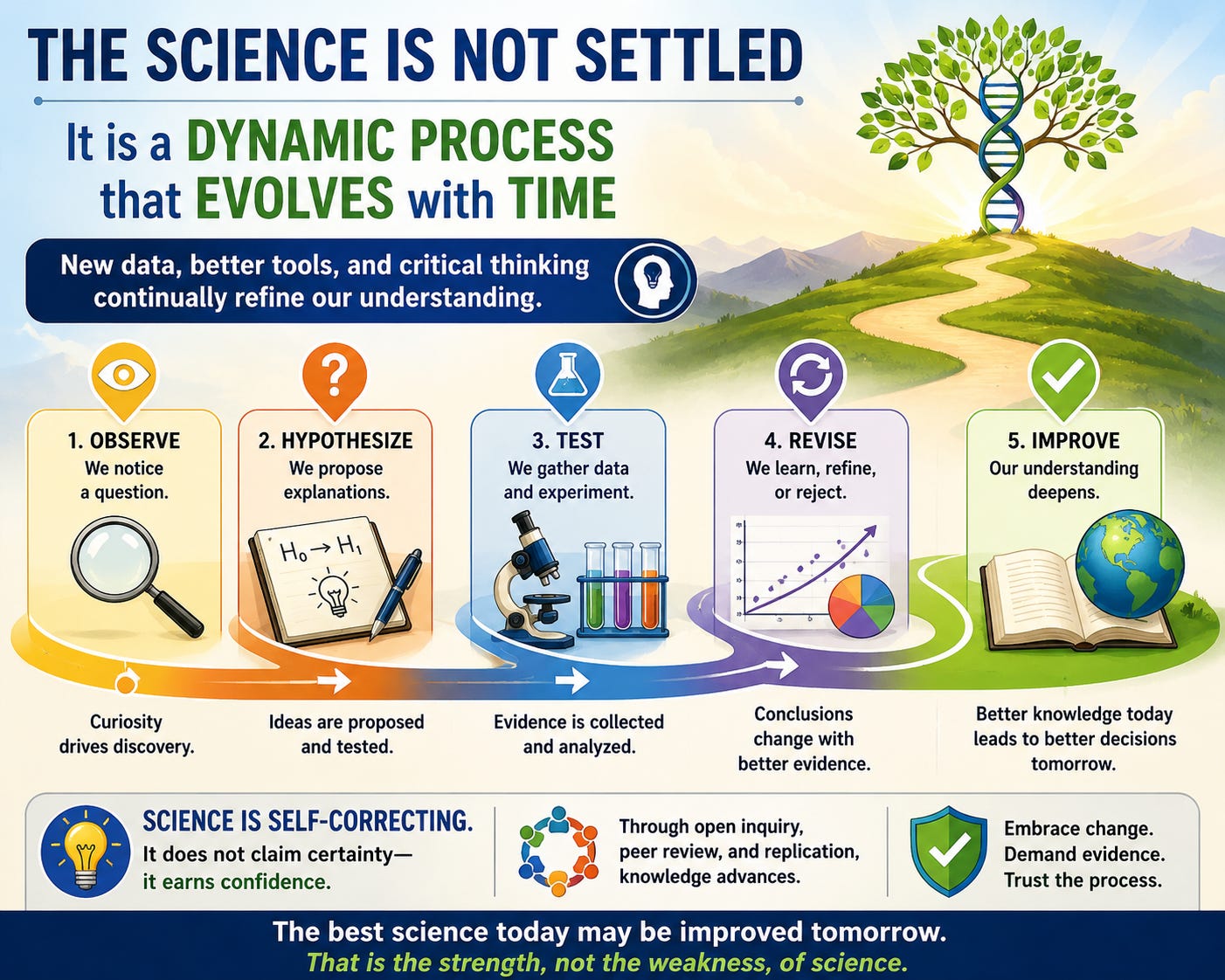
In Part 2 of this series, I will review several widely promoted cancer interventions that have little scientific support and in some cases may be harmful. These include therapies that are frequently discussed in alternative medicine circles but rarely examined carefully in the scientific literature.
References
1. Stacpoole PW. Therapeutic Targeting of the Pyruvate Dehydrogenase Complex/Pyruvate Dehydrogenase Kinase (PDC/PDK) Axis in Cancer. J Natl. Cancer Inst. 2017;109(11).
2. Abdel-Wahab AF, Mahmoud W, Al-Harizy RM. Targeting glucose metabolism to suppress cancer progression: prospective of anti-glycolytic cancer therapy. Pharmacol. Res. 2019;150:104511.
3. Strum SB, Adalsteinsson O, Black RR, Segal D, Peress NL, Waldenfels J. Case report: Sodium dichloroacetate (DCA) inhibition of the “Warburg Effect” in a human cancer patient: complete response in non-Hodgkin’s lymphoma after disease progression with rituximab-CHOP. J Bioenerg. Biomembr. 2013;45(3):307–15.
4. Khan A, Andrews D, Blackburn AC. Long-term stabilization of stage 4 colon cancer using sodium dichloroacetate therapy. World J Clin. Cases. 2016;4(10):336–43.
5. Khan A, Andrews D, Shainhouse J, Blackburn AC. Long-term stabilization of metastatic melanoma with sodium dichloroacetate. World J Clin. Oncol. 2017;8(4):371–7.
6. Stacpoole PW, Martyniuk CJ, James MO, Calcutt NA. Dichloroacetate-induced peripheral neuropathy. Int Rev Neurobiol. 2019;145:211–38.
7. Brandsma D, Dorlo TP, Haanen JH, Beijnen JH, Boogerd W. Severe encephalopathy and polyneuropathy induced by dichloroacetate. J Neurol. 2010;257(12):2099–100.
8. Stacpoole PW, Henderson GN, Yan Z, James MO. Clinical pharmacology and toxicology of dichloroacetate. Environ Health Perspect. 1998;106 Suppl 4(Suppl 4):989–94.
9. Hamaguchi R, Isowa M, Narui R, Morikawa H, Wada H. Clinical review of alkalization therapy in cancer treatment. Front Oncol. 2022;12:1003588.
10. Bogdanov A, Bogdanov A, Chubenko V, Volkov N, Moiseenko F, Moiseyenko V. Tumor acidity: From hallmark of cancer to target of treatment. Front Oncol. 2022;12:979154.
11. Bogdanov A, Verlov N, Bogdanov A, Burdakov V, Semiletov V, Egorenkov V, et al. Tumor alkalization therapy: misconception or good therapeutics perspective? - the case of malignant ascites. Front Oncol. 2024;14:1342802.
12. Martin NK, Robey IF, Gaffney EA, Gillies RJ, Gatenby RA, Maini PK. Predicting the safety and efficacy of buffer therapy to raise tumour pHe: an integrative modelling study. Br J Cancer. 2012;106(7):1280–7.
13. Gillies RJ, Ibrahim-Hashim A, Ordway B, Gatenby RA. Back to basic: Trials and tribulations of alkalizing agents in cancer. Front Oncol. 2022;12:981718.
14. Yang M, Zhong X, Yuan Y. Does Baking Soda Function as a Magic Bullet for Patients With Cancer? A Mini Review. Integr Cancer Ther. 2020;19:1534735420922579.
15. Abrams DI. Cannabis, Cannabinoids and Cannabis-Based Medicines in Cancer Care. Integr Cancer Ther. 2022;21:15347354221081772.
16. Abu-Amna M, Salti T, Khoury M, Cohen I, Bar-Sela G. Medical Cannabis in Oncology: a Valuable Unappreciated Remedy or an Undesirable Risk? Curr Treat Options Oncol. 2021;22(2):16.
17. Diorio C, Kelly KM, Afungchwi GM, Ladas EJ, Marjerrison S. Nutritional traditional and complementary medicine strategies in pediatric cancer: A narrative review. Pediatr Blood Cancer. 2020;67 Suppl 3:e28324.
18. Abrahamov A, Abrahamov A, Mechoulam R. An efficient new cannabinoid antiemetic in pediatric oncology. Life Sci. 1995;56(23-24):2097–102.
19. Smith LA, Azariah F, Lavender VT, Stoner NS, Bettiol S. Cannabinoids for nausea and vomiting in adults with cancer receiving chemotherapy. Cochrane Database Syst Rev. 2015;2015(11):Cd009464.
20. Hesketh PJ, Kris MG, Basch E, Bohlke K, Barbour SY, Clark-Snow RA, et al. Antiemetics: ASCO Guideline Update. J Clin Oncol. 2020;38(24):2782–97.
21. Johnson JR, Burnell-Nugent M, Lossignol D, Ganae-Motan ED, Potts R, Fallon MT. Multicenter, double-blind, randomized, placebo-controlled, parallel-group study of the efficacy, safety, and tolerability of THC:CBD extract and THC extract in patients with intractable cancer-related pain. J Pain Symptom Manage. 2010;39(2):167–79.
22. Johnson JR, Lossignol D, Burnell-Nugent M, Fallon MT. An open-label extension study to investigate the long-term safety and tolerability of THC/CBD oromucosal spray and oromucosal THC spray in patients with terminal cancer-related pain refractory to strong opioid analgesics. J Pain Symptom Manage. 2013;46(2):207–18.
23. Portenoy RK, Ganae-Motan ED, Allende S, Yanagihara R, Shaiova L, Weinstein S, et al. Nabiximols for opioid-treated cancer patients with poorly-controlled chronic pain: a randomized, placebo-controlled, graded-dose trial. J Pain. 2012;13(5):438–49.
24. Fallon MT, Albert Lux E, McQuade R, Rossetti S, Sanchez R, Sun W, et al. Sativex oromucosal spray as adjunctive therapy in advanced cancer patients with chronic pain unalleviated by optimized opioid therapy: two double-blind, randomized, placebo-controlled phase 3 studies. Br J Pain. 2017;11(3):119–33.
25. Guggisberg J, Schumacher M, Gilmore G, Zylla DM. Cannabis as an Anticancer Agent: A Review of Clinical Data and Assessment of Case Reports. Cannabis Cannabinoid Res. 2022;7(1):24–33.
26. Sarfaraz S, Afaq F, Adhami VM, Mukhtar H. Cannabinoid receptor as a novel target for the treatment of prostate cancer. Cancer Res. 2005;65(5):1635–41.
27. HA AL, Abuarab SF, Salamah HM, Ishqair AH, Dwikat MF, Nourelden AZ, et al. Cannabis and cancer: unveiling the potential of a green ally in breast, colorectal, and prostate cancer. J Cannabis Res. 2024;6(1):24.
28. De Petrocellis L, Ligresti A, Schiano Moriello A, Iappelli M, Verde R, Stott CG, et al. Non-THC cannabinoids inhibit prostate carcinoma growth in vitro and in vivo: pro-apoptotic effects and underlying mechanisms. Br J Pharmacol. 2013;168(1):79–102.
29. Guindon J, Hohmann AG. The endocannabinoid system and cancer: therapeutic implication. Br J Pharmacol. 2011;163(7):1447–63.
30. Li J, Gu T, Hu S, Jin B. Anti-proliferative effect of Cannabidiol in Prostate cancer cell PC3 is mediated by apoptotic cell death, NFκB activation, increased oxidative stress, and lower reduced glutathione status. PLoS One. 2023;18(10):e0286758.
31. Motadi LR, Jantjies ZE, Moleya B. Cannabidiol and Cannabis Sativa as a potential treatment in vitro prostate cancer cells silenced with RBBp6 and PC3 xenograft. Mol Biol Rep. 2023;50(5):4039–47.
32. O’Reilly E, Khalifa K, Cosgrave J, Azam H, Prencipe M, Simpson JC, et al. Cannabidiol Inhibits the Proliferation and Invasiveness of Prostate Cancer Cells. J Nat Prod. 2023;86(9):2151–61.
33. Singh K, Jamshidi N, Zomer R, Piva TJ, Mantri N. Cannabinoids and Prostate Cancer: A Systematic Review of Animal Studies. Int J Mol Sci. 2020;21(17).
34. Singh K, Nassar N, Bachari A, Schanknecht E, Telukutla S, Zomer R, et al. The Pathophysiology and the Therapeutic Potential of Cannabinoids in Prostate Cancer. Cancers (Basel). 2021;13(16).
35. Ramos JA, Bianco FJ. The role of cannabinoids in prostate cancer: Basic science perspective and potential clinical applications. Indian J Urol. 2012;28(1):9–14.
36. Yıldırım M, Erkişi S, Yılmaz H, Ünsal N, İnaç E, Tanrıver Y, et al. The apoptotic effect of ozone therapy on mitochondrial activity of highly metastatic breast cancer cell line MDA-MB-231 using in vitro approaches. J Interv Med. 2022;5(2):64–71.
37. Guo J, Guo J, Cheng B, Gong M, Sun X, Zhang H, et al. Ozone enhances the efficacy of radiation therapy in esophageal cancer. J Radiat Res. 2024;65(4):467–73.
38. Clavo B, Santana-Rodríguez N, Llontop P, Gutiérrez D, Suárez G, López L, et al. Ozone Therapy as Adjuvant for Cancer Treatment: Is Further Research Warranted? Evid Based Complement Alternat Med. 2018;2018:7931849.
39. Lei L, Xue X, Feng G, Wang X, Jiang Y. Medical ozone treatment for pain, fatigue, anxiety, and depression in cancer patients: a scoping review. Front Psychol. 2025;16:1687754.
40. Li Y, Pu R. Ozone Therapy for Breast Cancer: An Integrative Literature Review. Integr Cancer Ther. 2024;23:15347354241226667.
41. Pezzilli R, Caccialanza R, Capurso G, Brunetti O, Milella M, Falconi M. Pancreatic Enzyme Replacement Therapy in Pancreatic Cancer. Cancers (Basel). 2020;12(2).
42. Isaacs LL. Pancreatic Proteolytic Enzymes and Cancer: New Support for an Old Theory. Integr Cancer Ther. 2022;21:15347354221096077.
43. Brennan GT, Saif MW. Pancreatic Enzyme Replacement Therapy: A Concise Review. Jop. 2019;20(5):121–5.
44. Josefson D. US cancer institute funds trial of complementary therapy. Bmj. 2000;320(7251):1690.
45. Perán M, López-Ruiz E, García M, Nadaraia-Hoke S, Brandt R, Marchal JA, et al. A formulation of pancreatic pro-enzymes provides potent anti-tumour efficacy: a pilot study focused on pancreatic and ovarian cancer. Sci Rep. 2017;7(1):13998.
46. Beuth J. Proteolytic enzyme therapy in evidence-based complementary oncology: fact or fiction? Integr Cancer Ther. 2008;7(4):311–6.
47. Agrawal S, Wozniak M, Luc M, Makuch S, Pielka E, Agrawal AK, et al. Insulin enhancement of the antitumor activity of chemotherapeutic agents in colorectal cancer is linked with downregulating PIK3CA and GRB2. Sci Rep. 2019;9(1):16647.
48. Sissung TM, Schmidt KT, Figg WD. Insulin potentiation therapy for cancer? Lancet Oncol. 2019;20(2):191–2.
49. Winters N, Kelley JH. The Metabolic Approach to Cancer: Integrating Deep Nutrition, the Ketogenic Diet, and Nontoxic Bio-Individualized Therapies. White river Junction, VT: Chelsea Green Publishing; 2017.
50. Lasalvia-Prisco E, Cucchi S, Vázquez J, Lasalvia-Galante E, Golomar W, Gordon W. Insulin-induced enhancement of antitumoral response to methotrexate in breast cancer patients. Cancer Chemother. Pharmacol. 2004;53(3):220–4.
Comments
Nothing yet. Say the first thing.
Sign in to join the conversation.