
What have we done? And why? Join me ‘On Earth As It Is’ . . . because only by understanding the past will we free ourselves from its tyranny.
Next Thursday: The seven men who brought war to Europe
‘Serbia, which is at present the pivot of Pan-Slavist policy’ should be ‘eliminated as a political factor in the Balkans’ - Emperor Franz Joseph of Austria-Hungary, after the murder of Franz Ferdinand, July 1914.
FOR A FEW DAYS, European governments were unmoved by the murder of the heir to the Austro-Hungarian throne.
Nobody then imagined that Franz Ferdinand’s death would trigger events leading to the outbreak of a world war.
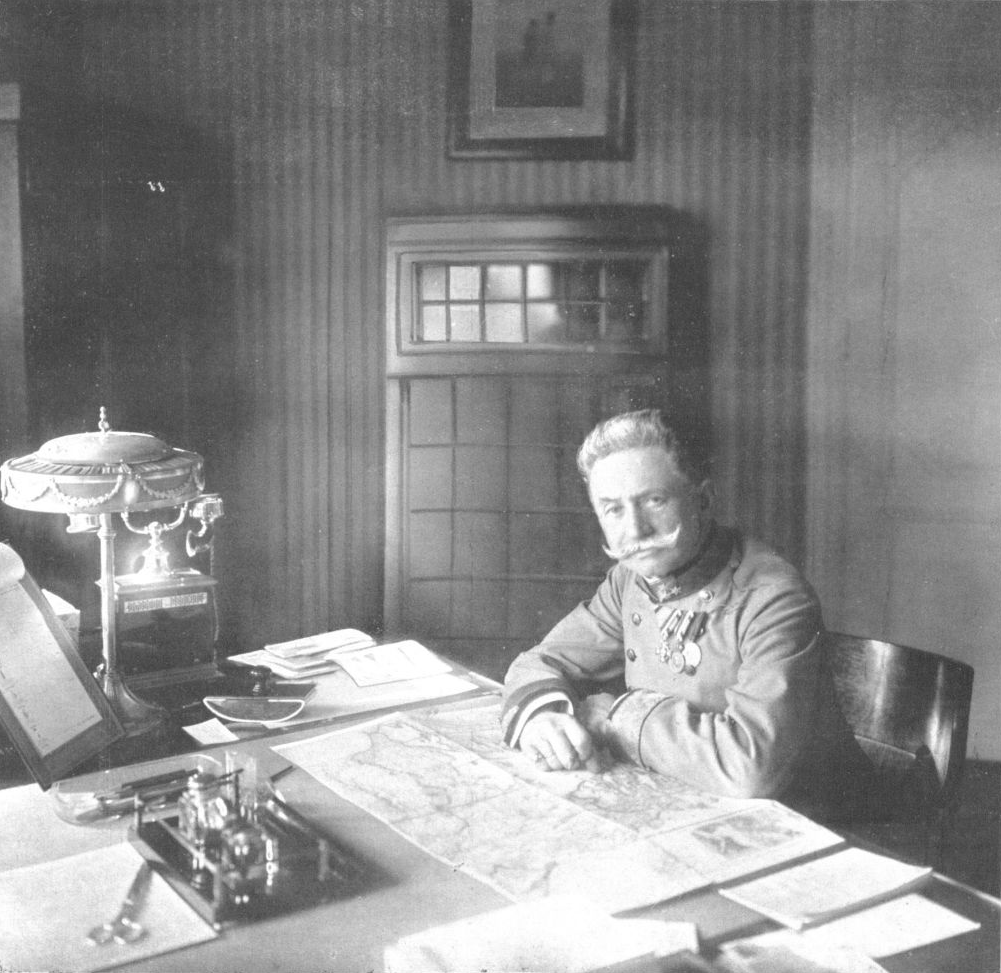
No head of state acted with any urgency. The assassination was a regrettable tragedy, which would exacerbate Austro-Serbian tensions, no more.
The outpourings of anger in the press and on the streets – with the unleashing of lynch mobs against Serbs – flared up and died down.
Not until four days later did Vienna start to stamp and fume at this ‘outrageous attack’ on the dignity of the monarchy.
The likely repercussions for Serb-Austrian relations were not high in Raymond Poincaré’s mind, for example. The French president was at Longchamp when he heard the news. He saw no reason to abandon the joy of witnessing the Baron de Rothschild’s horse win the Grand Prix.
In London, foreign minister Edward Grey’s government was similarly unmoved: a Bosnian Serb had committed a heinous crime, no more. Commiserations were sent to Vienna.
In Berlin, most senior officials were away on vacation and did not see fit to return to address the matter. Kaiser Wilhelm was at the Kiel Regatta, the chancellor Theobald von Bethmann-Hollweg at his country estate, and Helmuth von Moltke, Chief of the Great German General Staff, on holiday.
—
In Vienna and Budapest, the murders carried darker consequences.
At first, nobody cared beyond the enactment of the usual rituals; some high officials were openly, disgracefully relieved.
The emperor Franz Joseph showed extraordinarily little remorse at the death of his nephew and heir to his throne. On hearing the news, he was heard to sigh, ‘It is God’s will!’ God, he meant, had intervened to preserve the crown from his nephew, whom he loathed.
Another account has the emperor falling, thunderstruck, into a chair, mumbling, ‘Horrible . . . Horrible!’ and then exclaiming suddenly, as if to himself, ‘The Almighty is not mocked! . . . Order which I, alas, had not the strength to maintain, has been restored by a higher will.’
In public, he made no effort to seem upset by the couple’s death. Four days after the murders, he met the German ambassador and regaled him with talk of hunting, the death of the Italian chief of staff, and other chatter, but said nothing about the assassinations.
—
The sources of the emperor’s callous reaction were well known in Vienna.
Franz Joseph had little feeling for the archduke and less for his wife, Sophia, and barely disguised his relief at this ‘act of God’.
The emperor had dreaded the thought of the empire passing to the couple. The death by suicide of his only son, Crown Prince Rudolph, had fated the crown to his nephew and his ‘low-born’ wife. Their deaths now avoided that calamity.
Further alienating the emperor from Franz Ferdinand had been the latter’s curiously subversive ideas, such as his plan to ‘liberate’ the Hungarian minorities and the promise of concessions to Bosnia, Herzegovina, Macedonia and Bulgaria in exchange for their loyalty.
And so, at news of his death, a sigh of relief settled over the royal courts in Vienna and Budapest. Heinrich Kanner, a leading Viennese journalist, dared write: ‘. . . the death of Archduke Francis Ferdinand, leaving aside the group of his special adherents, came as a relief in wide political circles even to the highest official circles.’
The couple’s posthumous humiliation accompanied them to the grave. The obsequies were cruel. No European royals were invited to the funeral – the Kaiser was pointedly discouraged from going. Nor were the couple’s distraught children allowed to attend.
Only the emperor and senior court figures were present. The ceremonies were swift and graceless. The duchess’s coffin was cheap and small, and bore only her gloves and fan, with no insignia denoting her rank.
Sophia’s family and Ferdinand’s friends were outraged. ‘It caused a real scandal,’ writes the historian Albertini, ‘to see how the antipathy felt for the Heir Apparent in the highest circles of the Monarchy stifled all sense of compassion in the presence of so great a tragedy, and gave rise to disgraceful funeral arrangements.’
—
So much, then, for Habsburg ‘outrage’ at the assassination.
If Vienna was privately satisfied at this providential solution to the accession – the acceptable Archduke Charles, Franz Ferdinand’s nephew, would now inherit the crown – the government was publicly furious at Serbia.
The assassinations were an unforgivable assault by ‘Serbia’ – not a lone assassin – on the dignity of the empire. The murder in Sarajevo had Belgrade’s fingerprints all over it – of that, no one in power in Vienna had any doubt.
The question was how should Austria-Hungary make Serbia pay? Surely, the world could not deny Austria-Hungary the right to expect, at the very least, answers from Serbia and the harshest punishment of those involved.
Yet the desire for ordinary justice went only a fraction of the way along the spectrum of reprisals that Vienna had in mind.
Austria thirsted for military action against Serbia; the Viennese government’s bloated pride would settle for nothing less. A great clamour for harsh military reprisals went up, and a note of jubilation infected the Austrian armed forces.
—
At last, here was an oven-ready casus belli. The man most responsible for baking it was Conrad von Hötzendorf, the Austrian Chief of Staff, who was, as usual, at his most belligerent: ‘The outrage,’ he told colleagues in Vienna on 29 June, ‘was a Serbian machination.’ It would ‘lead to war with Serbia’ and ‘brought with it the danger that [Serbia’s allies] Russia and Roumania would have to be counted as enemies’.
It never occurred to Hötzendorf to listen to Serbia’s explanation, attempt to localise the damage or curb the rippling effect of his aggression. On the contrary, mobilisation against Serbia was ‘inevitable’, he bellowed.
Nor would Hötzendorf, this ‘architect of apocalypse’, as he became known, resist dusting down and championing his long-standing policy of extreme militancy against Serbia and Russia. Hötzendorf was nothing if not consistent. Since 1909, his faction had been hungering for war with Serbia: over the annexation, over Serbian expansion and during the Balkan Wars.
To cast Austria-Hungary’s position as one of ‘self-defence’ or ‘vengeance’ was merely to add a new expedient to an existing policy of naked aggression.
This went a lot further than revenge. The archduke’s death offered Vienna not only a pretext for military intervention but also an opportunity to crush Serbian ambitions to create an enlarged Slavic state in the Balkans. Here was a chance to absorb the peninsula into the Austro-Hungarian Empire once and for all!
—
Count Leopold Berchtold grasped the occasion like a drunken sentry who, having slept all night at his post, snaps to attention at the dawn bugle.
The bumbling Austrian foreign minister’s golden moment had arrived: a chance to draw the sword against Serbia and its allies, and stiffen his sagging role in the government. The senior Austrian and Hungarian noblemen and statesmen – all bitter enemies of the Serbs – strongly supported Berchtold’s newfound resolve.
The only dissenting voice of any influence was that of István Tisza, the Hungarian premier. Tisza, a hardbitten political operator of pacifist inclinations, opposed the coming war.
He wrote to his niece on 26 August 1914, ‘war means misery, anguish, devastation, the shedding of innocent blood, the suffering of innocent women and children’.
Without Tisza’s backing, Berchtold had little room to move. He could hardly mobilise Austro-Hungarian forces without Hungary’s approval. Nor would Vienna contemplate war with Serbia without the support of the mother ship, Germany.
So Berchtold turned to Germany, Austria’s powerful ally, for the support he needed to launch a war: if Berlin could be cemented to the Austrian war faction, then Hungary (and Tisza) would be forced to follow.
This was a tricky diplomatic manoeuvre. For one thing, the Triple Alliance did not technically oblige Germany to defend Austria-Hungary if, for example, Austria attacked Serbia and Russia in reply attacked Austria.
So Berchtold and his collaborators needed a new statement of support from Berlin – an open commitment to support Austrian actions in a highly fluid situation. Here lay the genesis of Germany’s infamous ‘blank cheque’.
—
Germany’s initial feelings urged restraint. Arthur Zimmermann, German undersecretary of foreign affairs, sent a cable to Vienna on 4th July recommending ‘great prudence’ and advised ‘against making any humiliating demands on Serbia’.
This would not do. Austria wanted harsh, warlike action! That depended on Berlin’s open-ended support, reasoned Berchtold. So, Zimmerman’s cable was consigned to a drawer and would not see the light of day until after the war.
Austria moved to extract a much firmer line from Germany: a definitive commitment to military action.
The next day, the Austrian emperor granted Hötzendorf an audience. Their discussion set the tone for the coming events. ‘If the answer runs that Germany will take her stand at our side, do we then make war on Serbia?’ Hötzendorf asked Franz Joseph.
The emperor replied, ‘In that case, yes.’
—
On 5th July, determined to extract an aggressive line of support from Germany, Berchtold sent Count Alexander Graf von Hoyos, his chef du cabinet, to Berlin. Hoyos, an Austrian nobleman of Spanish extraction, was a hard-line anti-Slav. He also happened to be the grandson of British engineer Robert Whitehead, inventor of the torpedo.
Hoyos arrived in Berlin bearing two documents. One made a strong case for diplomatic action against Serbia. The second was a letter to the Kaiser from Emperor Franz Joseph, drafted by Berchtold.
It stated with crystalline clarity Austria’s delusional case for war:
‘The attack directed against my poor nephew is the direct consequence of the agitation carried on by the Russian and Serbian Pan-Slavists whose sole aim is the weakening of the Triple Alliance and the destruction of my Empire. . . . it is no longer an affair at Sarajevo of the single bloody deed of an individual but of a well-organized conspiracy, of which the threads reach to Belgrade and if, as is probable, it be impossible to prove the complicity of the Serbian Government, nevertheless it cannot be doubted that the policies leading to the reunion of of all the southern Slavs under the Serbian flag . . . constitutes a constant danger to my house and to my realm.’
‘Serbia’, Franz Joseph concluded, ‘which is at present the pivot of Pan-Slavist policy’, should be ‘eliminated as a political factor in the Balkans’.
Here, then, was Austria’s highest policy response to the Sarajevo assassination. Vienna aimed not only to punish Serbia but also to terminate Serbia’s polity and crush pan-Slavism in the Balkans – the fulfilment of which depended on Berlin’s reply.
—
In Berlin, the Hoyos Mission fell like a spark in a tinderbox. The Kaiser’s fury at the assassination of his old friend Franz had already curdled into a desire for action: a Slav maniac had murdered his royal ally.
Wilhelm customarily daubed official correspondence with his outbursts and ravings. This one had the eerie authority of a command: ‘Now or never’ he scribbled beside the words ‘at last a final and fundamental reckoning should be had with the Serbs’ (in a letter from Tschirschky on 2 July 1914).
The same day the Kaiser met Chancellor Bethmann-Hollweg and reprised his commitment to harsh Austrian military action. Bethmann-Hollweg agreed. An immediate strike against Serbia was ‘the best solution’ to their difficulties in the Balkans.
Bethmann-Hollweg, on the Kaiser’s nod, promised open-ended German support for Austria. Whatever the circumstances, Germany would have Austria’s back. Here, then, was the chancellor’s justification for Berlin’s famous ‘blank cheque’ to Austria-Hungary, which he sent to Vienna that day. He later wrote - and note how far this had become a race war:
‘If this ally [Austria] had collapsed . . . from the failure of its friends to protect its vital interests, then Germany would be completely isolated. [Germany] would be choked to death by a ring of enemies, banded together in a common campaign for World dominion . . . by Slav race hatred against Teutons, and by lowering ill-will against the victor of 1870. And that is the reason why German policy thought it proper to approve Austria’s decision to take action against Serbia . . . ’
—
Germany had committed itself to backing any military action that Vienna chose to unleash against Serbia. Nor would Berlin sit idly by. The German Government urged its Austrian ally to strike Serbia with the greatest possible severity.
Here’s an extract from the blank cheque that plunged Europe into a conflagration:
‘Telegram from the Imperial Chancellor, von Bethmann- Hollweg, to the German Ambassador at Vienna, Tschirschky, July 6, 1914
Berlin, July 6, 1914.
Confidential. For Your Excellency’s personal information and guidance . . .
His Majesty desires to say that he is not blind to the danger which threatens Austria-Hungary and thus the Triple Alliance as a result of the Russian and Serbian Pan-Slavic agitation . . . as far as concerns Serbia, His Majesty, of course, cannot interfere in the dispute now going on between Austria-Hungary and that country, as it is a matter not within his competence. The Emperor Francis Joseph may, however, rest assured that His Majesty will faithfully stand by Austria-Hungary, as is required by the obligations of his alliance and of his ancient friendship.’
The Austrians were thus free to act as they wished, confident in the knowledge of having Mother Germany at their rear. Hötzendorf was delighted.
The striking thing about the blank cheque, observes the historian Hew Strachan, ‘is not that it was issued, but that it was indeed blank’. Nobody then knew when, and for how much, Vienna would cash the cheque.
Selected sources and further reading:
Albertini, Luigi, The Origins of the War of 1914 (3 vols), Enigma Press, New York 2005
Bethmann Hollweg, Theobald von, Reflections on the World War, (transl. by Young, George), Cornell University Library, New York, 1920
French Yellow Book, Chapter II, No. 8. M. Dumaine, French Ambassador at Vienna, to M. René Viviani, President of the Council, minister for foreign affairs, Vienna, 2 July 1914.
Geiss, Imanuel, July 1914 The Outbreak of the First World War: Selected Documents, Charles Scribner’s Sons, New York 1967
Hochschild, Adam, To End All Wars: A Story of Loyalty and Rebellion, 1914–1918, Mariner Books, Boston 2012
Hötzendorf, Conrad von, Aus meiner dienstzeit, 1906–1918, University of Michigan Library, Ann Arbor 1921
Keiger, John, Raymond Poincaré, Cambridge University Press, Cambridge 1997
Ludwig, Emil, July 1914, Putnam, London 1929
Ludwig, Emil, Wilhelm Hohenzollern: The Last of the Kaisers, AMS Press Inc, New York 1978
Margutti, Albert von, La Tragédie des Habsbourg, Bibl. Rhombus, Vienna 1923
Seton-Watson, Robert, Sarajevo: A Study in the Origins of the Great War, Hutchinson, London 1925
Smith, David James, One Morning in Sarajevo: 28 June 1914, Phoenix Press, London 2009
Sondhaus, Lawrence, Franz Conrad von Hötzendorf: Architect of the Apocalypse, Brill Academic Publishers, Leiden, Netherlands 2000
Sosnosky, Theodor von, Franz Ferdinand. Der Erzherzog-Thronfolger. Ein Lebensbild, Verlag Von R. Oldenbourg, Munich 1929
Strachan, Hew, The First World War: Volume I: To Arms, Oxford University Press, USA 2003
Sulzberger, Cyrus Leo, The Fall of Eagles, Crown Publishers, New York 1977
The World War I Document Archive, ‘The Assassination of Archduke Franz Ferdinand’: http://wwi.lib.byu.edu/index.php/The_Assassination_of_Archduke_Franz_Ferdinand
This essay is an edited extract from my book 1914: The Year the World Ended published by Penguin Random House (UK and Australia).
Comments
Nothing yet. Say the first thing.
Sign in to join the conversation.