
What have we done? And why? Join me ‘On Earth As It Is’ . . . because only by understanding the past will we free ourselves from its tyranny.
Next Thursday: The ultimatum to Serbia
PROTOCOL of the Council of Ministers for Common Affairs, with Count Berchtold, [Austrian foreign minister], in the chair. 7 July 1914.
PRESENT: The Imperial and Royal President of the Council of Ministers Count Stürgkh; the Royal Hungarian Premier Count Tisza; the Imperial and Royal Joint Minister for Finances Leon von Biliński; the Imperial and Royal Minister of War Alexander von Krobatin; the Imperial and Royal Chief of the General Staff Franz Conrad von Hötzendorf; the Deputy Chief of the Naval Staff, Rear-Admiral Karl Kailer von Kaltenfels.
Keeper of the Protocol: Secretary of legation, Count Alexander von Hoyos.
Subject of Council: Bosnian concerns. The diplomatic action against Serbia.
ON 7 JULY 1914 EIGHT HEAVILY BEWHISKERED NOBLEMEN representing four nationalities sat at the long table in Vienna’s Ballplatz, the seat of government, to decide how to manufacture a war with Serbia. One man, István Tisza, stood in their path.
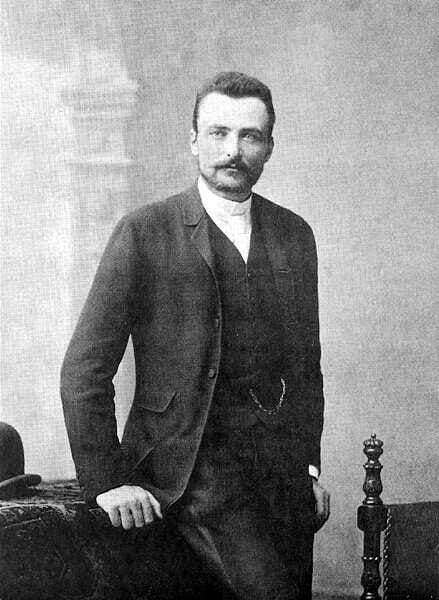
Count Leopold Berchtold had convened the meeting on the assumption that war against Serbia was inevitable and desirable. Seizing his moment in the sun, the bumbling Austrian foreign minister had ‘allotted the places with careful ceremony, as at a great dinner party’.
Here was Karl, Count von Stürgkh, the ultra-conservative Austrian prime minister, tall and weather-beaten and sporting a long, grey, pointy beard as if to detract from the aura of stuffy incompetence that tailed him like a mini-cumulonimbus. Stürgkh seemed as surprised as everyone to find himself occupying high office. He had spent his career avenging himself on the modern world. He would be assassinated in 1916, but not before he’d played a blinkered role in flinging Europe into the worst conflagration in history.
Beside him sat Dr Leon von Biliński, a ‘pale foxy faced Pole’ and sharp-minded operator who, as Austrian Minister of Finance, knew the empire’s secrets and was ‘perhaps the most dangerous man in the room’.
The most influential in the room was Conrad von Hötzendorf, aloof and silent, content to let the conversation run its course, enjoying his moment of schadenfreude at having forewarned everyone that it would come to this. Privately, Hötzendorf was obsessively in love with a married woman half his age, and the chemical infusion of oxytocin made him more aggressive and impulsive than he might otherwise have been.
Supporting him were Hötzendorf’s military colleagues, General von Krobatin, representing the army, and Admiral von Kaltenfels, the navy, both resplendent in the green, white and gold of the empire and mouthing the platitudes of their office.
Brandishing the blank cheque from Germany to act as he wished, Hötzendorf’s dream of war with Serbia was about to be realised.
Yet, in coming weeks, even Hötzendorf would pale at the German government’s assertion that Sarajevo presented ‘the perfect opportunity for a different war, the great war of reckoning with Russia’.
—
As the discussion progressed, it emerged that all except István (Stephen) Tisza, the Hungarian premier, believed Austria-Hungary must avenge the Sarajevo outrage with a military strike.
Tisza, a handsome, peace-loving man, was one of those rare politicians who are unafraid to articulate the voice of their consciences. He sat anxiously among the seven warmongers, intent on trying to protect them from the consequences of their actions.
He failed. In the coming hours, the seven others would effectively declare war on Serbia, aware that by doing so they risked plunging all Europe into a military catastrophe.
Their chief motives were: the preservation of the ailing Austro-Hungarian empire, a desire to punish the Serbian nation (for the assassination of Franz Ferdinand) and the deeper aim of destroying pan-Slavism.
‘When we crush Serbia,’ ran an internal memo sent before the meeting, ‘Serbian imperialism within and beyond our border will be defeated for a long time to come.’
It would also send a powerful lesson to Russia, the memo ran, if Vienna struck now: ‘Today we still have our fate in our hands, tomorrow, perhaps, we will not.’
And there were deep internal pressures driving Vienna to war. The empire was on the verge of disintegration. ‘[T]he Dual Monarchy,’ writes the historian F. Roy Bridge, ‘was by 1914 in a critical state bordering on decomposition, which rendered some foreign action imperative as a diversion or a solution.’ More precisely, according to Baron Leopold von Andrian-Werburg, the Austro-Hungarian consul general in Warsaw, ‘We are heading for collapse and partition and do [nothing to] defend ourselves . . . ’
—
The Council, minus Tisza, thus concentrated almost exclusively on the restoration of the honour of the Austro-Hungarian Empire.
To this end, they meant to extract a war from Serbia using the opportunity presented by Franz Ferdinand’s death: ‘[I]n order to erase the impression of decline and disintegration,’ the internal memo urged, ‘a striking deed, a knock-out punch would be necessary . . . It is incontestable that the moral effect of an action would be extremely favourable. Austria-Hungary . . . would again believe in itself. It would mean: I have the will, therefore I am.’
The likely consequences of the war, in terms of the destruction and loss of life, received little attention. The Council’s only question was: should Austria-Hungary strike now or fashion a diplomatic action against Serbia that would lead to war anyway?
Everyone at the table except Tisza were desperate for a war with Serbia. How they went about getting one would forever redound to Austria’s and, in a transcendent sense, humanity’s disgrace.
—
The meeting opened with the tortured logic that the continued honour and existence of the Habsburg Empire depended on the crushing of little Serbia.
Berchtold, the reconstituted warrior, opened the discussion by confronting Tisza, the peace-seeker who represented the other ‘half’ of the dual empire. Berchtold needed Tisza’s support before he could declare war on Serbia. Tisza refused to give it.
To persuade him, Berchtold came armed with Germany’s blank cheque. Its provenance and tone of firm resolution surprised Tisza. He realised he was in a losing battle. He wearily accepted – even if he resisted – the likelihood of ‘warlike action’ against Serbia, but he would never consent to a surprise attack on the Slavic nation. Without offering the Serbs a prior diplomatic warning, he said, Austria-Hungary would ‘draw upon ourselves the enmity of the Balkan states’.
Tisza thus urged restraint. He suggested they send a list of strong demands to Serbia. If these were rejected, ‘we must make out an ultimatum’. Its terms should be harsh, he advised, but ‘not such that they cannot be complied with’.
He added, ‘If Serbia accepted them, we should have a splendid diplomatic success and our prestige in the Balkans would gain immensely.’
If rejected, they could vote for war; but Serbia, with Russian aid, he warned, could not be annihilated: ‘Russia would fight to the death before allowing this.’ Nor would Tisza consent to the annexing of any part of Serbia.
He summed up: war was neither for Germany to decide nor necessary or desirable at this point. Tisza then sidetracked the meeting with a point about France’s falling birth rate, which would allow Germany to muster more men against Russia.
To which Stürgkh drew the Council’s wavering attention back to the key point: the question of their response to the assassination and ‘whether we might not solve the Bosnian difficulty by exercising force against Serbia’.
The whole situation had changed, Stürgkh warned: ‘It now shows a psychological character and is decidedly more than ever pointing to a solution at the point of the sword.’
Stürgkh reminded the Council of the persuasive power of Germany’s blank cheque and made a pointed riposte to Tisza: yes, it was for Austria-Hungary to decide whether to go to war, but Germany strongly influenced the decision. Berlin had promised ‘unreserved loyalty’ and advised Vienna ‘to act without delay’.
He, with Bilinski’s support, warned Tisza to remember that ‘by a weak and hesitating policy we might risk not being so certain of German support at some future time. This is surely of the highest importance.’ A diplomatic success was valueless, he declared.
—
The discussion then degenerated into bathos. All except Tisza wanted war with Serbia but could not decide on how to get one.
Somehow, a diplomatic provocation had to force war on Serbia. The point was to avoid an international outcry over taking up arms against the Balkan state ‘without warning’. Perceptions mattered. The Austro-Hungarian leaders must appear reasonable; they must seem to be offering Serbia terms, not a dagger at the throat.
The bloviating Stürgkh was comfortable with this poisonous line of thought: ‘If a foregoing diplomatic action [e.g. an ultimatum to Serbia] is . . . resorted to it should be taken with the firm resolve that this action can only end in war . . .’ In other words, the ‘diplomatic action’ must be formulated as to guarantee war against Serbia.
At this point, Krobatin dusted down the old Social Darwinian argument that a failure to act would be seen as ‘unworthy’ and ‘weak’: ‘a diplomatic success would be of no use at all. A success of this kind would be interpreted as weakness.’ Austria-Hungary must avenge its honour with an act of force and strength.
He directed his remarks at the person, not the policies, of Tisza, and implicitly questioned the courage and strength of anyone who backed the Hungarian leader.
Nobody did; nobody in the room wished to seem weak: ‘From a military point of view,’ Krobatin declared – with lethal finality – ‘it is desirable that the mobilization be carried through as immediately and as secretly as possible, and that an ultimatum should be addressed to Serbia when the mobilization is complete.’
—
Tisza opposed this, but was outnumbered. The minutes record the abomination:
‘All present except the Royal Hungarian Premier hold the belief that a purely diplomatic success, even if it ended with a glaring humiliation of Serbia, would be worthless and that therefore such stringent demands must be addressed to Serbia, that will make a refusal almost certain, so that the road to a radical solution by means of a military action should be opened.’ (my italics).
The seven turned to the question of how Serbia should be punished. It was agreed that, upon crushing Serbian resistance, a reliable European prince should replace the Serb royal family (the Karađorđević dynasty), who would be dethroned.
The defeated Serbs should then be made vassals of the Habsburg empire. All this proceeded on the high authority of men presumptuous of victory. None anticipated the strength of Serbian resistance; none countenanced the possibility that their actions would lead to the destruction of their own Crown and Empire.
Tisza interjected again. The terms of an ultimatum, he said, should not be so harsh ‘as to make our intention of raising unacceptable demands clear to everybody’. Otherwise, ‘we would not have a lawful basis for our declaration of war’.
Tisza’s protests were ignored or misrepresented.
A long debate ensued over the nature of the coming war. Could the war be localised to the Balkans? Russia’s entry was expected, necessitating the involvement of Germany. France would then surely follow its Russian ally. And Britain would be compelled to join. A European war would result. These men were not ‘sleepwalking’ into war, as one history suggests; they were wide awake and alert to the consequences of their actions.
Tisza had peered into the abyss. His small voice of sanity ‘appealed again to all present to consider carefully what they were about to decide’. They had decided to proceed with the drafting of an unacceptable ultimatum that would almost certainly lead to a European holocaust.
The meeting closed; the delegates packed up. Berchtold advised them to take their summer vacation and maintain a semblance of normality.
—
Pause to reflect on what had been decided that day. Seven Austro-Hungarian officials, newly emboldened by the German promise of open-ended support, had agreed to force a war on Serbia through a diplomatic con, without delay, and without awaiting the findings of the investigation into the assassination of Franz Ferdinand.
They would do so by drafting an ultimatum worded to be unacceptable. They refused to consider moderate alternatives, such as diplomatic demands or economic sanctions. The assassination had little bearing on these discussions, other than as a catalyst, and was barely mentioned.
These men were desperate for war. Their motives were darker than national pride or vengeance. They sought the destruction of pan-Slavism and the preservation of the empire. Sarajevo merely served as a public justification.
In sum, they had embarked on an exercise in deception that, they knew, would bring total war to Europe. They proceeded safe in the knowledge that Germany would have their back, especially in the event of Russia’s intervention. The German ‘curse’ of the blank cheque drove Austria-Hungary to ignore the counsel of restraint and act with extreme prejudice in all its dealings with Belgrade.
The world was about to feel the wrath of these deliberations, in the opening blows of a war of unprecedented horror, a war that fomented the bloodiest century in human history.
The tragic irony is that Tisza, the man who tried to prevent it, and volunteered (aged 57) to lead a hussar regiment after it began, would be assassinated in 1918 by disgruntled soldiers who blamed him for starting it.
Selected sources and further reading:
Albertini, Luigi, The Origins of the War of 1914 (3 vols), Enigma Press, New York 2005
Bethmann Hollweg, Theobald von, Reflections on the World War, (transl. by Young, George), Cornell University Library, New York, 1920
French Yellow Book, Chapter II, No. 8. M. Dumaine, French Ambassador at Vienna, to M. René Viviani, President of the Council, minister for foreign affairs, Vienna, 2 July 1914.
Geiss, Imanuel, July 1914 The Outbreak of the First World War: Selected Documents, Charles Scribner’s Sons, New York 1967
Hochschild, Adam, To End All Wars: A Story of Loyalty and Rebellion, 1914–1918, Mariner Books, Boston 2012
Hötzendorf, Conrad von, Aus meiner dienstzeit, 1906–1918, University of Michigan Library, Ann Arbor 1921
Keiger, John, Raymond Poincaré, Cambridge University Press, Cambridge 1997
Ludwig, Emil, July 1914, Putnam, London 1929
Ludwig, Emil, Wilhelm Hohenzollern: The Last of the Kaisers, AMS Press Inc, New York 1978
Margutti, Albert von, La Tragédie des Habsbourg, Bibl. Rhombus, Vienna 1923
Paléologue, Maurice, An Ambassador’s Memoirs, (transl. by Holt, Frederic), George H. Doran Company, New York 2008
Seton-Watson, Robert, Sarajevo: A Study in the Origins of the Great War, Hutchinson, London 1925
Smith, David James, One Morning in Sarajevo: 28 June 1914, Phoenix Press, London 2009
Sondhaus, Lawrence, Franz Conrad von Hötzendorf: Architect of the Apocalypse, Brill Academic Publishers, Leiden, Netherlands 2000
Sosnosky, Theodor von, Franz Ferdinand. Der Erzherzog-Thronfolger. Ein Lebensbild, Verlag Von R. Oldenbourg, Munich 1929
Strachan, Hew, The First World War: Volume I: To Arms, Oxford University Press, USA 2003
Sulzberger, Cyrus Leo, The Fall of Eagles, Crown Publishers, New York 1977
The World War I Document Archive, ‘The Assassination of Archduke Franz Ferdinand’: http://wwi.lib.byu.edu/index.php/The_Assassination_of_Archduke_Franz_Ferdinand
The World War I Document Archive, Records of national diplomatic communication: The Belgian Grey Book, The French Yellow Book, The German White Book, The Russian Orange Book, The Serbian Blue Book, The Austro-Hungarian Red Book, see also: http://www.gwpda.org/
This essay is an edited extract from my book 1914: The Year the World Ended published by Penguin Random House (UK and Australia).
Comments
Nothing yet. Say the first thing.
Sign in to join the conversation.