RHTP’s Easy Part Is Over
The plans are approved. The money is moving. Now rural health transformation has to work in the real world.

My personal Substack
Live Last read · last published · next check
The plans are approved. The money is moving. Now rural health transformation has to work in the real world.
The first national funding wave peaked in July. Now the real transition begins: closeout, implementation, CMS re-approval, and the next procurement cycle.
The state’s $173 million rural health plan reveals where applicants should place their bets
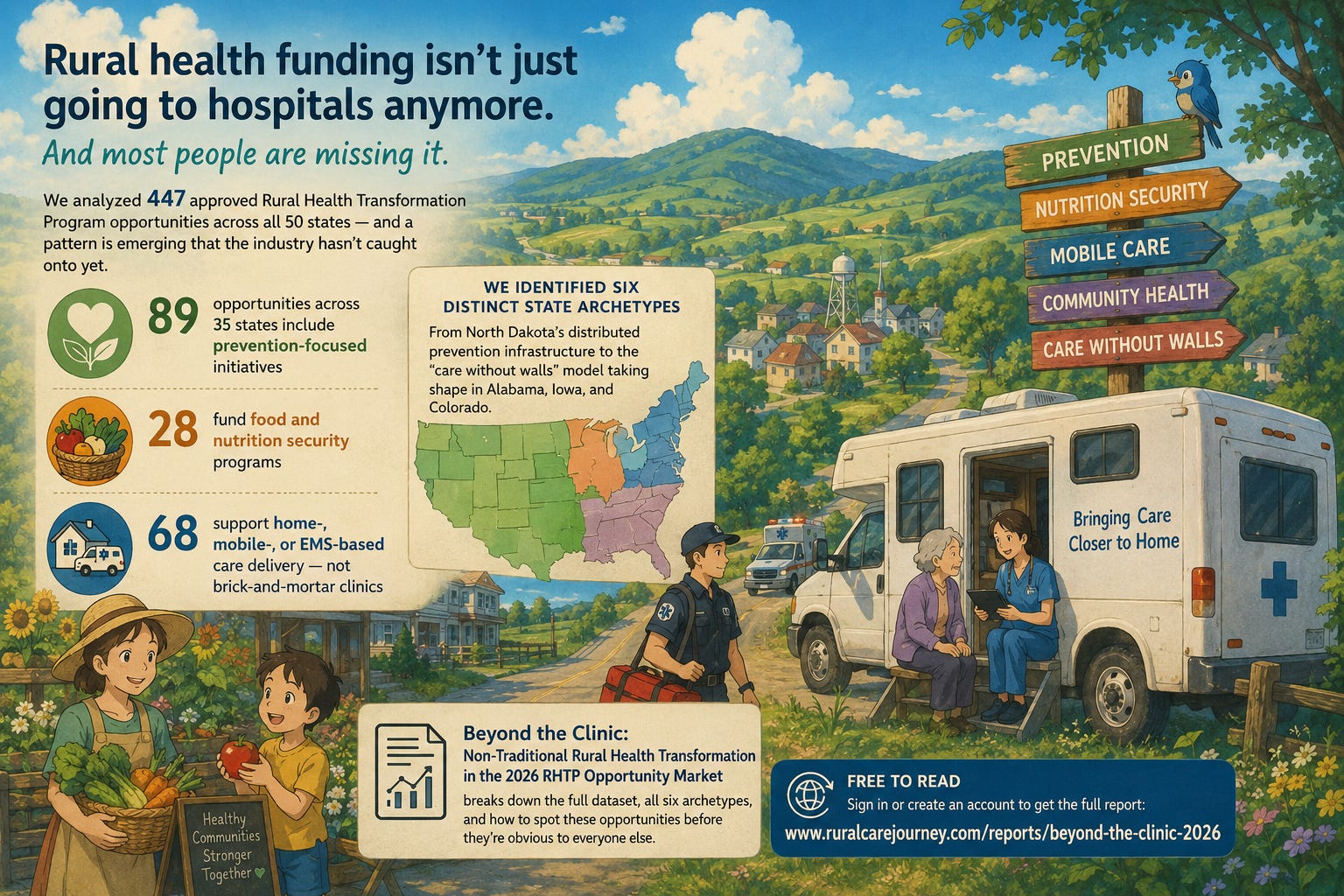
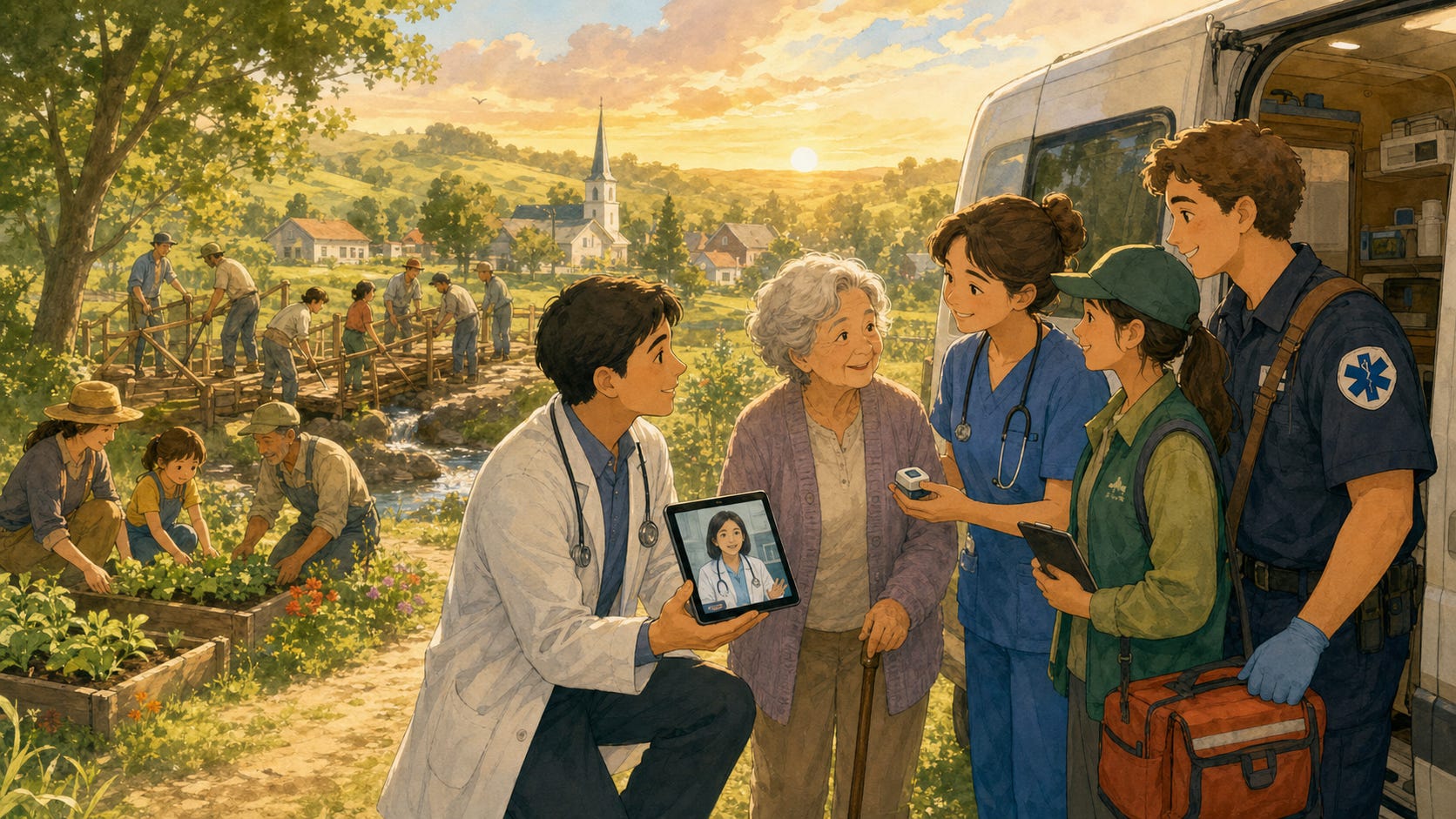
A walking group. A school kitchen. A ride to a clinic. A paramedic who treats you at home instead of hauling you to an ER 40 miles away.
Texas has moved into a category of its own, while the latest state activity reveals a second divide: who can participate in the next phase of rural health transformation?
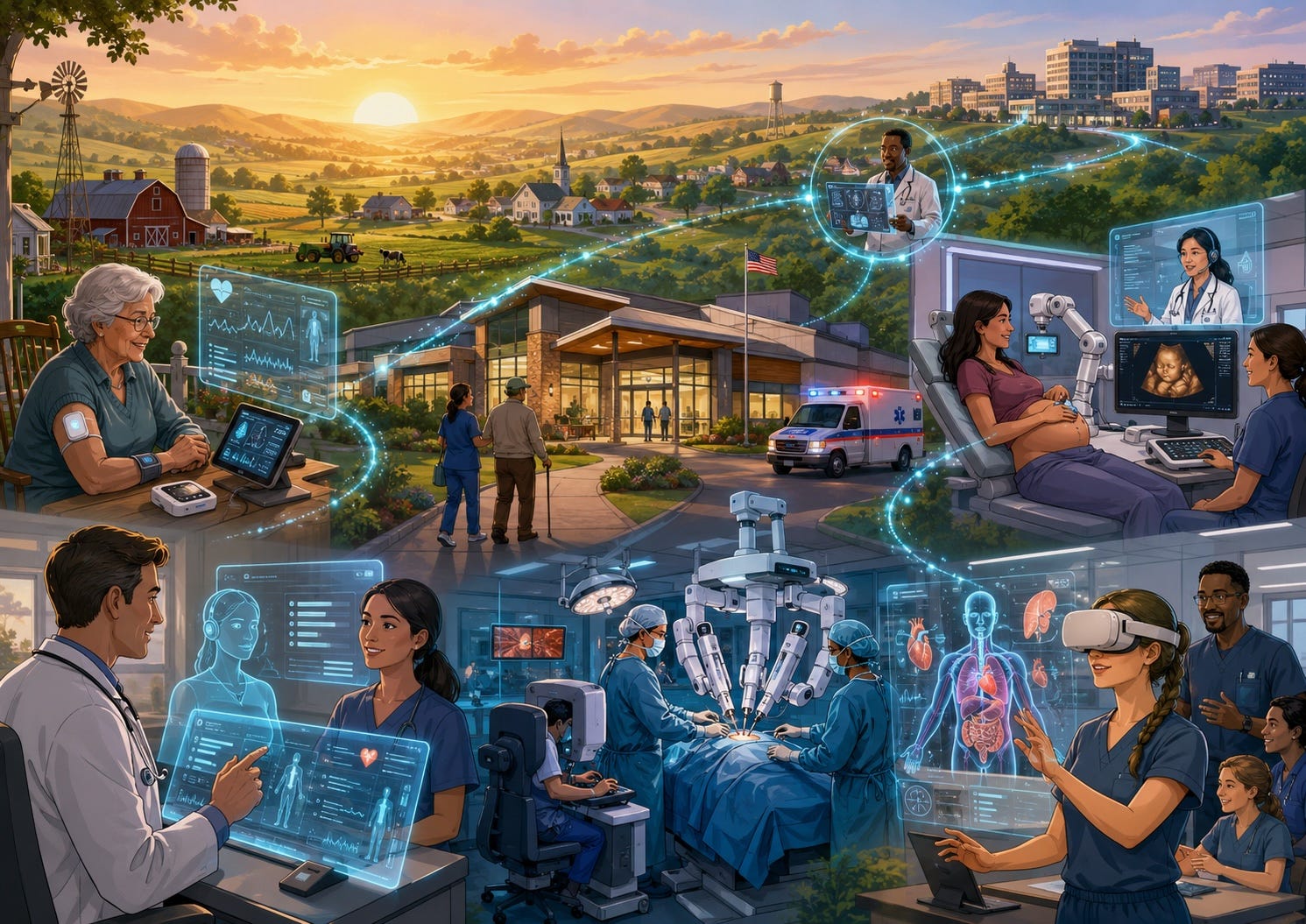
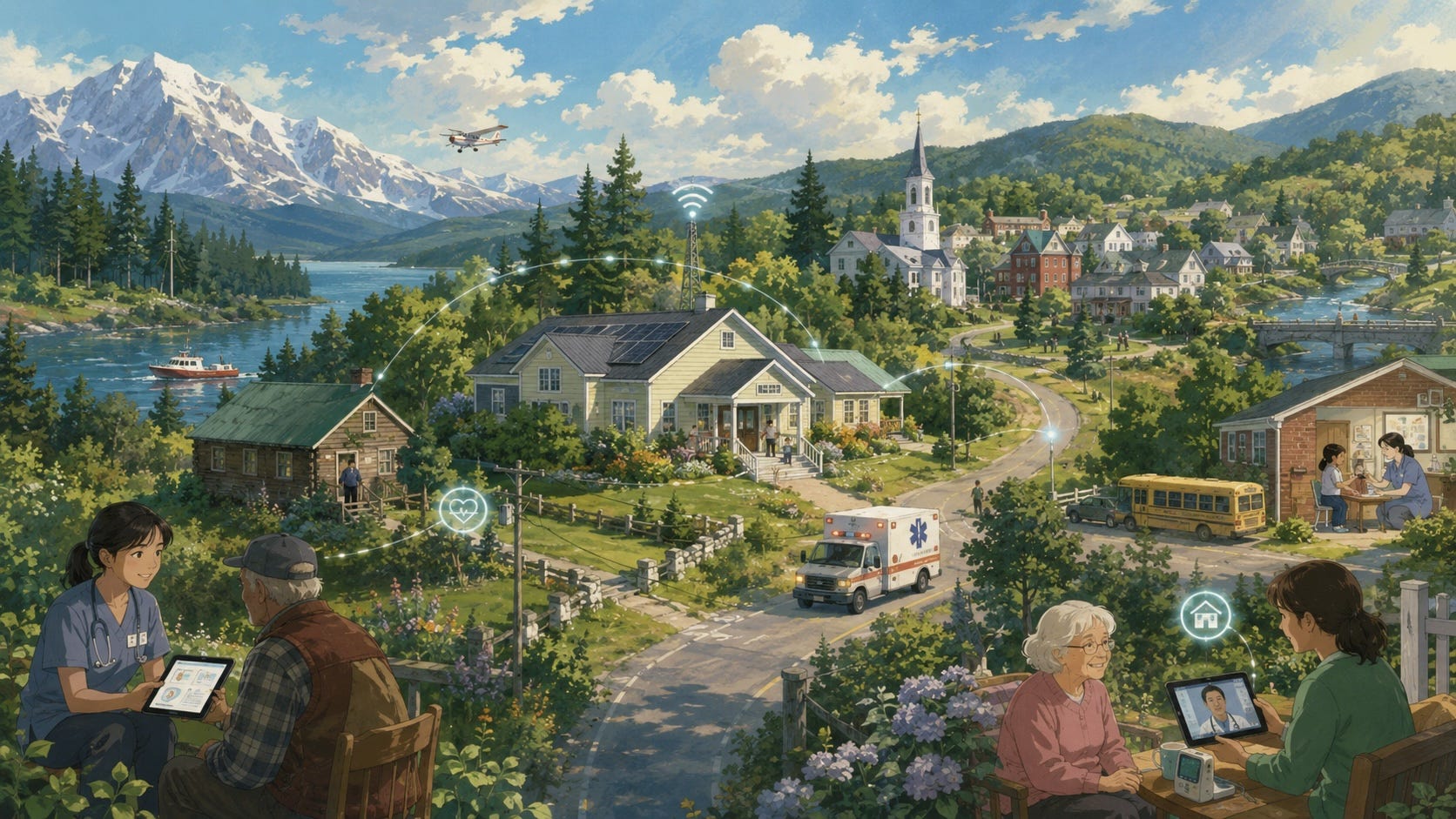
AI scribes, remote monitoring, robotic ultrasound, surgical robots, and virtual reality are entering rural healthcare. The real test is whether they can become dependable care infrastructure...
The July signal shows a smaller but more mature RHTP pipeline, clearer state requirements, and a vendor market that is catching up unevenly.
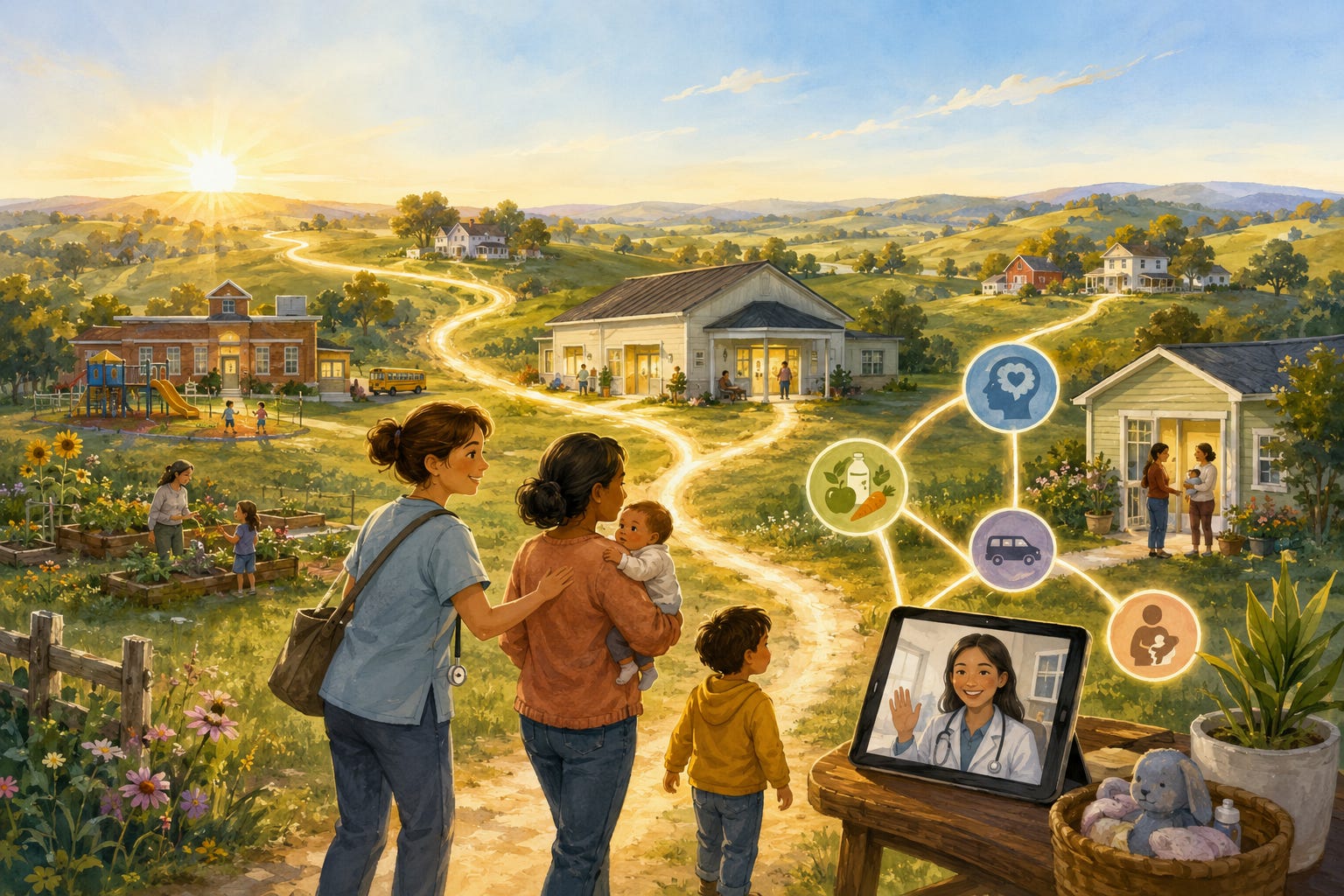
The RHTP landscape is showing where states are moving from policy language into real care pathways for women, infants, and children.
RHTP can fund technology, infrastructure, and innovation, but its lasting impact will depend on whether rural communities build people-centered systems that remain after the five-year funding closes.
Why understanding local implementation archetypes matters before building the solution