
Last weekend I mapped 12 rural areas of Italy where you can buy a house with land and still be an hour from a real city.
I had many people messaging asking me: what about the coast?
This is part two. Same method, but now pointed at the sea.
My wife still sends me a single photo of a place in Italy with no caption. Just the same underlying question every time: why don’t we own one of these yet?
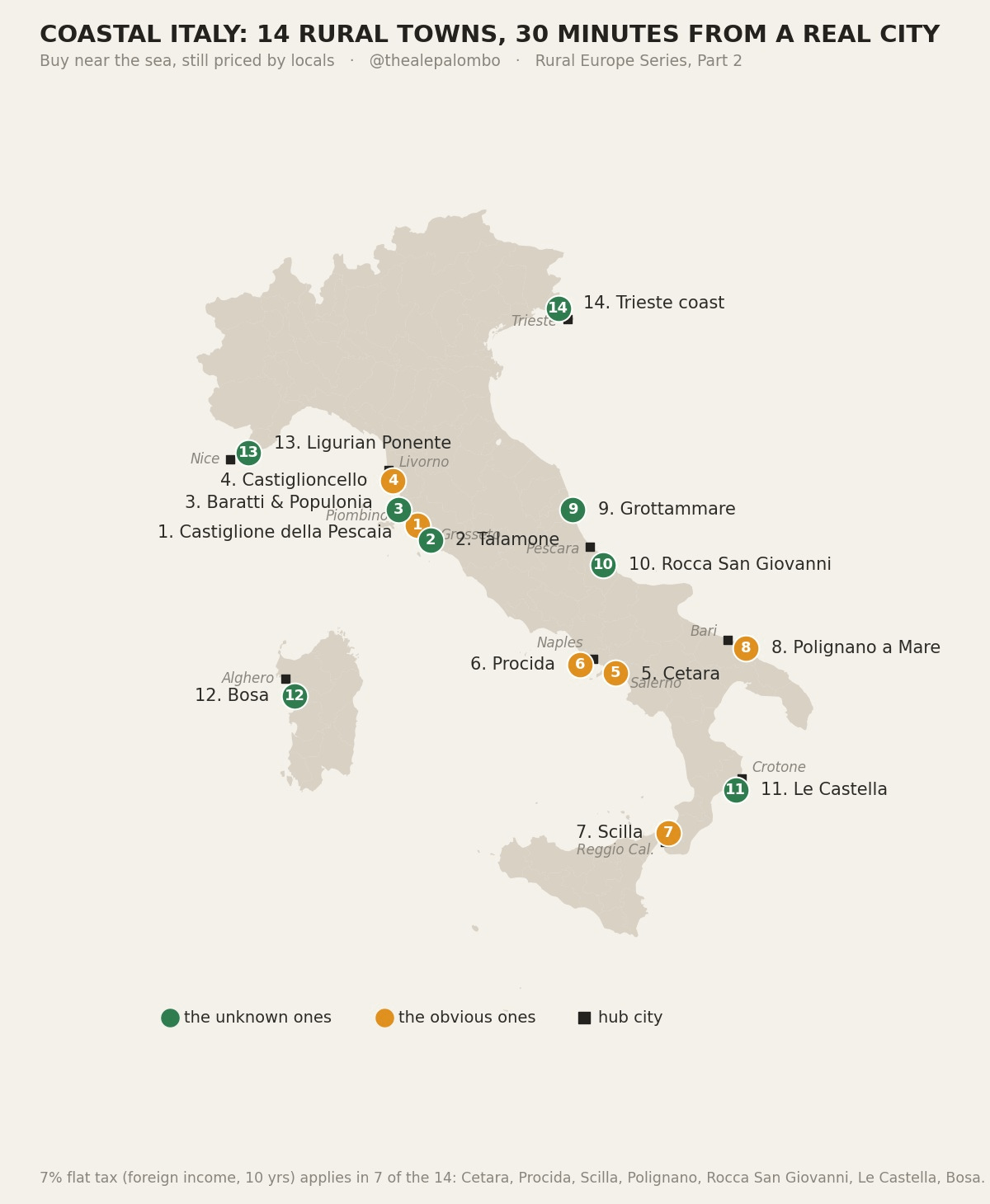
14 coastal towns where you can still buy near the water, still be 30 minutes from a real city, and still pay a price set by locals, not by the second-home market.
Some you will know but some you definitely won’t. And seven of them now come with a tax rate so low it sounds fake.
Three things have shifted in recent years, and they apply to the coast just as much as they did to the inland in part one.
Starlink solved bandwidth here too. Fishing villages that ran on 2 Mbps now run on 150+. The coast is no longer offline.
Autonomous driving solves the distance problem. 30 minutes you can work through is not a commute, it’s an extension of your office with a sea view. Everything half an hour out from a real city gets repriced the moment that lands. The market hasn’t done it yet.
The third shift is specific to the South. In April 2026 Italy raised the cap on its 7% flat tax to towns under 30,000 residents across eight southern and island regions. A foreign retiree who moves there pays 7% on ALL foreign income for ten years. Seven of the fourteen towns on this list now qualify.
So the same coast works in three directions. You can keep your business where it is and base from a harbor with Starlink. You can retire on the sea at a 7% rate. Or you can build the new thing from a fishing village while it’s still priced as one.
A real city within 30 to 45 minutes. Hospital, train, airport. This is what 80% of people will actually need, the first time something goes wrong.
Real village character on the sea. A working harbor, an old town, a park behind it. Not a concrete resort strip poured in 1975.
Property still priced as a local transaction, not by the international second-home market.
A coastal hinterland where you can actually find houses with land, the casali and rustici from part one, if that’s the experience you want.
One thing that trips everyone up: the prettiest coastal towns are clifftop villages with pricey sea-view villas. That’s not rural. If you want the rural experience, look 20 minutes inland, where the proper houses still are.
Every town below is tagged: the obvious ones and the unknown ones. I flag the 7% tax where it applies, and I flag the kids angle at the end.
We start in Tuscany.
Best for: the buyer who wants the proven Tuscan coast and will happily pay for certainty.
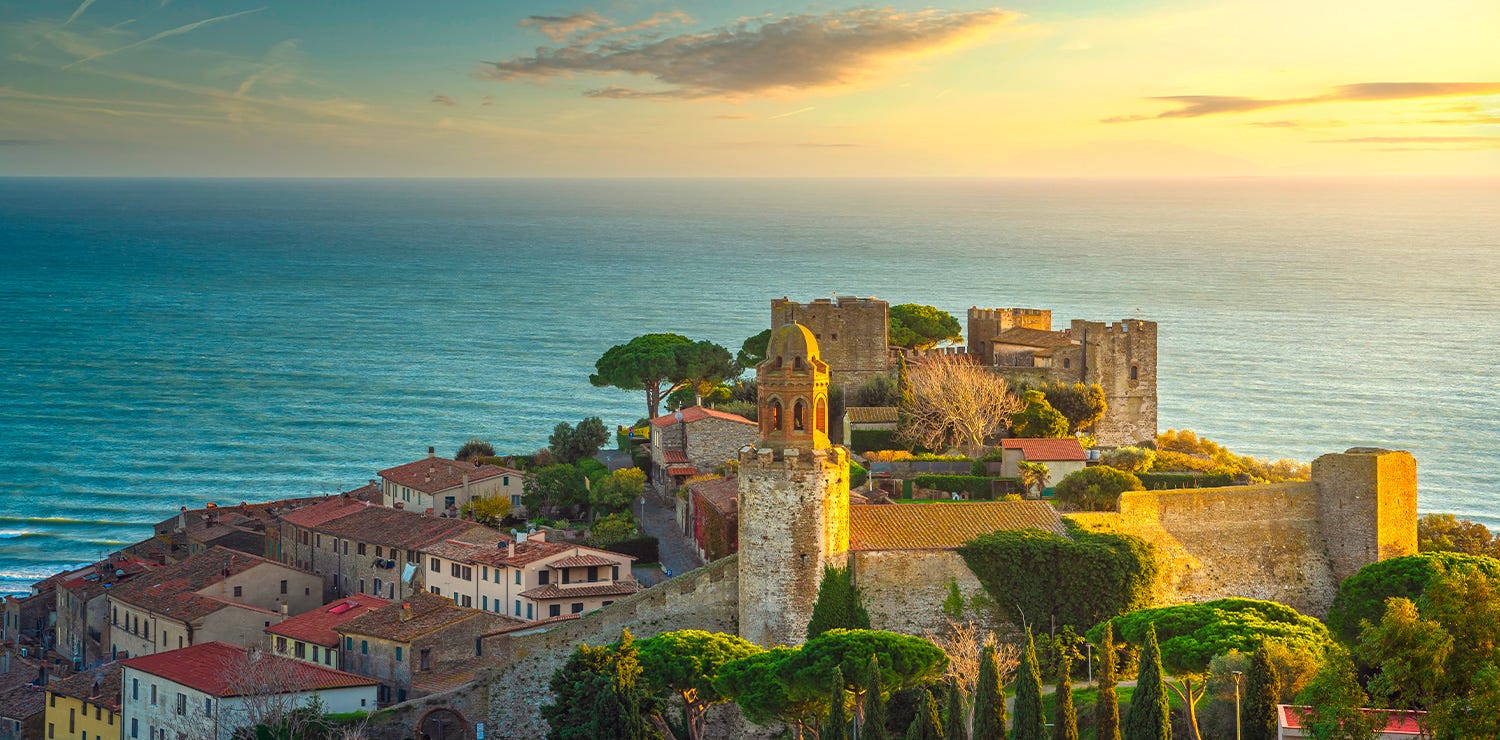
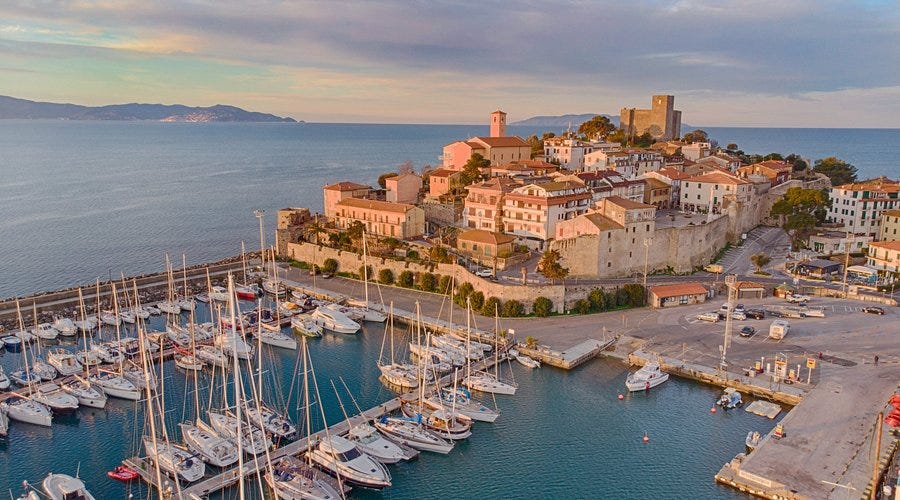
Start with the safe one. This is the Tuscan coast Italians actually book: a medieval borgo on the hill, a working port below, and the pine forests and beaches of the Maremma stretching behind it.
It has flown the Blue Flag for clean sea 27 summers in a row, which on this coast is less a sticker and more a track record.
Grosseto is about 24 minutes away, with the area’s main hospital and the coastal rail line. Pisa and Rome airports are both around 2.5 hours.
The market sits around €4,585/m² as of late 2025. Inland frazioni like Tirli still start near €65K, while the seafront enclaves of Roccamare and Riva del Sole push past €6,000/m².
The catch: this is the priciest pick on the entire list, and it is no secret, so August is shoulder to shoulder. Tuscany is also excluded from the southern 7% tax, so you buy this for the lifestyle, not the loophole.
You already know whether you want this. It’s the Tuscan seaside done properly with nothing to prove. Personally, I love it.
Best for: anyone whose perfect weekend involves a board, a wetsuit, and a national park at their back.
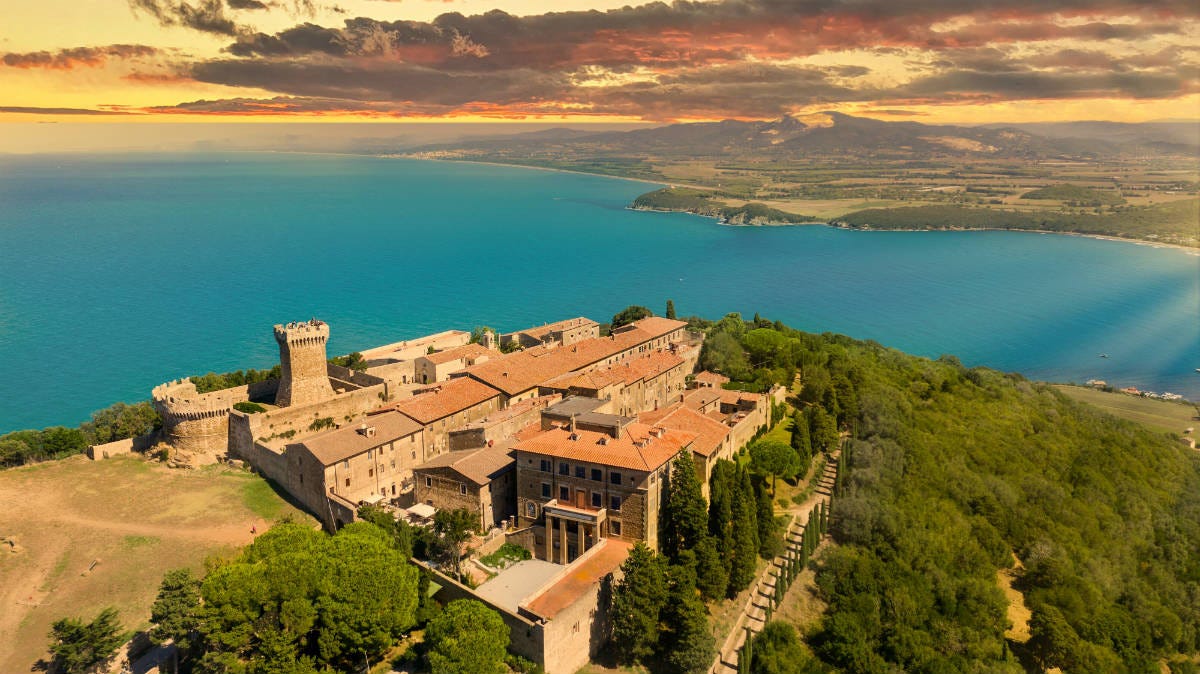
A medieval rocca on a headland at the southern gate of the Maremma Regional Park. About 280 people live here year round.
It is the kitesurf and windsurf capital of central Italy. A thermal wind fills the bay three or four days a week from April to October, reliable enough that the boards outnumber the fishing nets. Romans and Florentines in the know have a second home here and say nothing. Almost no foreigner has found it.
Grosseto is about 26 minutes away for hospital and rail. The market runs roughly €3,400 to €3,700/m². Entry sits around €175K, with most listings between €219K and €350K.
The catch: 280 residents means it genuinely sleeps in winter, the entry floor is high for a village this small, and you are buying wind and nature, not services. Tuscany again, so no 7% tax.
Best for: history-minded buyers who want the lowest Tuscan-coast entry and don’t need a crowd.
The only Etruscan city the ancients built directly on the water. The archaeological park runs from a necropolis down to a curving gulf beach, with the acropolis of Populonia on the headland above. Populonia Alta itself is a walled hamlet of about a dozen permanent residents. You definitely don’t move here for the nightlife. You move here for two thousand year old views.
And Baratti is the cheapest Tuscan-coast pick on this list.
Piombino is 15 to 20 minutes away, a real port with ferries to Elba and rail up to the main line at Campiglia. Baratti sits around €2,500/m², and the wider Piombino market is near €1,914/m², the most affordable hub on the Tuscan stretch.
The catch: Populonia itself isn’t really a town – it’s a walled hamlet of about a dozen people. The protected park caps what you can build. And Piombino, your nearest real city, is a working steel-and-ferry port: useful rather than pretty. You live beside history, not inside a bustling village. Tuscany, so no 7% tax.
Best for: the buyer who wants a train to a city, a cove of their own, and a market that isn’t running away from them.
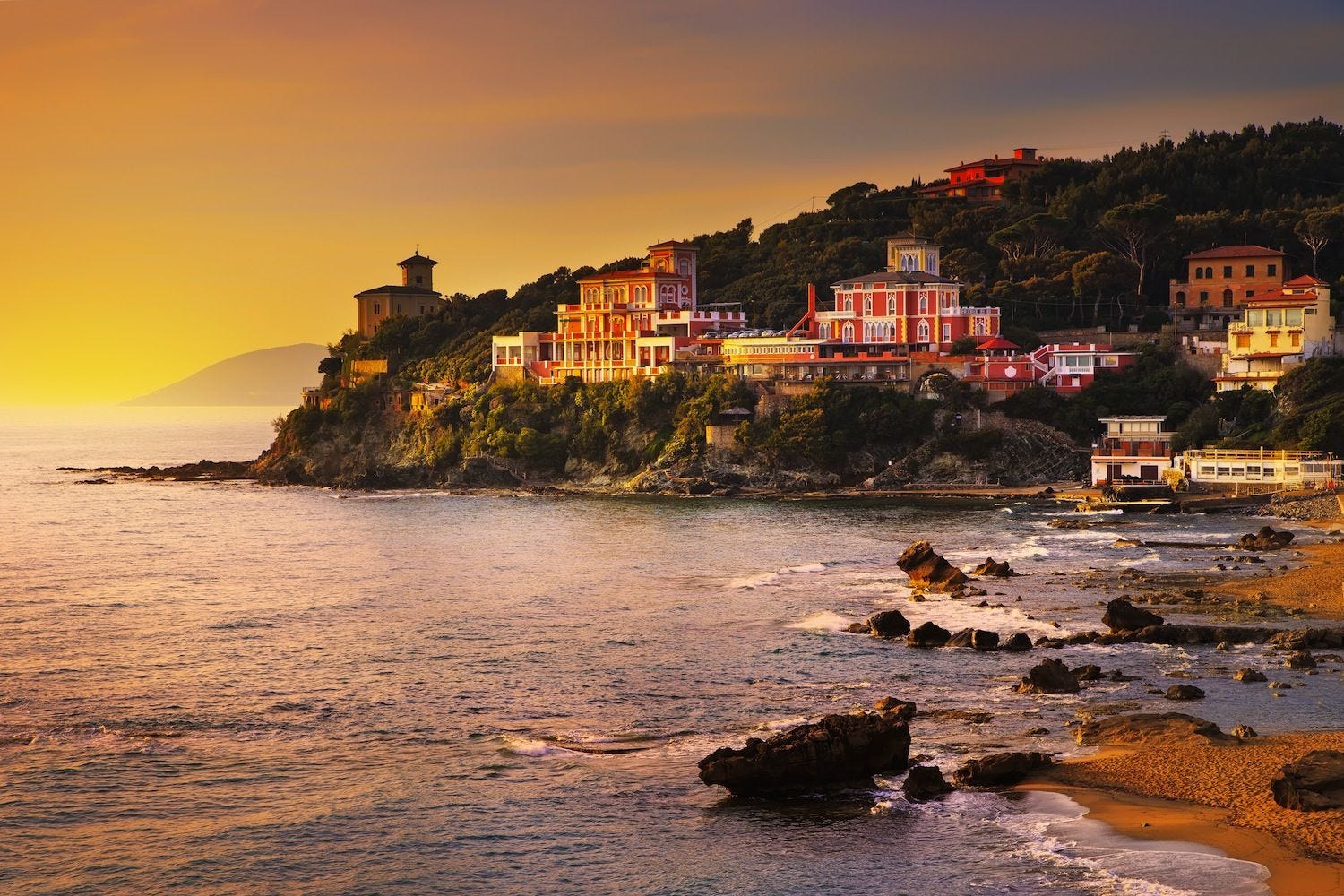
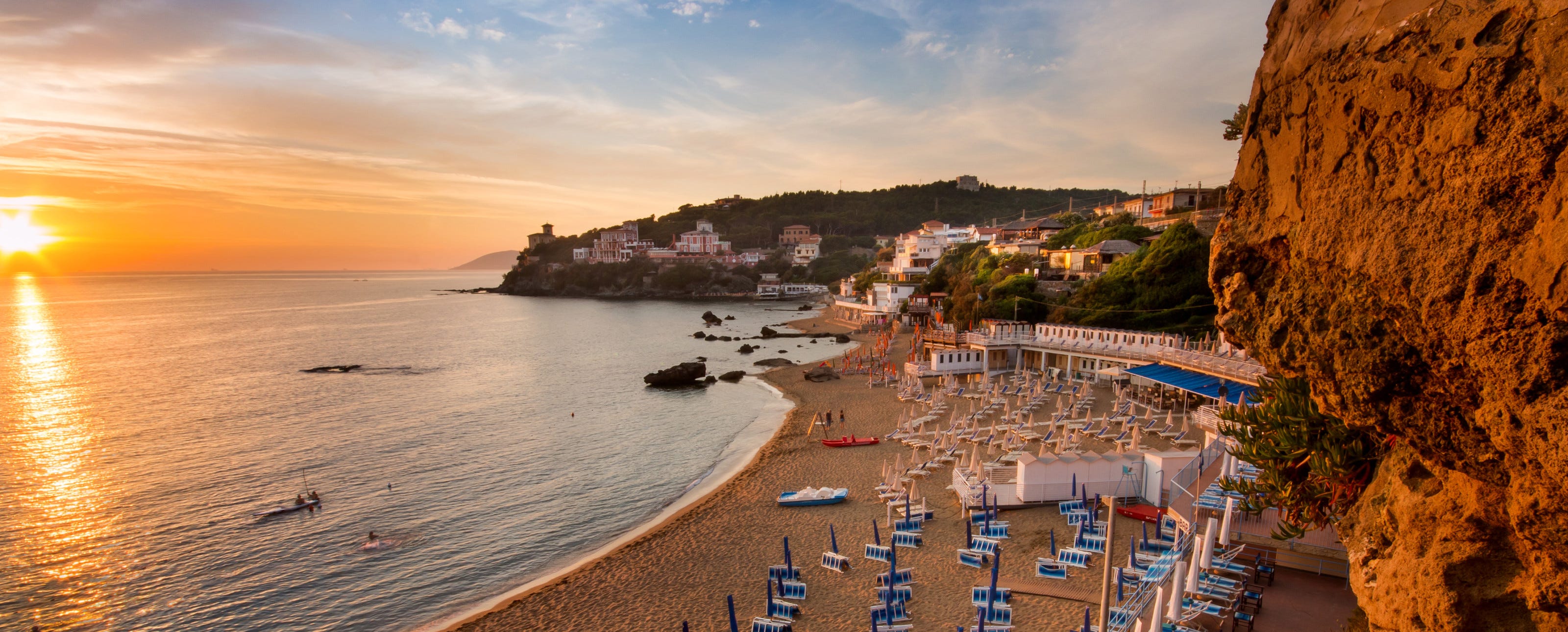
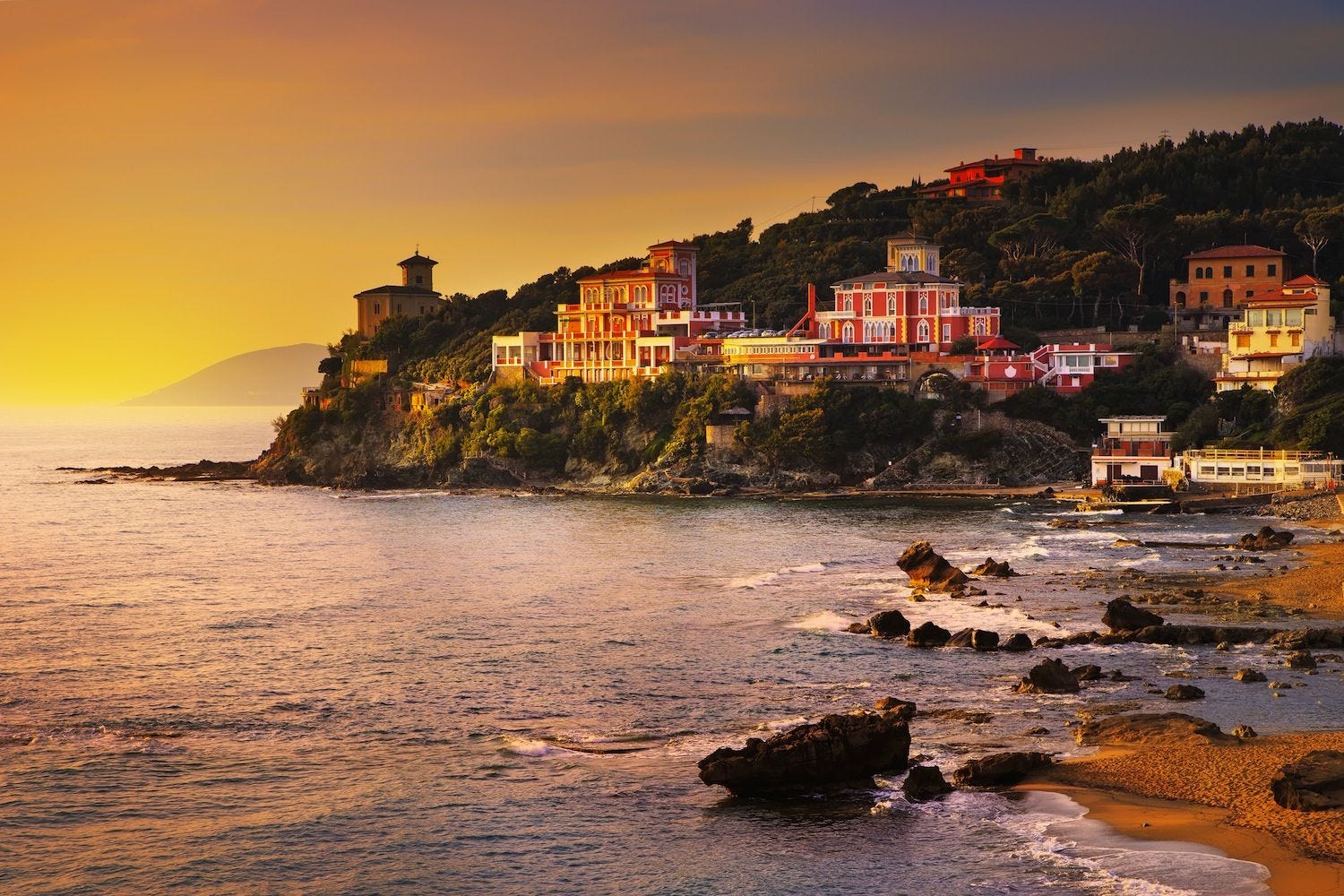
A clifftop resort that the Macchiaioli painters made famous in the 1800s, with Castello Pasquini watching over a string of small bays. It sits on the Costa degli Etruschi, with Bolgheri wine country a short drive inland.
It is the best-connected town on this entire list, and right now its market is cooling, not heating up.
Castiglioncello has its own railway station. Livorno is about 15 minutes away by train, Pisa airport around 40 minutes. That commuter-rail-to-a-real-city combination barely exists elsewhere on this list.
Around €3,400/m² as of late 2025, and prices softened recently, so the timing is friendlier than the Maremma names.
The catch: it has a faded-elegance feel and goes quiet off-season, and the nearby Spiagge Bianche owe part of their white sand to a chemical plant’s outflow. Tuscany, so no 7% tax.
Best for: the Amalfi dream with a tax break and a real village attached, if you can stomach the summer road.
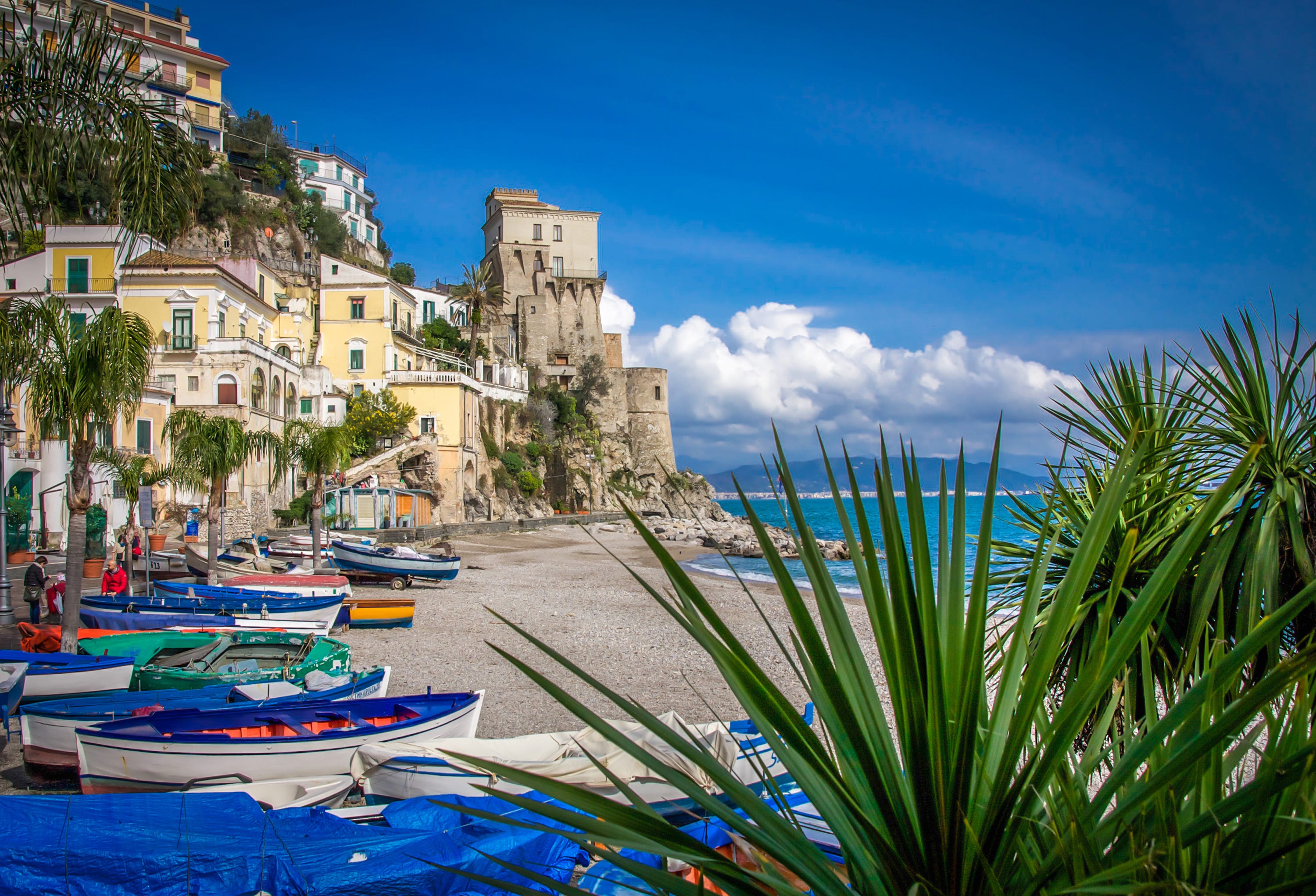
While Positano poses, Cetara fishes. This is the anchovy and tuna village of the Amalfi Coast, fewer than 2,000 residents, home of colatura di alici, the prized amber anchovy essence that carries DOP status. It is the rare Amalfi address where the harbor is still full of working boats instead of charter yachts.
And here, unlike the Tuscan picks, the 7% tax kicks in, and that changes the math.
Salerno is about 11 km away, 15 to 25 minutes off-season, with a major hospital, high-speed rail, and a small airport at Pontecagnano. At 1,928 residents Cetara sits far under the cap, so a foreign retiree pays 7% on foreign income for ten years.
The headline is around €4,474/m², up 13% in a year, but read that as an average not a quote. The market is tiny and split in two: a few modest village apartments at the bottom, luxury sea-view villas at the top, with almost nothing in between.
The catch: Cetara lives on the SS163, and in July and August that 15-minute hop to Salerno becomes an hour, with the odd landslide closure.
Want the view without the full Amalfi premium? Look one ridge back into the Salerno province hills, where sea-view country houses still trade closer to local prices. Either way, this is a villa story, not the farmhouse experience from part one.
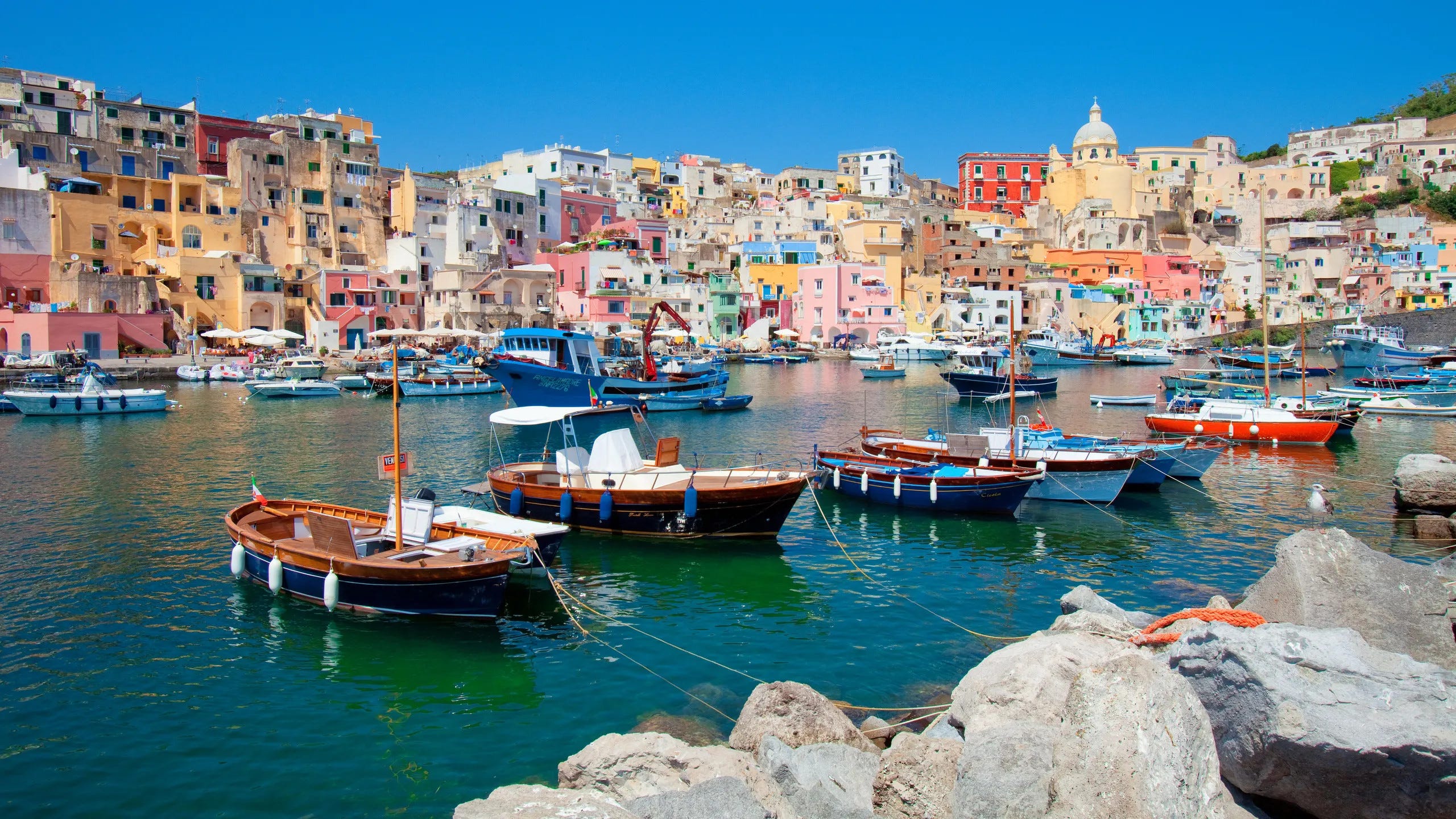
Best for: the romantic who treats the ferry as a perk.
Capri’s quiet cousin. Marina Corricella is the pastel fishermen’s harbor every photographer eventually chases, and Procida was named Italian Capital of Culture 2022. Lemons, film sets, and zero glitz. It is the Bay of Naples without the velvet rope, still lived in by roughly 10,000 people who fish and farm and don’t perform for anyone.
Naples is 25 to 40 minutes by hydrofoil, and from there you have hospitals, high-speed rail, and an international airport. The market runs around €3,701/m², up about 7%. The 7% flat tax applies: at roughly 10,000 residents the island is well under the cap.
The catch: it’s an island. Every hospital run, flight, or big grocery trip is a sea crossing, and rough weather cancels the fast ferries. Corricella’s stepped lanes are pedestrian only.
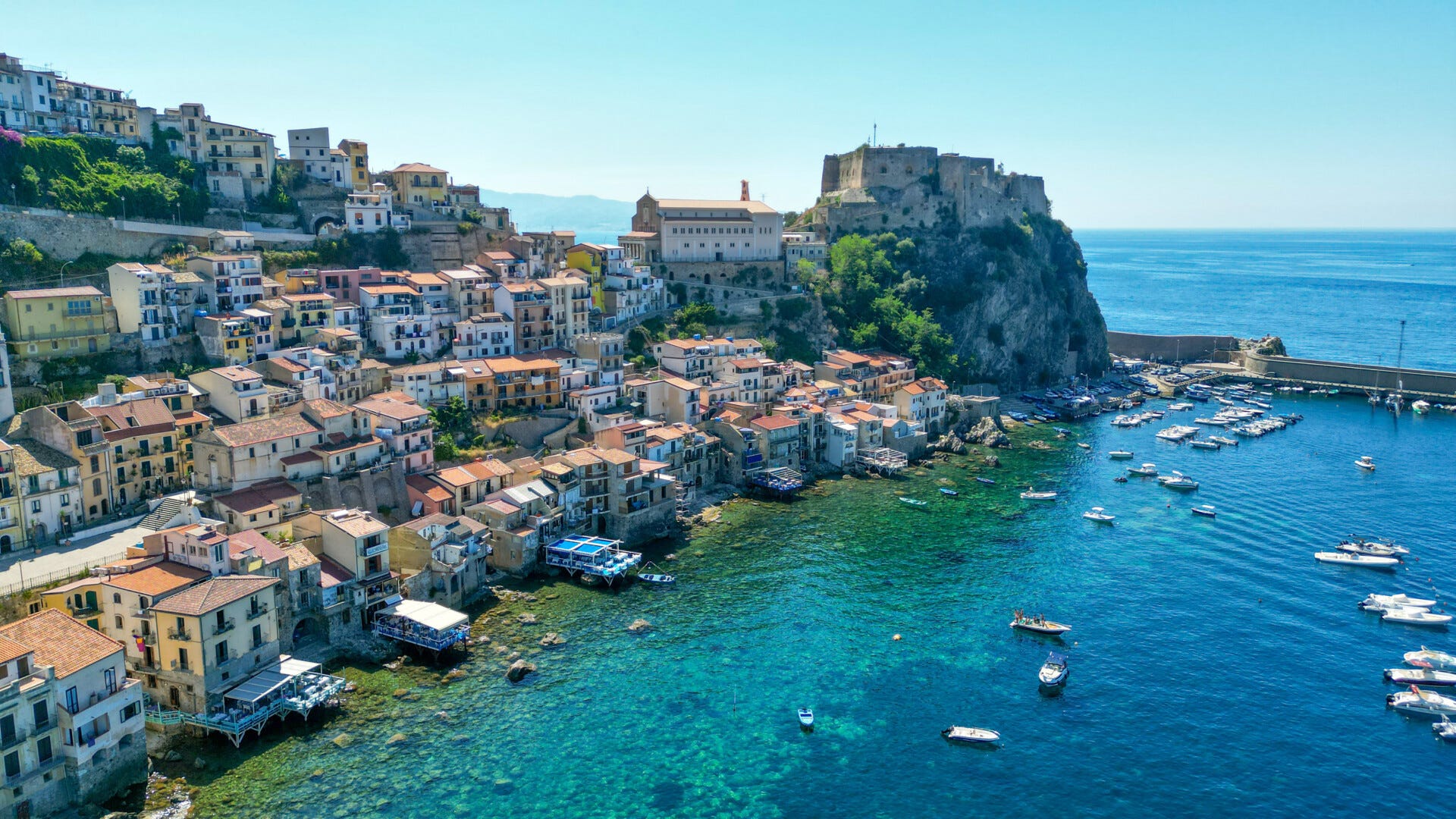
Best for: the buyer who wants the South’s most cinematic seafront, with the 7% tax to match.
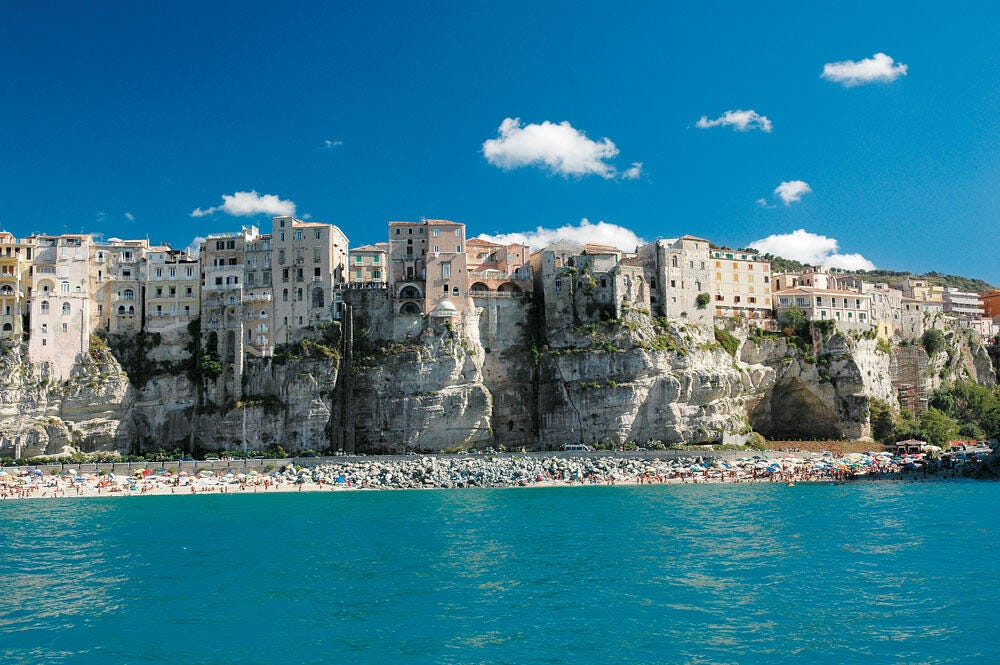
Chianalea, Scilla’s old fishermen’s quarter, is a little Venice of houses rising straight out of the water beneath the Ruffo castle. This is the Strait of Messina, the historic home of harpoon swordfish fishing where the boats still go out on tall spotting masts.
It is arguably the most photogenic seafront in the entire South, and the South’s prices still apply.
Reggio Calabria is about 22 km away, 20 to 25 minutes, on the Tyrrhenian rail line, with the airport around 30 minutes out. The market sits roughly at €2,115/m², though that’s up 20% in a year on a thin market. The 7% flat tax applies: 4,450 residents, comfortably under the cap.
The catch: Calabrian infrastructure is the weakest of the obvious picks here. The airport is small with few routes, and the Strait is a serious seismic zone. The 20% price jump also came on a thin market, which means selling will likely be slower than buying.
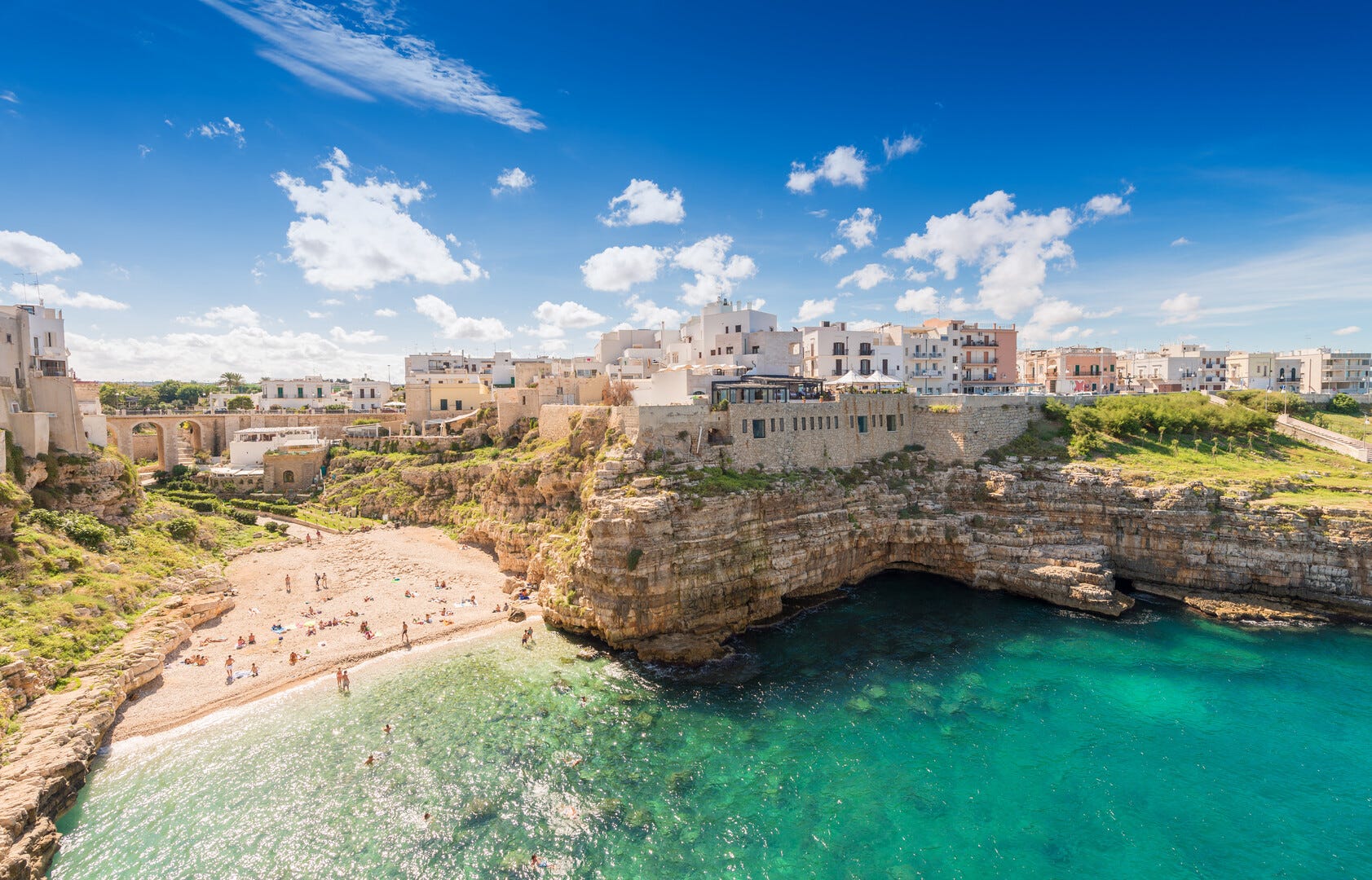
Best for: first-timers who want a famous, well-connected base with a tax break, crowds and all.
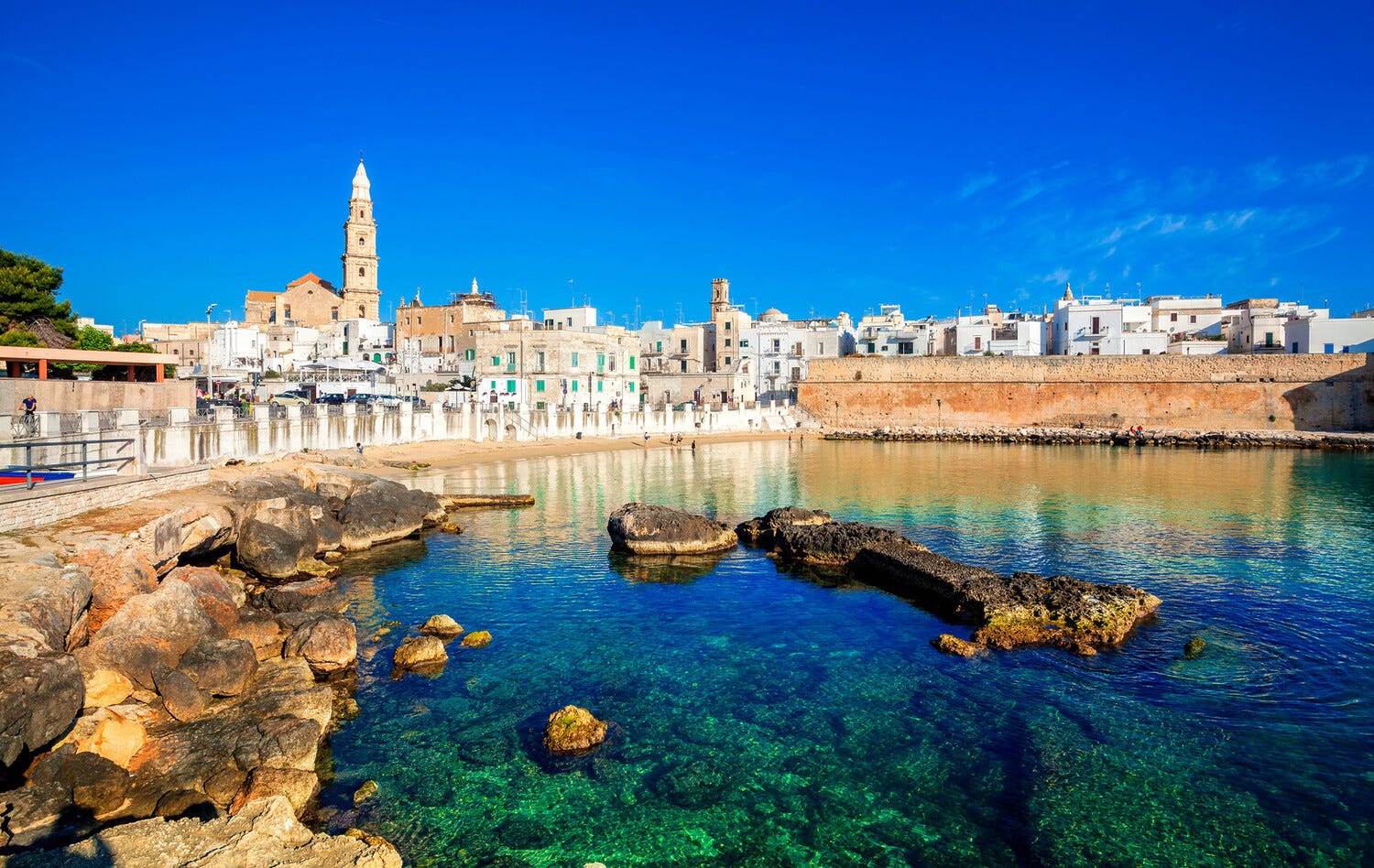
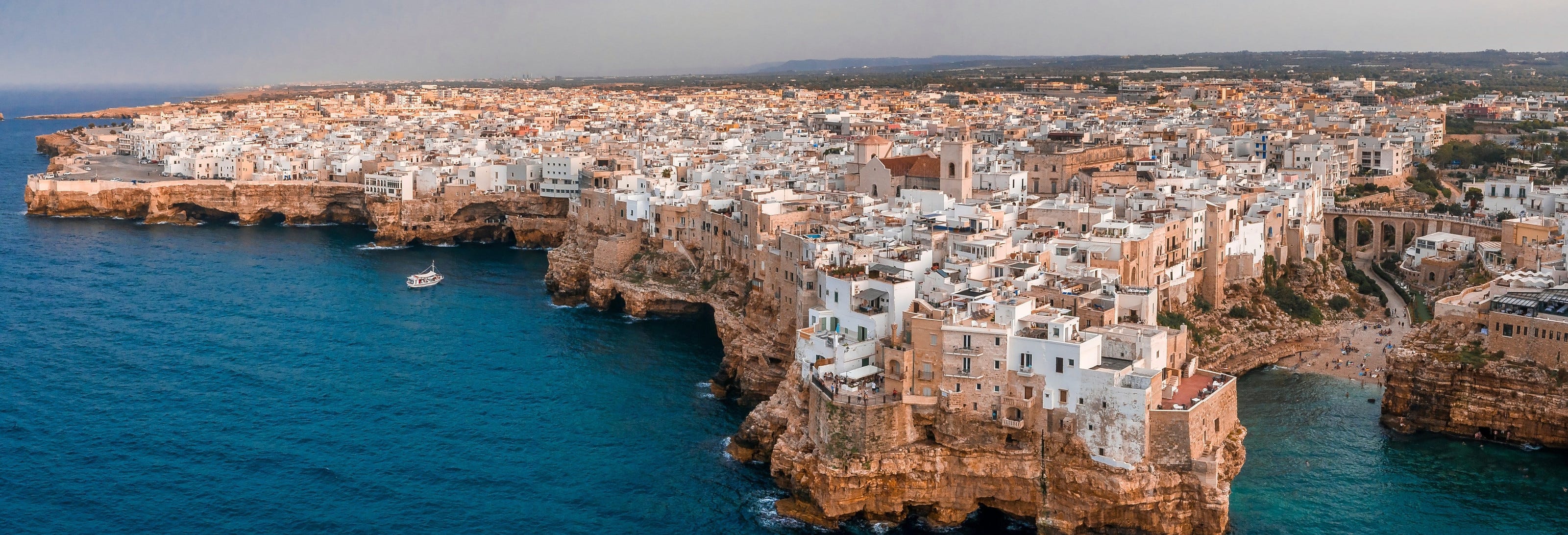
The famous one. Whitewashed houses on limestone cliffs over the Adriatic, the Lama Monachile cove cut into the rock below, and cliff divers in summer. Domenico Modugno was born here, the man who wrote “Volare.”
You know this town. What you may not know is that the tax reform put it in play.
Bari is about 33 km away, with frequent trains covering it in 19 to 30 minutes, plus a teaching hospital, high-speed rail, and the airport around an hour out. The market runs around €2,795/m², and prices actually dipped slightly last year. The 7% flat tax applies: 17,353 residents, under the cap.
The catch: it is the most crowded town on this list by a wide margin. Summer turns the small old town into an influencer set, and a ZTL keeps cars out of the center. Step outside the centro storico and it is an ordinary Adriatic town.
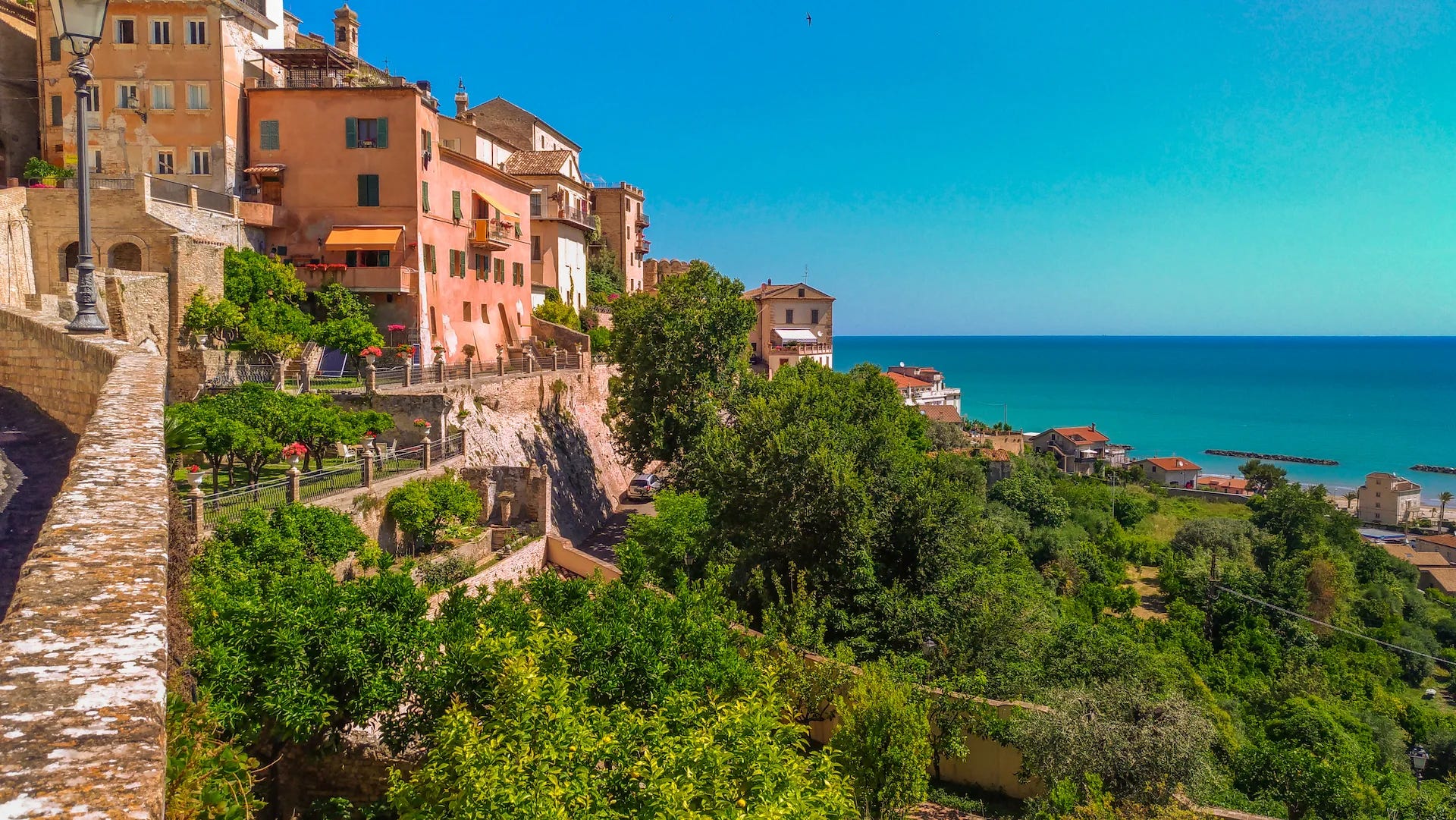
Best for: the buyer who wants an Adriatic borgo with a proper hospital town next door, and accepts the seismic risk that comes with it.
Everyone drives the Adriatic seafront below. Almost nobody climbs the hill to Grottammare Alta, the medieval belvedere borgo where Pope Sixtus V was born, with its little orange-tree theater and a castle looking straight out to sea. The palm-lined beach town below is pleasant and known. The old town above it is the part that feels like a secret.
San Benedetto del Tronto sits right next door, putting a full hospital and the Adriatic rail line about 10 minutes from your door, with Pescara airport around 40 minutes. The market is roughly €2,361/m², up about 7%.
The catch: this is central Italy’s earthquake country. The 2016 to 2017 quakes closed churches in the upper town, and old stone here carries real retrofit risk. And Marche is not in the flat-tax South, so this is the priciest of the hidden picks with none of the tax upside.
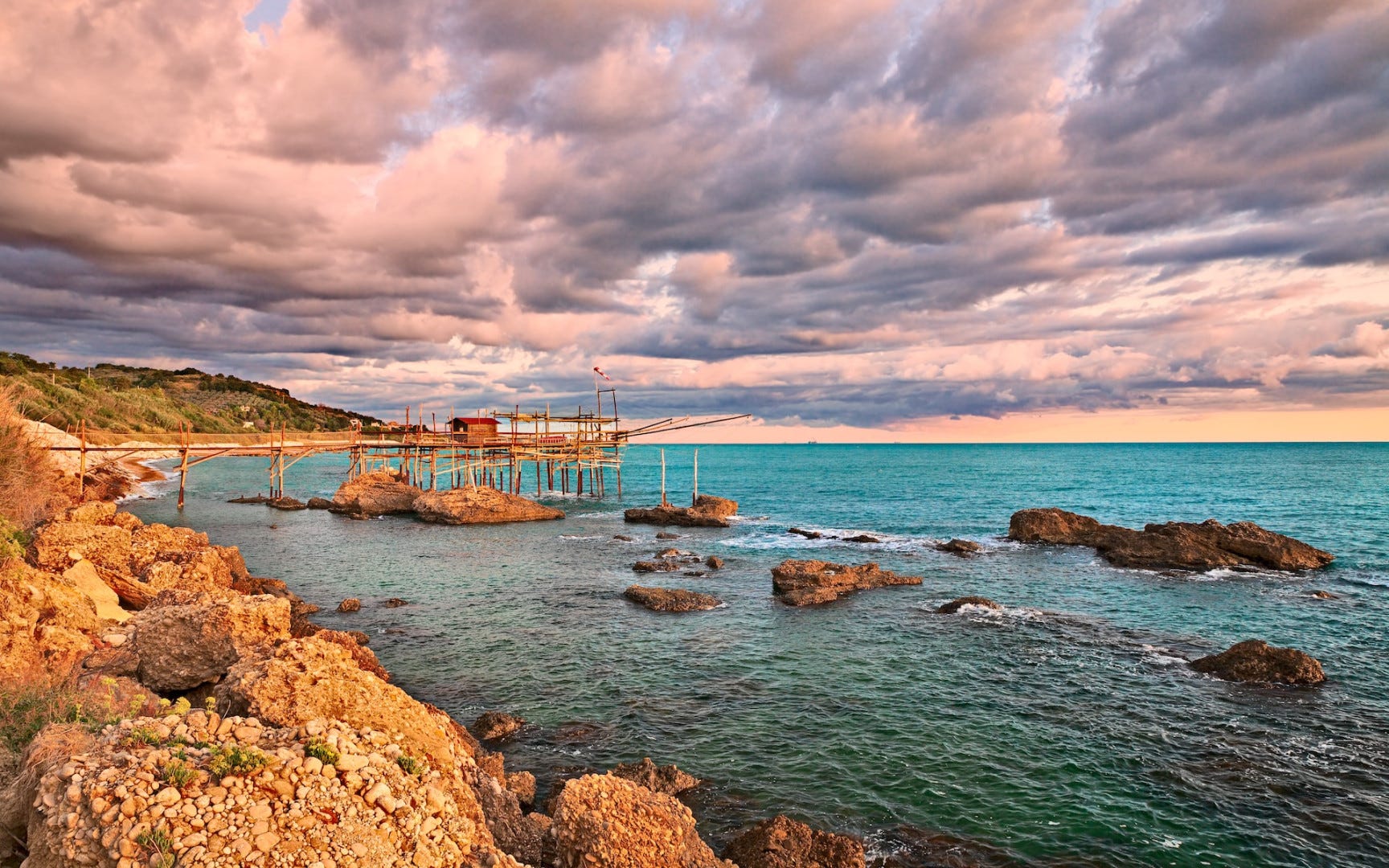
Best for: the quiet-coast buyer who wants the trabocchi, a cycle path to the sea, and a 7% tax bill.
One of Italy’s officially “most beautiful villages,” perched on a promontory over the Costa dei Trabocchi – named for the spidery timber fishing machines on stilts that line the coast, many now turned into seafood restaurants out over the waves. The Via Verde, a cycle and walking path on the old coastal railway, runs right along the shore beneath it.
This is the value play of the whole list.
Pescara is 30 to 40 minutes away, with an airport on its own rail link, the region’s main station, and a full hospital. The market is around €1,392/m², up about 14%. The 7% flat tax applies, and at roughly 2,300 residents this comfortably fits under the cap.
The catch: 2,300 people means thin, seasonal services, so you lean on Lanciano and Pescara for anything substantial. The area sits in a moderate seismic band, and the coast empties out of season.
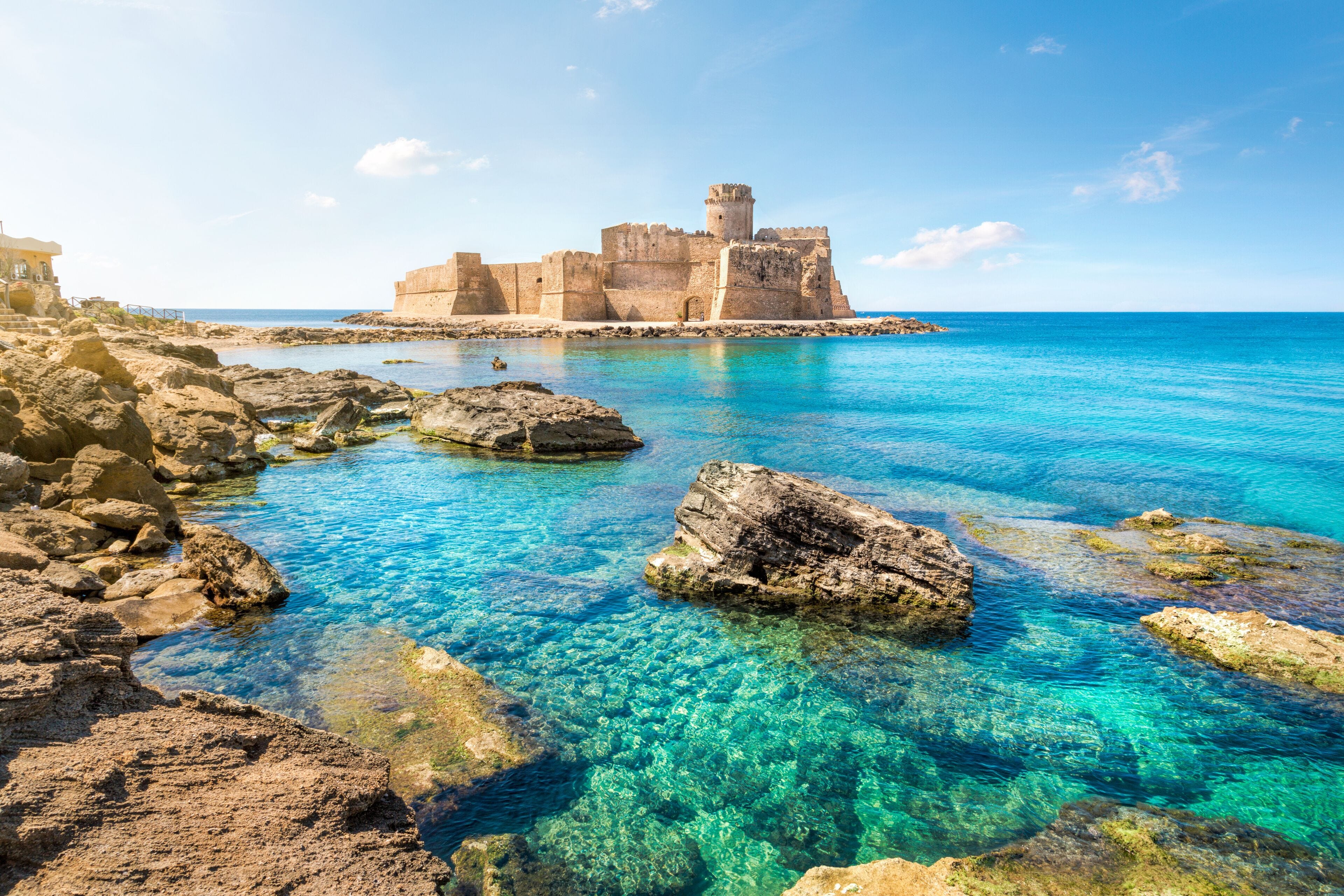
Best for: the contrarian who wants Ionian water at Italy’s lowest coastal entry price and isn’t banking on a quick resale.
An Aragonese fortress on a tiny islet, tethered to the shore by a thread of sand, sitting inside the Capo Rizzuto marine reserve, one of the largest in Italy. Clear Ionian water on a coast that almost nobody visits.
And Le Castella has the single lowest entry price on this list.
Crotone is about 20 km away for hospital and rail. Prices sit near €972/m², the cheapest pick here, and softening. The 7% flat tax applies: the comune’s 17,763 residents are under the cap.
The catch: this is the weakest infrastructure on the whole list. There is no major airport within reach, Lamezia is 1.5 to 2 hours, Calabrian services are thin, the coast is seismic, and falling prices mean it is easy to buy and harder to sell. You are early here, with everything that implies.
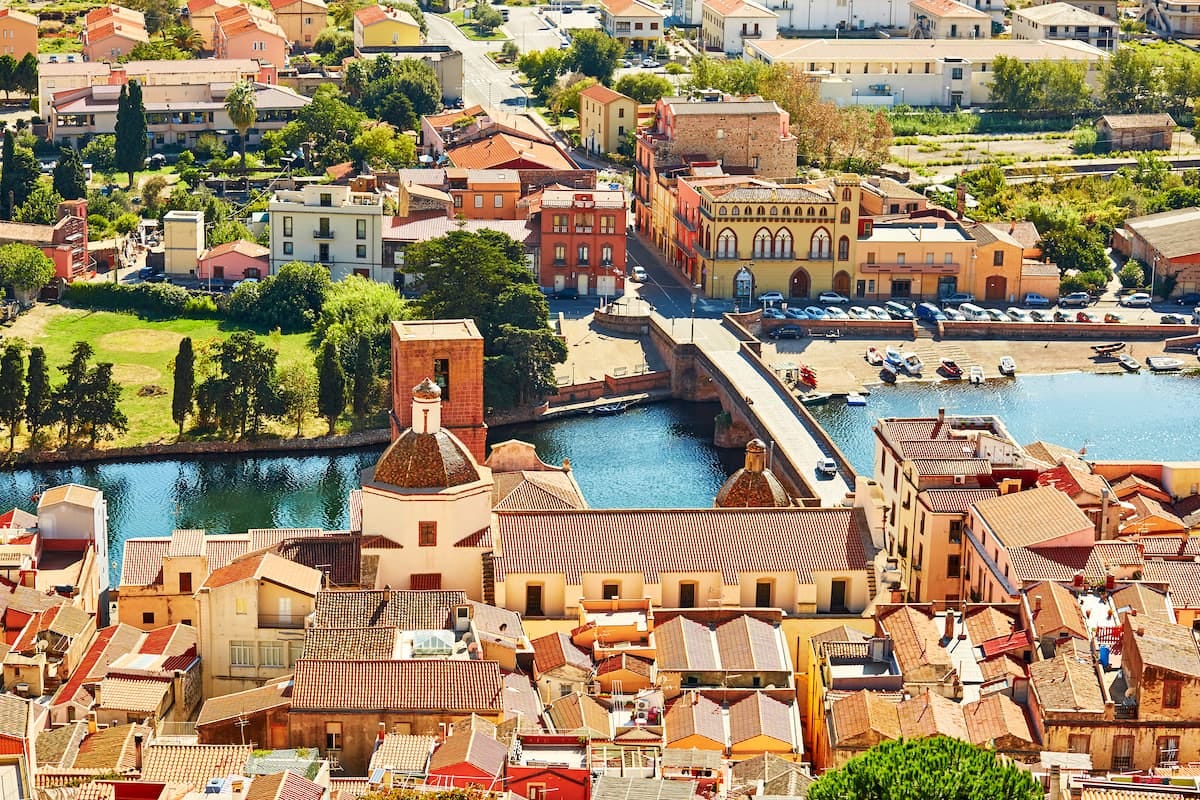
Best for: the buyer who wants island calm, low seismic risk, and a 7% rate, and isn’t put off by the distance.
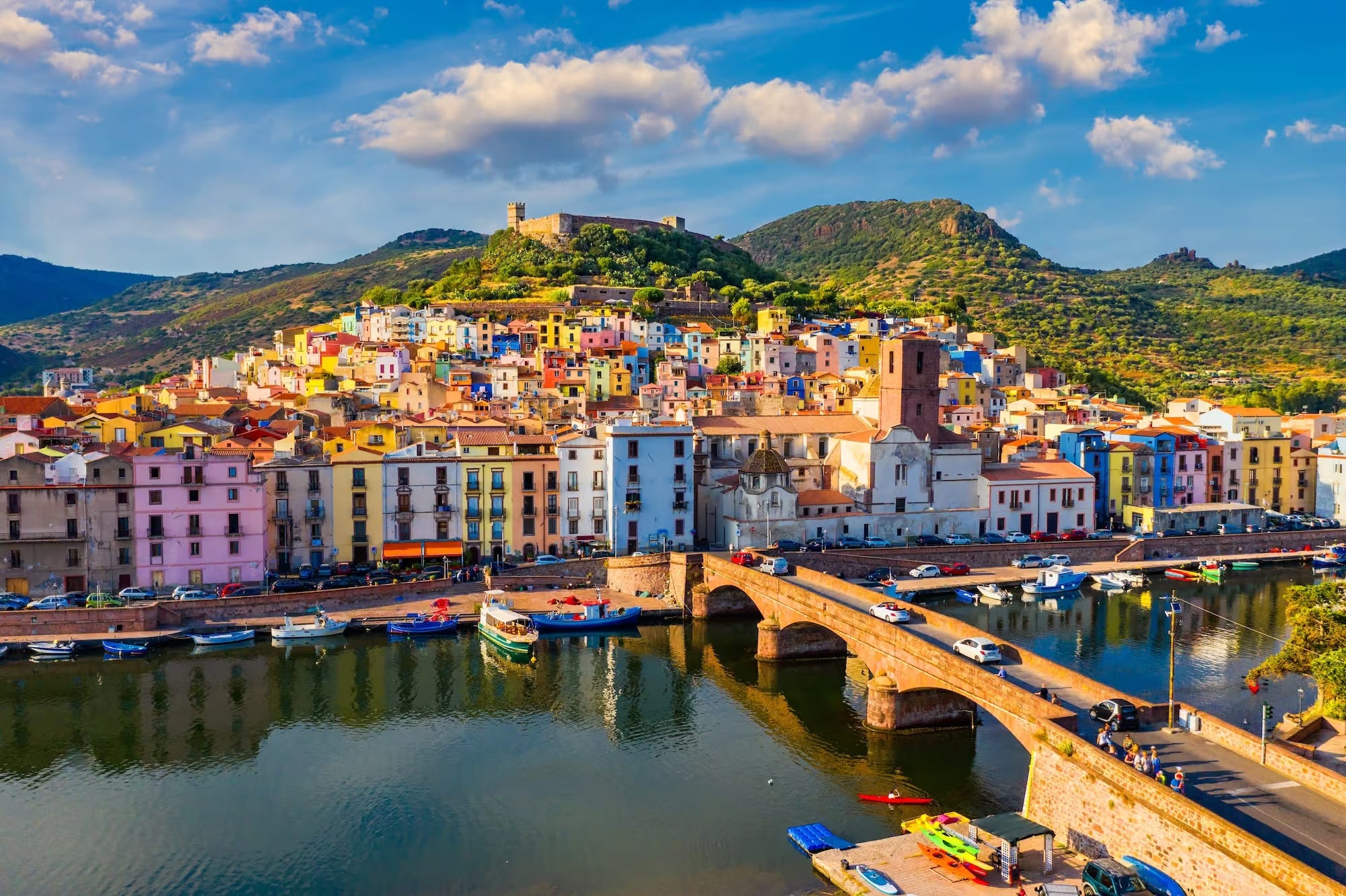
Pastel houses climbing the Sa Costa quarter to the Malaspina castle, standing over the Temo, the only navigable river in Sardinia. The town’s emblem is Malvasia di Bosa, its amber heritage wine. This is the quiet west coast, far from the Costa Smeralda circus.
And it comes with something none of the others can offer.
Alghero is about 45 km, roughly 50 minutes on one of Italy’s great coastal drives, with its airport and hospital. The market sits around €1,290/m² and is gently rising. The 7% flat tax applies: about 7,292 residents, under the cap. And here is the rare bonus: Sardinia sits in Italy’s lowest seismic band, which Scilla, Grottammare and Le Castella cannot claim.
The catch: isolation is the price of that calm. No train station, a coast road that is gorgeous but slow, and reaching the mainland means a flight or a ferry. Lively in summer, sleepy in winter.
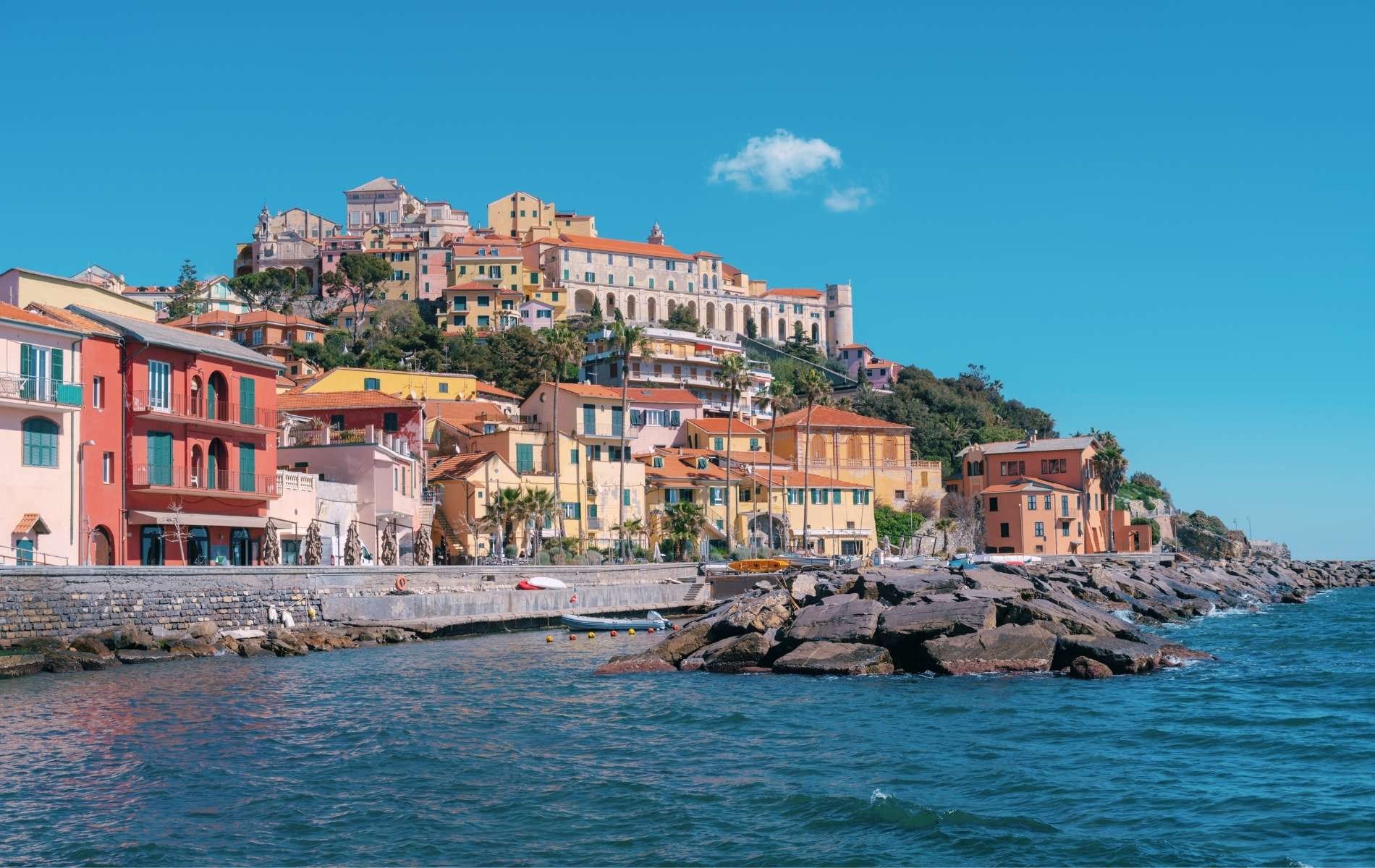
Best for: the buyer who wants Italian village prices and food with a French international airport in reach, happy to live in the hills above the Riviera rather than on it.
The far western tip of Liguria, where Italy runs out and France begins. The coast is Bordighera and Ventimiglia, palms and belle-époque villas on the Riviera dei Fiori. But the real find sits behind it: the Val Nervia, a string of medieval stone villages, Dolceacqua, Apricale, Isolabona, Perinaldo, that Monet came to paint.
This is the one pick on the list with a major international airport in the next country over.
Nice and its airport are about 40 to 50 minutes down the coast, which is the real unlock: direct flights across Europe and the US from a base where you still pay Italian prices. Ventimiglia has a mainline station straight into France. Imperia, about 30 minutes east, has the provincial hospital.
On the seafront, Bordighera runs from about €1,360/m² in the back streets to over €5,100/m² for the sea-view addresses. But step into the Val Nervia and the math changes: in Dolceacqua, Apricale and Perinaldo, characterful village houses still trade under €100K, and a restored two-room place can be found around €50K to €60K. This is your 20-minutes-inland rule, applied to the Riviera.
The catch: no 7% here – the tax map stops a thousand kilometers south. The famous coast itself, Bordighera and Sanremo, is priced by French and northern-Italian second-home money, so the value is strictly inland. And western Liguria is not seismically free. The inland villages are steep, stone, and small – beautiful, but not easy to live on day to day.
Personally, I find it a great option.
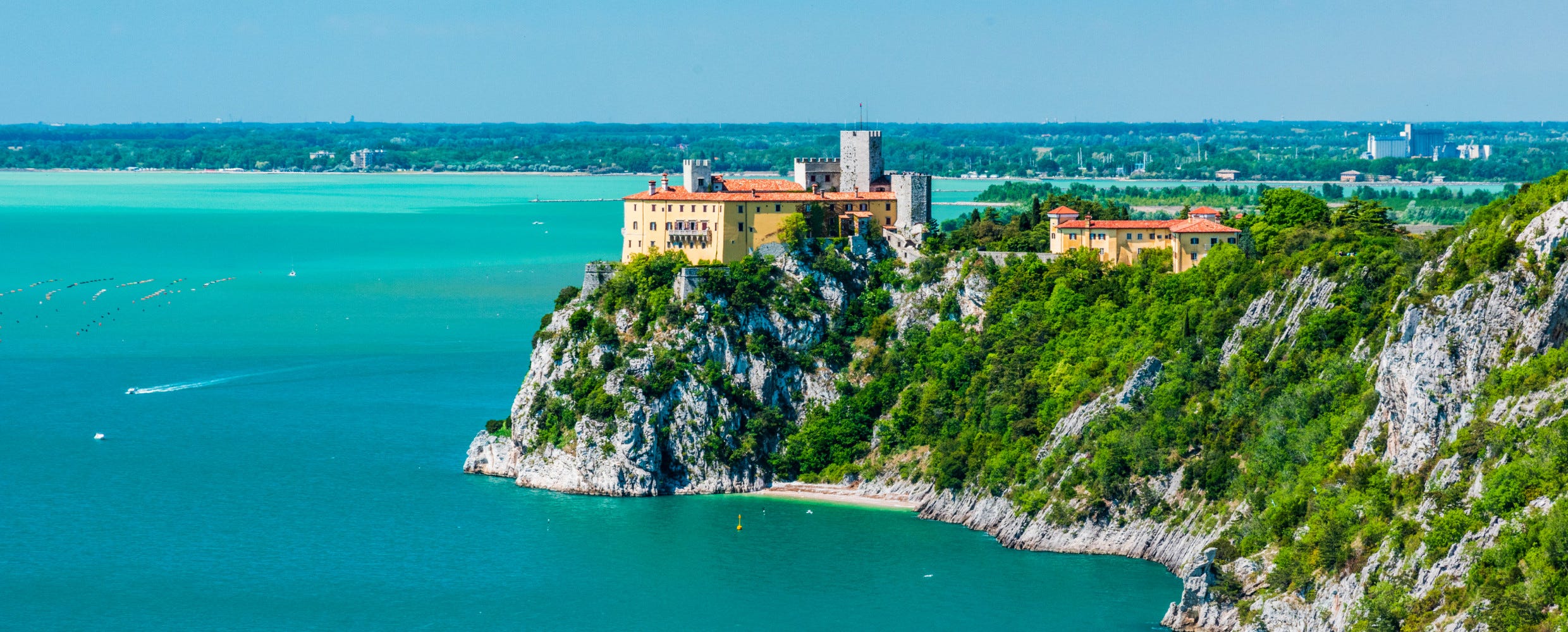
Best for: the buyer who wants a real city, a frontier culture, and northern-coast value, and treats the Slovenian border and the bora as part of the package.
The far northeast corner, where Italy meets Slovenia and the Adriatic begins. Not a single town but a short, strange, beautiful coast: the white cliffs of Duino and Sistiana, the Venetian-fishing harbor of Muggia across the bay, and the Carso plateau rising behind, with limestone, vineyards, and stone villages where Italian and Slovene are both spoken.
It is the most un-Italian coast on this list, and the best-connected wild card.
Trieste itself, a full city of about 200,000, is 20 minutes away: major hospitals at Cattinara, a university, an opera house, a fast line to Venice. Trieste Airport at Ronchi dei Legionari is about 30 minutes, with its own train station on the line. This is the wild card that comes with a real city’s services built in.
On the coast, Duino-Aurisina runs around €3,700/m² and is rising. But Muggia sits closer to €1,800 to €2,700/m², and on the Carso behind, detached houses with gardens trade well below the headline coast, some of the best value of any northern Italian seaboard.
The catch: no 7% tax here, because this is the North. The bora wind can blow hard in winter, and the coast is rocky rather than sandy. The area sits in a medium-low seismic band, calmer than the Strait of Messina but not Sardinia-calm. And the bilingual, border, Mitteleuropa character is a feature for some and a strangeness for others. This is coffee-house Trieste, not la dolce vita.
Forget the m² games. On the coast, what you’re really buying is one of three things: a sea-view apartment in an old town, a villa with a view, or a casale 20 minutes back from the water. The math is different for each, and worth knowing before you start clicking on listings.
The to-restore market is wide open. On the Etruscan Coast and in the Maremma, rough rustici start around €20K to €30K, real projects sit in the middle, like a casolare to fully restore with land at €520K, and a finished one in the Bolgheri countryside was asking €1.85M.
That gap between the ruin and the restored is your entire decision. Because restoring isn’t cheap.
A light refresh is €300 to €500/m². A proper turnkey job starts at €800. The deep work a stone house actually needs (roof, walls, systems) runs €1,400 to €1,800. Over 200m² that’s a €200K to €400K project before you touch the well, the septic, or the road. A €150K rustico becomes a €350K to €500K home by the time it’s livable.
Two traps to watch. The first is who you buy from. Private-to-private, the 9% registration tax is calculated on the cadastral value, far below the asking price. Buy from a company and it’s VAT on the full purchase price – a much bigger bill.
The second is the renovation bonus. It gives back 36 to 50 percent of the works, but only against Italian income tax. So on the 7% regime, it’s dead to you. The cheap tax and the rebate never stack.
The honest take: in the known areas, an already-restored casale at €4,000 to €5,000/m² usually beats buying a ruin and living through three years of builders and headaches.
Starting with the seismic topic. The Strait of Messina (Scilla), the central Adriatic (Grottammare) and the Calabrian coast are the high-risk zones. Puglia is calm and Sardinia (Bosa) is the calmest of all. An anti-seismic assessment is simply the cost of the cheaper prices.
The sea is also hard on buildings. Salt, humidity and wind mean higher maintenance than an inland house. Budget for it every year, not once.
Summer is a different town. Cetara’s road, Polignano’s old center and Procida’s ferries all choke in July and August. Visit in February before you fall in love in August.
Then there’s the island and ZTL question. Procida means a ferry for everything. Polignano and most old centers mean limited car access. Plan logistics before you sign.
And the 7% tax is not a holiday-home hack. You have to actually move your tax residence to Italy. It rewards people who relocate, not people who weekend.
None of this breaks the overall thesis. It just means going in with your eyes open on the parts that don’t show up in the photo.
If you hold an EU passport, none of what follows is your problem. Go shopping. If you hold a US passport, the visa is the first decision, not the house, and the order of the moves matters.
A few options, each with its own constraints. Elective Residence for passive income from around €31K. Digital Nomad from around €28K. And the Investor Visa from €250K, which is the one that keeps you free: you qualify by investing capital, keep full optionality for you and your family, and renew it for as long as the investment stays in place, with a path to permanent residency after that.
Italy’s investor visa is the most compelling residency-by-investment program left in Europe. €250K threshold (the lowest in any major EU program). No minimum stay requirement. And you only invest after the visa is granted, not before.
One important note on current timing: the program is in high demand right now and the Nulla Osta alone is taking around 3 months, where it used to clear in 30 working days. The backlog is recent, so factor it into your planning.
Quick pause…
We built Bitizenship Italia for exactly this. It’s an Italian innovative startup that qualifies under the €250K pathway and holds Bitcoin exposure directly, so your investment buys the visa and real upside at the same time, not a residency fee you never see again.
Preferential class B shareholders take 90% of realised profits from Bitcoin operations, with withdrawal rights every 24 months so you’re not locked in for the full duration.
If you want to walk through what the structure would look like for your situation, book a free consultation here.
Then the tax layer sits on top of the visa.
The 7% flat tax: 10 years, foreign income only, towns under 30,000 residents across the South and islands, and you have to actually transfer your residency. Seven towns on this list qualify: Cetara, Procida, Scilla, Polignano, Rocca San Giovanni, Le Castella and Bosa. For UHNWIs, the €300K non-dom flat regime works anywhere in Italy, including the Tuscan coast.
And there is a separate conversation worth having alongside the visa one, which is Italian citizenship itself. Citizenship by descent is narrower than it used to be after the 2024-25 rule changes, but still real for many Americans. Citizenship by residency is a longer road, but a road. The investor visa is often the bridge, not the destination.
If you’re an American thinking about an Italian base, those are the two conversations to have side by side, in the right order, treating the 7% tax as its own decision rather than bundling it into the visa choice.
A practical note on buying: coastal old towns are often ZTL and protected zones, so a local geometra and notaio are not optional. Budget 10 to 15% on top of the price.
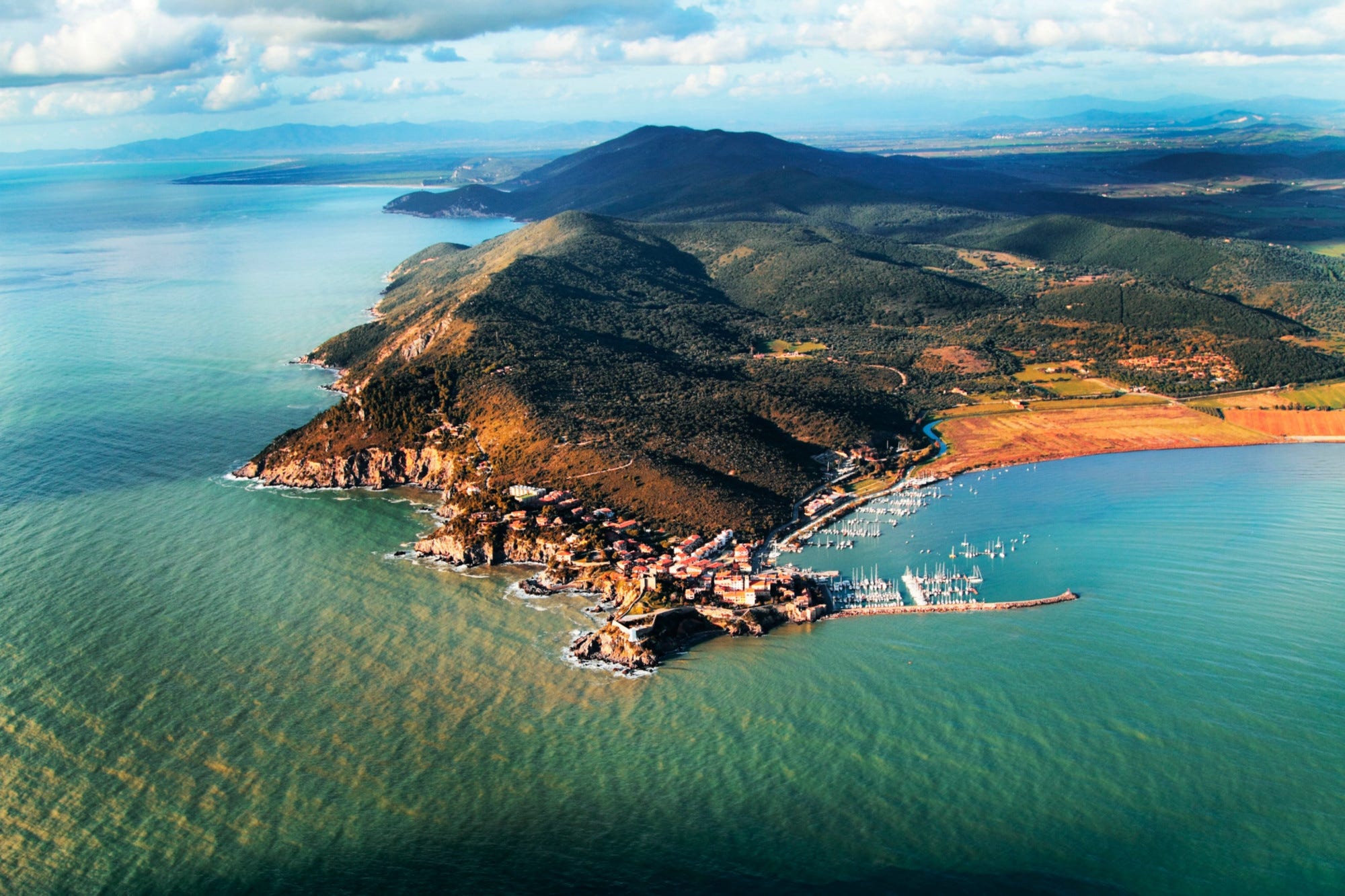
The proven Tuscan coast: Castiglione della Pescaia.
Tuscan coast, connected and cooling: Castiglioncello.
Wind, board and a park: Talamone.
History at the lowest Tuscan entry: Baratti and Populonia.
The Amalfi dream with a tax break: Cetara.
Island romance: Procida.
The South’s most cinematic seafront: Scilla.
Famous and easy to reach: Polignano a Mare.
An Adriatic borgo with a hospital next door: Grottammare.
Quiet coast and the best 7% value: Rocca San Giovanni.
The lowest entry price in Italy: Le Castella.
Island calm and low seismic risk: Bosa.
Italian prices, French airport: the Ligurian Ponente.
A real city built in, on the frontier: the Trieste coast.
Strongest year-round: Polignano (Bari orbit), Castiglioncello (Livorno), Grottammare (San Benedetto), and the Trieste coast (full city services 20 minutes away).
Workable: Cetara, Castiglione, the Ligurian Ponente (if you accept the cross-border school logic).
Honest no for school-age kids: Talamone, Baratti, Procida, Scilla, Le Castella, Bosa. Magnificent for you, thin for them.
I’ve spent time up and down this coast, and I have my own taste.
If my wife and I were signing tomorrow, my shortlist is two:
Castiglioncello, for the train, the cove, and the cooling market. And Talamone, for the wind, the park, and the fact that nobody outside Italy seems to have noticed it yet.
I’m biased. I simply love Tuscany.
I wrote this as an exercise for myself, and I’m sharing the homework. My wife and I haven’t picked ours yet. When we do, you’ll know.
This was the coastal chapter of the rural Italy series. Spain is next, then France. Same method: real cities, real villages, real prices, no tourist markup.
If you missed part one — the 12 rural areas an hour from a city, start here:
And if you’re American and haven’t read the piece on where Americans thrive in Europe make sure to check that out as well:
Reply and let me know which of these speaks to you, or if there’s one I missed. The best suggestions shape the next chapter.
And if you enjoyed this, click the ❤️ button and restack.
Stay free,
Ale
Writing from Lisbon
Comments
Nothing yet. Say the first thing.
Sign in to join the conversation.