
If you ask anyone about moving to France, you’ll hear the same four cities:
Paris, Nice, Bordeaux, and maybe Lyon.
But that’s not where the French actually live their best lives.
I’m Italian. After I published my pieces on Italy’s hidden cities, a close French friend of mine got in touch.
“You did Italy, now do France. But don’t embarrass yourself. Let me ‘elp.”
So we spent a weekend going back and forth. He’d suggest a city, I’d research it. I’d push back, and then he’d prove me wrong. By Sunday night, we had a list.
Seven cities that most people, including most French, will never think to visit, let alone move to.
France has 34,875 communes. Tourists visit maybe twenty of them. Inside the others sit cities with distinct regional identity, world-class food, and a cost of living that lets you actually enjoy France instead of just surviving it. These aren’t unknown cheap places either. These are cities where wealthy French live their best lives, completely off the radar.
Here’s what I looked at for each:
Property prices and what €300,000 actually buys
Connectivity to a major airport or hub
Cost of living that makes the relocation math work
Who the city is actually for
Honest trade-offs, not glossy brochure stuff
Let’s dive in.
Best for: foodies, remote workers who need an airport plus Spain access, and anyone who values regional identity over sunshine.
Population 51,400. €3,500-4,000/m², versus Biarritz 7 km away at €9,000-10,000/m². Biarritz Pays Basque Airport 6 km east, with direct flights to Paris, London, Lyon, plus seasonal European routes. San Sebastián across the Spanish border in 45 minutes.
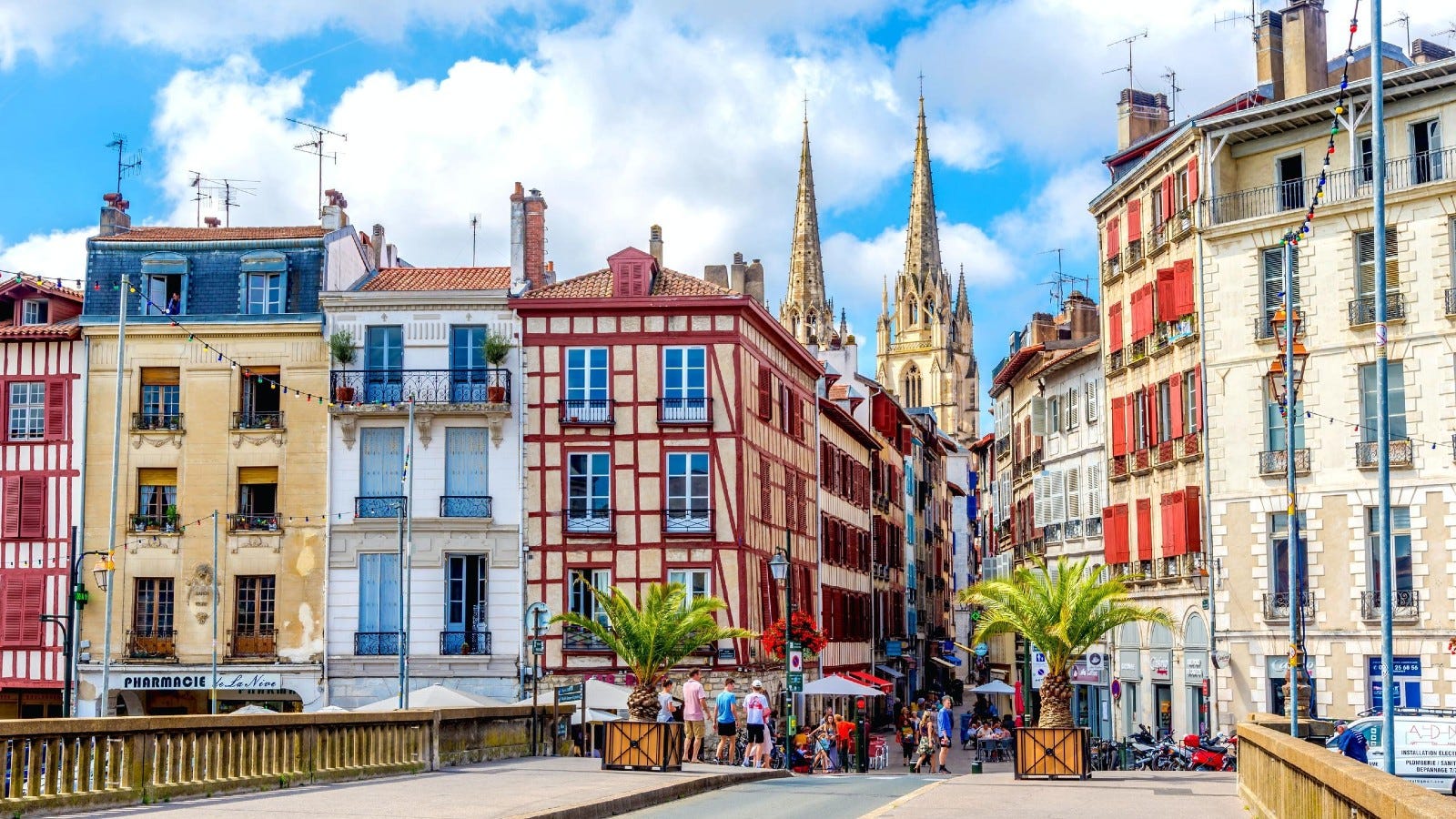
This is where France meets the Basque Country, and neither side won. Two rivers, a Gothic cathedral, and half-timbered houses painted oxblood red and forest green. The kind of food culture that makes Lyon jealous.
My French friend grew up near here. What he always says about Bayonne is that everyone goes to Biarritz, nobody looks 7 km inland.
He’s right. Biarritz is the show, Bayonne is the substance. The food is better, the people are more real, and you pay a fraction of the price for the same weekend.
The gastronomic case is easy. Pintxos at Bar du Marché for €2. Jambon de Bayonne, IGP-certified, from the market at €25/kg. Gâteau Basque from Maison Pariès, still baked to the 1895 recipe. Bayonne is also the chocolate capital of France – in the 17th century Portuguese Jewish refugees brought cacao here, and by 1870 the city had 130 chocolate shops. Most of France’s chocolate tradition traces back through this one town.
Bayonne is consistently ranked in France’s top five for quality of life, cost of living runs 5% below the national average, and a couple lives comfortably on €1,500-1,800/month. The Fêtes de Bayonne every July put over a million visitors in white and red into the old town for five days, and the city transforms. But the rest of the year is quiet.
The catch: the weather. Basque weather is rain, drizzle, Atlantic grey from November to March. If you moved to Europe for sunshine, this is not your city. And the Basque identity runs deep, locals will notice if you treat their culture as decoration.
Best for: wine buyers, families who want trilingual kids, and remote workers priced out of Switzerland who still want the Swiss-adjacent life.
It has been here for 600 years. Population 71,762. €2,500/m² average – €200-300K gets you 80-100m² of a renovated half-timbered building in the Vieille Ville. Basel-Mulhouse-Freiburg Airport 34 minutes north, serving three countries and every major low-cost carrier plus Lufthansa and Swiss. Strasbourg under an hour, Basel 45 minutes, and Freiburg 45 minutes.
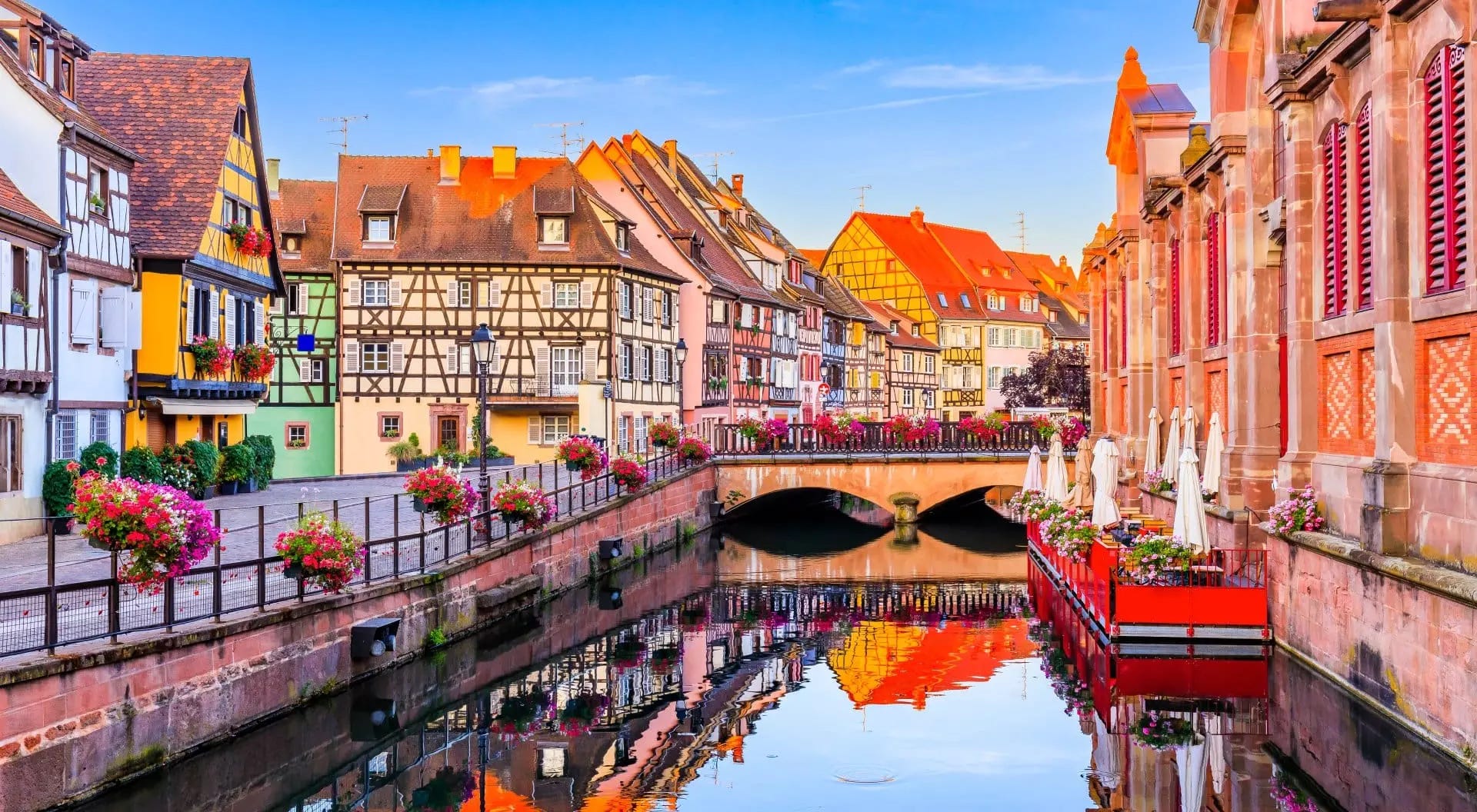
If you have ever seen a photograph of “that pretty French town” with pastel half-timbered houses and canals, it’s probably Colmar. But almost nobody actually lives there. I visited in December once with Christmas markets lit up, mulled wine in hand, snow on the timber frames and I remember thinking this could not be real.
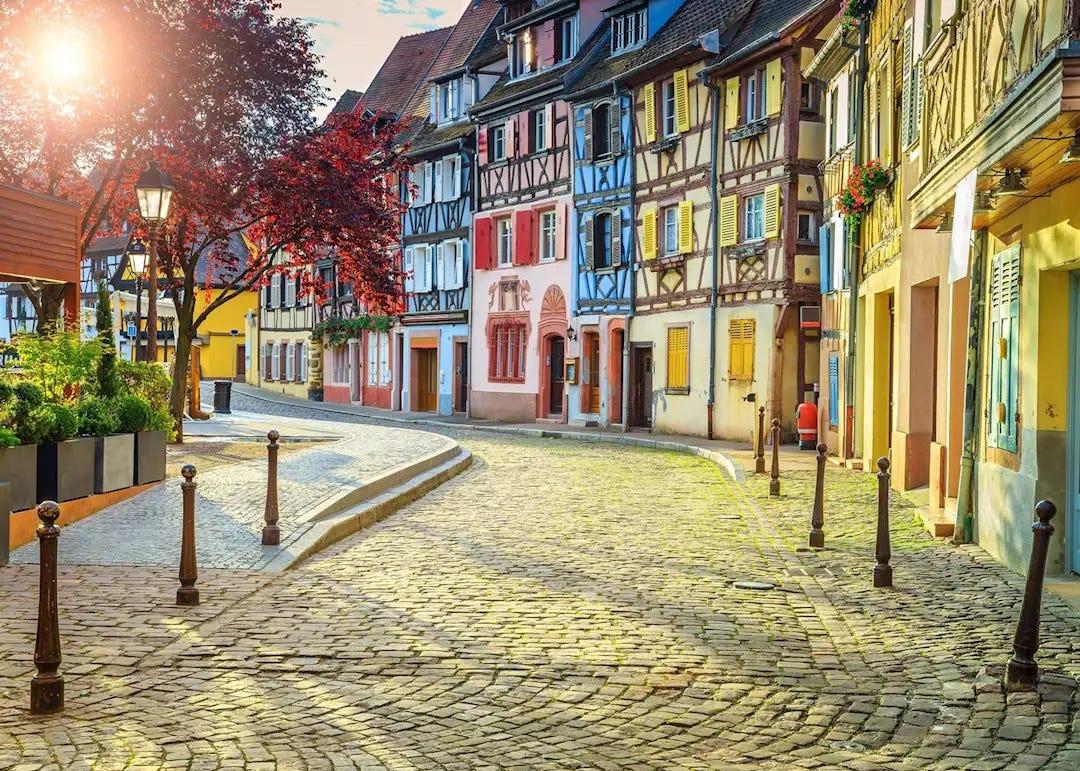
The most photographed quarter is La Petite Venise, houses from the 14th to 18th century lining the canals. But the reason Colmar makes this list is not for the postcard. It’s that Colmar is the capital of the Alsace Wine Route, 170 km of vineyards through 120 villages, and you can sit at a winstub with a tarte flambée for €10 and a glass of Gewürztraminer Grand Cru for €5, and legitimately wonder why you ever paid Paris prices for worse food. This would be the perfect place for my dad, and probably for many retirees.
The Swiss angle is the real financial argument. You live in France, grocery shop in Germany, and fly out of Switzerland, all within 45 minutes of your front door. Kids raised in Colmar grow up in French, German and Alsatian without trying, and the cost of living runs 5% below the French national average while everything Swiss-priced is a short train ride away.
The catch: Alsatian winters are the real deal. January averages 1°C, fog and frost are the norm, and daylight is thin from November to February. Tourism peaks hard in summer and at Christmas, and the old town turns into an obstacle course during peak season. If your dream is Mediterranean lifestyle, this is not it.
Best for: culture-obsessed retirees, artists and creatives drawn by the Provençal light, and remote workers who want Provence without the Aix-en-Provence markup (€5,500/m²).
Population 50,000. UNESCO World Heritage since 1981. €2,250/m² for apartments, €2,950 for houses – €200-300K buys 70-130m² of Provence. Marseille Provence Airport one hour away, Nîmes Airport 25 minutes for Ryanair routes, Avignon TGV station 20 minutes for four-hour Paris runs.
Van Gogh arrived in Arles on February 21, 1888, and in 15 months produced over 300 paintings and drawings. Starry Night Over the Rhône. The Night Café. The Yellow Room. L’Arlésienne. Then he left, and somehow the world forgot about Arles.
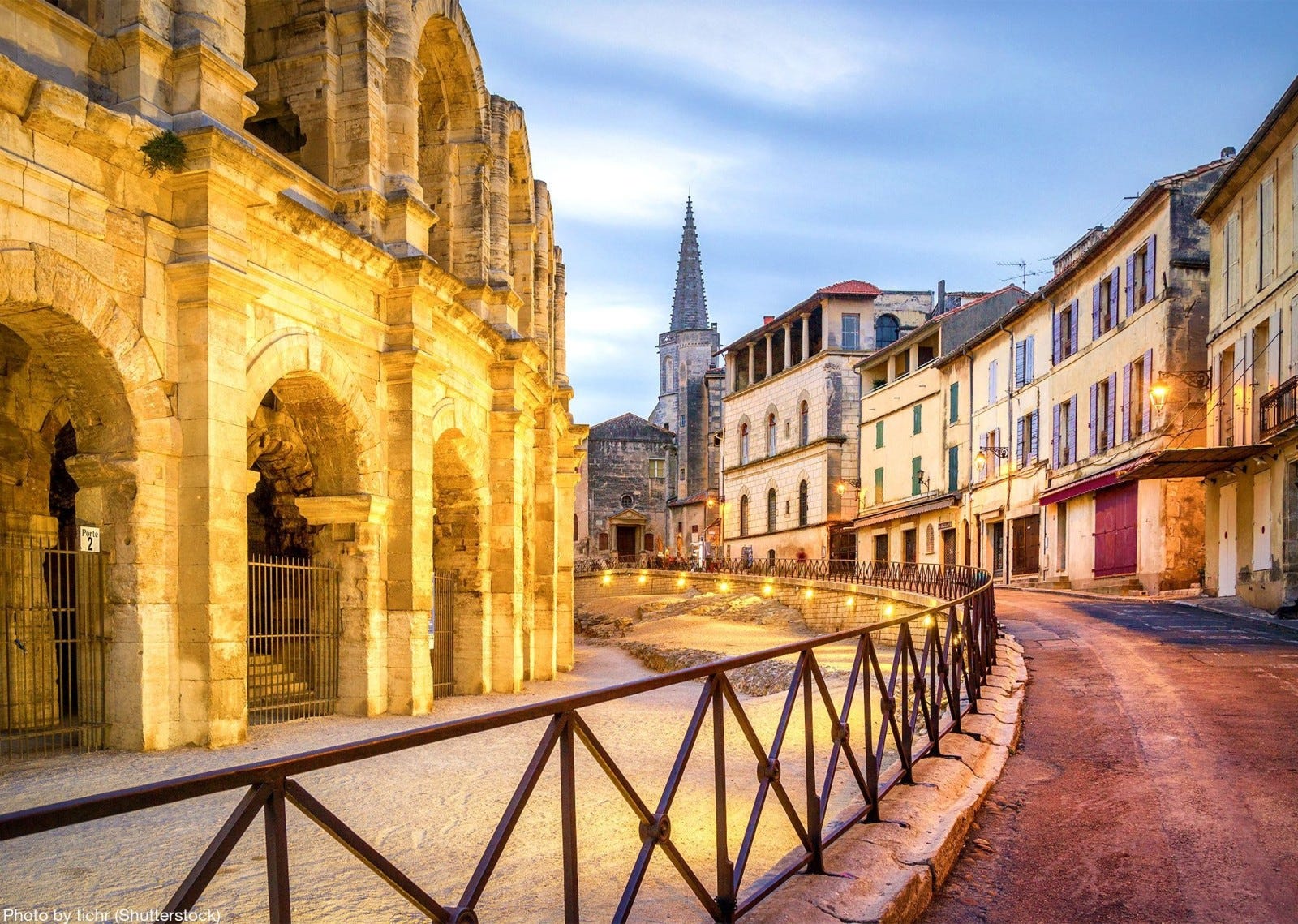
That was until Frank Gehry showed up. The LUMA Tower, a 56-metre twisted stainless steel building by the architect of the Bilbao Guggenheim, opened in 2021, and Arles suddenly had the most significant contemporary art space in the south of France. My friend visited and said the building itself was extraordinary, but what actually struck him was the contrast: step outside the LUMA campus and you’re in a Roman city. 2,500 years of continuous habitation, with an amphitheatre that still hosts bullfights. That collision of ancient and cutting-edge is something that’s unique in the whole of Europe.
Arles’ other secret is the Camargue, France’s wild west. White horses, pink flamingos, black bulls, and salt flats. Europe’s largest river delta, and Arles is the gateway.
The catches run on three fronts. First, the Mistral. Cold, dry, 100 km/h gusts that can blow for days at a time. Van Gogh mentioned it in almost every letter he wrote from Arles, and if you hate wind, avoid here at all costs. Second, summer. 35-40°C in July and August, with limited shade in the medieval centre. Third, scale. 50,000 residents means limited nightlife, limited English, and a car is essential. LUMA has brought cultural prestige but also tension, and property prices are rising fast enough that some locals feel priced out.
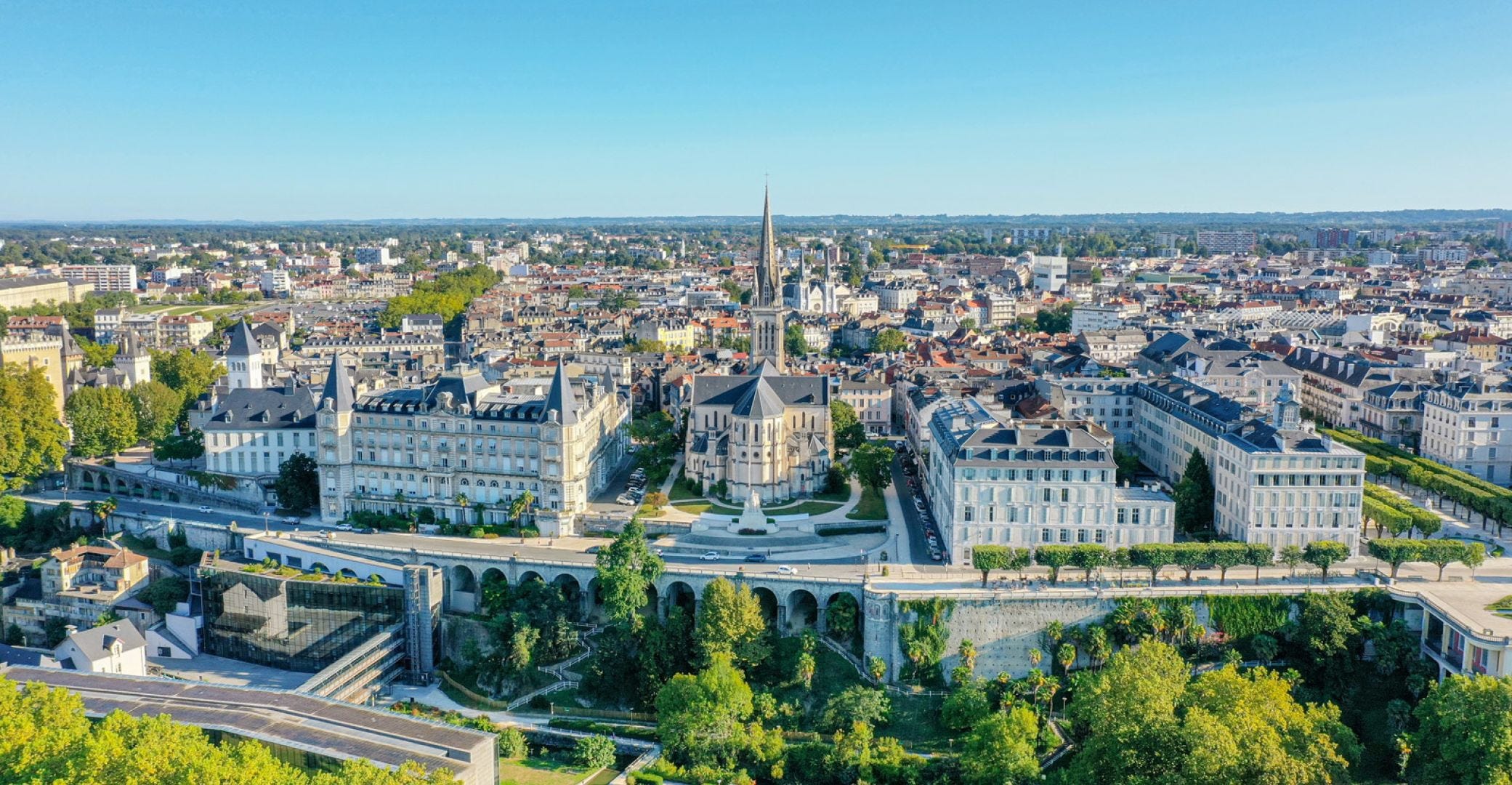
Best for: retirees who want mountains, affordability, and an established anglophone community. Families who want excellent French schools at low cost. Budget optimisers who still want a proper city.
Population 80,000. €2,200/m² – the most affordable real city on this list. €200-300K buys 90-135m². Pau-Pyrénées Airport 10 km east with flights to Paris Orly, Lyon and Marseille. Ski resorts 45 minutes south, Atlantic beaches 1.5 hours west, and Spain just 1.5 hours south.
Lamartine said: “Pau has the world’s most beautiful view of the earth, just as Naples has the most beautiful view of the sea.” He was not exaggerating. The Boulevard des Pyrénées is a mile-long promenade with an unbroken panorama of snow-capped peaks, from the Pic du Midi d’Ossau to the Pic d’Anie. No city in France has a view like this.
The city itself is the birthplace of Henri IV, the king who unified France, and the Château de Pau still stands at the head of the old town. What matters for a move here is not the châteaul, it’s that Pau is one of the greenest cities in Europe, with 1,900 acres of green space, and it has been a British and American favourite since the 19th century. Wilbur Wright set up the world’s first flying school here in 1909, and the anglophone community that formed in that era never left. Active associations, English-speaking services, and an existing infrastructure to catch new arrivals.
The financial argument is also strong. Cost of living runs 6% below the French national average, which is roughly 34% cheaper than Paris. Rent runs €700-900/month for a two-bedroom. A full dinner with wine at a Béarnais restaurant costs €20-25 – poule au pot (Henri IV’s dish), garbure béarnaise, Jurançon wine from the hillside across the river. This is a real French city that happens to cost half of what a French city usually costs, with the most spectacular mountain backdrop in the country.
The catch: Pau is not the coast. This is the foothills. Green, mild, and rainy with 150+ days of rain per year. It is an honest, well-functioning French city, but not photogenic in the way Colmar or Arles are. And the airport is regional, so international travel means a Paris connection.
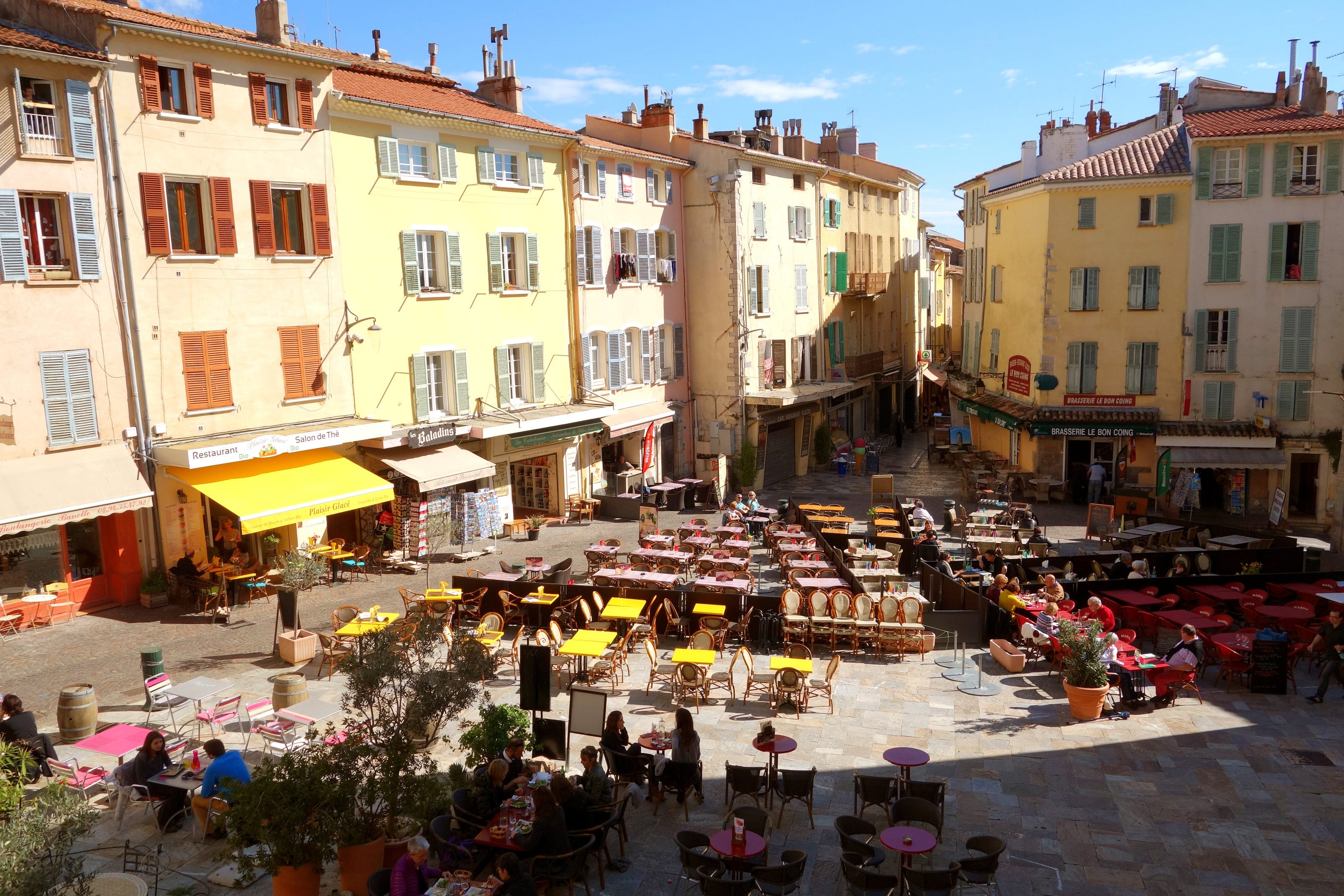
Best for: retirees wanting Riviera sun at half the price. Families with kids in Toulon’s international schools 20 minutes away. Sailors and beach people.
Population 58,000. €4,820/m² – Nice runs €5,500+, Saint-Tropez €12,000+. Toulon-Hyères Airport 3 km from the city (ten minutes), with direct flights to Paris, London, Brussels and Corsica.
This is France’s oldest seaside resort – before Nice, Cannes, and Saint-Tropez. Queen Victoria wintered here. Robert Louis Stevenson recovered here. Tolstoy wrote here. Then the railway line went to Nice instead and everyone followed. Hyères was left behind with its medieval old town, its palm-lined boulevards, its private islands, and its 300 days of sunshine.
My French friend puts it best: Hyères is the Côte d’Azur for people who actually live on the Côte d’Azur, not for tourists. For year-round residents who know the difference.
The move is not just the city. It’s the Îles d’Or. Porquerolles, Port-Cros, Le Levant – three islands, a national park, no cars allowed, crystal-clear Mediterranean, ferries year-round in 20 minutes. Porquerolles has beaches that rival the Caribbean, and you access them from your own city rather than paying resort prices to visit.
The catch is size. The city sprawls across 132 km², so you need a car, and the airport is small – international connections mean Marseille (one hour) or Nice (1.5 hours). Summer gets crowded, temperatures push past 35°C, and the Porquerolles ferry queues in August will genuinely test your patience.
But for Riviera sun, the same Mediterranean life, and half the coastal Provence markup, Hyères is hard to beat.
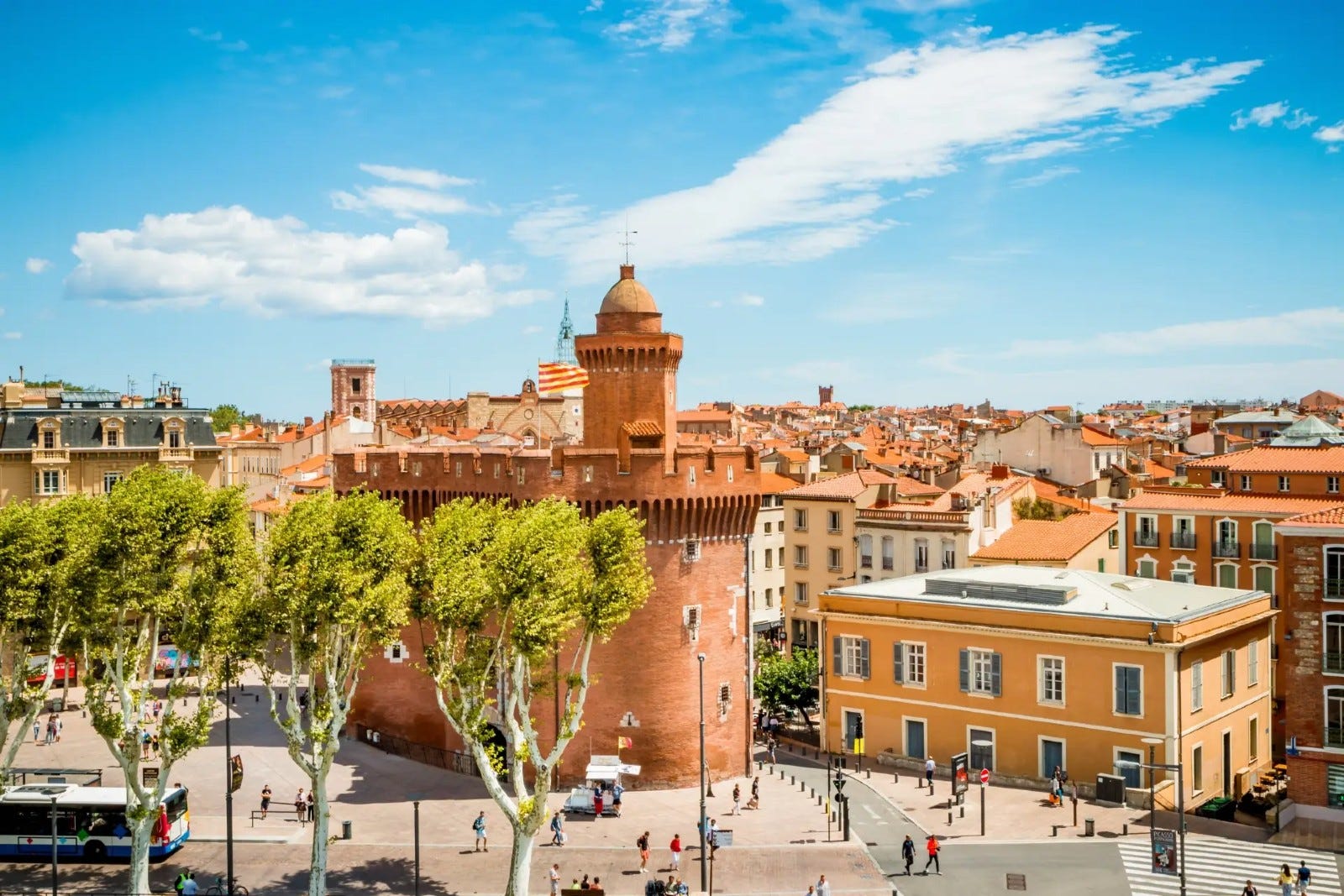
Best for: budget optimisers who want sun. Remote workers who need low cost. Contrarians who see the Barcelona-Perpignan corridor developing.
Population 121,000 – the biggest city on this list after Annecy. €2,000/m². Perpignan-Sud de France Airport with flights to Paris, London Stansted and Brussels Charleroi. Barcelona two hours by TGV, Spanish border 30 minutes, Mediterranean beaches 15 minutes east, and Pyrénées ski stations 1.5 hours west.
Salvador Dalí declared Perpignan’s train station “the centre of the universe” after experiencing what he called “cosmogonic ecstasy” there in 1963. There is a 3.6-metre statue of him at the entrance, arms wide open.
Perpignan was the capital of the Kingdom of Majorca in the 13th century. The Castillet, a 1368 fortress turned museum, guards the old town. Street signs are in French and Catalan.
At €2,000/m², for a city of 121,000 with an airport in the sunniest corner of France, the value case is obvious. In Saint-Jacques, the historic Catalan quarter, €200-300K buys 100-150m². In Moulin à Vent or Bas-Vernet, 120-160m². In Cabestany 5 minutes south, a full house with garden for under €250K. Cost of living runs 6% below the national average and 13% cheaper than Montpellier. Rent runs €600/month for a one-bedroom. Full Catalan meal – boles de picolat, cargolade, crème catalane – for €12-16.
I have to be honest about the catch here, because Perpignan is the pick with the most trade-offs. The city has one of the highest unemployment rates in France and a poverty rate significantly above the national average. There are neighbourhoods with real challenges. The airport has scaled back its routes. Some areas are rundown. The politics are divisive. If you need polish, safety guarantees, or a fully functioning expat scene, this is not your city.
But if you want maximum sun per euro, a TGV connection to Barcelona, beaches 15 minutes away, and a Catalan identity that has no equivalent anywhere else in France, Perpignan is the contrarian bet on this list.
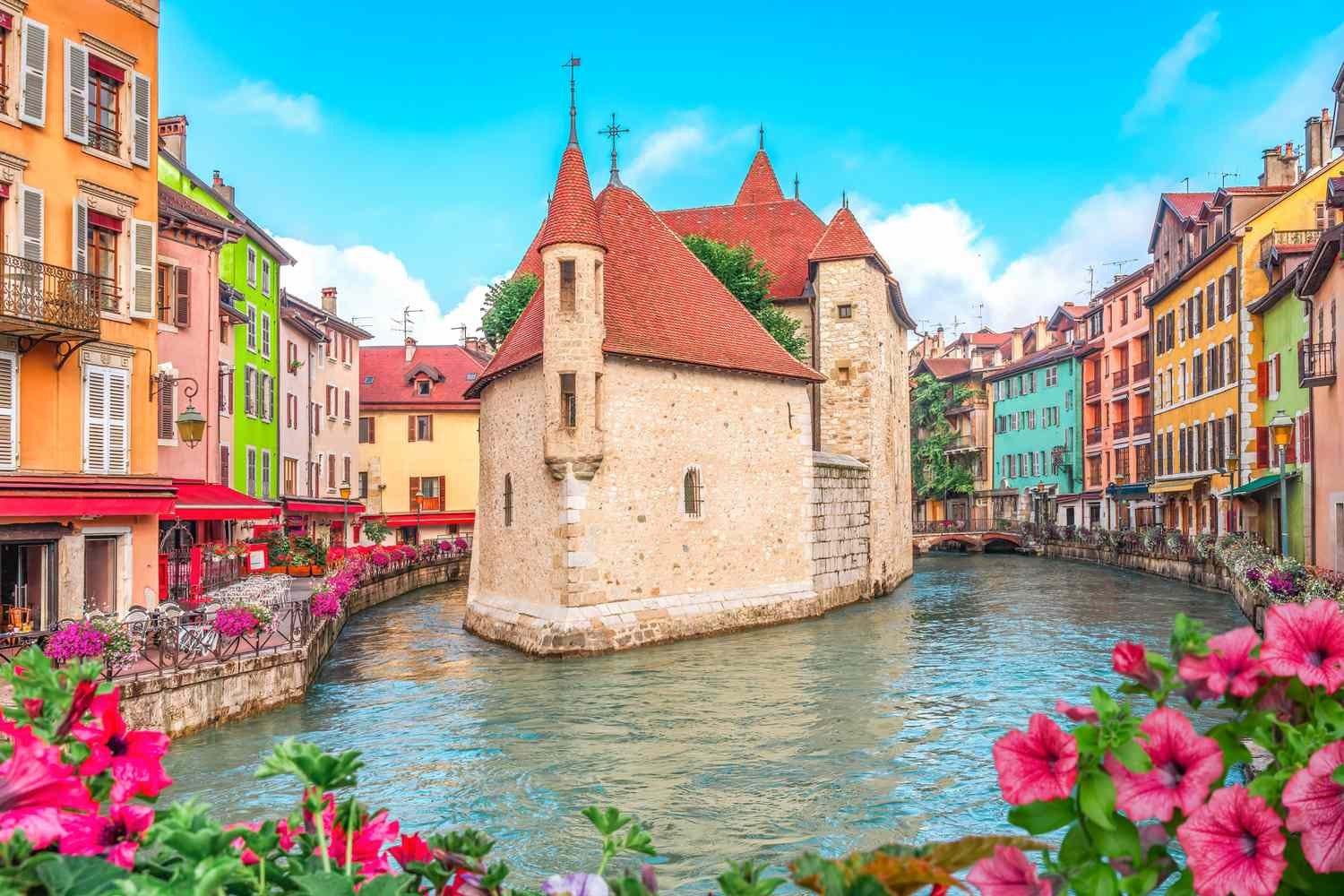
Best for: remote workers and founders who need global connectivity plus an Alpine lifestyle. Families with kids who might end up in Swiss international schools. Cross-border workers exploiting the Swiss wage gap.
Population 128,000+ – the largest city on this list. At €5,143/m² it is also the most expensive. Geneva International Airport 40 minutes north, with direct flights to New York, Montreal, Dubai, Singapore and every European hub. La Clusaz ski resort 45 minutes and Chamonix 1.5 hours.
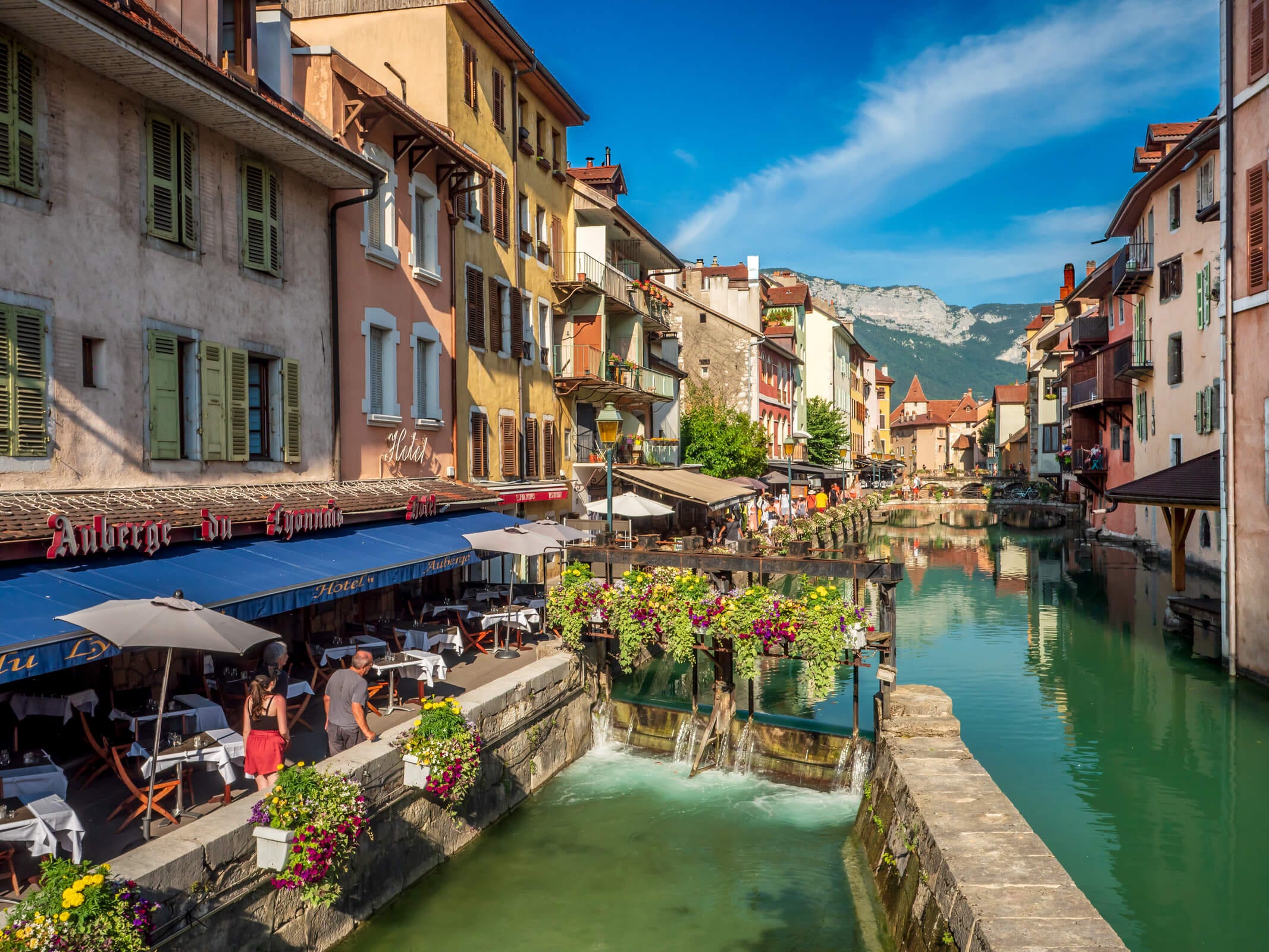
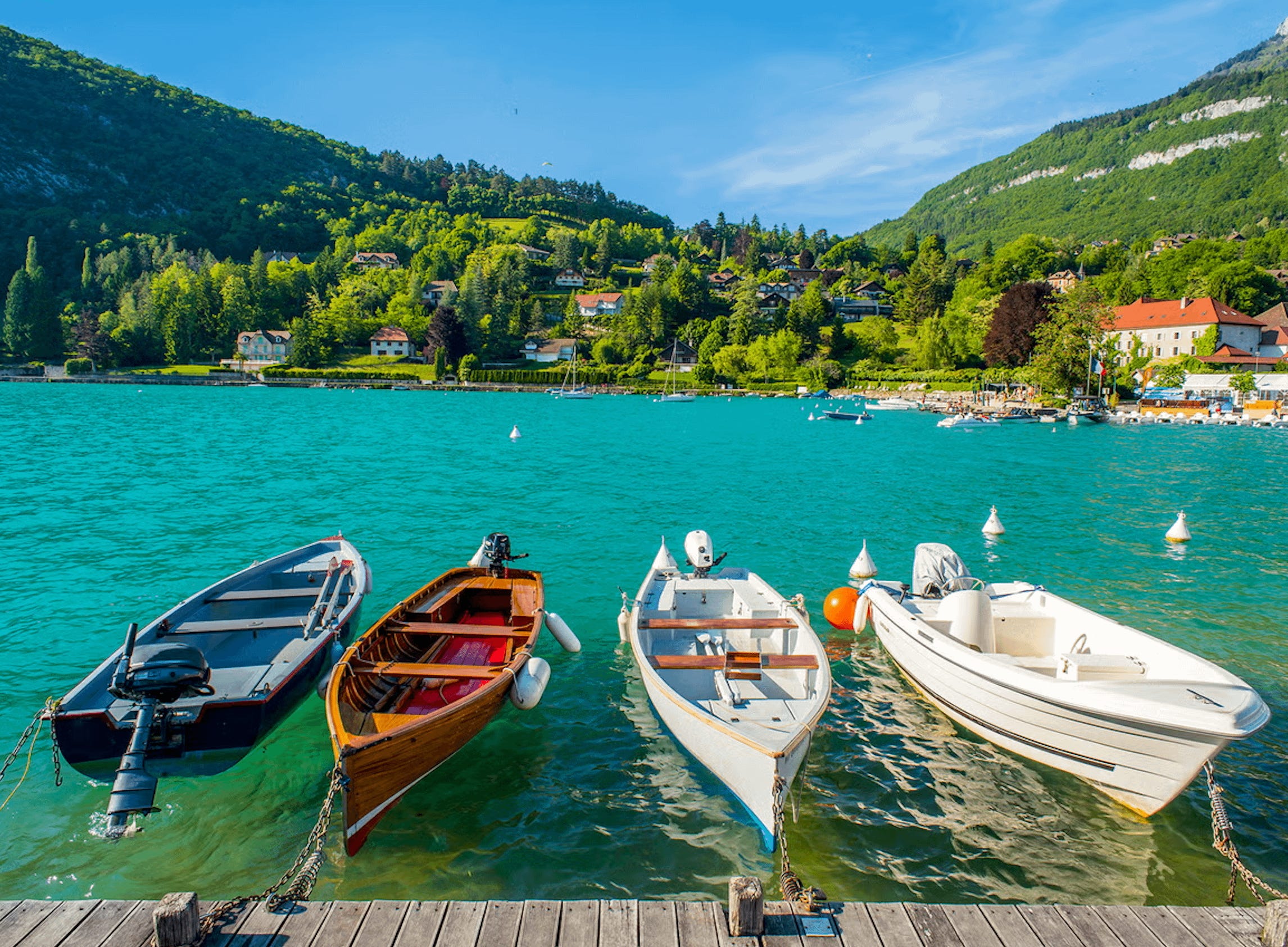
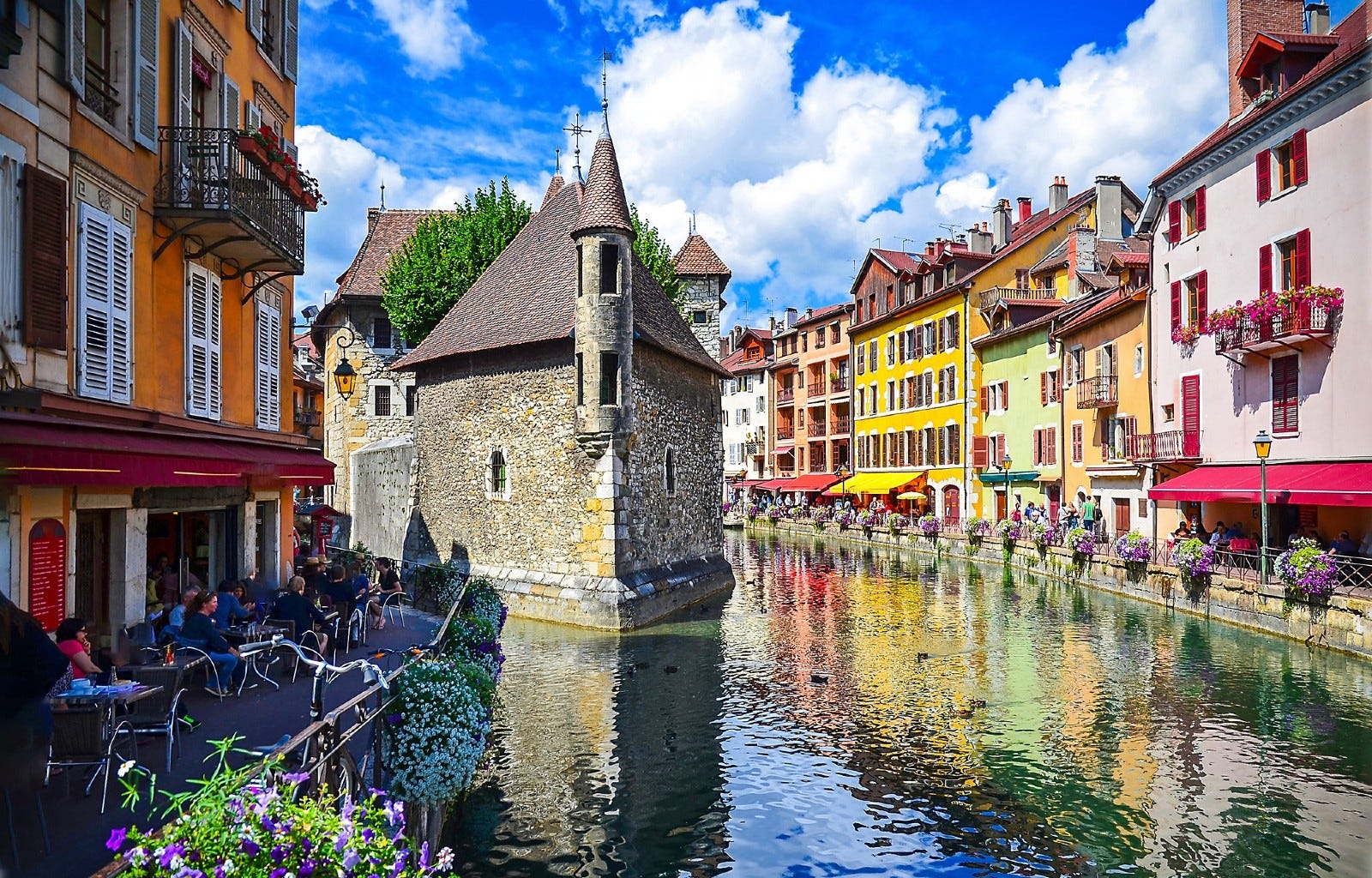
This one hides in plain sight. Everyone has seen the photographs with the turquoise lake, pastel old town, canals, and Alps rising behind. It’s “the Venice of the Alps,” Instagram’s favourite French city. And yet almost nobody considers actually living there.
I expected Annecy to be overrated. Tourist trap, IG bait. But it is not. The old town is stunning, but what actually got me was the lake at 7 AM. Dead calm with the mountains reflected perfectly. I understood immediately why people never leave.
Annecy is Europe’s cleanest lake, in a medieval city, with the French Alps as your back garden, and Geneva, with its global airport, 40 minutes away. It has consistently ranked #1 among French cities over 50,000 for quality of life, and the economy runs on cross-border workers earning Swiss salaries and spending French prices. That wage differential is a huge factor: Geneva is right there, and everything on the French side is priced in euros against a Swiss-franc income.
The financial reality: €5,143/m² and rising fast (+37% in the last seven years). In the Vieille Ville, €200-300K buys 35-55m², a studio or small one-bedroom. In Annecy-le-Vieux (lakeside, 10 minutes out), 45-60m². In Cran-Gevrier or Seynod (15 minutes), 60-80m² with parking. That same €300K gets you 135m² in Pau. So the trade-off is explicit: you pay for the setting, and you pay for the Geneva airport.
The catch: housing supply is tight because the city is physically squeezed between the lake and the mountains, and cannot sprawl. Winters are cold, dark, and foggy. And you are competing for property against Swiss-salary buyers, which is why prices have moved the way they have. If you can earn in Swiss francs or work remotely for a US company, Annecy is one of the best base-cities in Europe. If not, look at Pau or Bayonne for what €300K can actually buy.
Seven cities, seven price points, and a genuinely wide spread in what €300,000 buys.
Cheapest to most expensive per m²: Perpignan €2,000, Pau €2,200, Arles €2,250, Colmar €2,500, Bayonne €3,500-4,000, Hyères €4,820, Annecy €5,143.
The Paris anchor. Central Paris runs about €12,000/m², so your €300K in Paris buys 25m². The same money in Annecy buys 55m², in Bayonne 80m², in Colmar 100m², in Arles 130m², and in Pau 135m². Every city on this list gives you materially more space and quality of life than Paris – that is the Paris-flight trade that French wealth has been making for a decade.
Buying costs. France runs 7-8% in notaire fees on top of the sale price. The system is notaire-driven, not agent-driven, so you cannot skip this step. Budget the fees into your total from the start.
Renovation. Old-town properties in Bayonne, Arles, Perpignan and Colmar frequently need work. A light refresh runs €500-800/m². A proper renovation of a historic property with structural work runs €1,500-2,500/m². Historic-district properties often have hard restrictions on what you can change – verify with the mairie before you sign.
French bureaucracy is worse than Italian. That is not a joke – the French administrative state is a full-contact sport, and every step (bank account, health card, tax registration, residence permit) takes months, not weeks. Do not try to DIY.
Language matters more than most Americans expect. Outside Bayonne and Annecy, day-to-day English is rare. Learn French to at least B1 before you go. It is not optional in a Perpignan or a Colmar – it is survival, and it is the difference between being a resident and being a tourist with a long lease who is never fully accepted.
Property taxes and wealth taxes are real. France applies IFI (Impôt sur la Fortune Immobilière) to real estate holdings over €1.3M. Standard property taxes (taxe foncière) run higher than most Americans expect. This is not a tax-optimisation move, and anyone weighing France against Italy on pure tax should be clear-eyed.
As always, visit in winter first. If you can handle February in Colmar, or a Mistral week in Arles, or a rainy November in Bayonne, you can handle the rest of the year. Summer visits will lie to you.
If you hold an EU passport, none of what follows is your problem. If you hold a US passport, France has a visa layer that shapes this entire path.
The Long Stay Visitor Visa (VLS-TS “Visiteur”) is the standard route for retirees and passive-income buyers. Roughly €1,500-2,000/month of income per person, private health insurance, proof of accommodation. It gives you a year, then you renew locally as a carte de séjour, and the treaty benefits kick in from day one.
The Talent Passport is the route for founders, salaried workers, investors, artists and researchers. Multiple sub-categories, including “Passeport Talent – Créateur d’entreprise” for founders and “Passeport Talent – Investisseur” for €300K+ investments. Renewable in four-year increments, with a path to permanent residence after five years.
The US-France tax treaty is worth understanding on its own terms. For Americans, this is the strongest treaty in Europe. Social Security, 401(k) and IRA withdrawals, and even Roth accounts are taxed by the US and left alone by France. The Roth keeps its tax-free status, which almost no other European country honours. France also does not tax wealth held as savings or investments, only real estate over €1.3M, and even then new arrivals get a five-year pass on foreign property. Which means you can sit in Lyon or Bayonne paying American tax rates, with French healthcare and a fast train to anywhere.
The real catch is not the tax, it’s the citizenship path. Five years of continuous legal residence, fluent French (B1 minimum), demonstrated integration. This is a decade-long project, not a shortcut, and anyone chasing an EU passport quickly should look at other routes.
Most affordable: Perpignan (€2,000/m²).
Best airport access: Annecy (Geneva International, 40 minutes, global routes).
Biggest city, most services: Annecy (128,000+).
Best beach access: Hyères (own islands plus the Côte d’Azur).
Best gastronomic city: Bayonne (Basque food, IGP ham, chocolate capital of France).
Best culture per euro: Arles (Van Gogh, Roman ruins, Frank Gehry, all at €2,250/m²).
Best wine access: Colmar (Alsace Wine Route capital).
Best mountain access: Pau (Pyrénées panorama from your balcony).
Most sunshine: Perpignan (2,500+ hours per year).
Fastest appreciation: Annecy (+37% in seven years).
Strong: Annecy (top schools on both sides of the border, huge nature, real infrastructure), Colmar (trilingual French/German/Alsatian by osmosis), Pau (affordable, greenest city in Europe, established anglophone community with English-speaking services already in place).
Workable: Bayonne (Basque bilingual schools, Spanish border accessible), Hyères (international schools in Toulon, 20 minutes), Arles (small and French-only, but manageable for younger kids).
Honest no for school-age kids: Perpignan. The city’s challenges are real, and you can find similar Mediterranean sun with fewer trade-offs a few hours in either direction along the coast.
I don’t live in France, and I don’t have the Italian bias for a French city that I have for Tuscany. But I’ve spent enough time in a few of these to have opinions.
If we were signing tomorrow, my shortlist is two: Bayonne, for the food, the airport, and the border with Spain. And Annecy, for the lake, the Alps, and Geneva forty minutes away.
Colmar comes very close. If I were choosing a place for my dad, it would be there.
I wrote this as an exercise for myself, and my French friend approved the final list, which is the highest bar in the piece.
This is the France chapter of the Hidden Cities series. Italy came first – if you’re weighing France against Italy specifically, this one maps the Italian side of the same decision:
And if you’re an American thinking about a European move at all, this is the piece that maps which European cities work for which American profile:
Reply and let me know which of these seven speaks to you, or if there’s one my French friend missed.
And if you enjoyed this, click the ❤️ button and restack.
Stay free,
Ale
Writing from Lisbon
Comments
Nothing yet. Say the first thing.
Sign in to join the conversation.