
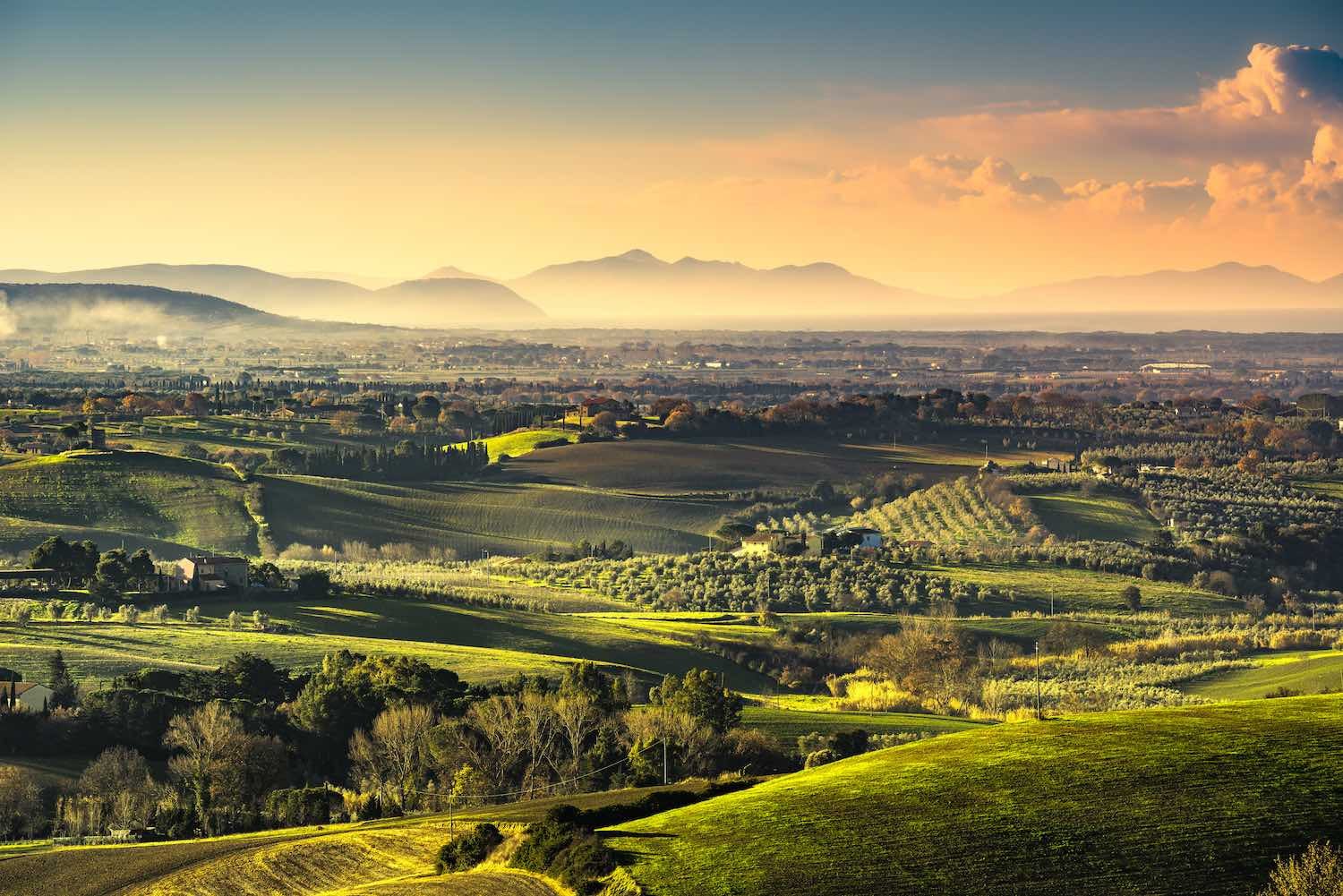
My wife and I keep having the same conversation.
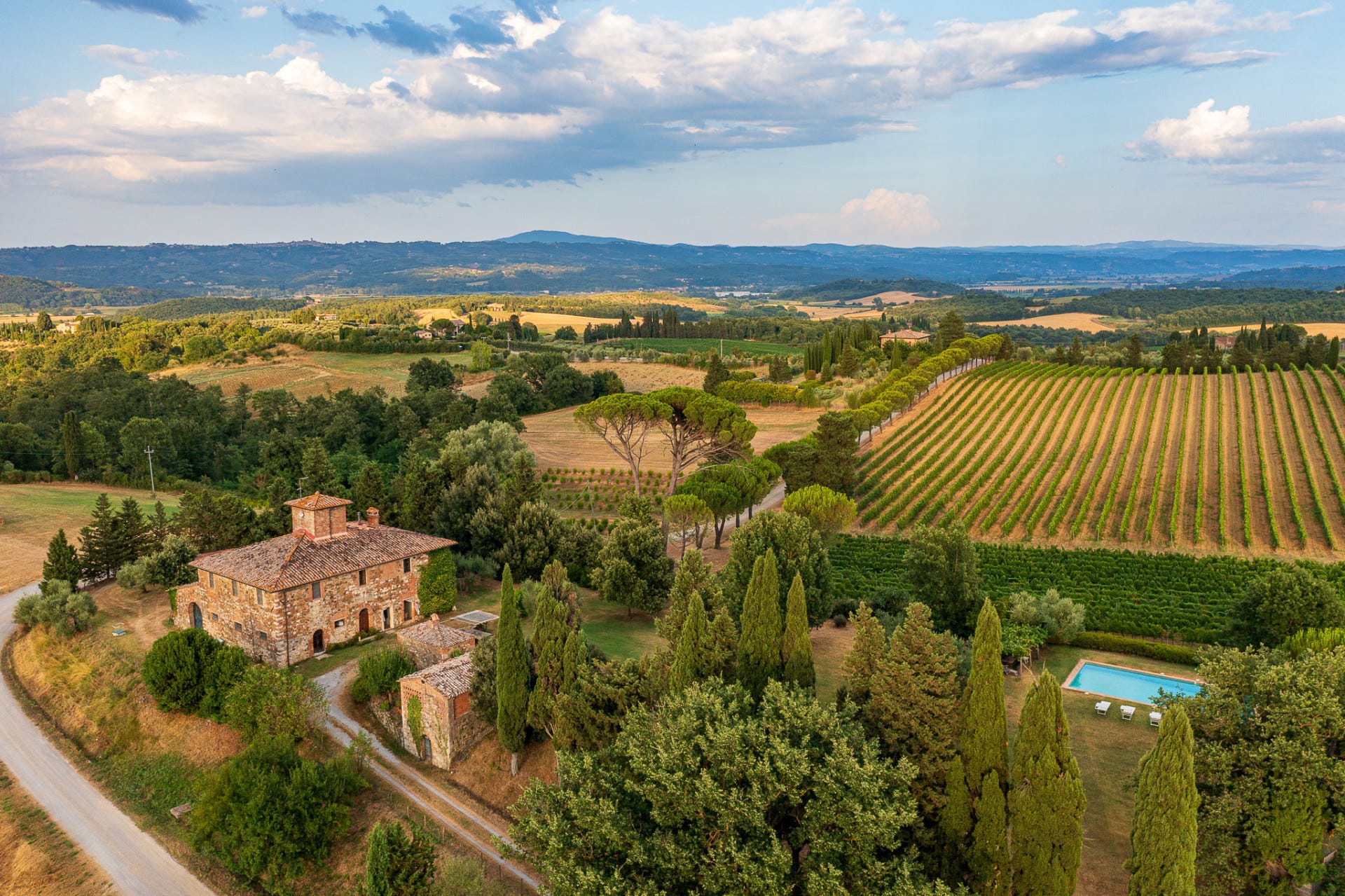
It starts with one of us showing the other a stone farmhouse somewhere in rural Europe. It ends with the same question:
Why don’t we own one yet?
For clarity, owning doesn’t mean living there full-time. That’s the part people get wrong. A base you use four months a year changes your life more than an apartment you use twelve.
After last week’s piece on where Americans thrive in Europe, I got many questions and lots weren’t about cities, but about land. So this time, instead of just talking about it with my wife, I did the homework.
12 rural areas of Italy where you can buy a house with land, build a small farm, and still be an hour from a real city. Some are more obvious names and others I guarantee you’ve never heard of. All of them are still underpriced for what they are.
These are real places, picked on my own taste, from someone who’s actually Italian.
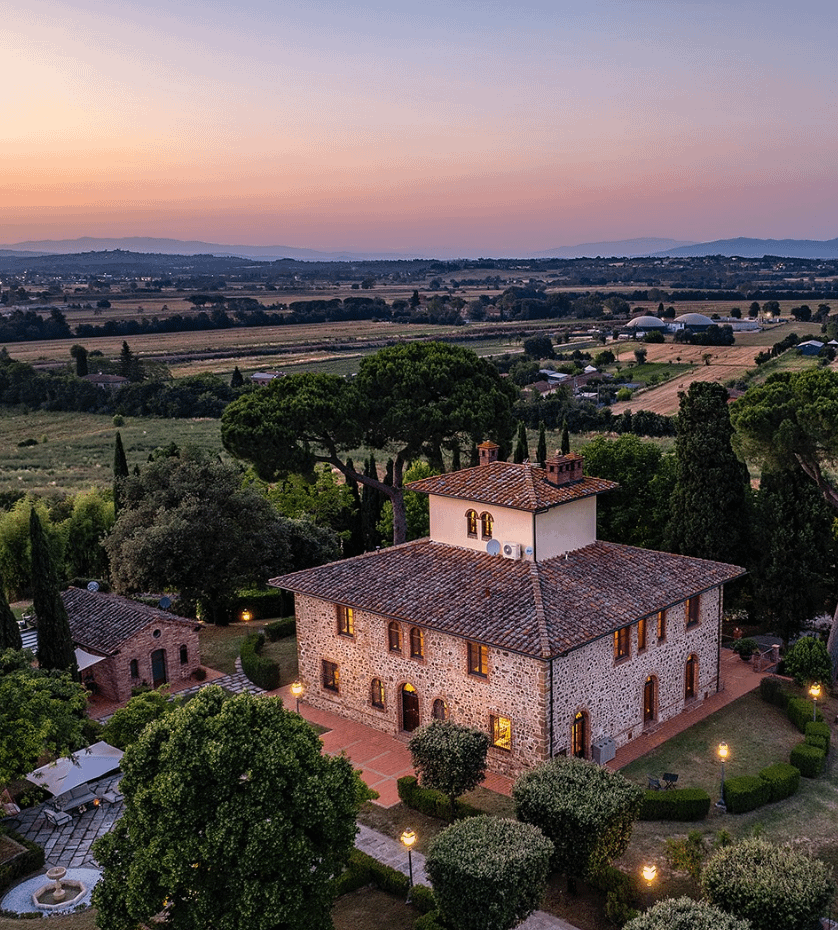
Three things have shifted in recent years.
Starlink solved bandwidth. I own one, and being able to connect from anywhere is priceless.
Autonomous driving will redefine what distance means. “One hour from a city” will mean something completely different in a few years. Dozens of places nobody looks at today will suddenly open up. You’ll sip a coffee, work, or read while your car drives.
And there’s an economic shift, too. You can build from there on your own terms. Without leaning on UBI or anything like it, we’re no longer in the ancient Roman age when these places were just for summer relaxation.
But here’s a bolder claim, admittedly unsubstantiated for now: some of the first one-person billion-dollar companies will be built from places exactly like these. AI gives the leverage, the network lives online, and you fly when it matters.
High-performance teams no longer need an expensive zip code. They need focus. And if taste is becoming part of the moat, working from a beautiful place is an edge of its own.
That’s how I think about it, at least.
A real city within 1 hour. Hospital, jobs, train, airport. This is what 80% of people will actually need, whether it’s for kids or just for something to do. Cultural proximity shouldn’t be underestimated either
Real agrarian heritage. A product with a real market behind it: DOCG wine, DOP oil, truffles, saffron. To me this is the thing that makes an area feel alive instead of just pretty.
Houses with land actually for sale, at prices that make sense.
One thing I learned along the way: “underpriced” doesn’t mean cheap compared to yesterday. It means the farm-with-land purchase is still a local transaction. Even in world-famous regions, the rural land an hour out still gets bought by locals, mostly farmers, almost never by the international market. That’s the window we’re looking for.
Each area below is tagged as either an obvious one or an unknown one. If you’re moving with kids, I flag that at the end too.
Let’s go area by area, starting one hour from Rome.
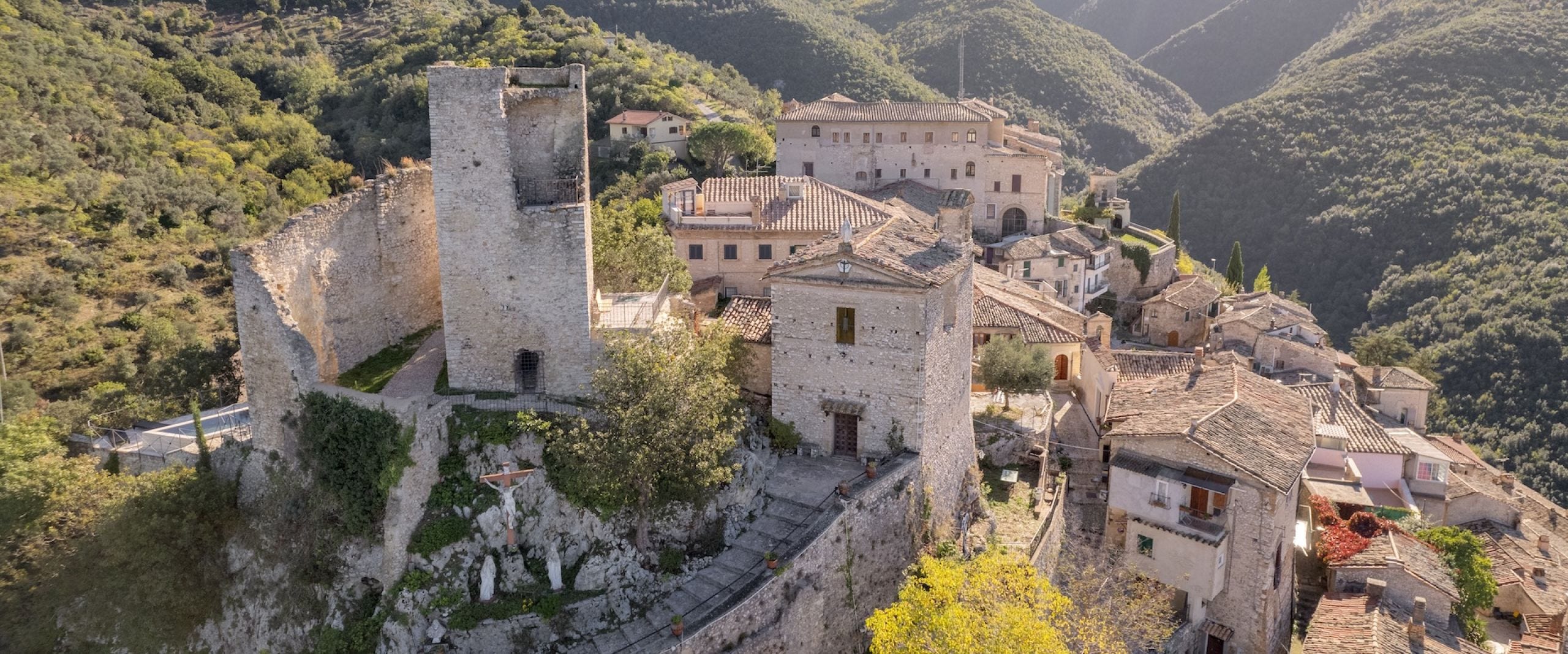
Best for: anyone who wants Rome weekly and an olive grove daily.
If you’ve followed me for a while, you know I’m big on one idea: proximity to Rome. Once autonomous driving matures, everything within 90 minutes of the capital gets repriced. That ring is full of incredible places, each one better than the last. Sabina is where I’d start.
Olive groves that Pliny the Elder praised two thousand years ago. Still here, still producing, and in 1996 they became the first DOP olive oil in Italian history.
Rome is so close that people who work in the city already live out here. That means proper city life when you want it, and silence when you don’t. Almost no foreigner has noticed. It’s not as scenic or as posh as Tuscany, and you’ll have to work harder to find the right spot. But that’s the kind of challenge you’d want to be up for.
Fiumicino airport is 45 to 55 minutes away. A commuter train (the FM1) runs from Fara Sabina into central Rome. You can hold a Rome life and an olive farm at the same time, and that combination doesn’t exist anywhere else in Europe at these prices.
Houses run €600–1,000/m². Farmhouse projects from €70K. Restored, with 4 hectares of productive DOP olives, €350–600K.
The single most underrated combination in Italy.
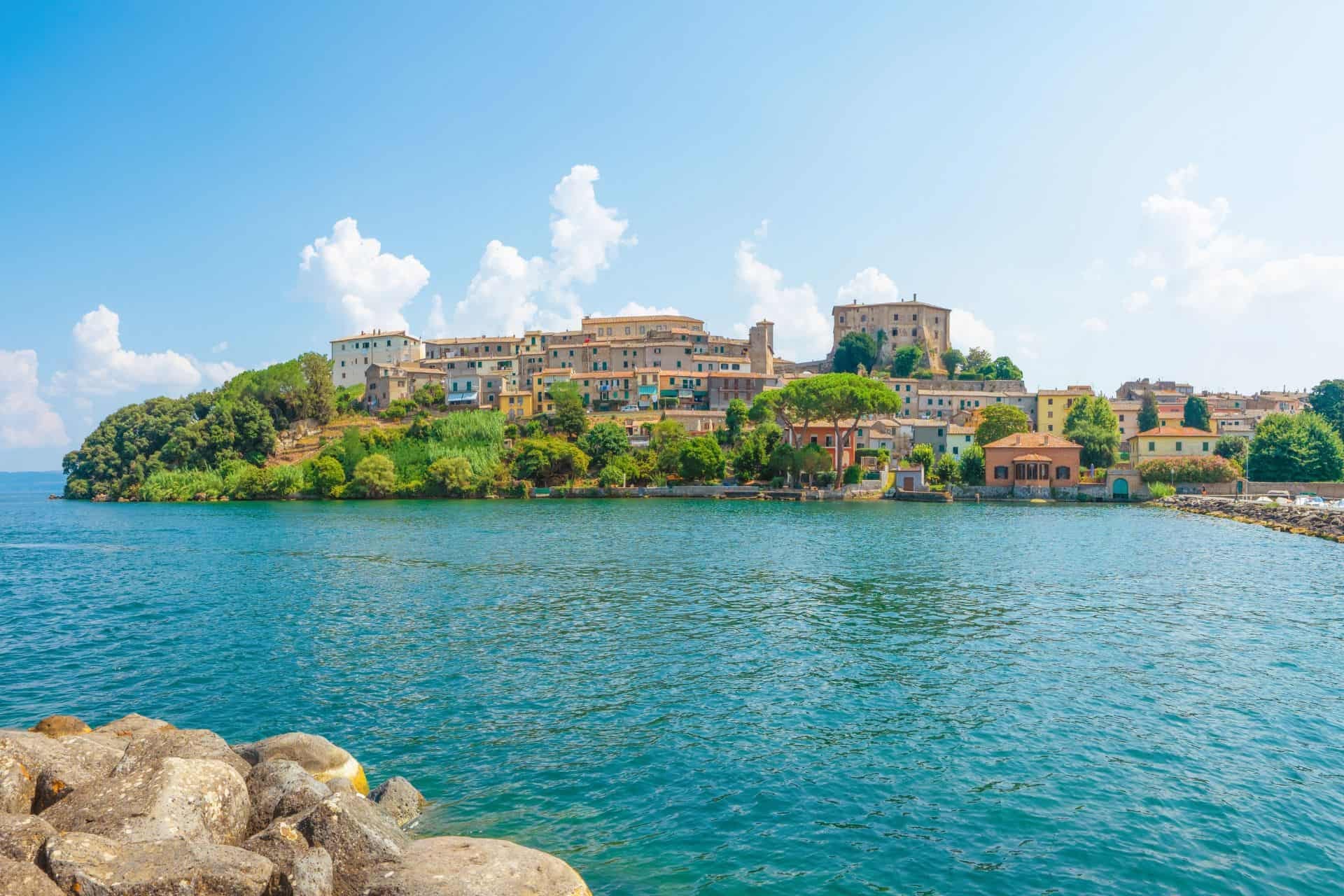
Best for: the Rome-connected buyer who wants what Tuscany was 40 years ago.
Romans drive through it every weekend on their way to Tuscany, where they pay double for the same hills.
Meanwhile, the Monti Cimini are Europe’s hazelnut basin (Nocciola Romana DOP, the hazelnuts in your Nutella jar), Canino DOP is one of Italy’s great olive oils, and there’s Etruscan archaeology under every second field. Two volcanic lakes, Vico and Bolsena, for the summer.
Viterbo anchors it: a real university city with a major hospital. Its medieval quarter is the largest in Europe, and somehow nobody outside Italy knows.
Full disclosure: I have family in construction here, so I see this one from the inside. It’s badly underrated. And I’ll be honest, I’d consider it myself, because you’re close to both Tuscany and Rome.
Rome’s Fiumicino airport is 1h to 1h20 away. Viterbo is 20 minutes. Around €1,000/m², working farms with land at €150–250K. And the best seismic profile of any area on this list, which in central Italy is worth real money.
The catch: prices creep up every year that Rome stays unaffordable. This one is on a timer.
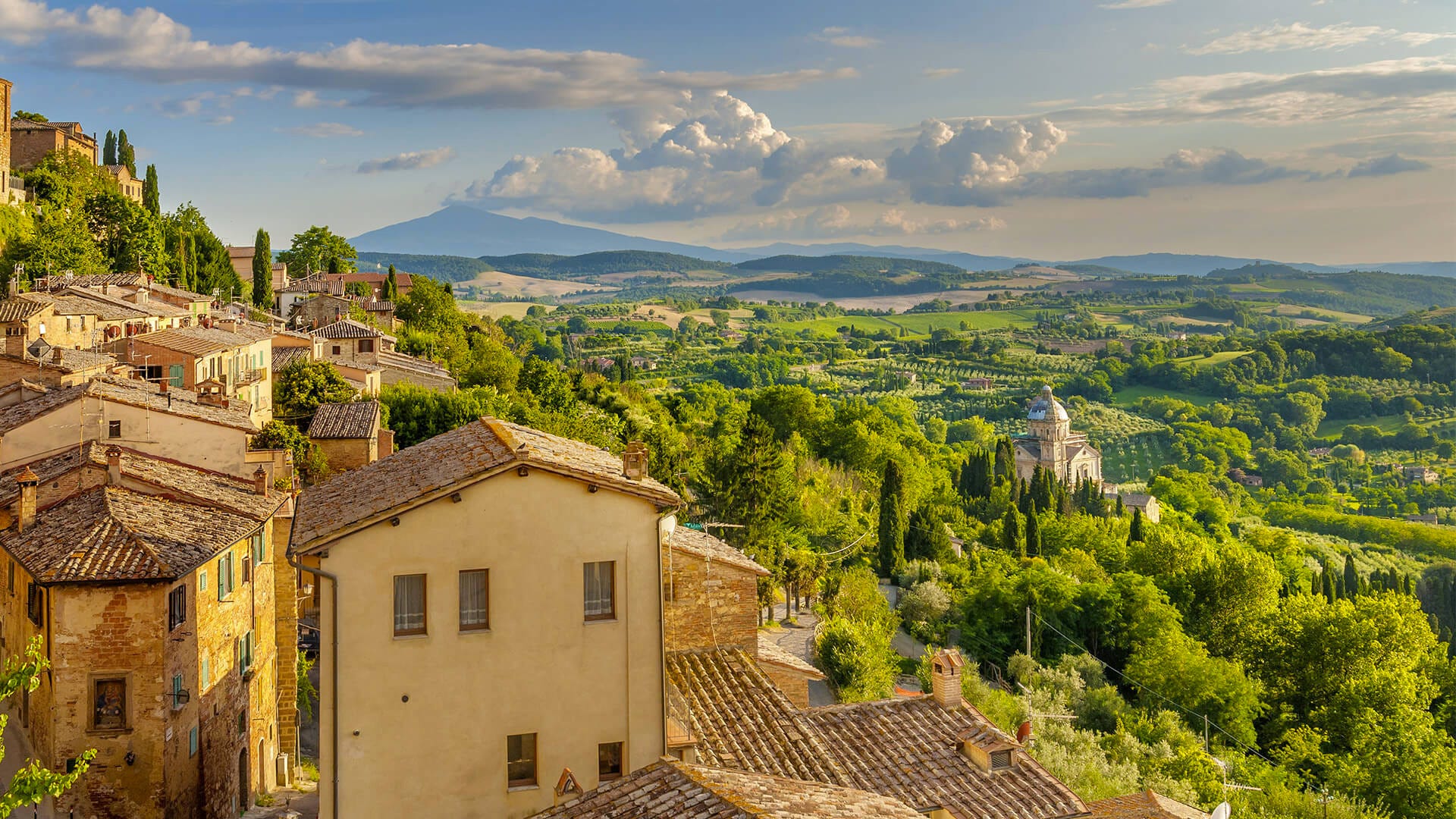
Best for: the full Tuscan brand with an actual farm attached.
Yes, the famous one. Under the Tuscan Sun was filmed here. The University of Georgia keeps a campus in Cortona. The hillsides with the view are fully priced, in dollars.
But here’s what the buyers on the hill never check: the valley below is the most productive agricultural plain in Tuscany, home of the Chianina, the white giant cattle behind the real bistecca alla fiorentina. And down there, local families still own and sell the land.
You buy the working valley. You visit the postcard spot. It’s a 15-minute drive between the two.
Arezzo and its San Donato hospital are 30 minutes away. Camucia station puts you on the Florence-Rome main line. Florence’s international schools are about an hour out.
Farmhouse to renovate with land runs €200–350K. Valley farmland €15–35K/ha. Cortona DOC Syrah and Vino Nobile DOCG within 20 minutes.
The catch is the listings. Anything with “Cortona view” in the description costs double. The valley floor is working farms, not cypress postcards.
Quick pause.
Most people asking me about rural Europe are Americans planning an EU move.
The house is the easy part. The legal architecture is what people get wrong: residency, visa, tax position. In the wrong order, the dream gets expensive.
On June 25th, I’m hosting a webinar breaking down the top EU Golden Visas covering:
Which European residency-by-investment programs are still open in 2026, what they actually cost, and how a rural base fits into the structure.
Full Q&A, so bring questions and your specific situation.
Now, to one of my favorite places in the world…

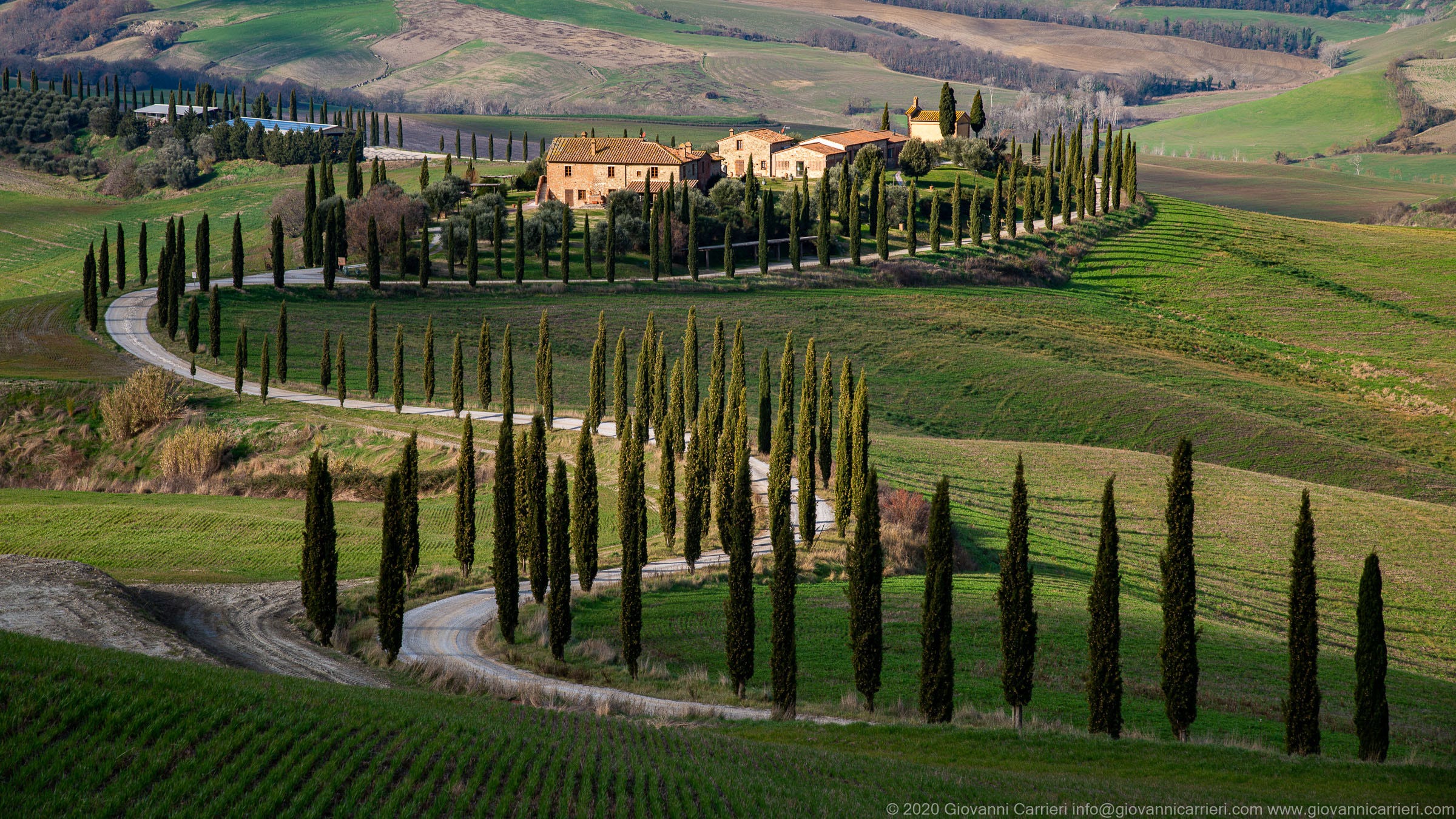
Best for: maximum landscape per euro. Nothing in Tuscany comes close.
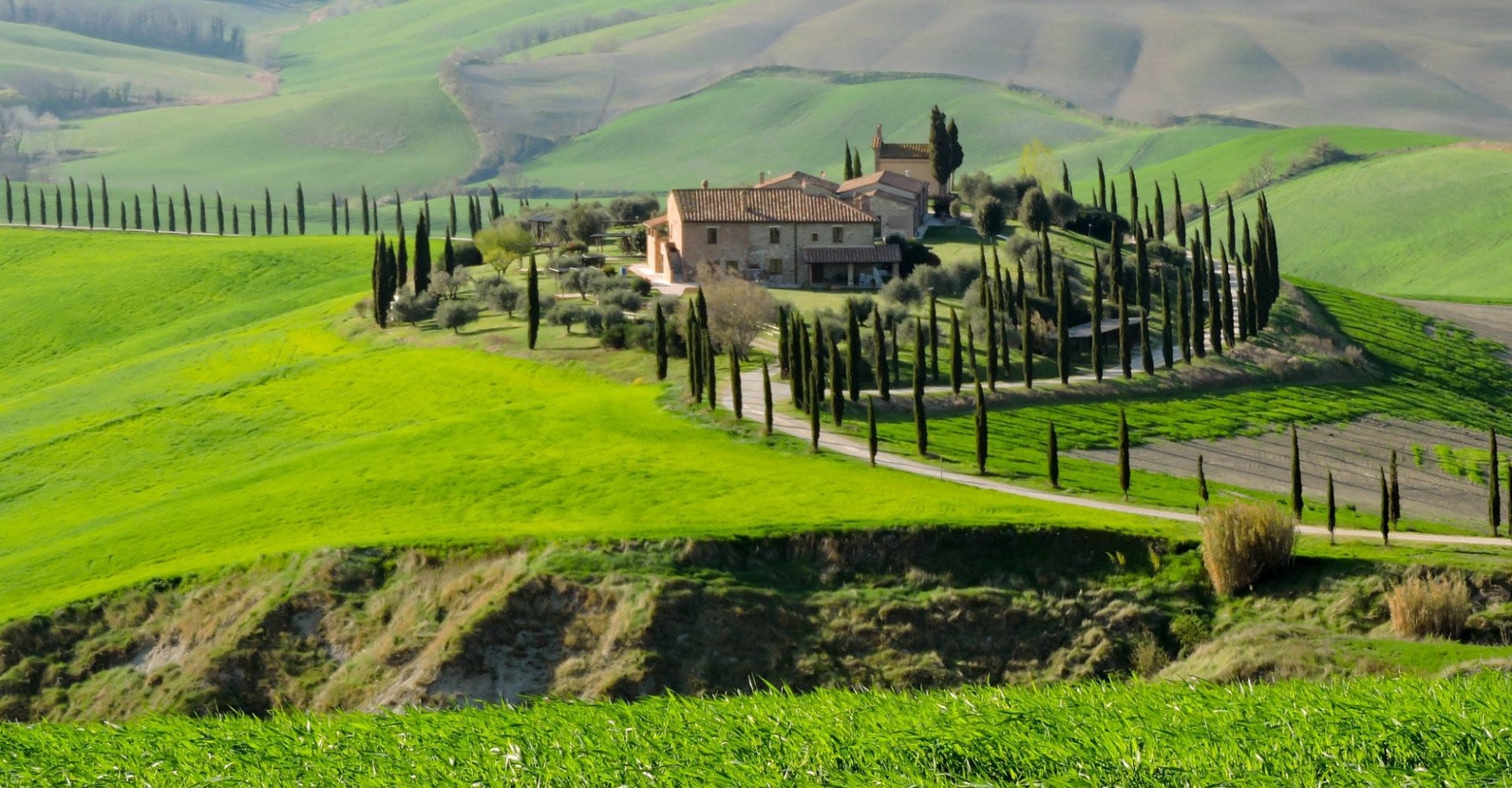
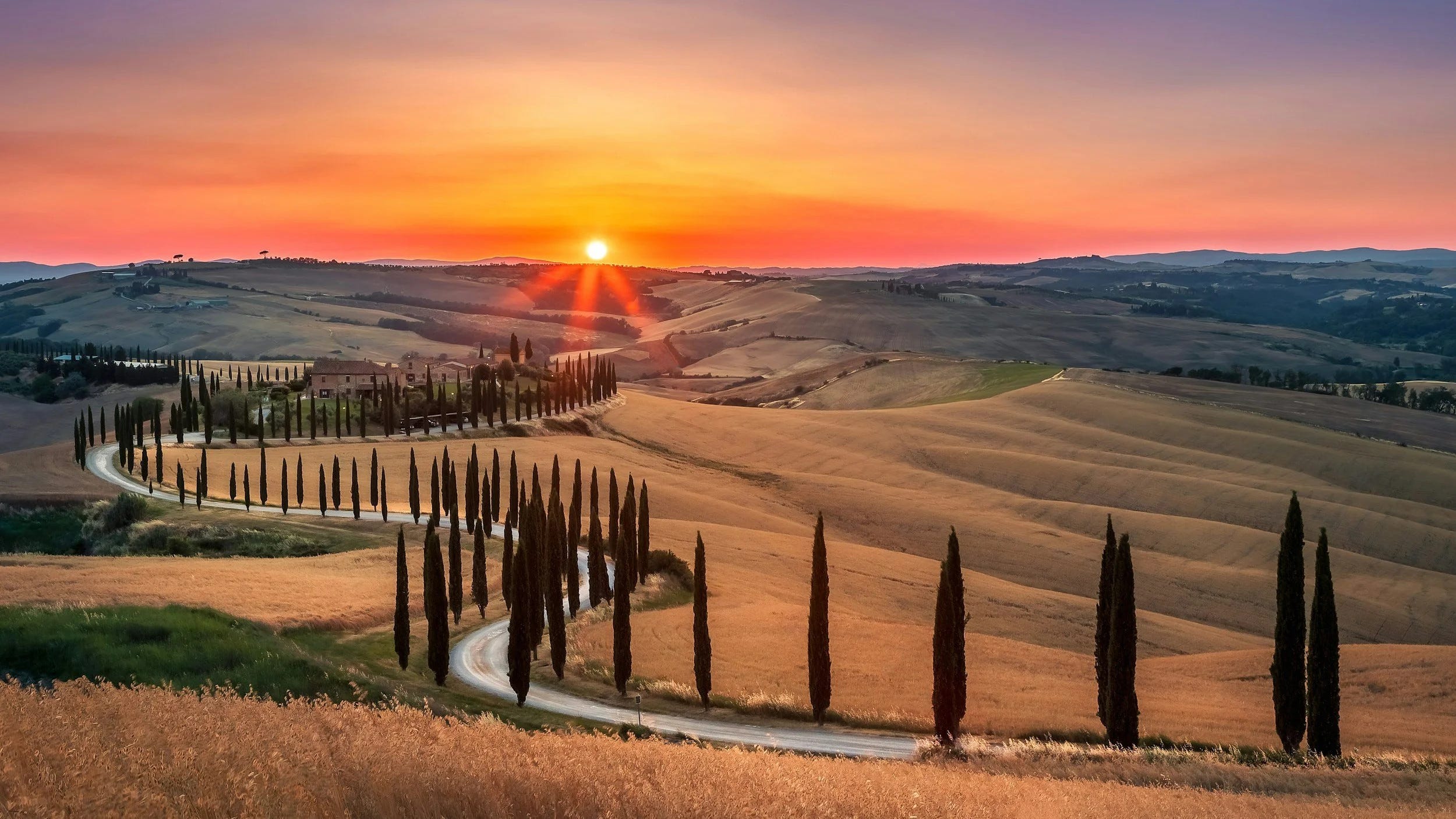
The clay hills south of Siena. Lone cypress rows, sheep, fog rolling through grey ridges. You’ve seen this landscape in every Tuscany photo essay ever printed. It might be the most photographed farmland on Earth.
Now the part nobody prints: because there’s no famous DOCG inflating the land, a real farm here costs a fraction of Chianti, 40 minutes north. Cereals, sheep, Pecorino, and white truffle around San Giovanni d’Asso.
The most photographed landscape in Italy is also one of its least bought. That asymmetry shouldn’t exist, and it won’t forever.
I know this area well, for a few reasons. My first dog came from a breeder here. Incredible small villages, one of the most fascinating places on earth to me.
Siena and its Policlinico are 25 minutes away. Buonconvento has a train station. Farmhouse with land runs €180–350K to renovate, €400–900K restored. Farmland is €20–40K/ha with zero appellation premium.
The catch: the year-round community is thin. Some hamlets are a bar, a church, and eleven neighbors. You’ll know all of them by November.
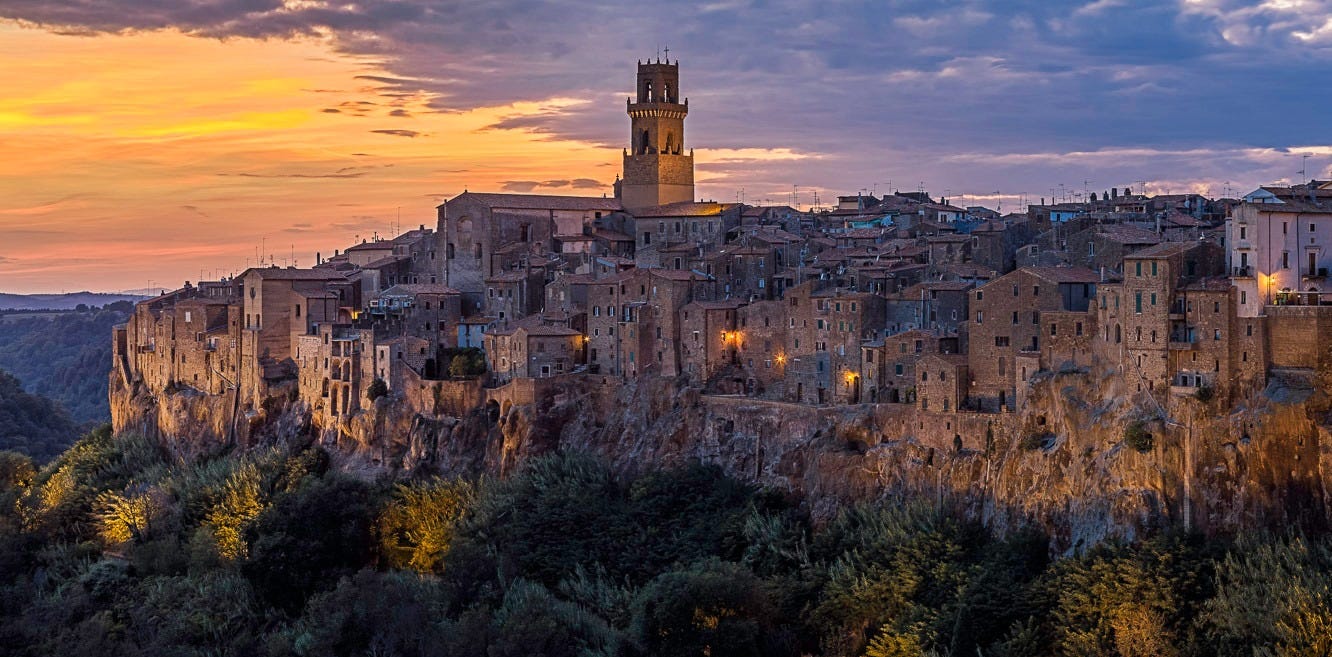
Best for: the Tuscany believer who got priced out and refuses to settle for less landscape.
The south of Tuscany that Tuscany forgot to gentrify.
Real cowboys (the butteri still work cattle on horseback, and once beat Buffalo Bill’s troupe in a rodeo, look it up), wild boar everywhere, Etruscan towns carved into tufa cliffs like Pitigliano.
And the cheapest DOCG vineyard entry in the region: Morellino di Scansano at roughly €100K per hectare, while Brunello trades north of €250K and the best parcels far beyond. Same grape family. Same region. Different planet on price. And it runs all the way to the coast, so the sea is part of the deal too.
Grosseto, its hospital, and the coastal rail are 40 to 55 minutes away. Farmhouse with land entry €150–300K, restored €350–700K. Olive and mixed land €15–40K/ha, still partly sold by local families.
The catch: less English, less hand-holding infrastructure, and Rome is 2h+. Grosseto is your city, and Grosseto is enough, but it’s no Florence.
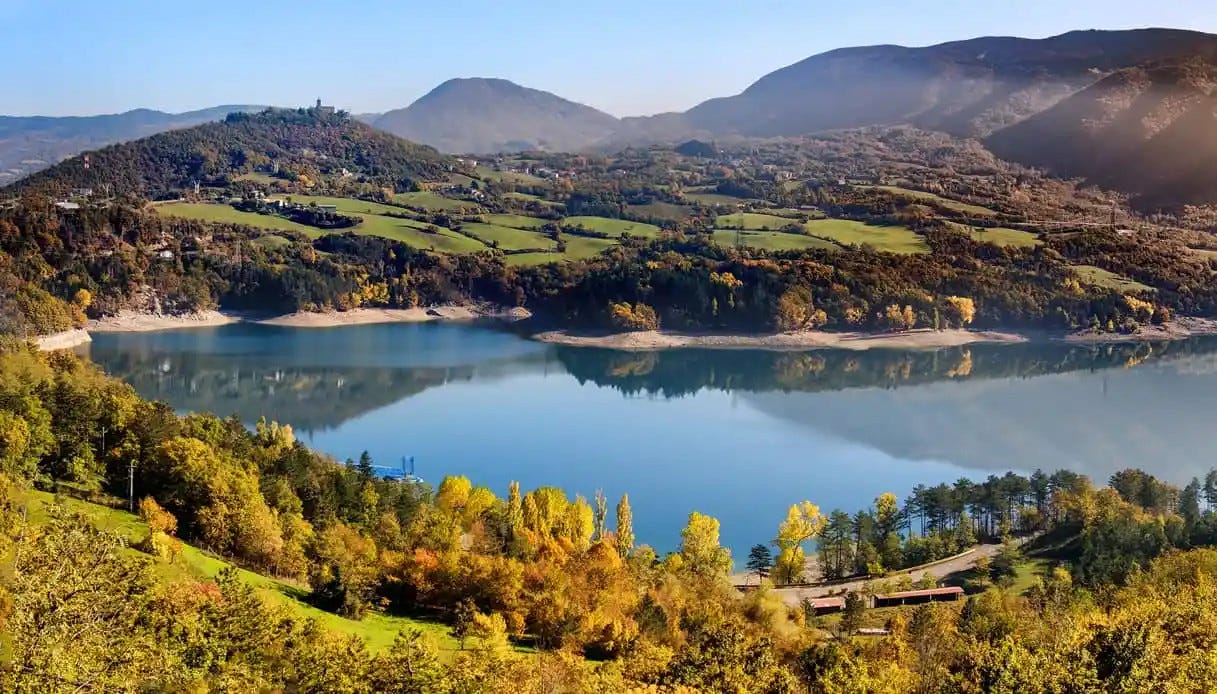
Best for: the person who chose Italy for the food.
Everyone knows the food. Parmigiano Reggiano, traditional balsamic, Lambrusco, mortadella. The densest concentration of protected food products on the planet.
Almost nobody looks up at the hills it all comes from.
Thirty minutes behind Bologna, the Apennines are chestnut forests, dairy farms, and stone villages at a fraction of what the same hour costs around Florence. You can live inside the supply chain of the best food on Earth.
Bologna is 30 to 60 minutes away, with direct US flights in season from BLQ, international schools, and Italy’s best pediatric care. The strongest family setup on this list.
Farmhouse with 2 to 5 hectares: €100–320K. Ruins in remote communes from under €50K.
The catch: clay slopes MOVE. This is landslide country and the 2023-24 floods were real. Geological survey before any offer, ridge positions over valley floors. Non-negotiable.
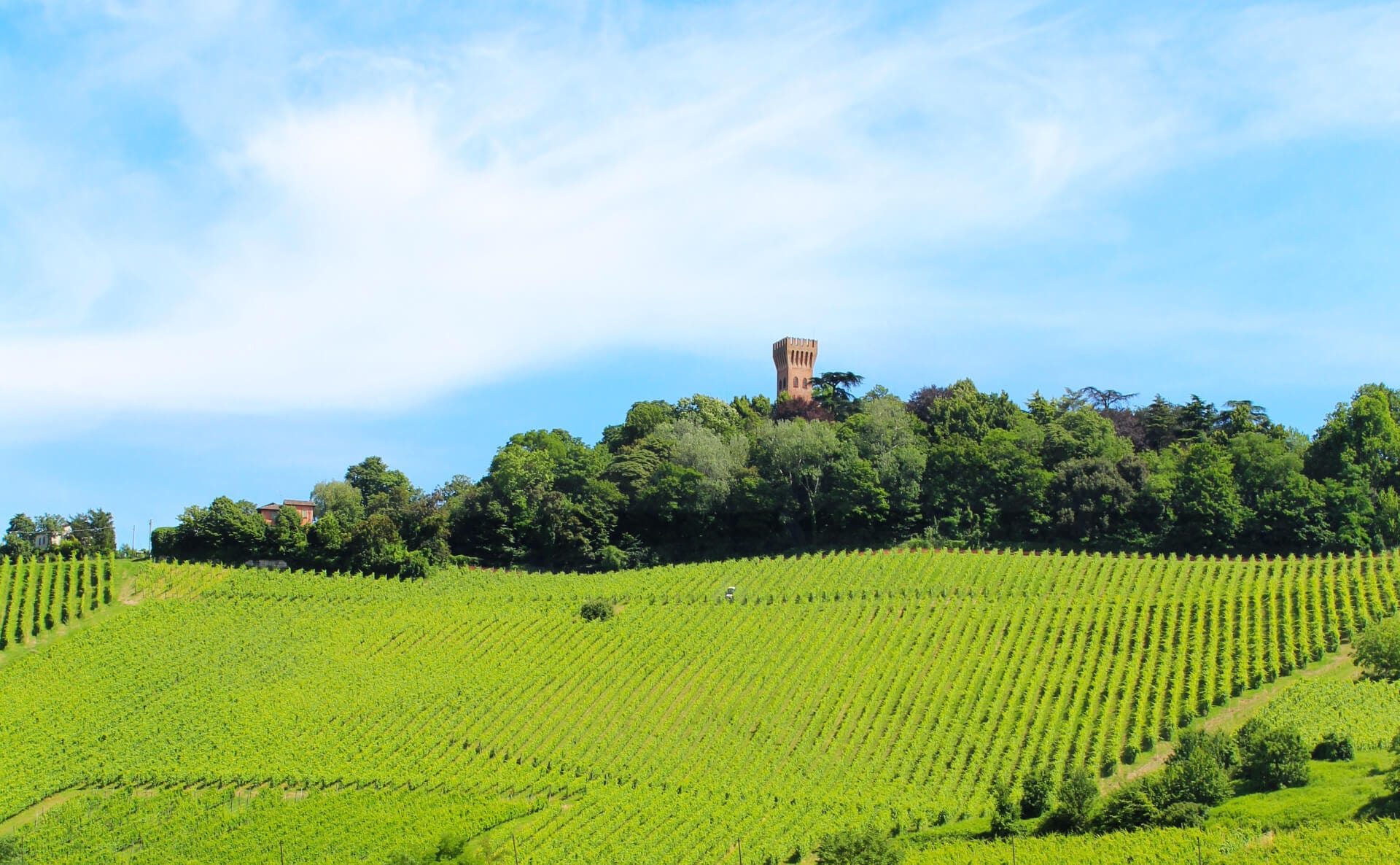
Best for: the purest version of the whole thesis. If you need Milan, this is the move.
Vineyard hills 55 minutes from Italy’s highest salaries. Read that again.
Oltrepò produces more than half of Lombardy’s wine and is the largest Pinot Nero zone in the country. Decanter calls it “pretty much undiscovered by tourism.” A wine region this size, this close to a city of 1.4 million people earning Milan money, with nobody pricing it.
Milan professionals haven’t connected the dots between their WFH policy and these hills. When they do, this list item expires.
Milan is 55 minutes away. Pavia and one of Italy’s top-10 hospitals are 30. Milan’s international schools are reachable. Farmhouses run €80–200K to renovate, €150–350K with vineyard. Vineyard land €20–50K/ha, while Franciacorta in the same region trades at €150–400K.
The catch: Po Valley summers are humid and winters foggy. The hills sit above the worst of it, but this is not the Mediterranean.
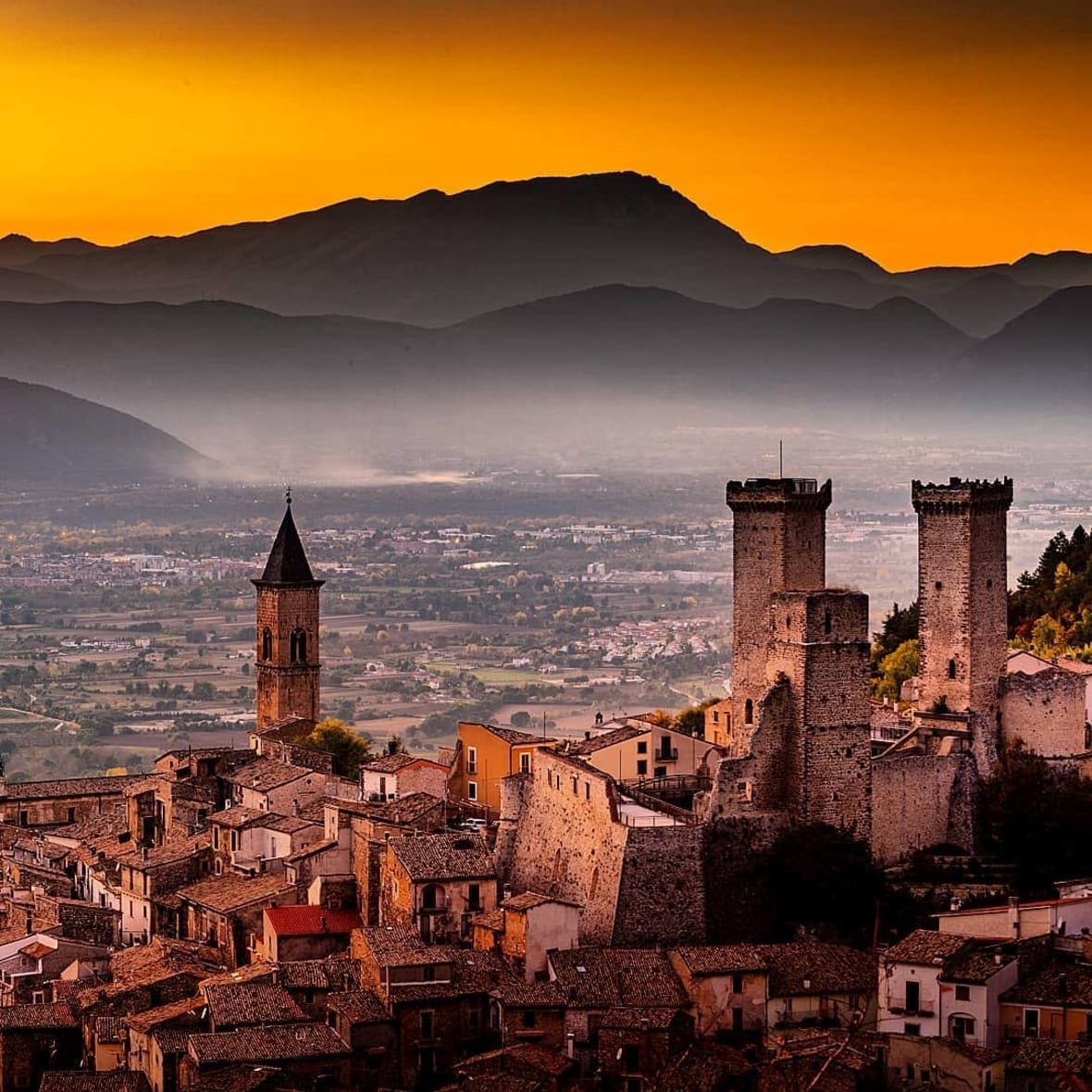
Best for: tax-optimized mountain life with Rome in reach. The thinking person’s Abruzzo.
The highest scorer in my entire research, and almost nobody outside Abruzzo could place it on a map.
A proper medieval market town of 22,000, ringed by three national parks, in the region where Italy hides its mountains. Thirty minutes north, on the Navelli plateau, grows the world’s most expensive crop: saffron at €11–18K per kilo.
And then April 2026 happened: Italy raised the population cap on the 7% flat tax, and Sulmona itself slid under the bar. A real town, with a train station and an ancient piazza, where a foreign retiree pays 7% on ALL foreign income for ten years.
If it wasn’t for Tuscany, I’d look at Abruzzo myself. Part of it is hugely underrated.
L’Aquila is 50 minutes away. Pescara is 1h. Rome about 2h on the A24/A25. Sulmona runs €962/m², Pratola Peligna €662/m². Farmhouses €50–150K, farmland €6–12K/ha.
The catch: this is seismic Zone 2 and the 2009 L’Aquila earthquake hit 50 km north. Anti-seismic assessment is simply the cost of these prices. And for school-age kids, the anchor cities are thin.
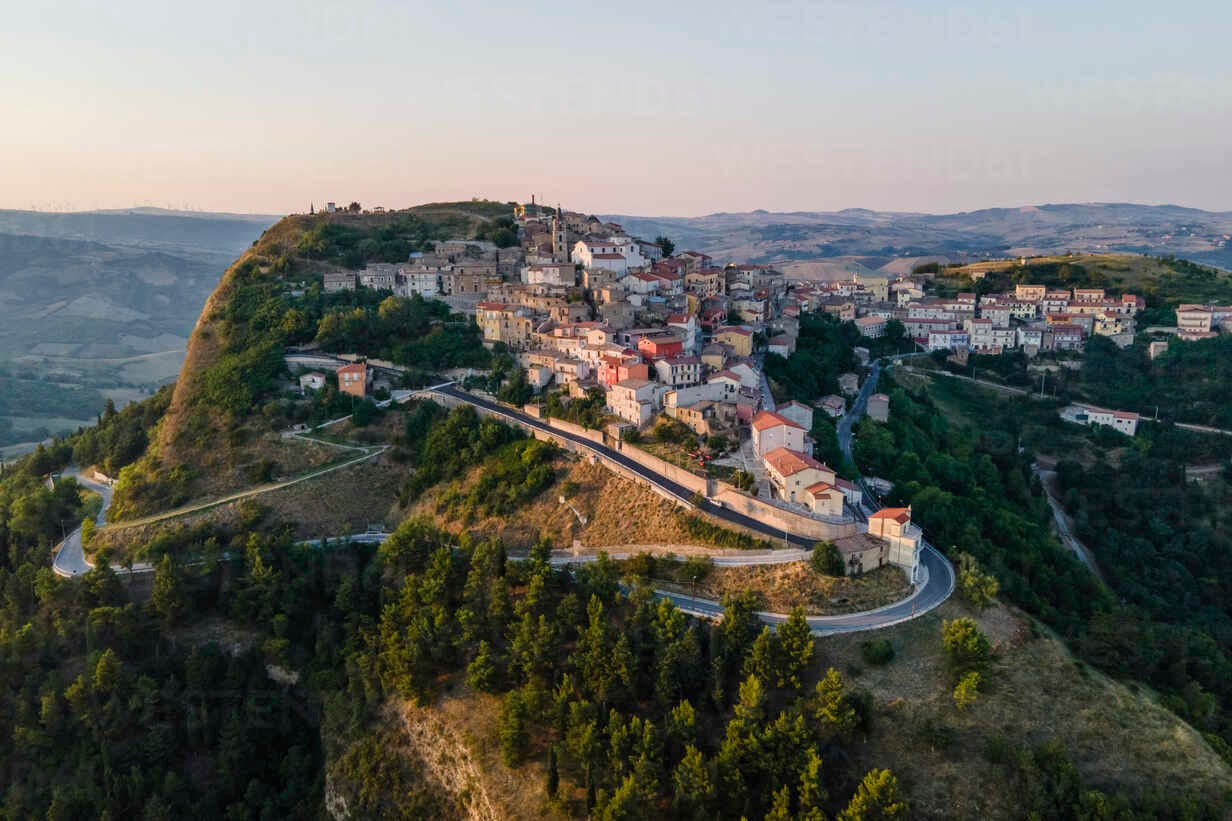
Best for: serious wine people who read tax codes and aren’t afraid of the South.
Three DOCG wines in one province: Taurasi, Fiano di Avellino, Greco di Tufo. Piedmont needed two centuries of marketing to earn what Irpinia has in the ground.
Entire blocks of 1900s Little Italy came from these villages. Now the villages are selling: some, like Zungoli, at €191/m².
Taurasi DOCG vineyard land trades at €30–60K per hectare. Barolo, its only stylistic rival, trades between €800K and €3M. It’s a 20 to 50x gap on comparable wine pedigree.
Naples and its airport with US nonstops are about an hour away. Wine villages run €400–700/m². The 7% flat tax applies in essentially every village on the wine routes.
The catch: this is seismic Zone 1. The 1980 earthquake is living memory here. You buy with a structural engineer or you don’t buy. No exceptions, no romance.
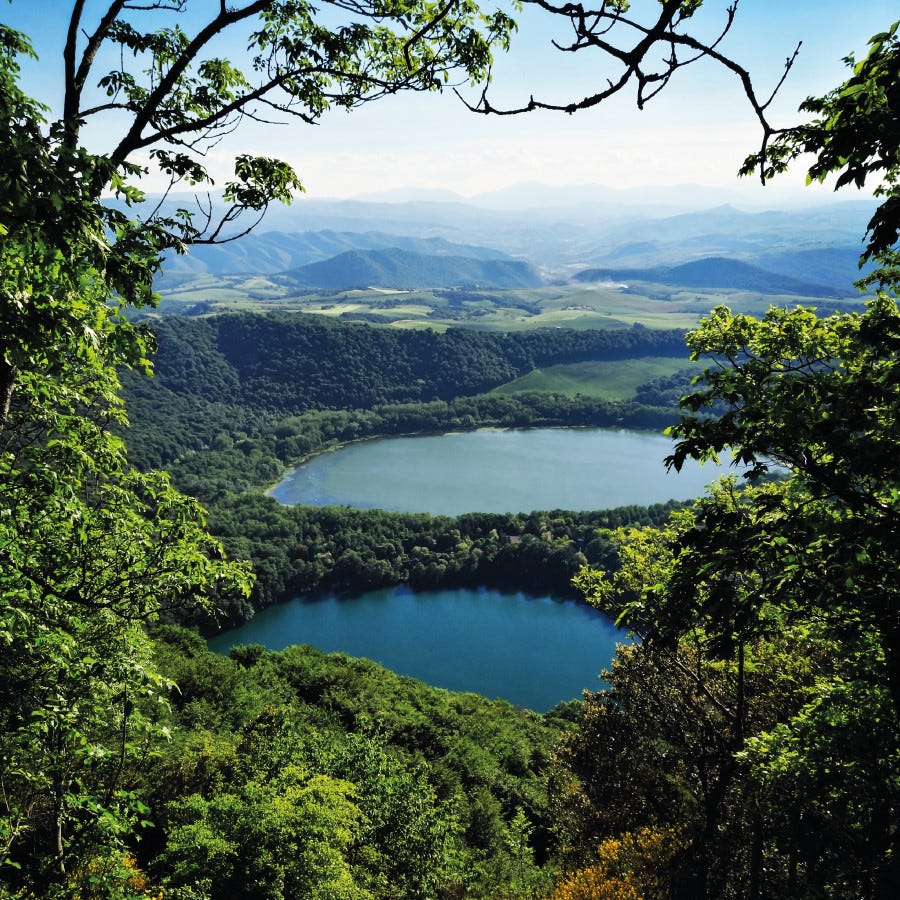
Best for: buying a wine region before the wine region knows it’s been bought.
This is my wild card. An extinct volcano in Basilicata covered in vineyards. Aglianico del Vulture, “the Barolo of the South” to people who take wine seriously, just earned the area the title of Italian Wine City 2026.
A new generation of producers is moving in. The property market hasn’t noticed: prices actually fell 6% last year while the designation was being announced.
Two facts you won’t expect. Basilicata is statistically the safest region in southern Italy. And Irsina, 40 minutes east, already hosts a documented community of American families. CNN covered it.
Bari and its airport are 1h30 away. Potenza is 1h. Rionero sits at around €802/m². Farmhouses with land run €80–200K. Volcanic vineyard land is at a fraction of any comparable DOCG. The 7% flat tax applies in all 14 communes.
The catch: Potenza is the weakest anchor city on this list. Bari is the real one, at 1h30, which stretches my own rule. The price is the compensation.
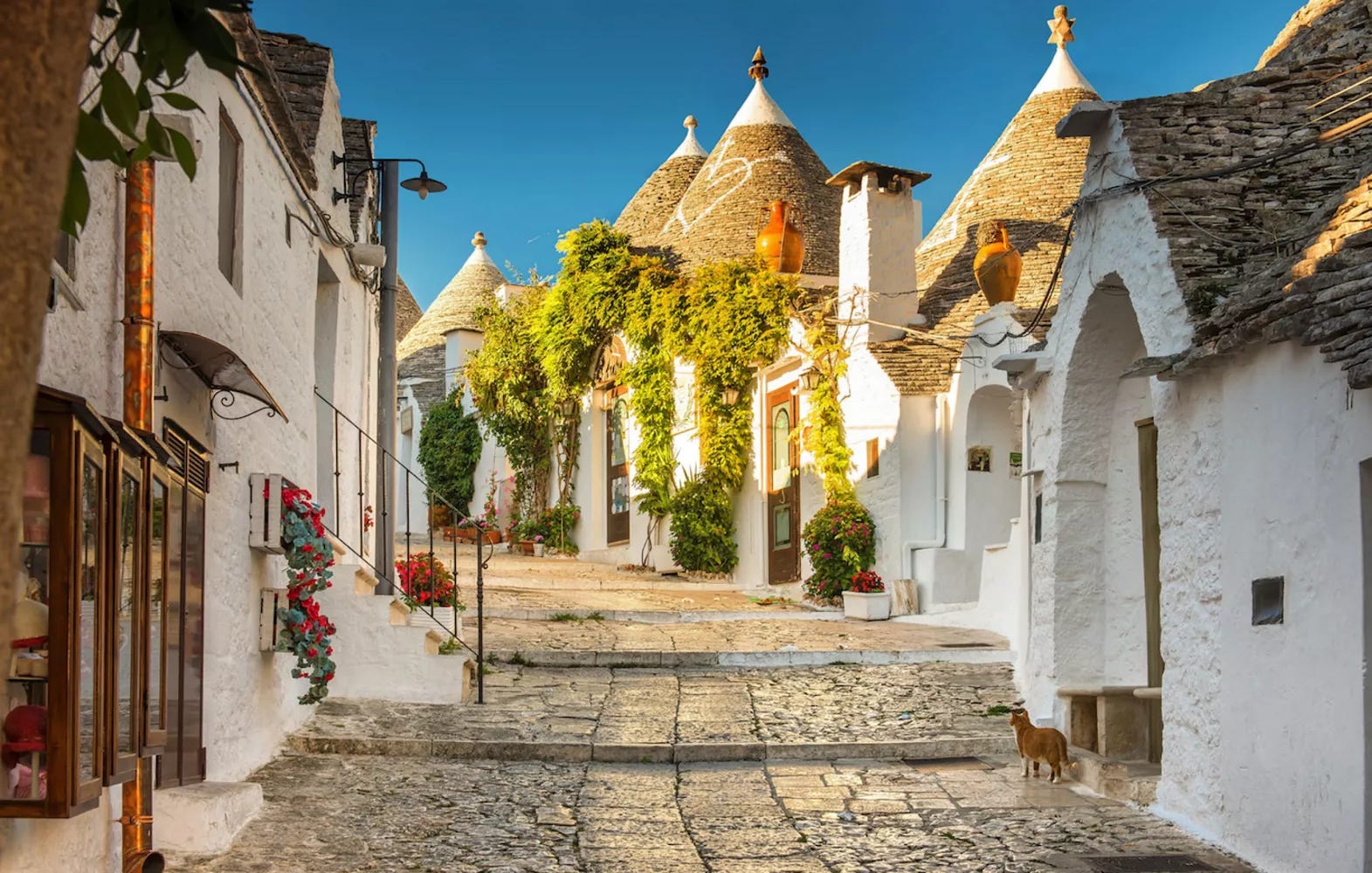
Best for: first-time Italy buyers who want beauty, tax, and a support network in the same purchase.
White Ostuni, trulli, masserie. The Puglia of every summer photo dump. You know this one.
What you don’t know: the April 2026 tax reform changed the game. Ostuni, at 29,764 residents on the last ISTAT count, now fits under the raised 30,000 cap for the 7% flat tax. A world-famous white city where a foreign retiree pays 7% for ten years.
And between the famous towns, the countryside still trades like countryside. Trullo complexes with land from €80–250K, renovated masserie with olive groves €350–800K.
Very different vibe from Tuscany, Abruzzo, and Sabina, you can feel it in the pictures. This is the warmer, southern version. It has many pros, and certainly some cons.
Bari is 50 to 70 minutes away. Brindisi airport is 40. Seismic Zone 4, the lowest risk in Italy. And the biggest expat infrastructure in the rural South: 7,300 people in the local expat group alone. The softest possible landing.
The catch: Xylella. The olive disease devastated Salento to the south. This valley is in the buffer zone, so a phytosanitary check on any grove is non-negotiable. And July-August brings the crowds.
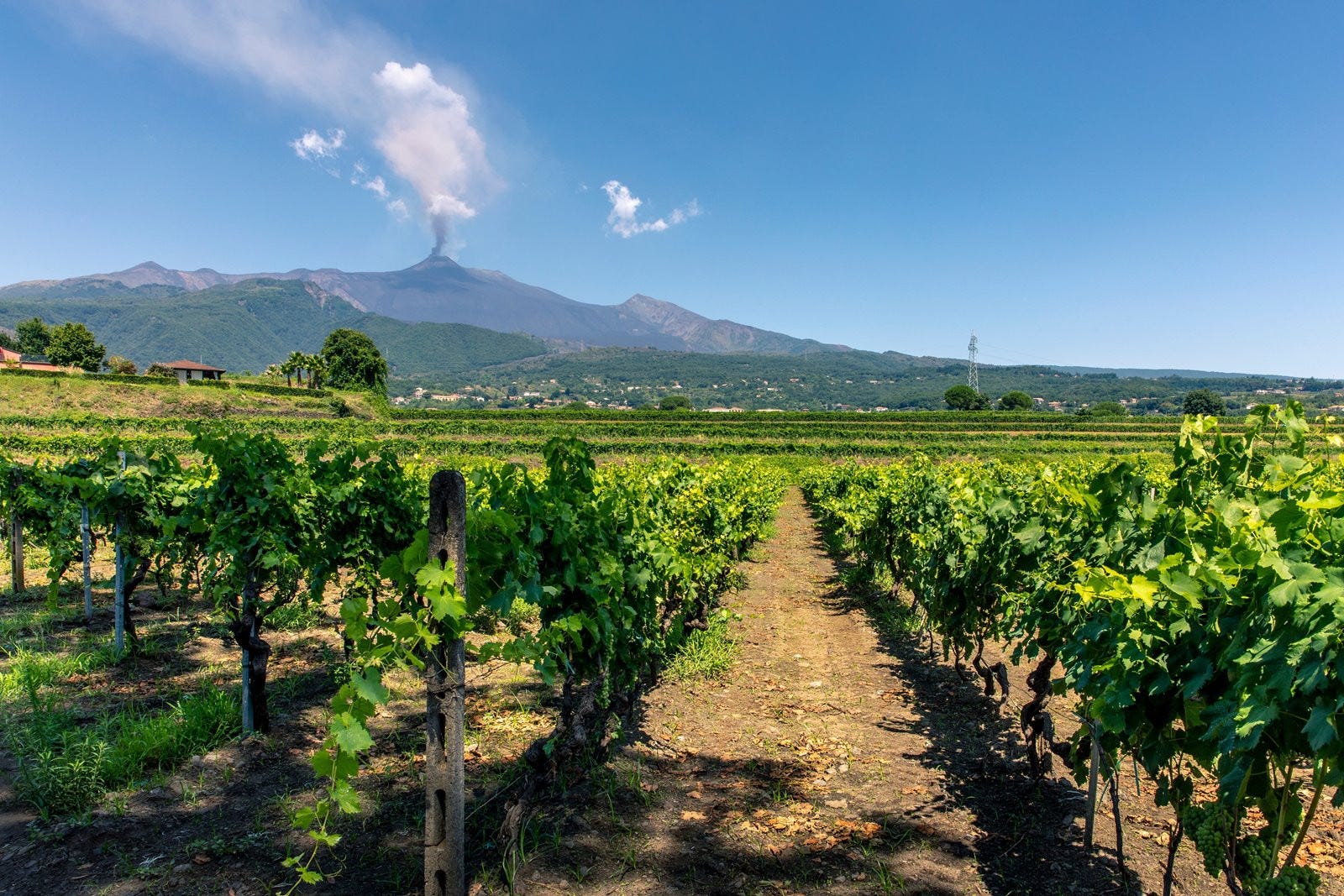
Best for: the highest-upside bet on this list. Glamour, tax, and a working farm economy on the same mountain.
The wine world has spent a decade comparing Etna’s Nerello Mascalese to Pinot Noir, and DOC vineyard land hit €150–250K per hectare, six to ten times the Sicilian average.
Everyone looks at the DOC contrade. Almost nobody looks one ridge over.
Castiglione di Sicilia sits at €783/m². Bronte, where 90% of Italy’s pistachios grow, at €675/m². Palmenti, the lava-stone wine farmhouses, with land from €80–180K.
Same volcano, same UNESCO listing, same sunsets over the Alcantara valley. The brand premium stops exactly at the DOC boundary line. The beauty doesn’t.
Catania, Sicily’s busiest airport and its real economic capital, is about 50 minutes away. The 7% flat tax applies in every Etna village. Price momentum is already +9 to 12% a year, the window here is the shortest on the list.
The catch: the volcano is alive, and Sicily has a water problem. The north slope catches the rainfall the south doesn’t. Buy north, buy a cistern, check the lava-flow maps like a local.
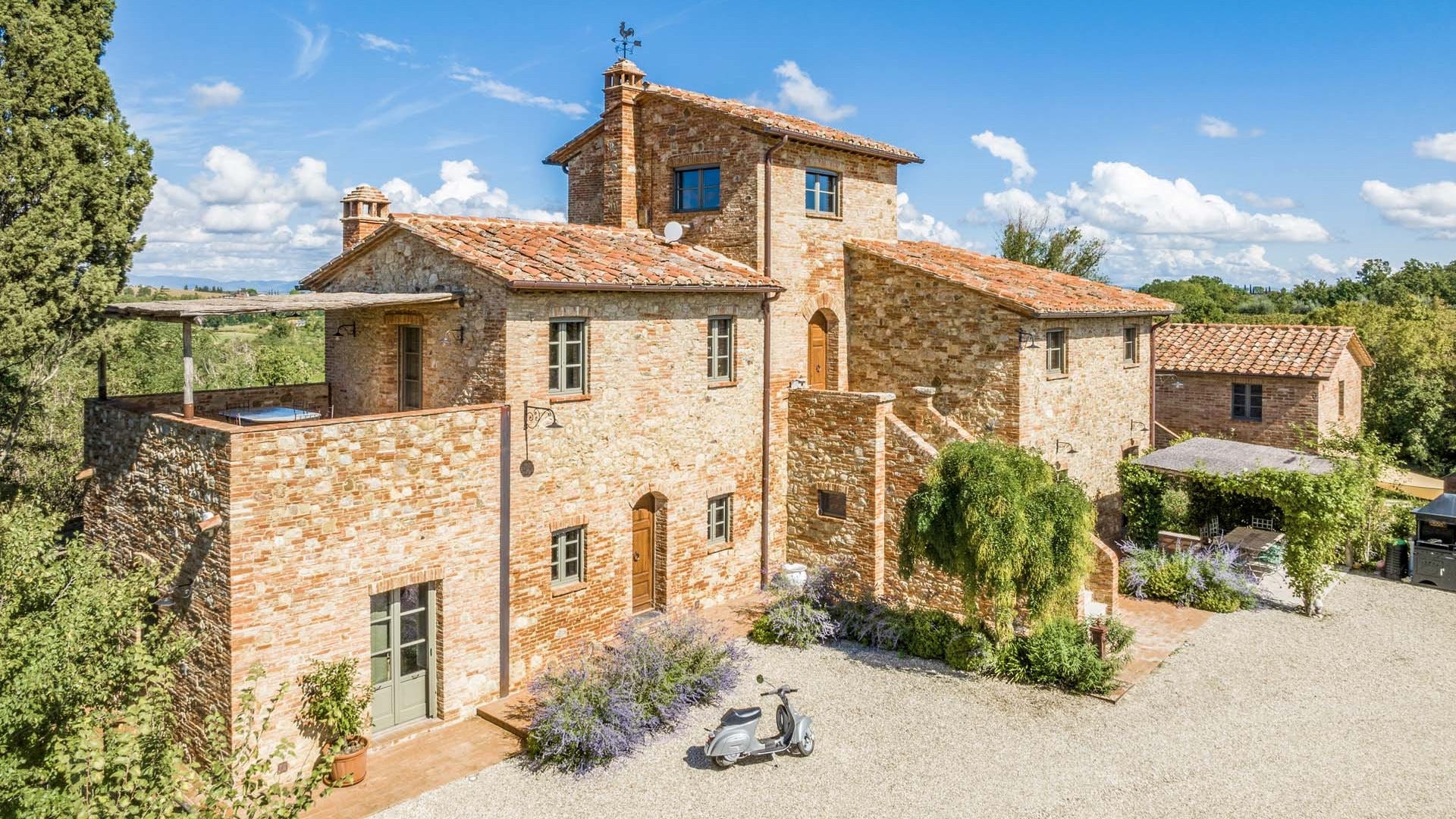
Take the typical purchase in the unknown-tier areas: a 200m² stone farmhouse with 3 hectares, asking €120K.
Buying it: add 10 to 15% between taxes, notary, and agency, so call it around €135K all-in. One mercy: the 9% registration tax is calculated on the cadastral value, which usually sits well below the price. Qualify as a professional farmer (IAP), or buy through a qualifying farm company, and the land portion drops from 15% tax to around 1%, against a 5-year commitment to actually farm it.
Renovating it, the REAL number. A full gut of a rustico runs €1,200–1,500/m², so €240–300K. A liveable refresh of a structurally sound house runs €350–700/m², so €70–140K. Seismic zones add 20–30%.
Italy gives part back: 36% tax deduction on the works (50% if it becomes your main home), up to €96K, spread over 10 years, if you pay Italian income tax.
The final projection: the €120K farmhouse is a €220–450K project. Anyone quoting you a different number is selling you something.
Running it: €5–10K a year between IMU, utilities, insurance, and land upkeep. An olive grove managed by a local cooperative offsets part of that in oil.
The alternative most people should take: buy already restored at €350–600K. Same destination, zero construction risk, and in half these areas it costs less than renovating yourself.
And the premium version, the one 80% of us actually dream about: a fully restored 300 to 400m² casale, pool, 5+ hectares of productive vines or olives, top finishes, nothing left to do. Figure €800K to €1.5M depending on the area and the view. Still a fraction of what the same thing costs in Chianti or the Cortona hills, where it starts around €2M and climbs fast.
EU citizens move in tomorrow. But Americans need a visa first, and the route matters more than people think.
There are several, each with its own constraints.
The investor visa is the one that keeps you free: you qualify by investing capital (from €250K), keep full optionality for you and your family, and renew it for as long as the investment stays in place, with a path to permanent residency after that.
European golden visas deserve a proper side-by-side, because the differences between countries are bigger than they look.
That’s exactly what the webinar will cover. If you’re an American thinking about a rural base in Europe, that’s where the legal architecture conversation should start.
Register here if you didn’t catch it earlier.

Need Rome in your life: Sabina or Tuscia.
The Tuscan dream, working-farm edition: Val di Chiana valley.
Maximum landscape per euro: Crete Senesi.
You got priced out of Chianti but won’t let go of the dream: Maremma.
You chose Italy for the food: Emilia’s Apennines.
You need Milan: Oltrepò Pavese.
Tax-optimized mountain life with Rome in reach: Sulmona.
Serious about wine, not afraid of the South: Irpinia or Vulture.
The soft landing for a first-time Italy buyer: Valle d’Itria.
The asymmetric bet: Etna North.
If you’re moving with kids?
Strong: Emilia, Oltrepò, lower Sabina, Val di Chiana.
Workable with local schools: Tuscia, Irpinia, Valle d’Itria, Etna.
Honest no for school-age kids: Crete Senesi, deep Maremma, Sulmona, Vulture. Magnificent for you, thin for them.
Since people always ask: I know people living in most of these regions, and I have my own taste.
If my wife and I were signing tomorrow, my shortlist is two. Sabina for the Rome thesis, because I keep coming back to that ring around the capital. And Crete Senesi, because I simply love this place.
I wrote this as an exercise for myself, and I’m sharing the homework. My wife and I haven’t picked ours yet. When we do, you’ll know.
This is the first piece in a series on rural Europe. Spain is next, then France. Same method: real cities, products, and prices.
Reply and let me know which of these speaks to you, or if there’s one I missed.
And if you enjoyed this, click the ❤️ button and restack.
Stay free,
Ale
Writing from Lisbon
Comments
Nothing yet. Say the first thing.
Sign in to join the conversation.