
It’s yet another week of travels. London and Brighton. This, plus the heatwave that fried my brain, delayed the main analysis I was planning for this week.
But sitting on trains and planes gave me an opportunity to reread one of the most transformative books of my life: Company of One, by Paul Jarvis. I’m currently going through a brainstorming/rethinking phase, and this book is just such an inspiration, hopefully for you as well. Plus, in the AI era, it feels more relevant than ever.
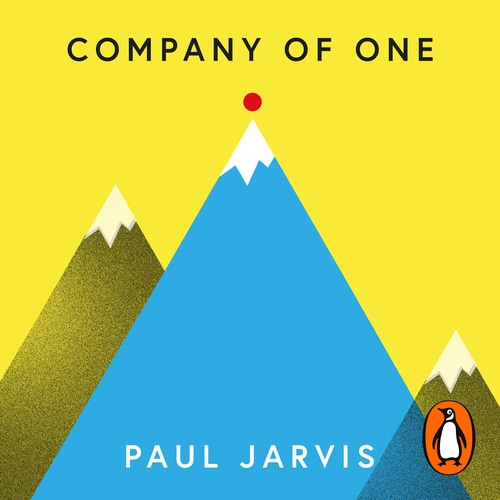
The idea is simple: growth isn’t necessarily the best/only business strategy.
We all know companies that grew too quickly and failed. One of those - WeWork, almost cost me a lot of money.
I also know a lot of non-profits that grew too quickly, only to run into trouble: restructuring, reductions, loss of efficiency and vision.
Though clearly not ideal, this keeps happening. If you’re running a startup with external funding, the whole point is to grow - usually starting with headcount. Even if you’re just good at what you do, you will start attracting more and more opportunities. Tempting you to hire more staff and expand. Decreasing efficiency and profits. Or just adding to your workload.
What Paul Jarvis shows is that this isn’t the only path.
Why do I think this topic is more relevant now than ever?
Because the current AI gold rush assumes growth. And not just any growth. Global- (interstellar-) domination-style growth. At least judging by stock market valuations, volumes of VC funding, volumes of capex spending, or any other metric.
Btw guess who pumped billions into WeWork? SoftBank. The same group that’s now planning 5 GW of AI investments in France worth up to €75 billion.
Anyways, if you’re doing anything in the AI space, you’ll immediately be pulled into the exponential growth mindset.
For years I’ve been drawn to people who have chosen a different path. Paul Jarvis, Tim Ferriss, Pat Flynn. In Poland, Michal Szafranski.
They are, in many ways, extremely successful entrepreneurs. Multi-millionaires, influencers, award-winning authors. But they don’t chase infinity.
They are prime examples of 1-person companies. Super efficient, highly automated, strictly focused on their niche and products, consciously setting UPPER revenue limits. Two of them have now almost completely disappeared from public life, focusing on fun projects, investing, surfing, and spending time with family. Perhaps the ultimate success.
There are less extreme and still impressive cases too. WhatsApp served hundreds of millions of customers with a team of <50. Instagram sold to Facebook for $1 billion with 13 employees. Notion, ElevenLabs, Lovable, Cursor, Midjourney are the new wave of AI startups generating millions in ARR, with small teams, some just 10-20 people!
Competing in the age of AI requires serious speed. But most people I talk to have this vision: get funding, hire a team, start building a product, and then start selling it. That’s a year at best.
Remember the AI scenarios I described recently? I don’t have that kind of time.
So the old-school startup path seems, well, old-school.
To be fair, Anthropic or Google are extremely fast. But that comes with a completely different lifestyle.
I appreciate this is somewhat chaotic. It’s all work in progress and I’ll be sharing some more updates over the summer.
I do highly recommend the book though.
If it resonates with you, please do reach out. We might have a lot in common.
Now I’m off to see an offshore wind farm :P
No posts
Comments
Nothing yet. Say the first thing.
Sign in to join the conversation.