
Data center grid connection queues are spinning out of control, slowing down AI deployment, increasing administrative costs, and making future grid planning difficult. This week’s newsletter explains the scale of the problem and the available best practices.
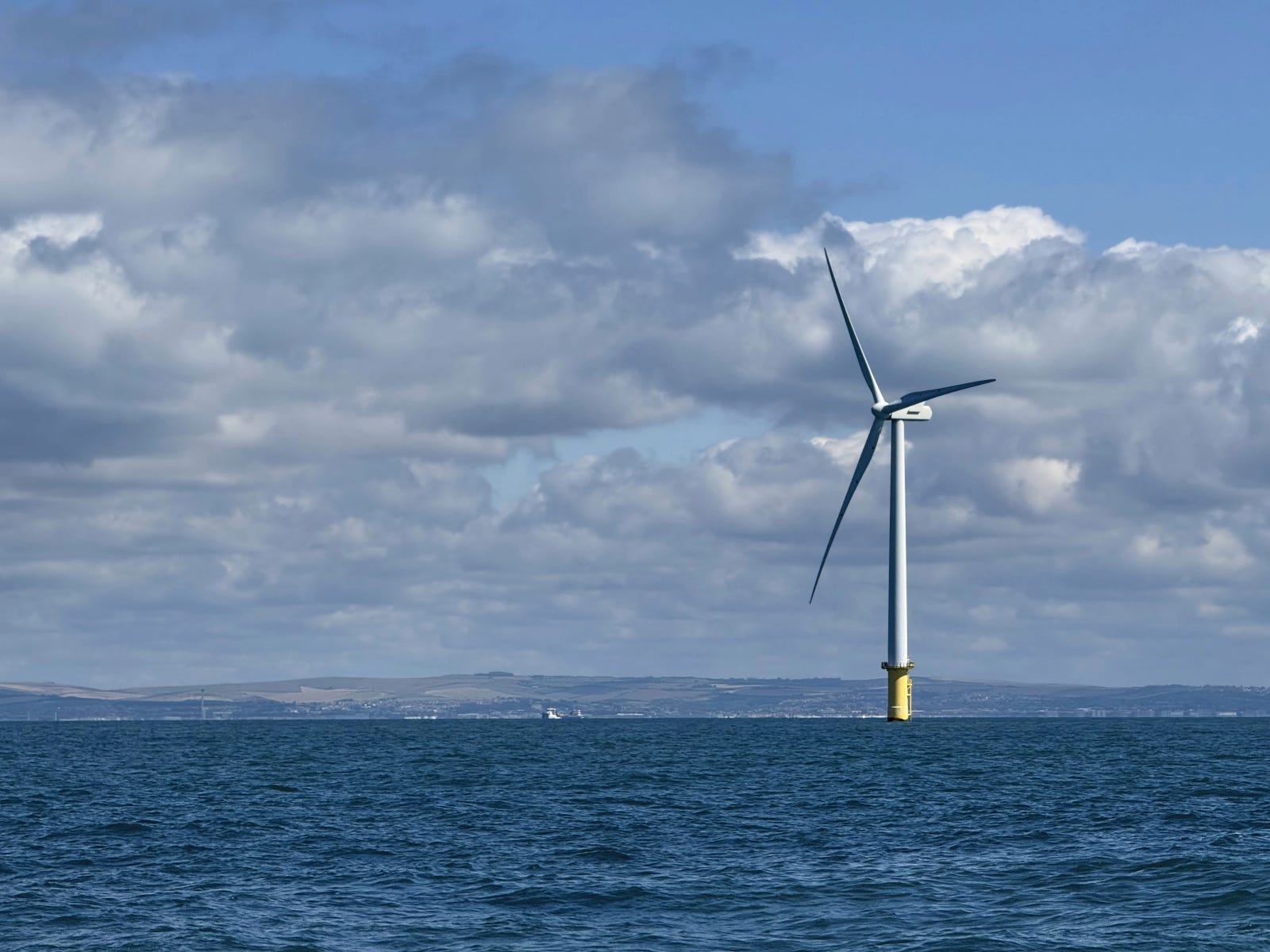
But first, here’s a picture from my wind farm visit in Brighton last week 🙈 (sorry, couldn’t help it)
Also, because of email length restrictions, this is a summary of the full analysis available here.
While grid connections queues are widely recognized in the world of renewables, they’ve now started growing rapidly on the demand side. And how do you design your power system if you don’t know what the demand will be?
In some cases like Poland, Italy, Denmark, Finland, the capacity of data center projects applying for grid connection exceeds the peak power demand of the whole country. That does not sound reasonable.
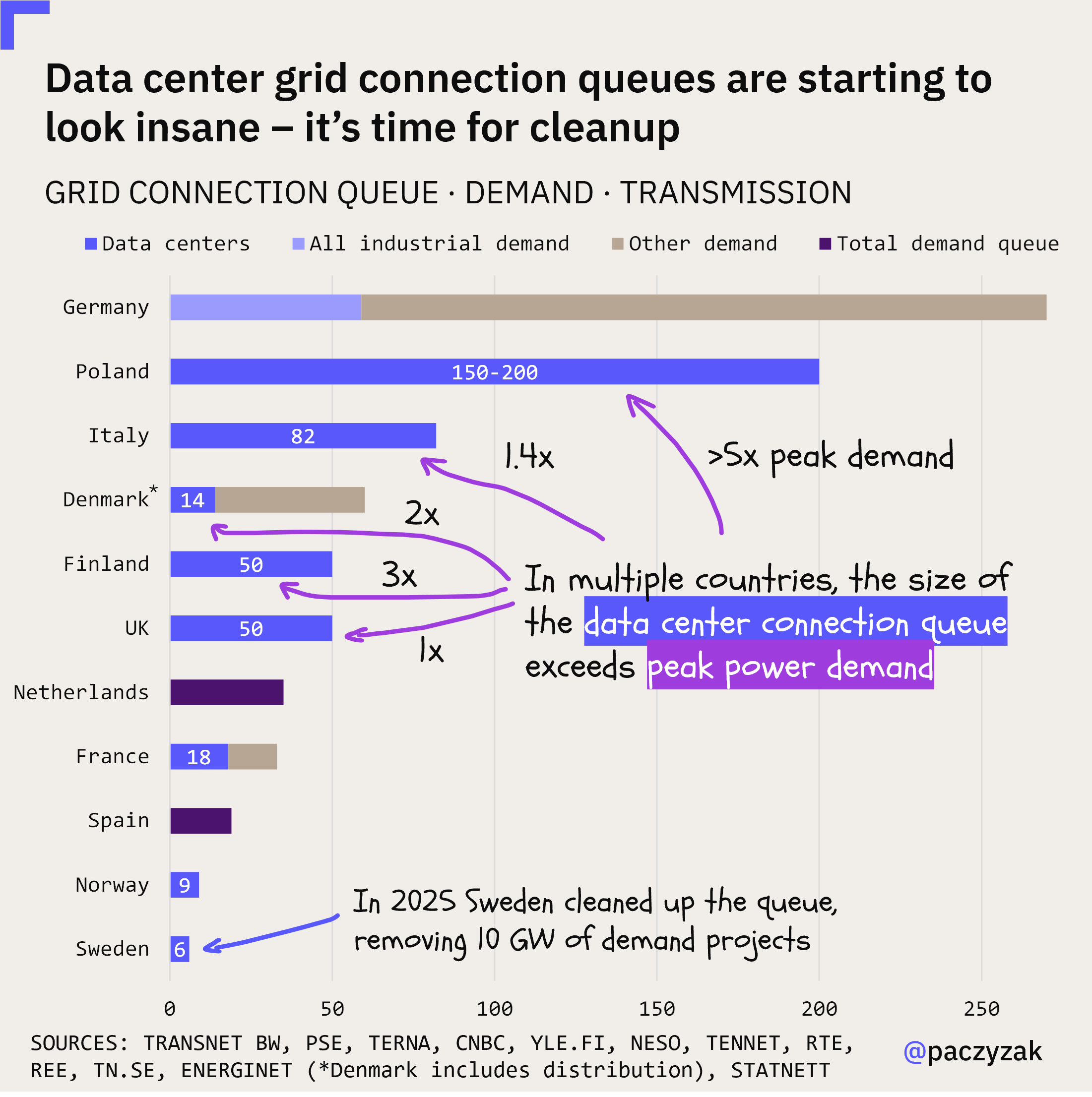
You’ll find a table with all the data, definitions and sources in the full analysis.
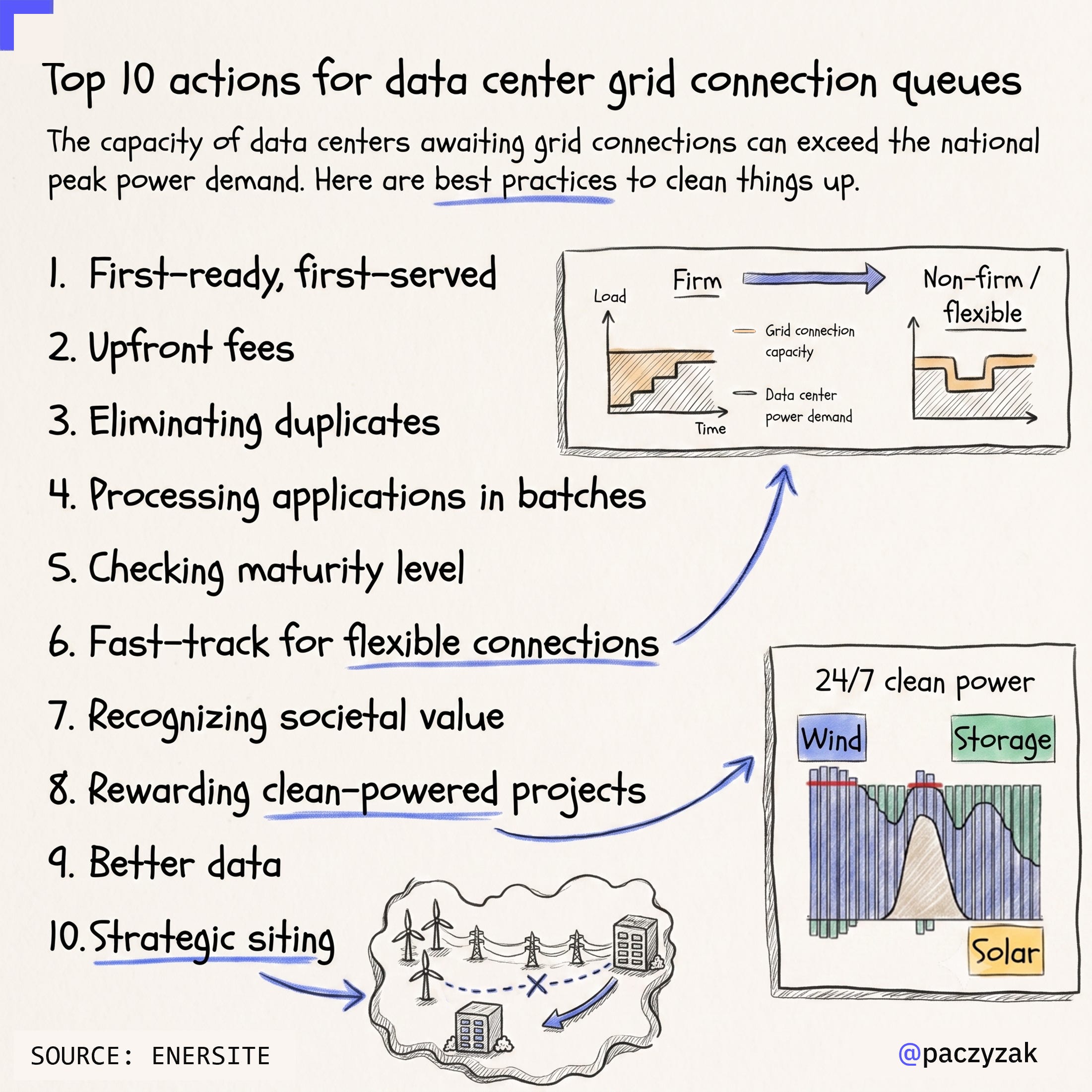
Many grid operators were forced to actively manage their connection queues. In the US, FERC and ERCOT started a move from the old first-come, first-served approach to a first-ready, first-served one: prioritizing the most advanced projects that are well documented, backed by real commitments, and offer benefits for the power system - through e.g. flexibility services or battery storage.
There’s also a move to require upfront deposits and cluster the grid studies - so run the costly models for a group of projects, rather than each one separately.
In Europe, Ireland, Netherlands, Germany, UK - the historically leading data center markets, all faced challenges with data center integration, forcing them to reform the grid connection processes. Denmark faced this recently, issuing the halt on new connections.
The solutions already being implemented:
prioritizing data centers with on-site generation and storage, requiring clean power deployment that matches the annual demand (Ireland, Germany)
collecting applications in batches to streamline processing, removing duplicates, requiring upfront study fees
prioritizing projects with higher likelihood of success (first-ready, first-served)
incentivizing flexibility and phased connections
improving availability of data on grid capacity
There’s a proper list of recommendations in the full text, but here’s a visual summary:
No posts
Comments
Nothing yet. Say the first thing.
Sign in to join the conversation.