
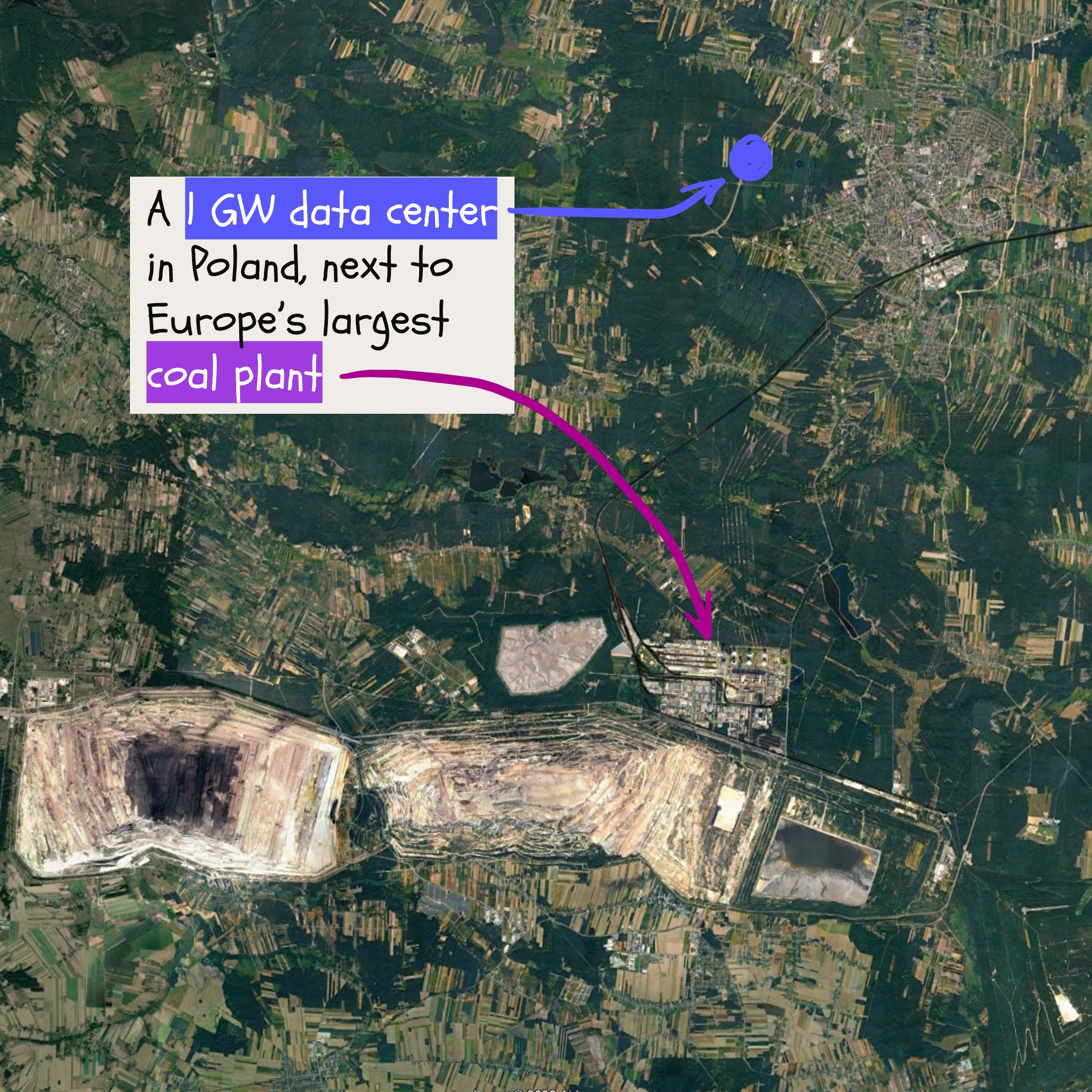
Poland is planning a 1 GW data center next to Europe’s largest coal plant - Bełchatów. An initial 500 MW of grid capacity was granted, aiming for a start in 2029. Of course the actual power will not come from coal, otherwise we’d have the dirtiest and most expensive data center on the planet 😂
So where will the power come from? Can this project aim for 24/7 clean power?
With 8-hour batteries, it can.
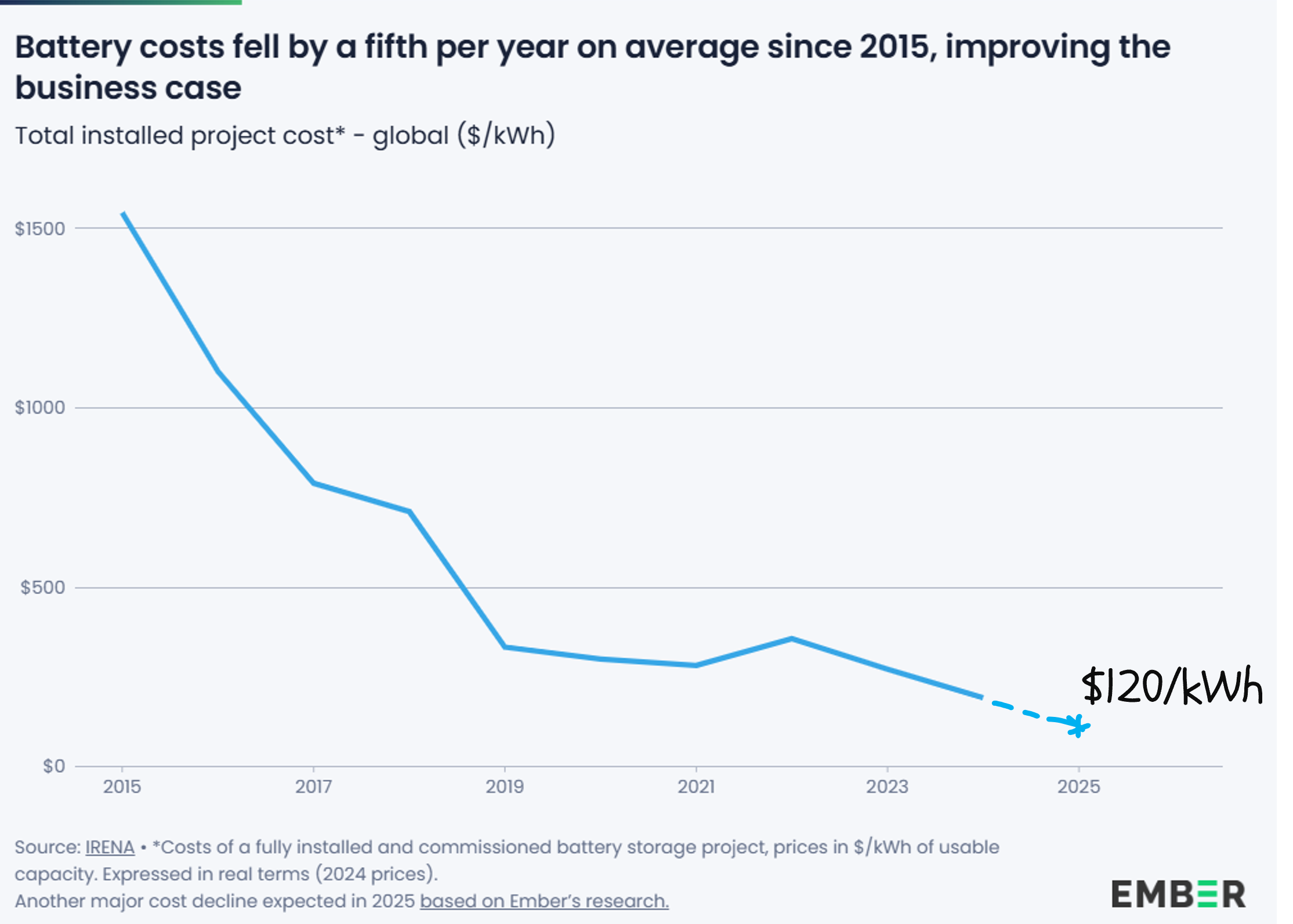
The recent IRENA report says that “global average turnkey energy storage system prices fell to below USD 120/kWh in 2025”. Dropping 31% in a year, after a 40% decrease in 2024. There might be a small hiccup in 2026 due to the global supply chain disruptions, but there’s no sign of long-term trend changing anytime soon.
Aligning with this is the gradual increase of battery capacities - historically, 2-hour systems dominated, but now Australia and China are installing the first 8-hour systems. With these, you can capture almost the entirety of daytime solar generation, dramatically increasing capture prices, reducing curtailment, and getting to much flatter PPAs. And eventually, 24/7 Carbon-Free Energy.
In the early days of data centers, most big tech players announced 100% clean power commitments. But this usually meant they’d get dirty-ish power from the grid, and then obtain guarantees of origin (GOs) from renewable energy producers to get to 100% clean on an annual basis. Which hides the real impact on the grid - the need to balance the demand and supply in every hour of the year in each location.
24/7 matching (also 24/7 Carbon-Free Energy) is a more honest approach - you’re aiming to procure enough clean power to meet your load in every hour of the year. Engie has a beautiful visual explainer on this, and EnergyTag has multiple examples of existing arrangements.
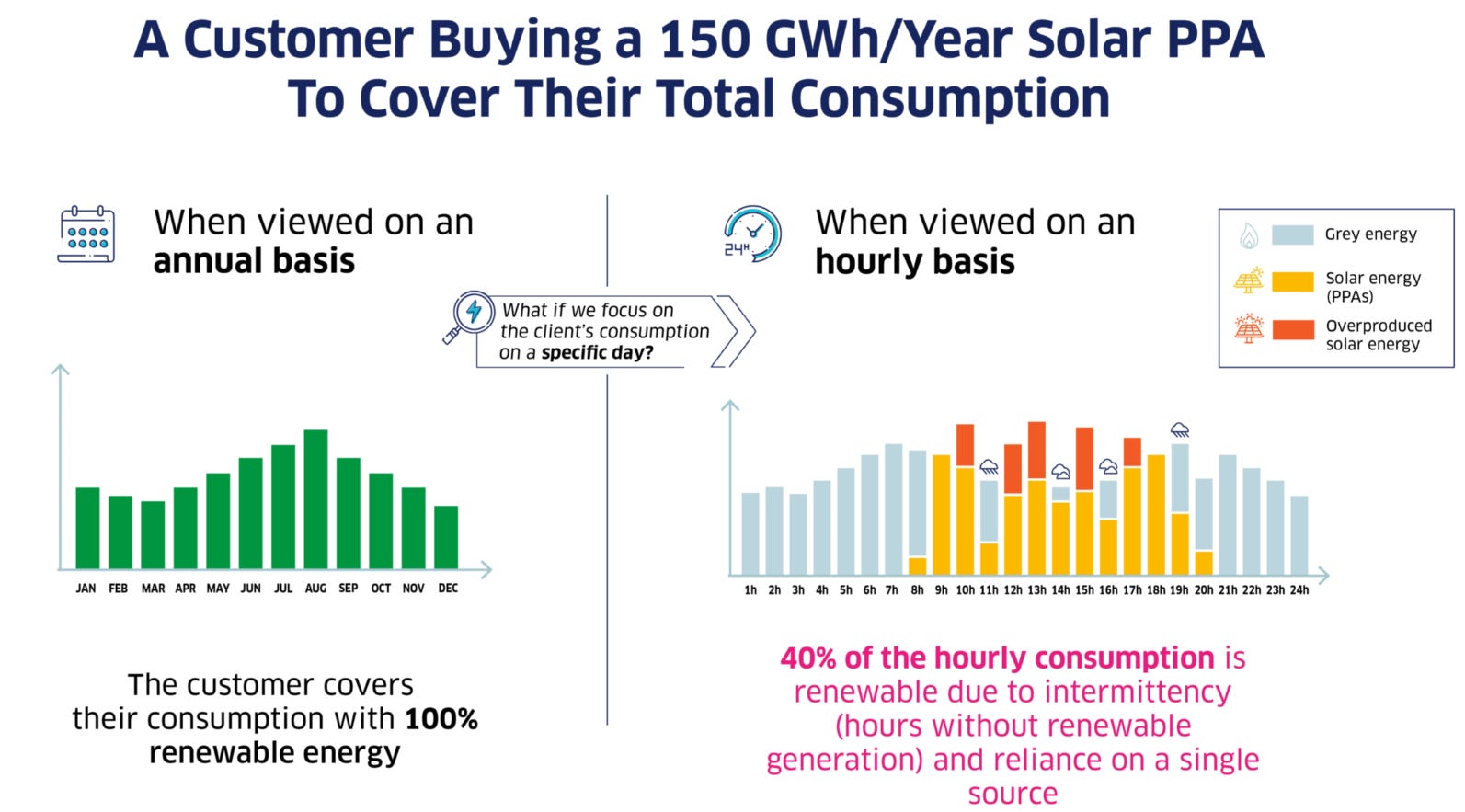
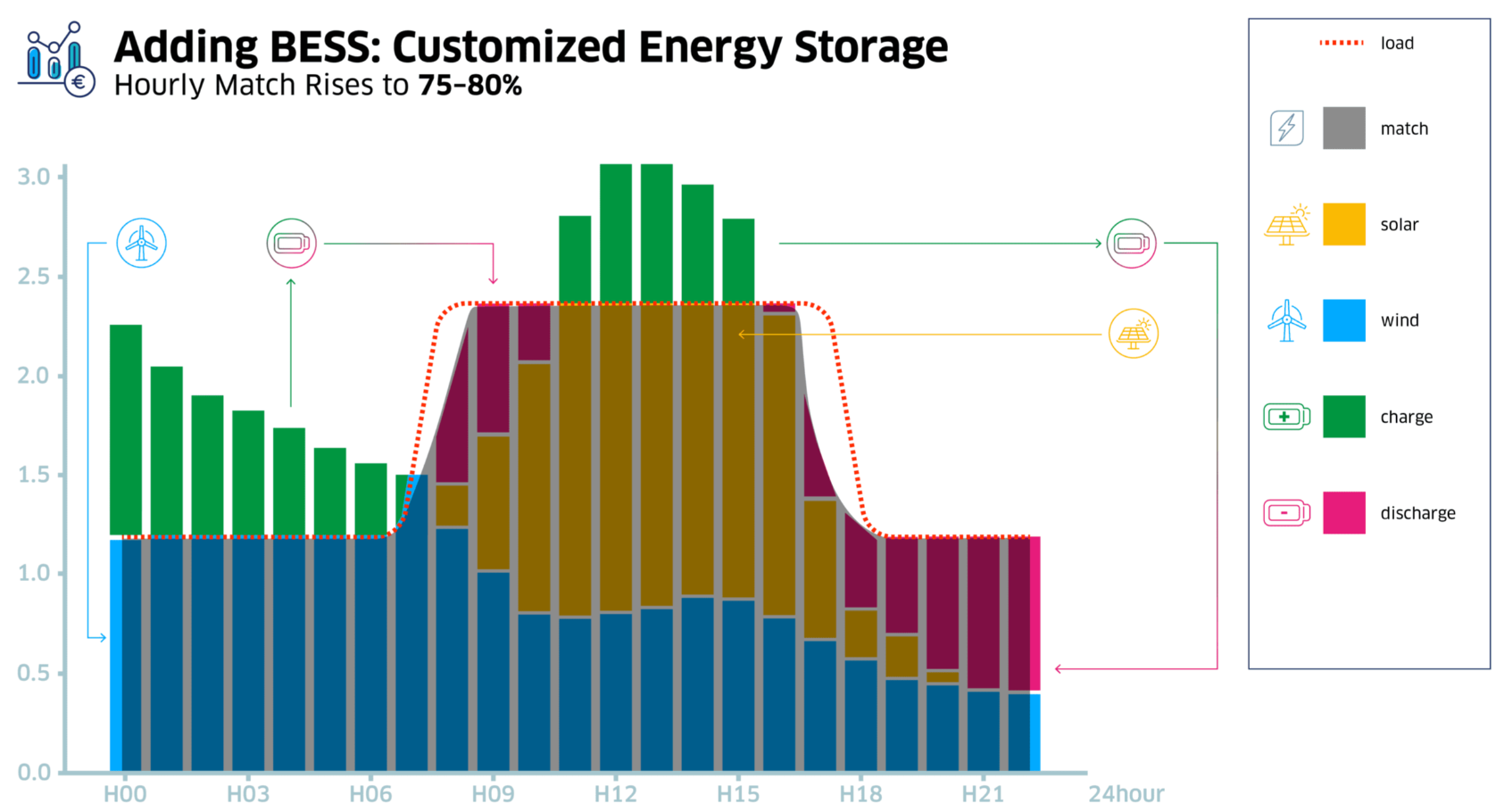
Technically it’s more challenging, but it prices in the mismatch between, say, the solar generation profile, and the flat demand of data centers. This has an important purpose: without 24/7 matching, the costs of expanding grids and balancing the system are transferred to all consumers through e.g. capacity markets.
With 24/7 matching, the data center will pay a bit more to flatten the generation profile of renewables (by getting a “baseload PPA”), usually via storage, but this will lower the system costs for other consumers, and also protect the data center from power price spikes.
So what does all this have to do with the Bełchatów data center?
I used it as a case study to model the 24/7 clean power matching under different storage scenarios. In all cases, the data center would use around 2.8 GW of solar (a pay as produced off-site PPA) and 3 GW of wind, plus 2 GW of battery storage (also off-site). The BESS ranged from 1h to 8h in storage capacity.
With 1-2h storage, it was quite difficult to reach 80%+of hourly matching. But 4-8h batteries unlock the 90% territory we should be going for to both keep emissions in check and avoid disrupting the grids. Amazing result!
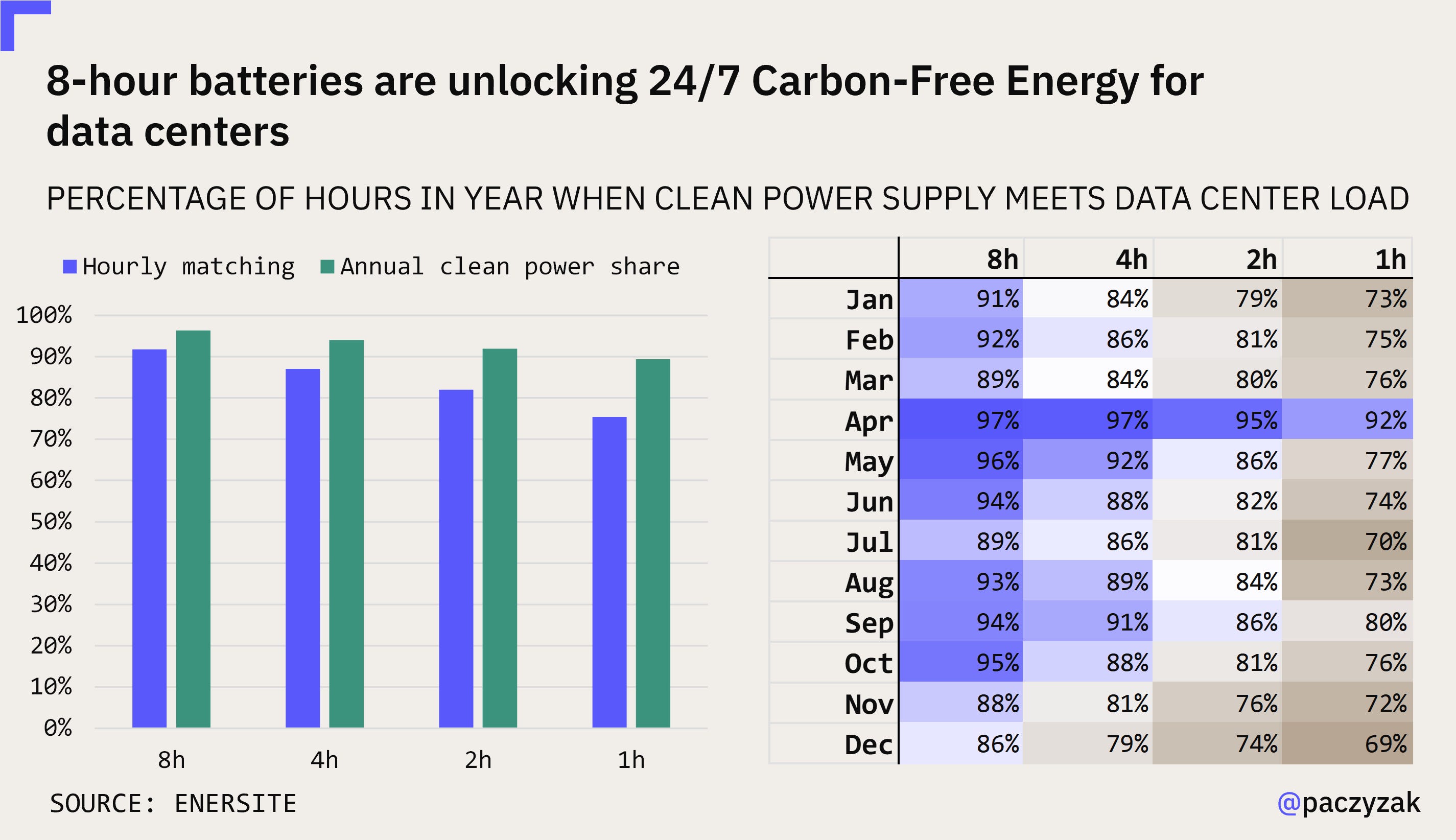
The numbers come from a small PyPSA model with two nodes imitating the grid connection (1000 MW) between on-site and off-site generation and storage. I let it expand wind, solar and batteries under some rough capex assumptions, and I made the spot market expensive - so the model prioritized 24/7 matching using the PPAs. Weather profiles come from the latest ENTSO-E PECD, data center load was flat. The idea was to quickly look at the impact of different battery storage options, not to have a perfect representation of the Polish power market and grid.
One nuance is: there’s a difference between batteries used for flattening the PPA profile (which are best located on the generator side), and batteries used for managing the ramping of the data center (on the load side).
The former make most sense sitting with the wind and solar assets. The more you oversize them, the better the matching, and the higher the capture price for the producer (and lower curtailment). So basically they’re part of the baseload/flattened PPA arrangement, and their cost is included in the PPA price the data center will pay.
The latter are needed to manage the rapid changes in data center load profiles. By rapid I mean tens of megawatts dropping or appearing in milliseconds, which can cause serious disruptions for the grid. In fact there are already examples from Virginia, Texas and Ireland, where small grid faults escalated into major events after multiple (even up to 40-70) data centers got disconnected all at once.
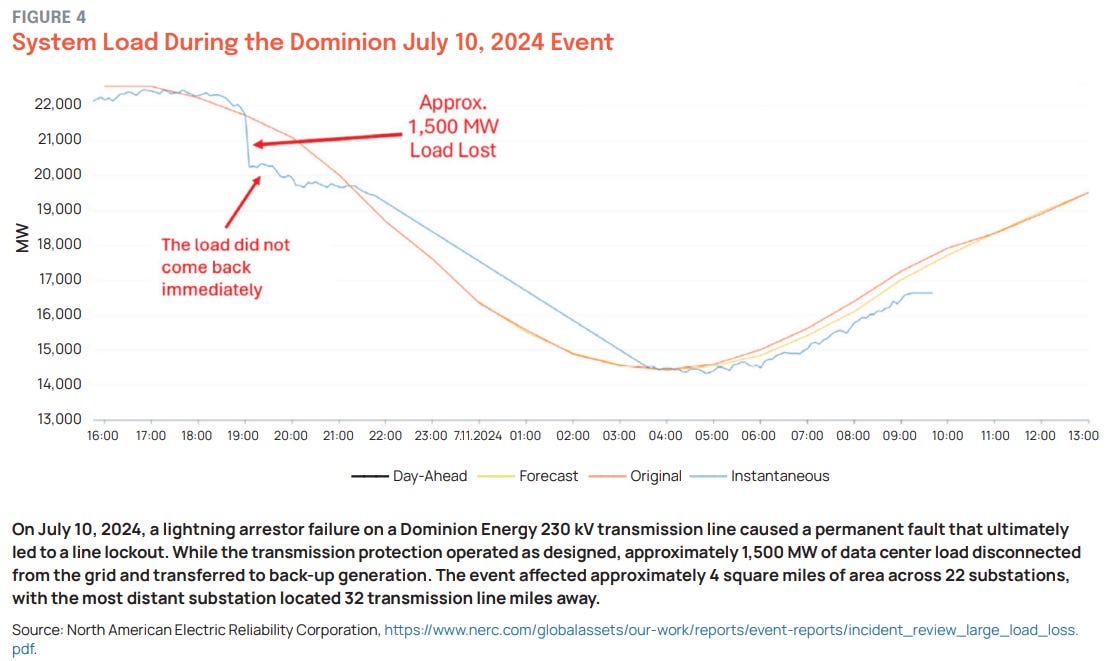
And it’s not just during faults - IT jobs ramp up and down very quickly, which isn’t always aligned with the parameters required by the grid connection agreement. So you need a UPS/battery on-site to keep things in check - not a huge one, but say 20% of peak load, with a very short duration (below 1 hour).
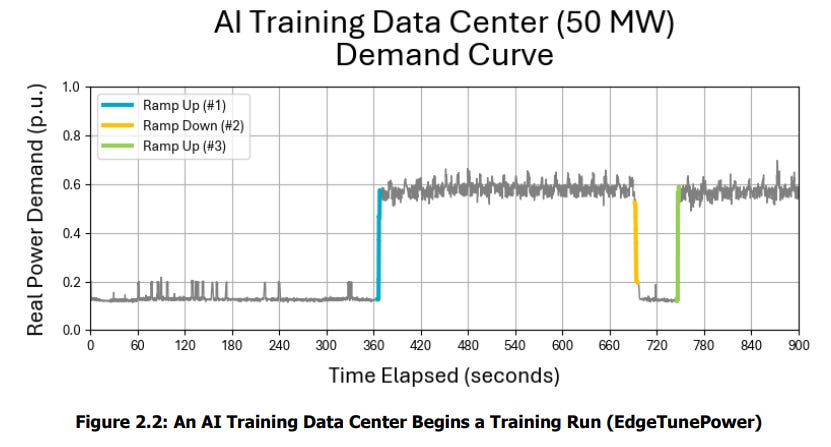
In theory, both functions could be handled by the same on-site battery. But that would only make sense with an oversized grid connection… And typically, a data center developer will max out the grid connection with the compute load. So there’s no surplus of power that can be drawn to charge the battery. Hence two batteries. I don’t love this solution - need to look for a better one. One plus is that the on-site battery can be used for balancing on-site solar generation.
This became a somewhat technical newsletter, but maybe it’s good after the philosophical one last week 🥸. Next week I’m off to London, fingers crossed the heatwave will be gone by then.
No posts
Comments
Nothing yet. Say the first thing.
Sign in to join the conversation.