
The bottom line? Ten million years of evolutionary loyalty won’t evaporate overnight, but change is coming one functional mocktail at a time. What do you think about the future of drinking? Let me know what you think in the chat.
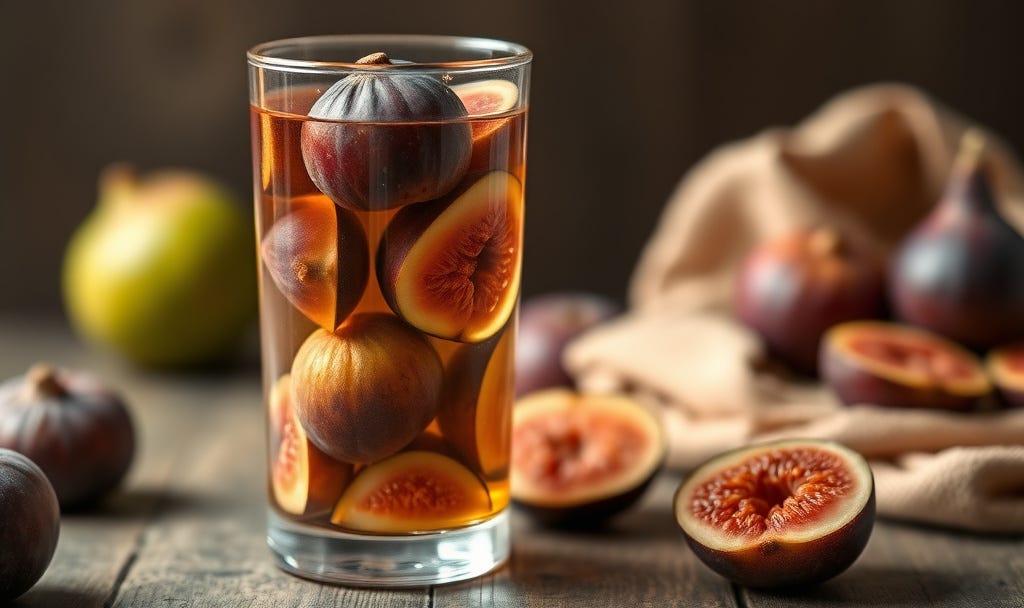
The story: Humanity’s relationship with booze is older and more consequential than most of us realise. It is pre-human old. About ten million years ago, a common ancestor of humans, chimps and gorillas acquired a mutation allowing them to process ethanol more efficiently. Why? The theory is that tropical forests in parts of the world were collapsing, 90% of apes went extinct, and the survivors were forced out of the trees. On the ground there was little fresh fruit to be found, but our ancestors discovered fallen, fermenting fruit. In other words, our they learned how to process alcohol in order to survive. Today, in the rainforests of Uganda, researchers are studying chimps, in order to find out how much alcohol they consume in the figs they eat—and how it affects how they behave.
At some point, alcohol became foundational to many human societies
The first solid evidence of intentional brewing dates to about 13,000 years ago, from there booze seems to have played an important role in helping to bring early social groups together. As groups of primates grow larger it becomes harder to sustain the direct ties needed by ‘grooming’ each other individually, but large-scale activities such as singing, dancing, storytelling, eating and drinking (collectively feasting) all trigger endorphins, the brain’s natural opioids. One academic even argues that alcohol’s effect on the prefrontal cortex allowed fiercely tribal primates to co-operate with strangers, making large-scale civilisation not just easier, but possible. Did we sail into civilisation on an ocean of beer? Possibly.
Fast forward to now, and the party may be winding down.
Sales of alcohol have been slowly declining in rich countries since 2011 when each person drank the equivalent of 8.9 litres of pure alcohol; by 2021 that had fallen to 8.6. Younger generations, raised on smartphones and late-night gaming sessions, increasingly see alcohol as an expensive way to fog your brain and wreck your sleep. Which, to be fair, it is. Weight-loss drugs are adding to the trend, appearing to influence the brain’s reward pathways and making booze less appealing.
The drinks industry is taking note of the cultural changes and seems to be shifting towards no- and low-alcohol markets. Beyond that, a wave of “functional drinks” packed with ginseng, ashwagandha, lion’s mane and CBD promises to be calming, enlivening, or socially lubricating — depending on your needs. I bravely taste-tested several. The herbal beers and spirits got a cautious thumbs up. The functional wine, alas, was undrinkable. (I have since been told to try a herbal grape juice called L’Antidote—do let me know if you recommend it.) One intriguing development is Alcarelle, an effort to create a flavourless substance at GABA Labs based just north of London. The firm is trying to design a drink to mimic the calming, anxiety-reducing buzz of alcohol — without any of the downsides.
The bottom line? Ten million years of evolutionary loyalty won’t evaporate overnight, but change is coming one functional mocktail at a time. What do you think about the future of drinking? Let me know what you think in the chat.
Source: “How humankind’s 10m-year love affair with booze might end,” The Economist, December 2025
March 12th on NPR: Are we breaking up with booze? Krys Boyd interview on why consumption of alcohol worldwide is starting to wane, to take stock of the pros and cons of partaking in drink and to talk about the newest products on the market that promise an alcohol-like buzz with fewer side effects.
New - our video explainer!
Comments
Nothing yet. Say the first thing.
Sign in to join the conversation.