
“The Travel Management Rule is why dirt-bikers and snowmobilers can share national forest lands with hikers and backcountry skiers without conflict. It’s why our national forests provide habitat to support thriving wildlife populations. It is built on local decision-making, with a designation process that ensures that no user group gets steamrolled and all our national forest values are protected.” - Hilary Eisen, Federal Policy Director for Wild Montana, in Outdoor Life (August 21, 2026)
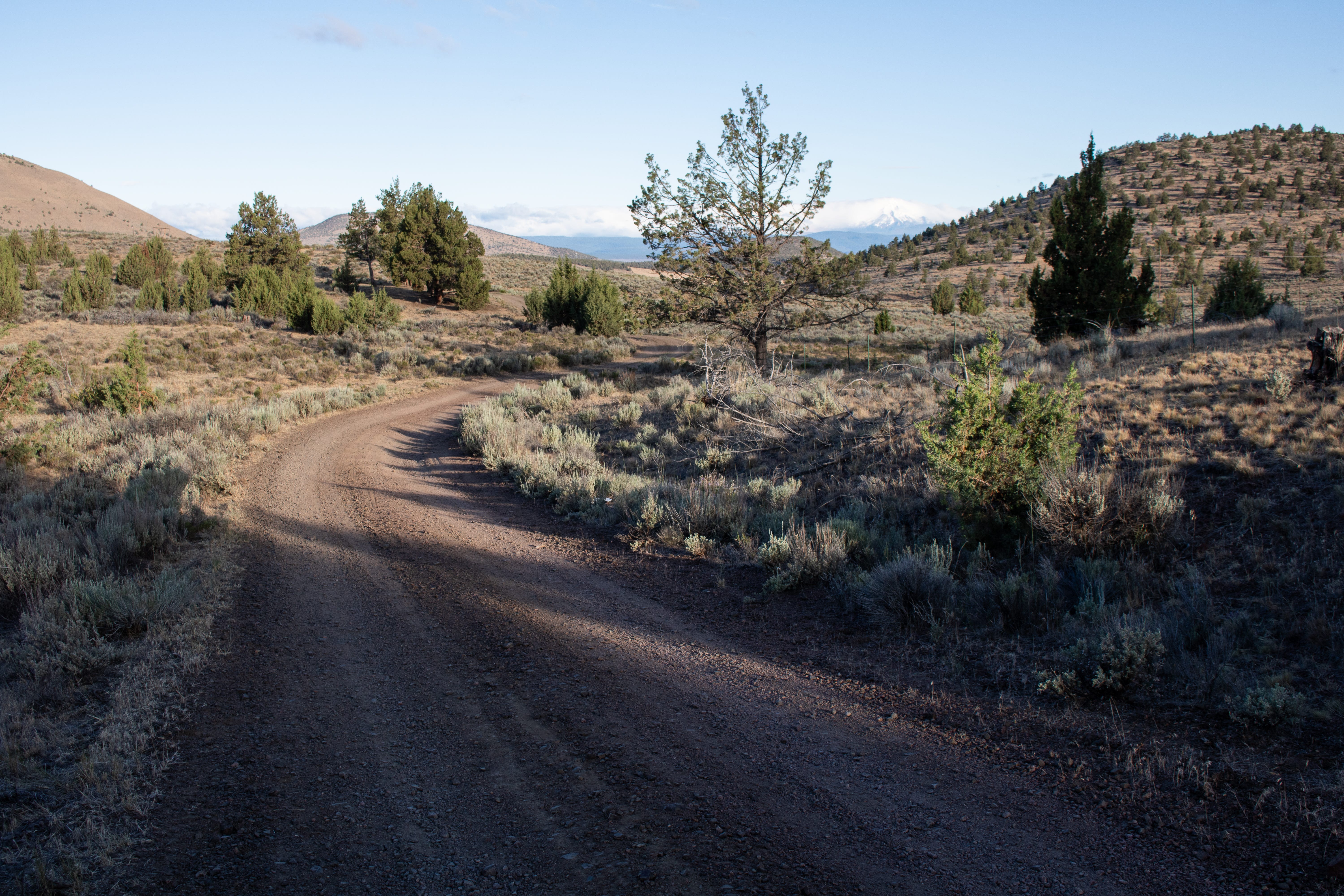
Just three days after proposing to rescind the Roadless Rule—which, for financial and fiscal reasons, prohibits the construction of new permanent roads on nearly 45 million acres of roadless national forests—the Trump administration opened another front in its campaign to expand motorized access across America’s public lands.
On Friday, August 21, the U.S. Forest Service announced in a press release that it would begin rewriting its Travel Management Rule.
Created and implemented during the George W. Bush administration in 2005, this rule determines where cars, trucks, dirt bikes, ATVs, snowmobiles, and other motor vehicles are allowed in our national forests and grasslands.
The agency now says the revision will accelerate local decisions and “increase access, including for motorized vehicles, e-bikes, and mobility devices.”
Their statement does not specifically exclude any type of motor vehicle. Without those exclusions, motorized vehicles, of course, do include logging and mining trucks.
The Forest Service said it plans to prepare an Environmental Impact Statement soon, which will kick off another 30-day opportunity for public comment.
For the time being, though, existing travel maps and route designations will remain in force until individual forests revise them.
Still, the administration has made its objective abundantly clear.
“Public lands are for public use, yet for too long, Forest Service regulations have stood in the way of public recreation access,” said Deputy Agriculture Secretary Stephen Vaden, arguing—again, falsely—that Forest Service regulations have prevented Americans from accessing their forests.
Vaden is an attorney specializing in election law and administrative law and has precisely zero experience in conservation, recreation, or public land management in general. Before he was appointed as Deputy Secretary of Agriculture in July 2025, he was a Judge of the Court of International Trade.
“With this step, USDA begins the process of ensuring the public can access their forests and USDA can better manage the lands with which the public has entrusted it,” Vaden said.
Literally every national forest is accessible to visitors. There isn’t a single national forest that’s closed off entirely. The “problem,” in the mind of the Trump administration, however, is that certain areas of certain forests may be closed or restricted to particular uses.
Allow me to repeat myself: the current Travel Management Plan was created and implemented by the Republican Bush administration. Trump is undoing that.
The administration’s typical tactic is grouping together “accesses” of all kinds.
Using the easily defensible argument that “access” allows people with disabilities to travel further into national forests, their broad definition of “access” also means that heavy equipment, such as logging and mining trucks, can also travel deeper into forest lands.
But the thing is that there’s absolutely no need to open up more roads and trails so people with disabilities can enjoy their public lands more or better.
We already have a law for that: the Americans With Disabilities Act allows disabled folks to use (motorized) wheelchairs anywhere that’s accessible to foot traffic, from the boardwalks of Yellowstone to public roads to national forest trails.
Under Secretary Michael Boren—who recently came under fire, pun most certainly intended, when he redirected about nine federal firefighting aircraft to combat a small blaze near his own private Hell Roaring Ranch in Idaho on July 12—described the current system as “unnecessary barriers.”
He specifically called for “roads, trails, airfields, trailheads, and other access routes” to be opened where deemed appropriate by local officials.
Note that he mentioned airfields.
This begs the question: does the average national forest visitor use an airfield? Do ordinary American taxpayers who plan to enjoy and recreate in a national forest need an airfield for better access? Easy answer: of course not.
Private airfields on public lands are the exclusive privilege of millionaires and billionaires, CEOs and industry tycoons—like, you might have guessed it, Michael Boren himself.
In the summer of 2018, Boren—who’s a tech billionaire and conservative donor—began groundwork on the same 480-acre Hell Roaring Ranch I mentioned above, which is a private inholding surrounded by the protected mountains, lakes, forests, and wilderness areas of Idaho’s Sawtooth National Forest.
Boren said that the work was rather basic and intended to eliminate weeds and gopher holes.
What was actually constructed, however, was a private airstrip built without the required federal authorization. By 2019, the ranch also had a $1.1 million aircraft hangar.
Boren’s quarrels with the Forest Service didn’t stop there.
In July 2020, while U.S. Forest Service employees were trying to survey a public trail crossing land near another of his ranches, a helicopter associated with Boren repeatedly flew low over the workers. The federal employees said they felt the flights were an effort to intimidate and harass them.
The Justice Department sought a temporary restraining order, alleging that the helicopter created dangerous conditions and interfered with federal employees performing their duties. Boren denied trying to threaten anyone.
The conflicts continued.
In 2024, the Forest Service warned that a company connected to Boren had constructed an unauthorized cabin and waterway on federal land.
Despite all of that, Michael Boren was confirmed as the Undersecretary of Agriculture for Natural Resources and Environment by the Senate on a 51-47 partyline vote and sworn in in January of this year.
He oversees the entire Forest Service, the very agency he’s been fighting with for nearly a decade.
Now, Boren is specifically promoting more vehicle traffic on national forest roads, opening up more access routes and, as I said, talking about airfields in national forests.
Here’s the thing, though: the current Travel Management Rule as it exists right now doesn’t broadly prohibit motorized access at all.
It manages a system containing more than 380,000 miles of Forest Service roads—nearly eight times the length of the Interstate Highway System—and 165,000 miles of trails.
Before the rule, unmanaged off-road travel had resulted in countless user-created routes, significant soil erosion, deteriorating watersheds, and growing conflicts between motorized and nonmotorized visitors.
The 2005 Bush administration rule required every national forest to designate specific roads, trails, and areas that are open to vehicles. Sometimes, that would require the restriction of access by season or vehicle type for various reasons, from weather to wildlife protections.
“The Travel Management Rule is why dirt-bikers and snowmobilers can share national forest lands with hikers and backcountry skiers without conflict,” said Hilary Eisen, Federal Policy Director for Wild Montana, in Outdoor Life.
“It’s why our national forests provide habitat to support thriving wildlife populations. It is built on local decision-making, with a designation process that ensures that no user group gets steamrolled and all our national forest values are protected.”
For the record: neither the current Travel Management Rule nor any future revision would affect officially designated Wilderness Areas, which don’t have roads at all. It applies solely to non-Wilderness areas in the national forest system.
Increased access for all kinds of user groups all at once comes with serious ecological costs. And those costs don’t just disappear because decisions are made on a local rather than federal level.
Additionally, motorized access can also conflict with hiking, horseback riding, cross-country skiing, birding, and backcountry hunting and fishing—all activities the appeal of which depends on quiet, solitude, remoteness, and significant distance from machines.
“Travel management is one of the most important tools in the wildlife management toolbox,” said Ryan Callaghan, President and CEO of Backcountry Hunters & Anglers on Instagram. “Where and how we travel across public lands directly affects migration corridors, calving and wintering areas, habitat security and our ability to keep public wildlife and public land.”
Combined with the proposed rescission of the 2001 Roadless Area Conservation Rule, rewriting this long-standing Travel Management Rule—opening more roads to motor vehicle traffic—could be bad for the wilderness experience, wildlife, water, and general environmental protections in our national forests and grasslands.
The Roadless Rule limits most road construction and industrial logging across Inventoried Roadless Areas, while the Travel Management Rule determines where certain vehicles are permitted in national forests.
Rescinding and/or weakening both would be a double whammy—potentially leading to more roads and more motor vehicles, which range from e-bikes to OHVs and industrial machinery.
Those two recent announcements cannot be seen as separate. They’re part of the same plan to open up national forests to more industrial-scale extraction, particularly timber harvesting.
“This action provides the legal foundation to streamline and modernize the Travel Management Rule and align Forest Service policy with administration priorities to increase access and protect private and commercial interests, while conserving natural resources,” said Forest Service Chief Tom Schultz
It’s worth emphasizing that Schultz served as the Vice President of Resources and Government Affairs at the Idaho Forest Group, one of America’s largest private lumber producers.
His LinkedIn profile says he’s presently still employed at that very position.
Again, the Forest Service has provided few details on its Travel Management Rule revision at this point. Their notice of intent to draft an Environmental Impact Statement, which is expected on August 24, will offer more insight into what exactly it is they’re planning on changing.
That will also open up a 30-day public comment period, during which you can chime in on how you want your national forests and grasslands to be managed.
I will provide a link to all relevant webpages once all of that is announced and published.
In the meantime, the Roadless Rule rescission proposal is live and that public comment period is open.
If you care about Roadless Areas, the wildlife that calls them home, and the world-class recreation opportunities they provide—and if you care about how the federal government uses your hard-earned tax dollars—you can submit a personal comment through September 21.
You can submit your comment directly on Regulations.gov.
Remember that a personalized comment is way more effective than a generic one submitted through some organization’s pre-filled form. (If there are, say, a thousand comments that are exactly the same because they were submitted via a template form, they may get counted as just one comment.)
Remember that the comment period is 30 days long. You don’t need to submit your comment right away—you can only submit one.
You don’t need to act immediately. But you do have to act thoughtfully and carefully. This is the last time you can speak up about this particular Roadless Rule rescission.
So take your time. Learn about what the Roadless Rule actually is and does. Think about what it actually means to you. Then craft a good, impactful, effective, and meaningful personalized comment.
Say why you want the Roadless Rule to stay in place; talk about which Roadless Area you’ve enjoyed visiting; share a memorable experience you’ve had in a tract of roadless national forest.
The website Roadless.org is arguably the best resource on the entire Internet for all things Roadless. They’ve got tons of background information, as well as a great way to craft an impactful personalized comment. Highly recommend checking this out!
Then, after you’ve submitted your comment, make sure to register to vote this November. And actually vote.
You can check the environmental and public lands track record of your representatives on the comprehensive Congressional Scorecard from the League of Conservation Voters.
And if you’re in a particularly strong protect-public-lands mood and want to submit more comments, you can find all public comment periods that are currently open on the superb Public Land Comment Map created by onX.
Lastly, if you’d like to support independent public lands and conservation writing, please consider becoming a paid subscriber today. My work is made possible exclusively by paid subscribers.
Thanks for helping to protect our public lands and waters!
See you out there,
Bram
Comments
Nothing yet. Say the first thing.
Sign in to join the conversation.