
“Something will have gone out of us […] if we drive the few remaining members of the wild species into zoos or to extinction; if we pollute the last clear air and dirty the last clean streams and push our paved roads through the last of the silence, so that never again will Americans be free in their own country from the noise, the exhausts, the stinks of human and automotive waste.” - Wallace Stegner in the opening passage of his Wilderness Letter (December 3, 1960)
As we all prepare to submit our comment on the proposed Roadless Rule rescission—see my last article for a breakdown and call-to-action—I figured it’d offer you some motivation and inspiration by resharing an article I published last year in December. (I’ve updated certain sections for current relevance.)
The article was about Wallace Stegner’s famous “Wilderness Letter,” which has become an iconic piece of writing in conservation circles. But here’s what makes that letter even more felicitous: it was also a public comment (albeit a rather lengthy one).
Although Roadless Areas aren’t officially designated Wilderness Areas, they do have very similar characteristics. In fact, if we manage to keep them protected, they’d make for fine additions to our existing Wilderness System in the future.
On December 3, 1960, Wallace Stegner wrote a long letter that has become one of the foundational texts of modern American conservation.
Addressed to the Outdoor Recreation Resources Review Commission, it was a careful, measured explanation of why wilderness matters—not only as an environmental resource, but as a cultural one.
Stegner’s brilliance as a writer radiates throughout the entire letter. In addition to being a historian and passionate conservationist, he was also a Pulitzer Prize-winning novelist and has been called “The Dean of Western Writers.”
An absolute masterpiece filled with world-class prose, his letter was so powerful and evocative that it was later used to introduce the Wilderness Act in 1964, which is still one of the most important conservation laws in U.S. history.
In fact—get this—Wallace Stegner’s now-famous Wilderness Letter was actually nothing more than “a comment letter about implementing regulations for the Wilderness Act,” said Chris Wood, President and CEO of Trout Unlimited, on the Backcountry Hunters & Anglers Podcast in September 2025.
(Chris Wood worked for the U.S. Forest Service in the 1990s and helped create the Roadless Rule. I strongly recommend listening to that podcast episode for an expert explanation of the Roadless Rule and its critical importance.)
In the past year and a half, many hundreds of thousands of us have sent our own letters, emails, and comments to our elected officials and government agencies, too, urging them to protect our public lands and waters against sell-offs, drilling, logging, mining, and other forms of extraction.
Stegner’s Wilderness Letter was no different. It was his way of telling officials to protect public lands and waters in perpetuity.
In it, he masterfully advocated for the protection of wilderness areas, for the idea of wilderness, and for how important it is to simply know that those places exist.
It was highly effective and could/should serve as an example for all of us going forward.
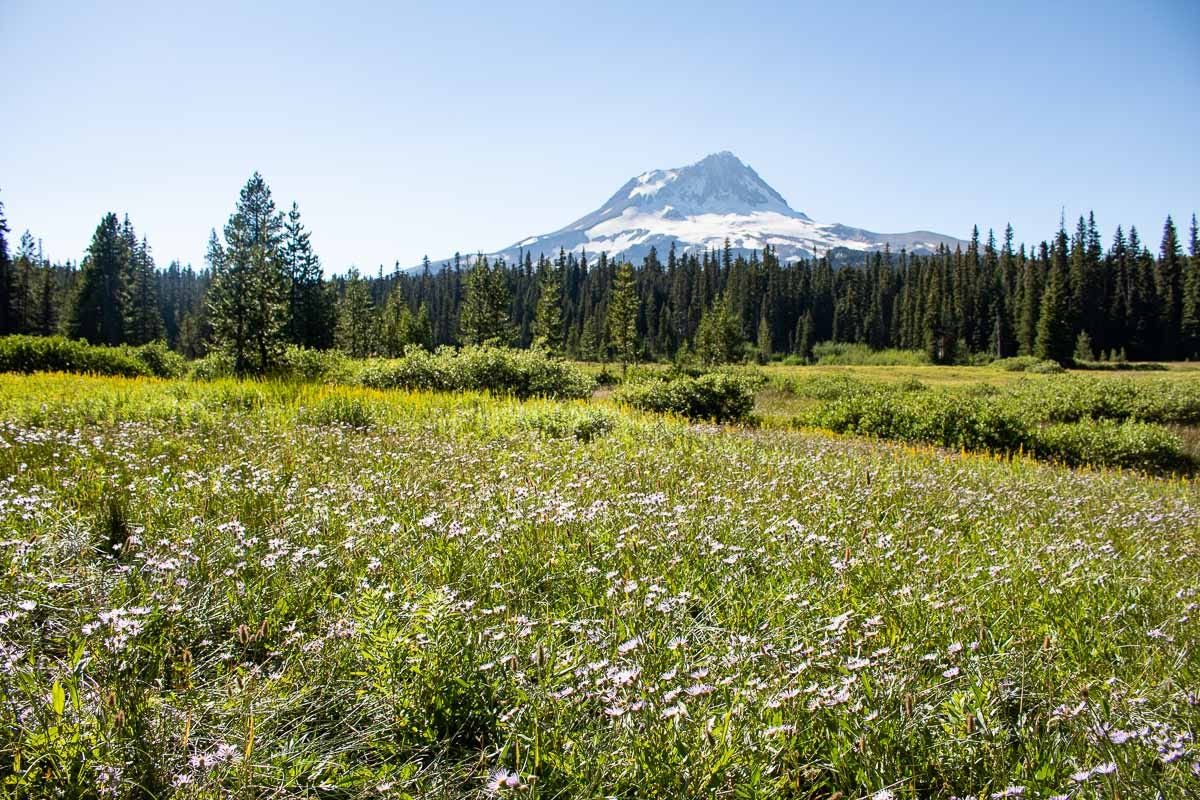
Stegner’s Wilderness Letter centered on an idea that was both simple and straightforward: that the value of wilderness can’t be reduced to what can be extracted or developed.
He argued that wilderness “is a resource in itself.”
“Something will have gone out of us as a people if we ever let the remaining wilderness be destroyed,” he wrote, urging policymakers to see wild lands not as unproductive spaces waiting to be improved, but as essential to the national character.
“Something will have gone out of us […] if we permit the last virgin forests to be turned into comic books and plastic cigarette cases; if we drive the few remaining members of the wild species into zoos or to extinction; if we pollute the last clear air and dirty the last clean streams and push our paved roads through the last of the silence, so that never again will Americans be free in their own country from the noise, the exhausts, the stinks of human and automotive waste.” - Wallace Stegner in the opening passage of his Wilderness Letter (December 3, 1960)
One of my favorite parts of the letter exemplifies the irreplaceable worth of wilderness the best: “The reminder and the reassurance that it is still there is good for our spiritual health even if we never once in ten years set foot in it. It is good for us when we are young, because of the incomparable sanity it can bring briefly, as vacation and rest, into our insane lives. It is important to us when we are old simply because it is there—important, that is, simply as an idea.”
That’s the most profound pro-conservation statement I’ve read anywhere.
The point of wilderness was not recreation alone, he argued. It was the knowledge that somewhere beyond our traffic-clogged cities and accelerating pace of life, there were still places governed primarily by natural forces rather than human ones.
In 1960, wilderness preservation was far from guaranteed. Large landscapes across the American West were being transformed for energy, water storage, timber, mining, and development.
Now, more than six decades later, that’s all still the case.
Back then, just like today, conservationists had to justify why certain areas should remain undeveloped, and they often focused on scenic beauty or recreation. Stegner offered a broader argument—a more philosophical argument.
Wilderness, he suggested, serves as “the geography of hope,” a phrase that masterfully frames conservation as a forward-looking investment rather than a backward-looking refusal to change.
Yet the pressures facing wilderness have only grown in recent decades. Under the current Trump administration, the threats have grown to pretty much unprecedented levels.
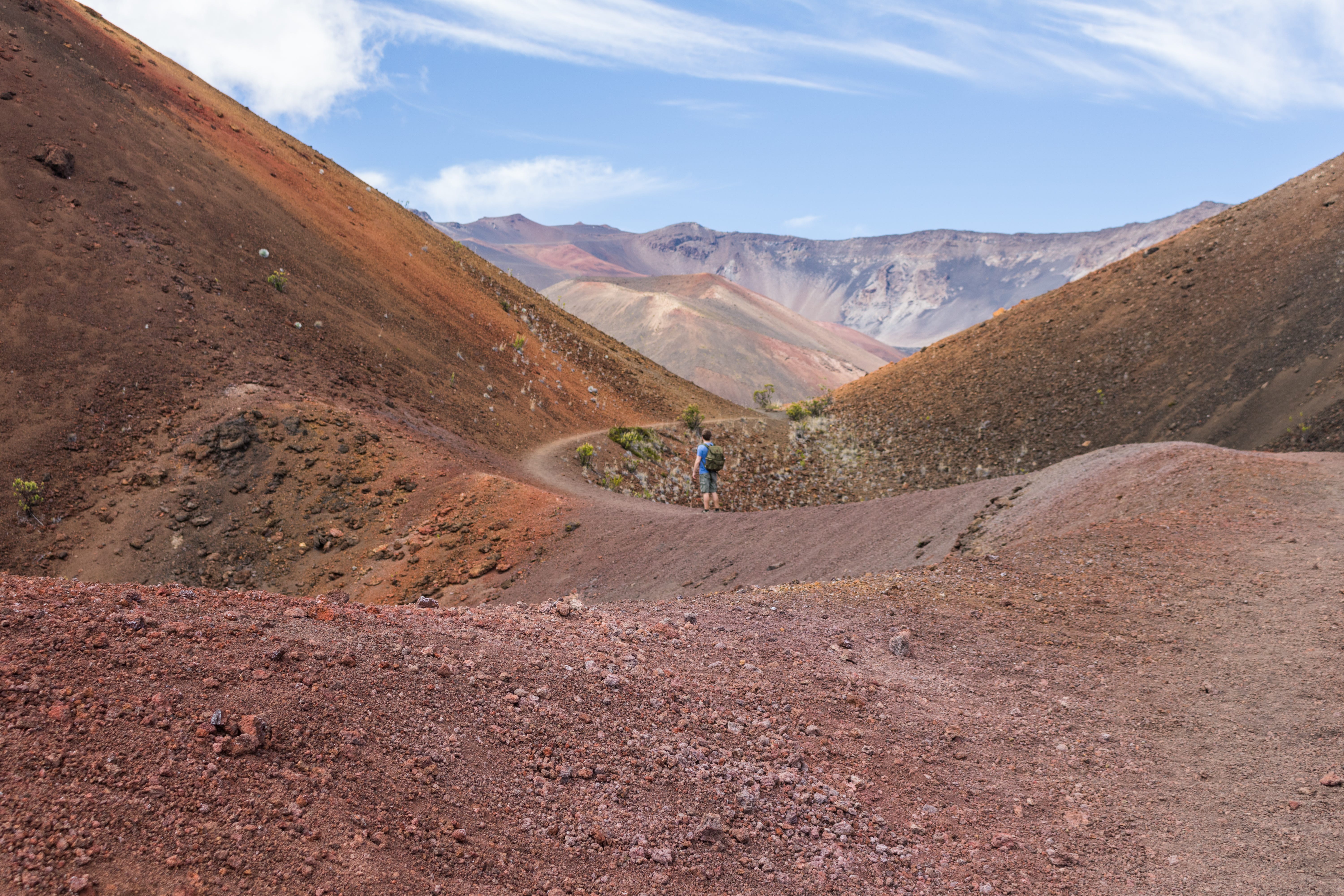
In April, the Republicans in Congress used the Congressional Review Act to undo a mining ban in the headwaters of the Minnesota’s Boundary Waters Canoe Area Wilderness, the most popular and most visited wilderness in the entire country.
Fortunately and thankfully, just yesterday, Democratic Minnesota Governor Tim Waltz took executive action to protect that wilderness in the future. (It’s not guaranteed yet, though.)
Also yesterday, the U.S. Forest Service announced it’d filed a proposal to rescind the widely popular Roadless Rule, which protects wilderness-like landscapes in our national forests.
In the past couple of weeks, Customs and Border Protection contractors have been plowing roads through the wildest corners of Big Bend National Park, places that the National Park Service itself has identified for potential Wilderness designation.
And as you read this, the Trump administration is actively reviewing wilderness and wildland-related policies, which could affect up to 200 million acres of public lands.
In this context, Stegner’s argument powerful —that wilderness is valuable even for people who will never visit it—is arguably more relevant now than when he penned it.
You don’t need to go fishing in the Boundary Waters to want to protect clean water. You don’t need to go hunting in roadless backcountry to care about wildlife habitat. You don’t need to go kayaking in Big Bend to advocate for unspoiled landscapes.
Without wilderness, Stegner wrote, “never again can we have the chance to see ourselves single, separate, vertical and individual in the world, part of the environment of trees and rocks and soil, brother to the other animals, part of the natural world and competent to belong in it.”
“Without any remaining wilderness we are committed wholly, without chance for even momentary reflection and rest, to a headlong drive into our technological termite-life, the Brave New World of a completely man-controlled environment.”
The Wilderness Act of 1964, passed four years after Stegner’s letter and heavily influenced by it, codified many of the principles he articulated.
In the letter’s often-cited closing passage, Stegner re-emphasized how wilderness fulfills a basic human need:
“We simply need that wild country available to us, even if we never do more than drive to its edge and look in. For it can be a means of reassuring ourselves of our sanity as creatures, a part of the geography of hope.” - Wallace Stegner’s closing passage in his Wilderness Letter (December 3, 1960)
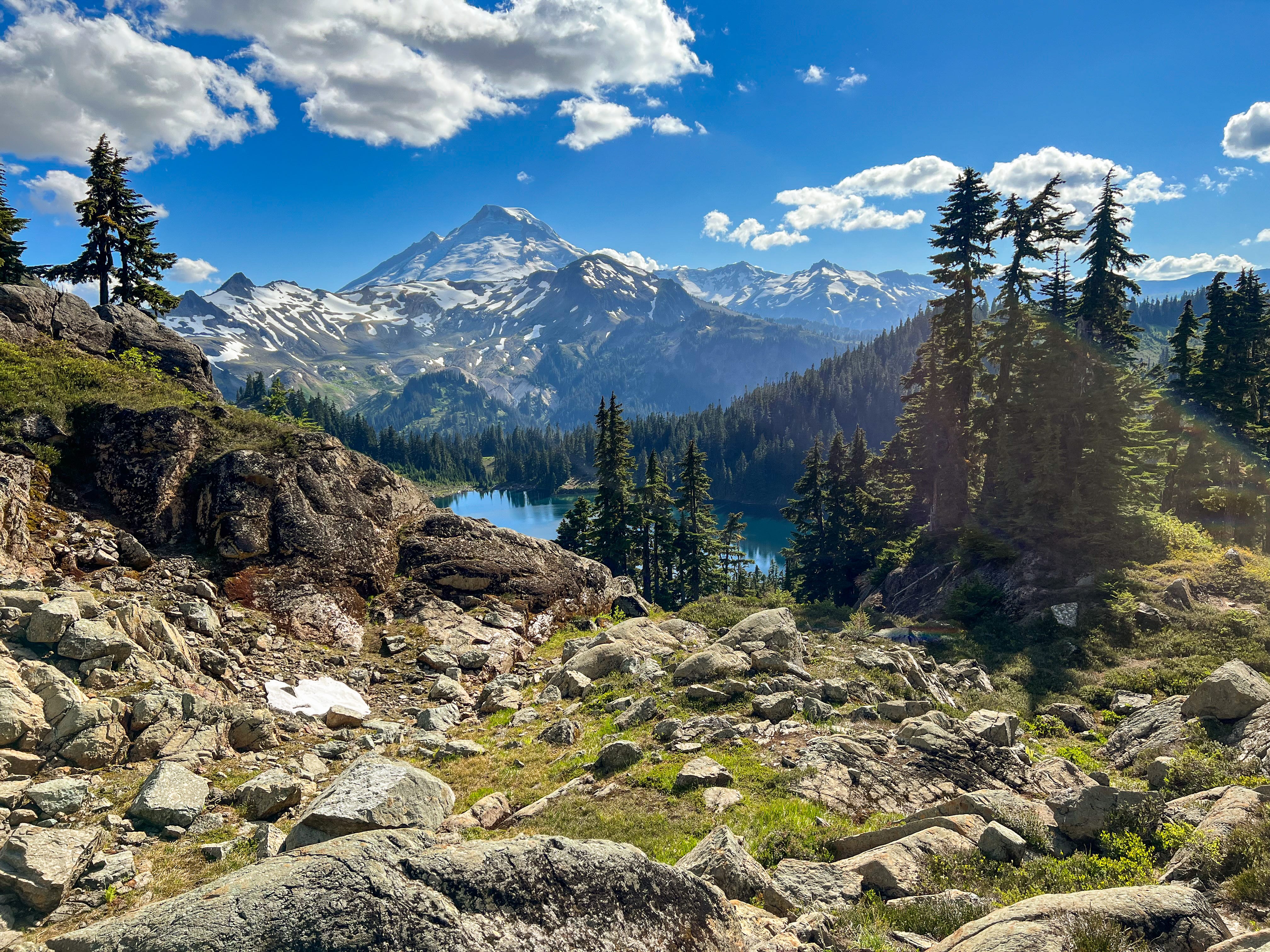
I have included Wallace Stegner’s Wilderness Letter in full below. At about 2,500 words, it’s a pretty long write-up, but it’s absolutely worth reading in its entirety. I want you to read it, wait a few hours or sleep on it, and read it again—and then again to really let each word and sentence sink in.
For me personally, and without exaggeration, it’s been a life-changing letter.
While the original letter contains rather long and somewhat complicated passages, I have taken the liberty to split some of them up into separate paragraphs for readability purposes.
May it—a legendary “comment letter” advocating for public lands in the 1960s—serve as an inspiration for you to (continue to) advocate for our public lands and waters in the future.
Los Altos, California
December 3, 1960
David E. Pesonen
Wildland Research Center
Agricultural Experiment Station
243 Mulford Hall
University of California
Berkeley 4, Calif.
Dear Mr. Pesonen:
I believe that you are working on the wilderness portion of the Outdoor Recreation Resources Review Commission’s report. If I may, I should like to urge some arguments for wilderness preservation that involve recreation, as it is ordinarily conceived, hardly at all.
Hunting, fishing, hiking, mountain-climbing, camping, photography, and the enjoyment of natural scenery will all, surely, figure in your report. So will the wilderness as a genetic reserve, a scientific yardstick by which we may measure the world in its natural balance against the world in its man-made imbalance.
What I want to speak for is not so much the wilderness uses, valuable as those are, but the wilderness idea, which is a resource in itself. Being an intangible and spiritual resource, it will seem mystical to the practical minded—but then anything that cannot be moved by a bulldozer is likely to seem mystical to them.
I want to speak for the wilderness idea as something that has helped form our character and that has certainly shaped our history as a people. It has no more to do with recreation than churches have to do with recreation, or than the strenuousness and optimism and expansiveness of what the historians call the “American Dream” have to do with recreation. Nevertheless, since it is only in this recreation survey that the values of wilderness are being compiled, I hope you will permit me to insert this idea between the leaves, as it were, of the recreation report.
Something will have gone out of us as a people if we ever let the remaining wilderness be destroyed; if we permit the last virgin forests to be turned into comic books and plastic cigarette cases; if we drive the few remaining members of the wild species into zoos or to extinction; if we pollute the last clear air and dirty the last clean streams and push our paved roads through the last of the silence, so that never again will Americans be free in their own country from the noise, the exhausts, the stinks of human and automotive waste. And so that never again can we have the chance to see ourselves single, separate, vertical and individual in the world, part of the environment of trees and rocks and soil, brother to the other animals, part of the natural world and competent to belong in it.
Without any remaining wilderness we are committed wholly, without chance for even momentary reflection and rest, to a headlong drive into our technological termite-life, the Brave New World of a completely man-controlled environment.
We need wilderness preserved—as much of it as is still left, and as many kinds—because it was the challenge against which our character as a people was formed. The reminder and the reassurance that it is still there is good for our spiritual health even if we never once in ten years set foot in it. It is good for us when we are young, because of the incomparable sanity it can bring briefly, as vacation and rest, into our insane lives. It is important to us when we are old simply because it is there—important, that is, simply as an idea.
We are a wild species, as Darwin pointed out. Nobody ever tamed or domesticated or scientifically bred us. But for at least three millennia we have been engaged in a cumulative and ambitious race to modify and gain control of our environment, and in the process we have come close to domesticating ourselves.
Not many people are likely, any more, to look upon what we call “progress” as an unmixed blessing. Just as surely as it has brought us increased comfort and more material goods, it has brought us spiritual losses, and it threatens now to become the Frankenstein that will destroy us.
One means of sanity is to retain a hold on the natural world, to remain, insofar as we can, good animals. Americans still have that chance, more than many peoples; for while we were demonstrating ourselves the most efficient and ruthless environment-busters in history, and slashing and burning and cutting our way through a wilderness continent, the wilderness was working on us. It remains in us as surely as Indian names remain on the land. If the abstract dream of human liberty and human dignity became, in America, something more than an abstract dream, mark it down at least partially to the fact that we were in subdued ways subdued by what we conquered.
The Connecticut Yankee, sending likely candidates from King Arthur’s unjust kingdom to his Man Factory for rehabilitation, was over-optimistic, as he later admitted. These things cannot be forced, they have to grow. To make such a man, such a democrat, such a believer in human individual dignity, as Mark Twain himself, the frontier was necessary, Hannibal and the Mississippi and Virginia City, and reaching out from those the wilderness; the wilderness as opportunity and idea, the thing that has helped to make an American different from and, until we forget it in the roar of our industrial cities, more fortunate than other men. For an American, insofar as he is new and different at all, is a civilized man who has renewed himself in the wild.
The American experience has been the confrontation by old peoples and cultures of a world as new as if it had just risen from the sea. That gave us our hope and our excitement, and the hope and excitement can be passed on to newer Americans, Americans who never saw any phase of the frontier. But only so long as we keep the remainder of our wild as a reserve and a promise—a sort of wilderness bank.
As a novelist, I may perhaps be forgiven for taking literature as a reflection, indirect but profoundly true, of our national consciousness. And our literature, as perhaps you are aware, is sick, embittered, losing its mind, losing its faith. Our novelists are the declared enemies of their society. There has hardly been a serious or important novel in this century that did not repudiate in part or in whole American technological culture for its commercialism, its vulgarity, and the way in which it has dirtied a clean continent and a clean dream.
I do not expect that the preservation of our remaining wilderness is going to cure this condition. But the mere example that we can as a nation apply some other criteria than commercial and exploitative considerations would be heartening to many Americans, novelists or otherwise. We need to demonstrate our acceptance of the natural world, including ourselves; we need the spiritual refreshment that being natural can produce. And one of the best places for us to get that is in the wilderness where the fun houses, the bulldozers, and the pavement of our civilization are shut out.
Sherwood Anderson, in a letter to Waldo Frank in the 1920s, said it better than I can. “Is it not likely that when the country was new and men were often alone in the fields and the forest they got a sense of bigness outside themselves that has now in some way been lost…. Mystery whispered in the grass, played in the branches of trees overhead, was caught up and blown across the American line in clouds of dust at evening on the prairies…. I am old enough to remember tales that strengthen my belief in a deep semi-religious influence that was formerly at work among our people. The flavor of it hangs over the best work of Mark Twain…. I can remember old fellows in my home town speaking feelingly of an evening spent on the big empty plains. It had taken the shrillness out of them. They had learned the trick of quiet….”
We could learn it too, even yet; even our children and grandchildren could learn it. But only if we save, for just such absolutely non-recreational, impractical, and mystical uses as this, all the wild that still remains to us.
It seems to me significant that the distinct downturn in our literature from hope to bitterness took place almost at the precise time when the frontier officially came to an end, in 1890, and when the American way of life had begun to turn strongly urban and industrial.
The more urban it has become, and the more frantic with technological change, the sicker and more embittered our literature, and I believe our people, have become. For myself, I grew up on the empty plains of Saskatchewan and Montana and in the mountains of Utah, and I put a very high valuation on what those places gave me. And if I had not been able to periodically to renew myself in the mountains and deserts of western America I would be very nearly bughouse.
Even when I can’t get to the back country, the thought of the colored deserts of southern Utah, or the reassurance that there are still stretches of prairies where the world can be instantaneously perceived as disk and bowl, and where the little but intensely important human being is exposed to the five directions of the thirty-six winds, is a positive consolation. The idea alone can sustain me. But as the wilderness areas are progressively exploited or “improve”, as the jeeps and bulldozers of uranium prospectors scar up the deserts and the roads are cut into the alpine timberlands, and as the remnants of the unspoiled and natural world are progressively eroded, every such loss is a little death in me. In us.
I am not moved by the argument that those wilderness areas which have already been exposed to grazing or mining are already deflowered, and so might as well be “harvested”. For mining I cannot say much good except that its operations are generally short-lived. The extractable wealth is taken and the shafts, the tailings, and the ruins left, and in a dry country such as the American West the wounds men make in the earth do not quickly heal. Still, they are only wounds; they aren’t absolutely mortal. Better a wounded wilderness than none at all.
And as for grazing, if it is strictly controlled so that it does not destroy the ground cover, damage the ecology, or compete with the wildlife it is in itself nothing that need conflict with the wilderness feeling or the validity of the wilderness experience. I have known enough range cattle to recognize them as wild animals; and the people who herd them have, in the wilderness context, the dignity of rareness; they belong on the frontier, moreover, and have a look of rightness. The invasion they make on the virgin country is a sort of invasion that is as old as Neolithic man, and they can, in moderation, even emphasize a man’s feeling of belonging to the natural world. Under surveillance, they can belong; under control, they need not deface or mar. I do not believe that in wilderness areas where grazing has never been permitted, it should be permitted; but I do not believe either that an otherwise untouched wilderness should be eliminated from the preservation plan because of limited existing uses such as grazing which are in consonance with the frontier condition and image.
Let me say something on the subject of the kinds of wilderness worth preserving. Most of those areas contemplated are in the national forests and in high mountain country. For all the usual recreational purposes, the alpine and the forest wildernesses are obviously the most important, both as genetic banks and as beauty spots. But for the spiritual renewal, the recognition of identity, the birth of awe, other kinds will serve every bit as well. Perhaps, because they are less friendly to life, more abstractly nonhuman, they will serve even better.
On our Saskatchewan prairie, the nearest neighbor was four miles away, and at night we saw only two lights on all the dark rounding earth. The earth was full of animal—field mice, ground squirrels, weasels, ferrets, badgers, coyotes, burrowing owls, snakes. I knew them as my little brothers, as fellow creatures, and I have never been able to look upon animals in any other way since. The sky in that country came clear down to the ground on every side, and it was full of great weathers, and clouds, and winds, and hawks. I hope I learned something from looking a long way, from looking up, from being much alone. A prairie like that, one big enough to carry the eye clear to the sinking, rounding horizon, can be as lonely and grand and simple in its forms as the sea. It is as good a place as any for the wilderness experience to happen; the vanishing prairie is as worth preserving for the wilderness idea as the alpine forest.
So are great reaches of our western deserts, scarred somewhat by prospectors but otherwise open, beautiful, waiting, close to whatever God you want to see in them. Just as a sample, let me suggest the Robbers’ Roost country in Wayne County, Utah, near the Capitol Reef National Monument. In that desert climate the dozer and jeep tracks will not soon melt back into the earth, but the country has a way of making the scars insignificant. It is a lovely and terrible wilderness, such as wilderness as Christ and the prophets went out into; harshly and beautifully colored, broken and worn until its bones are exposed, its great sky without a smudge of taint from Technocracy, and in hidden corners and pockets under its cliffs the sudden poetry of springs.
Save a piece of country like that intact, and it does not matter in the slightest that only a few people every year will go into it. That is precisely its value. Roads would be a desecration, crowds would ruin it. But those who haven’t the strength or youth to go into it and live can simply sit and look.
They can look two hundred miles, clear into Colorado: and looking down over the cliffs and canyons of the San Rafael Swell and the Robbers’ Roost they can also look as deeply into themselves as anywhere I know. And if they can’t even get to the places on the Aquarius Plateau where the present roads will carry them, they can simply contemplate the idea, take pleasure in the fact that such a timeless and uncontrolled part of earth is still there.
These are some of the things wilderness can do for us. That is the reason we need to put into effect, for its preservation, some other principle than the principles of exploitation or “usefulness” or even recreation. We simply need that wild country available to us, even if we never do more than drive to its edge and look in. For it can be a means of reassuring ourselves of our sanity as creatures, a part of the geography of hope.
Very sincerely yours,
Wallace Stegner
If you’d like to support independent public lands and conservation writing, please consider becoming a paid subscriber today. My work is made possible exclusively by paid subscribers.
Thanks for reading!
See you on our public lands and waters,
Bram
Comments
Nothing yet. Say the first thing.
Sign in to join the conversation.