
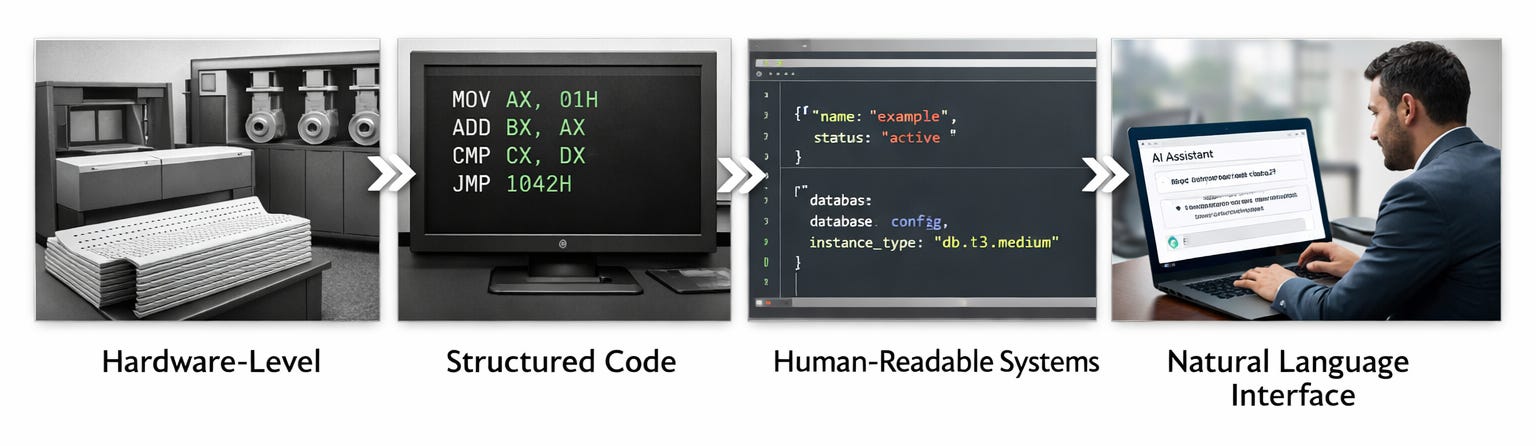
The current skills reset is part of a much longer story about how humans and machines evolve together.
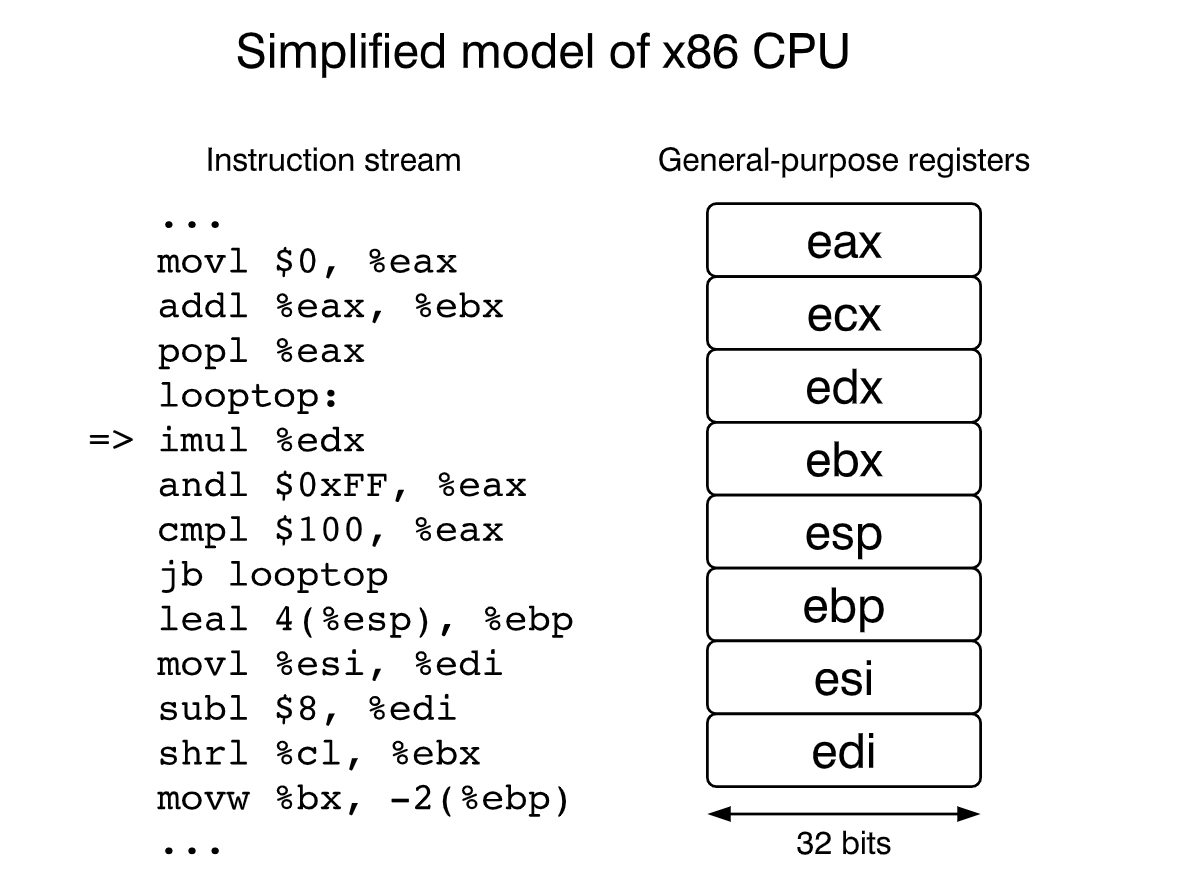
Early computing required humans to think like hardware. We programmed with punch cards and assembly registries, working at the level of machine instructions.

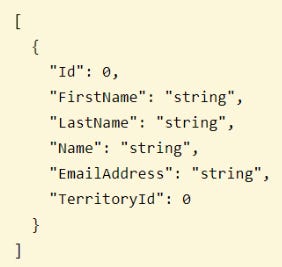
Over time, programming languages became more human-readable. Formats like JSON and YAML reduced cognitive friction. Today, natural language increasingly serves as the interface.

And with each wave, what we define as a valuable skill also shifts. Writing code remains important, but the frontier has moved toward orchestrating systems, understanding model behavior, evaluating outputs, and designing workflows where humans and AI collaborate effectively.
AI literacy now includes knowing how systems are trained, where they fail, and how they scale. Precision in directing machines is becoming an in-demand core competency.
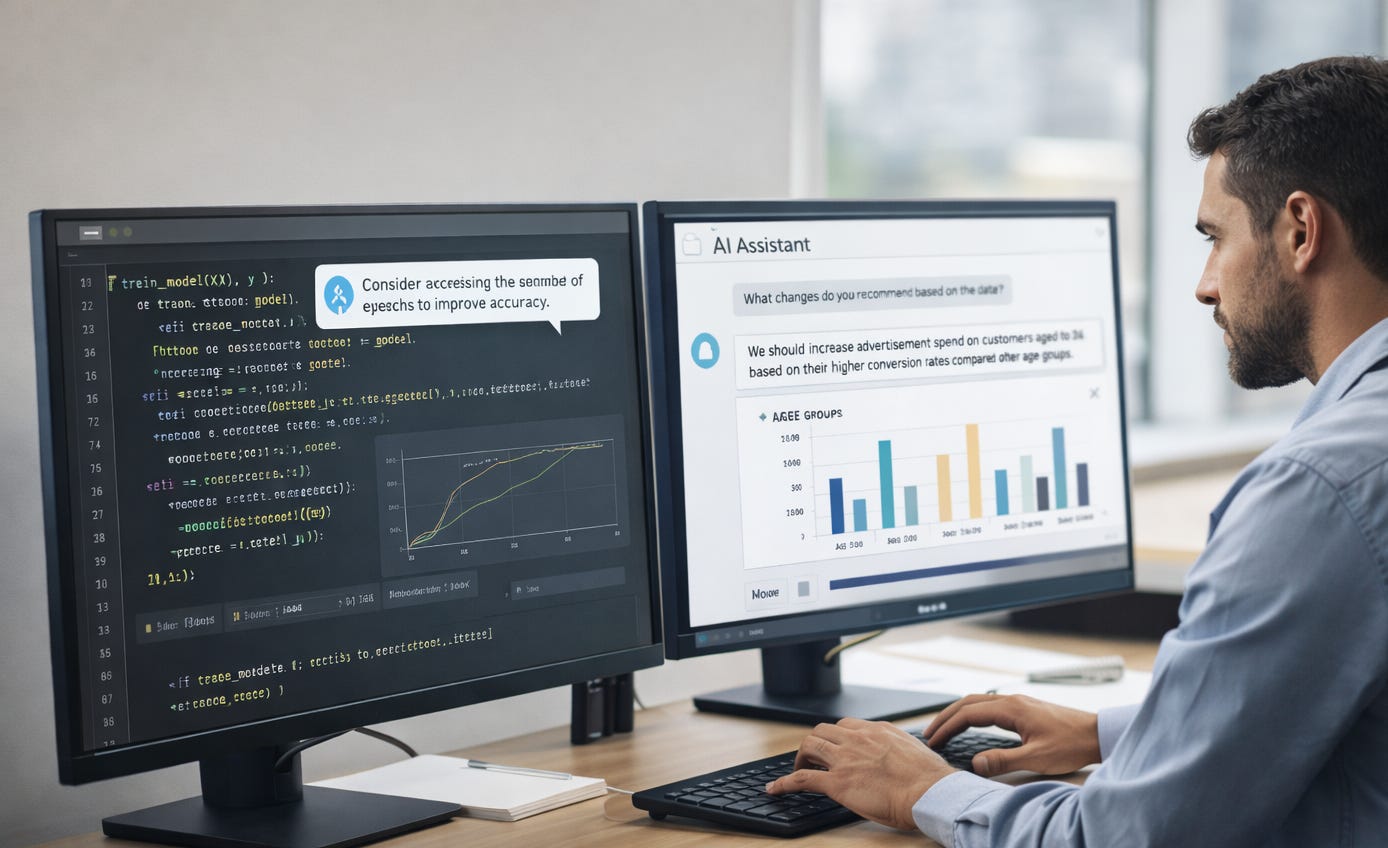
We’re seeing the rise of AI-native learning environments. Adaptive genAI systems provide real-time feedback, enable rapid experimentation, and personalize instruction at scale. Learning is becoming interactive and iterative.
Even amid enormous commitments by organizations and teams to experiment with and operationalize AI, establishing foundational knowledge remains essential.
Professionals who understand neural networks, machine learning principles, and data architecture are better equipped to question results, manage risk, and ultimately “implement AI” and deliver on set success metrics.
Credentialing, which has long been a stronghold in many engineering disciplines, must also evolve with the needs of employers and their hiring. Degrees and certifications still benchmark baseline competence, but proof of capability increasingly requires demonstrated execution in AI-augmented contexts.
Employers are looking for evidence that individuals can apply tools, reason through constraints, and translate technical insight into business value. A line item on a resume and a solid answer in an interview aren’t enough anymore.
When hiring engineers in the past, we used to require small take-home coding assignments, but with AI tools nowadays, anyone (or any AI tool) can write good code. Instead, we now need to understand how engineers think, probing into their process for writing and iterating on code. (This requires a follow-up, in-person interview with senior engineer to thoroughly vet someone’s capabilities.)
The standard is shifting from one-time qualification to observable performance.
Concerns about economic displacement are not new. In the late 1990s, books like The Age of Spiritual Machines projected a world where automation would dominate by 2020.
AI has transformed many workflows, but history suggests technological waves reconfigure labor rather than eliminate it. Agriculture adopted robotics. Manufacturing automated production lines. Cloud computing reshaped IT operations. Each transition created new roles requiring oversight, integration, and higher-order thinking.
Economic mobility will favor individuals who stay aligned with technological change. That alignment requires both technical fluency and enduring human capabilities: systems thinking, ethical judgment, communication, and adaptability. As machines assume more responsibility for execution, human value concentrates in framing problems, validating outputs, and integrating technology into complex organizational systems.
Those who understand how to collaborate with AI, evaluate its limits, and continuously adapt will define the next phase of economic advantage.
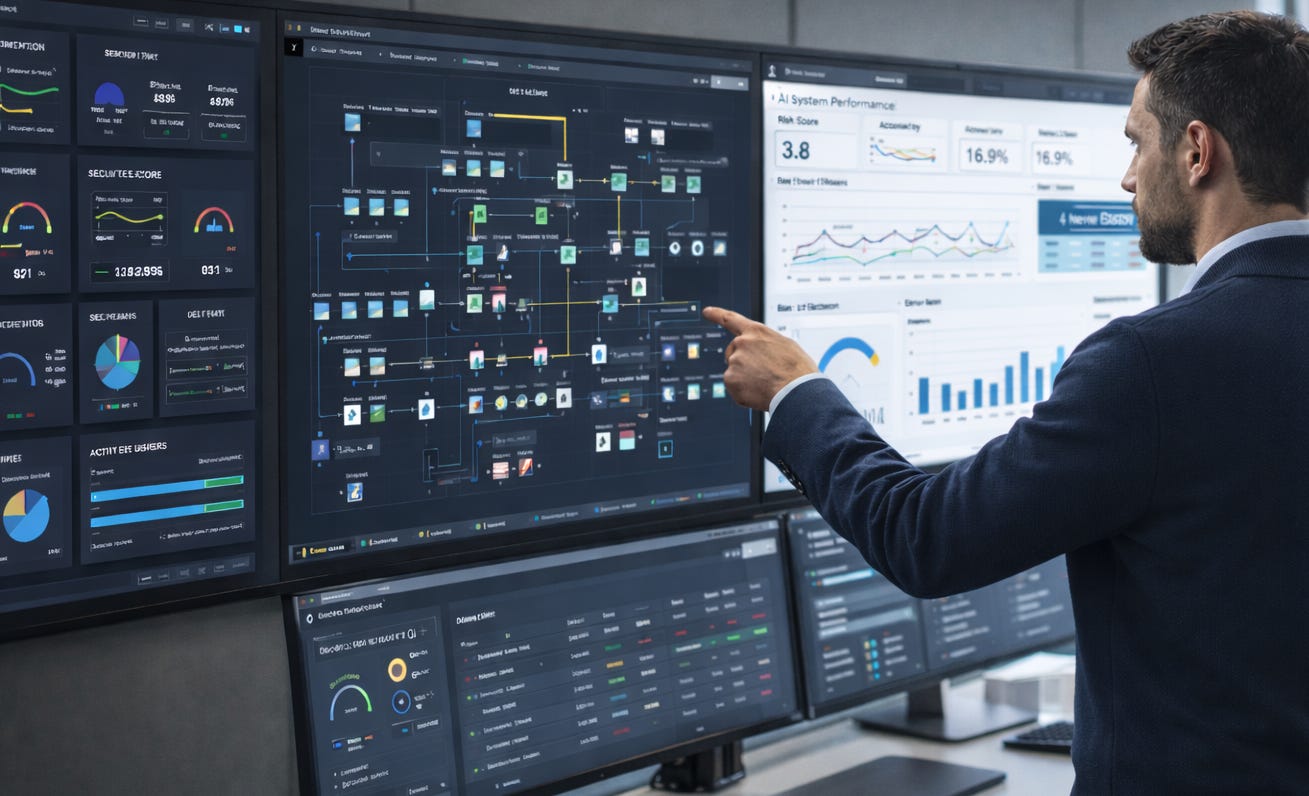
Many counterarguments suggest that AI will replace sweeping numbers of people and permanently eliminate entire categories of work. I agree that these concerns deserve serious examination. Certain roles will contract with technological disruption, but if history is any example, the hype is just that—hype.
Rather, the open question is how will we effectively reallocate human effort toward higher, AI-leveraged work? I welcome your perspective. The direction we choose will shape education, credentialing, and opportunity for this and the next generation.
Thanks for reading Cloud9 in Production! This post is public so feel free to share it.
Comments
Nothing yet. Say the first thing.
Sign in to join the conversation.