
Pakistan can already process more crude than it currently does. The real problem is that its ageing refineries continue producing a fuel mix the country no longer needs.
Pakistan has finally moved forward with a reform its refining industry has been waiting years to see. On July 28, 2026, the Cabinet Committee on Energy approved amendments to the Brownfield Refining Policy, creating a framework that could unlock close to $6 billion in upgrades across Pakistan’s five existing oil refineries.
The figure makes it sound like Pakistan is about to embark on a massive refinery-building programme. It is not. The policy is primarily intended to modernise plants that already exist. More importantly, it is not simply about increasing how much crude Pakistan can process. It is about changing what comes out of that crude.
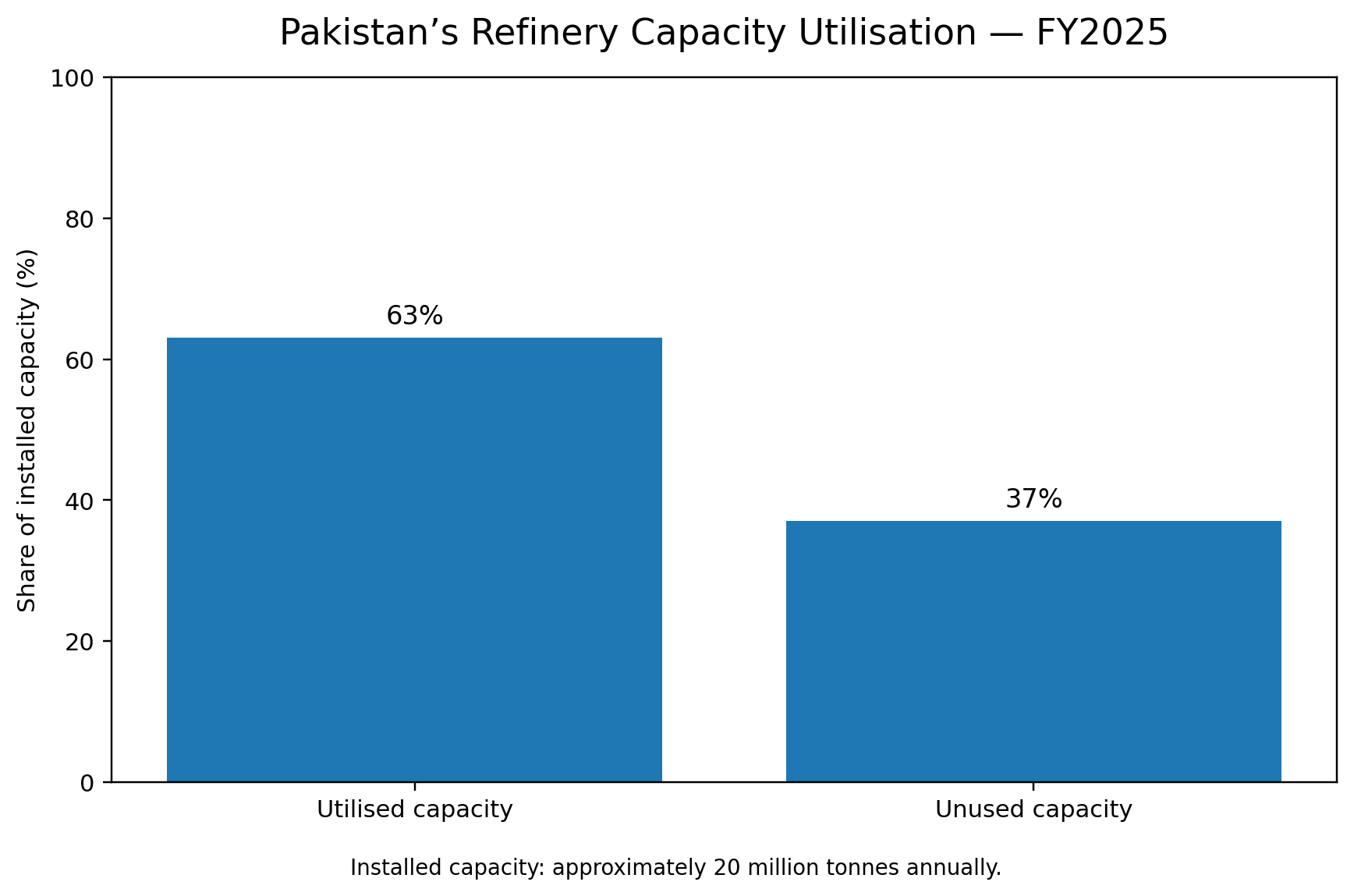
Pakistan’s refinery problem is often presented as a straightforward shortage of processing capacity. The country imports petrol and high-speed diesel, so it seems logical to conclude that local refineries are simply too small. On paper, however, Pakistan’s five major refineries already have an installed capacity of approximately 20 million tonnes a year, equivalent to around 450,000 barrels per day.
Yet average utilisation remained close to 63 percent in FY2025. Pakistan therefore has refinery equipment sitting partially idle while the country continues importing finished petroleum products. The contradiction exists because the industry is not merely short of capacity. Its technology produces a fuel mix that is increasingly disconnected from the needs of the economy.
Most of Pakistan’s refining system is based on ageing hydroskimming technology. A hydroskimming refinery can separate crude oil into petrol, diesel, kerosene, jet fuel and furnace oil, while carrying out basic treatment to improve quality. What it cannot do efficiently is break down the heaviest parts of the crude barrel and convert them into lighter, more valuable transport fuels.
The result is a relatively high production of furnace oil and a lower yield of petrol and diesel than a modern refinery could achieve.
For many years, that configuration was not a serious problem. Beginning in the 1990s, particularly after the 1994 power policy encouraged private investment in thermal electricity generation, Pakistan developed a large market for furnace oil. Independent power producers and other thermal plants consumed enormous quantities of it, giving refineries a dependable customer for the heavy residue left after processing crude.
Furnace oil was not an unwanted by-product. It was one of the foundations of Pakistan’s electricity system. Refineries could run their plants, sell their lighter products to the transport sector and dispose of the heavier part of the barrel through the power sector.
Then Pakistan’s energy mix changed.
The country gradually added imported LNG, coal-fired generation, nuclear power, hydropower and renewable energy. At the same time, policymakers reduced the use of expensive furnace oil in electricity production. Demand from power plants collapsed, but the physical configuration of Pakistan’s refineries largely remained unchanged.
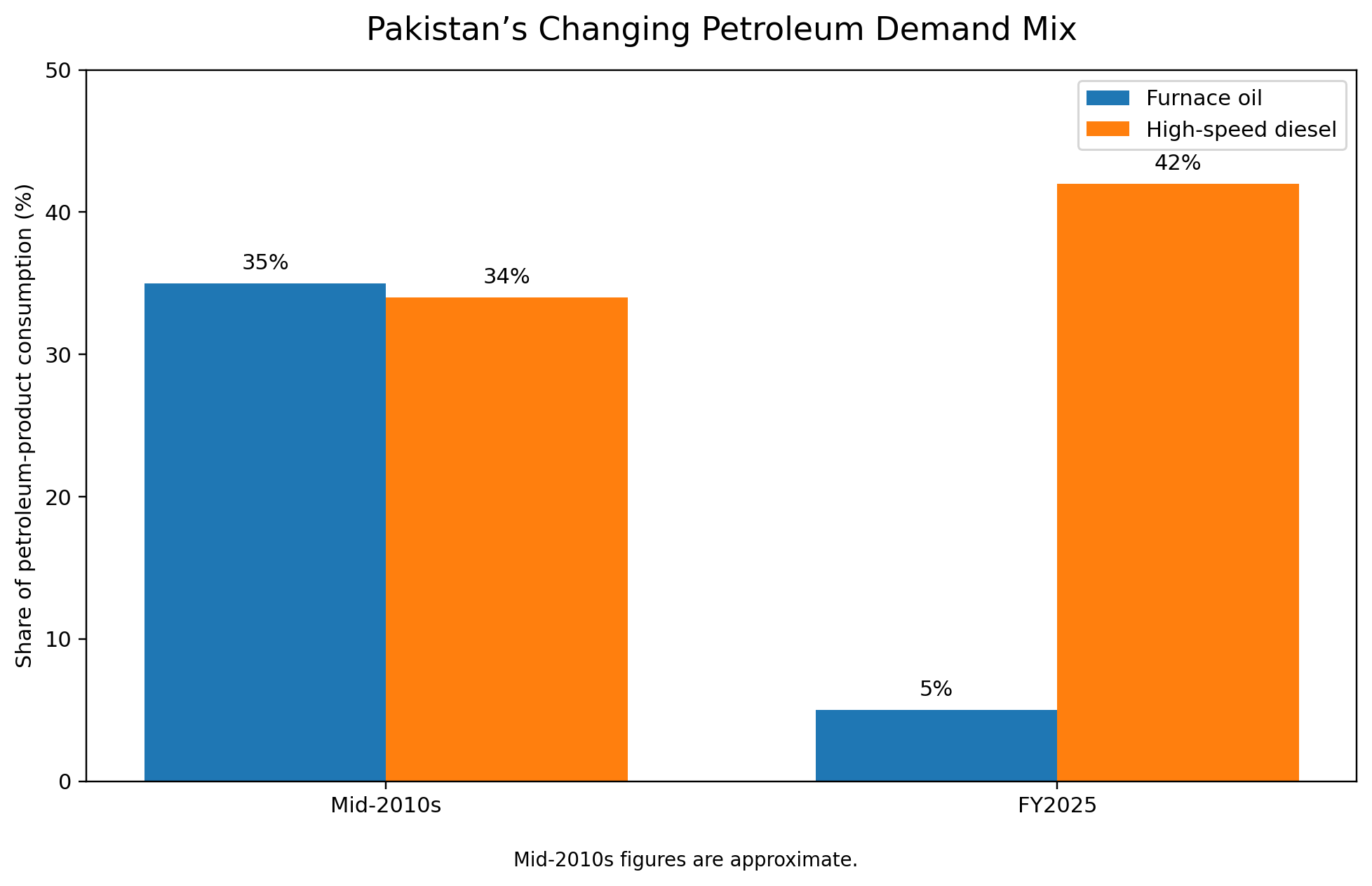
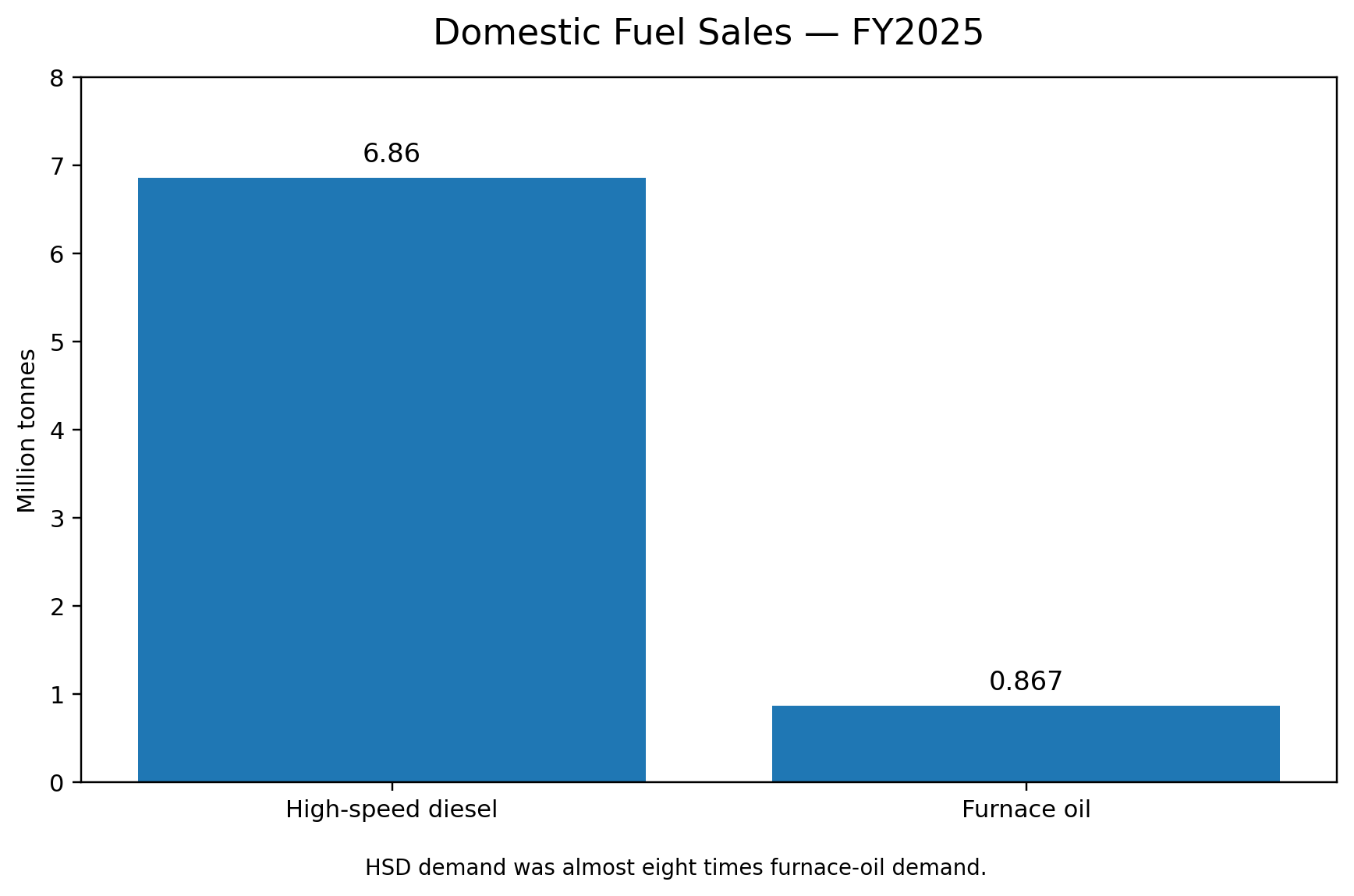
Around the middle of the last decade, furnace oil accounted for roughly one-third of Pakistan’s petroleum-product consumption and was comparable in size to high-speed diesel. By FY2025, domestic furnace-oil sales had fallen to approximately 867,000 tonnes, representing only slightly more than 5 percent of total petroleum-product volumes.
High-speed diesel moved in the opposite direction. Its sales reached approximately 6.86 million tonnes, accounting for more than 42 percent of the market. Furnace oil went from being one of Pakistan’s dominant petroleum products to a marginal part of consumption, while HSD became the central fuel of transport, agriculture, construction and industrial activity.
Pakistan’s petroleum demand is now driven primarily by movement and economic activity rather than oil-fired electricity generation. Trucks carrying goods across the country run on HSD. Tractors, tube wells and agricultural machinery depend on it. Buses, construction equipment, factories and backup generators also consume diesel, while rising motorcycle and vehicle ownership supports petrol demand.
The economy wants more transport fuels. The refining system continues producing too much of a heavy fuel whose largest customer has largely disappeared.
A hydroskimming refinery cannot simply decide to make less furnace oil and more diesel. Refinery output is determined by the plant’s physical configuration, the type of crude being processed and the conversion units installed. Without modern conversion technology, a significant part of every barrel remains heavy residue.
When furnace-oil demand falls, storage tanks begin filling. Once inventories reach their limits, refineries must reduce crude processing or temporarily shut units. Utilisation falls even while Pakistan is importing petrol and diesel. The country is not short of demand for fuel; its refineries are producing too much of the wrong fuel.
The revised policy is intended to correct this imbalance by supporting deeper conversion and desulphurisation units. These technologies can break down heavier petroleum fractions and turn them into higher-value products such as petrol and HSD. They can also enable refineries to produce cleaner Euro-V-compliant fuels with lower sulphur content.
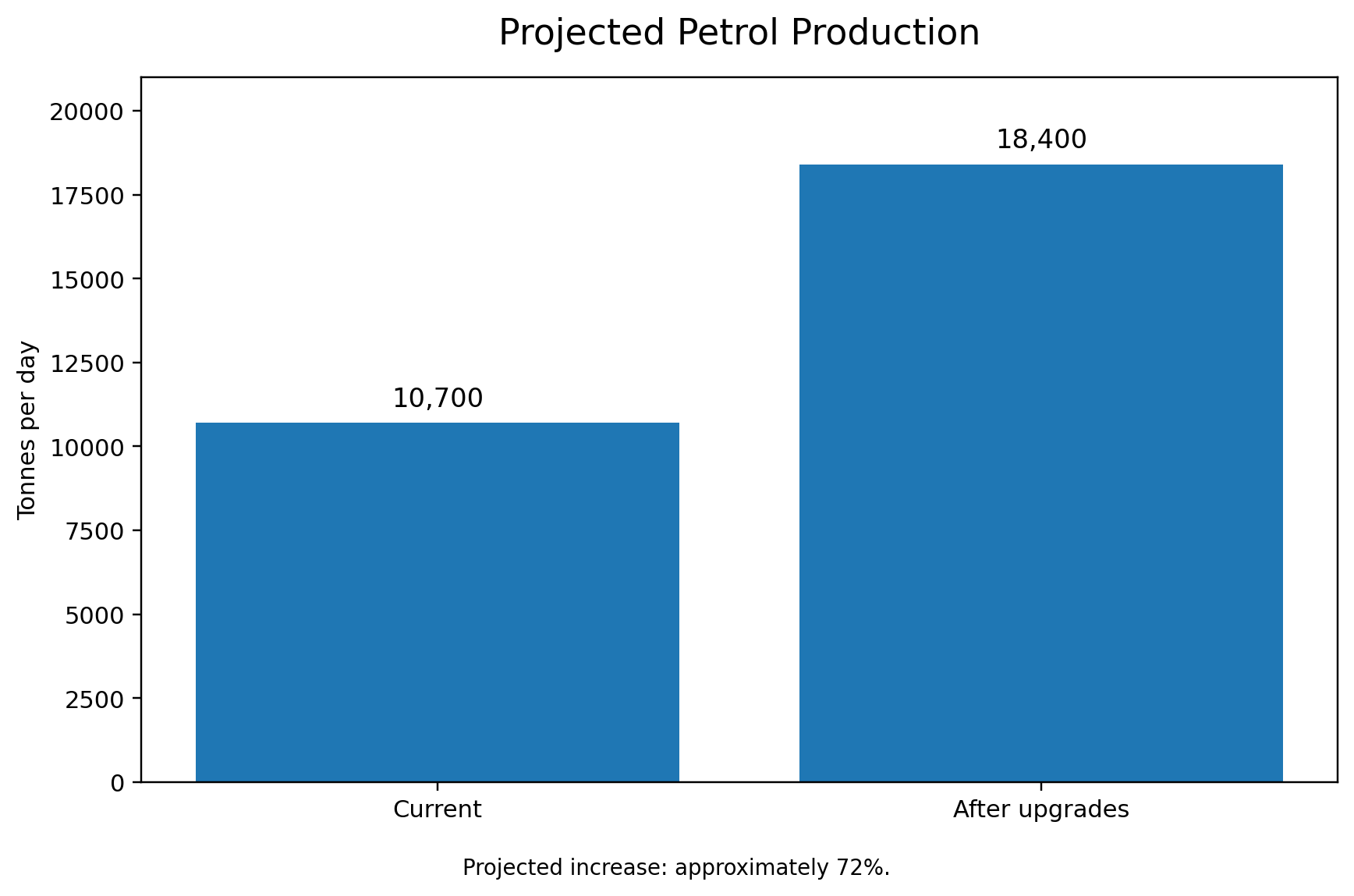
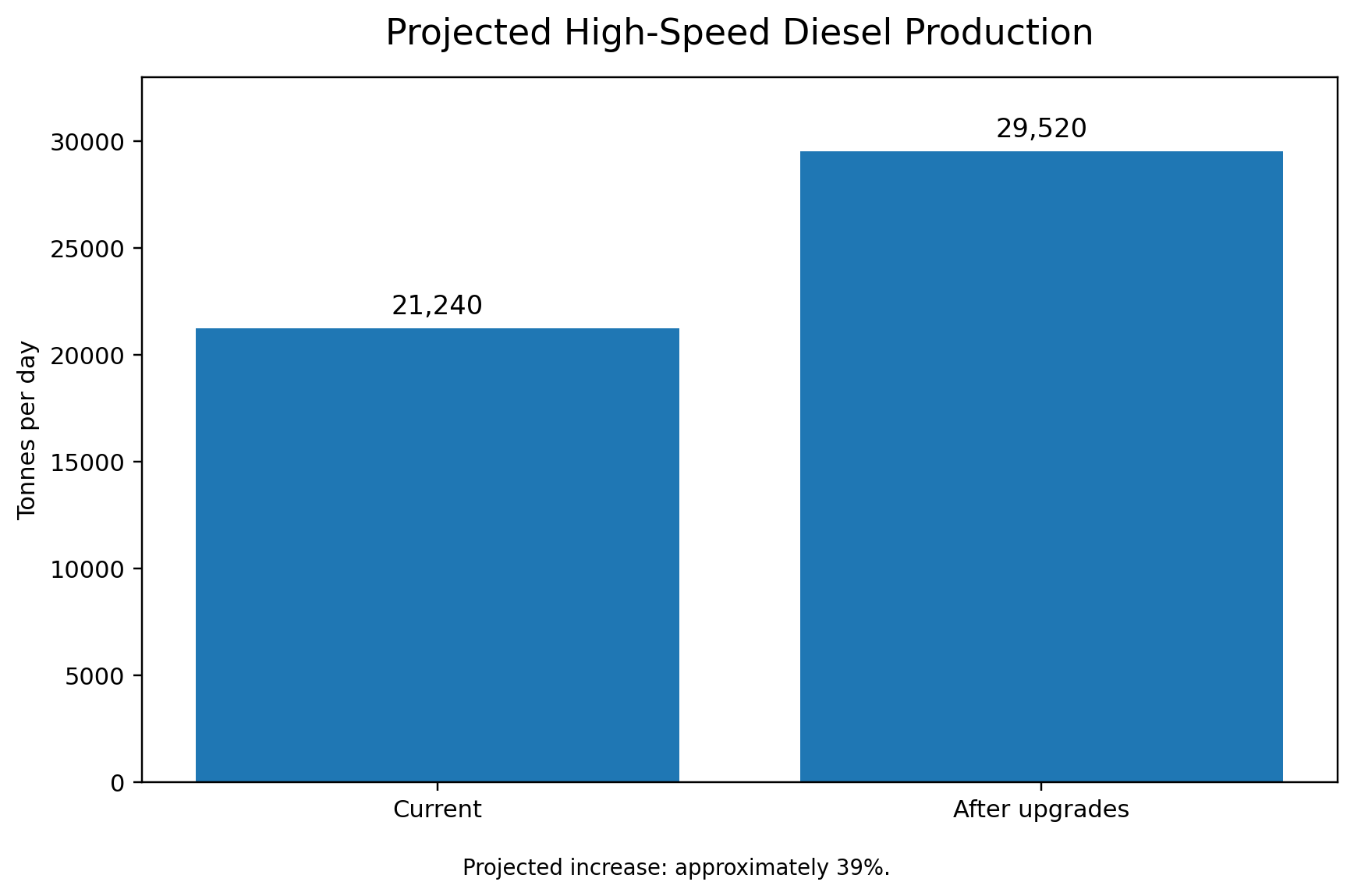
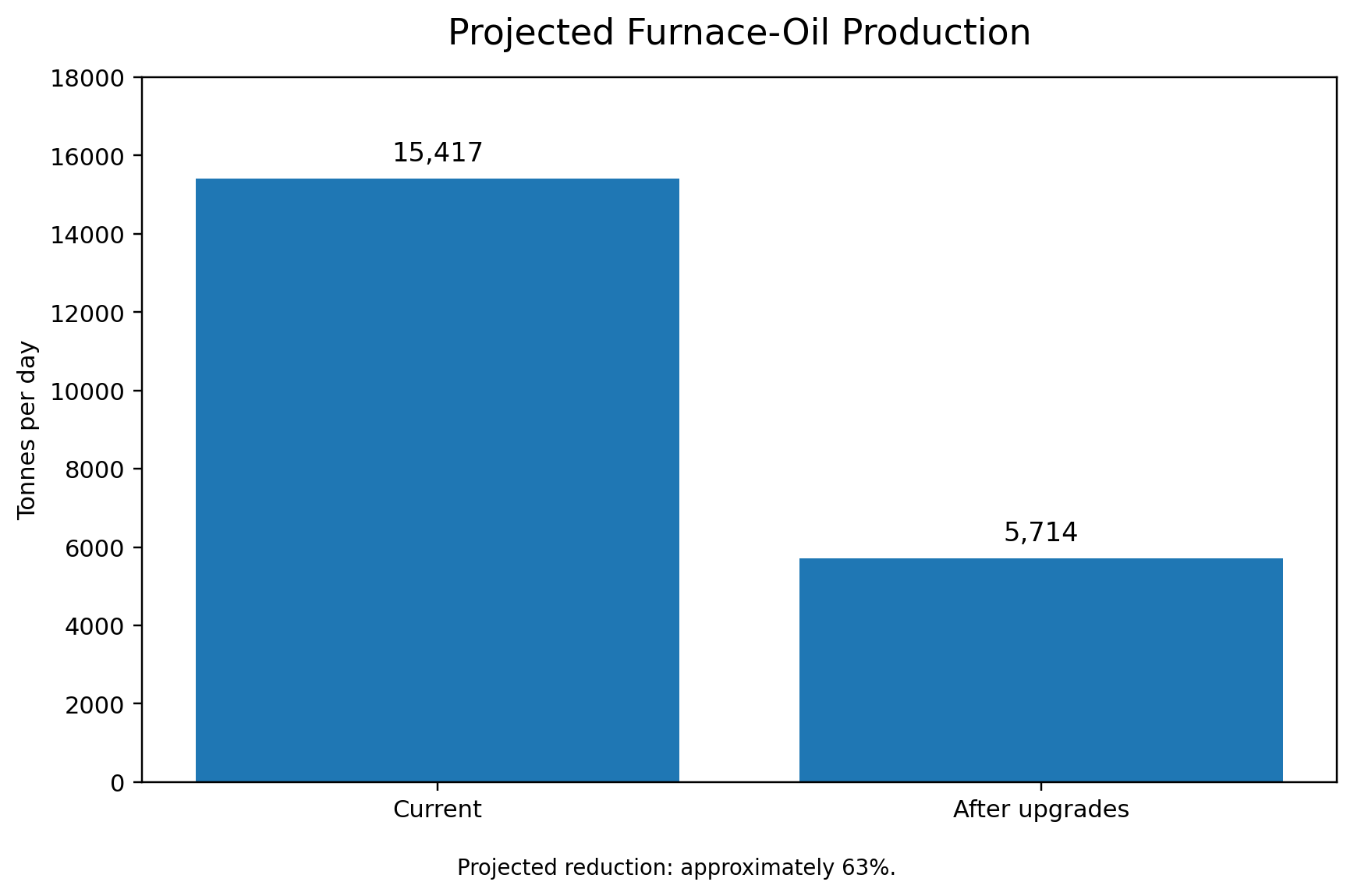
If the upgrades are completed, petrol production is projected to rise by around 72 percent, from approximately 10,700 tonnes per day to 18,400 tonnes. HSD output could increase by about 39 percent, from 21,240 tonnes to 29,520 tonnes per day. Furnace-oil production, meanwhile, could decline by approximately 63 percent, falling from more than 15,000 tonnes per day to around 5,700 tonnes.
These upgrades are unlikely to lead to an immediate reduction in petrol prices. Pakistan will continue to import crude oil, while retail fuel prices will remain influenced by international oil prices, exchange-rate movements, taxes and the petroleum levy.
The more direct benefit of modernisation would be a better match between refinery output and domestic demand. By producing more petrol and high-speed diesel and less furnace oil, refineries could operate more efficiently and help reduce Pakistan’s reliance on imported finished fuels.
The approval of the policy is therefore not the achievement the government should celebrate. Implementation is. Refineries must still sign binding agreements, arrange billions of dollars in financing, complete engineering work and construct technically complex units. Pakistan has produced enough policies, frameworks and investment announcements to fill entire filing cabinets. What it has repeatedly failed to produce is execution.
If these upgrades are completed, they could finally align Pakistan’s refining industry with the economy it is supposed to serve. If they are delayed again, the country will continue protecting obsolete plants, importing the fuels it needs and producing a fuel it no longer wants.
Pakistan’s refinery-upgrade programme now has a clearer policy framework, but its impact will depend on how quickly the planned investments move from approval to execution. Raising utilisation, reducing furnace-oil output and increasing the production of petrol and high-speed diesel could significantly improve the sector’s efficiency and bring domestic refining closer to the country’s actual fuel requirements.
The proposed $6 billion investment therefore represents an important opportunity to modernise Pakistan’s refining system. Successful implementation could help the country make better use of its existing capacity, reduce its dependence on imported finished fuels and gradually align refinery output with the changing structure of domestic energy demand.
No posts
Comments
Nothing yet. Say the first thing.
Sign in to join the conversation.