
There is a real reason fat around your middle behaves differently from fat anywhere else on you. It is not willpower. It is not a character flaw. It is receptor density.
I went looking for this after noticing how many people describe the same frustrating pattern: everything else responds, the middle does not. I assumed it was a myth people tell themselves. It is not. The physiology is genuinely different down there, and once I understood why, a lot of confusing advice suddenly sorted itself into “true” and “sounds true.”
Here is what holds up, what is exaggerated, and the one lever with the strongest evidence that almost nobody puts on these lists.
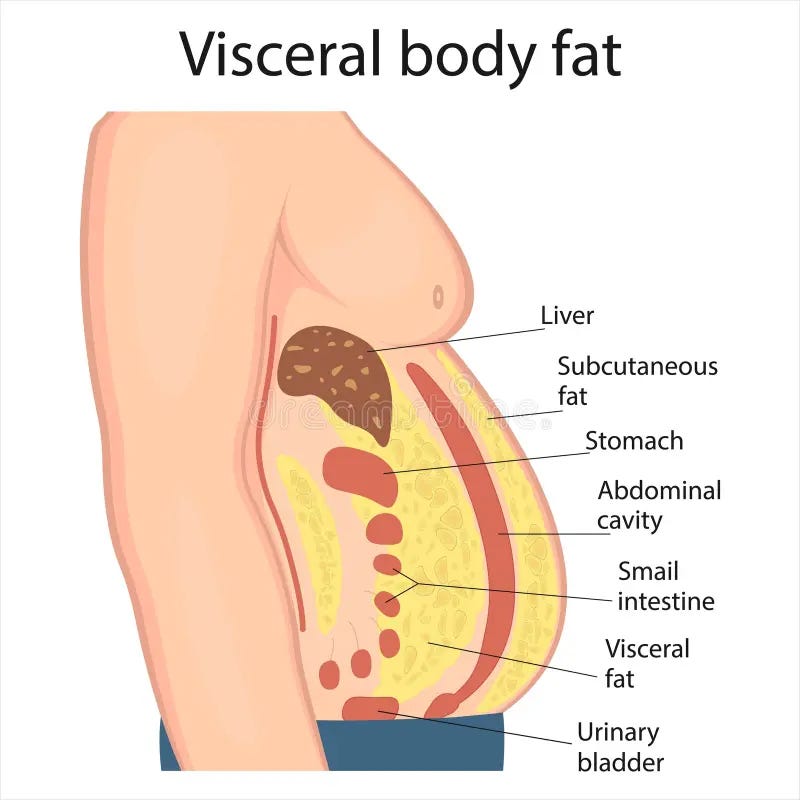
Visceral fat is not stored fat. It is an active organ, and it listens to stress hormones.
Send that to anyone who thinks belly fat is just calories sitting still.
Your abdominal fat is not passive padding. Visceral fat, the deep fat packed around your organs, has more glucocorticoid receptors, more cells per unit of mass, and higher blood flow than the fat under your skin. That means cortisol reaches it faster and acts on it harder (why glucocorticoids affect abdominal fat more than subcutaneous fat).
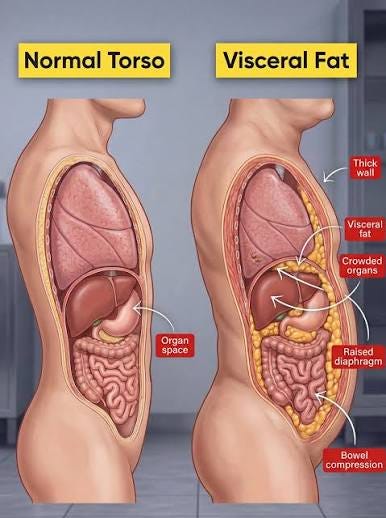
The mechanism is specific. Cortisol binds those receptors and activates lipoprotein lipase, the enzyme that pulls circulating fats into fat cells for storage (the HPA axis, cortisol and abdominal adiposity).
The clearest human evidence is Cushing’s syndrome, where cortisol runs high for medical reasons and fat redistributes to the trunk and face in a recognisable pattern. That is not a theory. That is a clinical picture doctors diagnose by looking.
And it shows up in ordinary life too, not just disease. In a study of more than 1,800 people, those reporting high chronic stress carried roughly 9.4 cm² more visceral fat than low-stress participants (chronic stress burden and visceral adipose tissue).
So the core idea is sound. Stress genuinely puts fat on your middle, through a named receptor and a named enzyme.
Then the same idea gets pushed one step too far, into “belly fat is not really a diet problem.” That one does not survive contact with the evidence.
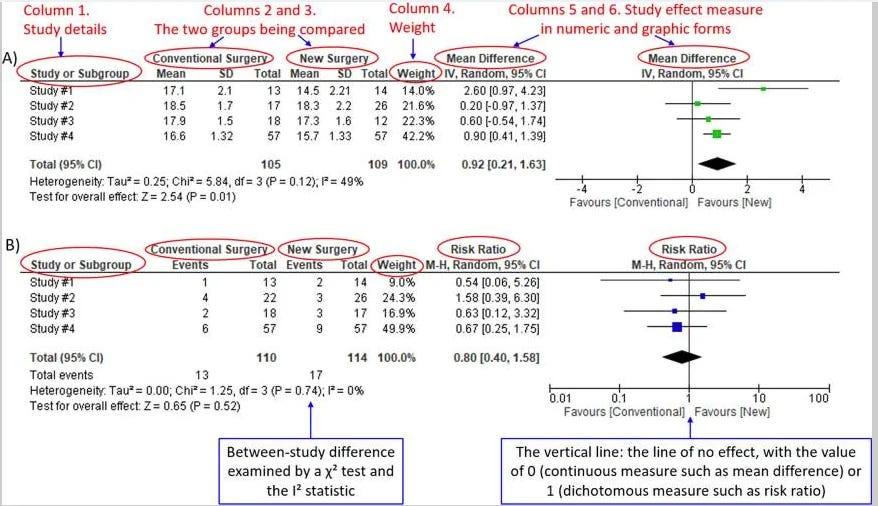
A meta-analysis of 40 randomised controlled trials with 2,190 people compared interventions head to head for reducing visceral fat specifically. Calorie restriction produced the largest effect. Exercise also worked, with a dose-response relationship, meaning more of it did more (exercise and caloric restriction on visceral adiposity, 40 RCTs).
Diet is not the weak lever in this picture. On the current evidence it is the strongest one.
Meanwhile, the honest status of stress work is “promising, not proven.” A mindfulness trial in women with obesity did improve the cortisol awakening response, and those improvements correlated with less abdominal fat. But the intervention did not significantly reduce abdominal fat at the region measured (mindfulness, cortisol and abdominal fat). Encouraging. Not a replacement for the things that clearly work.
This is the pattern I keep running into. A real mechanism gets discovered, and then it gets promoted to the cause, and the things that actually move the needle get demoted to “temporary fixes.” The truthful version is less dramatic and more useful: cortisol is a genuine co-driver. It is not a substitute for what you eat.
That raises a question I cannot answer properly here: what actually goes on the plate? Coach Dylan covers that side of it in You’re not fat. Your gut is starving.. It includes a 2021 Stanford trial where fermented foods raised microbiome diversity while a high-fibre diet barely moved it.
Here is what struck me most. Nearly every stress-and-belly-fat list skips the intervention with the best causal evidence in the entire field.
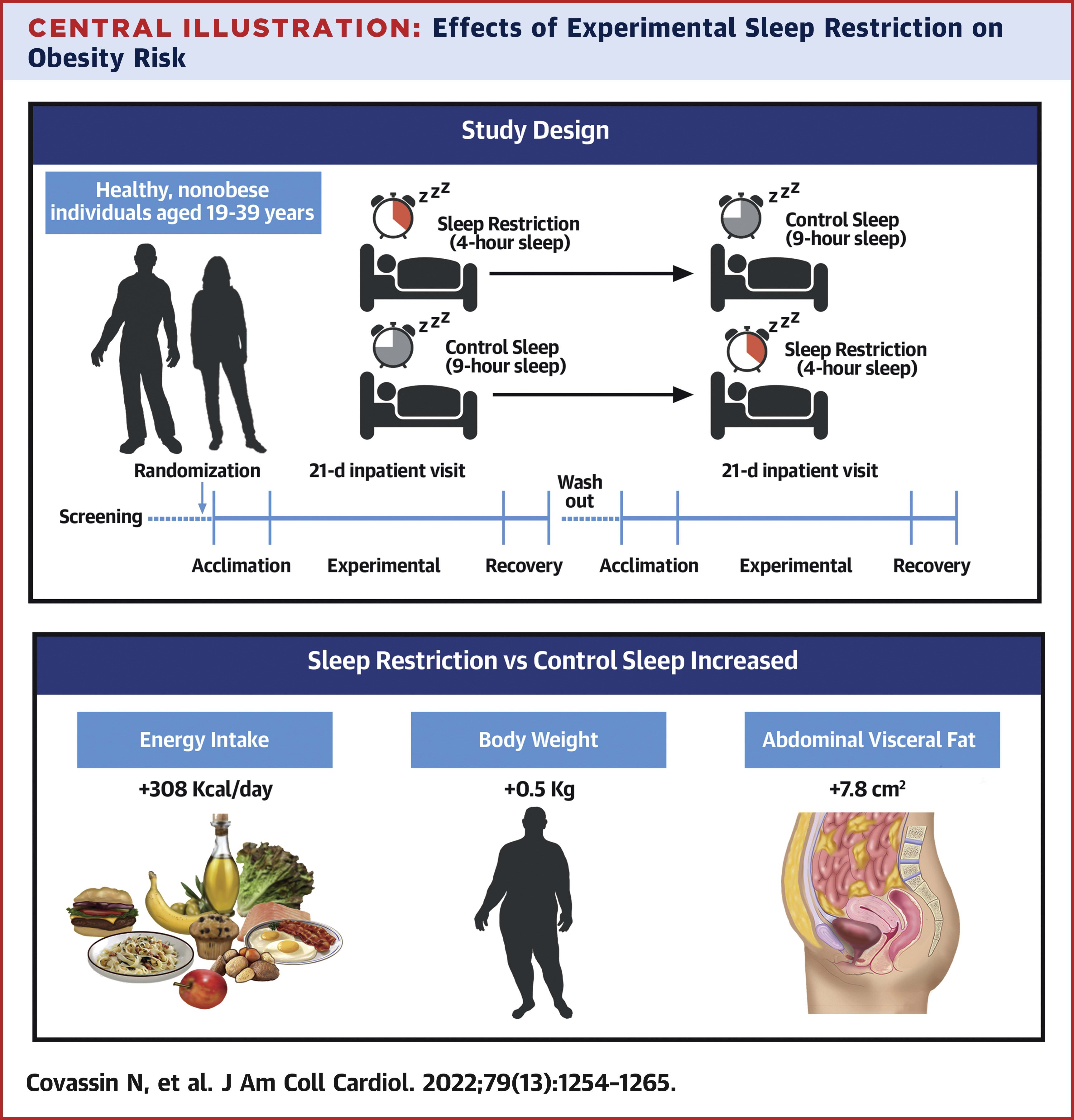
Twelve healthy adults completed a 21-day inpatient crossover study. Two weeks on four hours of sleep, versus two weeks on nine, with free access to food. On short sleep they ate an extra 308 calories a day, with no change in energy expenditure. Body weight rose in both conditions, but visceral fat expanded by roughly 11 percent only during sleep restriction (experimental sleep restriction and visceral obesity — Journal of the American College of Cardiology).
That is a controlled experiment, not a correlation. Short sleep put fat specifically in the abdomen. The researchers also noted that a couple of recovery nights did not undo the metabolic damage.
If you want one thing from this article, it is that one. Sleep is not the soft option on the list. It has the hardest evidence on the list.
Which part surprised you most? A) Cortisol targets belly fat through actual receptor density B) Sleep has the strongest evidence and gets left off every list C) “It’s not a diet problem” is backwards
Drop your letter below.
The “no food three hours before bed” rule gets justified with a story about insulin rushing sugar into your belly overnight. The rule has something to it. The story does not.
In a randomised crossover trial, people ate identical meals either early or late. Same calories. On the late schedule they were hungrier, burned slightly fewer calories during the day, and showed changes in fat tissue gene expression that favoured storage over breakdown (late isocaloric eating — Cell Metabolism).
Comments
Nothing yet. Say the first thing.
Sign in to join the conversation.