
One in six people alive right now has fatty liver disease. That is not a projection. That is where we already are.

I went back into the liver research after the last piece, because a number kept nagging at me. I had written that around a quarter of adults have fatty liver, and I wanted the real global figure. What I found was bigger than I expected, moving faster than I expected, and quieter than almost any disease this common has a right to be.
Here is the real scale, why you cannot feel it happening, and the part that is genuinely hopeful.
A liver disease affecting 1.3 billion people is spreading almost entirely in silence.
Send that to anyone who thinks fatty liver is rare or only happens to heavy drinkers.
A 2026 Lancet analysis pulled together data from 204 countries. The finding: about 1.3 billion people, 16.1 percent of the global population, were living with metabolic dysfunction associated steatotic liver disease in 2023 (global burden of MASLD 1990 to 2050 — Lancet Gastroenterology & Hepatology).
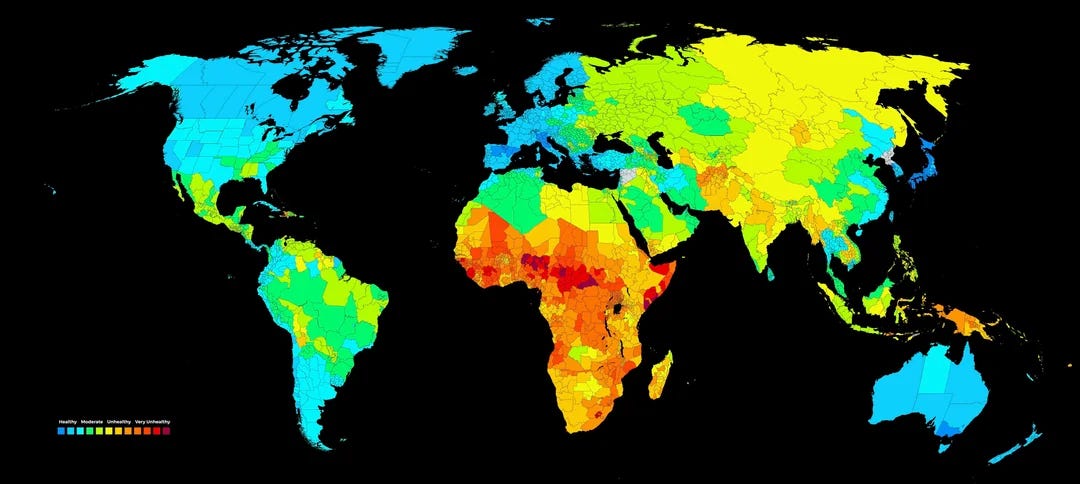
That is up 142 percent in raw numbers since 1990. The projection reaches 1.8 billion by 2050.
MASLD is the new name for what used to be called non-alcoholic fatty liver disease. The rename matters, because it puts the cause in the title. Metabolic. This is a disease of blood sugar, weight, and how your body handles fuel.
The same analysis names the top risk factor driving the harm, and it is not a toxin or an additive. It is high fasting blood glucose, followed by high body weight and smoking. That lines up exactly with what hepatologists said in the last piece. The story keeps pointing at sugar and metabolic health, not mystery poisons.
The liver has almost no pain nerves inside it. Fat can build up, inflammation can start, and early scarring can form while you feel completely normal. That is the trap. By the time symptoms show, the damage is usually advanced.
This is where a genuinely exciting piece of research comes in, and I want to describe it accurately rather than oversell it.
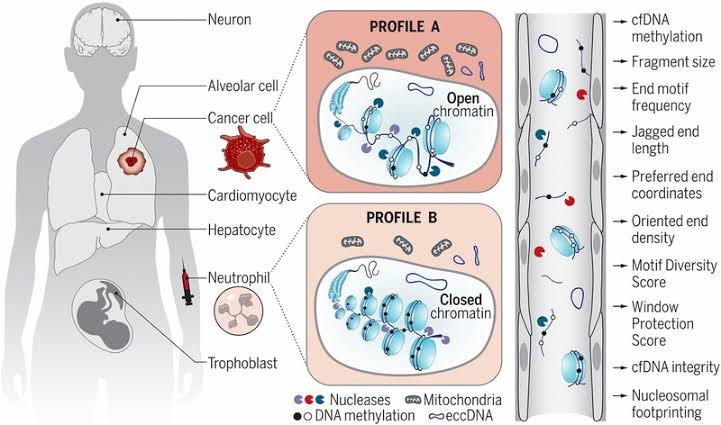
Researchers at Johns Hopkins built an AI blood test that reads how fragments of DNA break apart and scatter in your bloodstream. In a study of 1,576 people, it detected early liver fibrosis and cirrhosis with high sensitivity, catching signals that standard blood tests miss about half the time (AI blood test for silent liver disease — Johns Hopkins Medicine / Science Translational Medicine).
The reason this matters: early fibrosis is reversible. Later scarring is not. A test that flags the reversible stage, before you feel a thing, could change the outcome for a lot of people.
Now the honest part. This test is a prototype. It is not something you can ask your doctor for yet. The researchers are still validating it, and it has not entered clinical use. I am telling you it exists because the direction is real and worth knowing. I am not telling you to go request it, because you cannot, and I would rather you hear that from me than feel misled later.
Comments
Nothing yet. Say the first thing.
Sign in to join the conversation.