
From the coastal homes of the Orang Seletar in Johor Bahru, the protected mangroves of Sungei Buloh Wetland Reserve seem almost to shimmer in midday heat, a tangle of roots and trees reaching into the Straits of Johor. “There are so many mud crabs there,” Nek Leti, one of the community’s elders, tells us. In her younger days, she could swim across the channel (now a border between our countries) to forage along those shores. By sampan, the elders would follow winding rivers and creeks across northern Singapore, sometimes making their way toward the Kallang Basin until the Orang Kallang stopped them from venturing any further.
Over the past year, we have been fortunate to be able to work more closely with our friends from the Orang Seletar community, particularly Jefree Salim, Nek Leti and Kak Anti, who visited Singapore twice in January to lead Anyaman (weaving) workshops at our Rumah Laut installation for the Light to Night festival.
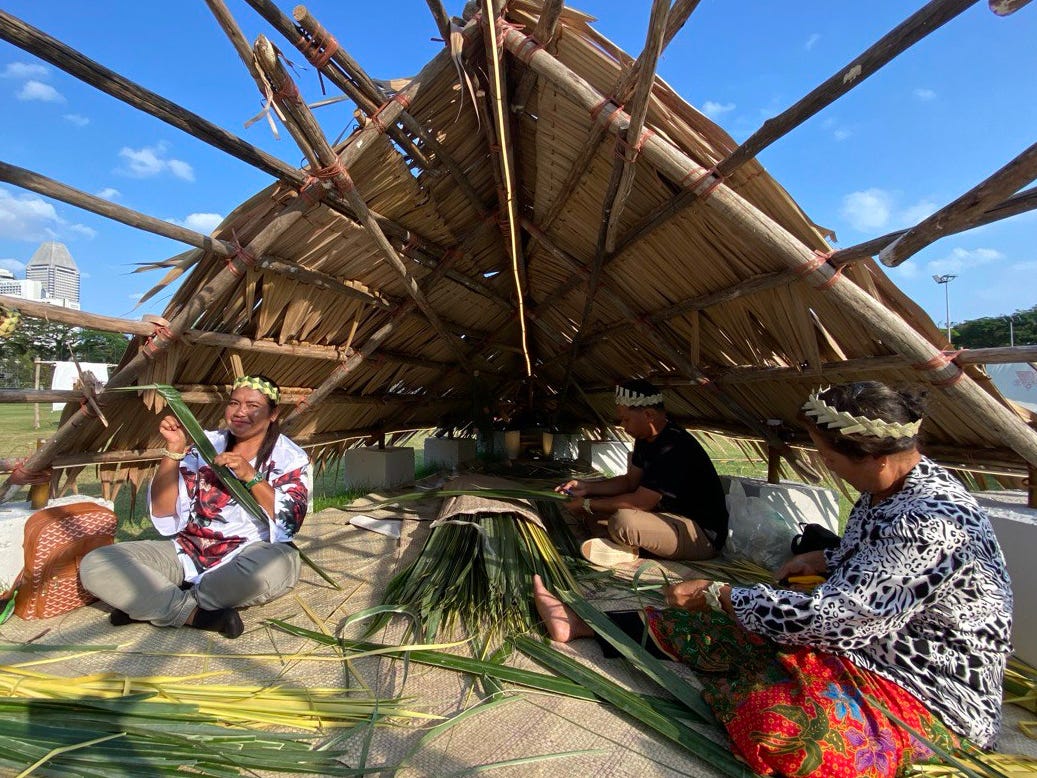


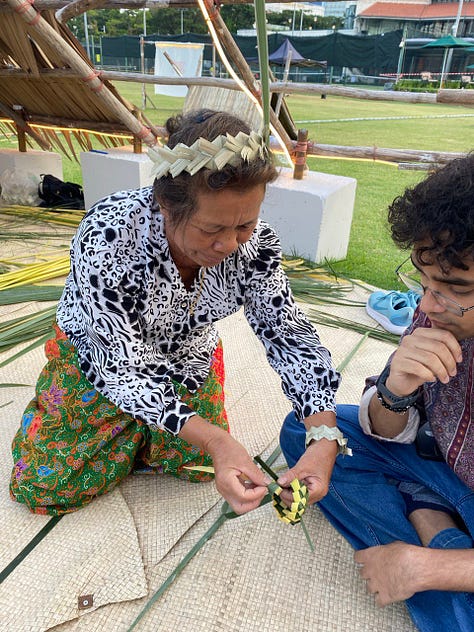
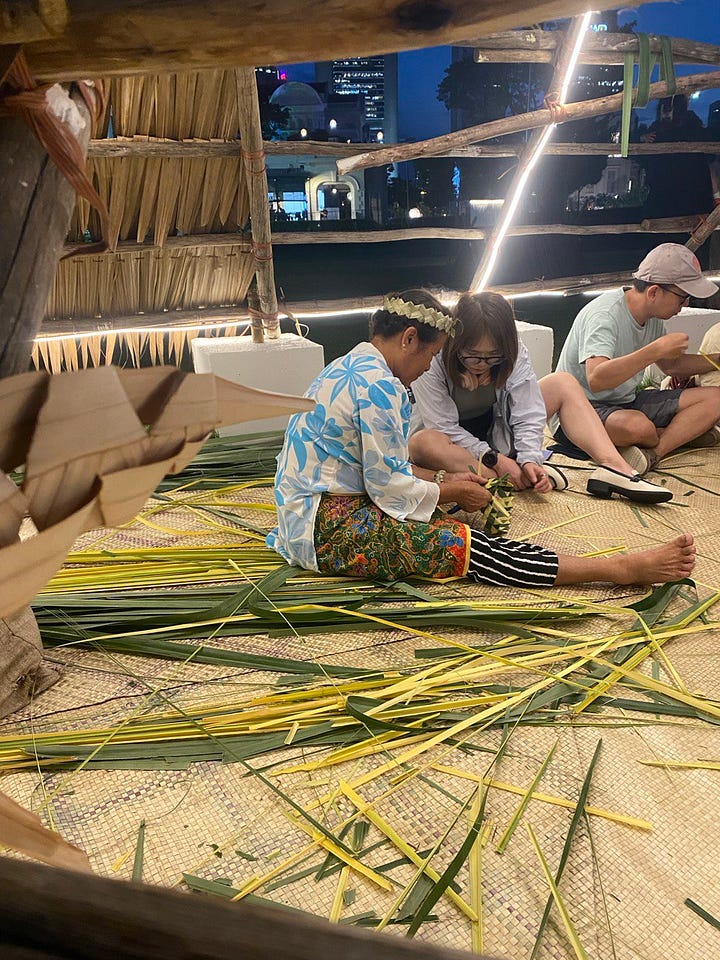
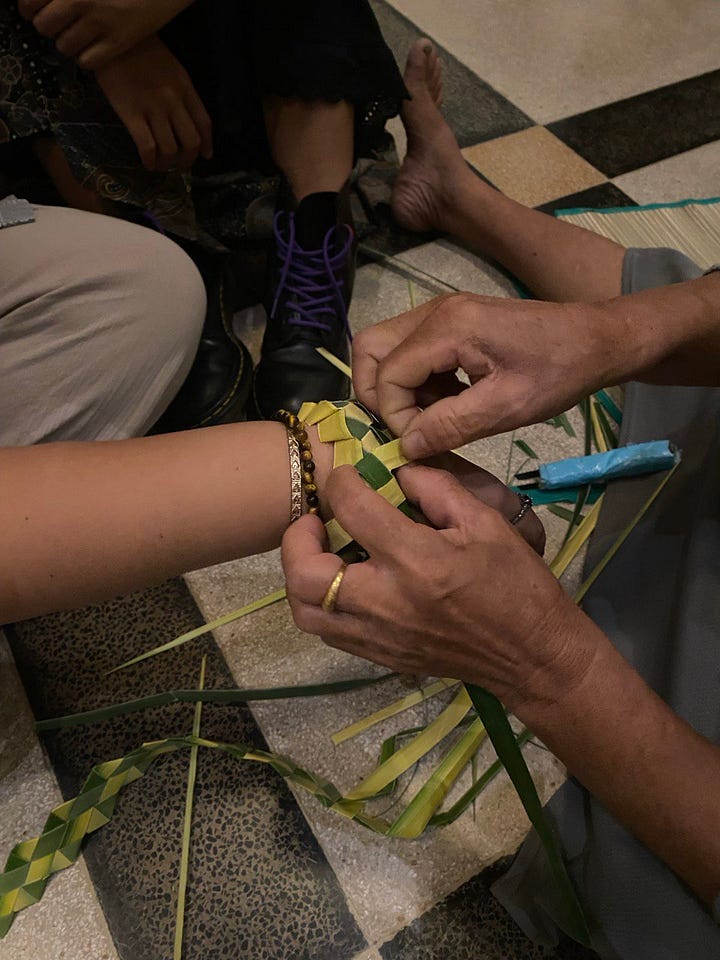
They taught us words in their native Kon language, such as “kocang”, for the grasshoppers they expertly wove from nipah leaves and handed to eager children. They also recounted the places they once frequented in Singapore while the borders were still porous, including Pulau Seletar, their namesake island, now inaccessible to the public despite housing some of the community’s sacred burial sites.
As researcher Tan Zhi Xuan notes, it is difficult to locate the Orang Seletar in early British or Dutch records, as colonial writers often treated the Orang Laut as a single homogeneous group. However, the community’s social memory today affirms a presence that extends far beyond formal documentation. Some elders, for example, speak of an ancient gravesite near present-day Pulau Golf Resort dating back to a time “when men had tails”, a story shared in interviews conducted by Ilya Katrinnada, Chan Kah Mei and Ruslina Affandi during research for the play Air.
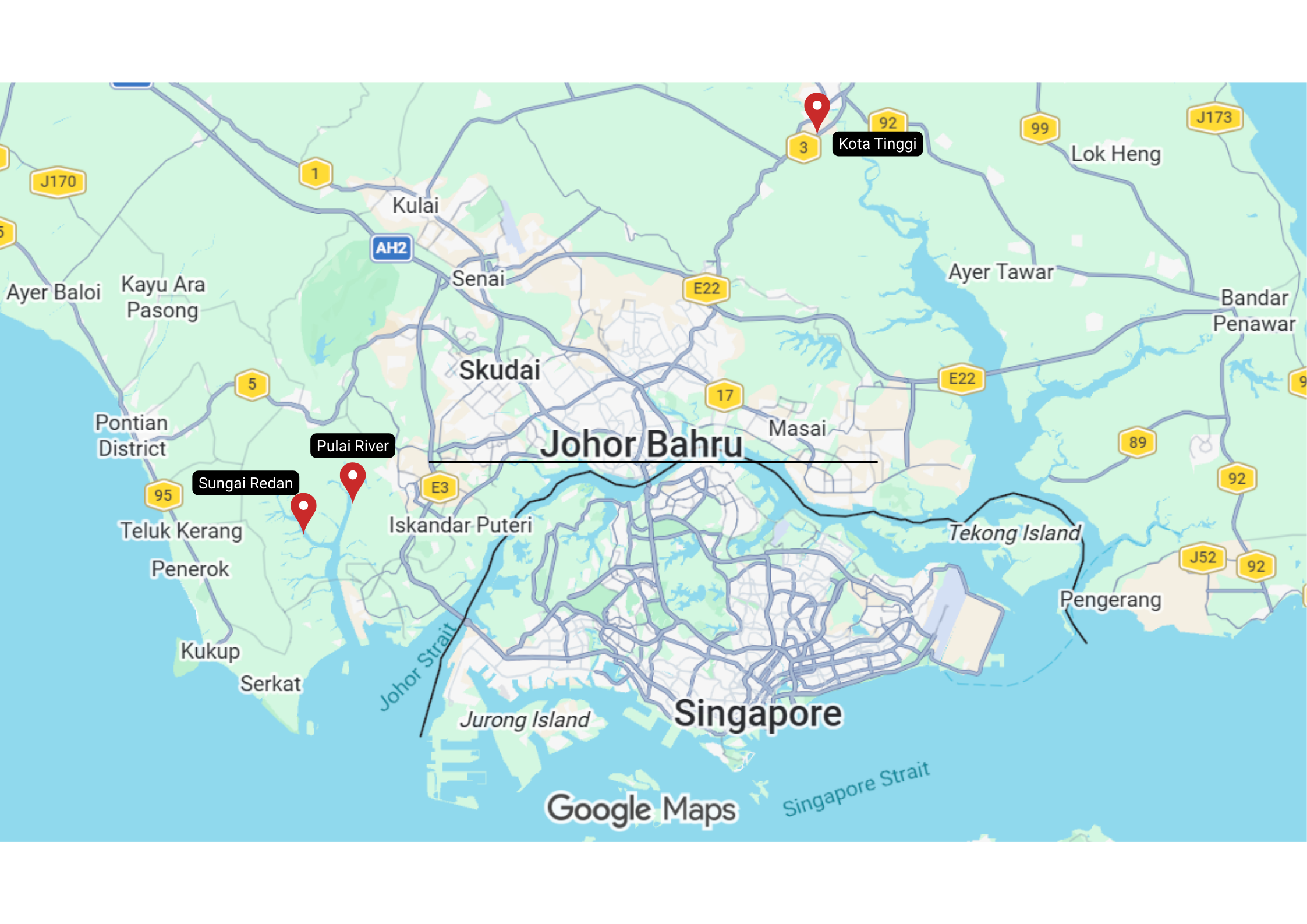
Prior to 1819, researchers suggest that the Orang Seletar held distinct roles under Malay rulers, including collecting forest products such as gutta-percha (gum resin). The present generation still recounts stories of elders singing, dancing, and gathering mangrove products for the sultans of Johor, and at times accompanying them on hunts. In 1819, a population of about 200 Orang Seletar was described as roaming the northern creeks of Singapore. Later records and oral histories corroborate their presence across northern Singapore and southern Johor, loosely bounded by the Pulai River in the west and Kota Tinggi in the northeast.
One of the earliest relocations occurred in the 1850s as the Johor Strait grew busier. Some Orang Seletar retreated deeper into mainland Singapore’s smaller creeks, such as the Seletar River, while others assimilated into coastal populations. Around that time, they were also asked by the Temenggong to settle permanently in one place, but the community appears to have held on to its nomadic lifestyle, continuing to live in and travel by pau kajang (houseboats) along the strait’s rivers.
The pau kajang is known for its thatched woven roof that provided both shade and shelter in the harsh tropical weather. As found by researcher Ilya Katrinnada, the Orang Seletar had a distinct way of weaving mengkuang (screw pine) or pandan leaves, which differentiated their boats from those of other Orang Laut groups. Each wooden boat usually housed families of up to six; beyond serving as a mode of travel, the pau kajang was also where they cooked, played, and slept, with elders like Nek Leti having even been born on the boat.
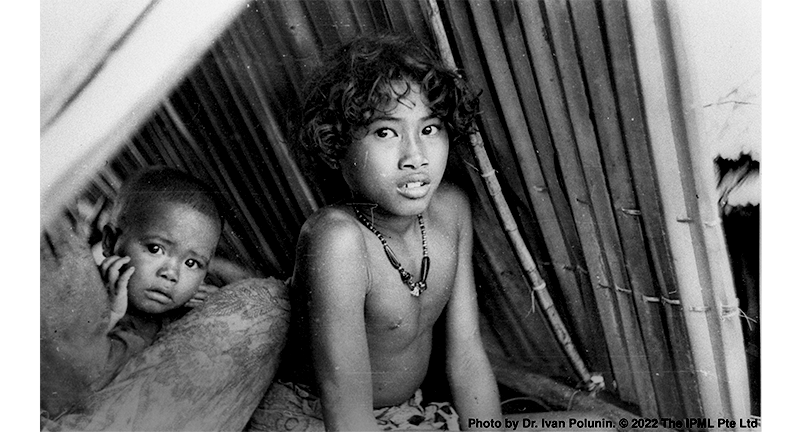
In 1923, most of the Orang Seletar in Singapore were once again moved by the Johor ruler to the Pulai River, when the Straits Settlement government in Singapore acquired over 600 acres in Seletar to construct an airbase.
Then came the Japanese Occupation from 1942 to 1945, which scattered the community across the region. Some fled into the forests, others headed north to Kuala Lumpur and Selangor, and still others went south to Indonesia. Although they lived in fear and hiding from the Japanese soldiers, the community is said to have emerged relatively unscathed, sometimes attributed to the protective spells the traditionally animistic community had cast. Some Orang Seletar even adopted and raised Chinese babies whose families had entrusted to them for safekeeping.
The Orang Seletar only began leading a more settled lifestyle during the Malayan Emergency from 1948 to 1960. According to Juma’at Misman (as cited by Tan Zhi Xuan), to curb communist influence, the colonial government had restricted the community to the Kuala Sungai Redan area. A curfew was imposed; travel by pau kajang was banned, and fishing was permitted only between 6am and 6pm. In response, some families built wooden homes over the river’s mudflats, returning to them after fishing each day.
When the Emergency ended, the Orang Seletar were relocated again, this time with greater autonomy. Some wished to settle closer to Johor town to trade their catch, a move supported by the Department of Orang Asli Affairs. Eight villages were subsequently established along the rivers and southern coast of Johor: Kampung Simpang Arang, Kampung Sungai Temon, Kampung Bakar Batu, Kampung Telok Jawa, Kampung Kuala Masai, Kampung Pasir Putih, Kampung Telok Kabong and Kampung Pasir Salam.
At the same time, some Orang Seletar returned to Singapore, establishing a temporary village on Pulau Seletar. From the 1960s to the 1980s, Orang Seletar on both sides of the border could move freely without passing through immigration, sometimes using a secret passage beneath the Causeway that they had helped build in the 1920s.
Besides Pulau Seletar, they frequently docked around Kranji, Sungei Kadut, Choa Chu Kang, Jurong, Punggol, Pulau Ubin, Pulau Tekong, Tuas and Lim Chu Kang. Some travelled seasonally, coming down to Singapore every October and November when the winds were stronger.
In the 1980s, however, borders became more strictly enforced after an Orang Seletar individual was exploited to smuggle illicit goods and subsequently arrested. Post-independence Singapore was also becoming an increasingly difficult terrain. Catches dwindled due to coastal development and maritime traffic, and many feared arrest due to a lack of documentation. By the 1980s, further development projects pushed the remaining Orang Seletar back to Johor villages, while others assimilated into coastal settlements in Singapore, such as Kampong Irau, Kampong Punggol and Kampong Wak Hassan.
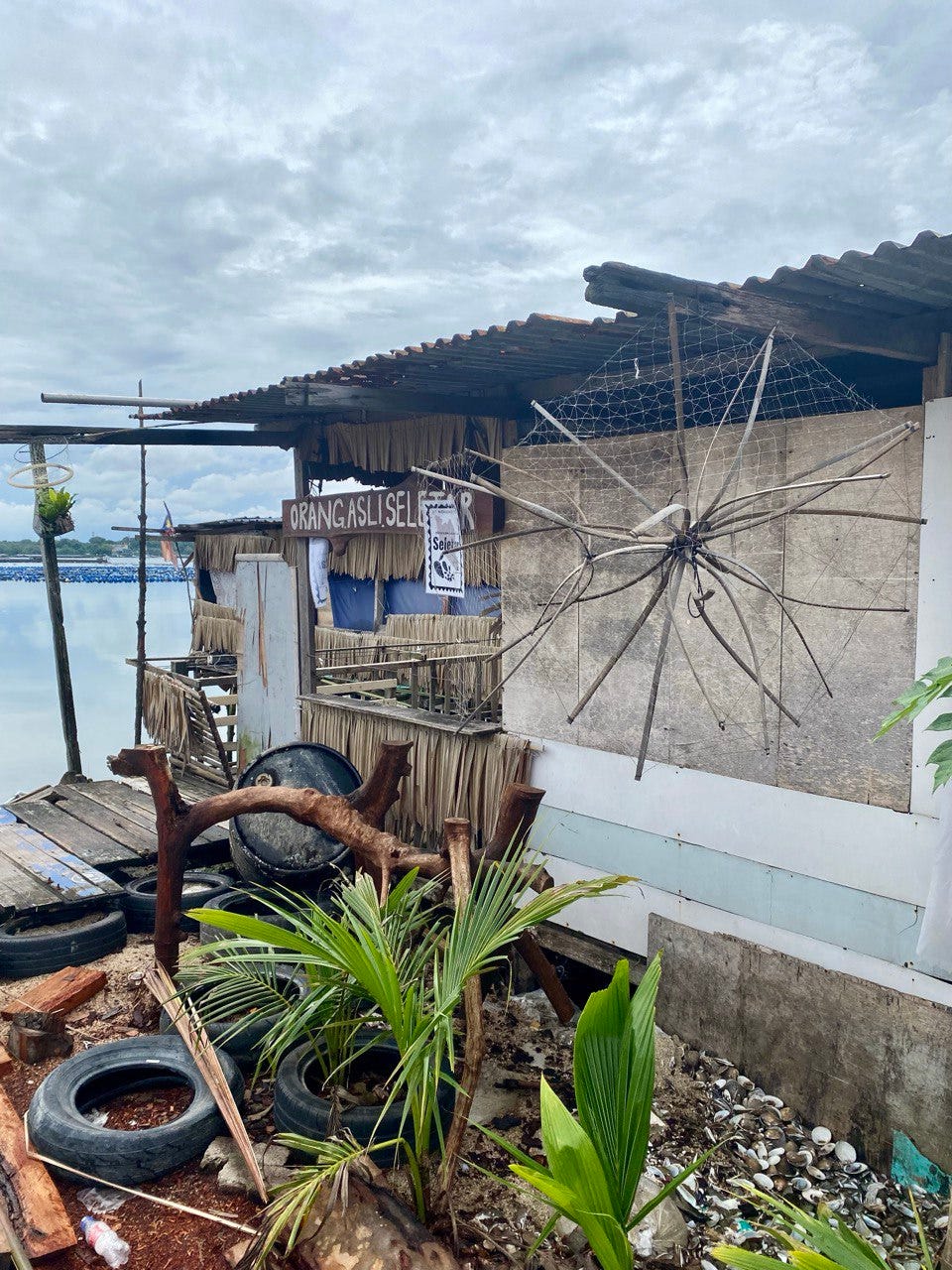
They continue to pass down their unique customs, beliefs, and language to the younger generations. While they were here with us, Nek Leti and Kak Anti showed us several videos of the distinctive ceremonial dances and songs sung in a mix of Malay and Kon - living traditions that they spoke of with a quiet but unwavering pride. Some snapshots of their daily lives have also been poignantly captured through Jefree Salim’s photography.
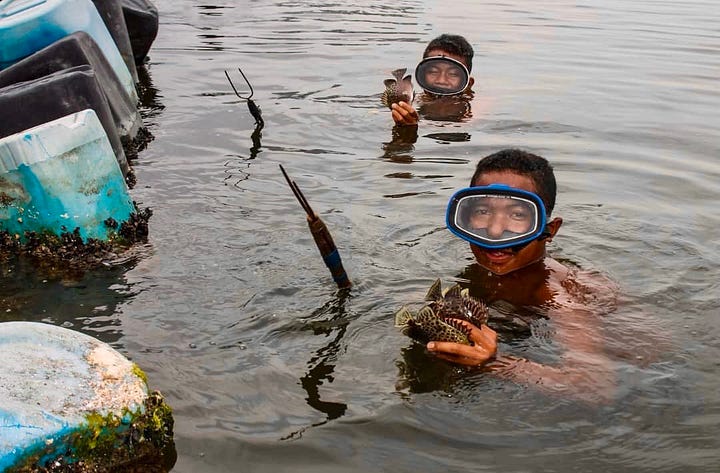

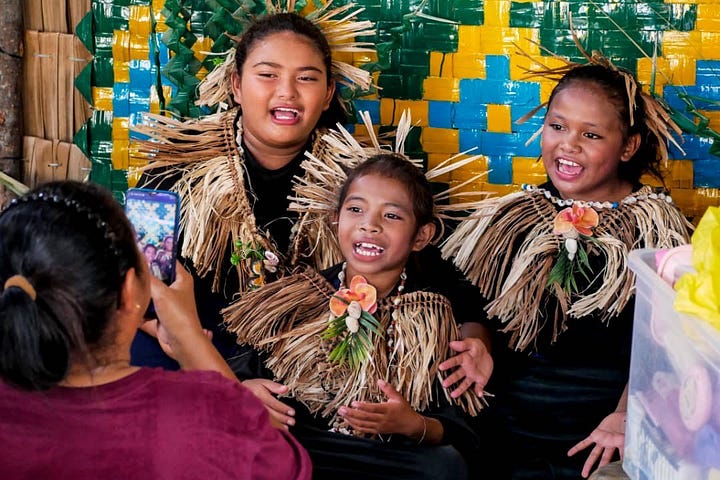
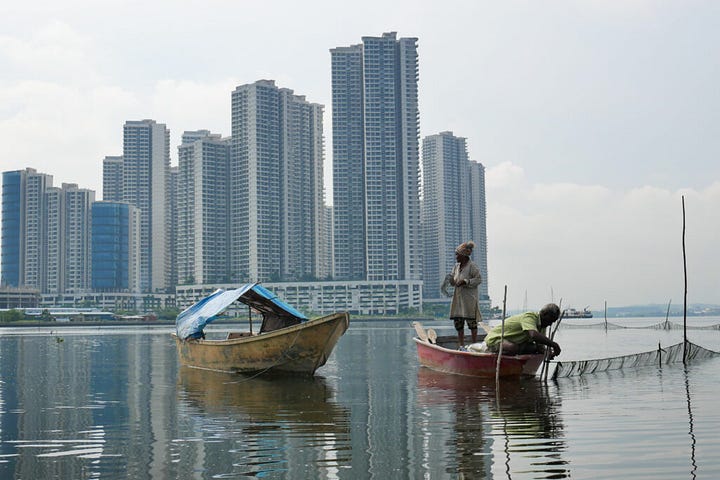
But for the community, the continuity of their culture and identity has felt increasingly fragile over the past decade, as climate change and land reclamation disrupt the marine environments so intimately connected with the Orang Seletar way of life and livelihoods. For example, Orang Seletar fishermen report that their catches have declined by more than 70 per cent over the past decade due to diminishing sea life, increased marine traffic, and more frequent heavy rains and strong winds.
“The water of our river / Has turned red / Crabs and clams / Now all gone.”
- Excerpt from Air Merah (Red Water), a song by the Orang Seletar
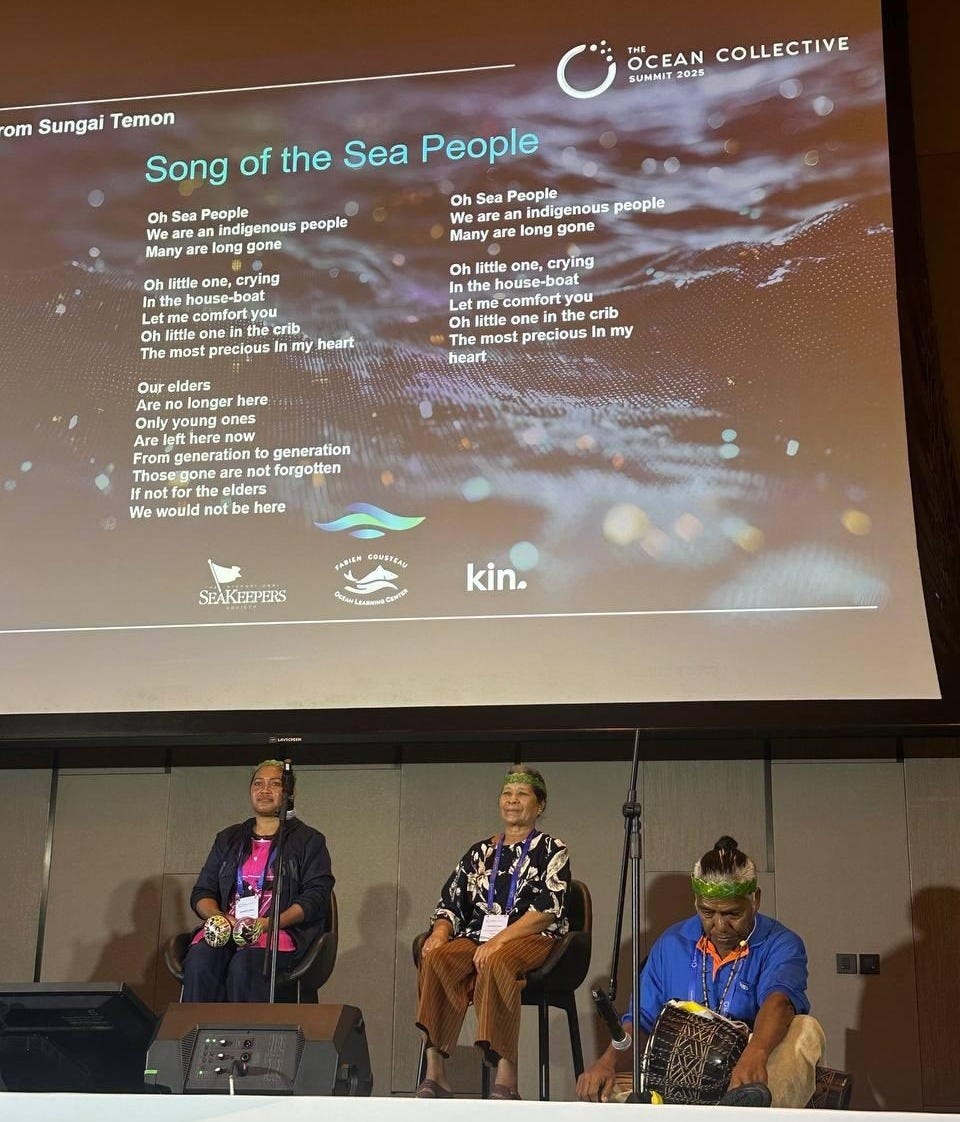
In 2017, the Orang Seletar of Kampung Sungai Temon, led by Eddy Salim, launched legal action to halt developments affecting their village. After five years in the Johor High Court, the government agreed to provide financial compensation and newly gazetted land to replace their ancestral territory. While considered a hard-won victory, it remains bittersweet. When we met Nek Leti at The Ocean Collective conference last year, she shared that construction appeared to have stalled, suggesting that she held on to a glimmer of hope that relocation might yet be avoided.
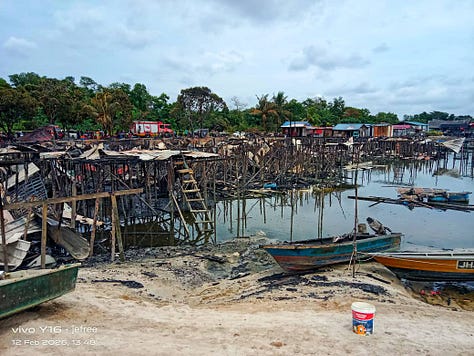
“Banyak barang musnah, pakaian diorang pun. Bot pun terbakar, enjin pun terbakar. (So many things were destroyed — clothes, boats, engines.)”
A fire had broken out in Kampong Teluk Jawa in Masai, Johor, where some of his extended family live. “Semua habis,” he said. Everything is gone.
Some 30 homes were completely destroyed, with several others badly damaged. Thankfully, all residents managed to evacuate. However, most families did not have time to gather any of their personal belongings and were left with only the clothes on their backs. Boats, engines and fishing equipment — essential to their livelihoods — were also lost in the blaze. In total, 143 individuals were directly affected.
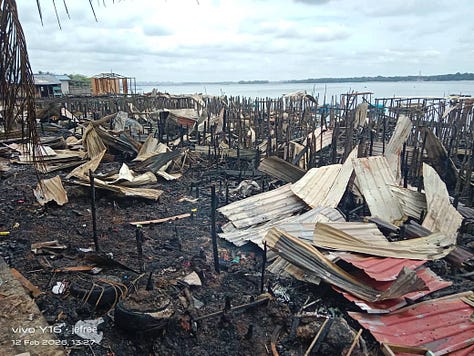
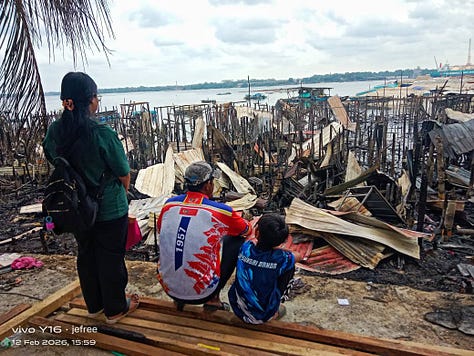
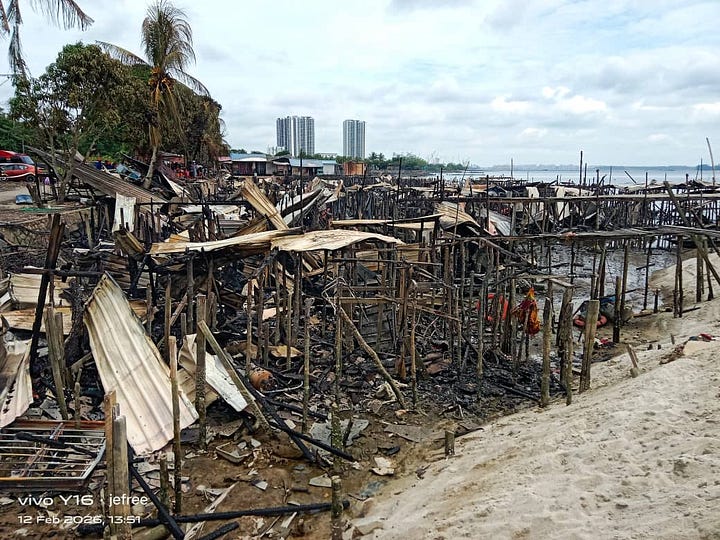

Recognising the gravity of the situation, we shared about the situation on Instagram and launched a crowdfunding appeal for emergency aid. We are deeply grateful that 635 of you contributed a total of SGD 36,264.65 by the time we closed donations on 14 February.
On 15 February, our team travelled to Johor to meet affected families and better understand their immediate needs. The cause of the fire remains under investigation, and we respect the authorities’ ongoing process. Local agencies, including Polis Diraja Malaysia (PDRM), Jabatan Kebajikan Masyarakat (JKM), Angkatan Pertahanan Awam Malaysia (APM), Kementerian Kesihatan Malaysia (KKM), Jabatan Kemajuan Orang Asli (JAKOA) and other organisations, are actively assisting the community.
Families have been temporarily relocated to Dewan Muafakat in Johor, where they are living in tents. While this provides immediate shelter, the emotional toll of displacement is significant. Some shared their uncertainty about whether they will ever get to return, particularly as their former kampong had already been gazetted for relocation.
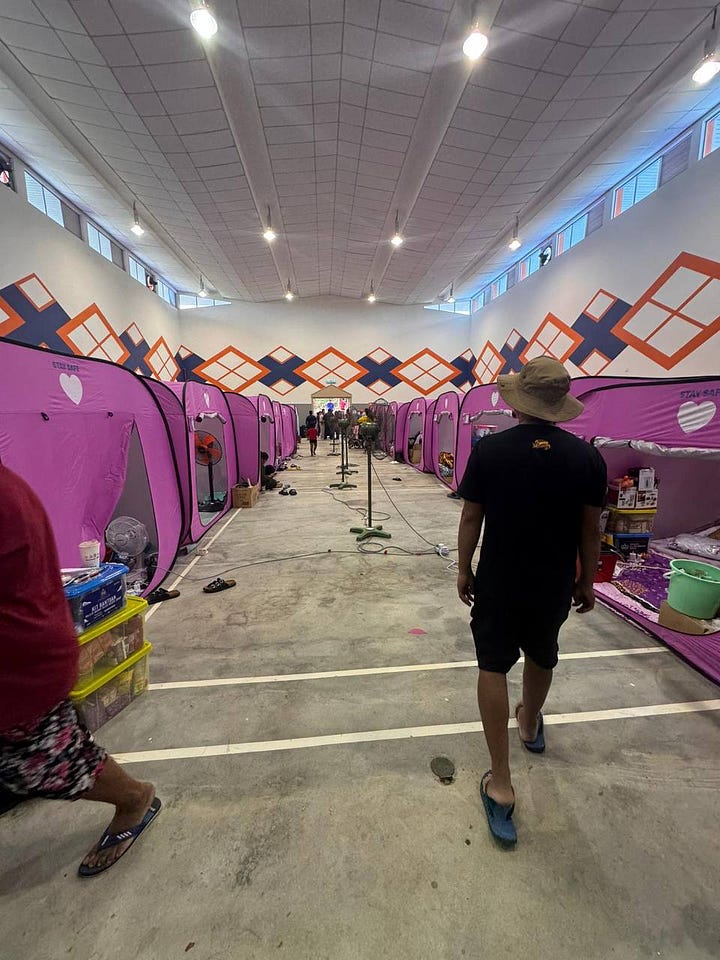
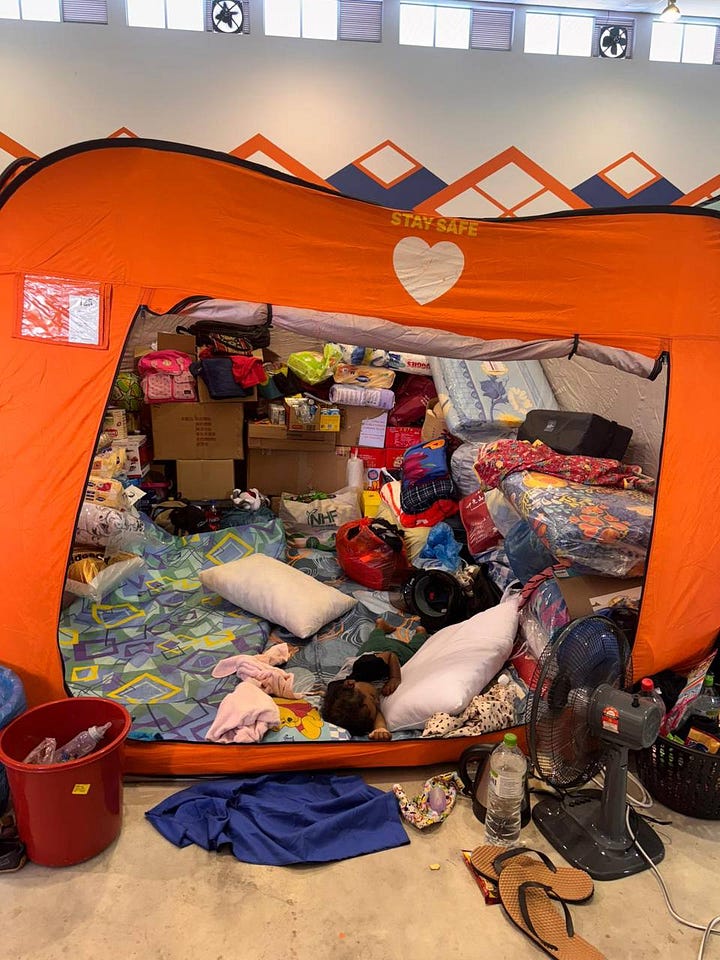
In consultation with families, Orang Laut SG focused on practical items to ease daily living and support eventual relocation. We purchased durable storage boxes, electric fans for each tent, extension plugs, hot water flasks and new undergarments in various sizes.
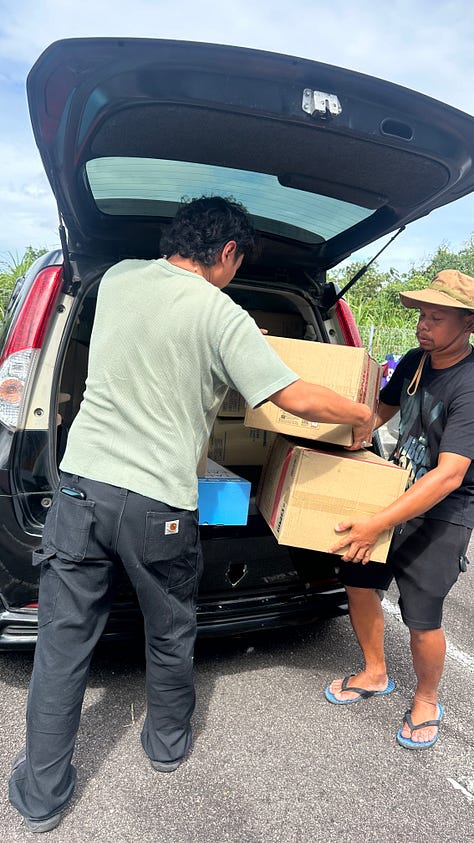
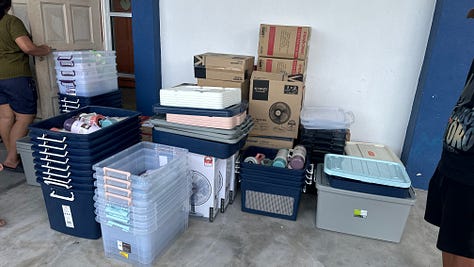
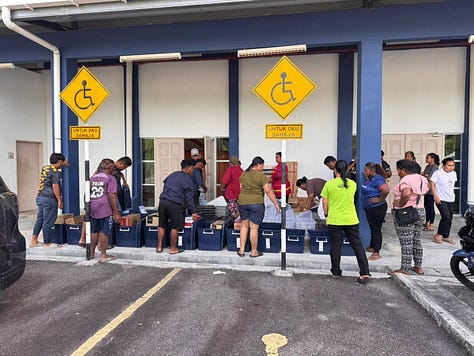
Looking ahead, we will continue to support the community through the longer-term recovery phase. The funds we have collected will be directed towards assisting families as they rebuild their lives. As we understand that the local government will play the primary role in constructing new homes, our efforts will complement this by supporting critical household essentials, such as bedding, basic furniture, and key appliances like refrigerators.
During our visit, some residents spoke openly about the challenges they now face. Despite the hardship, children continue to attend school with transport support from local authorities, and community members have spoken of their desire to return to sea and rebuild their livelihoods.
Orang Laut SG remains in close contact with community members, and will continue working alongside them to understand and support their evolving needs. As recovery efforts continue, we will be calling for volunteers in the near future to support the community in meaningful and practical ways.
We thank you again for standing with the Orang Seletar. Your solidarity has made a tangible difference, and we hope you will continue walking alongside the community in the coming months as they rebuild.
Coastal Walk with National Arts Council
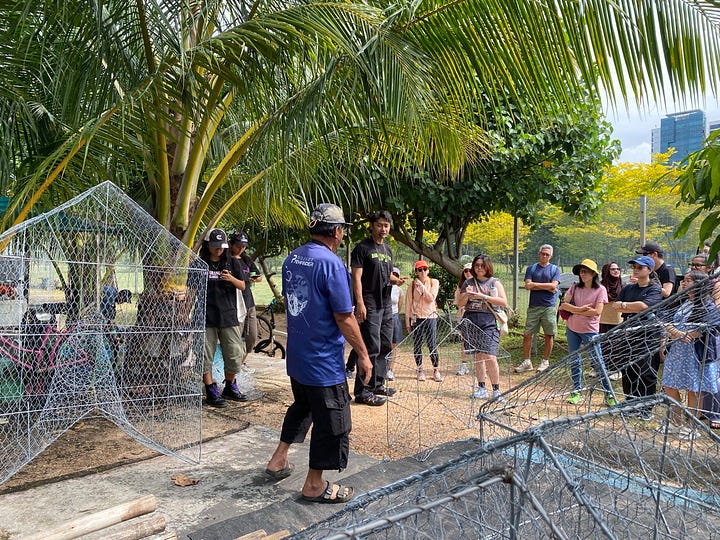
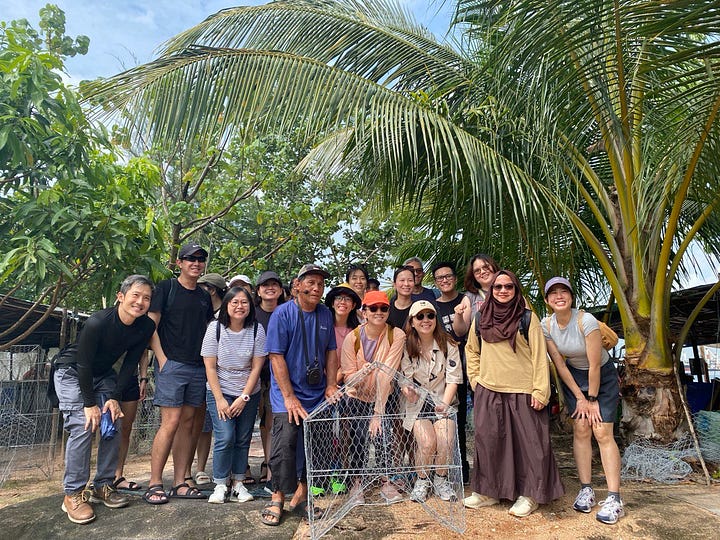
On 6 February, we hosted the National Arts Council at West Coast Park for a Coastal Walk as part of their team bonding programme. We brought them through the park and community space, sharing our maritime crafts and the perspectives of the Southern Islanders, before bonding over a meal prepared by former Pulau Semakau residents. We had a lot of fun engaging with such an eager and curious group!
For organisations interested in similar team bonding, CSR or DEI initiatives, feel free to drop us an email at hello@oranglaut.sg. We would love to meet more of you!
Out to Sea with Cik Am
On the fourth day of Ramadan, we had the privilege to witness the practice of Bubu fishing by our ICH expert, Cik Am, as part of a research trip. We left the community space on Cik Am’s humble blue boat early at 7:45 am. With 6 of us on the boat, Cik Am navigated our way to the first terumbu (a reef, rocky shoal, or sandbank that is typically submerged and only visible or exposed during low tide). We encountered many waves, getting drenched in the process, as bigger ships moved past us, going about their port activities in the morning. As Cik Am mentioned, the increase in maritime and port traffic around the community’s fishing grounds has become a significant source of disruption, destabilising the ecosystem upon which the community depends.
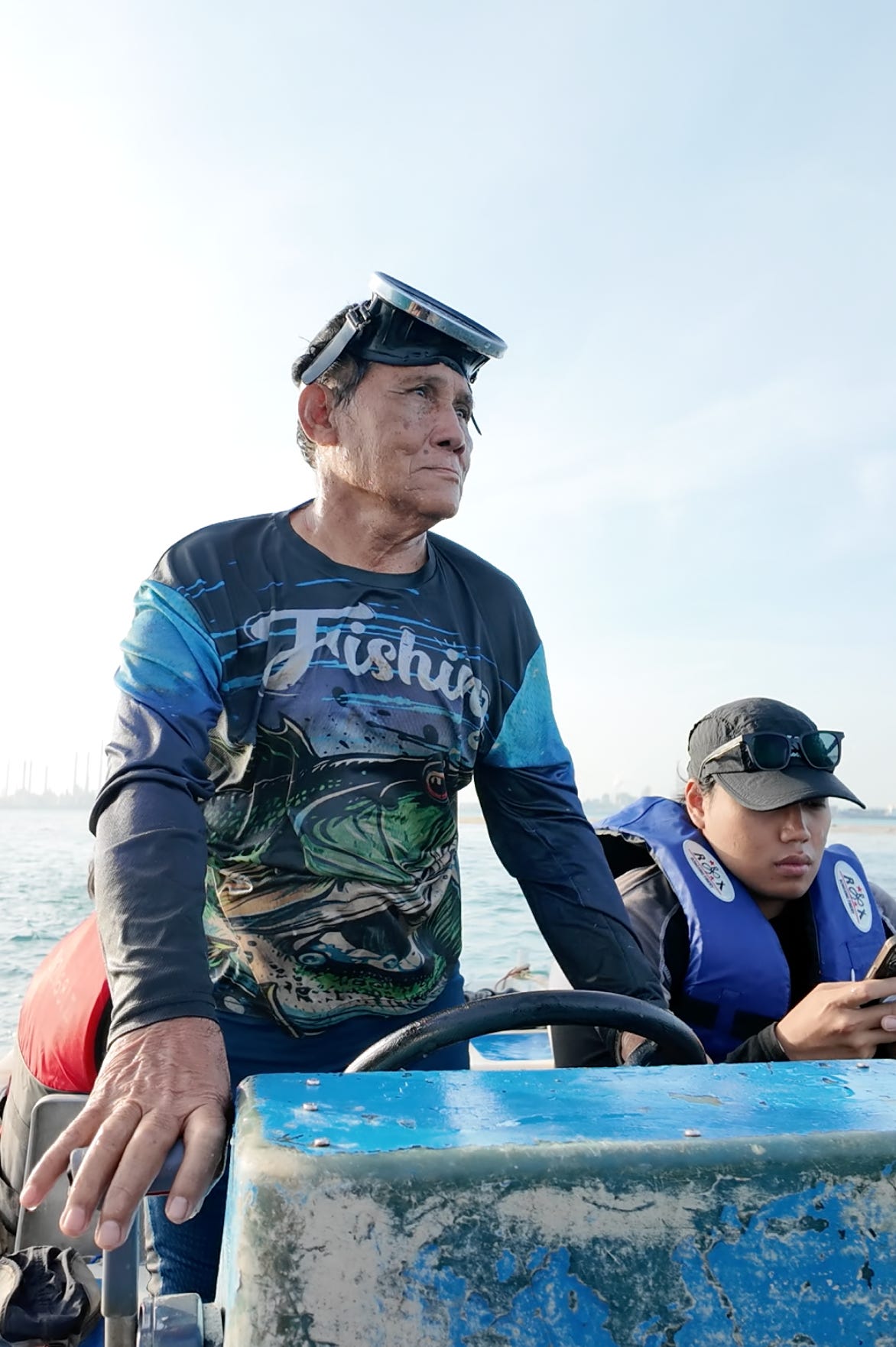
As we arrived at the first spot, Terumbu Pandan (now named Cyrene Reef), located between Pulau Bukom and Jurong Island, Cik Am lined up his boat according to physical landmarks such as the buoys and the buildings at West Coast Park behind it. With decades of experience under his belt, he then dove into the Singapore straits in search of his bubu, placed a week ago.
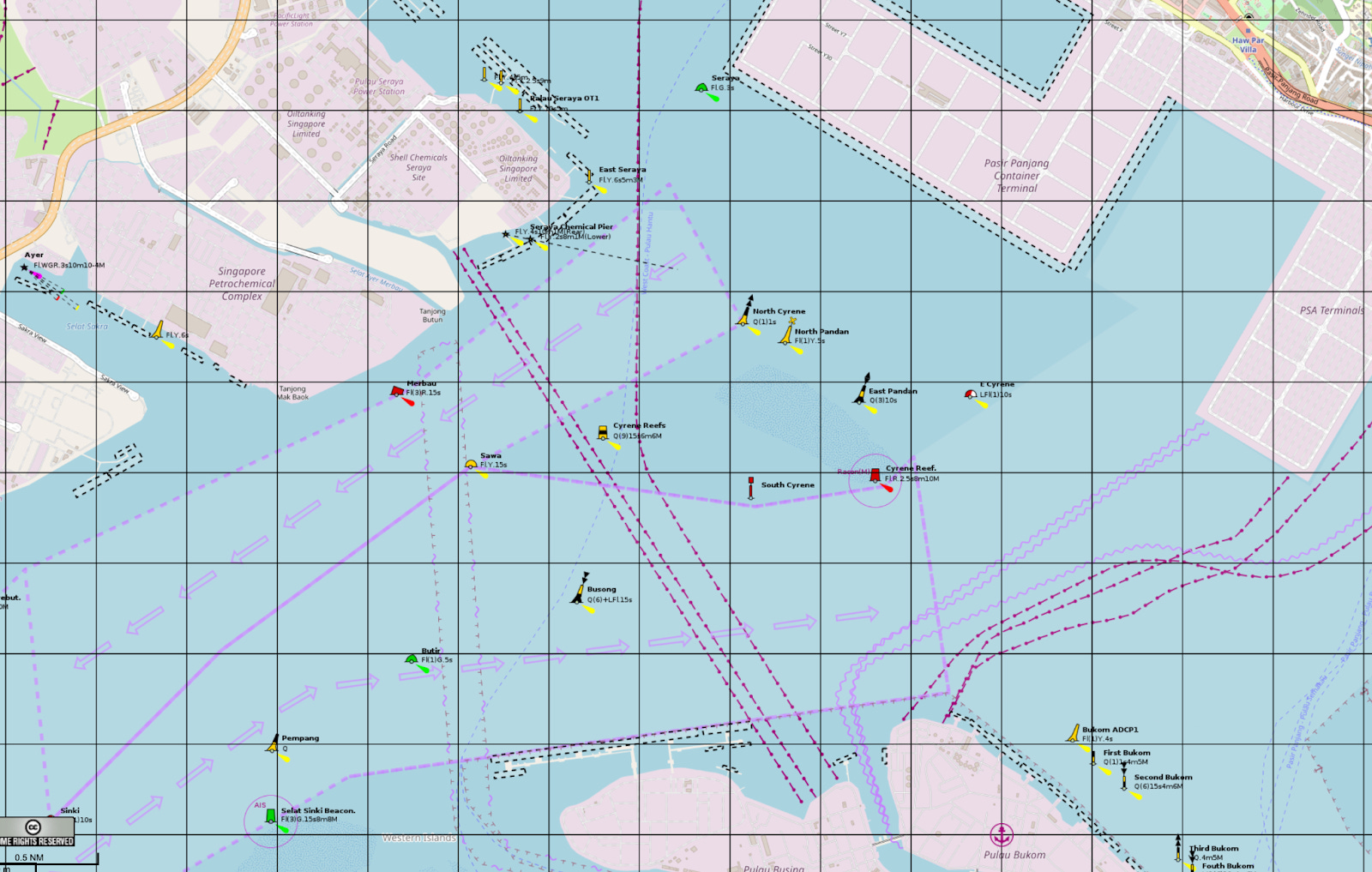
Swimming a few metres swiftly in one breath, Cik Am was able to locate his bubu within seconds and was even able to see if there were fish in the trap. To our amazement, he could even hear the presence of fish when the waters were murky. While some bubu yielded abundant catches, others contained relatively few fish. After pulling up a few bubu, Cik Am and his son accumulated many fish on his boat — ikan libas, ikan dingkis, ikan temenggong, ikan pari mengkek, ikan gelam, amongst many others.
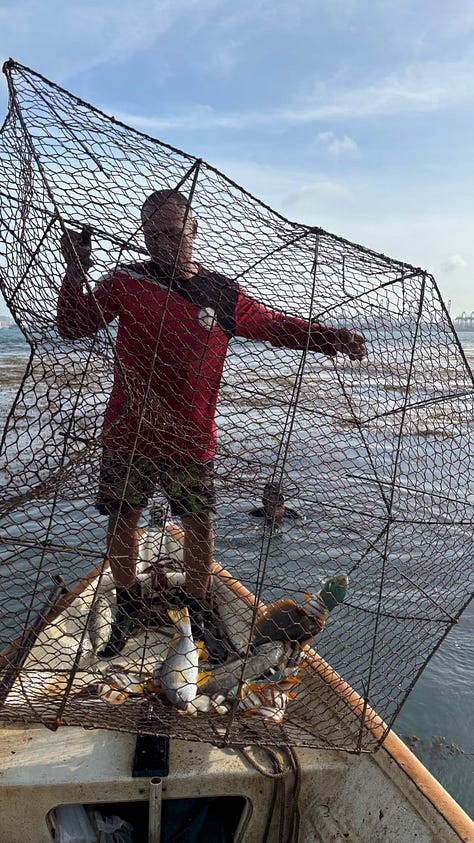
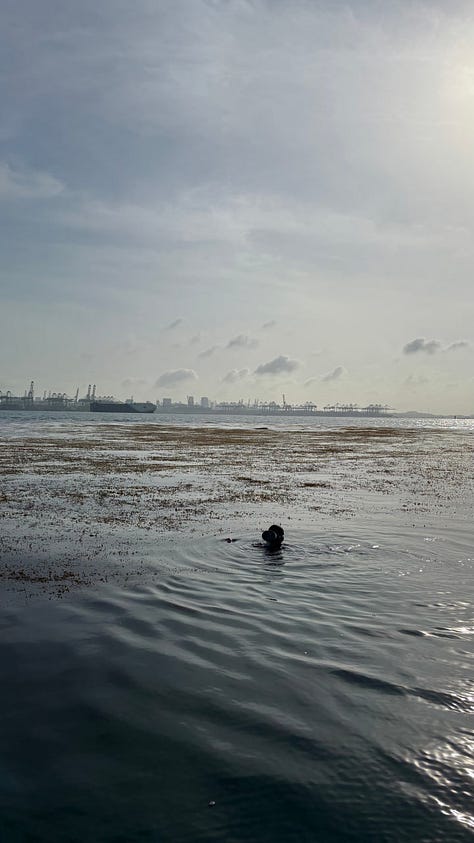

We then went to see the expansion of Pulau Sudong to witness the effects of land reclamation. The government adds sand to the terumbu to increase the land area of the Southern islands. This process not only reduces the space for fishing but also alters currents and increases sedimentation, making the water murky. These effects make it more difficult for Cik Am to catch fish. This was seen firsthand on several occasions when Cik Am dived to retrieve the bubu but chose not to pull it up because the catch was insufficient.
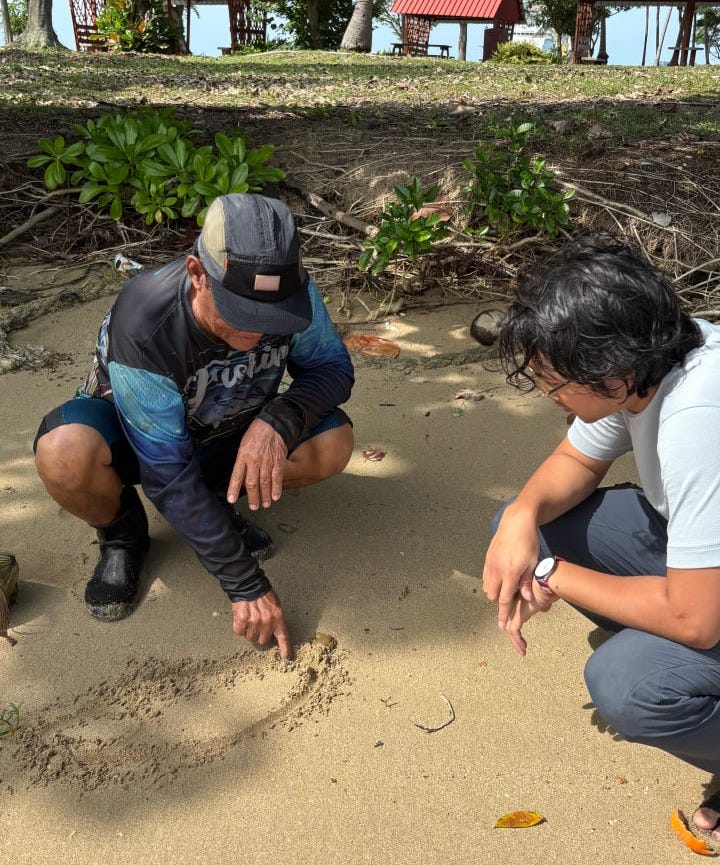
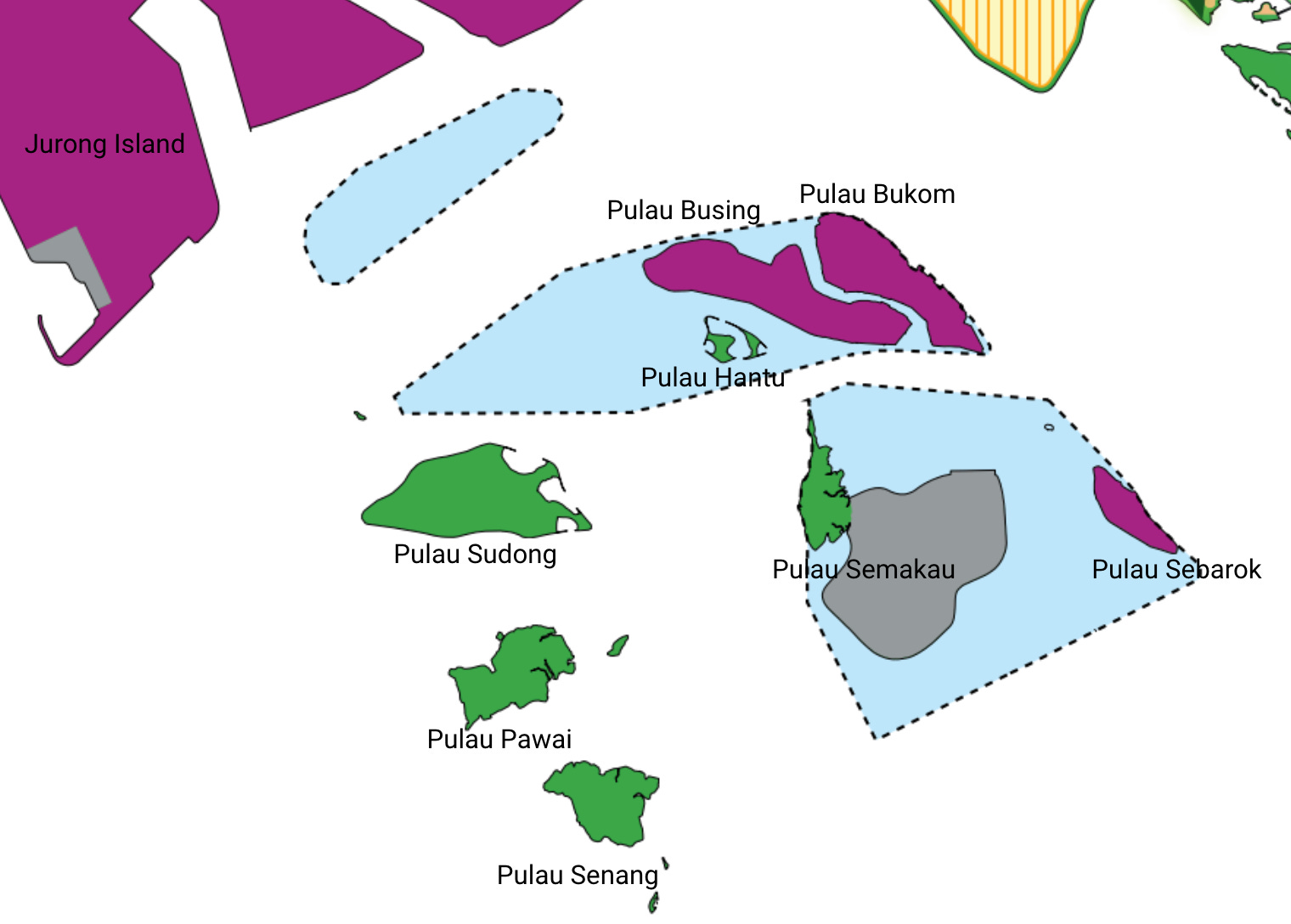
To end off the research trip, we visited Pulau Hantu, recounting stories we had heard from community elders and Cik Am’s time living on Pulau Sudong. In the past, Pulau Sudong was only a quarter of its current size - it was an island surrounded by extensive reefs. Cik Am recalls that he would have to swim back to the island if he went out to forage when the tides were low. Pulau Sudong's reef has since been reclaimed to pave the way for a military airstrip. Now, Cik Am can only see his island from afar as it has been closed to the pubic for military use since 1982.
Just across Sudong, Semakau has also seen drastic changes. It was joined with Pulau Seking by land reclamation and has been a landfill since the 1990s. Similarly, Pulau Busing, now a heavily industrialised island with oil and chemical facilities, was founded on reclamation that joined four islands - Pulau Busing, Pulau Ular, Pulau Bukom Kecil and Pulau Bukom Besar. Evidently, the Southern Islands have undergone extensive state-driven transformation, forever changing the land and seascape of the islands, leading to the disappearance of some of them from our collective memory.
The video above shows a 1943 map superimposed on the current map of Singapore.
With the expansion of the Southern Islands, it is unclear how much longer this rich historical tradition can be sustained. The government has gazetted the terumbus, which the community relies on for fishing, as potential reclamation sites. If land were to be reclaimed on these terumbus, not only would the ecology and currents be forever altered, but the practice of Bubu fishing too.
Under One Atap: The Spirit
For The Black Sampan, we hosted our third Under One Atap session (a youth-focused spinoff of Atap Assembly) at City Sprouts (in West Coast Park) on 13 February. We were extremely excited to welcome our traditional arts practitioners to the space — Jodi (Southeast Asian shadow puppetry), Tedja Timur (Wayang Kulit), and Faizal (Guzheng). They delivered incredible performances, including an absolutely beautiful collaborative piece that they improvised for the night. We were completely in awe, and got to learn so much about these precious art forms through their sharing as well. Thank you to all who joined us that evening! <3

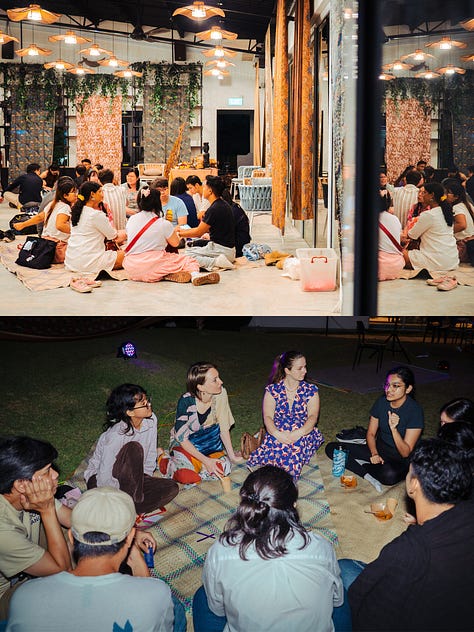

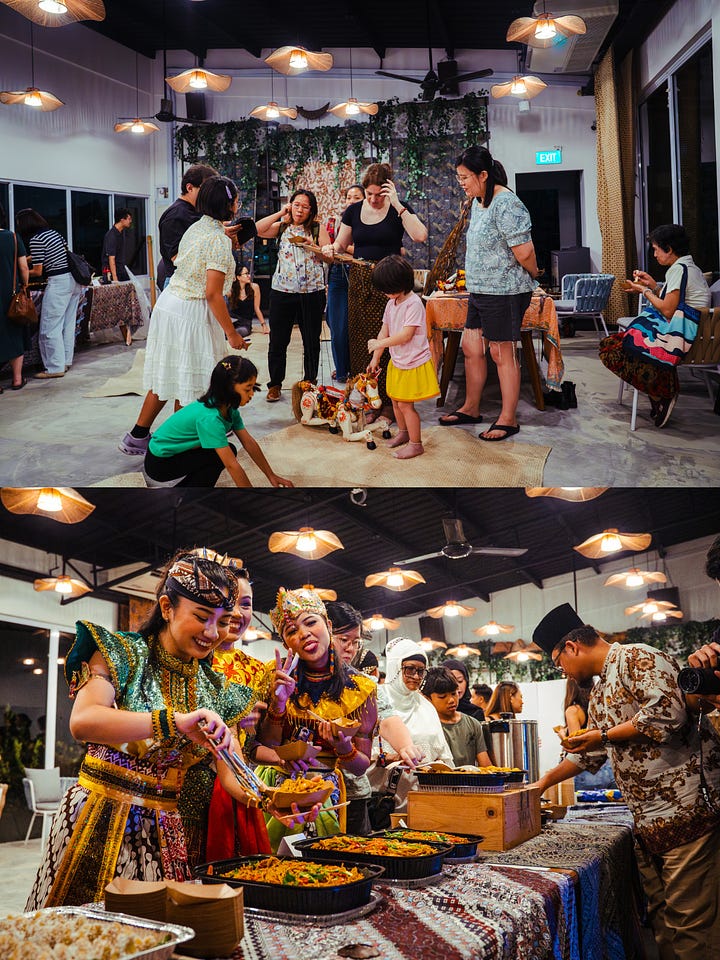
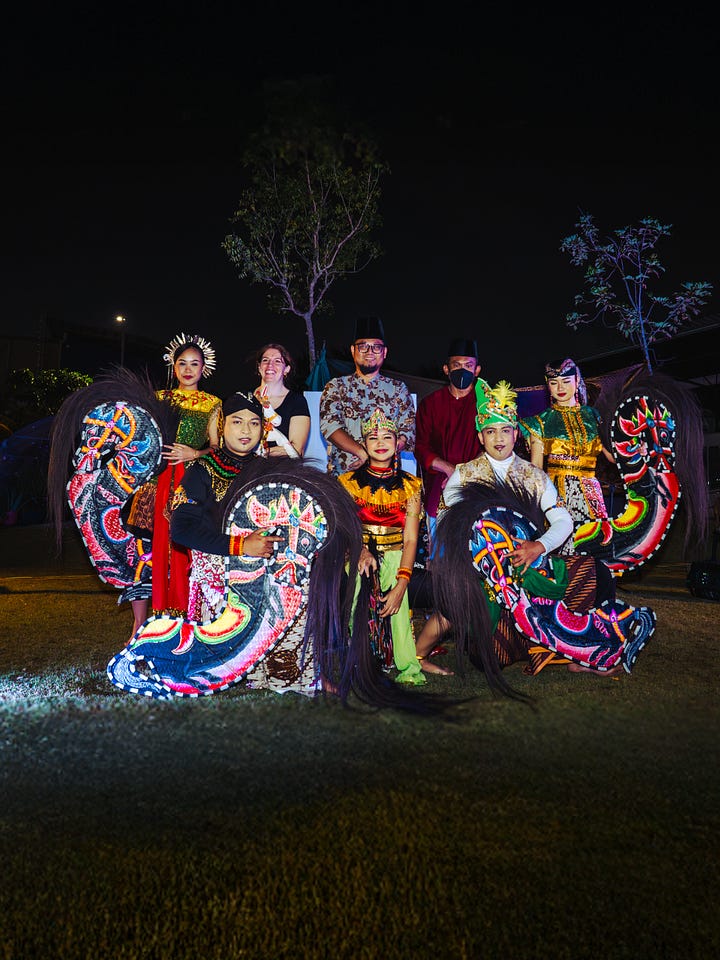
Our Under One Atap sessions are designed to open conversations on matters close to all of our hearts. We have one last session coming up this month, spotlighting community-builders. Stay tuned for more updates, or join our Telegram channel here!
Mengkaji dengan Hati (Research with Care): Launch of our Research Ethics Toolkit!
To wrap up the month, we are honoured to have launched Orang Laut SG’s very first publication! We have been working on this Research Ethics Toolkit with our friend and researcher, Chia Jie Lin, since 2024. A true labour of love, this first edition was written with the generous input and expertise from community members, as well as academics and experts who share our same goal of creating more equitable and beneficial models of community-based research.
We are especially honoured to have been joined by Dr Vivienne Wee and Ilya Katrinnada, our esteemed panellists, and 80 of you lovely people for our launch event - we are so grateful for all of your support.
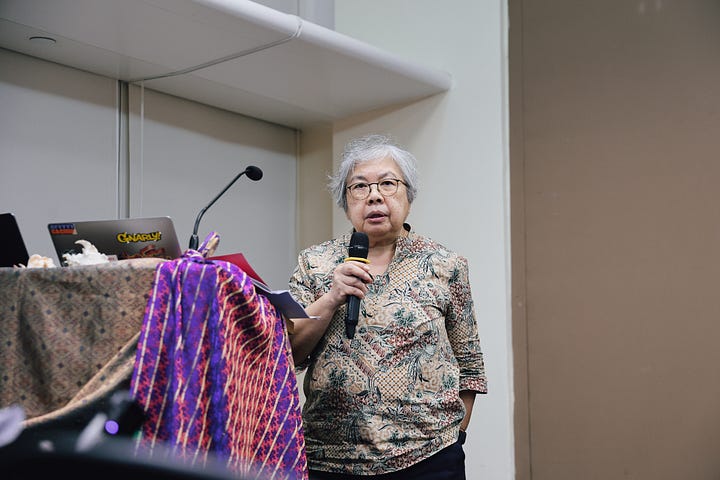
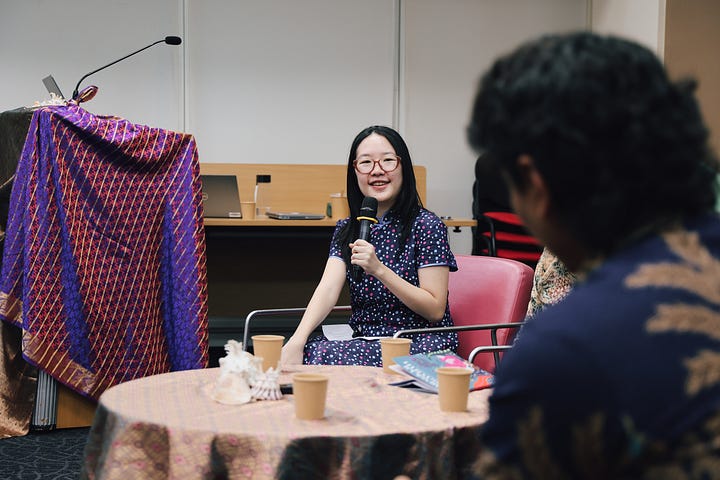
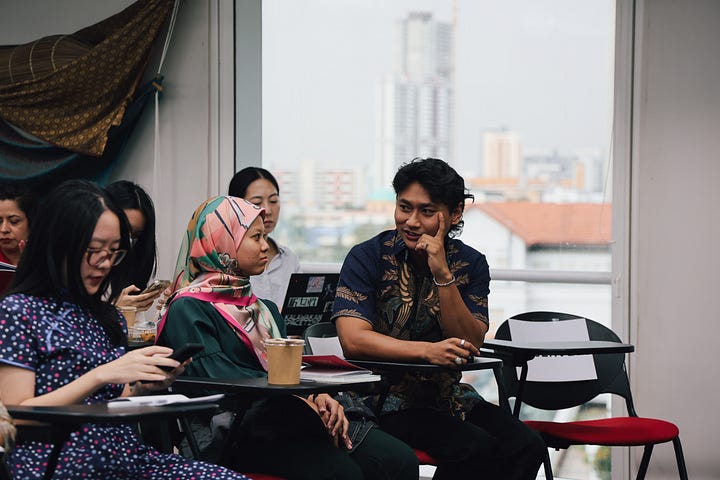
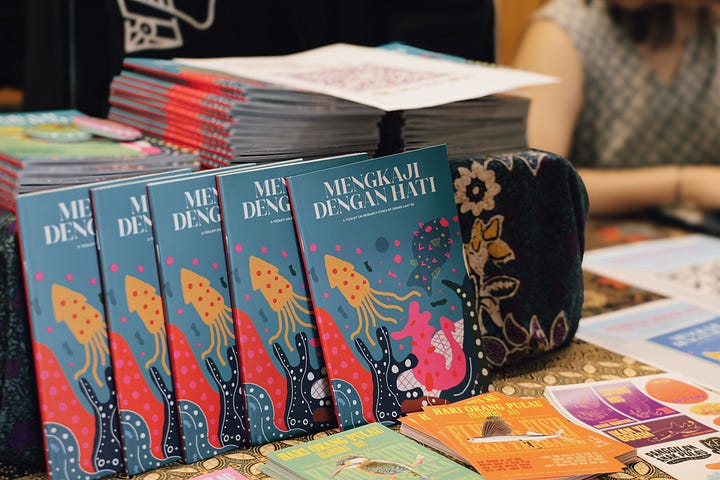
You may click here to download a free digital copy of the Toolkit or purchase the physical copy on our Ko-Fi page.
Marking the month of Ramadan with Bubur Lambuk Ikan Tenggiri and Bubur Sum Sum
As part of our yearly tradition since the start of Orang Laut SG six years ago, we will be sharing our community’s special Bubur Lambuk Ikan Tenggiri at two locations this month, on 11 March and 14 March. This time, we will be joined by esteemed chef and content creator at nOm, Azfar Maswan. We are excited to meet you!
See you soon,
Firdaus
No posts
Comments
Nothing yet. Say the first thing.
Sign in to join the conversation.