
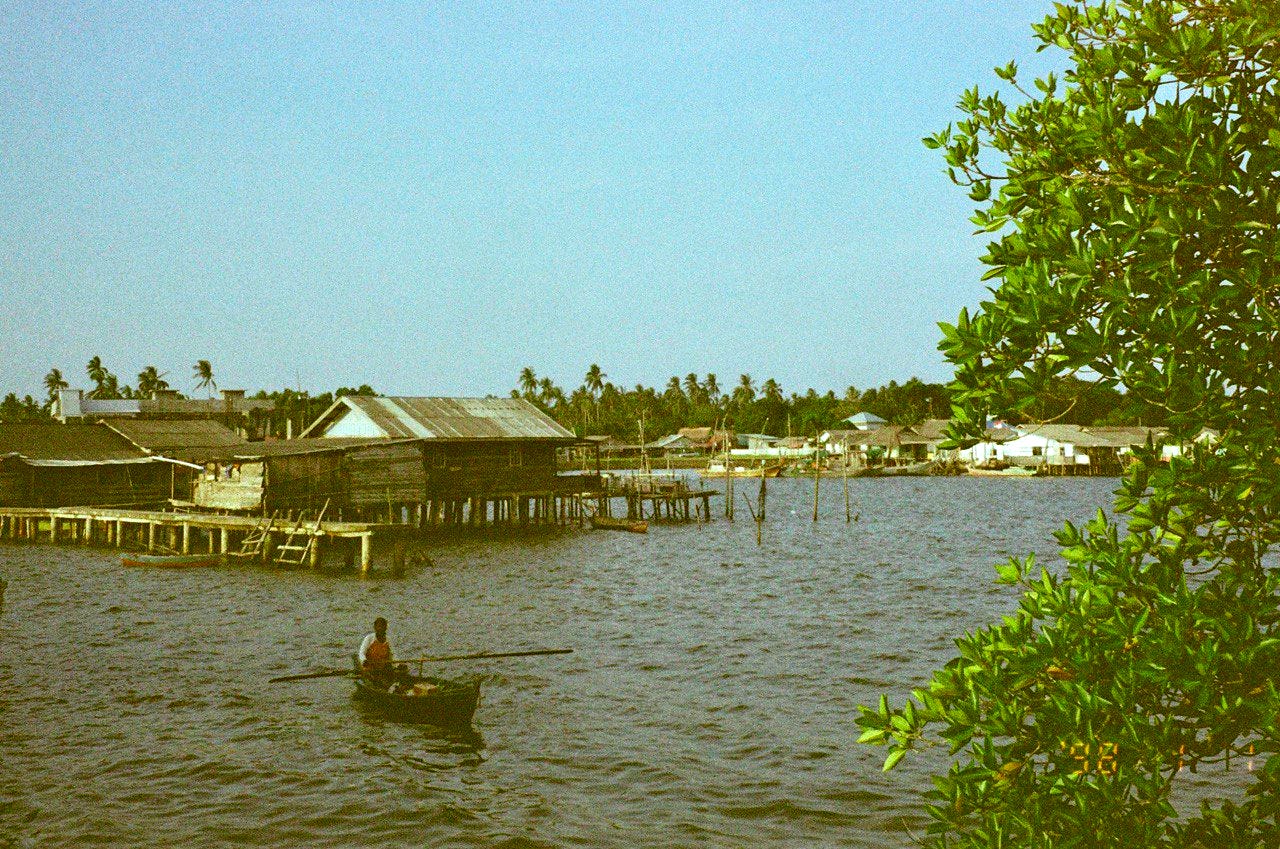
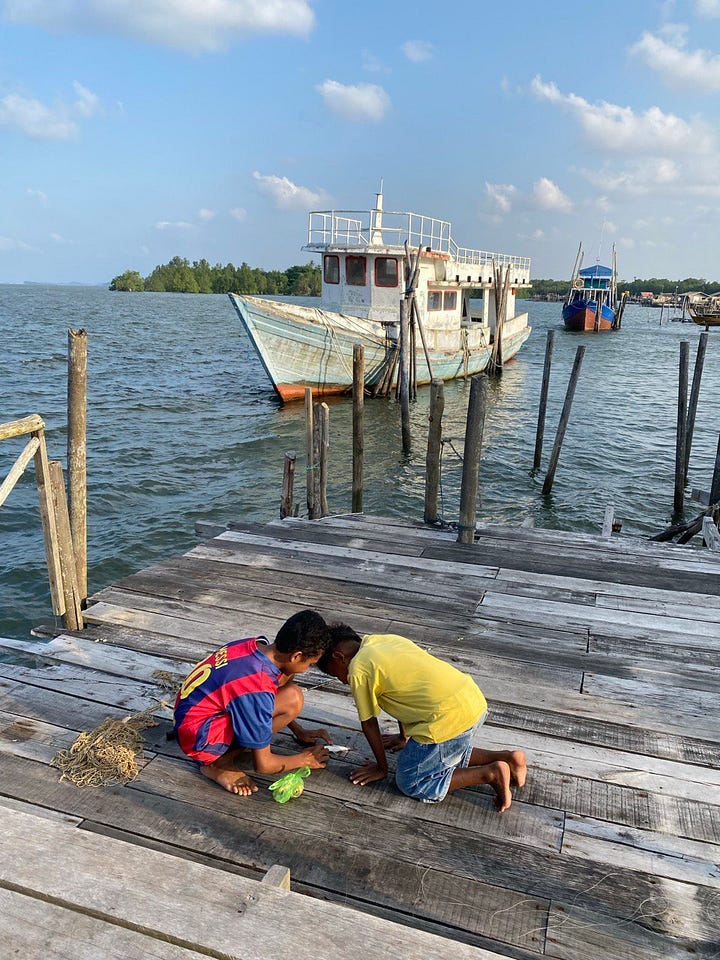
A while back, our team travelled to Bintan to visit Johanes, a friend from the Orang Suku Laut community. From Tanjung Pinang, we drove an hour east into Gunung Kijang district, where Johanes’ village is located. Bintan’s waters have long been home to the seasonally migrating Bajau Laut and the Orang Suku Laut. Some of these communities share kinship ties with the Orang Selat of Singapore. Over the past two decades, however, the island’s east coast has changed dramatically.
As our car rumbles onto a long dirt road, the landscape sharpens: stretches of bare earth surround us, punctuated by stark white buildings. In the distance, cranes loom over construction pits. Asti, our friend and guide, explains that we are entering the Galang Batang Special Economic Zone (GBKEK). Much of this land is now claimed by PT Bintan Alumina Indonesia (BAI), a bauxite processing firm that has come to dominate Indonesia’s industry.
You can hardly pass a couple of meters before spotting a concrete stake stamped with the letters B-A-I. A red banner flutters in the wind, announcing: “Congratulations to Bintan Chemical on the start of the first phase of the chlor-alkaline project,” written in Bahasa Indonesia and Mandarin Chinese. From his post, an armed officer eyes us closely.
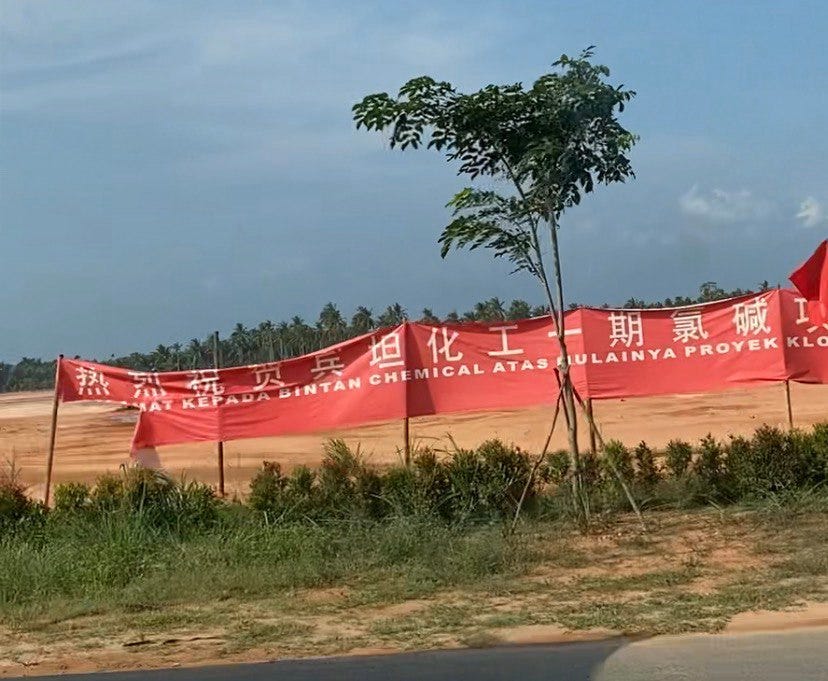
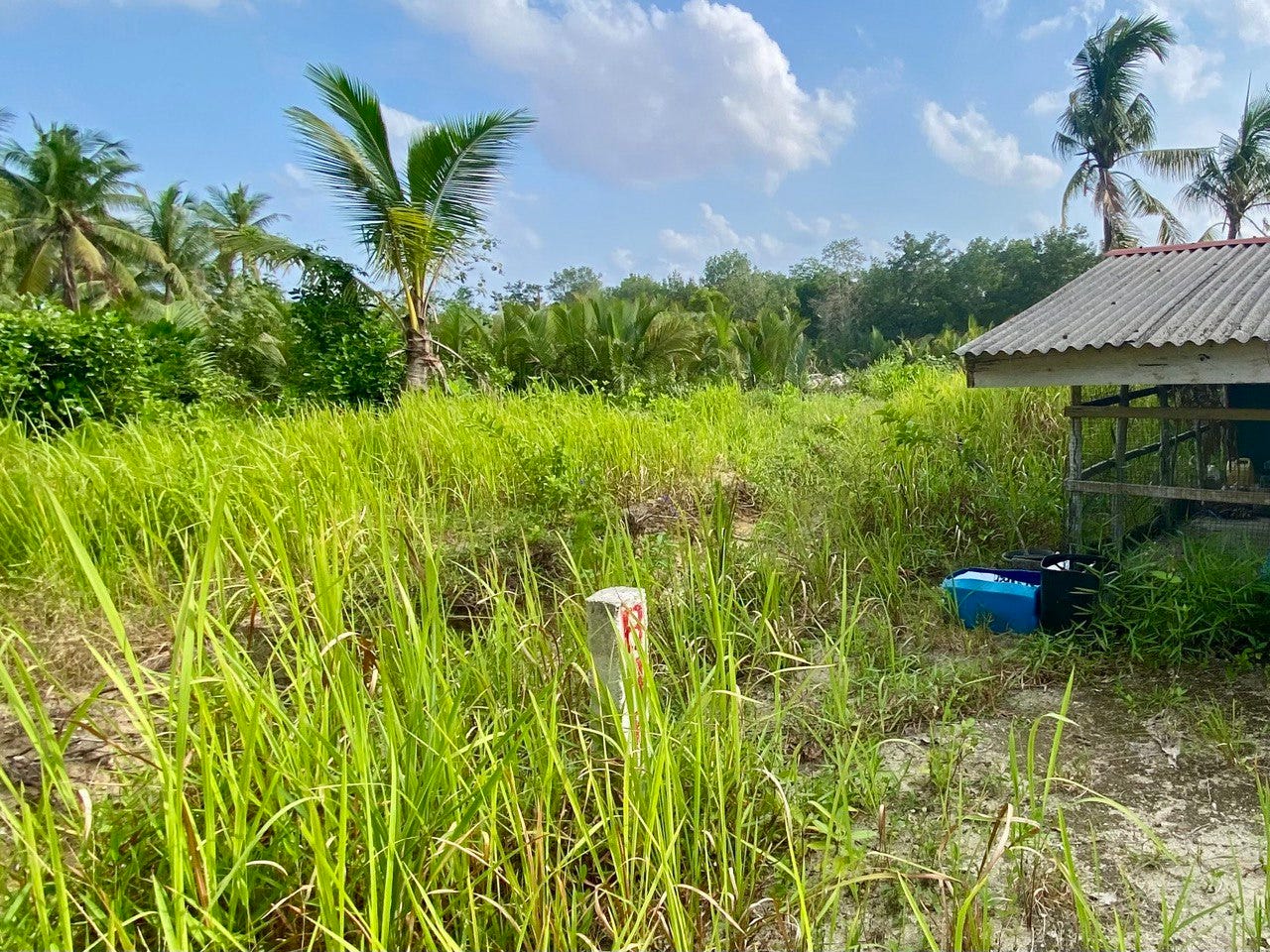
All of this, Johanes says, used to be mangroves.
He shares that while the Orang Suku Laut were never formally ordered to relocate or work for PT BAI, the company’s developments have upturned ecosystems central to their livelihoods, culture, and sense of place. Fishing grounds have been disturbed by mining and reclamation, leaving few alternative sources of income. Many from Johanes’ village have since taken up employment with PT BAI, moving into company-provided quarters.
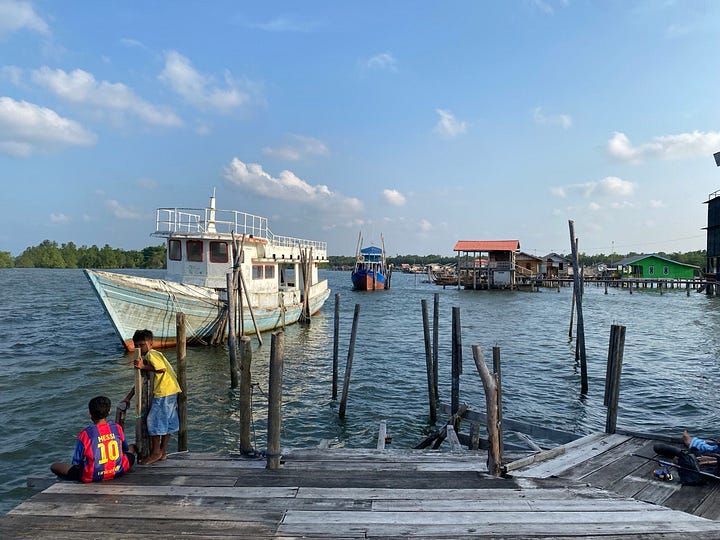
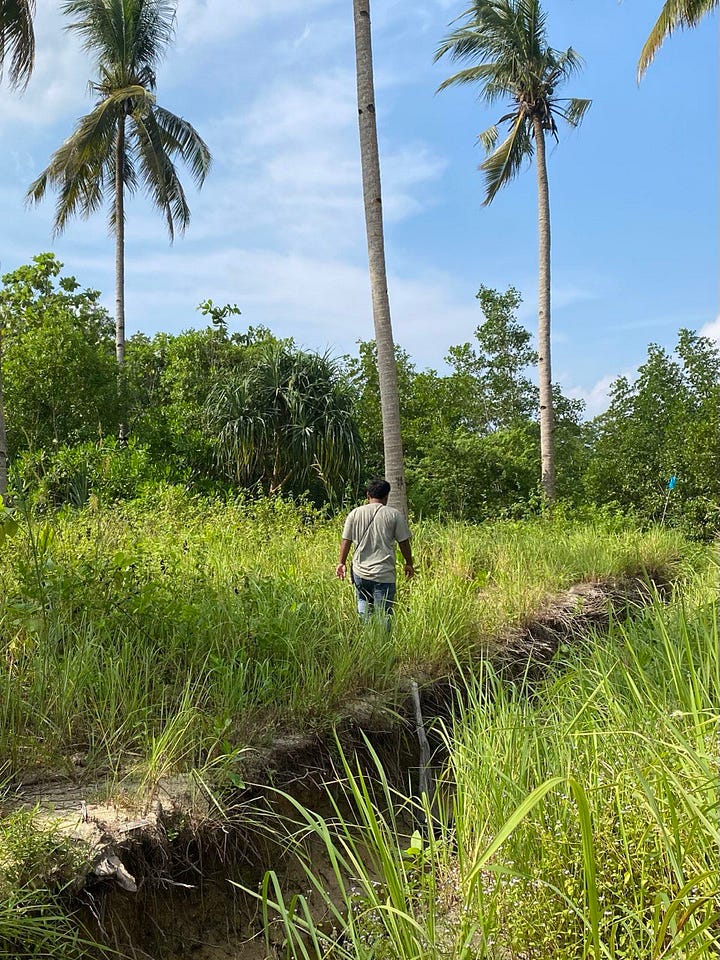
Environmental changes have also altered water flow and raised water levels in certain areas, including the community’s ancestral gravesite. The site, where generations of Orang Suku Laut have been laid to rest, sits on the edge of PT BAI’s land, yet activities just outside the boundary have left the graves increasingly exposed.
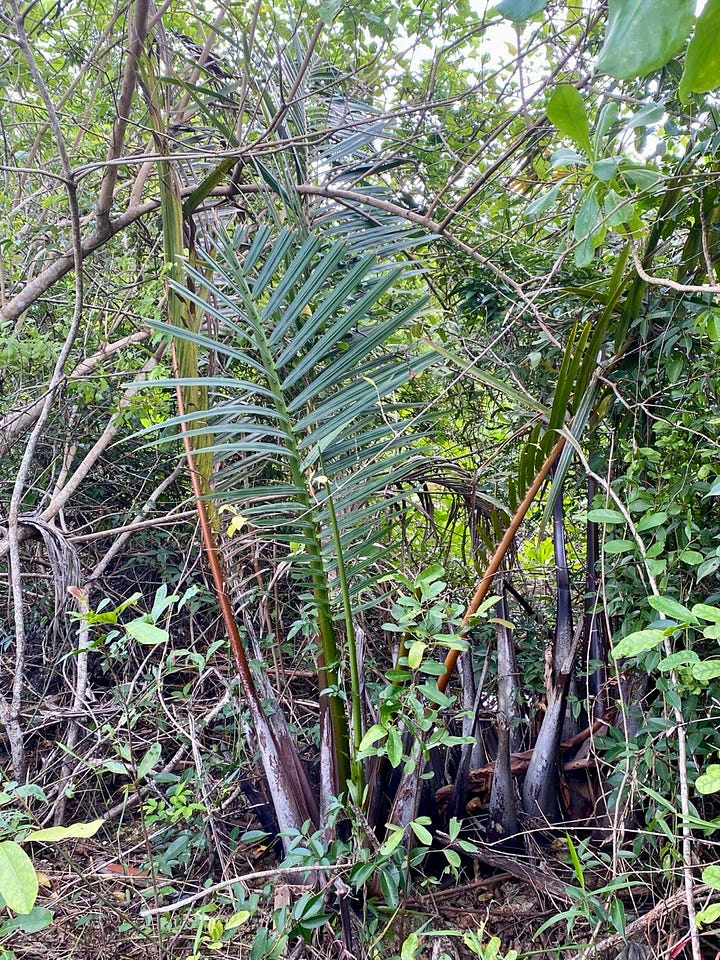
Stands of nipah and pandan trees once provided a natural buffer against rising waters. Nipah trees, in particular, are important for offerings and rituals connecting the community to their ancestors and the land. In the last few years, however, many of these trees have been cleared to make way for PT BAI’s activities. The remaining trees are some of the last few in the district.
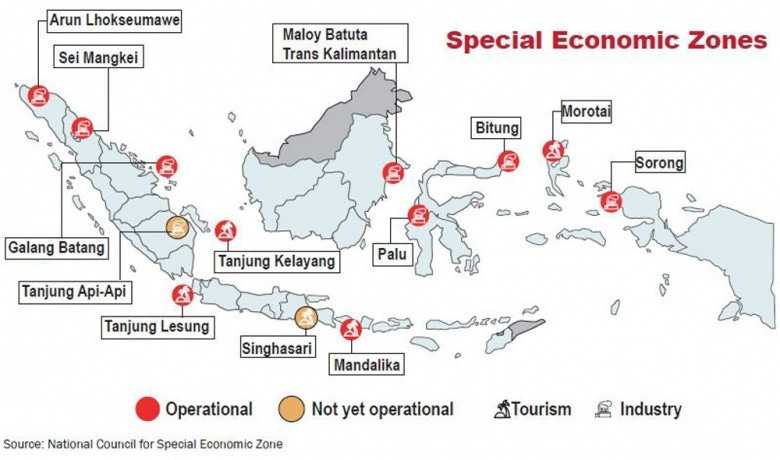
Galang Batang has been designated as a SEZ since 2017, and by 2018, PT BAI was appointed its primary manager, overseeing a newly built port, steam power plant, alumina refinery, and transportation network, most of these on land once occupied by the Orang Suku Laut. The company is almost entirely foreign-owned, with shares tracing back to Shandong Nanshan Aluminium Co. Ltd., a leading Chinese metals group, through a chain of Singapore-based subsidiaries.
To many Southeast Asian governments, SEZs are a bargaining chip in courting foreign investment. Within them, firms like PT BAI enjoy investment facilities, financial incentives, and broad authority to develop land according to industrial priorities. Through policies such as expanded SEZs, Indonesia attracted $12.8 billion USD in Foreign Direct Investment (FDI) nationwide in the first quarter of 2025 alone. Top contributors include Singapore, China, Hong Kong, Japan, and Malaysia.
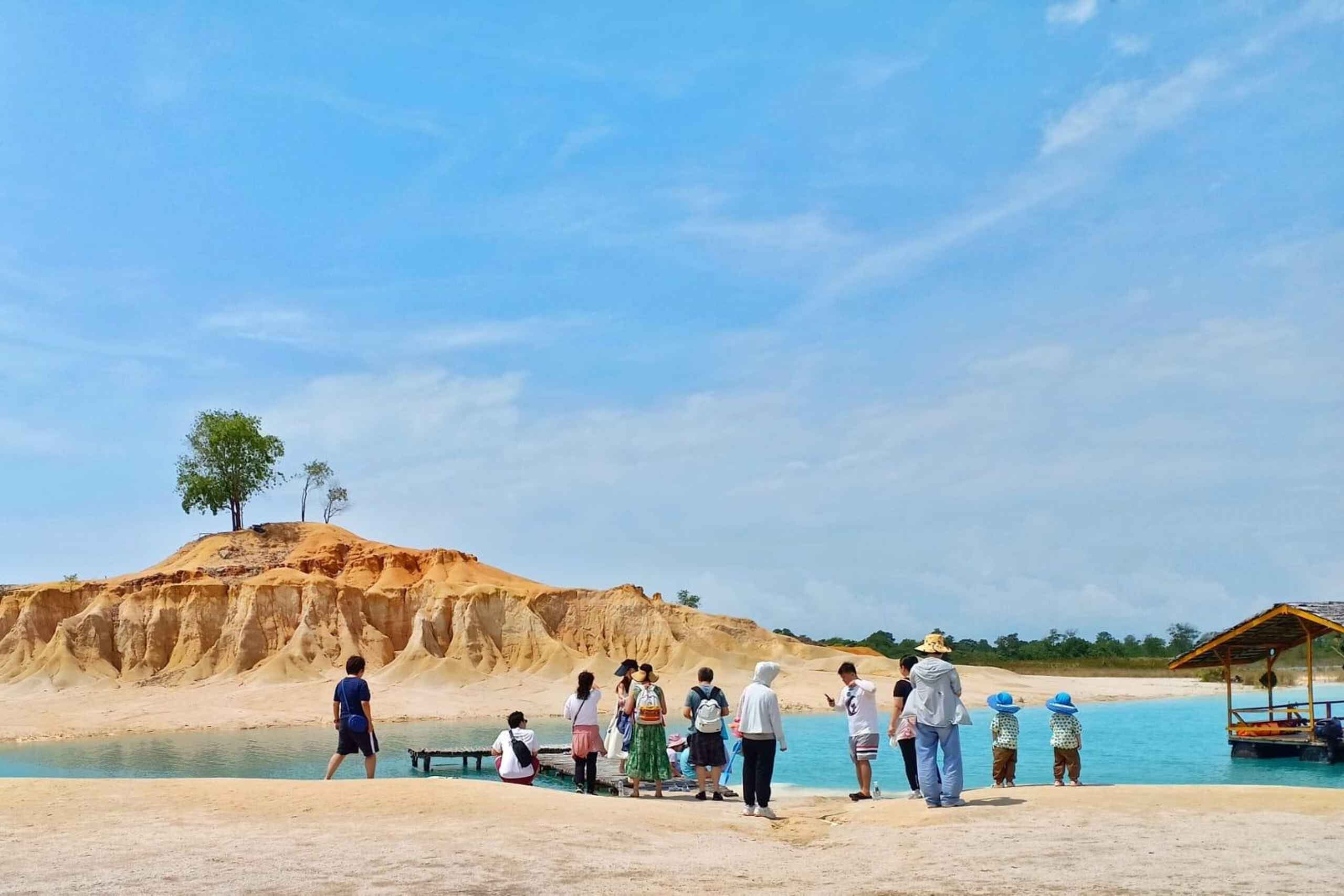
In other parts of Bintan, famous tourist sites like its sand dunes and uncannily blue lakes are remnants of past mining activity by other foreign-led companies; a concentration of contaminants in the waters gives these lakes their striking appearance.
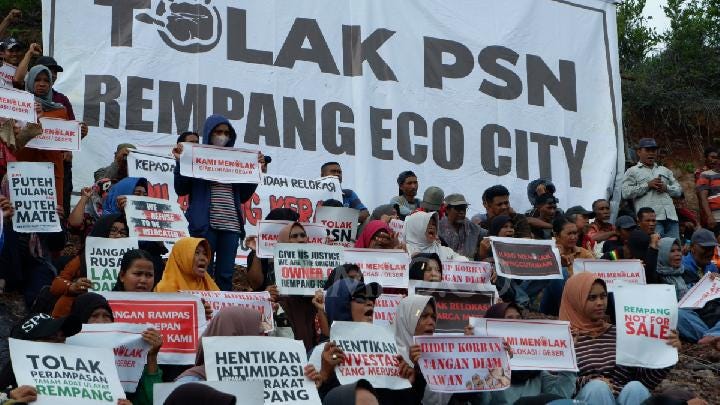
Nearby in Pulau Rempang, Indigenous communities continue to resist eviction for the construction of a quartz sand processing factory, intended to supply solar panels to countries including Singapore. Following violent clashes with law enforcement and attacks targeting residents of the area, they continue to demand for recognition of their ancestral village, wanting only to “live peacefully on their land”.
Many of the SEZs in our region are part of a wider map linked to China’s Belt and Road Initiative (BRI), a central pillar of Chinese foreign policy aimed at strengthening trade connectivity and China’s global influence. As of last year, participating countries accounted for nearly three‑quarters of the world’s population and more than half of global GDP. While governments and businesses welcome these investments for their promise of growth and infrastructure development, the influx of foreign capital also raises serious concerns about social and environmental impacts, particularly for marginalised and Indigenous communities.
As a maritime region, coastal areas in Southeast Asia are especially sought after for qualities such as their easy access to shipping routes. Too often, coastal communities suddenly find themselves in the shadowy grip of foreign business, who have set sights on their homelands from afar. Because sea and foreshore rights are rarely formally recognised, their vulnerability is further heightened.
Just across our causeway, the Orang Seletar face similar threats of displacement as major projects like Danga Bay encroach onto their homes in the Johor Strait. These developments are part of the Iskandar Malaysia SEZ, built to leverage its proximity to Singapore. Announced in 2006, much of the initial SGD $87 million investment came from Singapore, though Chinese developers such as Country Garden (the firm behind Forest City) have taken the lead.
For some, this new island rising from the sea represents opportunity: speculative investment, for instance, a waterfront property, or space for experimental enclaves. Months ago, patrons of the Network School, a techno-utopian compound where “crypto and tech entrepreneurs are building software, chomping down Australian prime ribeye, hitting the gym – and getting schooled in a radical blueprint for creating new sovereign states from scratch” arrived in hordes on the reclaimed island.
For the Orang Seletar, this development marks a second relocation within a few decades. The first occurred when they were moved from Singapore’s northern shores in the mid-1900s. Elders spoke of the pain of seeing people and machinery bulldoze their sacred spaces, as they first learned about the projects only when construction workers began clearing ancestral gravesites over a decade ago.
At the same time, the community has fought fiercely to maintain their livelihoods and cultural practices, holding their ground in legal disputes with remarkable strength and determination. Led by Eddy Salim, the Orang Seletar of Kampung Sungei Temon filed a stop-work action in 2013 at the Johor High Court. In 2017, the court recognised that they had customary rights over their claimed territories. Five years later, in a landmark ruling, the Johor government agreed to provide not only monetary compensation, but also newly gazetted land to replace their ancestral territory and allow the community to continue their livelihoods.
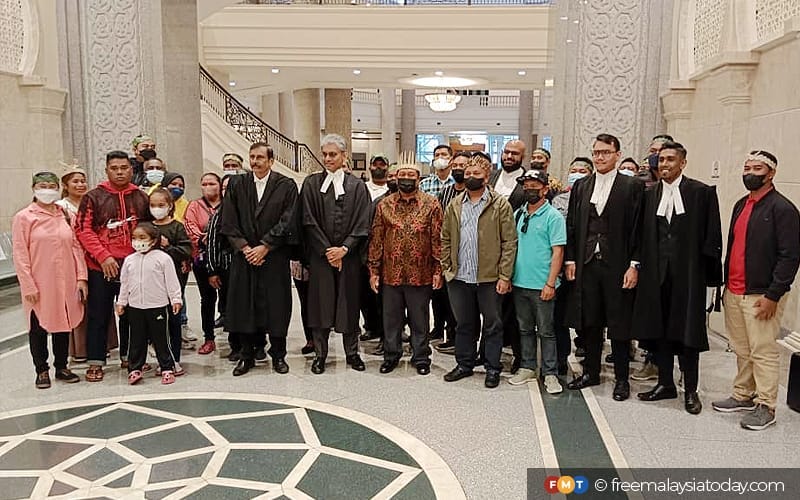
This outcome is significant, especially compared to earlier cases involving the Orang Asli in Malaysia. For example, in the Sagong Tasi case (2002-2005) led by the Orang Temuan of Selangor, the High Court recognised Orang Asli native title for the first time, affirming their customary rights over ancestral land, though the Orang Temuan received only financial compensation, and were not given any new land.
The Orang Seletar ruling represents a notable step forward, combining monetary support with replacement land. However, it still falls short of granting full control over their ancestral territories; in Malaysia, customary rights are limited in practice as the state retains ultimate ownership of land, and Orang Asli rights are largely restricted to occupying and using it. Under the Land Acquisition Act, the government can still relocate communities or allow development on their land, provided compensation is offered.
By contrast, international standards, such as the UN Declaration on the Rights of Indigenous Peoples (UNDRIP), go further. UNDRIP recognises Indigenous peoples’ rights to own, use, control, and develop their traditional lands, and requires that states obtain free, prior and informed consent (FPIC) before approving projects or relocations.
This framework acknowledges that native title carries deep cultural, spiritual, communal, and economic meaning that cannot be reduced to market value. It also gives communities the power to fully manage economic, cultural, and environmental use of their territories.
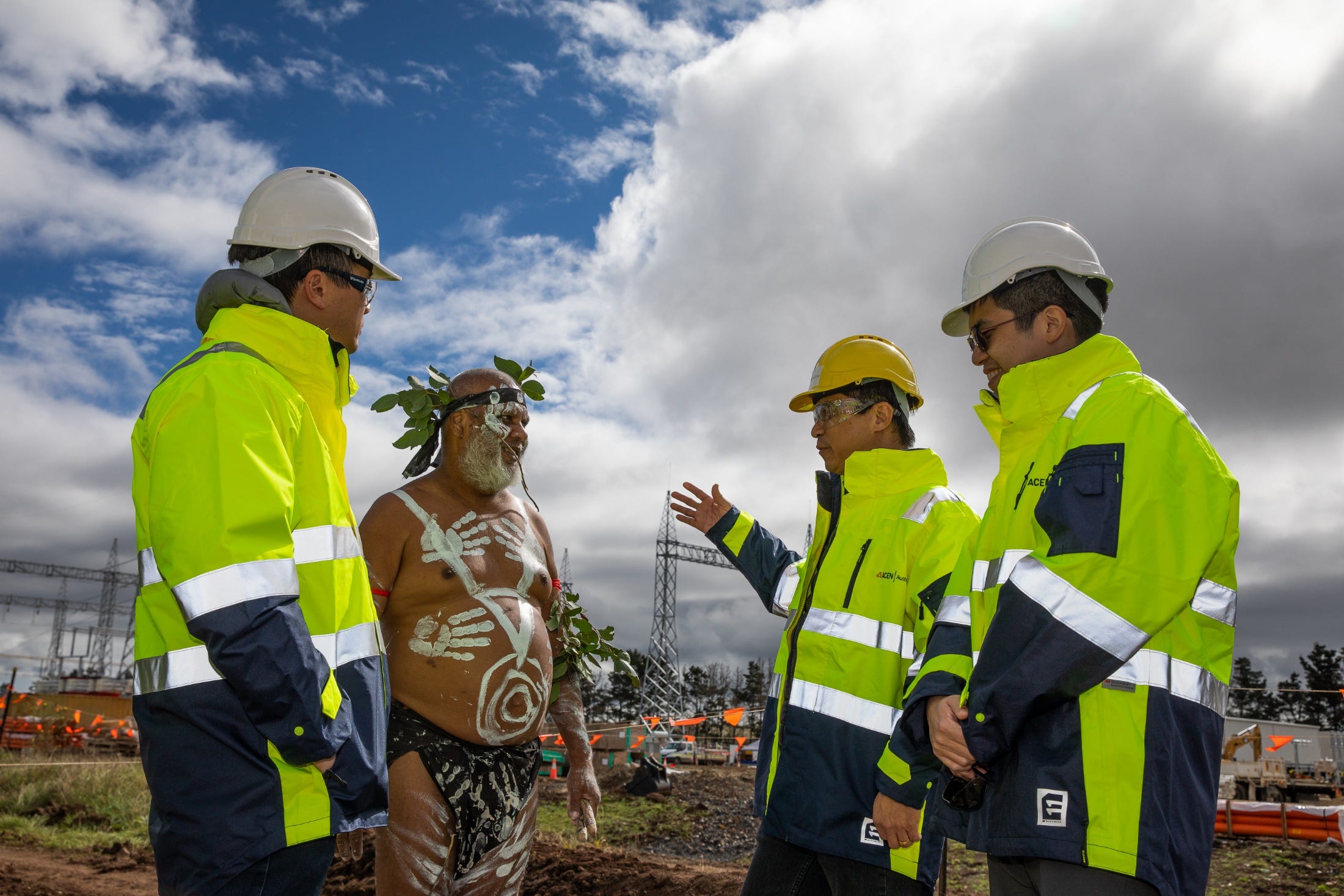
For investments to truly benefit Indigenous people, this ability to exercise meaningful control over their territories is crucial. While research shows that foreign investment near Indigenous lands often leads to land loss, environmental harm, and social conflict, there are few exceptions. In Australia, for example, the Philippines-based ACEN Renewables partnered with the Yindjibarndi people of Western Australia to jointly develop renewable energy projects.
A key strength of the arrangement is that the Yindjibarndi chose ACEN as their partner and retain approval rights over all proposed project sites. The agreement also provides for Yindjibarndi equity of between 25% and 50% in each project, preferred contracting for Yindjibarndi-owned businesses, and training and employment opportunities for community members.
These examples suggest that different outcomes are possible, but only when land tenure is secure, agreements are fairly negotiated, and cultural and environmental values are treated as central rather than peripheral. Such conditions are often absent in Southeast Asia, yet they demonstrate that development need not come at the expense of Indigenous lives, livelihoods, or heritage.
In Singapore, our own history is not disconnected from these regional experiences. The relocation of the Orang Pulau from the Southern Islands was partly triggered by the establishment of the Shell refinery on Pulau Bukom in the early 1960s, alongside other development projects in the decades that followed. Although the Southern Islanders have long since been resettled, Singapore’s economy remains intertwined with contemporary processes of displacement taking place just beyond our borders.

For communities like the Orang Suku Laut and Orang Seletar, the future is still uncertain. Industrial expansion keeps pushing into their lands and waters, even as their efforts to protect ancestral sites, livelihoods, and ways of life grow more urgent. But these communities are far from passive. They continue to assert their presence, share their histories, and fight for the right to live with dignity on their own terms. As neighbours, we stay in touch with both the Orang Seletar and the Orang Suku Laut, and with local partners, are exploring ways to support them through visits, documentation, and advocacy.
If you have experience working with Indigenous communities facing similar pressures, or insights into ways to safeguard the rights of neighbouring coastal communities, we would be grateful to hear from you.
As the year comes to a close, we want to give a quick shout-out to the communities and organisations we’ve connected with over the past couple of months. These relationships are what give meaning to our work and keep us motivated to push for social impact. We’re grateful to each and every one of you!
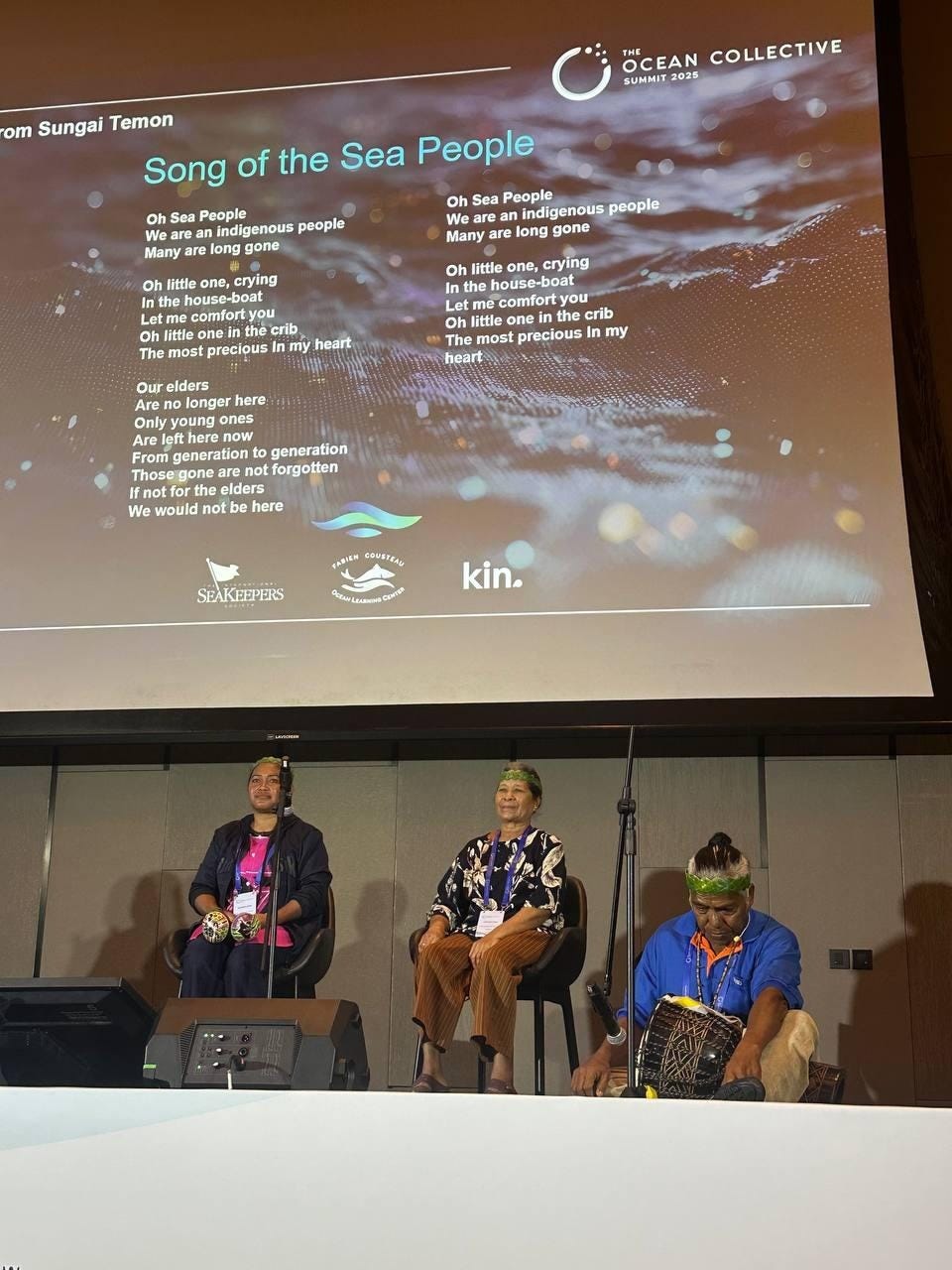
Meeting Orang Seletar @ The Ocean Collective Summit (3 Oct)
We participated in The Ocean Collective Summit organised by The International SeaKeepers Society Asia. Through Dr Jarina’s coordination, we were joined by Nek Leiti, Pak Jahan and Anti from Kampong Sungei Temon, Johor. They shared about their displacement from their coastal village and the loss of access to ancestral seas. Their songs and stories offered a direct and personal insight into the lived experiences of the Orang Seletar community. This session grounded the summit’s conversations in real human experiences behind environmental and cultural loss.
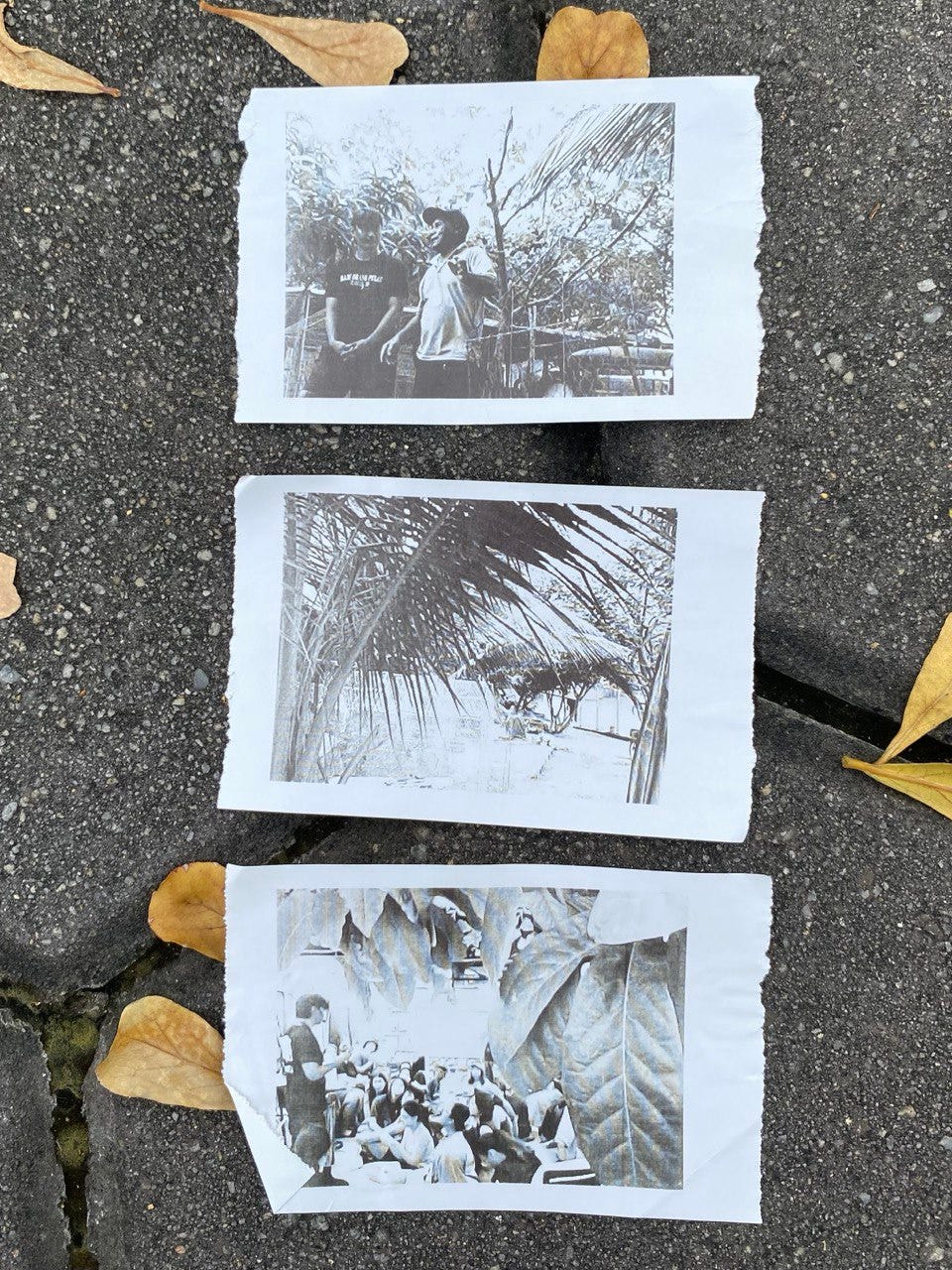
Coastal Walks (with Culture Pass!)
On October 11 and November 22, we hosted another two Culture Pass coastal walks, introducing participants to the maritime histories of Singapore’s southern shores and the heritage of Orang Laut communities. Participants shared that it was their first time learning about the cultural and ecological relationships held by coastal communities here. These walks continue to be a useful way to familiarise the public with lived heritage on-site.
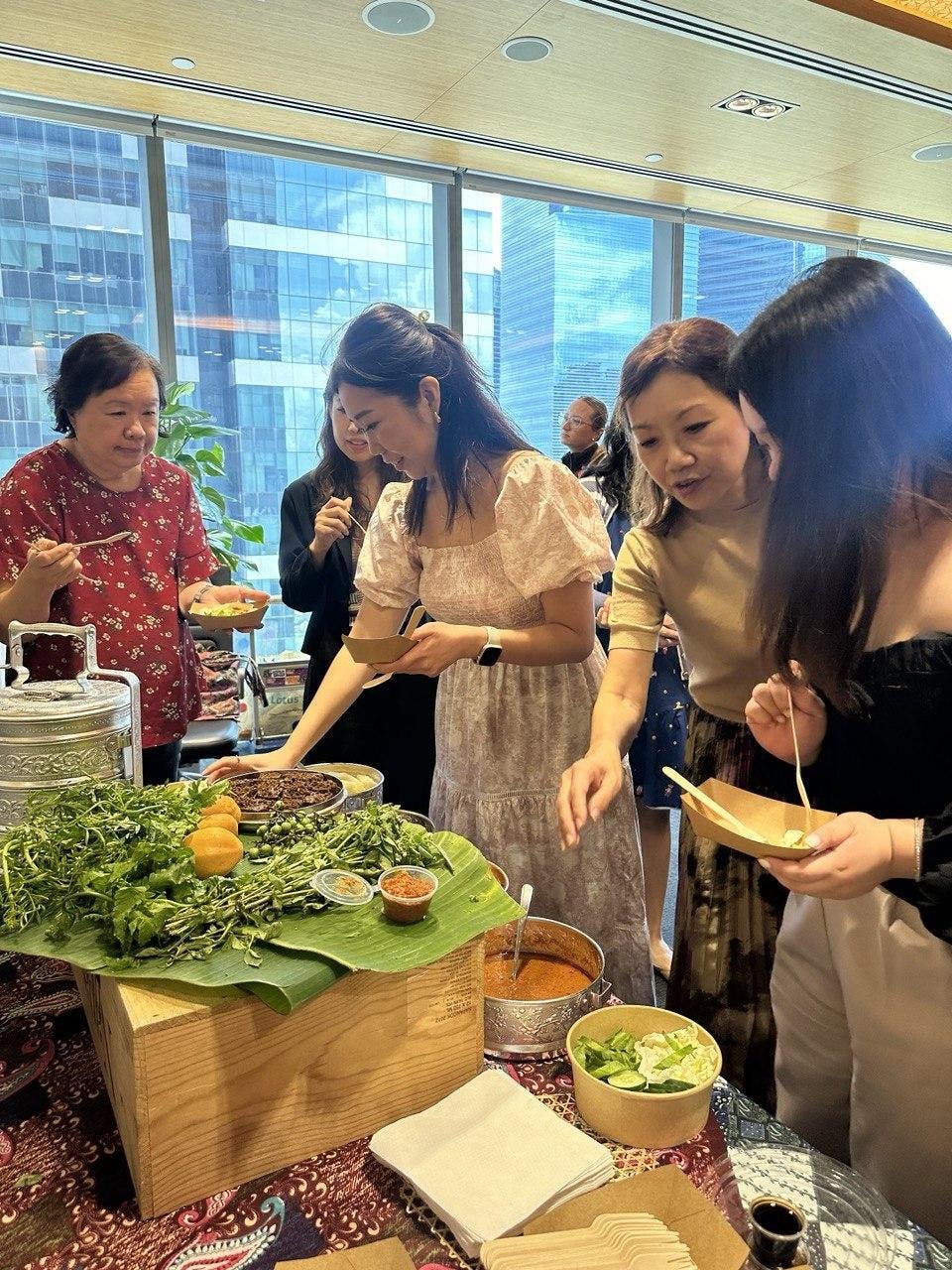
Nikko AM Global Awareness Series (15 Oct)
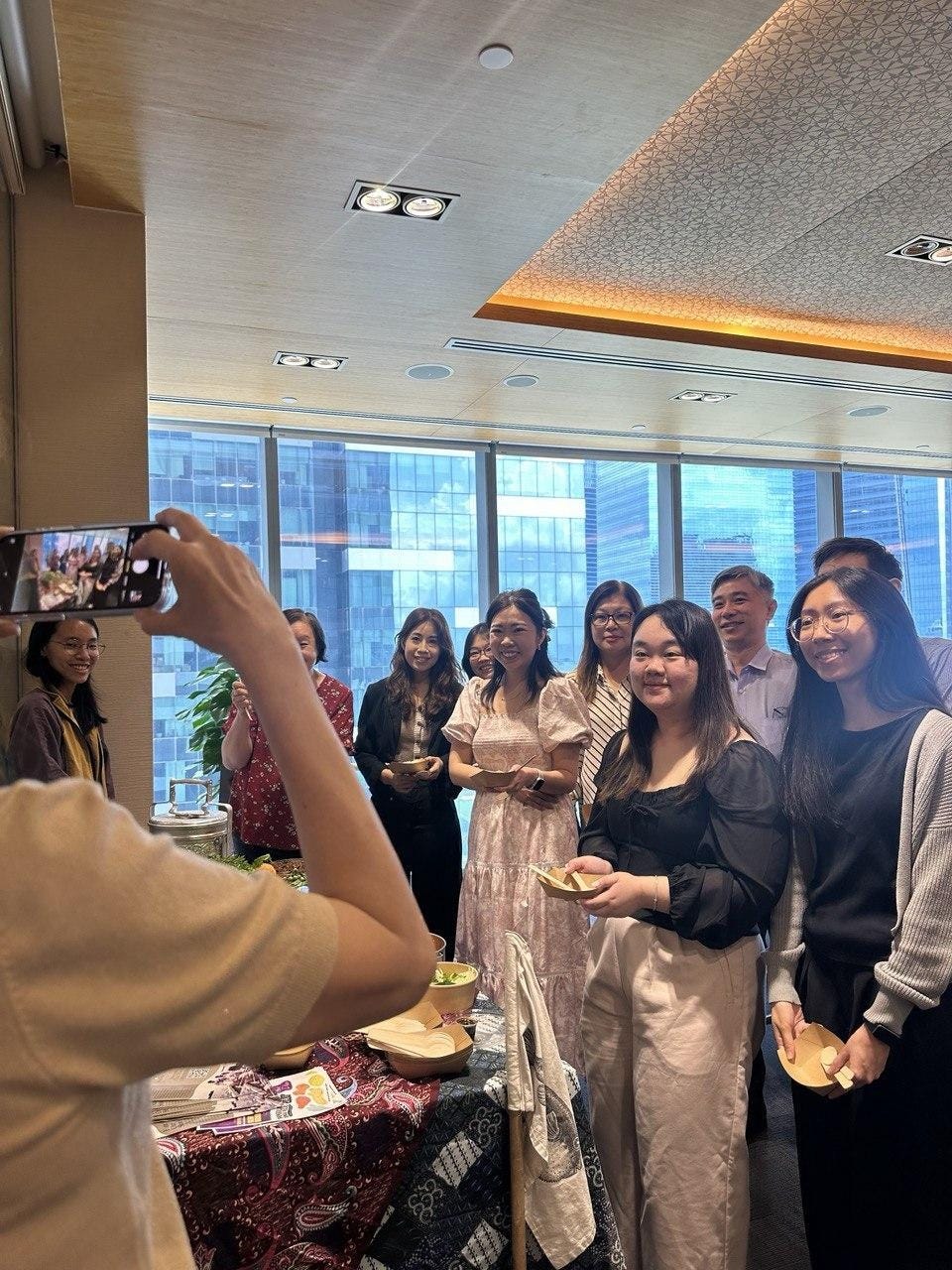
We were also invited by Nikko AM’s Sustainability Group and Global Racial Equality Group to share about the Orang Laut communities as part of their internal global learning series. Previous talks in the series included the Buraku community in Japan and the Māori in New Zealand. Our session was conducted live in the Singapore office and broadcast to teams in Japan, New Zealand, and other regions. Thank you to the Nikko AM team for welcoming us into your office and learning more about Singapore’s Indigenous Peoples, we hope you enjoyed the food!
Jemput Lagi! with Singapore Art Museum & Shooshie Sulaiman (17 Oct)
We hosted Shooshie Sulaiman and the Singapore Art Museum team at Tanah dan Air in West Coast Park. It has been about a year since establishing the space, and this gathering served as a check-in and re-connection. We were happy to welcome back Shooshie Sulaiman into our space, and celebrated with an evening of gathering, storytelling and food, a spread specially prepared for SAM’s crowd!
We had space to hear the Orang Laut community practitioners and members, with Faizal, Cik Am, Mak Noni and Mak Ani present on the panel. Shooshie reflected on how beyond documenting, representing, it is of upmost importance that we take to practicing traditions, knowledge and to partake in building these crafts by their own- to truly understand what the community has been through.
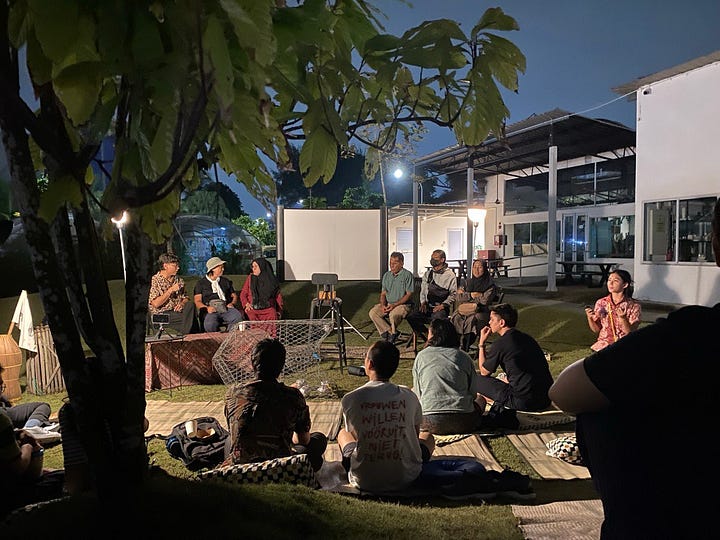
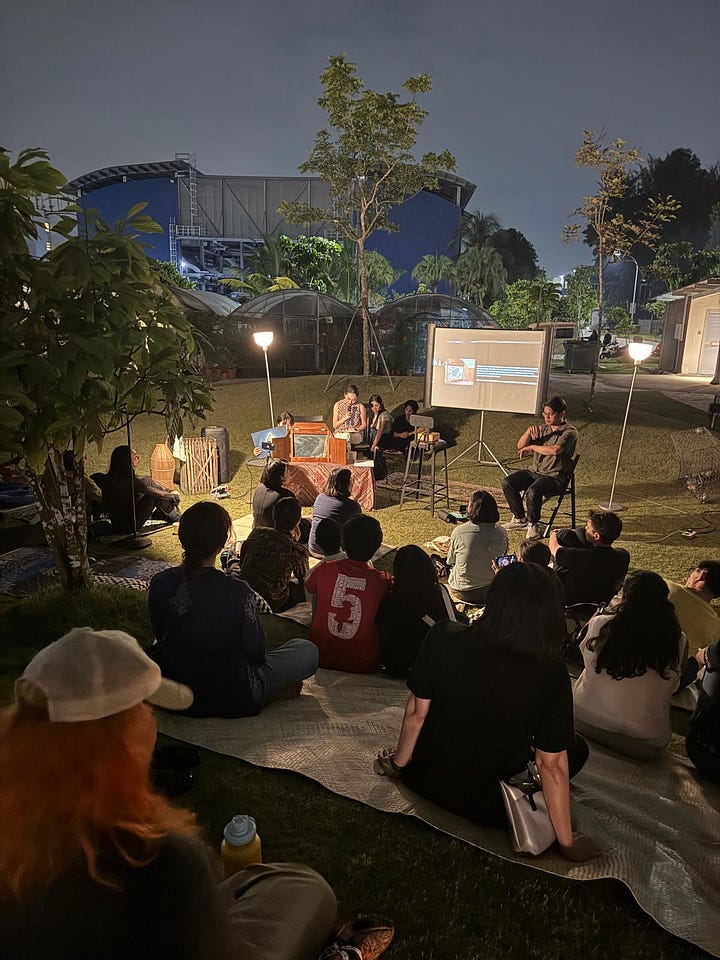
Learning Journeys with Lee Kuan Yew School of Public Policy (5 Nov) and Raffles Institution (18 Nov)
In November, we embarked on Learning Journeys with students from the Lee Kuan Yew School of Public Policy and Raffles Institution, using the Orang Laut and Orang Pulau experience as an entry point to discuss development, indigeneity, and advocacy in Singapore. Through these sessions, students engaged with lived experiences of displacement, adaptation, and community-led work. For RI students, the session placed particular emphasis on Project Work (PW), encouraging intimate discussions on how these insights could be thoughtfully applied to their own advocacy and research projects in a way that is grounded, ethical, and community-centred.
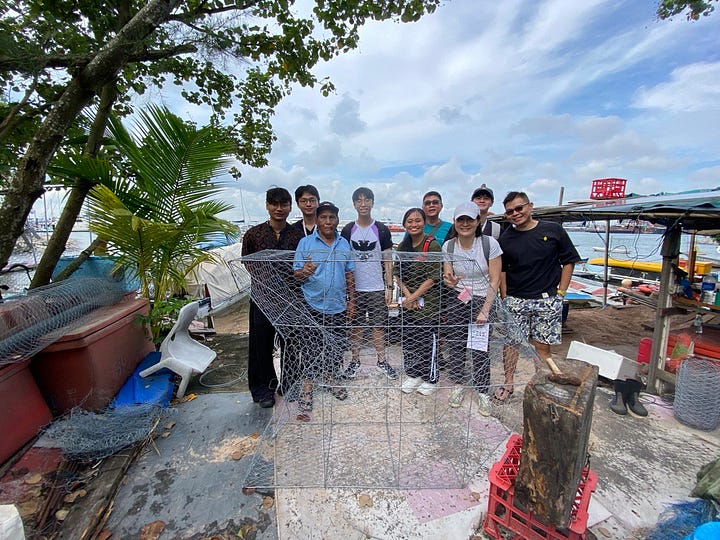
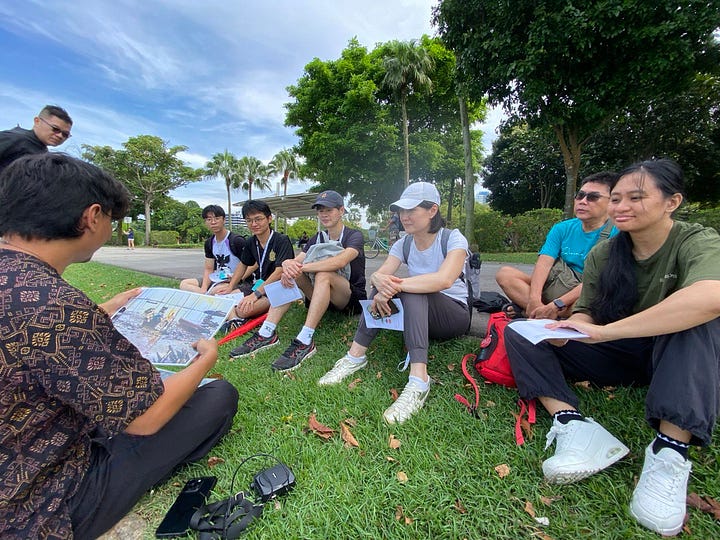
Programmes for the staff of Guangyang Secondary School, Hua Yi Secondary School, and ACMI
We were also happy to welcome the staff from Guangyang Secondary School, Hua Yi Secondary School, and the Archdiocesan Commission for the Pastoral Care of Migrants & Itinerant People (ACMI) to West Coast Park in the past month. For Guangyang, the programme was part of their strategic planning for the year, and we shared a buffet set as they reflected on the year ahead. Hua Yi staff joined us for a range of hands-on activities to bond, including a cooking demonstration with Mak Noni and a jamu-making workshop with Sue from Dapur Cahaya. With ACMI, it was insightful for us to hear about the work they do with migrants and have open conversations about roots, identity, and supporting communities.
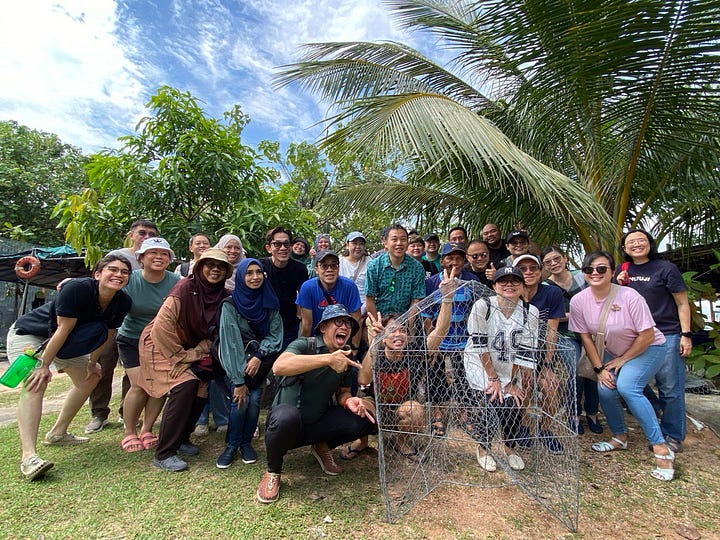
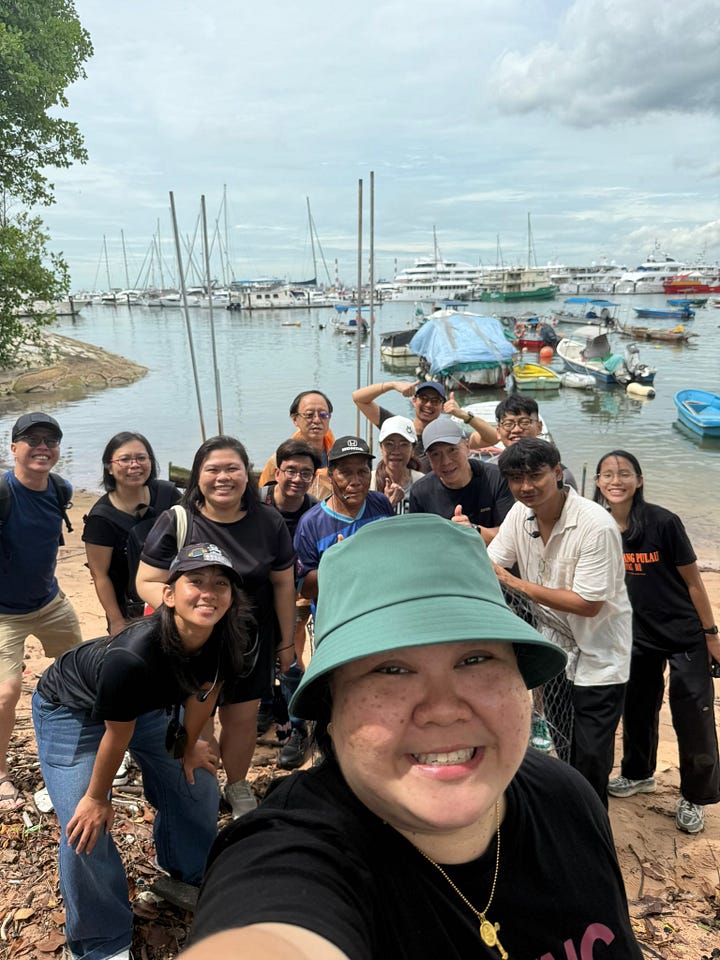
We have some exciting plans for the start of 2026 and are looking forward to sharing them with you! If you’re interested in creating a programme with us, or just want to chat about ideas, feel free to drop us a line at hello@oranglaut.sg. :)
See you soon!
No posts
Comments
Nothing yet. Say the first thing.
Sign in to join the conversation.