
This month, we are thankful to be able to spotlight more Orang Pulau community members, as they have been given opportunities to represent their own unique experiences and stories of growing up on Singapore’s Southern Islands.
Their stories are a vital part of our intangible cultural heritage (ICH), which anchor us (and hopefully, future generations) to our environment and kinship ties in the region.
When Cik Am and some fishermen from the Southern Islands return to sea over the weekends, their sampans are sometimes loaded up with these handwoven wire mesh traps that can be larger than the men themselves.
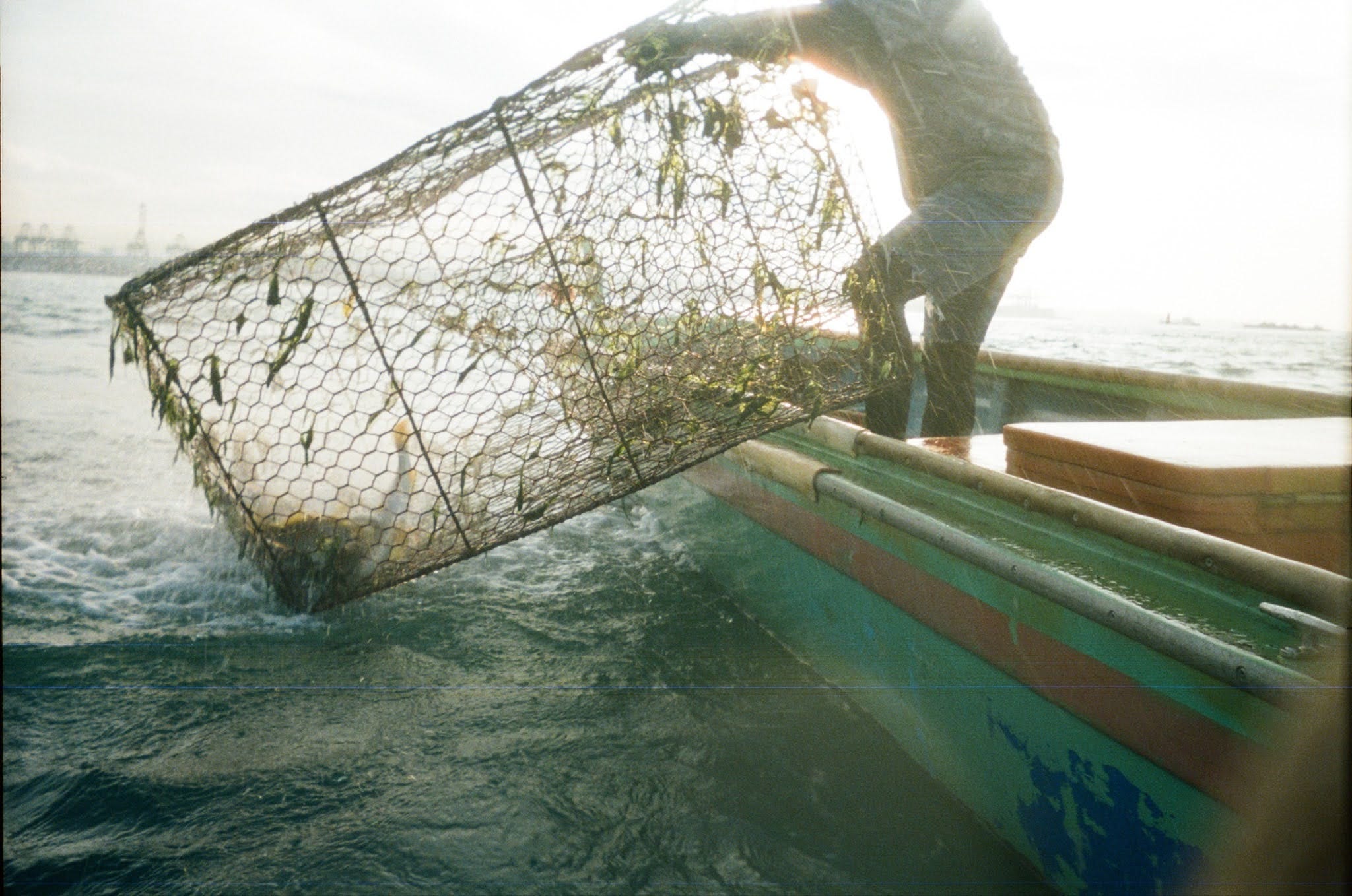
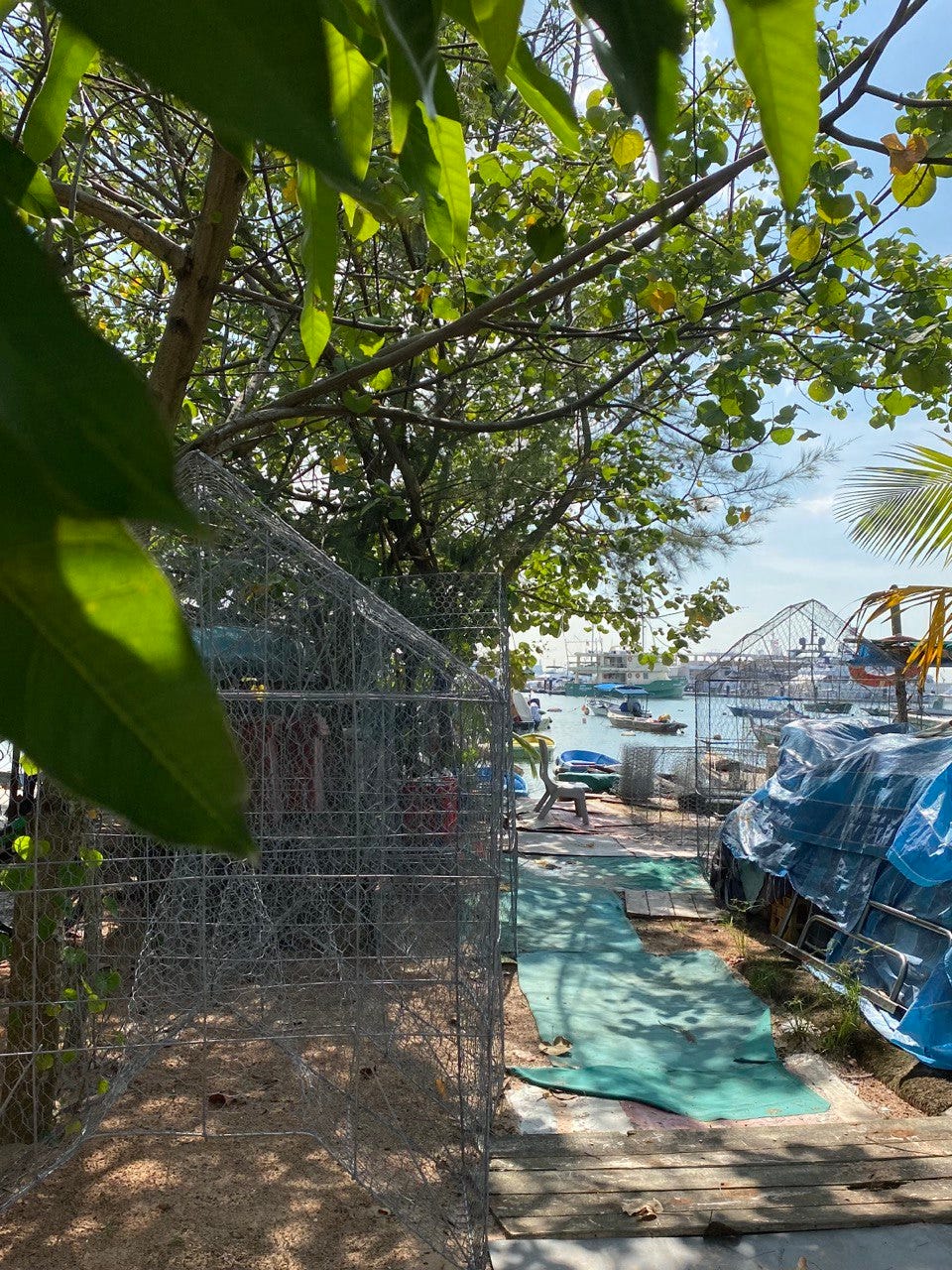
Every bubu maker has a signature – Cik Am uses siku (hooks) to secure the tulang (skeleton) of his trap to the hexagonal wire frame in front; each trap is furnished with a small door near the roof to easily reach the fish inside. This craft is not simply an object, it is a living practice intertwined with the sea, coupled with a sensitivity and familiarity to the environment developed over decades. At seven, Cik Am began fishing with bubu traps with his father, rowing their sampan to the bountiful reefs surrounding Pulau Sudong, their ancestral island. Having just turned 70, Cik Am has been making bubu traps for about half a century.
Through visits to our community space at West Coast Park, Cik Am has humbly shared with us the know-how behind bubu trap fishing. In the expanse of glittering blue sea, the Orang Pulau keep track of exactly where each bubu trap is placed in relation to landmarks such as islands, reefs, and locations on the mainland like Bukit Timah Hill. One person free dives into the sea to secure the trap onto the reef with large rocks, while another mans the boat, keeping an eye out for any shift in the currents or winds. With a large catch and a large bubu trap, the fish alone could weigh up to 70 kg, and require both fishermen to lift together. For the most part, one person is enough to retrieve the fish and carefully brush off stray pieces of seaweed and debris before returning the trap to its original spot. “A bubu is like a home,” Cik Am often reminds us. If it does not look nice and clean, the fish would not want to enter it.
The bubu is a type of passive trap, allowing fish in but making it difficult to escape. It is a light-touch, sustainable tool as it does not damage marine habitats or involve large bycatch. Cik Am also shared that he believes it can be more effective than methods like net fishing, which may require fishermen to stay out at sea for long hours. With bubu fishing, fishermen can retrieve traps during the day and return home by evening.
As a shared traditional craft that has sustained families and livelihoods among Indigenous coastal communities of the Nusantara for generations, it is also a vessel for maritime knowledge and wisdom – like how our winds and currents flow, where fish gather, and the rhythms of the reefs.
We’re hence excited to share that our team nominated Cik Am as an expert ICH practitioner last year, and the nomination has been accepted! Soon, Bubu Making and Fishing will be added to our ICH inventory, which will also serve as documentation for some of Cik Am’s knowledge relating to the weaving of bubu traps and their use.
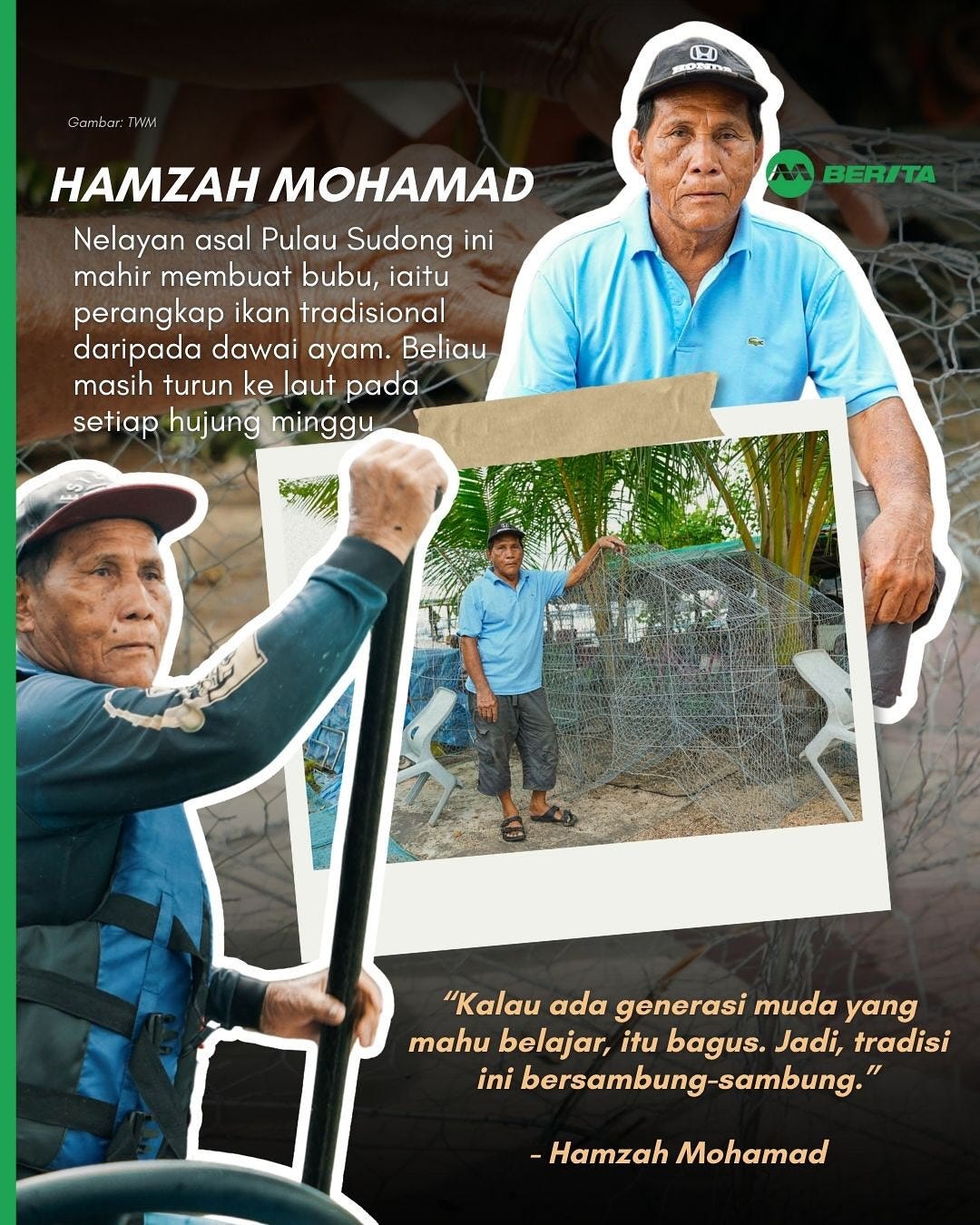
We are so happy to see Cik Am’s craft receiving official recognition, and this is also the first time that an aspect of Singapore’s Indigenous cultural heritage has been included in the ICH inventory.
Many of the community’s practices are place-based, reflecting a rootedness with our surrounding land and seascapes. Being relocated from the Southern Islands threatened to sever such ties, as former islanders suddenly faced barriers to continuing their age-old traditions. For instance, fishermen like Cik Am have to take their sampans much further out to sea to access traditional fishing spots, many of which are closer to the Southern Islands than mainland Singapore. These longer trips require more fuel, in addition to having to shoulder additional costs like boat motor upkeep and operational licenses. Compounded with a dwindling catch impacted by the increasing developments in Singapore’s waters, some islanders have had little choice but to give up or sell off their boats and associated licenses.
More than a survival skill or source of sustenance, these traditional fishing practices are part of our living heritage, carrying stories of resilience, belonging, and deep connection to the sea. To help safeguard them, we have launched a dedicated donation fund to support the community in maintaining their sampans and continuing maritime traditions like bubu fishing. Every contribution goes directly towards sustaining sampan upkeep, licensing, and the passing on of these crafts to future generations.
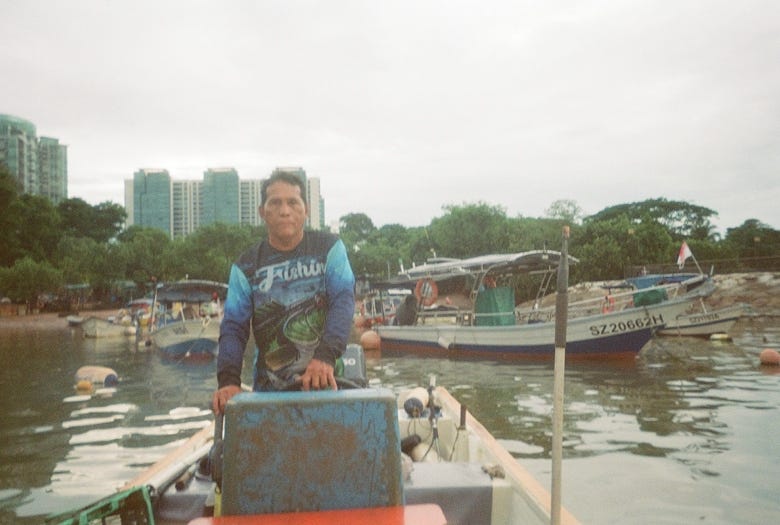
Thank you for supporting our Orang Pulau fishermen!
Another Pulau Sudong islander we are so proud to see making waves in the media recently is the phenomenal Cikgu Asnida Daud (who is also Cik Am’s niece)! If you’re lucky, you may have caught her at one of our past Orang Laut SG events, on television, or perhaps even in your classroom. Cikgu Asnida is an educator with the Malay Language department at MOE Headquarters, and also a talented artist, performer, and proud Orang Laut descendant. We’ve always been in awe of how her words and music so powerfully capture the heart and soul of what it means to be Orang Pulau.
Recently, she shared with Channel NewsAsia how her music continues to carry the rhythm of the islands, recalling:
“My childhood was filled with music, and everyone around me sounded fantastic.
With her voice, she not only shares her family’s stories, but also lights the way for other descendants, showing what it means to reclaim our heritage loudly, beautifully, and unapologetically.
As part of the Singapore Night Festival earlier this month, we had the privilege of bringing together Cikgu Asnida and other former islanders for a panel discussion on the lesser-known celebratory traditions of Singapore’s island communities — from music and dance to storytelling. Held at the Oldham Theatre in the National Archives of Singapore, Rentak Pulau, Bunyi Hati (Island Rhythms, The Heart Echoes) featured Cikgu Asnida alongside Cik Nasir, a musician from Pulau Samulun, and Cik Kasmun, a joget dangkung dancer from Pulau Sudong, in a conversation moderated by Firdaus, their riveting stories bringing to life the vibrancy and richness of Orang Pulau culture.
As a young teen on Pulau Samulun, Cik Nasir first encountered the ghazal — a genre of traditional Malay music common across the Nusantara. The melodies drifting across the island stayed with him, and to this day he continues to play ghazal with Orkes Melayu Mutiara, an ensemble led by former islanders and descendants of Pulau Samulun. He spoke about the joy of playing through the night with a full ensemble of gong, percussion, violin, singers, and dancers.
Meanwhile, Cik Kasmun shared his experiences as a joget dangkung dancer, performers who were sometimes called “angels” among the community, known for traveling between islands to enliven festive occasions. Despite the joy they brought, dancers sometimes also faced stigma for their unique updo, yet they carried this tradition with pride as part of the islanders’ celebrations.
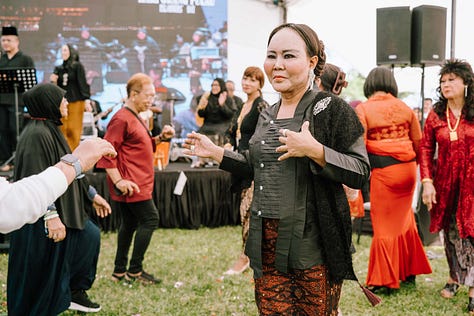

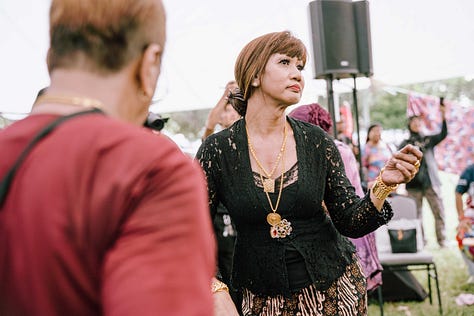
You may observe that the backdrop to both Cik Am and Cikgu Asnida’s stories is our community space at West Coast Park, a precious strip of beach nestled between the park’s wavebreakers, where many former Southern Islanders still dock their sampans. Along the sandy shore, they built shacks by hand, originally meant as shelters for friends and relatives to gather and rest while the fishermen were out at sea.
The space faces the Southern Islands, though views of the community’s former homes are now blocked by large ships and developments like the Royal Singapore Yacht Club. Yet it remains one of the last places where maritime crafts — from weaving gillnets to making bubu traps — are actively practised and passed down to younger generations. These traditions rely not just on knowledge, but on having physical space and access to the sea.
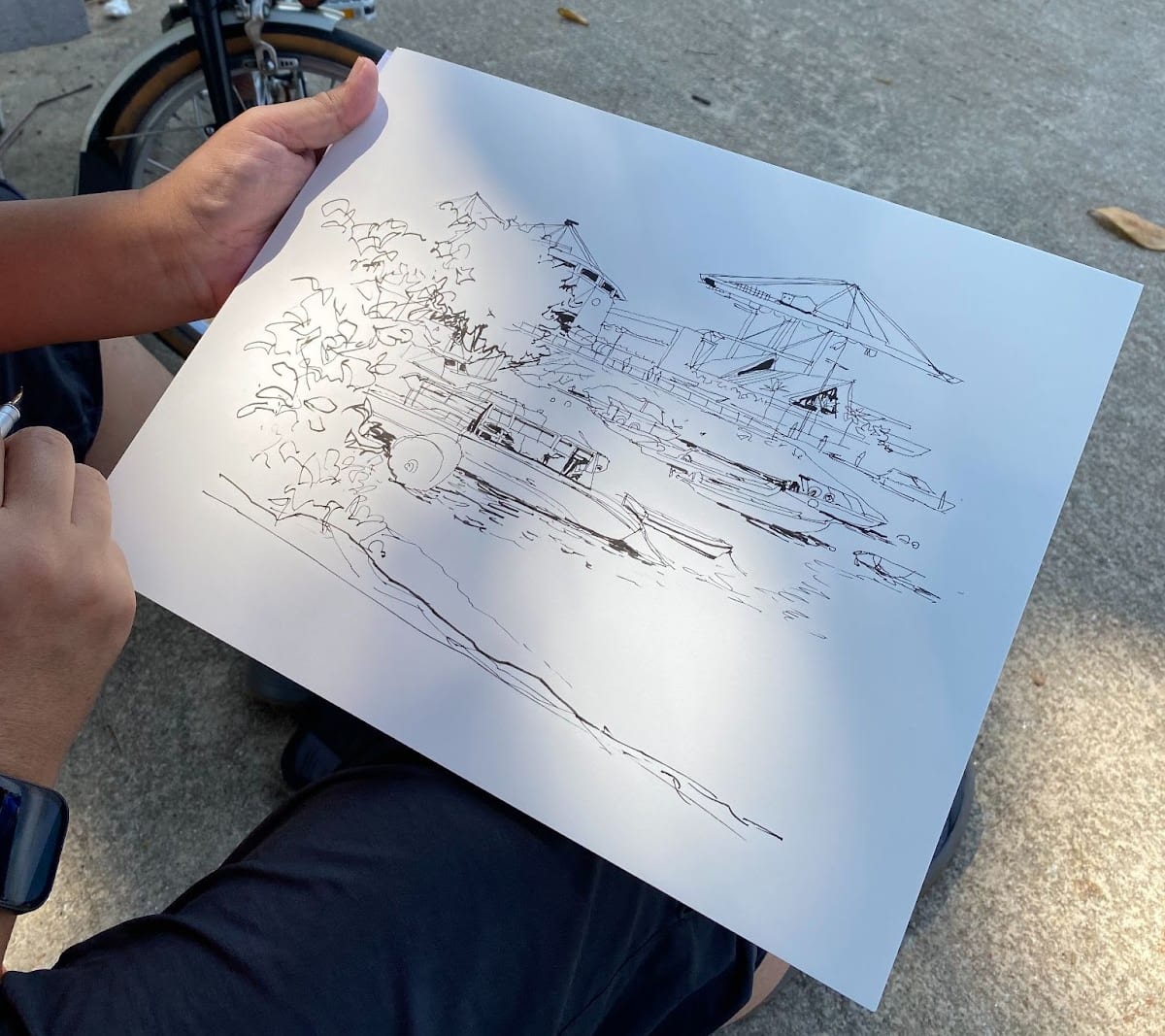
Initiatives like the Malay Heritage Centre’s short video series for ICH are helping spark interest among young people in these traditions. But nurturing that interest requires more than storytelling — it also needs support in the form of dedicated spaces, hands-on opportunities, and resources so that this engagement can be sustained.
Recognising this, our team has been advocating for the preservation of this community space. On our Coastal Walks, Food and Stories, we also hope to bring more people to visit the space and learn directly from community members like Cik Am. As a ground-up organisation, attending our walks helps to sustain Orang Laut SG’s programmes and initiatives. If you are a Singaporean above 18 years old, our walks are under Culture Pass, and you can redeem your credits at checkout to join us :)
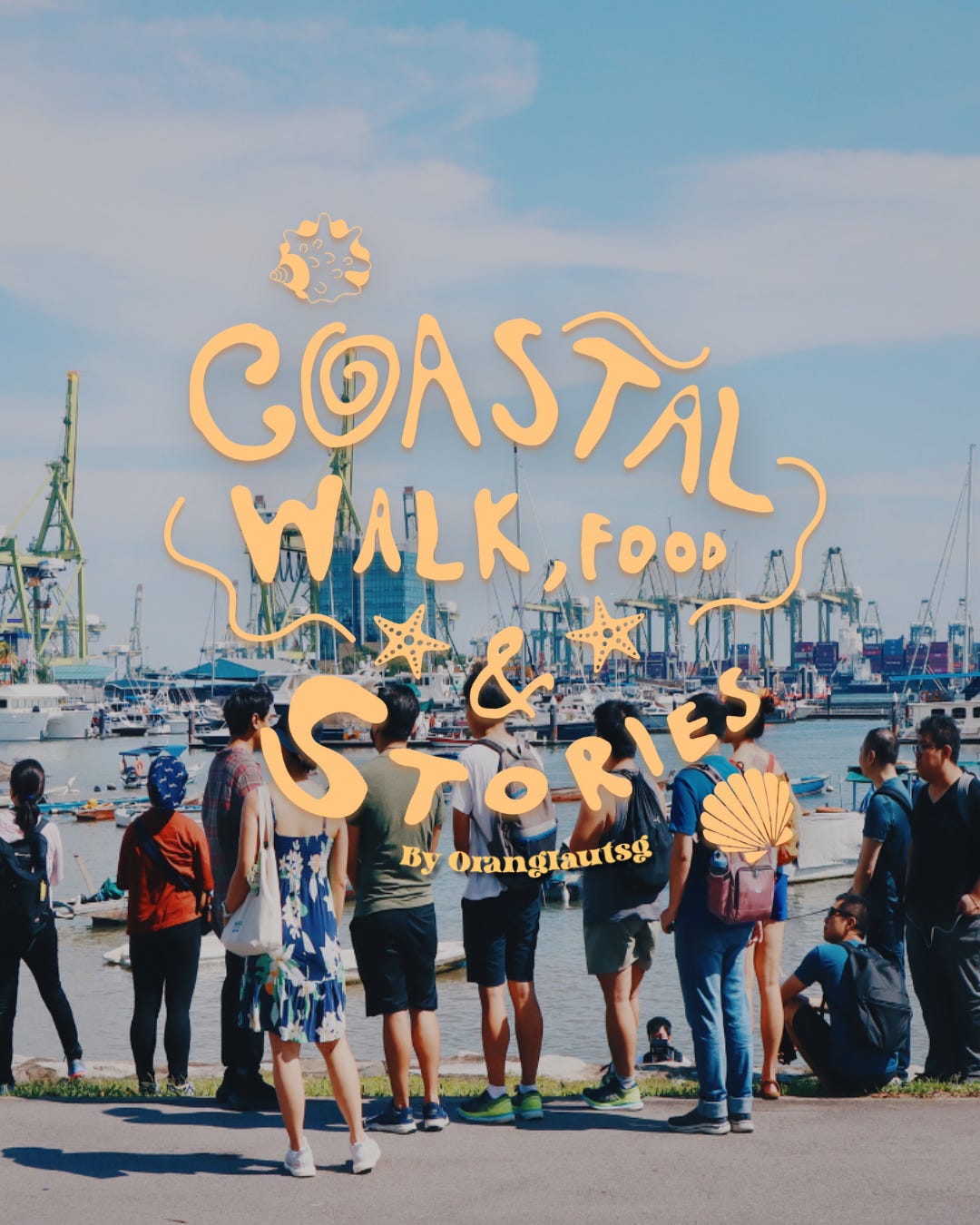
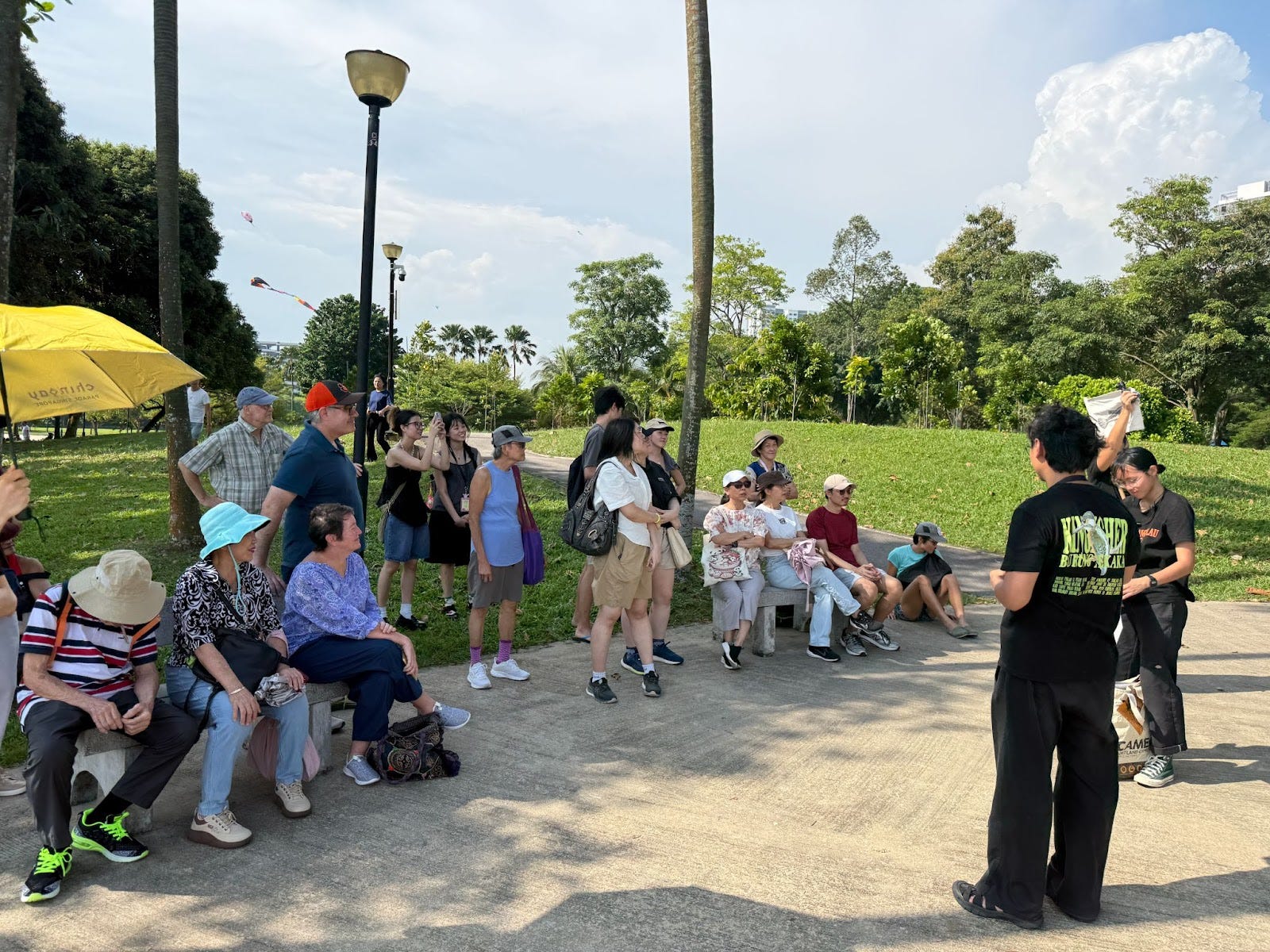
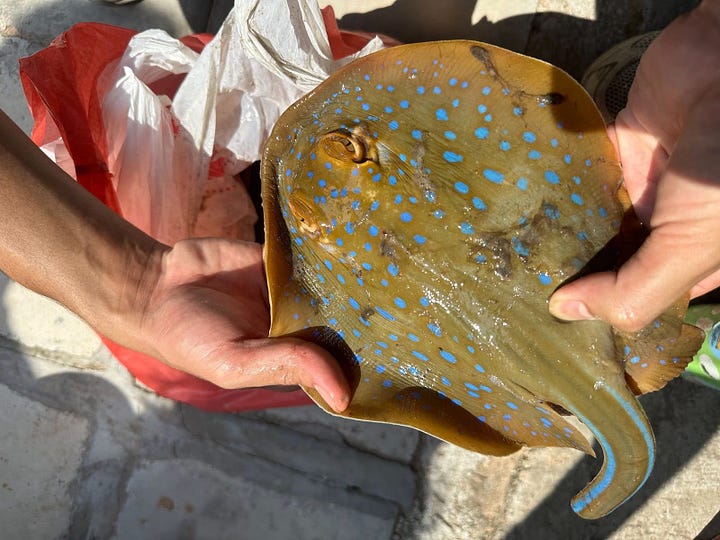
Our next walk will be on October 11, Saturday. If you are lucky, you might even get a peek at the freshest catch of the day, as Cik Am goes out to sea on Saturdays!

That being said, the community space is primarily cared for and used by the Orang Pulau, and public entry into this space is by invitation only. While we are grateful for the growing support and attention to the stories of the Orang Laut, we encourage visitors who are curious to learn more about the Orang Laut community practices to write to us, before attempting to interview, record, or photograph the space or the community. You may get in touch with us via our email hello@oranglaut.sg or our Work with Us form for collaborations, interviews, or learning opportunities.
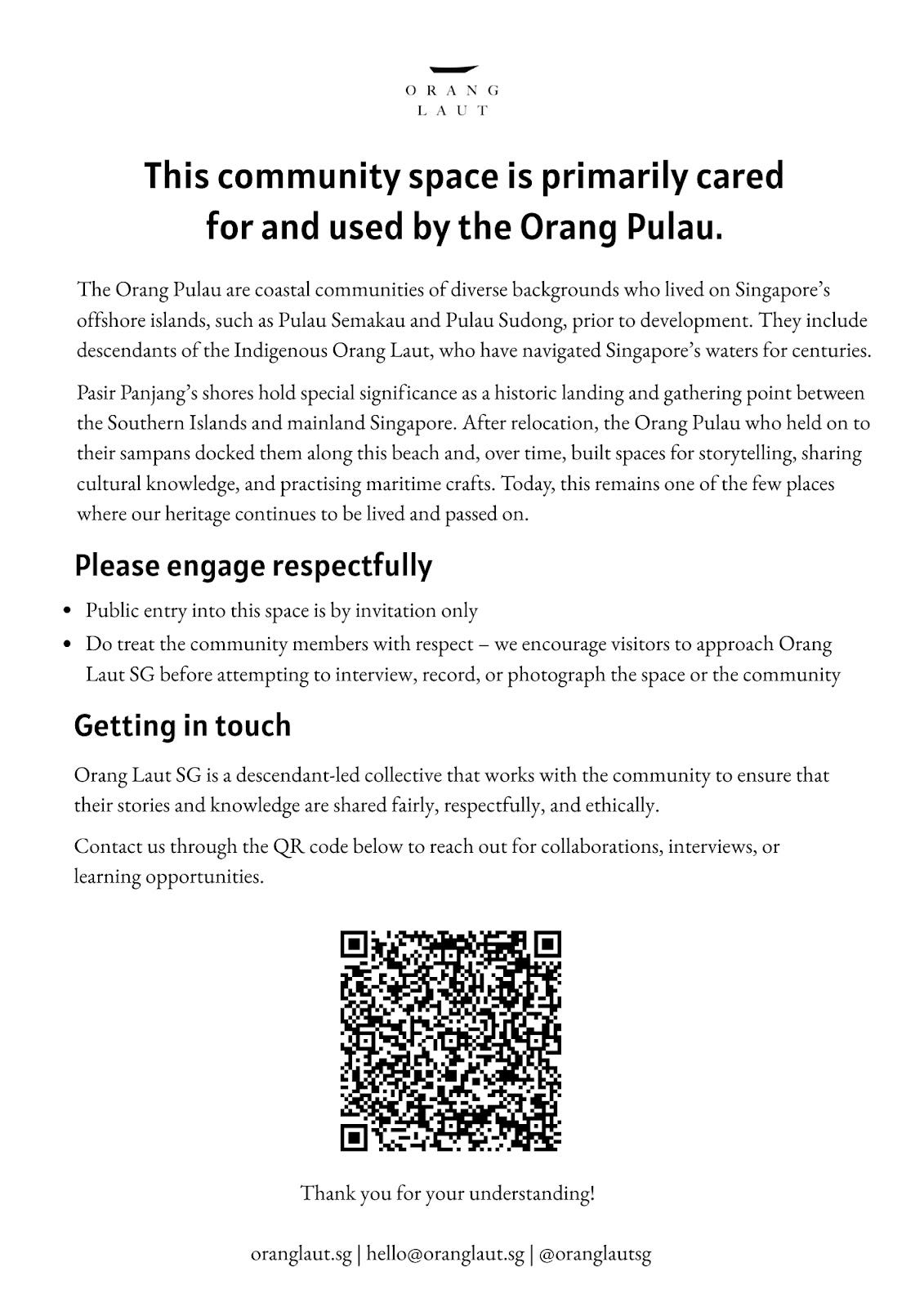
We thank you for your understanding!
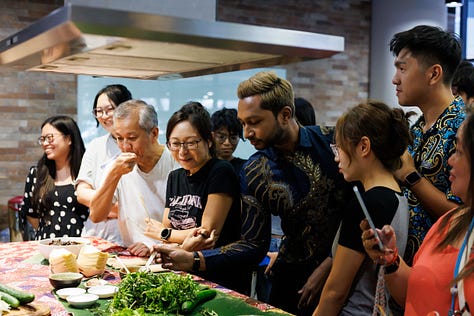
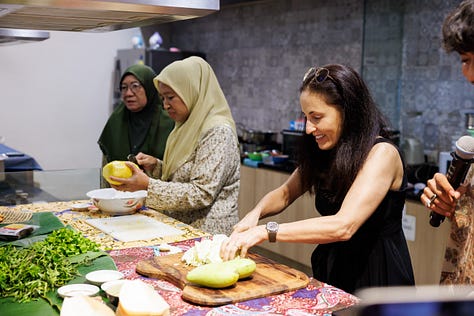
Cooking Demonstration @ Geylang Serai Heritage Gallery (GSHG)
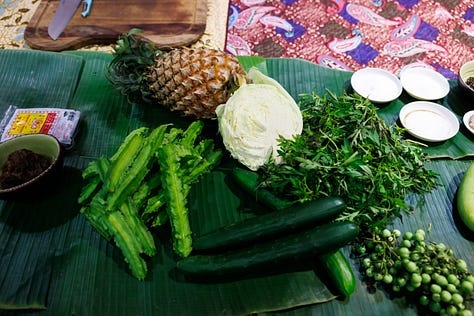
To celebrate the opening of GSHG, we held a session exploring some of the historical connections that Orang Laut communities have with significant neighbourhoods in the east of Singapore, like Geylang and Kallang. Mak Noni and Mak Ani, our homecooks from Pulau Semakau, also led a cooking demonstration where they shared stories of some of the native flora and fauna used to flavour the traditional cuisine of the Southern Islanders.



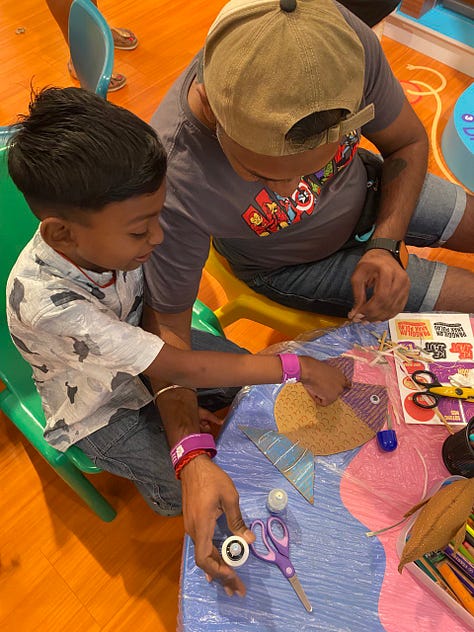
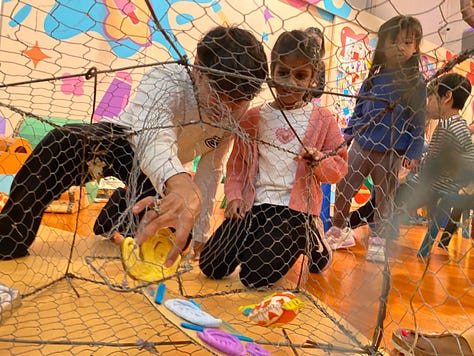
Bubu & The Big Catch @ Children’s Museum Singapore (CMSG)
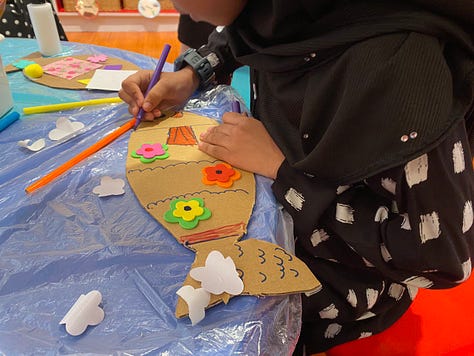
For the September School Holidays, we were invited by CMSG to introduce bubu trap fishing and other traditional maritime crafts to a group of lovely kids and their families. With the team at the museum, we ran a craft activity at their new maker’s space, where the kids made their own sea creatures, absolutely delighting us with their curiosity and the creativity of their handiworks!
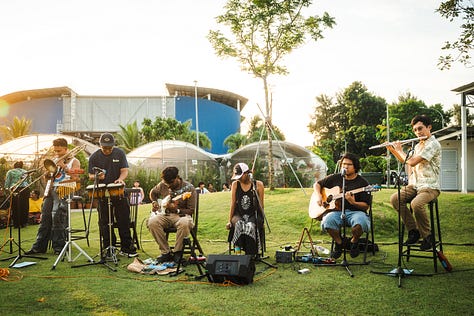
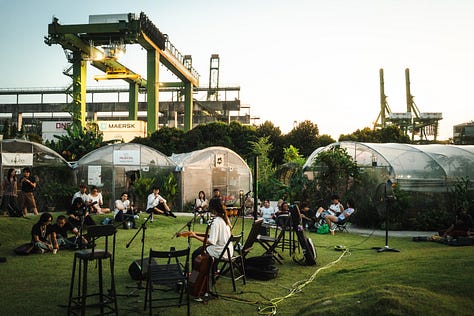
Meriah Bersama, a fundraiser for Orang Laut SG at Tanah dan Air
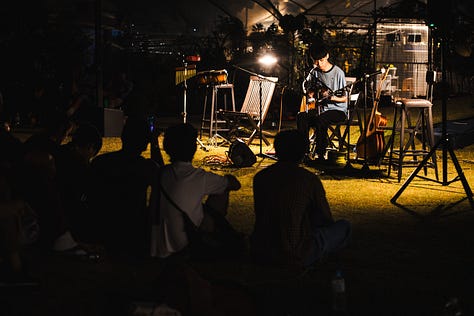
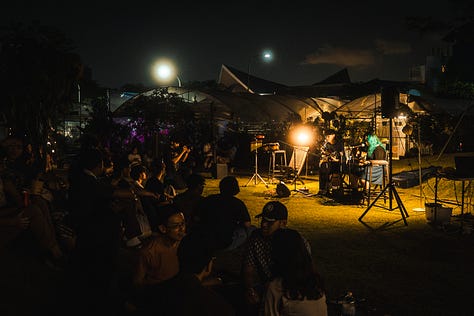
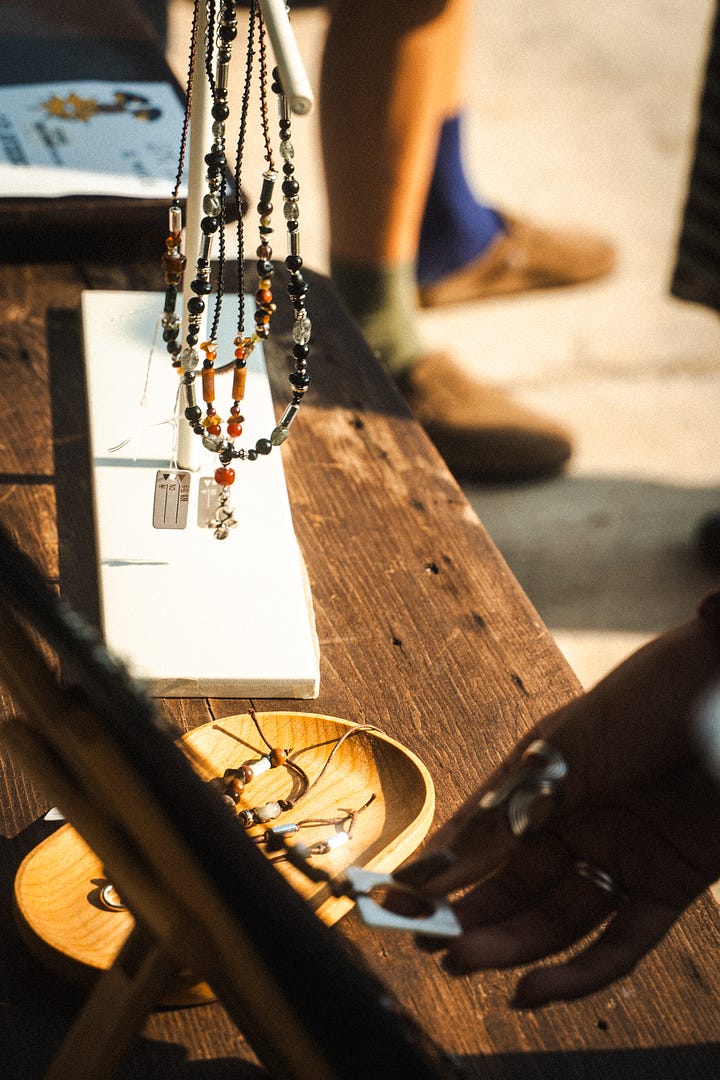
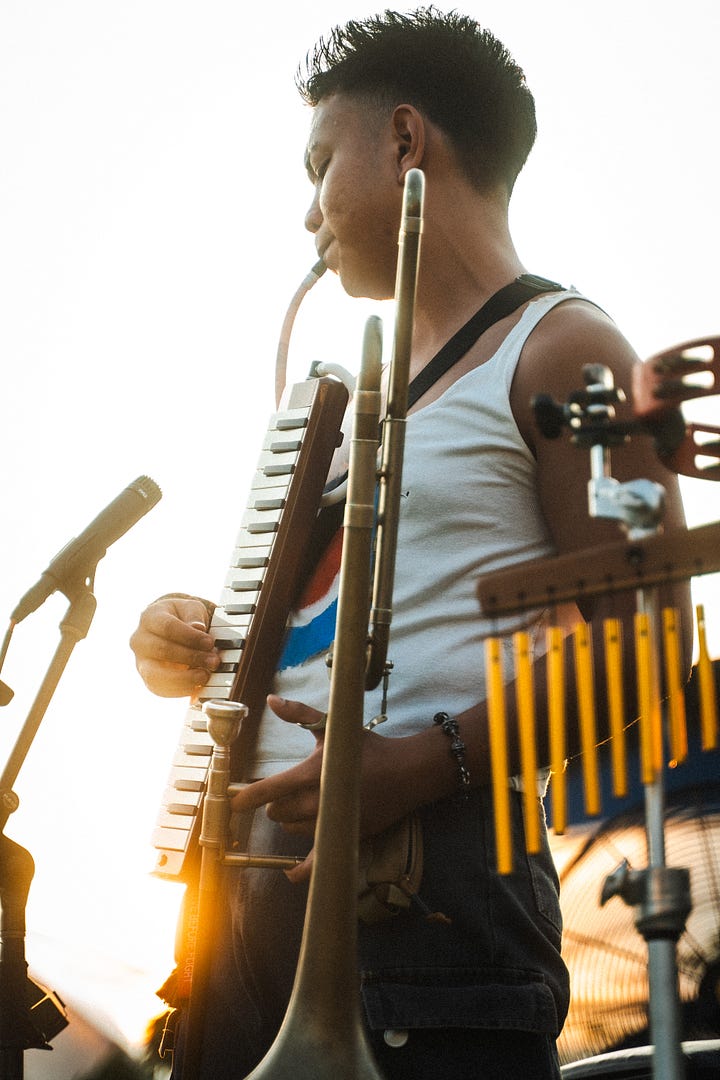
We were so grateful to see the community come together for Meriah Bersama, a fundraiser hosted by our ex-intern Aqilah, who has supported our work for several years. She performed with her band Nosedive, alongside other local artists Bluebonebroth and Everythingusalright. Guests also enjoyed Beans & Beads, a coffee stand run by Anaqi, and a booth by Athena featuring handmade accessories.
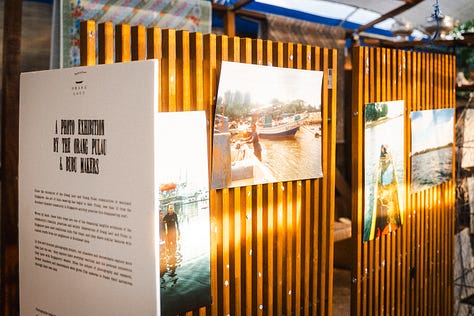
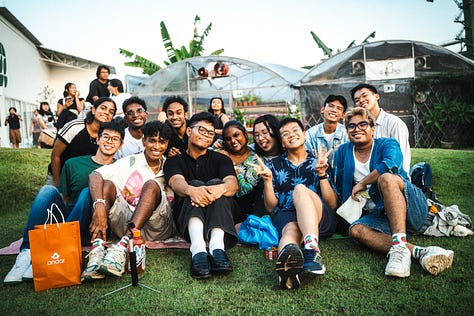
It was such a beautiful evening of gentle music, crafts, and community spirit. Our hearts were full seeing everyone lounging on the City Sprouts lawn, soaking in the acoustic sets with loved ones and friends, new and old. Adding to the experience, we displayed a bubu fishing photo exhibition in the garden and shared warm bowls of bubur lambuk ikan tenggiri (spiced mackerel porridge) with attendees.
We’re deeply touched by the generosity of these talented young artists and everyone who joined us — thank you for supporting the Orang Laut community!
If you’re an artist or creative who feels connected to our work, we’d love to hear from you too, as we’re planning to host more of such gatherings very soon - DM us on Instagram @oranglautsg :)!


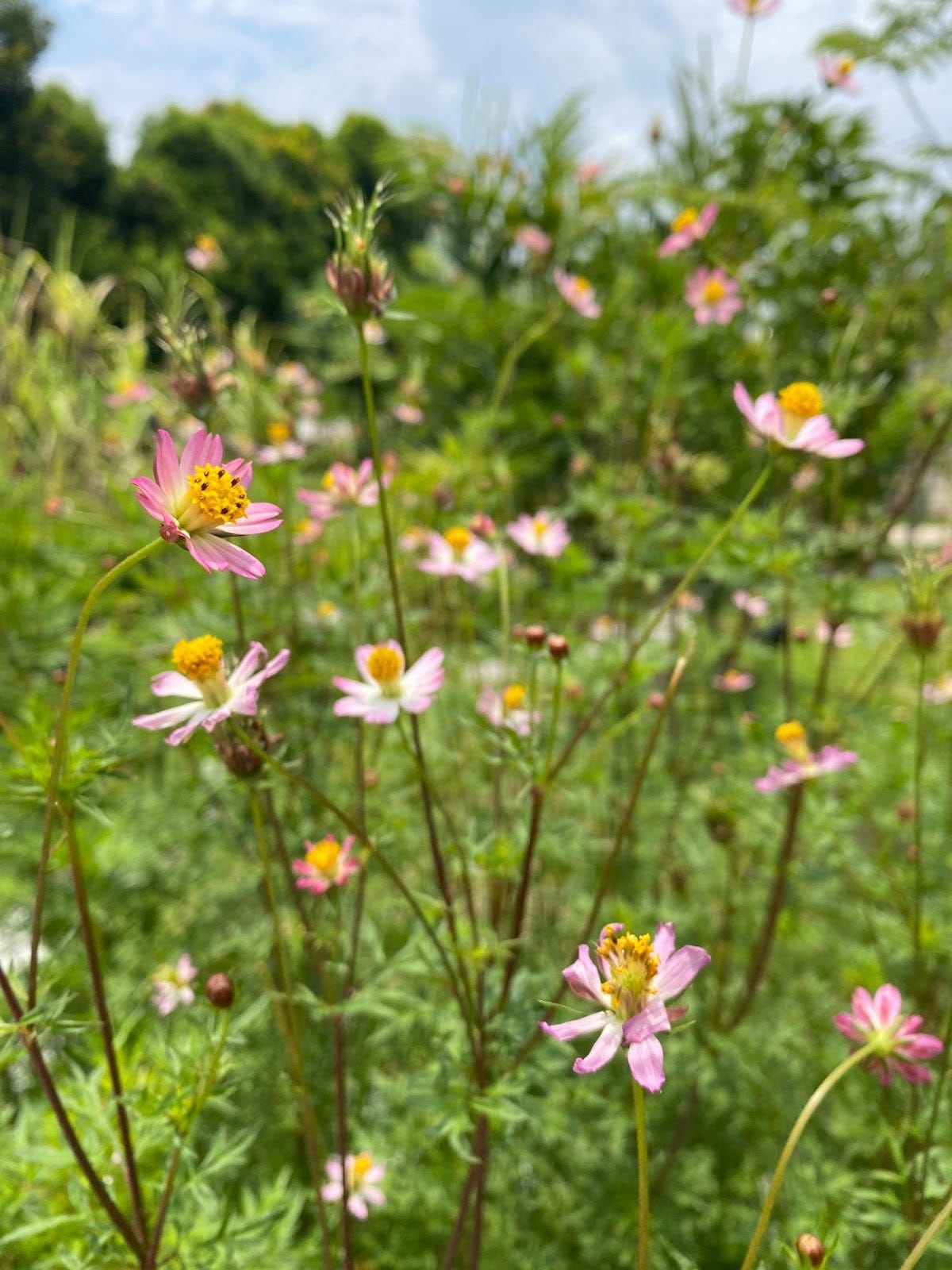
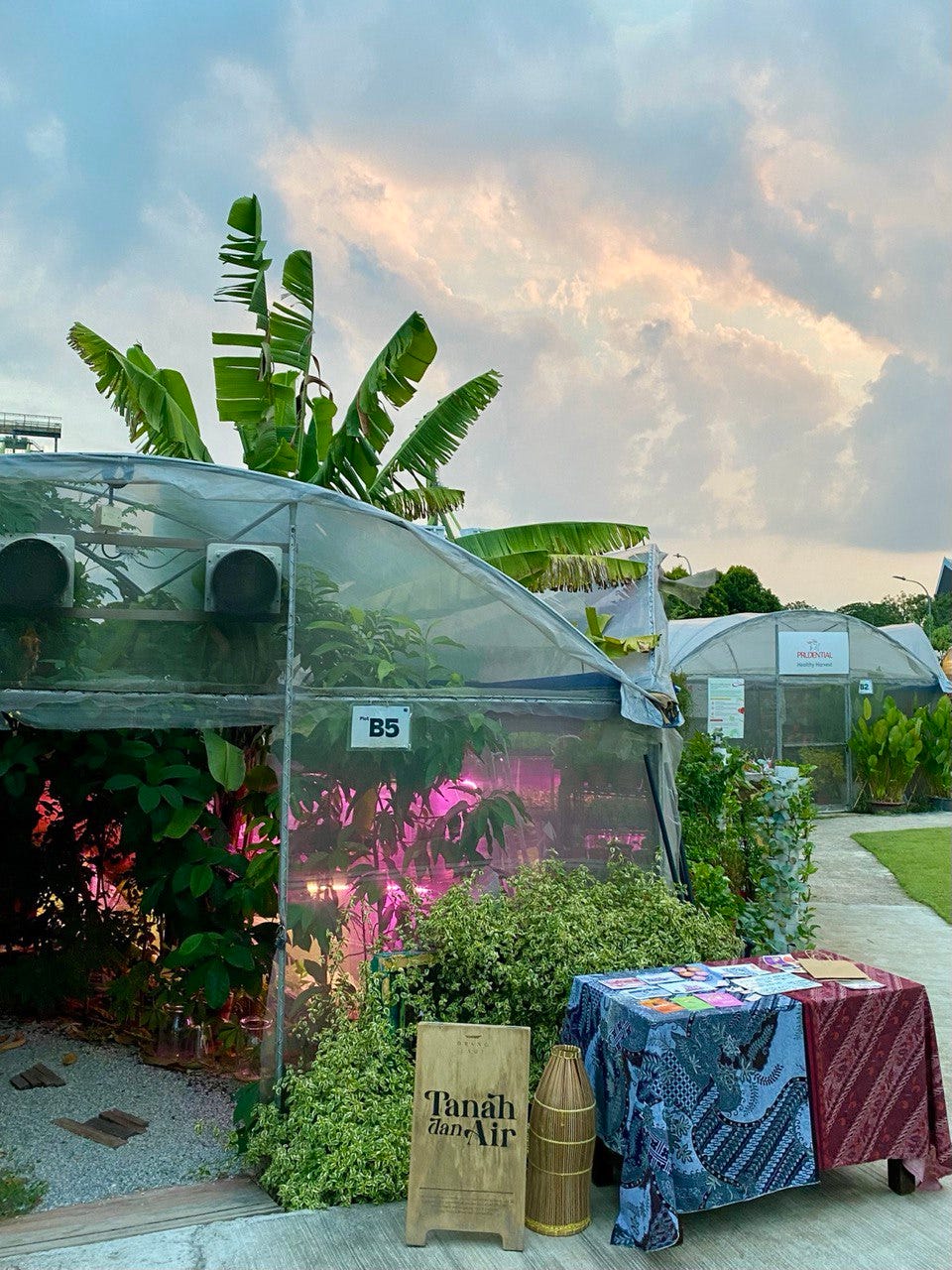
Almost exactly a year ago, we held our first ever public event at Tanah dan Air – an intimate dinner and conversation between our community elders and Malaysian artist Shooshie Sulaiman, who kicked off the session by planting two pokok pisang in our garden. Over the months, the trees have shot up (literally bursting through our garden roof)! Shooshie will be concluding her residency with Singapore Art Museum (SAM) this month, and we are happy to be hosting her again at City Sprouts on 17 October (Friday) for her publication launch. For the evening, you’ll get to join Shooshie and the islanders for a delicious dinner of homemade Southern Islander cuisine, watch a kamishibai (traditional Japanese street theatre) performance, or mix some nature-based pigments with Wild Dot. Keep a look out on SAM and our socials for sign-up details!
This month, we’re also excited (if a little nervous) to share something new with you — a toolkit we’ve been developing with our friend, Jie Lin, a researcher from the University of Hawaii. The toolkit looks at ethical ways of engaging with communities, especially those who are vulnerable. Drawing from our own experiences advocating for our community, as well as conversations with elders, researchers, and media practitioners, we’ve put together a set of guidelines that we hope will be useful for researchers or storytellers who may feel unsure about navigating the sometimes complex dynamics of working with underrepresented or marginalised communities.
As part of the Creating Narratives for Change Festival with our neighbours at Common Ground, we will be soft-launching the toolkit through an interactive session with real examples and reflective prompts to help anyone who has ever wondered: how can research and storytelling truly support the communities we work with? We’d love for you to come learn and share with us at this session!
See you soon!
No posts
Comments
Nothing yet. Say the first thing.
Sign in to join the conversation.