
Over the last year I’ve been working on a series of articles about the Falklands War. The general tone of the research was “how the hell did the British pull it off?” Given the England versus Argentina World Cup match today. I’ve accelerated publishing this first post.
This post is largely highlights from a book I think everyone should buy, called “Logistics in the Falklands War: A Case Study in Expeditionary Warfare” by US retired MGen Privratsky.
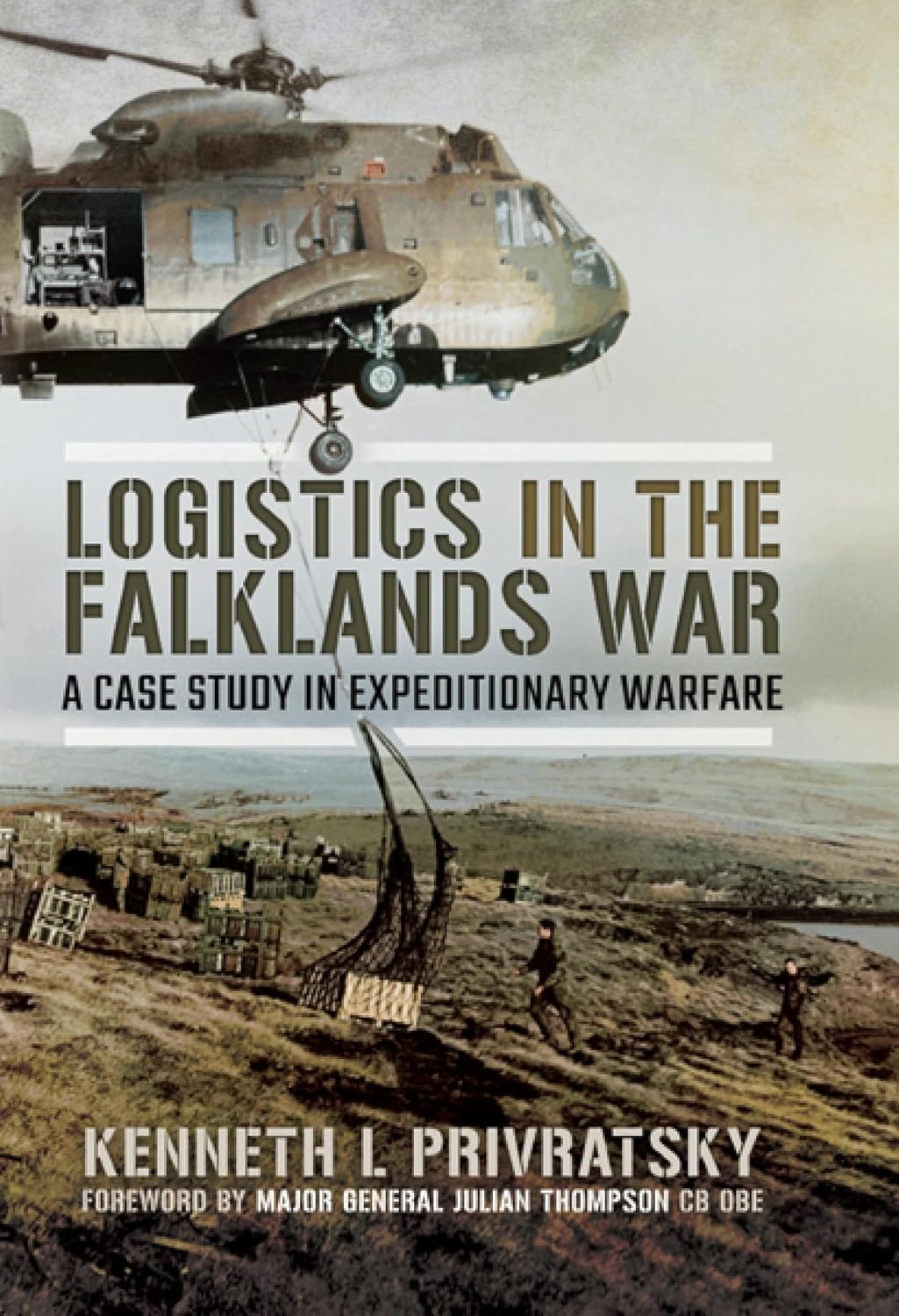
The book came to my attention from this lecture given at the US Command and General Staff College’s historical section:
I read the book as part of a long term project on the history of command and communications in the Falkland War. I couldn’t figure out how the British managed to pull off victory given the logistical challenges, so I purchased this book hoping to find answers.
Having now read the book I know WHAT the British did to win the war, but I have ZERO clue how they managed to make it work. The conditions and limitations they faced were so much worse than I thought.
I can honestly say this is the most interesting book I have read in years, which is a shock to me as I’m typically as bored by logistics as the next non-logistician. It was genuinely more engaging and entertaining than the battlefield accounts of that war.
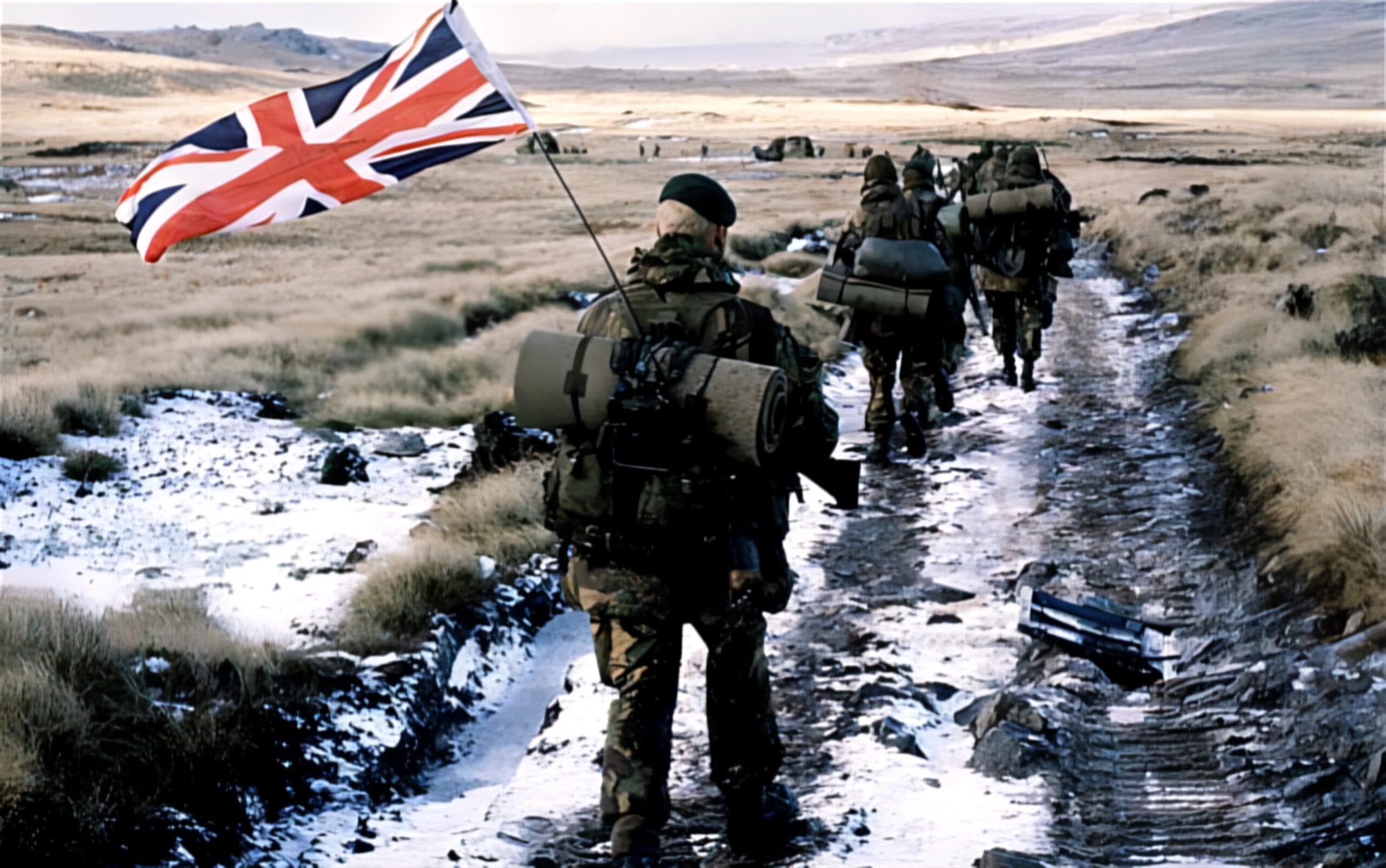
The task eventually given to the British task force was to retake the Falkland islands from the Argentines. This was a daunting task, both logistically and in terms of the actual ground combat.
Strategic logistics is providing the lifeline of supplies, personnel, maintenance and health care between the home country and a staging area about 300km outside the combat zone. British strategic logistics involved a link from England to a small British held island half way between Brazil and Africa called Ascension. This link was 4,300 miles (6,900 km) by sea from Portsmouth. It had an airport and one jetty capable of handling one or two small commercial ships.
The next link was a further 3,600 miles (5,800 km) from Ascension to a logistics loitering area about 200 miles (320 km) short of the Falkland Islands. This was just a box drawn on a map in the middle of the ocean where the larger supply ships would loiter, outside the range of the Argentine air force.
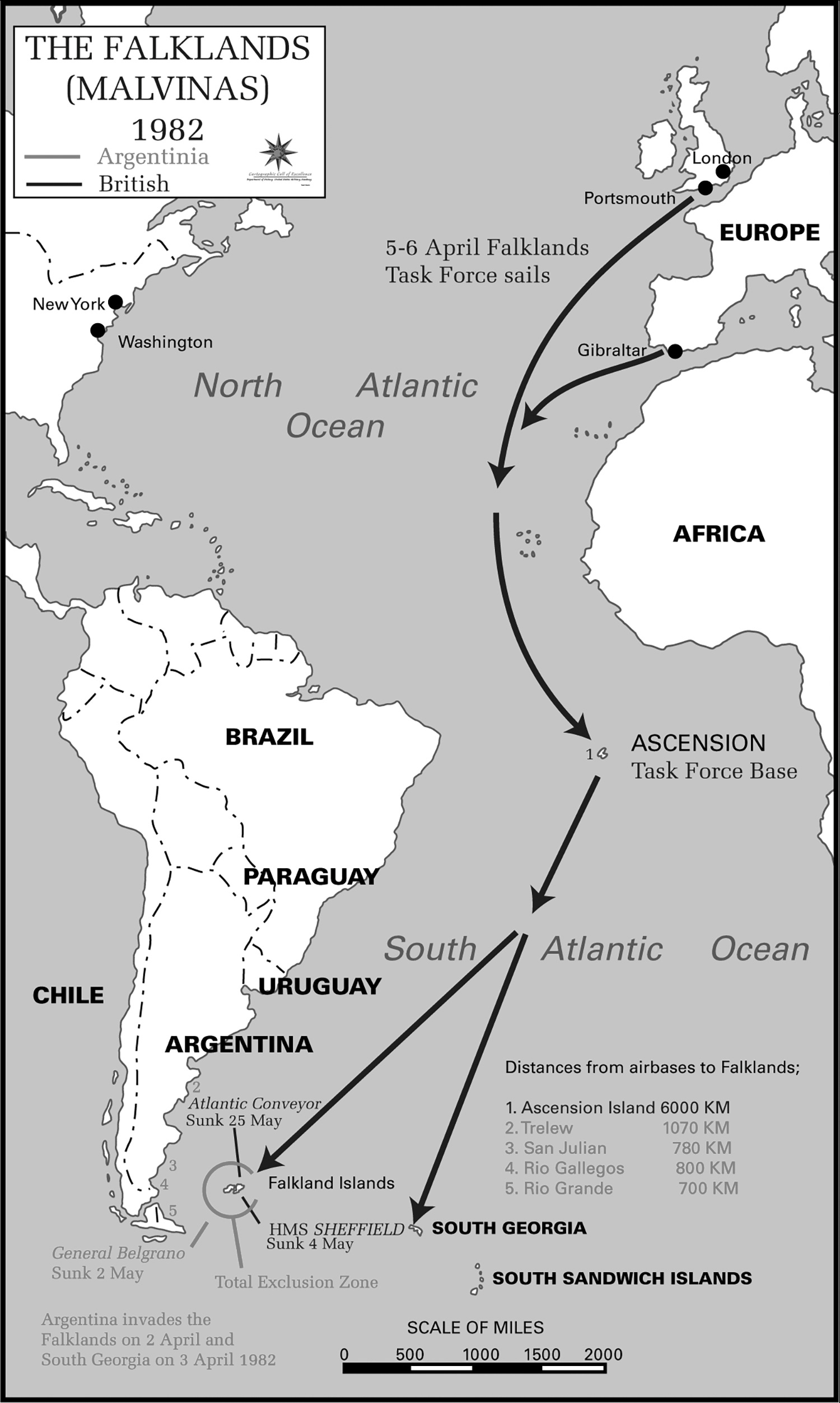
The British also had to retake the South Georgia group of islands, which had also been taken by Argentina. This almost uninhabited set of rocks in the Atlantic was 800 miles (1,300 km) east of the Falklands. The British retook them on April 25th, three weeks after the Argentine invasion. Retaking South Georgia gave the British a natural harbour to shelter ships during storms, but it had no airfield or port facilities. So from a Strategic Logistics perspective South Georgia was much more of a drain on resources than it was an asset.
In the case of the Falkland war, operational logistics was the same lifeline of supplies, personnel, maintenance and health care, but stretching from the logistics loitering area to the British main ashore logistics area at San Carlos (their amphibious landing site). The logistics area at San Carlos started as what’s called Brigade Service Area (BSA) in modern terminology. A few weeks after the British landing a second brigade arrived and the land force was converted to a division. The San Carlos logistics area when became what is called a Division Service Area (DSA) in modern terminology. I will use the modern terms for simplicity.
Although the distances involved were only about 200 miles (320 km), the logistics chain from the loitering area to the BSA/DSA was both very dangerous and difficult to coordinate. To move supplies from the loitering area to the BSA/DSA ships needed to be brought into San Carlos harbour. This meant cropping anchor for hours at a time within range of the Argentine air force.
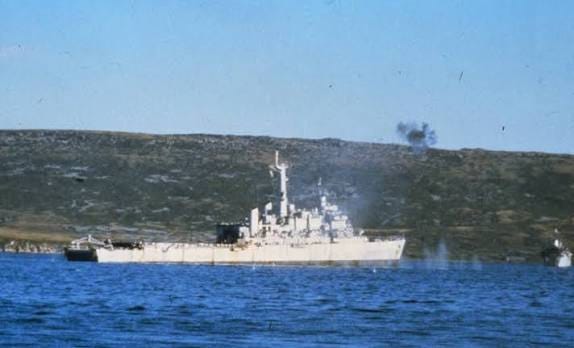
The British landed at San Carlos on May 21 and the Argentine air force spent May 21-25 launching hundreds of aircraft sorties against the Royal Navy, Royal Fleet Auxiliary and civilian requisitioned ships, earning the area the nickname Bomb Alley. In the course of those air attacks the Argentines sunk two frigates (HMS Ardent and Antelope). They also seriously damaged a destroyer, three more frigates and three amphibious support ships. Consequently unloading was frequently interrupted and ships often had to depart before they completed unloading.
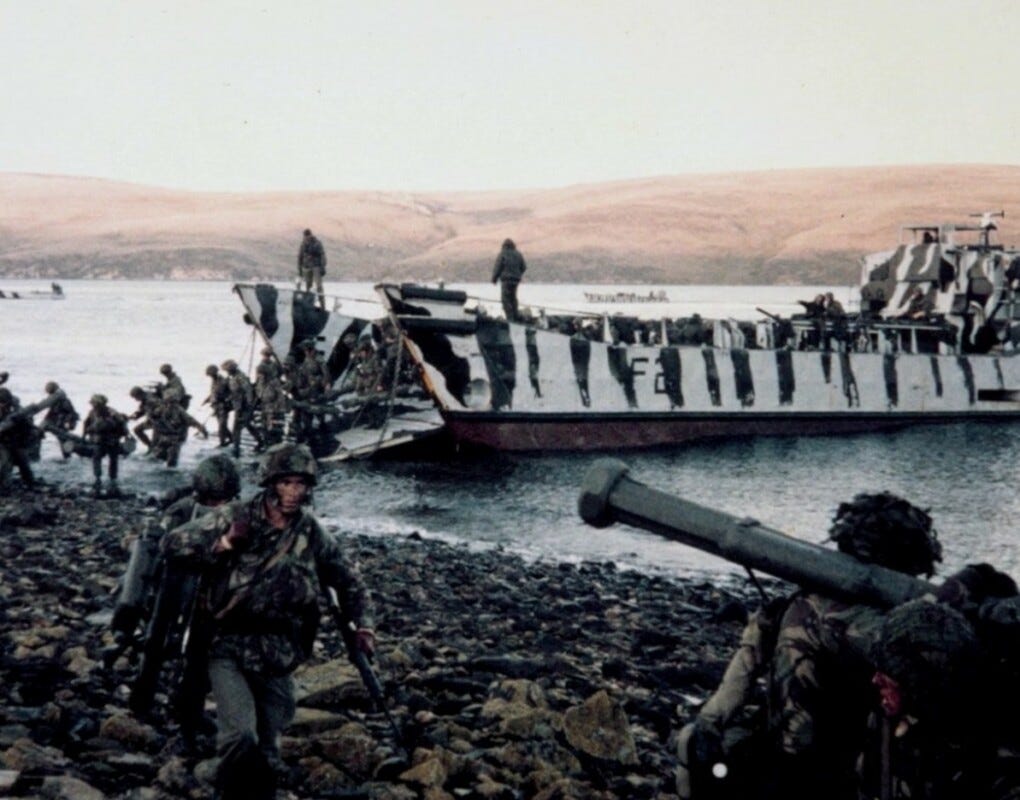
On May 25 two more ships were sunk while transiting from the logistics loitering area to the BSA/DSA. HMS Coventry was hit by two bombs from A-4 Skyhawks and sank within 30 minutes. Coventry was one of only two remaining air defence destroyers the British had in the Falklands (they had already lost the third air defence destroyer, HMS Sheffield, to an Exocet attack on May 10).
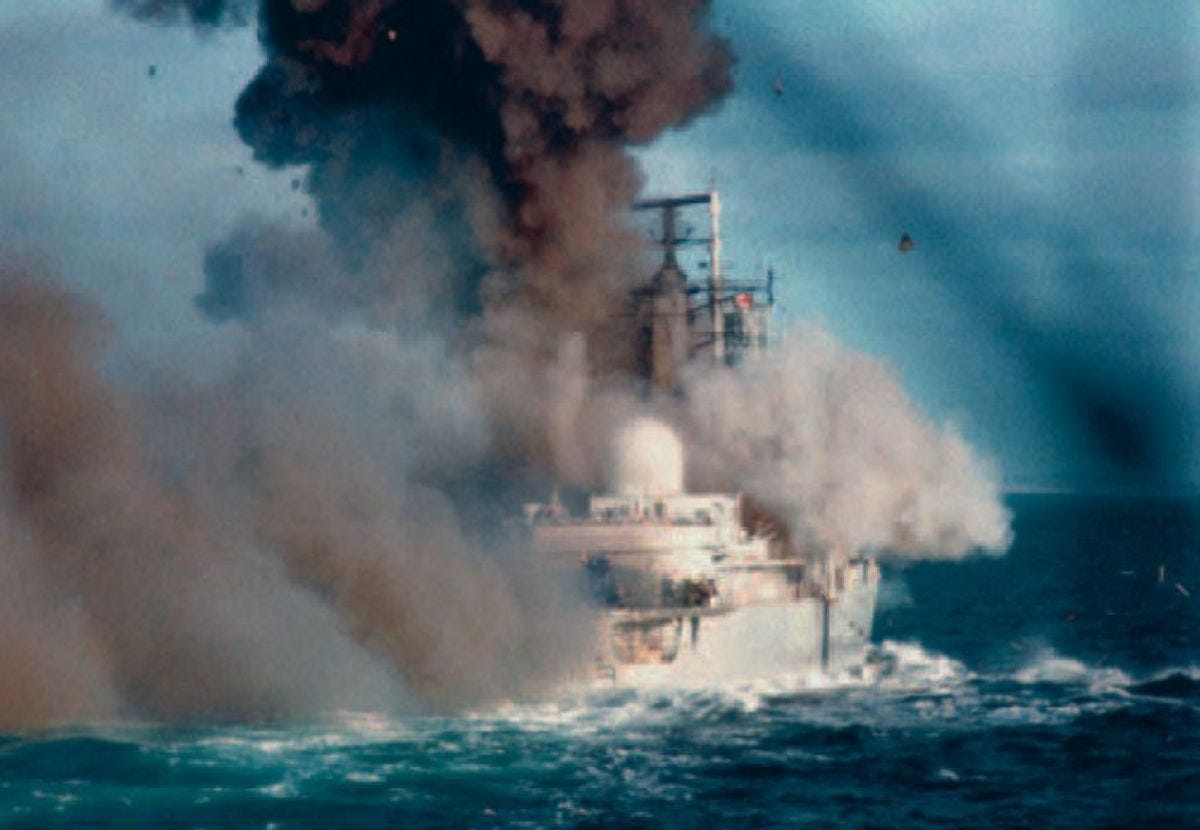
On the same day the container ship Atlantic Conveyer was sunk by two Exocet missiles. As will be described later, she carried a cargo of urgently needed critical stores for the land force.
For coordination, the Operational Level was where the Royal Navy handed over supplies to the ground force. The logistics loitering area held 30-60 days of supply afloat, but there were initially only about 5 days of supply ashore held within the Tactical Logistics system. In civilian terms it’s best to think of Operational Logistics as the warehouse and the Tactical Logistics as the delivery company. Every 24 hours the Operational Logistics system offloads what the fighting troops ashore will need in 48 hours. The Tactical Logistics system then has 24 hours to move those supplies forward to the fighting units.
This means the Operational Logistics system needed to coordinate very well with the Tactical Logistics system ashore. The Operational Logistics system was run by the Royal Navy and implemented by the Royal Fleet Auxiliary. The Tactical Logistics system was a mixture of Royal Marines and British Army. They did not think the same way and almost all their radios couldn’t talk to one another. There were also heavy restrictions on using radios, due to Argentine signals listening detachments.
Tactical Logistics holds a few days’ supply (eventually the BSA/DSA held about 30 days supply ashore at San Carlos) but it’s main job is to move supplies, broken equipment, replacements and injured personnel between the BSA/DSA and the manoeuvre units.
Normally the backbone of Tactical Logistics is trucks. Here there was a problem, as the image below is a comprehensive of all the paved and unpaved vehicle capable roads in the Falklands, excluding those in the vicinity of Port Stanley.
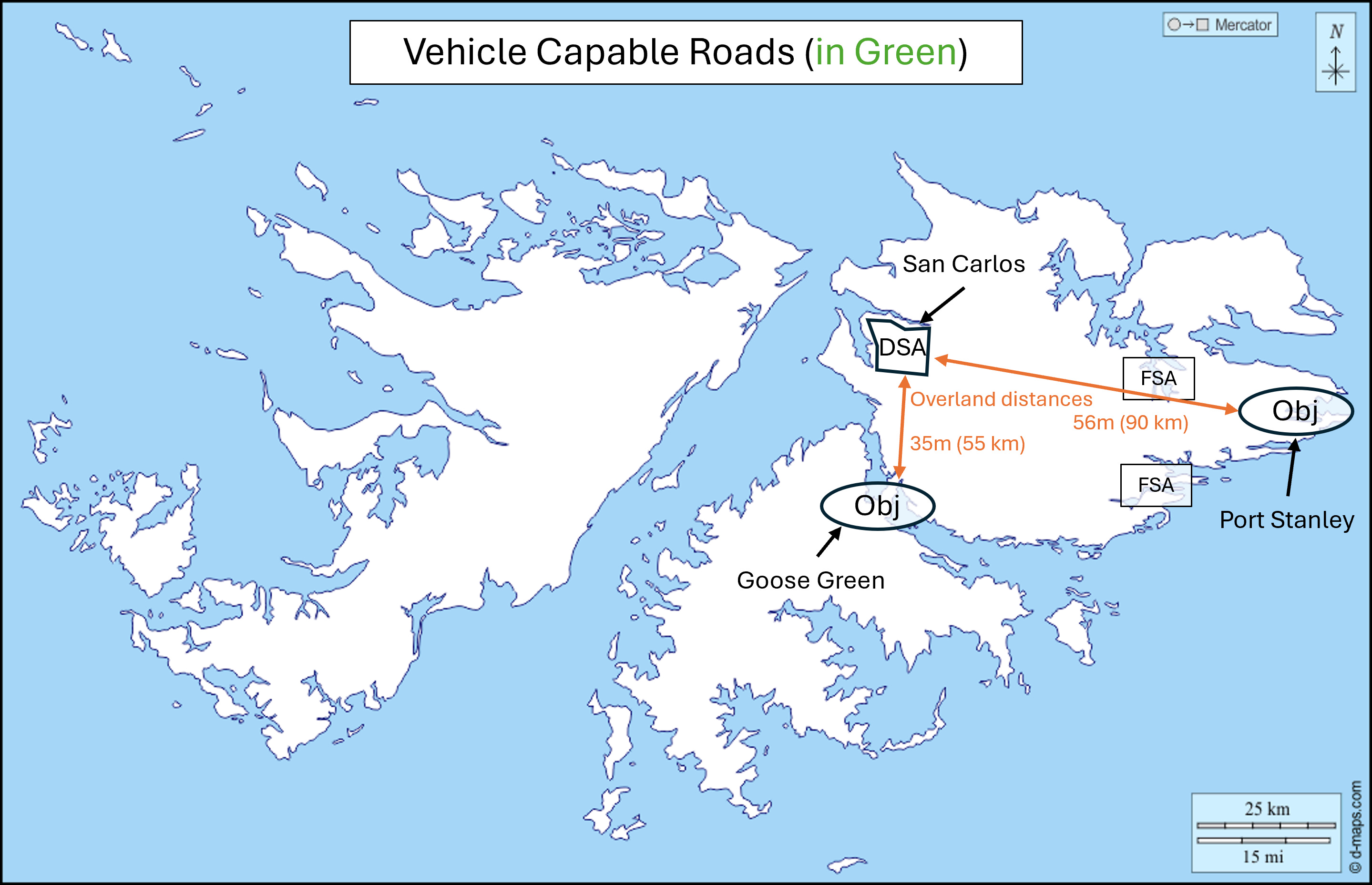
The details of tactical logistics take up several chapters of the book. The brief version is:
The troops marched from the DSA to the Objective;
For the attack on Port Stanley two days supply of Ammunition, Shells, fuel and shells were brought to the two Forward Support Areas (FSAs) along with skeletal field hospitals;
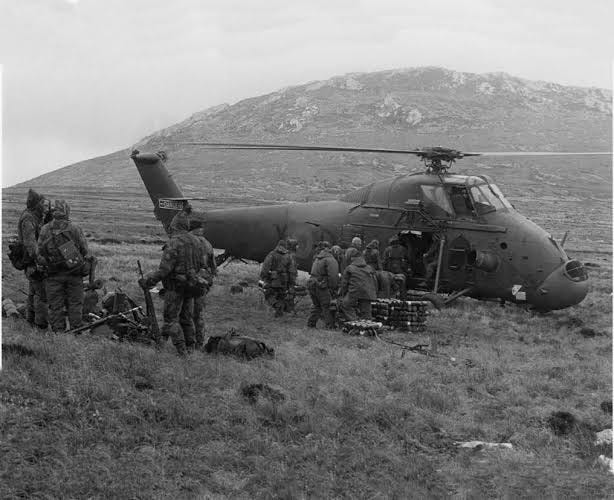
Helicopters spent about 2 weeks bringing the artillery from the DSA to outside Port Stanley; and
Limited emergency resupply of ammunition and casualty evacuation was available from the FSA to the troops in combat. However, most of the ammunition going brought and casualties evacuated rearward was done on foot over what can charitably be described as walking tracks.
Tactical Logistics in the Falklands was so difficult because there were no roads and the distances involved were enormous. While the orange arrows above give a sense of the distances involved, the image blow shows the size of the Falkland Islands superimposed over England.
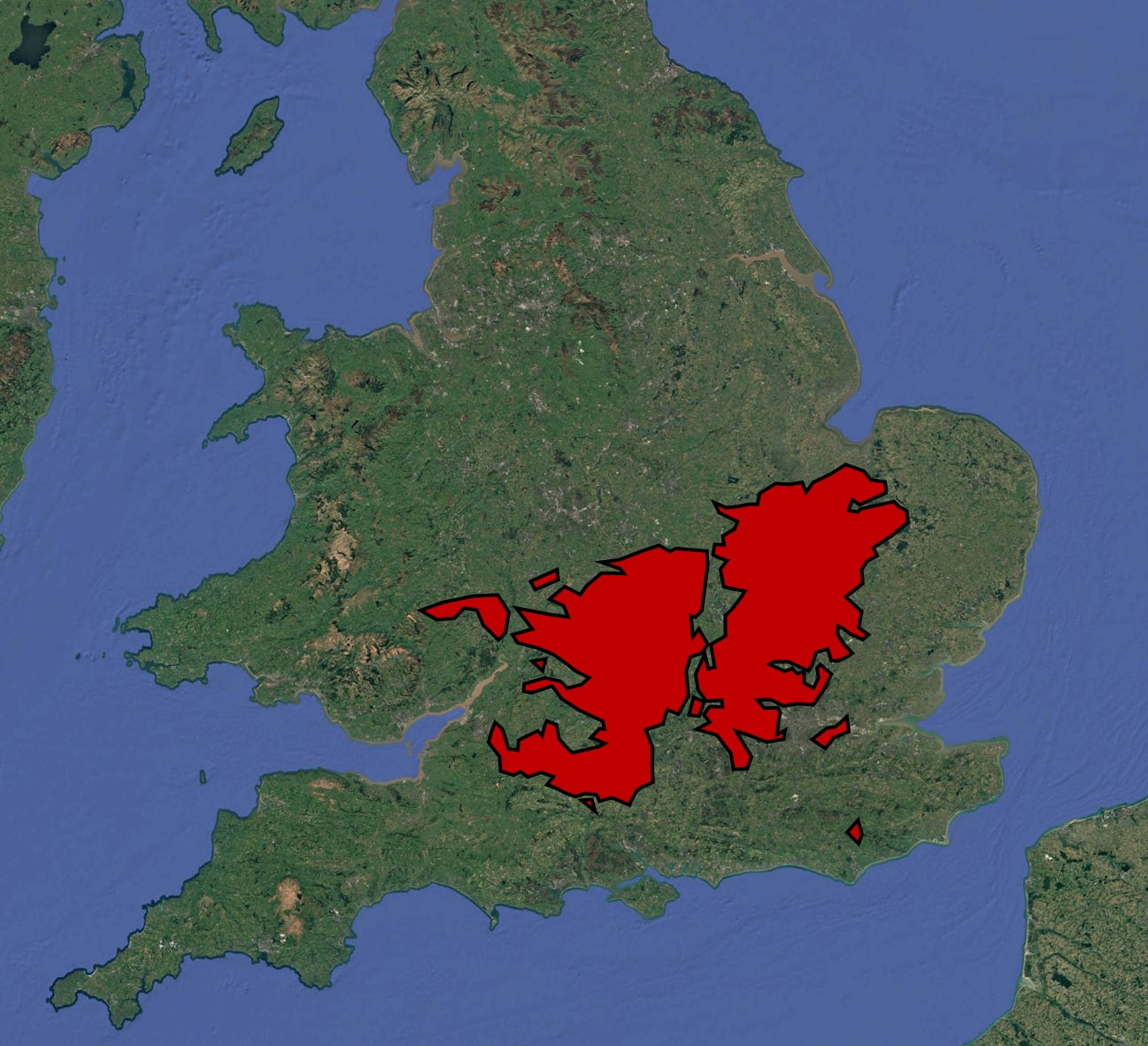
Once all the challenges of the 8,156 mile (13,125 km) logistics chain had been overcome, the Royal Marines and the British Army had to fight the Argentines. The Argentine land force on the Falklands was essentially two reinforced brigades.
Although I have pointed out the 1:3 ratio for the attacker is greatly misunderstood, in circumstances like the Falklands War the British ought to have at least some numerical advantage over the Argentines in all the major categories. Instead, the defending Argentines generally had about a 1 to 0.8 numbers advantage over the attacking British.
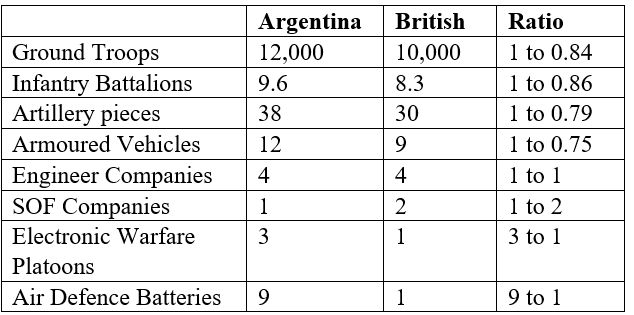
However, the Argentines widely dispersed a large portion of their force across the islands. These dispersed outposts lacked the mobility to move out and attack British ground forces, so they were either defeated in detail or left alone to play no role in the war.
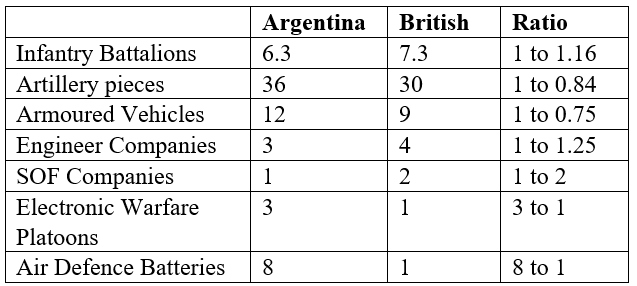
For the final assault on Port Stanley the ratios had improved somewhat, but it was still well below what the British would have hoped. On the whole that were at about numbers parity with the Argentines.
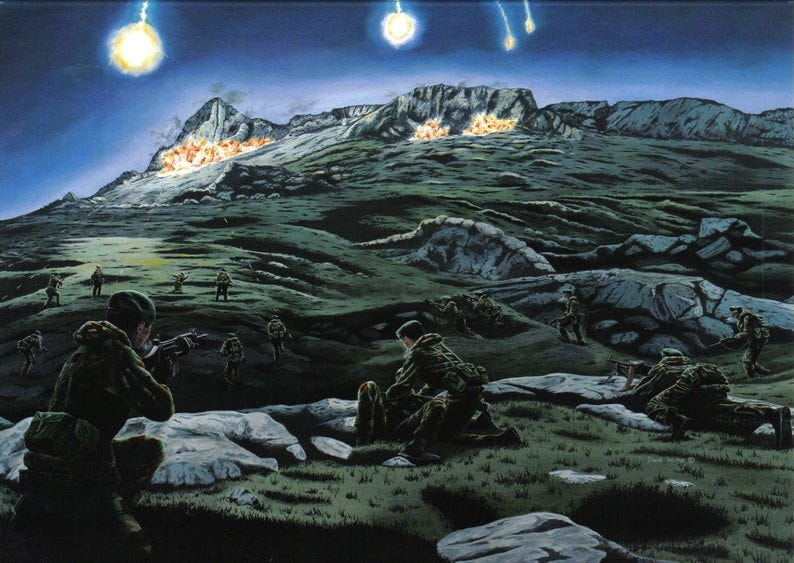
Between June 11 and 15th the British Division assaulted 6 of the mountains or hills outside Port Stanley. Each was defended by a company to a battalion (+) of Argentine infantry who had spend six weeks fortifying their defensive position. These assaults involved advancing over ground that provided almost no cover, that is perfect defensive terrain for the Argentines.
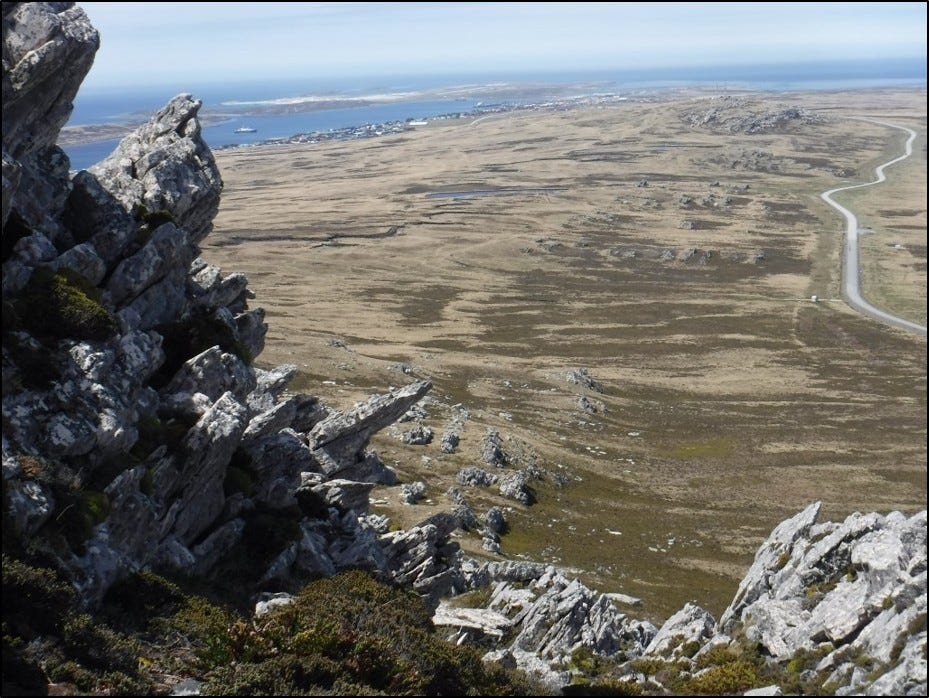
The battle for the hills outside Port Stanley was brutal and hard fought. The British suffered roughly 75 killed and over 250 wounded, while Argentine forces suffered approximately 150 to 170 killed and roughly 450 to 500 wounded. However, every British assault was successful and every Argentine counter-attack failed.
When the 6th position was seized the morning of June 15th Argentine forces collapsed and withdrew into Port Stanley. Later that morning the Port Stanley Garrison of 11,000 military personnel surrendered, ending the war.
The Falklands War is typically cited as the perfect example of a volunteer professional military defeating a statistically superior conscript army. On the tactical level, this is certainly true. At the sub-unit level the Argentines fought tenaciously and bravely to hold their ground.
However, at the battalion level and above the Argentine defence lacked coordination and was far too passive. The British were able to use their superior training and motivation to do things that were beyond the Argentine’s abilities and even imagination.
![Hundreds of weary captured Argentinian soldiers await processing. Port Stanley, Falkland islands 1982 [1024x615] : r/HistoryPorn](https://substackcdn.com/image/fetch/$s_!RELA!,f_auto,q_auto:good,fl_progressive:steep/https%3A%2F%2Fsubstack-post-media.s3.amazonaws.com%2Fpublic%2Fimages%2F753aa364-dcfe-4df5-bcdd-f248adbdc7e9_1024x615.jpeg "Hundreds of weary captured Argentinian soldiers await processing. Port Stanley, Falkland islands 1982 [1024x615] : r/HistoryPorn")
In particular, the Argentines assumed the British would not land as far from Port Stanley as San Carlos because their conscripts were unable to do what the Royal Marines and Paratroopers did; yomp (or tab) over 50 miles across punishing terrain devoid of roads. This is an intelligence failure known as mirroring, where military planners assume their enemy will act the same way as them in the same situation.
Once the British were in place on the outskirts of Port Stanley the Argentines still held well entrenched positions with commanding fields of fire that needed to be approached over open terrain. Normally the only way to seize this kind of ideal defensive position is through overwhelming numbers and firepower, neither of which were available to the British ground force. Instead the British conducted all their attacks at night, where the limited night vision equipment held by the Argentines negated the lack of covered approaches. Conducting night attacks at the battalion level and above is one of the most difficult military operations, available to only a volunteer professional military like Great Britain's.
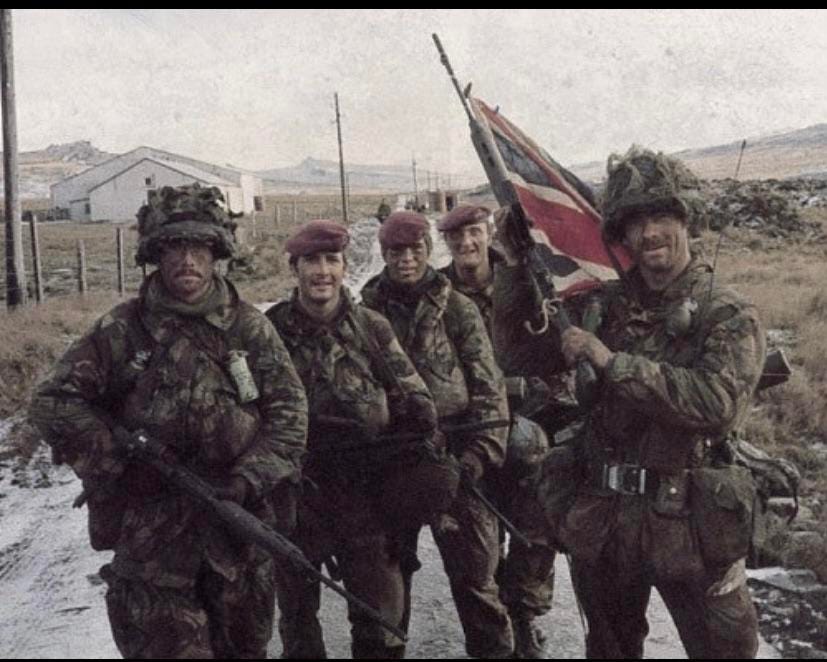
The Argentines could have overcome the night attack threat through an aggressive program of standing patrols, but that method of defence is the hallmark of professional militaries. Good patrolling technique requires years to develop, and requires a motivation level that few conscript armies posses. Notably during the battle for Port Stanley, one of the few areas where Britain had a numerical superiority was in the kind of special forces and light recce sub-units that are critical to winning the patrolling battle.
At the level of strategic and operational logistics the British secret ingredient was their ability to improvise quickly. The British military in 1982 was not prepared for a conventional war involving a joint amphibious operation at the division level on the far side of the world. There had been almost no contingency planning, and they had procured almost none of the equipment normally used to logistically support such an operation. They improvised that planning and equipment remarkably quickly.
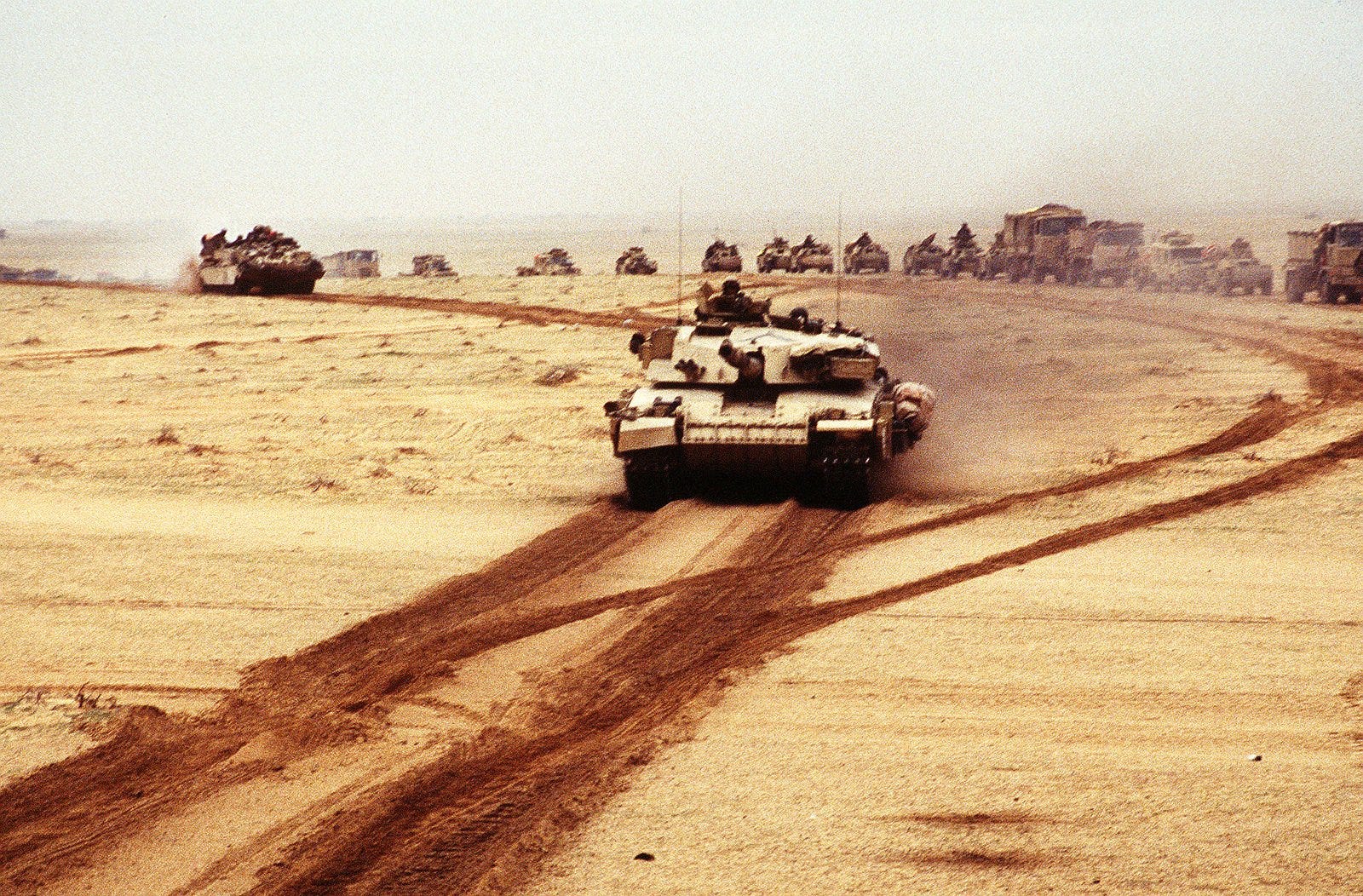
However, this does raise an interesting question of why Britain was so ill prepared for the Falklands War. For the decade leading up to 1982 they averaged defence spending of about 5% of GDP. If the British governments of the late 1960s to early 1980s had made it even a mid-level priority to globally project power at the Brigade (+) level then the Falklands War would have been MUCH easier to win. Certainly by Desert Storm in 1990-91 the British military was better prepared for global power projection despite having defence spending below 5% of GDP.
However, from the late 1960s until the Falklands War British defence policy was governed by the 1966 White Paper. That document stated Britain's armed forces would only fight above the battalion level (1) within Europe; and (2) as part of the NATO alliance. As a matter of high level policy the military was told it did not need to independently fight conventional wars or to deploy above the battalion (+) level outside of Europe.
Then in April 1982, the British government directed its military to independently fight a conventional war at the division (-) level on the far side of the world. The British government was certainly lucky they had armed forces with such an excellent capacity for improvisation.
Prior to reading “Logistics in the Falklands” I couldn’t quite figure out how the British managed to pull a victory out the hat, given the challenges of projecting power literally on the opposite end of the globe. Having read the book I am now convinced the British military in 1982 was either the best improvisational armed force in history or under some kind of Divine mandate.1
The disadvantages facing the British armed forces were significant. Despite these disadvantages they:
Deployed a fleet that carried a division (-) to the far side of the world within about week of the surprise Argentine invasion.
Conducted an opposed amphibious landing within 6 weeks of the invasion.
Built up a logistics base at the amphibious landing site while under constant attack from the numerically superior Argentine Air Force.
fought their way across over fifty miles of possibly the worst terrain in the world for an attacking force to defeat an Argentine garrison with superior numbers and firepower.
The lesson that’s usually drawn from the Falklands War is the superiority of a professional military made up of long service volunteers, operating from within a system that rewards improvisation. This is true, and it is why the British defeated Argentina’s military force of frankly poorly led conscripts.
However, there is another lesson that is just as salient: Government strategic defence policy must be aligned with the real threats to a nation’s vital interests. In 1966 the British government pretended all it’s national interest could be protected through contributing to NATO tasks in Europe. The next article will look at how the high level strategy decisions made in 1966 made the British military surprisingly unprepared to fight a conflict like the Falklands War.
But most of all, the lesson of this article is that more people should read “Logistics in the Falklands”. If you’re interested in military history or military operations you need to buy this book. I am not being paid to say this. Do it. Do it now.

Links (In alphabetical order)
Canada: Amazon Cda
USA: Amazon US
UK: Amazon UK
Comments
Nothing yet. Say the first thing.
Sign in to join the conversation.