
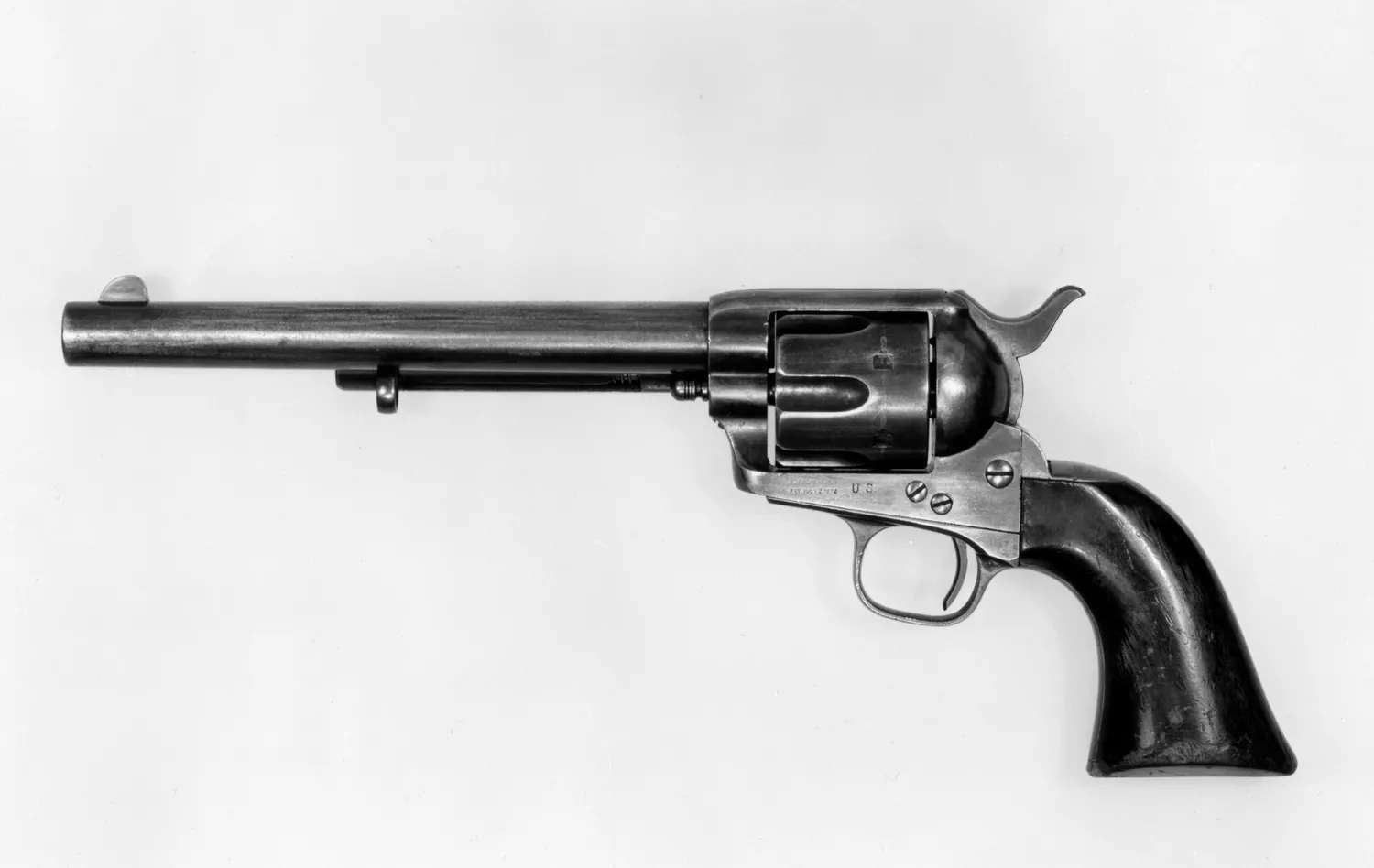
The rage of a jealous husband led to an exchange of gunfire near Trinity College on a cold day in January 1880. In my previous post, I wrote about the Hartford County Courthouse that was built in the early 1880s on Trumbull Street, in the area where the Hartford Peoples Bank Arena stands today. Before the courthouse, this was the location of the childhood home of painter Frederic Edwin Church. After the Church family departed, in the late 1860s, the house was purchased by Dr. George B. Hawley (1812-1883), a noted Hartford physician and close friend of Samuel Colt. From the 1850s until his death, Dr. Hawley played a major role in the early development of Hartford Hospital, overseeing the design and construction of its first dedicated building. By 1880, the venerable doctor was sharing his Trumble Street home with his son, Dr. George Fuller Hawley, and daughter-in-law. In addition to being a physician, the younger Dr. Hawley was also a businessman: he was President of the Farnham Typesetter Company and, along with Mark Twain, invested heavily in James Paige’s failed typesetting machine. If the elder Hawley paid attention to local gossip, he would have known the city was awash in rumors concerning his son’s activities. There was even a rising sense of impending danger, a tension that finally rose to a crescendo on the morning of January 10. Later that day the younger Dr. Hawley returned home in need of his father’s medical attention. He was suffering from a gunshot wound.
“For a long time there have been vague reports of some such state of things as should not exist, in regard to the Doctor and Mrs. Webster.” So reported the Hartford Times that evening, as it broke the dramatic news of events earlier that day. Mrs. Webster, whose maiden name was Clara Hay, was the wife of Charles H. Webster1, an insurance agent. They lived at 10 Allen Place, near Trinity College, in a house that is no longer standing. As was typical of the gender standards of the time, male newspaper reporters had no qualms about commenting on her appearance as they investigated the shocking news story she was involved in that January morning. The initial Times story described her as “a pretty person,” while two days later, a Times reporter who interviewed her at her home wrote, “Mrs. Webster is about 29 or 30 years of age — rather a good-looking blonde, with three lovely little children, 5, 7 and 9 years old — the eldest and youngest being girls.” A New York Times reporter, however, observed that, “She is about 35 years of age, not particularly fine looking in the face, but is well formed, and has a very attractive manner.”2
As the New York Times coverage shows, the Hawley-Webster incident was sensational enough that it made headlines well beyond Hartford. A day after the growing tension between Dr. Hawley and Mrs. Webster’s husband finally exploded into violence, the New York Times provided important background information for its readers:
For a long time there have been stories in circulation that Dr. George F. Hawley, a young physician and son of Dr. George B. Hawley, one of the leading old-school practitioners here, has been on terms of intimacy with the wife of Charles H. Webster, of the insurance firm of Chapman & Webster. About four months ago the scandal became so notorious that it was a matter of common remark among the people of Hartford, all the parties being well known and moving in good social circles. At that time Mrs. Hawley left her husband’s house and went to her father’s, and it was reported that she took this step with a view to separate permanently from the Doctor; but, after an absence of a few weeks, she returned and was often seen in public with her husband, and it was then said that she went home in the first place on account of sickness in the family, and that the course of her husband, even if she knew of it, had nothing to do with her action.
Dr. Hawley must have known about the stories in circulation concerning him, and there is no doubt that some of his friends cautioned him about his movements, lest he might get himself into serious trouble. Further than this, Mr. Webster, who was disturbed over the frequent visits of the Doctor, knowing that they created talk, though he may not have known, and probably did not know, all that was going on, called upon Hawley and asked him to discontinue his calls; but this request did not serve its purpose, and Webster at last became thoroughly enraged. He and his wife have had much trouble recently, he accusing her of infidelity, and she charging him with unbecoming jealousy.
The following day the Hartford Times provided further interesting background details:
The jealousy of Webster towards Dr. Hawley has been shown for perhaps a year or two — and some local gossip and scandal has existed in reference to the Dr. and Mrs. Webster. About a year ago Webster says he borrowed $50 of Dr. Hawley — who was always ready to assist him. About six months ago Webster paid back this $50, and took from Dr. Hawley a receipt in full, for that money and for “all professional services” to date. On receiving this receipt, Webster said-
“Now, if I ever catch you in my house again, I’ll shoot you!”
Since that time both men would seem to have been more or less prepared for an encounter. Even at the above interview, Dr. Hawley, apprehending some assault (he is a much more powerful man than Webster), took with him his coachman, or hired man, who was left outside at the door, and he also had a policeman on call. It has been pretty well understood that both men have been armed for some time past.3
Mrs. Webster had finally had enough of her husband’s behavior and since Christmas time had made it clear that she wanted to visit her relatives in Newark. As per the Times (again the Hartford one):
Her husband objected, partly on account of the expense, and partly because he suspected another gentleman might also go down to Newark too. But the relatives afterwards sent up the funds for her to go with. Her husband still objected, and told her that if she would send back that money he would raise the means for her to go, but not at that time.4
Mrs. Webster was still determined to go, but her husband made it clear that if she were to leave, he would not tolerate her taking their three children with her. On the evening of January 9, she packed her bags. Mr. Webster went out the next morning, but “he gave notice to the Police that if she attempted to leave the city on any of the trains, to stop the children, if she had them with her, and let her go.”5 Mrs. Webster planned to take the 12:25 train.
The initial Hartford Times story does not mention Mr. Webster as having concerns about the children that morning, which may be why he is twice described as “surprised” by what happened as he made his way home:
Shortly before noon Mr. Webster went out to his house, and was surprised to meet the children, all nicely dressed, coming up the street toward Washington street. The eldest girl started back, running, but he called and stopped her, and she answered his question where she was going by saying “Only just up there to Washington street.” But the little boy spoke up and said they were going up, by mamma’s direction, to take a carriage to the Union railway station. Somewhat surprised, Mr. Webster went to the house, and found the front door ajar.
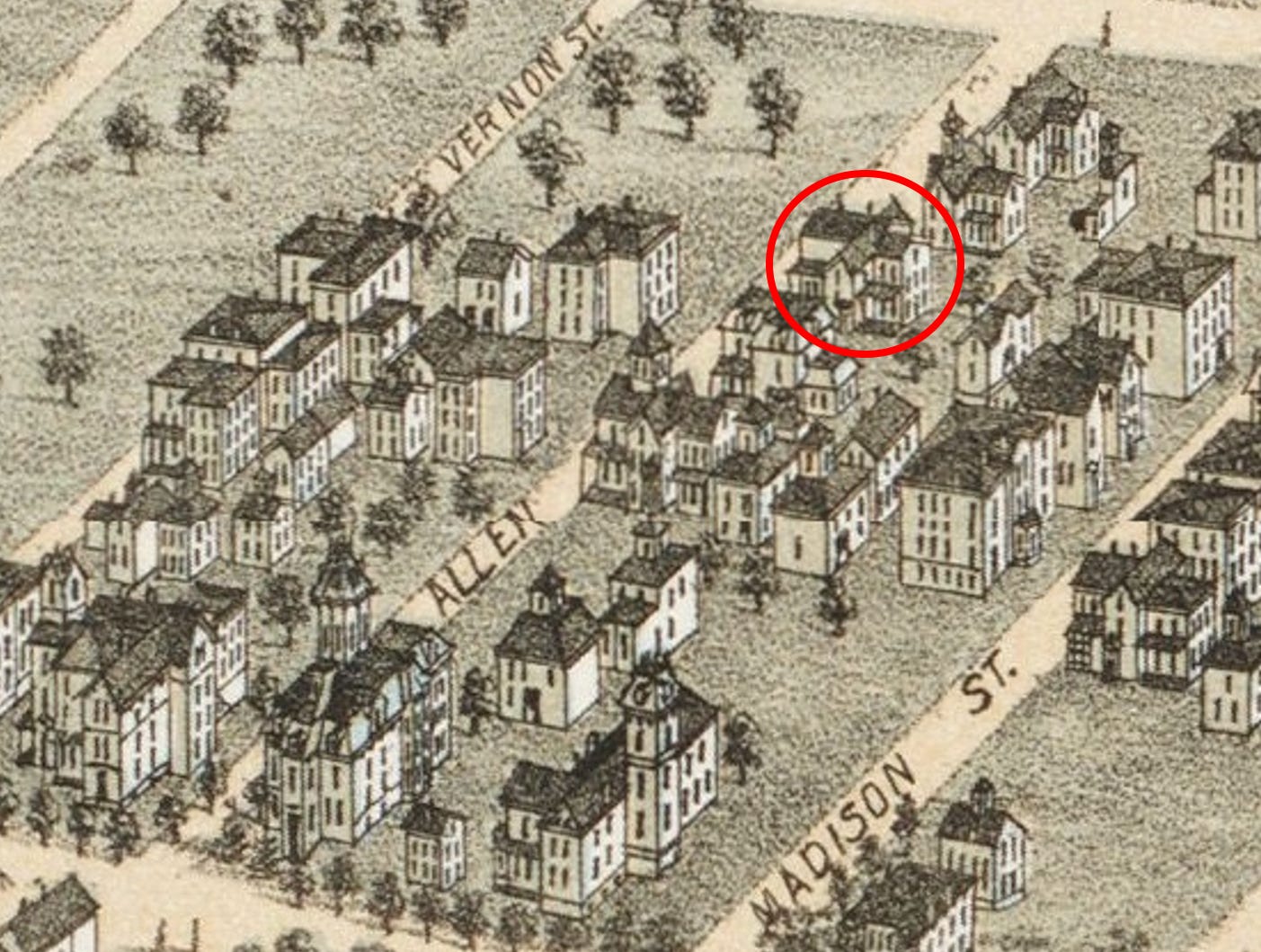
As described in the New York Times account:
As he entered the front hall he heard his wife close and lock a door up stairs. He immediately went up there to see what she was about. She was closing another door leading to the children's room as he came up to her, and when he asked her what she was about, she said that she was locking up preparatory to carrying out her purpose of leaving town. But he now began to be suspicious, and demanded the key to the front room, which is a bedroom. His wife refused to give it to him, and he then went to the door and kicked it in.
He had his pistol in his pocket and as he vigorously kicked the door, it went off, tearing a hole in the fabric of his coat, but causing him no injury. As the dramatic account in the Hartford Times relates:
His wife, hearing the explosion, rushed to the stairs, and called to know what was the matter?
“I’m going to get in here!” was her husband’s answer.
“What for?” demanded his wife.
“You’ll see!” said the husband, now thoroughly aroused, as he dealt a kick which burst the lock and threw open the door. THERE HE SAW DR HAWLEY sitting by a window, and, immediately drawing and cocking his revolver, he FIRED AT HIM.
Returning to the New York Times account:
When Webster got into the room Hawley was sitting in a chair. The former fired immediately while the Doctor was about rising from the chair. The Doctor then pointed his own pistol and fired, Webster retreating and holding his left hand up as a cover to his head and breast. The shot went into Webster’s hand, passing in below the knuckle of the little finger, and passing through to the thumb, making an ugly but not a dangerous wound. Webster got out of the room, but went directly back again, and fired a second shot and then a third.
Webster then fled. Dr. Hawley had been wounded, but he managed to get home where his father tended to his injury. One of Webster’s shots had been absorbed by a bunch of cigars in his overcoat pocket, otherwise it would have penetrated the doctor’s body near his heart. Another bullet had penetrated the middle of his right arm. Dr. Hawley senior was unable to locate it, and the Hartford Times reported two days later that “The ball is embedded so deeply that it is not deemed prudent to probe thoroughly at present.”
As the Hartford Times described the immediate aftermath:
After the shooting, Webster ran out to his mother’s, Mrs. McMaster’s, on Washington street, and got a towel which was bound about his mangled hand. He then hailed the Washington street bus and told the driver to drive him to the office of Dr. Chamberlain.6
As for his wife, the Courant explained:
Meanwhile Mrs. Webster had left the house and proceeded to the depot to take the 12:25 train. Word had been received there through a friend of Mr. Webster's to have her detained, and ex-Detective Cowles and Depot Officer Cushman stopped her as she was boarding the train. At first she resented the detention and demanded to know by what authority the police could prevent her going away. She was told politely that arrests could always be made by the police on immediate information, and that all that was wanted of her was to convey her in a carriage to the police station.7
At the station,
Prosecuting Attorney Hyde was notified of the affair soon after its occurrence, and had an interview with all the parties concerned. Mr. Webster was not disposed to make any complaint, as he admitted firing the first shot, and in the face of the facts the shooting by Dr. Hawley was in self-defense, and the latter was in no physical condition to declare his purposes fully as to the prosecution of his assailant. The attorney, therefore, decided to let the matter rest for the time being and await results. When this decision was arrived at, Mr. Webster joined his wife and children at the station house, and all took a carriage together and proceeded to their home in Allen Place. Mrs. Webster was desirous of taking an evening train and going to her friends in New Jersey, but insisted on taking her children, which Mr. Webster opposed, and finally she remained at home over night. What further action will be taken by them is not known.8
Two days later, the Hartford Times observed:
It is a notable circumstance that both the wives of the wounded men sat up with them nearly all night, Saturday night, bathing the wounds, and ministering to their husbands very faithfully. In regard to Mrs. Webster, she and her husband were apparently living together harmoniously yesterday and to-day; but it is uncertain what the issue of this trouble may be.
It did not take long for reporters to descend upon the scene to interview the participants. There is an almost Rashomon-like aspect to some of the variations among their stories and in the reporter’s accounts, including the exact sequence of the gunshots. On January 12, the Courant printed the account Mr. Webster gave later in the day, after the shooting:
“I have had more trouble in my family than you probably know anything about. When my wife said she was going away I told her I had no objection but she could not take the children. As I went into the house I had no idea that any one was there. My wife was just locking the door to the childrens’ room and I asked her what she was about and she said she was getting ready to go away, and was locking all the doors. I tried the door to the front room and found that it was locked and she said she had the key and when I asked for it she refused to give it to me. I then for the first time had a suspicion that some one was in that room, and as she would not give me the key I kicked the door in. My pistol was in my outside coat pocket, and when I kicked the door the pistol went off and made the hole in my coat which you seen (showing a big hole in the skirt of the coat.) When I got into the room Dr. Hawley was sitting in a chair and I fired, and then he returned the shot, and it hit me in the hand. I had my hand up to my face when I saw he was going to shoot, and receiving the bullet there probably saved my life.”
Mr. Webster was very much excited when talking of the affair, and several friends who were about advised him to make no statement whatever, for they thought it might compromise him if a legal prosecution should follow. He said, however, he had nothing to conceal and wanted to tell the whole thing just as it was. This was at the station house in a back room, while Mrs. Webster and her children were in the chief’s office.
The same Courant piece gives Dr. Hawley’s version of events, in which he presents his relationship with Mrs. Webster as completely innocent and vividly describes the reactions of Mr. Webster:
The family of Mrs. Webster I have known for many years, and l have rendered professional services on numerous occasions to different ones, and particularly to Mrs. Webster’s mother, who had a difficulty [gall stones] which was treated so as to greatly relieve her. Mr. Webster has pursued a remarkable course toward me, at one time threatening me and again expressing his regrets that he should have made any threats. I have never called at his house except in the must open manner, just as I have made calls at other places in making my regular visits to patients. There has been no concealment whatever, as there was no occasion for any. Webster, however, has as I have said, displayed an excitable disposition at times, but as he took occasion in other moods to disclaim any hostility toward me, I attributed his conduct to a passionate whim and treated both himself and family as if nothing on his part had occurred. Sometimes I have heard that he proposed to shoot me, and when I saw him be would disclaim having made any threats and appear to be friendly. Thus I had no cause to feel that his enmity was at all deep-seated, or that there was anything more in his disturbed moments than a feeling of jealousy of which I was the innocent cause.
“The trouble yesterday was evidently brough about wholly by the man’s rage, caused by the fact of which I knew nothing at the time, that his wife had decided to go to her friends against his wishes. I had no design of calling at his house and it was the merest accident that led me there. I drove in company with my hired man, Thomas Cosgrove, out to Trinity college to see Mr. Kneeland, a student. We went out through Vernon street and returned by the way of Allen Place. As we passed Webster’s house his wife came out on the side stoop and called to me, saying that she wished to see me for a moment. I went in, telling Thomas I would be out immediately. Mrs. Webster said she was going away on the 12:25 train—it was then going on 12 — and wanted me to write the prescription which had been of so much benefit to her mother to take with her. I was not expecting to stay there five minutes. My impression is that Mrs. Webster had her cloak and hat on ready to go to the depot, the children were dressed ready to go. I stepped into an adjoining room from the hall and was about writing the prescription when Webster burst in in a furious manner. I thought he was under the influence of liquor. That he intended any mischief I had not the least suspicion, and the only warning I had that he designed to harm me was when he straightened his arm out and fired a pistol shot, immediately following it with another.9 As quick as I could I drew a small revolver and was on my feet and fired in return and he screamed, making a terrible noise, and ran into the hall. I followed him, not knowing then whether I was badly hurt or not, and could have killed him as well as not, as he was crouched in a corner with his hand up to his face. His attitude had such a cowardly appearance that I had pity upon him and concluded to let him alone. I then returned to the room to see how badly I was wounded, and hardly got in when Webster came to the door and fired at my back, but did not hit me. I went after him again and he ran in mortal fear. Even then I could have shot him, but I desisted and saw no more of him. I had my overcoat on, and the shots went through it as you will see by examining it. One shot struck me in the breast in the region of the heart, but went against a bunch of five cigars in my vest-pocket. But for the cigars the shot would probably have killed me. The other shot hit me in the arm just below the shoulder.
“After I had examined and found where I was hit I went out and could not see Thomas, my man. He had a four-year old colt driving and had driven down the street to keep him exercising. I started for the hospital thinking I could get there well enough, when I met Thomas and came home.
“Of course the affair is an unfortunate one, but there has been nothing on my part intentionally done to provoke it. I have simply acted in good faith toward all the parties concerned, and Mr. Webster has no justification for his impulsive act.”
On the morning of January 12, a Hartford Times reporter visited the Webster home on Allen Place, describing it as “a single, frame dwelling, quite cosy [sic], and modern in style.” He noted that “Mrs. Webster said she desired to leave for Newark, but her husband would not permit her to take the children, and she would not go with-out them.” Mrs. Webster claimed “Dr. Hawley was a friend of the family; that he sometimes called as a friend, as well as upon professional duties; and that there has never been any criminal intimacy between herself and him, and nothing more than friendly relations.” She also stated that she had not, in fact, invited the doctor in to write out a prescription. Instead, he had entered the door (left ajar by the children) on his own volition. Noticing him in the hallway downstairs, she invited him up, but when she heard her husband return, “knowing that he was excitable, and did not like Dr. Hawley, she told the Doctor to stay in the bed-room.” As for the locked door, she said, “the Doctor must have fastened the door from the inside.” When her husband was bursting the door open,
his pistol, being in his overcoat pocket, probably struck the door; the hammer (says Mr. Webster) was down, and the blow on the door discharged it, tearing out a large piece from the side of his coat.
The bed-room door was shown to the reporter. There was a bolt on the inside which was still fastened in its socket, and the bolt of the lock was also pushed into its socket. The casing of the door was broken by Mr. Webster, and the door was burst in by the giving way of the casing.
In the same piece, the reporter proceeds to debunk her claim about not having invited the doctor in herself to write a prescription:
When Mrs. Webster was stopped at the railway station on Saturday by Officer Cowles and asked to accompany him to the station-house she became very indignant, and showed considerable temper. On being informed that her detention was legal she went with the officer.
On entering the office of the chief-of- police she accosted him in a very indignant manner, and wanted to know if a person could be arrested without the proper papers. She was informed that she was not under arrest, but detained until certain matters could be investigated. She then held her peace for a time.10
At last she volunteered the information that she had called Dr. Hawley into the house to give her the recipe formerly given to her mother (thus corroborating the statement made by Dr. Hawley).
It seems no chargers were ever filed. The only further mention of the incident I’ve come across is a notice in the Hartford Courant of May 11, 1880:
The pistol ball lodged in the left hand of Mr. Charles M. Webster at the time of his shooting affray with Dr. Hawley last winter, was removed yesterday by Dr. Jarvis, who administered an anesthetic before performing the operation. The ball, of 32- inch calibre, and considerably flattened by contact with the bones, was found lodged near the base of the thumb, having entered near the lower joint of the little finger.
There is so much left unsaid and open to speculation in these accounts from January 10-12. Was the doctor really only there to fill out a prescription for Mrs. Webster’s mother? Could he have been planning to accompany her to New Jersey? If he told his hired man he would only be in the house for five minutes, why did Cosgrove decide to exercise the horse by taking it around the block?
Dr. Hawley (born 1844) was in Europe when his father, the elder Dr. Hawley, passed away in 1883. He and his wife, Anna Coleman Newton Hawley, were divorced by 1885, when the doctor married the second of his three wives. By the first decade of the twentieth century, Dr. Hawley had relocated to Chicago, where he died in 1917. He was a throat specialist who invented an atomizer in 1904 that was designed to spray both oil and water (one of them is now in the collections of the Smithsonian).
As for Charles McCloud Webster (born 1847), he is listed in the 1881 Geer’s Hartford Directory as living at a different address in Hartford than the house where the shooting took place. He continued in the city as a prominent insurance underwriter until his death in 1927. He also married three times. He and Lucy Ely Fox (1852-1910), whom he married in 1882, had four children. I’m not sure of what happened to his first wife, Clara Hay Webster, who was once caught between two armed men who ended their dispute with gunfire but, thankfully, no loss of life.
Not to be confused with Charles L. Webster, Mark Twain’s nephew and business manager who lent his name to the famous humorist’s publishing company. Mark Twain was a resident of Hartford at the time, and I wondered if he was around the city at the time, but on January 10 both he and his wife were in the first days of an extended stay with her relatives in Elmira, New York.
Hartford Times, January 12, 1880; New York Times, January 11, 1880.
Hartford Times, January 10, 1880.
Hartford Courant, January 12, 1880.
The New York Times account of January 11 observes that the revolver going off in Mr. Webster’s pocket as he kicked in the door “of course, gave warning to the inmate of the room.”
This is likely why, despite the depiction here of her earlier strong reaction, the Hartford Times reporter who encountered her on January 10 described her as “very quiet and reserved.”
No posts
Comments
Nothing yet. Say the first thing.
Sign in to join the conversation.