
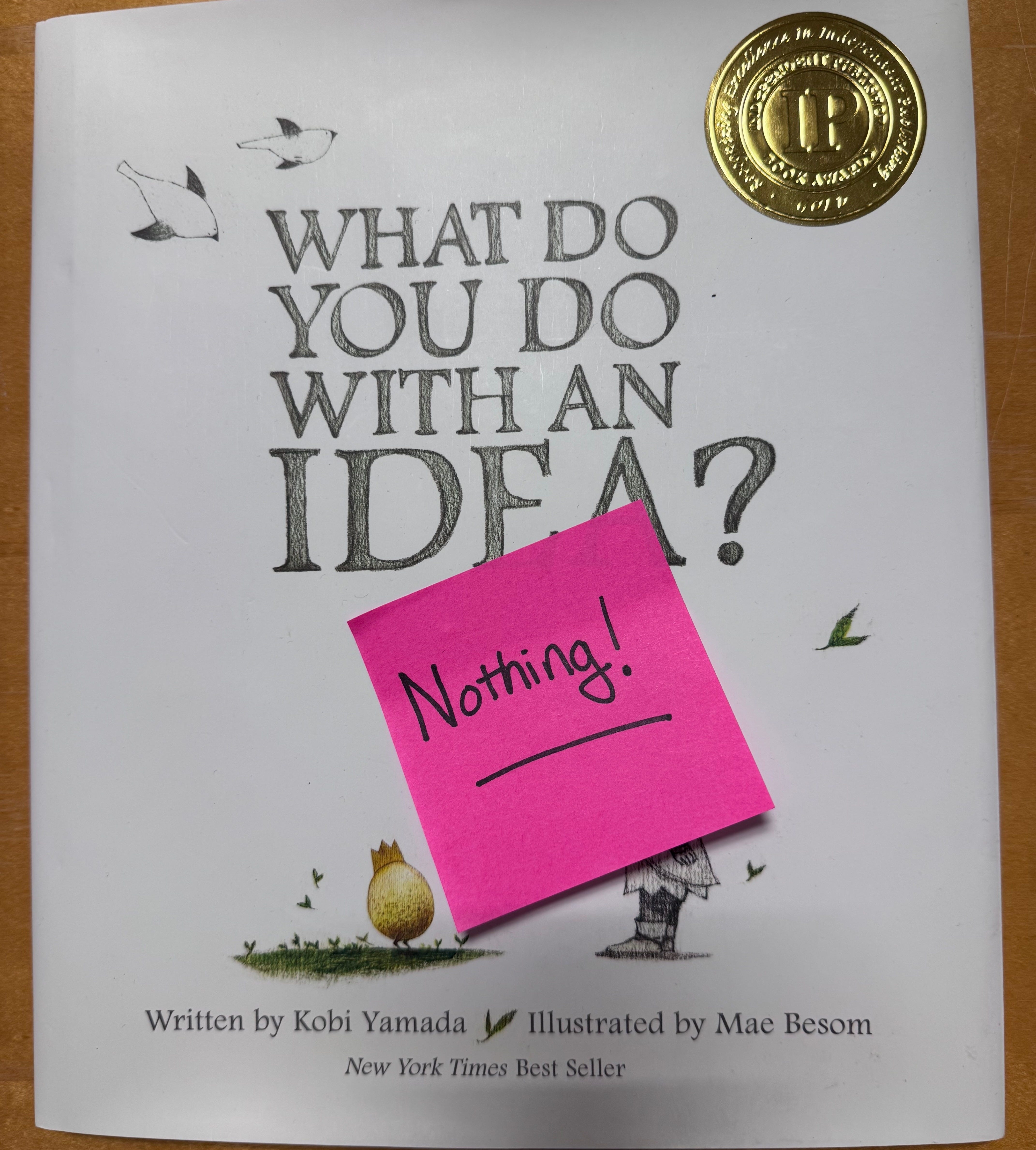
What Should You Do With an Idea? Apparently, for most people, the answer is nothing.
A large, multi-year U.S. study from 2019 found that while millions of Americans consider starting a business, fewer than half ever take even the simplest first step—like doing a basic online search or talking to someone about the idea.
So what are we actually doing with our ideas? Not very much.
The image above references a children’s book that captures this perfectly. It tells the story of a boy who encounters an idea, represented as a fragile egg. Unsure what to do with it, the boy simply walks away. The more interesting question isn’t why people have ideas. It’s why so many of us walk away from them and the sense of generativity that makes us feel alive.
After years of working with students, founders, and executives, I’ve come to see the answer isn’t fear or laziness.
It’s something more powerful: an inherited logic about action.
We are taught, over time, to delay action until we feel ready, qualified, or certain. Early on, this shows up when we ask for permission. First from parents and teachers, later from institutions and credentials. Over time, we stop needing someone to say no, our identity (Quant, Creative, Operator) does it for us. By the time we reach college or get an MBA, this becomes formalized: action should wait until tradeoffs are calculated and risks minimized.
At first, this logic works because it rewards consistency. Others can see your path because you’re clearly on one. And when you get tempted to step outside of it, you don’t, because you can anticipate what you might lose.
But this logic breaks down when the question isn’t optimization, but direction and meaning.
In the children’s book, the boy admits, “I worried what others would think. What would people say?” That’s the moment most ideas stall, not because they’re bad, but because acting on them would mean stepping into uncertainty without guarantees.
Rebuilding ourselves doesn’t begin with feigned confidence or more clarity. It begins with action. An idea doesn’t need confidence to survive—it needs contact.
The boy in the story notices something simple: he feels better when the idea is around. So instead of walking away, he starts paying attention to it. He feeds it. Plays with it. Works alongside it. And only then does the idea begin to change.
This mirrors what I see in real life.
A few years ago, one of my students, Jerry Chen, came to me convinced that LinkedIn-style networking was broken. It wasn’t working for new people entering the workforce, nor for those looking to hire and groom the next generation of talent. His first version of the idea, SWIPE, wasn’t right. Our first idea rarely is. But instead of protecting it or overthinking it, he worked on it. He shared it. He let it change.
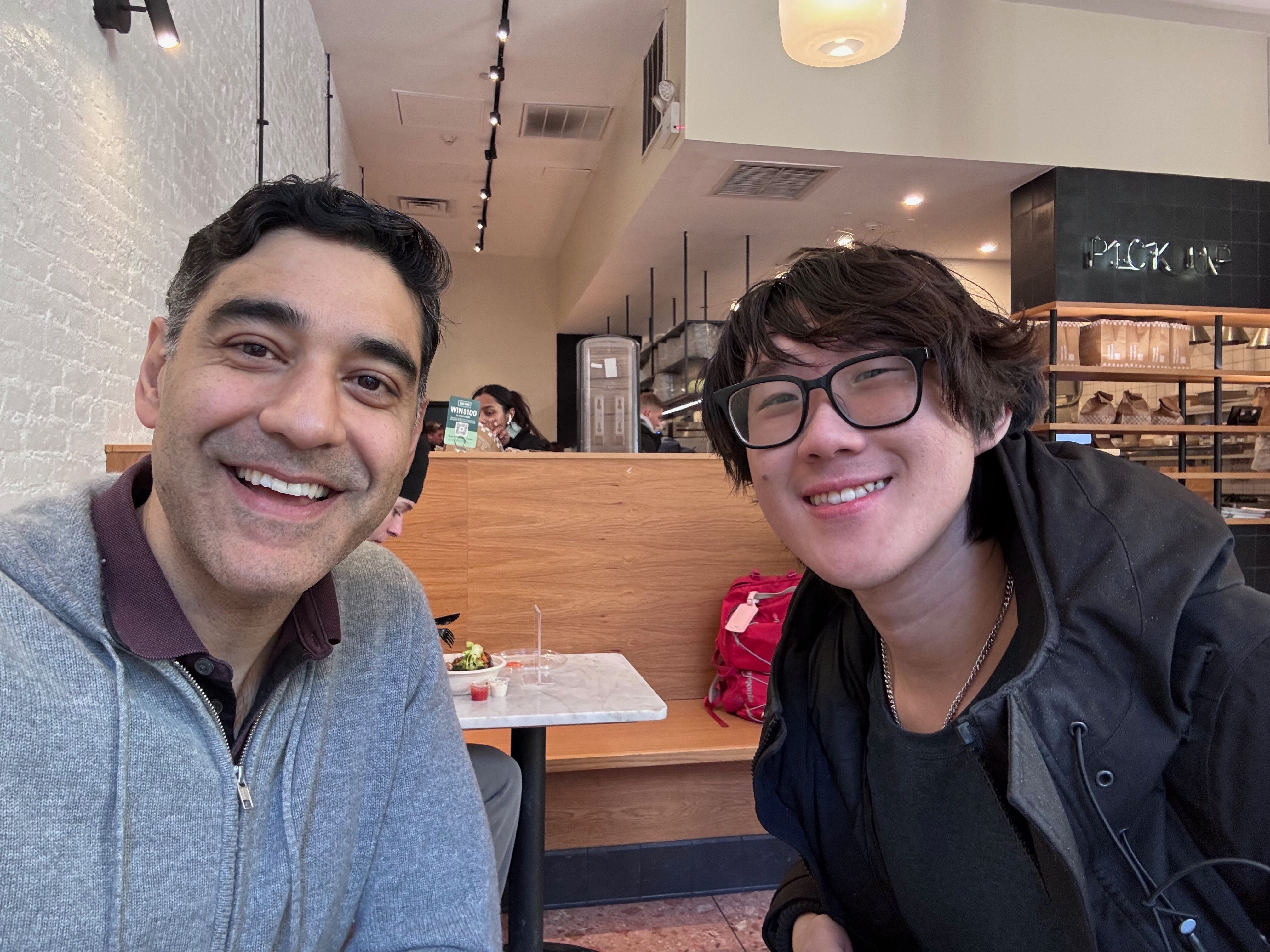
He took a semester off, then another, and another. In that time he got his updated venture, Latte, selected into a top accelerator, TechStars. In addition to receiving funding, he earned time to iterate on his product and learn more about his customer. Last year he was working with one university on his mentor platform. As of our lunch yesterday, he is working with fourteen universities.
What changed wasn’t the quality of the original idea. What changed was his willingness to engage with it before it was fully formed.
This is the core of Entrepreneurial Intelligence: the human capacity to act, learn, and create meaning when the usual guarantees are missing.
Most ideas aren’t good when they first appear. Some won’t get better at all. But unless we practice engaging with them, feeding them attention, sharing them with others, letting them evolve, we end up like the boy at the beginning of the story, convinced that ideas are fragile, strange, and ultimately not meant for us.
And that’s how capable people stay stuck—not for lack of ideas, but because they were taught to wait.
No posts
Comments
Nothing yet. Say the first thing.
Sign in to join the conversation.