
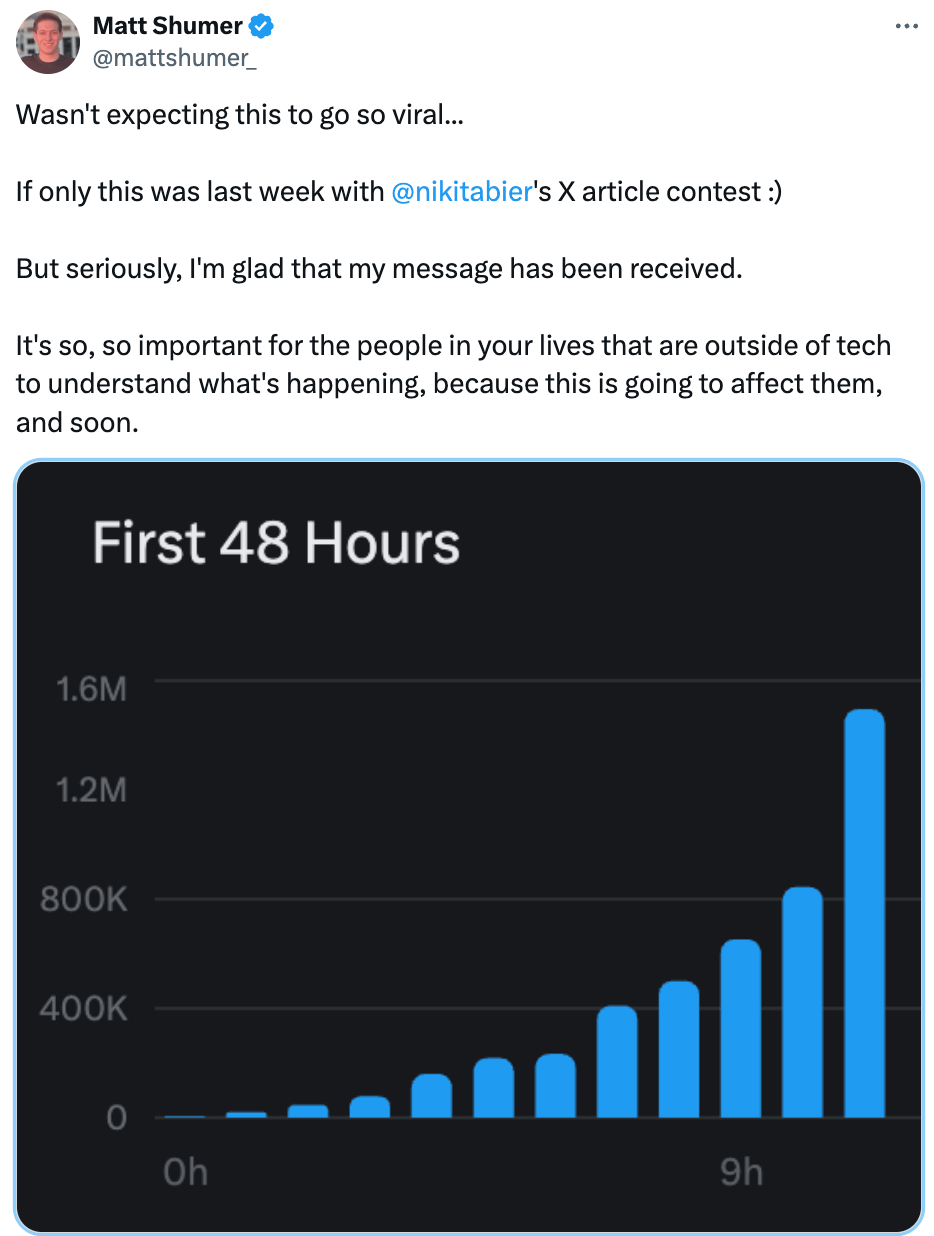
If anyone was looking for a recipe for raising our anxiety level, just talk to Matt Shumer, because he found it yesterday.
He posted a reflection on twitter that was titled, “Something Big Is Happening.” He began with a society already uneasy about AI. Then he added our still-healing memory of Covid.
The delivery was a simple analogy. Shumer compared:
February 2026 to February 2020.
Or in other words T-1 month, only 30 days before everything changes.
Shumer wrote:
“I think we’re in the ‘this seems overblown’ phase of something much, much bigger than Covid.” He described watching AI go from “helpful tool” to “does my job better than I do.” He even said, “I am no longer needed for the actual technical work of my job.”
What followed was a flurry of commentary in the news media, on X, and on Linkedin. Many in agreement and plenty of anxiety and fear to go around.
I think it deeply resonated as we all remember the skepticism we had in February of 2020. We went about our business as usual, and then came the stark contrast of March: schools closed, friendships moved to Zoom, celebrations canceled, hospitalizations rising, jobs cut, lives altered.
So when someone says, “This is happening right now,” and warns that AI may eliminate large swaths of cognitive work, it’s not surprising that many people feel their back tighten. I felt it too. My mind started racing toward catastrophic outcomes.
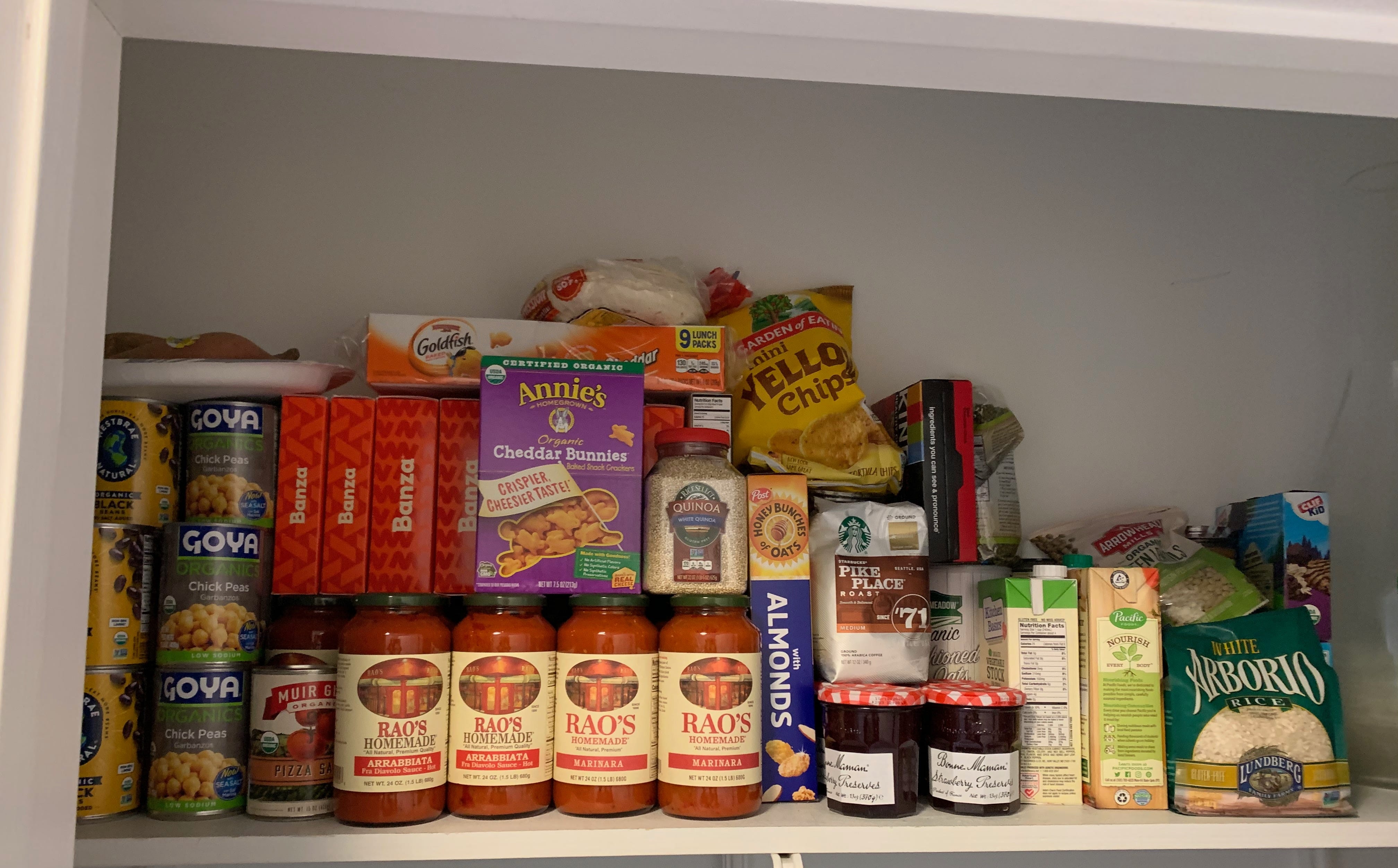
In late February of 2020, I did the same thing. I projected terrible doomsday scenarios. In a panic, I stocked up on way too many black beans and tomato sauce. Took my kids out of school days before my friends and doom scrolled. The worst scenarios I imagined never materialized for me. But other challenges emerged that I could never have predicted.
Yet, the future rarely collapses in one dramatic sweep. It shifts in increments. In March 2020, my instinct to minimize risk amplified every catastrophic possibility until I felt paralyzed. The people who stay in motion get to shape the change. The ones who freeze, experience it.
I see this same emotional bundling every time I talk to a would-be founder that says entrepreneurship feels “too risky.”
In coaching students and early founders, I spend a lot of time separating out the different risks people experience. When someone considers starting a company, they often say, “It’s too risky.” But that risk is rarely singular.
They worry about the job they would leave, the money and time already invested, the embarrassment of failing, the reputation they’ve built.
With AI, many of those risks parallel quite closely. We tend to lump these together into one undifferentiated feeling of dread. When everything blends together, it feels larger and more dangerous than it actually is.
What if the hardest part isn’t financial risk, but identity risk, the feeling that the thing you worked so hard to become might no longer be scarce?
The alternative to dread is not reckless reinvention. It’s disciplined motion. Stay curious long enough to notice what is actually changing. Study the problem before racing toward a solution. Use AI at work and at play, not as a surrender, but as a tool to understand the terrain. The better you understand its evolving capabilities, the less there is to fear and the more agency you regain.
I doubt we’re in February 2020. But we aren’t standing still either. The future rarely announces itself all at once. It shifts in increments. So will I.
No posts
Comments
Nothing yet. Say the first thing.
Sign in to join the conversation.