
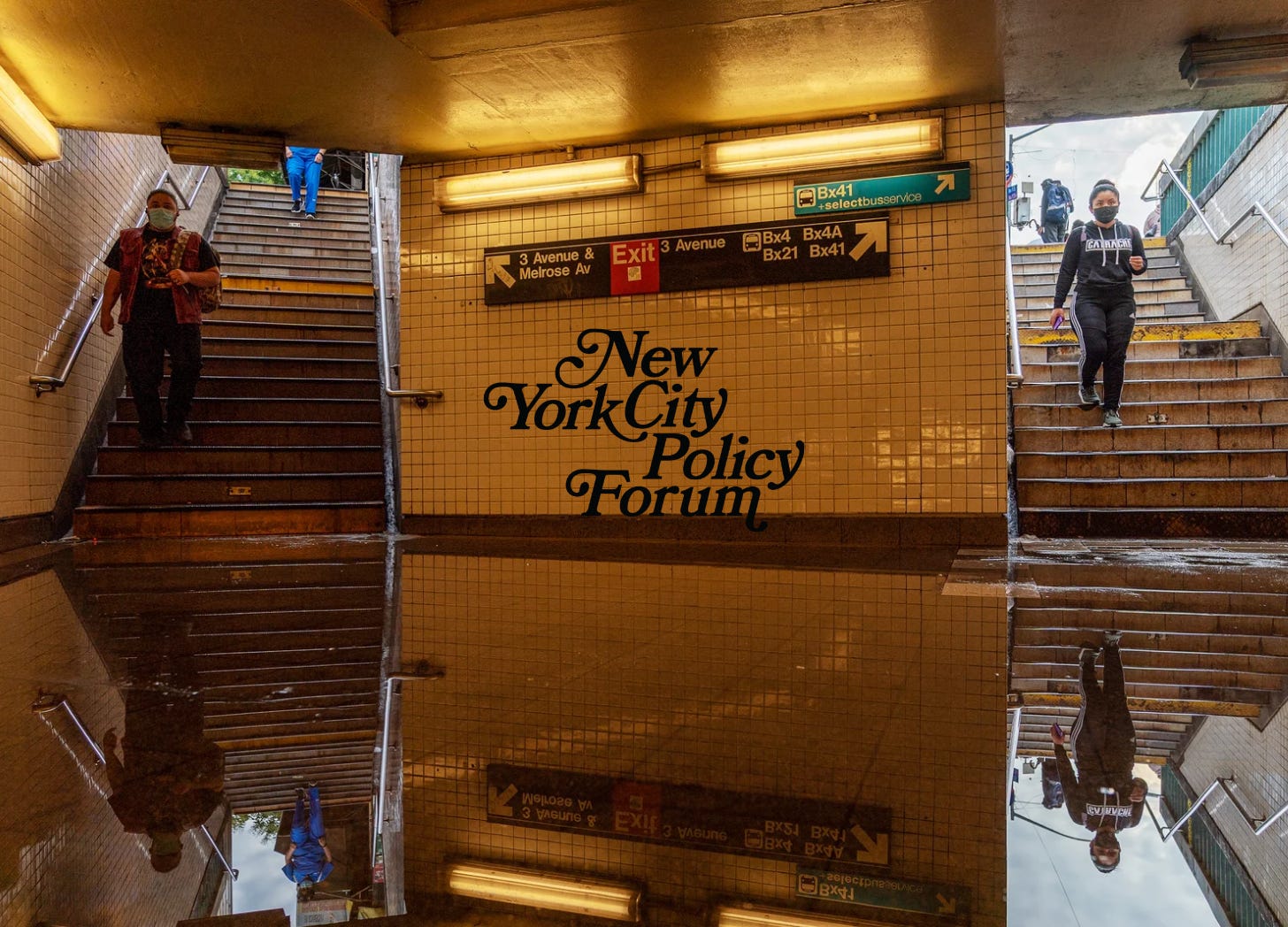
In recent years, New York and other cities have witnessed the rise of a new kind of climate disaster: cloudburst events. With a warmer atmosphere holding more water, extremely intense bouts of rain are overwhelming storm-and-sewer systems that were engineered for a different climate. This has led to devastating—even deadly—flash floods. In response, cities like New York have begun exploring a new paradigm to handle this crisis: so-called sponge city interventions that mitigate harm while providing urban residents with better “social infrastructure” year-round. In many ways, handling cloudburst rain events that fall from above requires a completely new set of strategies, compared to those used to prevent the kinds of flooding from below experienced during Hurricane Sandy. To understand how this crisis has developed in New York, and how the city can accelerate its response, Daniel Aldana Cohen spoke with urban climate policy expert and NYU Professor Eric Klinenberg. He is the author of a recent article in the New Yorker, a major new study on social infrastructure, and a seminal book on extreme heat, Heat Wave: A Social Autopsy of Disaster in Chicago.
Daniel Aldana Cohen: Are floods becoming more common and more severe in New York City?
Eric Klinenberg: It’s raining at a greater intensity than we’ve seen before. We knew in theory that this was coming, because when the atmosphere warms, it holds more water vapor. But now the impacts are here: cities around the world are experiencing extreme precipitation events, deluges of biblical proportion, with some places getting months of rain in just a few hours.
In New York City, the four most extreme precipitation events have all happened in the last four years. Some of the most recent extreme flooding has come from named storm systems, like the big flood in September 2021 following Hurricane Ida—which forecasters saw coming. But on October 30, 2025, what appeared as just an ordinary low-pressure system with only two inches of rain forecasted, became a catastrophe. More than one of those inches fell in about 10 minutes, and the results were extreme, damaging infrastructure and killing two New Yorkers.
Generally rain is talked about in terms of the total amount of precipitation—but it’s the speed that determines its impact. Two inches over the course of a day in New York City is no problem whatsoever. One inch of rain in 10 minutes is an emergency. Cloudburst is a name they use in Denmark for these extreme precipitation events, and some people call these events “rain bombs”; there’s a whole vocabulary for them that tries to capture this dramatic shift in predictability. We used to be basically confident about heavy rains, assuming it would all roll off into gutters. But that’s less and less true: roads might not handle the downpour, the subway might not handle the water coming in.
DAC: You’ve written about the diameter of pipes in New York City—infrastructure that doesn’t match the climate we live in now.
EK: Nothing illustrates the disconnect between the infrastructure we’ve built for modern cities and our new climate as vividly as an extreme precipitation event—you literally see that the city can’t handle the amount of water that’s fallen. New York, like many modern cities, didn’t have a hardscape flood control system until the middle of the 19th century. Back then, a whole wave of cities started to replace the ponds and streams that used to collect sewage and rainwater with pipes, pumps, and drainage systems designed to move water quickly from the streets and sidewalks where people live their lives into nearby lakes, rivers, and oceans. For about a century, there was relatively little treatment of that waste.
In the 1960s and ‘70s, we saw real innovations in sewage treatment—cleaning that water before it got dumped in the places where people got their drinking water and fished. From the middle of the 19th century, the most common way to build a flood control system was to combine the places that took sewage with the system that absorbed rainwater—these were called combined systems. The idea was that rainwater would help flush the sewage out.
But once you reach a certain amount of rain, the system just can’t handle the combined rainfall and sewage, which now backs up into homes, businesses, and streets. New York City wanted a first-class combined sewage system, and in the 20th century the city updated its system so the pipes could absorb 1.75 inches of rain in an hour, which is a tremendous amount. By contrast, Hoboken’s system to this day can take 0.8 inches of rain in an hour.
That was an excellent system for the climate we used to have. Until the 1990s, there were zero occasions when New York City got more than 1.75 inches of rain in an hour. Since the nineties, New York City has experienced eight storms with hourly rainfalls above 1.75 inches.
The combination of increased rainfall and inadequate infrastructure is dangerous and deadly. When the system backs up, it’s not Evian—that water has picked up toxic chemicals, oil, trash, literally whatever’s on the street. You don’t want it touching your skin. At minimum, as dead rodents, birds, insects, and so on get washed into flood zones, you are dealing with classic environmental health dangers. This affects storage for restaurants and grocery stores, typically below ground, and of course the subway. But the water also ends up in people’s homes.
Tens of thousands of New Yorkers live in basement apartments. Some low-lying neighborhoods have flood risks not just in the basements but also at the first level. And there are places that are literally impossible to protect. In a recent New Yorker essay, I wrote about a block in Hollis, Queens that got so much floodwater during Ida that the foundation of one building collapsed, drowning two people in the basement. During that storm, thirteen people died in New York. These deaths reflect the class-based geography of the city: wealthy New Yorkers do not live in basements, while working-class immigrant New Yorkers do.
So should we just get bigger pipes? That would require ripping up every street in every neighborhood in the city. It would be impossibly expensive and take decades—and if climate change continues accelerating, who knows what pipe diameter we’ll need to handle the storms of the future.
But there’s a new world of engineering, landscape architecture, and city planning, where creative people are trying to find solutions—moving water out through hardscape systems, while also finding ways to capture the water, slow it down, and manage how it moves, so you’re not sending storm water into a system that’s already backed up.
DAC: Hurricane Sandy in 2012 was a massive, devastating weather event, and there’s been years of work since to respond and plan for the future. But you argue that preparing for storm surges from hurricanes is not the same as preparing for cloudburst events. How does the concept of the so-called Sponge City differ from how we’ve responded to Sandy?
EK: There’s a danger in climate adaptation that I think of as the engineers’ version of generals preparing for the last war. If you focus on preventing the catastrophe that just happened, you might miss the weirdness of climate change and not see that the next threat is going to be different. To protect from storm surges, you typically elevate the edge to keep water from coming in—New York City has done creative things to build up the edge, particularly on the East River. But when you build up an edge, you also run the risk of turning everything inland into a bathtub. New York City engineers know that, and they’ve now designed a system, called Parallel Conveyance, that diverts stormwater into a giant tank, sends it up to 14th Street, and, there, pumps it out to the Newtown Creek wastewater facility at up to three hundred and fifty million gallons a day.
We have to keep engineering for new conditions, but every time we build a big, expensive system, we’re locked into it. The Department of Environmental Protection (DEP) has done tremendous things in New York City to handle the cloudburst issue. But the challenges of dealing with these problems in New York City are immense. It’s a big, sprawling city with challenging topography, challenging demographics, and challenging politics.
The Sponge City idea takes its inspiration from very old principles in landscape architecture going back to Frederick Law Olmsted, but it crystallized as a planning concept in the work of Kongjian Yu, a recently deceased Chinese landscape architect. The notion was that instead of hardscaping and engineering our way out of flooding, we needed to find ways to absorb and hold water—hence the sponge metaphor. Its influence has as much to do with the power of that metaphor than with specific ideas, which have been around in landscape architecture for a long time. But I think one virtue of this approach is that it recognizes you want to slow down and store water—to relieve pressure on the sewage system—but also because water in many cities has become a scarce resource, in many Chinese cities and increasingly in US cities like Los Angeles.
One of the key features of the Sponge City approach is thinking of climate infrastructure as social infrastructure—the physical places that shape our capacity to interact. If you’re investing in infrastructure for climate adaptation, you should always include a well-designed social infrastructure feature, because otherwise you run the risk of having a dumb wall that never gets used for anything other than flood protection, say once a year. Sponge City approaches are commonly developed through things like parks, play spaces, sports fields, and gardens.
It’s an approach to urban planning that takes advantage of the opportunity climate change presents—we shouldn’t just be trying to stave off ecological disasters, we should be thinking about how to make a more beautiful, accessible, affordable, and joyous city on a daily basis.
DAC: What are some examples that illustrate this idea of spongey social infrastructure?
EK: Copenhagen, which has gotten a lot of attention for its cloudburst plan, famously redeveloped parks to hold, store, and slowly discharge water. There’s a park in a formerly working-class, now gentrified area of Copenhagen—that sits down the hill from the original Carlsberg brewery and is surrounded by housing. The city built a water basin underneath one green area, where water seeps in and can be stored. When the water level starts to rise, water monitors trigger deployable walls to elevate, so the whole park turns into a storage basin. They have a water storage facility underneath an ice rink, and they’ve planted an enormous number of trees and gardens to have more absorbent surfaces.
I’ve also seen many parks in Hoboken that were developed after Hurricane Sandy work on those same principles. Following the storm, Hoboken, which is situated like a bathtub, made big investments in pumps to move water out. I believe the future of climate adaptation has to be getting multiple benefits out of single projects in this way—using playgrounds as invisible flood management systems. Hoboken’s ResilienCity Park is one example of this approach: a very lush, green space, with a soccer field, an amazing playground, and a sunken basketball court, like the ones that NYCHA has also been building to store water, all sitting on top of a massive water basin. And it’s incredibly helpful in preventing rain-related catastrophe in that city.
In Brooklyn, the Green-Wood Cemetery’s Sylvan Lake has the capacity to hold a lot of water. Engineers have connected it to a monitoring system and drainage pipes so they can control it. If the forecast calls for a major rain event, they can drain the lake before the water comes and move it through the sewage system beforehand, clearing out space in advance of their anticipated storage needs.
If you live in Brooklyn, you’ve probably seen Department of Environmental Protection (DEP) workers putting in more permeable surfaces along the sidewalks and streets. That’s been a big investment from New York City.
Finally, there’s the Blue Belt in Staten Island: an old-fashioned system of creeks, streams, and green spaces connectd to some basic engineering—street-level catch basins, pipes, and pumps—that absorbs rainwater without it either spilling into neighborhoods or needing to be dumped into the ocean.
DAC: Is this a shift away from the hardscape approach?
EK: We’ll always have pipes, pumps, and hardscape systems to move water out. Even the best Sponge City approaches involve holding onto water so you can move it into that modern system later. But the fantasy that hardscape systems alone can give us the level of control we need to get through climate change is now gone. In New York City, as in almost every city on earth, those were designed for a climate we no longer live in, and we have to find something else to do, short of tearing up every street and replacing every pipe. The Sponge City approaches complements the older approach.
DAC: It’s clear New York City is doing a lot. Does the city need to go faster, or do things differently? What would be your wish list?
EK: The brilliant people at the DEP know what they’re doing and are in touch with with cities around the world. We just do not have nearly enough money to do this work. While I was reporting the story for The New Yorker, the federal government was cutting federal funds available to cities through programs like Building Resilient Infrastructure and Communities. They’ve said they’ll start again, but it’s not clear who will get it or what the criteria will be. So hundreds of millions of dollars that were supposed to go to New York City for flood management systems just disappeared.
The challenge in New York City is that there are so many places that need help, and some neighborhoods are so low-lying and vulnerable that it’s all but impossible to stop the flooding there. Landscape ecologist Eric Sanderson is one of the people who believes there are neighborhoods in New York City that will never be able to be spared from catastrophic flooding, and that the best thing would be to buy out those homes through a process of managed retreat. Sanderson’s new study with Lucinda Royte shows there are more than a million people in New York living in what he calls blue zones—areas prone to flooding—and they’re disproportionately public housing residents and disproportionately people of color. The idea that the city, or the state, could relocate a million people is somewhat fantastical, but the core of the argument is that nothing short of a landscape-level intervention would make a meaningful difference for a lot of these communities. That might well be true, but it’s not at all clear how you integrate that into the city’s day-to-day reality. Some people just don’t want to hear about that scale of intervention because it feels like a nonstarter. At some point we’re all going to have a reckoning, but I think unfortunately we’re still very far from that.
DAC: You’ve written a hugely influential book on the Chicago heat wave, and you wrote it as a sociologist, so you have a fairly unique perspective. Last year, Mayor Mamdani won his primary on the hottest day in 12 years and didn’t mention climate change in his victory speech. Now we’re looking at a potentially world-historic El Niño weather pattern, and unbelievable heat waves this summer. Whether it’s from the perspective of social infrastructure, climate adaptation, or bringing people together and keeping them cool—what can the administration do to better protect New Yorkers from heat waves?
EK: Heat is a massive threat, and we’re still learning just how deadly it can be and just how damaging it is to our health. We’ve taken for granted that we can withstand high temperatures, and the reality is that many of us can’t. So what do we do? The city needs to invest in shade. A lot of cities have planted trees—I grew up in Chicago, which had a horrible heat wave but also planted more than a million trees during my lifetime. Green roof programs are terrific, but they’re probably not enough. You and I have talked about programs other cities in Southern Europe have developed, creating beautiful canopies. They’re doing similar things in South America—heat canopies and heat corridors that get cooled down, where you can literally create a cloth canopy and use it as street design.
We also need to think about how to make more green, shaded areas. Many people I know are working on a right-to-cooling campaign, similar to the way Americans have a right to heat in winter.
Beyond that, my work on heat waves has shown something fundamental: weather crises kill people in many cases because of social isolation. We need to do a better job making sure people get attention and social support—a critical challenge as more people are living and aging alone than ever before. That can mean more public outreach from social service workers during extreme heat events, more and better communication, for example. I think it’s important to see this as a problem for the public sector to lead on, but it’s also an area where informal social connections and networks play a critical and life-saving role.
The Institute for Public Knowledge and Gehl Architecture just put out a big report on social infrastructure in New York, and we emphasized how important social infrastructure is for making a more accessible, joyful, and affordable city. Building quality social infrastructure—investing in parks, playgrounds, and branch libraries—makes it much easier for people to build relationships. And a city in which people connect with each other is one where social support systems are going to be stronger in advance of a crisis.
Eric Klinenberg is Helen Gould Shepard Professor in Social Science and Director of the Institute for Public Knowledge at New York University.
Daniel Aldana Cohen is Assistant Professor of Sociology at UC Berkeley and Founding Co-Director of the Climate and Community Institute.
No posts
Comments
Nothing yet. Say the first thing.
Sign in to join the conversation.