
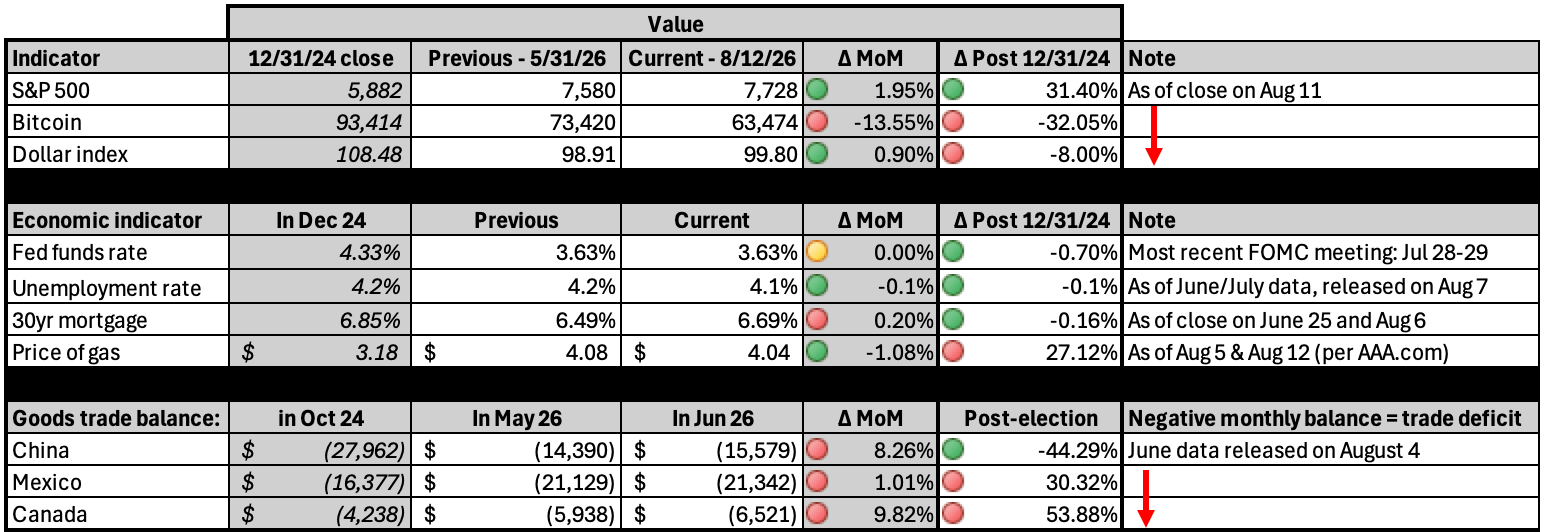
Green circle = indicator has moved in a positive direction
Red circle = indicator has moved in a negative direction
MoM change = month-over-month change
I would much appreciate it if you could hit the like ❤️ button!
It helps more people discover Nuance Matters and is a cost-free way to let me know you appreciate the work!
Near the end of July, Trump announced a new wave of tariffs for 60 countries.
After the Supreme Court struck down most of Trump’s Liberation Day tariffs as unconstitutional, Trump’s trade team went back to the drawing board to find a different route through which it could ‘legally’ impose tariffs. This time, they came up with Section 301 of the Trade Act of 1974, arguing they could place tariffs of 10-12.5% on trading partners who failed to impose and enforce bans on goods made with forced labor. The tariffs cover the US’s 60 biggest trade partners, accounting for over 99% of imports — though as we noted yesterday there are myriad exemptions, all of which I’m sure are above board.
The Trump team claims these tariffs come after an investigation into forced labor practices, but considering Trump’s love of tariffs and lack of enforcement of America’s own forced labor policy, no one actually believes that. Unsurprisingly, most of America’s trade partners are peeved at Trump’s latest salvo in his unilateral trade war,1 but some of the loudest critics came from inside the US itself. Conscious of how unpopular Trump’s tariffs are, Democrat-led states are taking their cue from the public and going on offense. A group of more than 20 Democratic attorneys general filed suit against the Trump administration over this latest batch of tariffs, accusing the administration of conducting a sham investigation in order to levy illegal tariffs.
We also await the results of a separate government investigation into unfair trade practices “relating to structural excess capacity and production in manufacturing sectors.” Launched in March, this has the government looking into whether the economic practices of 16 trade partners, including the EU, and China, and Mexico (America’s three largest trade partners), caused the US to adjust its industrial policy to forego manufacturing.2
While it was always expected that Trump would try to rebuild his tariff wall, it is a pleasant surprise that his administration has issued refunds of ~$100bn related money collected stemming from the Liberation Day tariffs deemed unlawful by the Supreme Court. Importantly though, only the ‘importer of record’ can request a refund, which is causing problems for small businesses that do not directly import products but rather rely on other intermediaries. And obviously, none of the companies that have received tariff refunds are passing it on to one who ultimately paid for the tariff via higher prices, the American consumer.
In a stark example of how diverging industrial policy is, the war in Iran is waking American auto-companies to the fact that they may have made strategic errors, with consumers currently pursuing hybrid vehicles, mostly from Asian producers. In the meantime, Chinese companies like BYD are racing ahead to design more advanced chips for autonomous driving and are making greater inroads in the European market. At the same time, European carmakers are facing what feels like an existential crisis with industrial titans like Volkswagen and BMW are warning of major job cuts in the not-too-distant future.
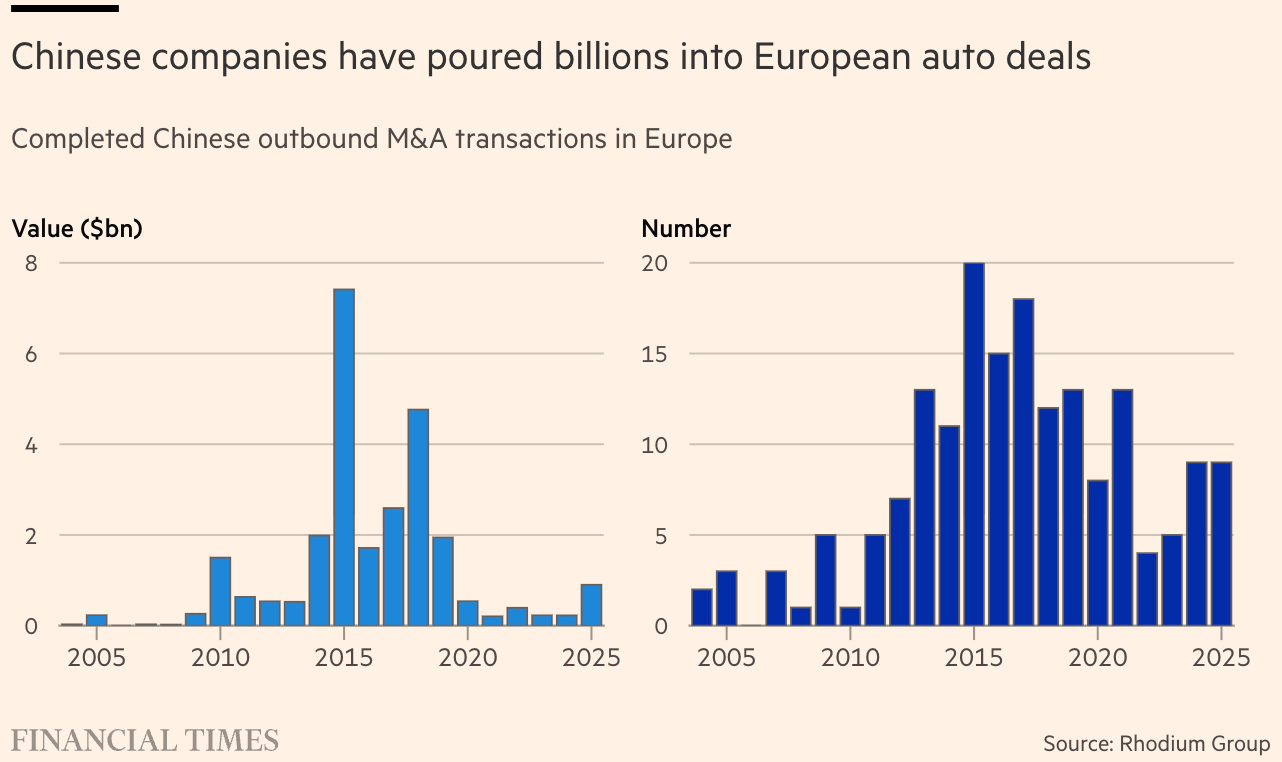
While Chinese cars themselves, facing tariffs of 100%, are effectively banned in the US, the Connected Vehicle Security Act, is moving through Congress right now that could eventually see the US ban vehicles that use hardware/software for communications from companies that are more than 15% owned by Chinese entities (or Russian, Iranian, and North Korean…but they are not as prevalent in the global market). Even if passed, the ban on selling vehicles in the US would not begin until 2032 (to give companies time to adjust their supply chains), so companies would have some time to adjust, but this would include cars by Volvo and Mercedes-Benz.
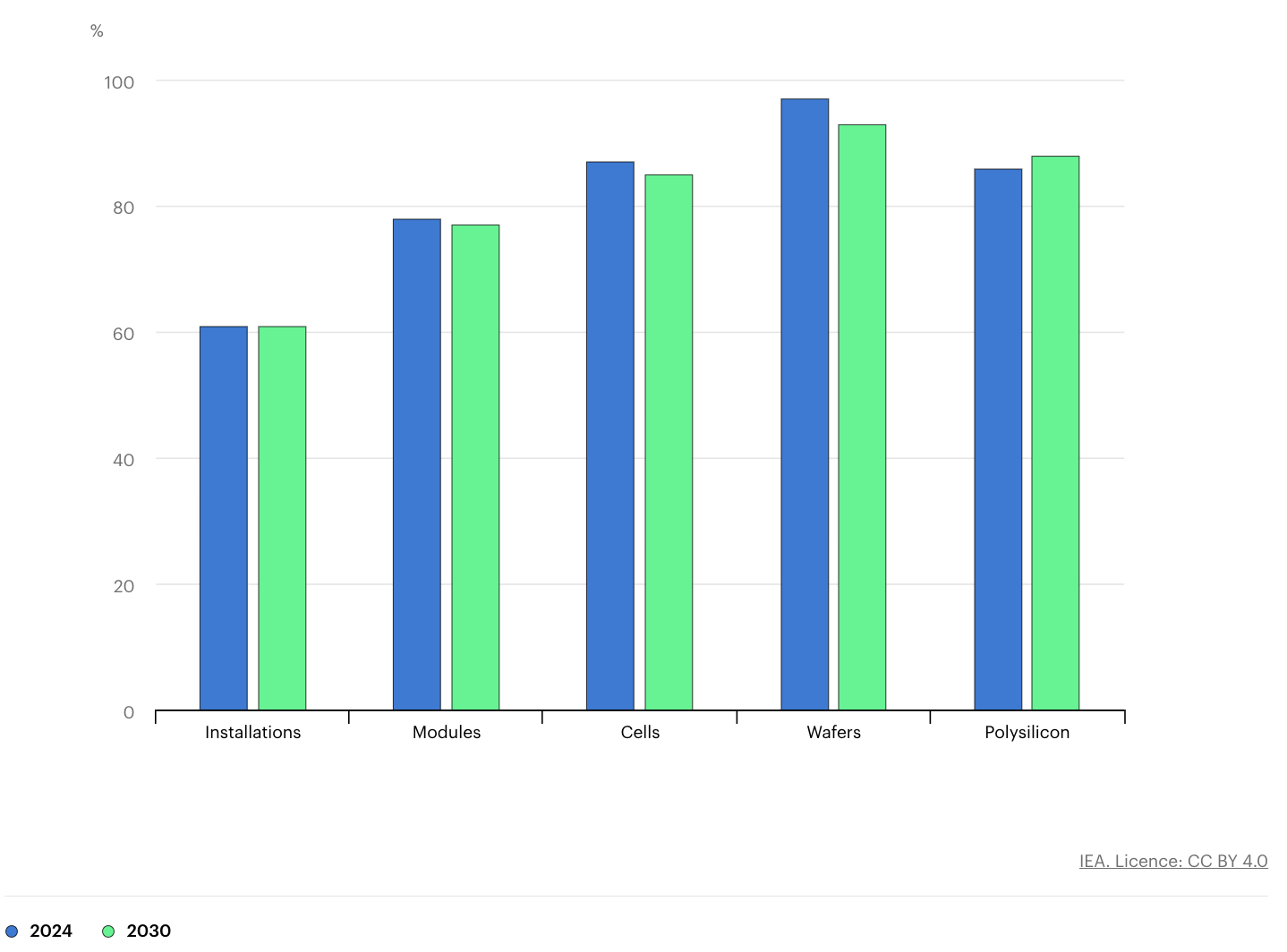
This is all a piece of the US’s general strategy which seems to be, invoke the guise of national security to justify a ban on anything and everything manufactured outside the US that could be considered advanced. This includes inverters (devices that facilitate electricity transmission along the electrical grid)3, and advanced robots (which are generating a ton of excitement in China) while also imposing tariffs on material used in solar panels (+ price floors for US manufacturers, in the hope of cultivating a robust US-based supply chain).
As the chart below details, China dominates the current solar market.
Relatedly, there was an interesting report from the IMF last month that discussed the use of subsidies across China, the US and Europe. While it is accepted that China doles out subsidies to help develop industries, the IMF noted that both the US and Europe do it as well. The difference is that Beijing is more strategic about it than Washington or Brussels, applying a more systemic approach to boost critical industries like clean tech and semiconductors. The US and Europe, on the other hand, have historically been more beholden to political interests and spends subsidies on industries like agriculture.
Whether the US and Europe can more efficiently deploy government support will go a long way toward determining what the world looks like in 20 years.
Despite everything going on, China’s trade with the rest of the world remains robust. Monthly imports and exports (in dollar terms) have been growing at well over 20% year-over-year.
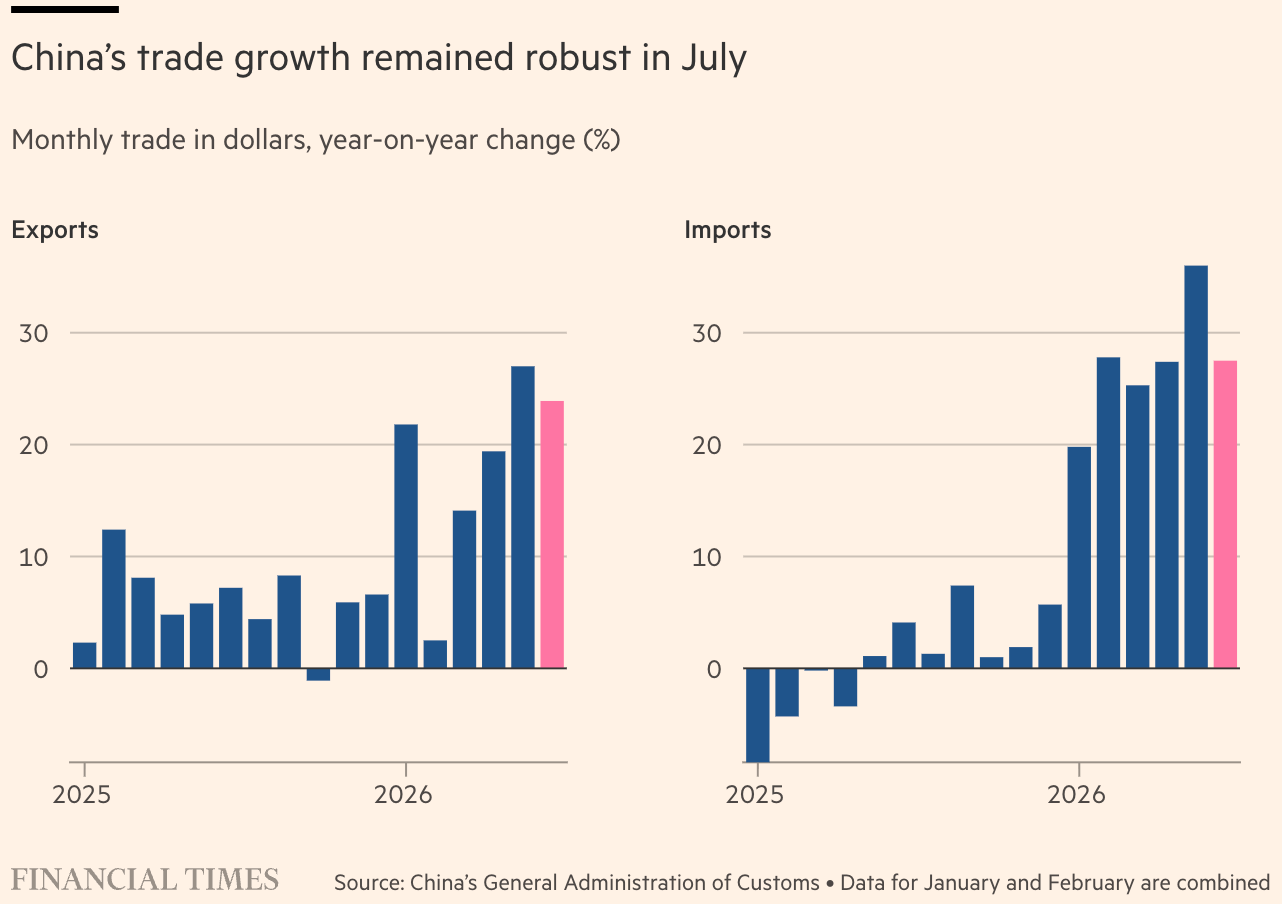
The export growth comes from increased global demand for tech products, including chips, lithium batteries and clean tech equipment. China’s import of crude oil increased in July after the price of oil dropped following the initial US-Iran Memorandum of Understanding.
The US’s imports from Mexico have continued to climb, at least in part because Mexico is playing a roll in the US AI data center boom. Mexico is the second-largest provider of hardware for US data centers (behind only Taiwan).
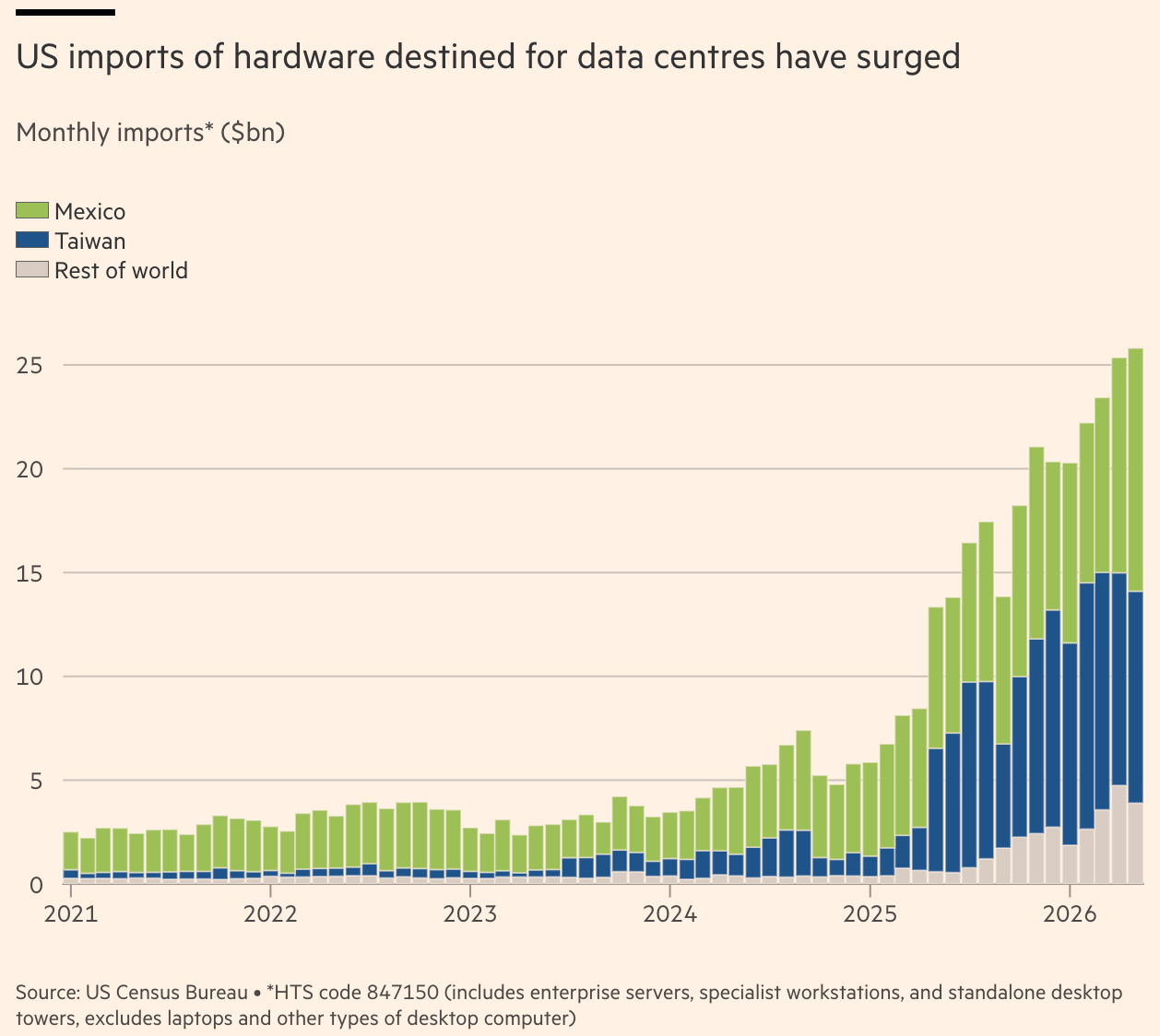
Naturally, part of this stems from Taiwan developing a closer trade relationship with Mexico, a way to gain easier access to the US market with much lower operating costs than building out manufacturing facilities in the US (though companies like TSMC are still heavily investing in the US).
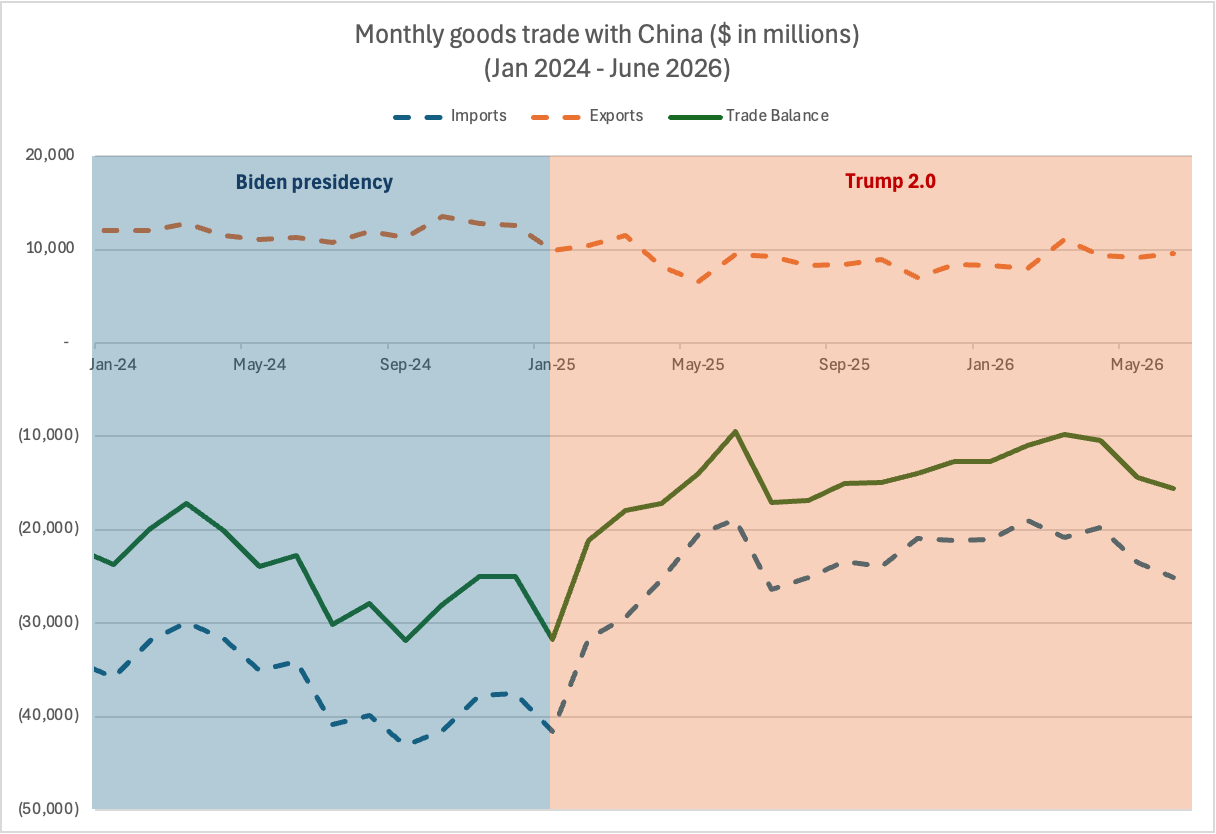
June 2026 trade balance (released on Aug 4): -$15,579mn, indicating the US imported more goods from China than exported.
Source: US Census Bureau
***********************************************************************
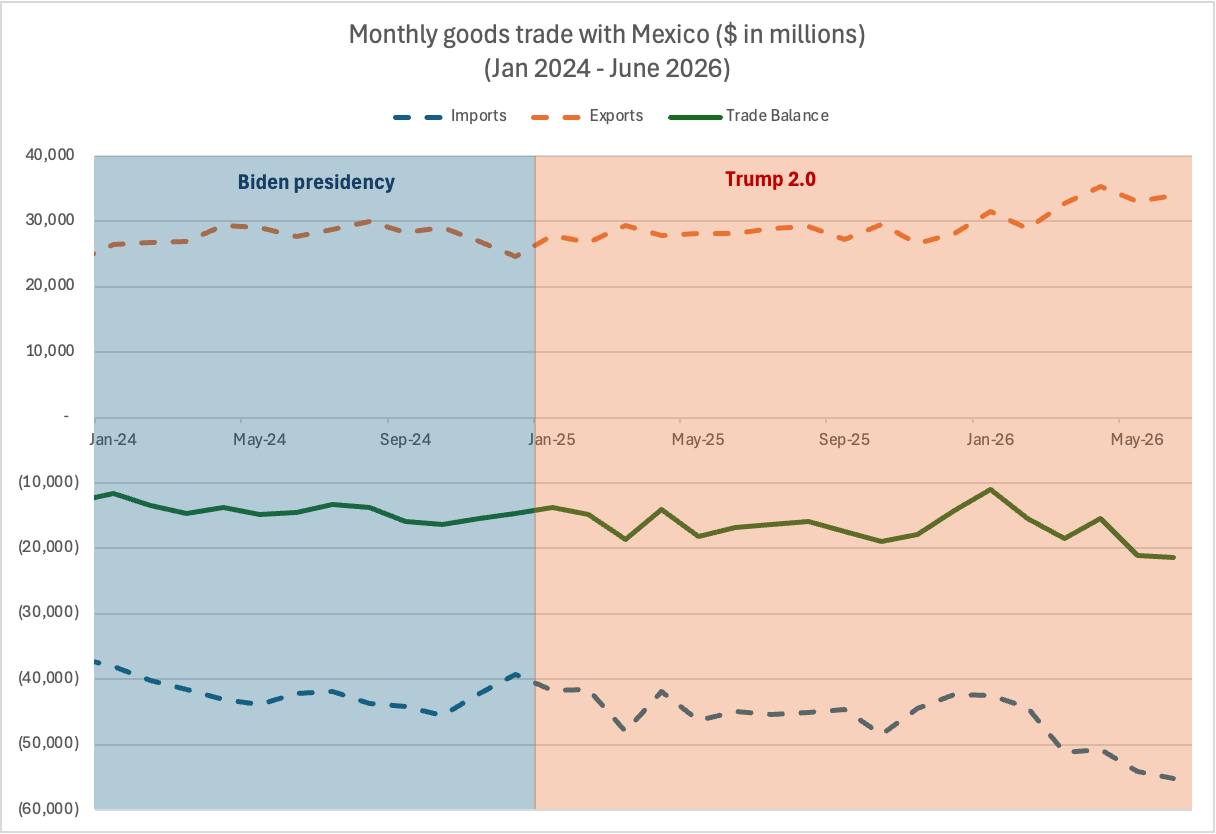
June 2026 trade balance (released on Aug 4): -$21,342mn, indicating the US imported more goods from Mexico than exported.
Source: US Census Bureau
***********************************************************************
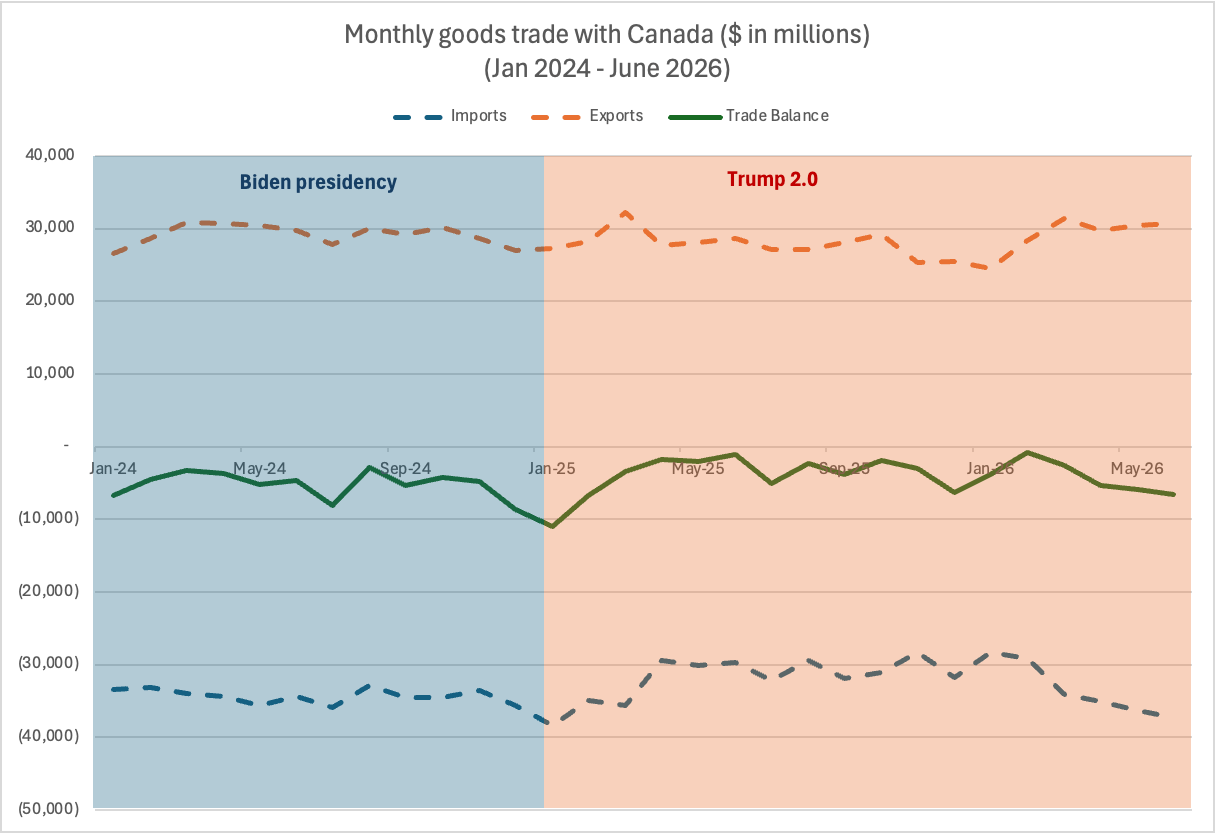
June 2026 trade balance (released on Aug 4): -$6,521mn, indicating the US imported more goods from Canada than exported.
Source: US Census Bureau
If you enjoyed this edition of Nuance Matters, consider letting me know by buying me a cup of coffee!
Cheers!
A sample: Australia said the tariffs were “unjustified, inconsistent with our free trade agreement, and should be removed.” Singapore said there was “no technical or economic basis to impose tariffs upon us.”
Meanwhile, Europe said the terms were consistent with the terms the bloc agreed with the White House last year and these new tariffs provide “positive momentum to continue the work on exploring further tariff exemptions and deepening cooperation.” Europe really can’t help itself, can it?
Complete speculation, but I’m guessing the ‘investigation’ comes back recommending more tariffs.
Though importantly just future models, so those that already secured government approval are still OK
Comments
Nothing yet. Say the first thing.
Sign in to join the conversation.