
Summary commentary: It feels noteworthy that the Global Times, a Chinese tabloid printed under the auspices of the Chinese Communist Party, posted an op-ed on Sunday labeling Canada prime minister Mark Carney’s response to Trump’s latest tariffs as a ‘Chinese-styled counterattack.’1
As the op-ed goes on to say, the only leaders that have consistently stood up to Trump are China’s president Xi Jinping and Carney. But while Xi can do so without having to worry about the political and economic ramifications of a trade war, the same cannot be said for Carney. The vast majority of Canadian trade is with the US, and a prolonged trade war would do tremendous damage to the Canadian economy. In one poll, nearly 40% of Canadians are concerned about the impact the trade war could have on their jobs.
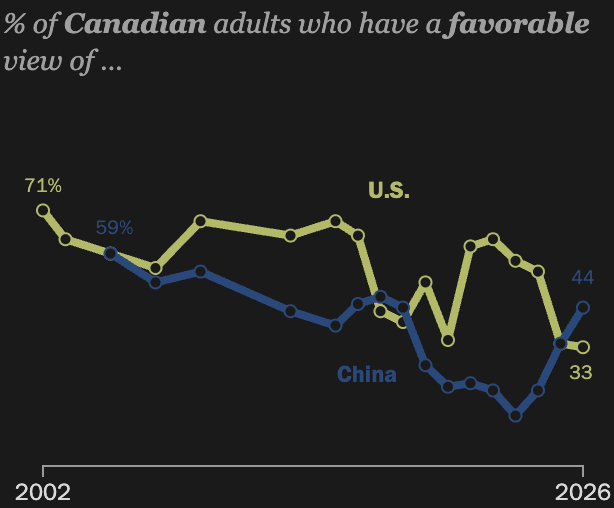
It is telling that, despite being seemingly clear-eyed about the risks, Canadians continually backed Carney and his refusal to bend the knee. Survey after survey, poll after poll, show that Canadians stand behind Carney’s decision to stand up to Trump’s tariffs and the ridiculous talk of making Canada the 51st state.
This emphasis by Canadians on national sovereignty, on ensuring Canada has a voice and is not relegated to a status as a servile-state of the US is commendable. The people want a fighter, someone who isn’t going to bow down to a bully, and Mark Carney is doing that for Canada (and really, most democratically-elected leaders around the world).
This is a lesson a lot of institutions, governments, and politicians back in the US should take note of and internalize.
I would much appreciate it if you could hit the like ❤️ button!
It helps more people discover Nuance Matters and is a cost-free way to let me know you appreciate the work!
Geographically speaking, Canada has a lot going for it.
By total area, the second-largest country in the world (behind only Russia).
The world’s longest coastline (by far) extending to three oceans.
A bounty of natural resources ranging from oil and iron to copper and gold.
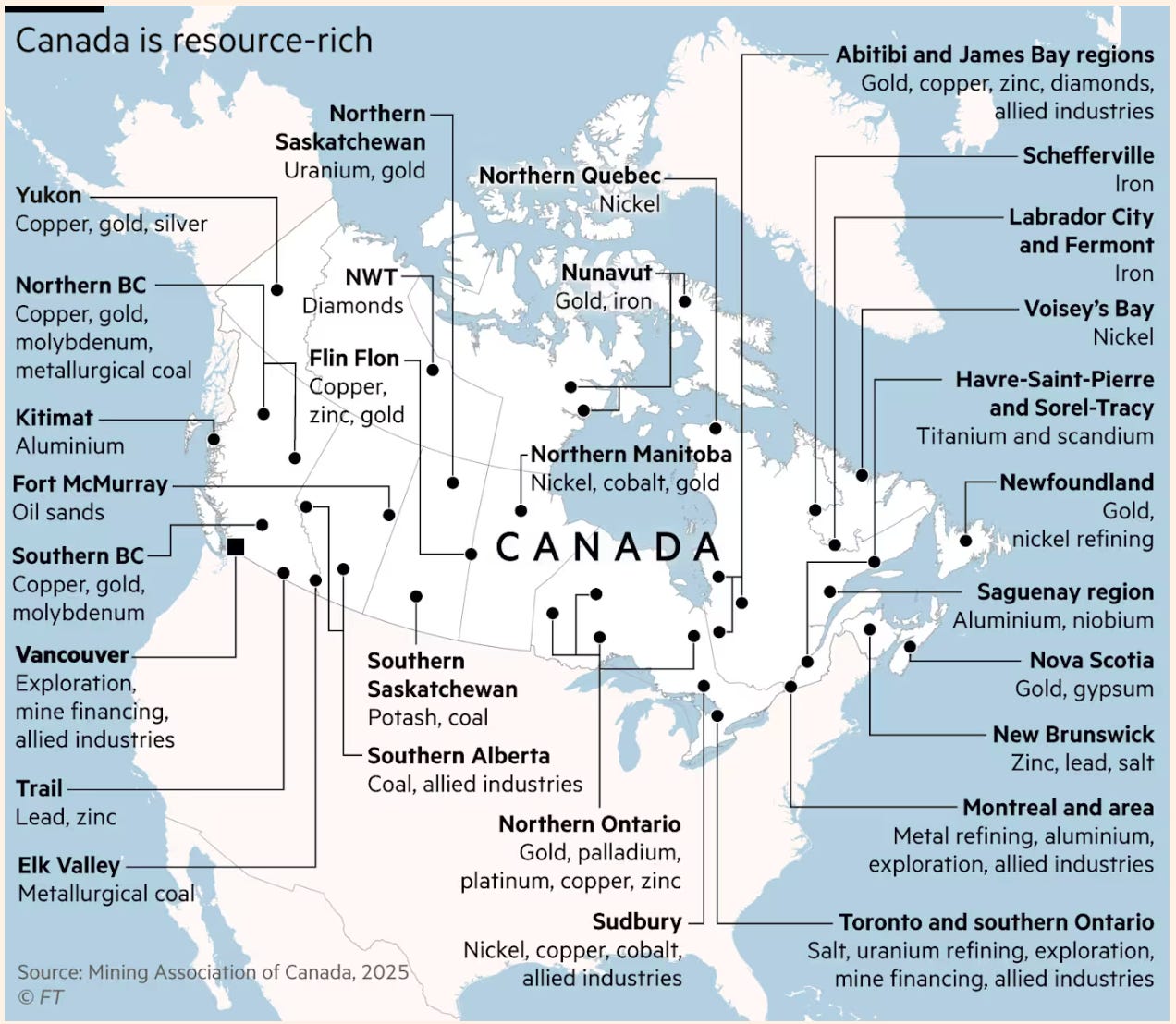
And for decades, it had a relatively accepting export market located directly to its south that was more than happy to pay for Canada’s manufactured goods.
Case in point: The United States purchases ~60% of its imported oil (~4mn barrels/day) from Canada, the fourth largest oil producer in the world.
But in the Donald Trump era, Canada is rethinking its whole approach. Yesterday we talked about prime minister Mark Carney’s outreach to the rest of the world, his attempt to build coalitions of middle powers that collaborate economically and militarily independent of the US and China.
Today, the focus is on the US-Canada relationship, and most prominently the return of Trump’s trade war.
Canadians have taken Trump’s (oft repeated) threat about making it the 51st state as a personal affront and responded with gusto. While one of the most noticeable reactions has been the reduced travel to the US, bans on certain US imports (e.g., American wine and liquor) have been so effective that one executive at the Oregon Winegrowers Association called it “the most catastrophic single year trade disruption in the history of US wine exports.”
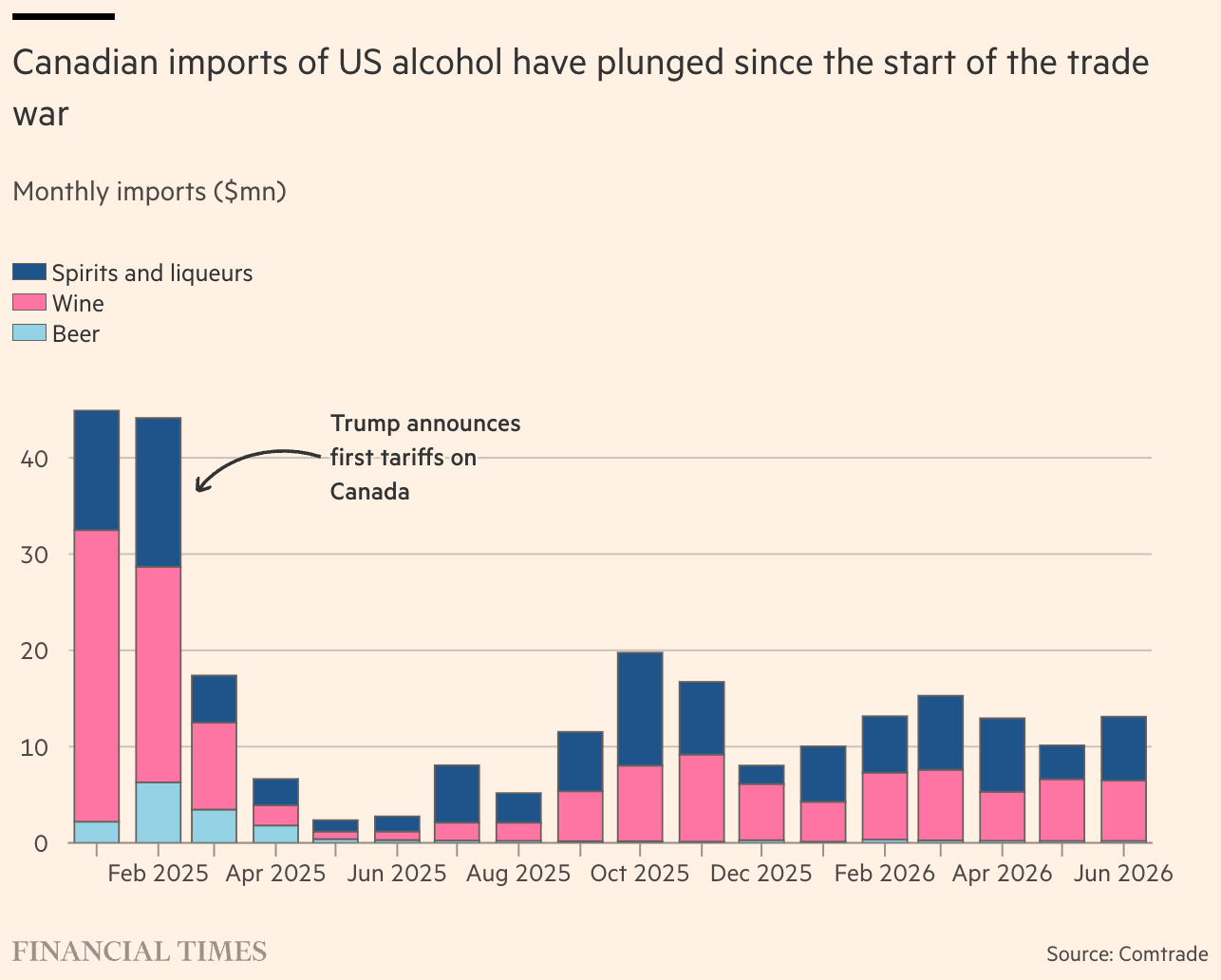
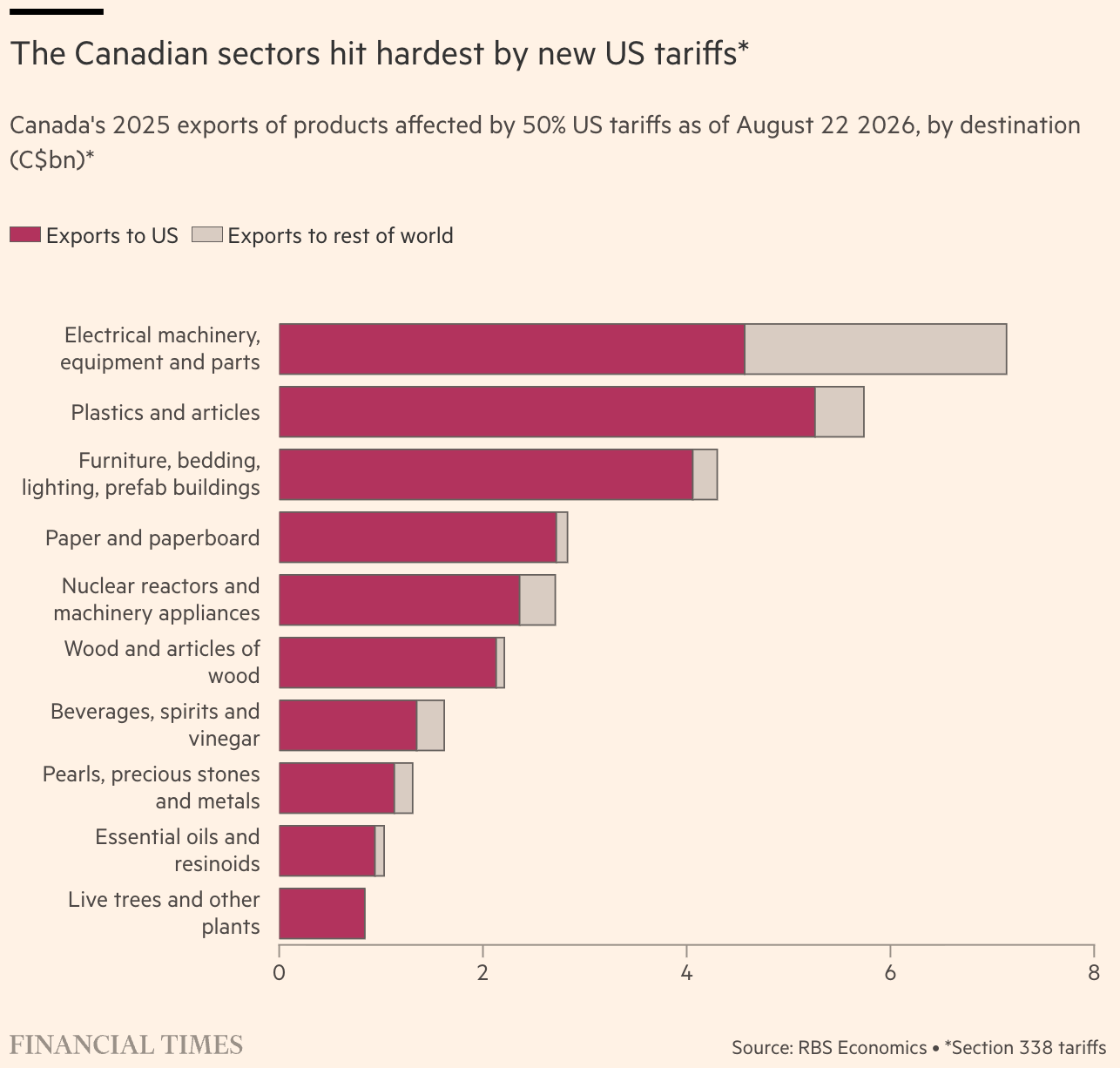
In July, Trump had announced new tariffs on Canada but they did not go into effect for 30 days, giving time for the parties to negotiate. For Canada, the focus was on reducing or eliminating 50% tariffs on Canadian aluminum and steel and 25% on cars. On the other side, the US sought an end to Canada’s boycott of American alcohol.
And after weeks of negotiations, characterized by reported in-fighting within Trump’s team and calls for last-minute concessions which the Canadians called “unfair, uneconomic, and called into question the reliability of any deal,” talks ended on Friday night (Aug 21) without a deal. As Politico put it:
The result: A dramatic escalation into a trade war between two countries with deeply integrated supply chains, one that could threaten more than $1 trillion in North American trade and, with it, could continue to raise economic pressure ahead of U.S. congressional elections in November. A 50 percent tariff on $20 billion worth of Canadian goods kicked in on Saturday, Canadians have promised to respond in kind and Mexico, which does business with both, could be caught in the crosshairs.
Carney, who announced Canada was now “at war” with the US over trade, has said he will retaliate with dollar-for-dollar tariffs “to protest our workers and business.” On Saturday, he went on Canadian TV to address the nation.
“Last spring, I warned that America is trying to break us so that they can own us. And I promised: ‘That will never, ever happen.’ We are keeping that promise,” Mr. Carney said somberly, before reporters in Ottawa.
“Canada is becoming stronger and less dependent on America. We are already giving ourselves more than they can take away. And we are just getting started,” he added.
Trump’s trade representative Jamieson Greer claims the US offered “significant tariff reductions” on cars, aluminum, and steel, but Canada declined the deal. Carney said Canada initially accepted the US requests, but that negotiations got to a point where the US “asked too much and…offered too little.” Two of the stickiest points were
A late request from the US to limit Canada’s ability to strike up trade deals with other countries. When set in conjunction with a point about the US having a right of first refusal on any Canadian critical mineral exports, this would essentially hand the US exclusive access to the Canadian market.
Demands that Canada do away with requirements for French labels in Quebec, requirements in place to protect and promote French in the province. As Stephen Marche, a Canadian author and podcast host, put it in The New York Times yesterday, “French, in Canada, is not a business matter. Its place in our nation transcends absolutely any market-based consideration. It is not something that gets ‘put on the table.’”
Most of Trump’s previous one-time tariffs have been repudiated by the courts. This time around, Trump is invoking Section 338 of the little-used 1930 Smoot-Hawley Tariff Act. The rule states that the president is authorized to impose tariffs on countries that have discriminated against US commerce. Undoubtedly, this will be challenged in court this fall.
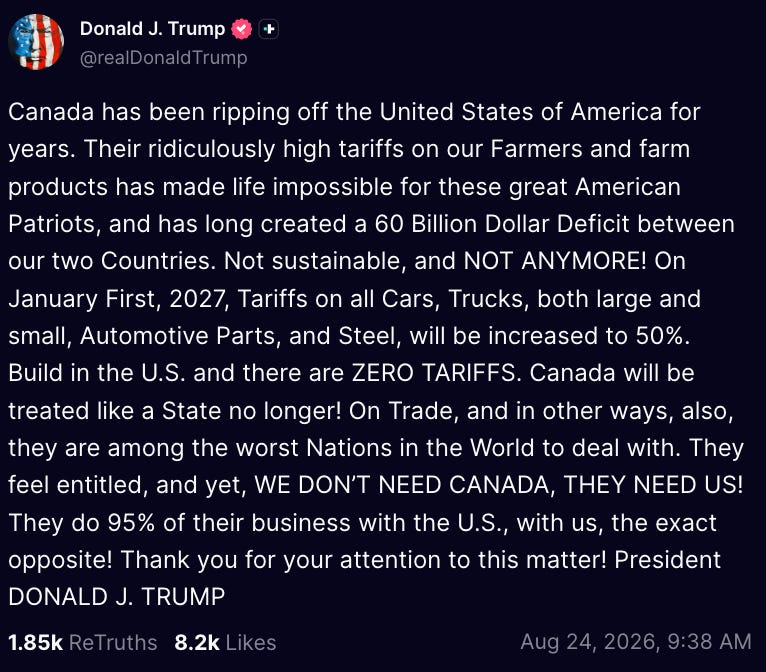
In addition, yesterday (Monday Aug 24) Trump took to Truth Social to announce 50% tariffs on “all Cars, Trucks…Automotive Parts, and Steel,” though pointedly not until “January First, 2027,” giving plenty of time for circumstances to change.
A poll by the firm Angus Reid found that over 75% of Canadians believed Carney did the right thing in walking away from negotiations. This is a similar story to what the public has been saying for a while. A poll from early August noted a plurality of Canadians (36%) wanted prime minister Mark Carney to respond with counter-tariffs of his own, even if the result was higher prices for Canadians. Just 18% wanted to concede to Trump.
Another August poll found a majority of Canadians (54%) backed the ban on selling US alcohol, even if this resulted in an escalatory response. Just 19% supported lifting the restriction to help ease tensions.
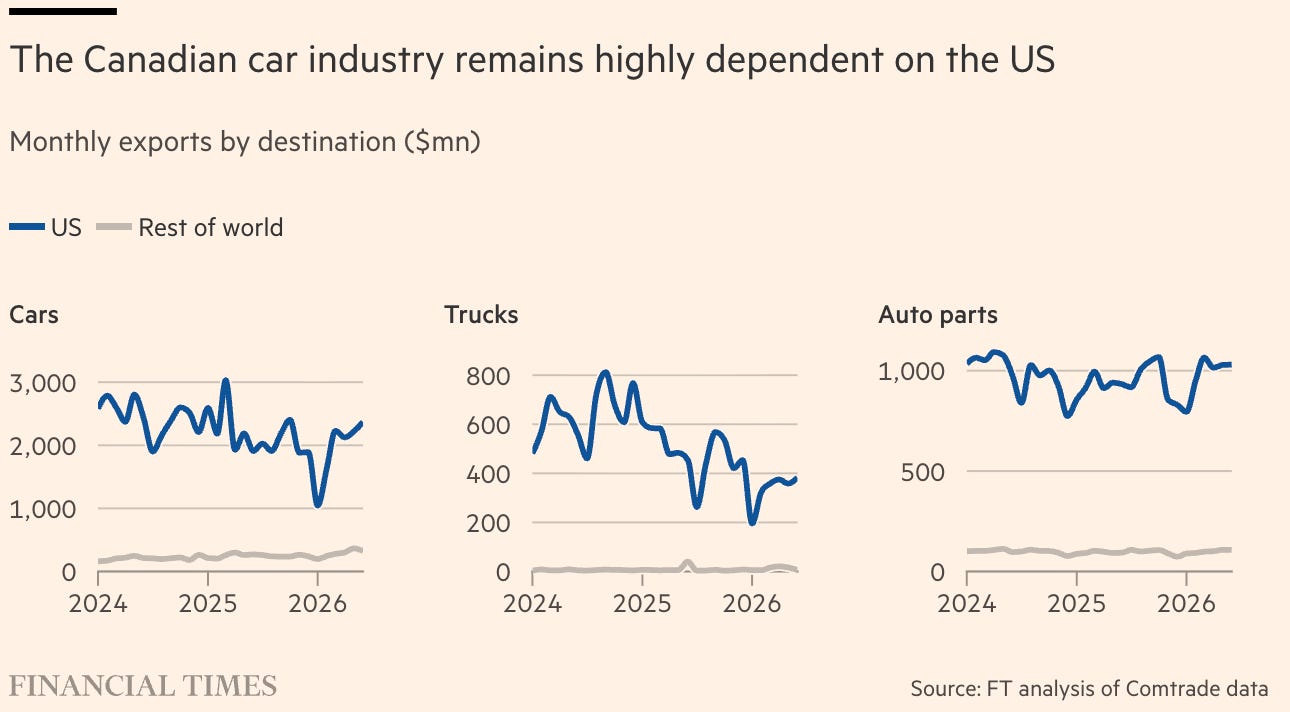
Despite this widespread anti-American sentiment, for the past 18-months Canada has still largely played Trump’s game. And it’s fairly easy to see why: the US is Canada’s biggest trade partner by a country-mile.
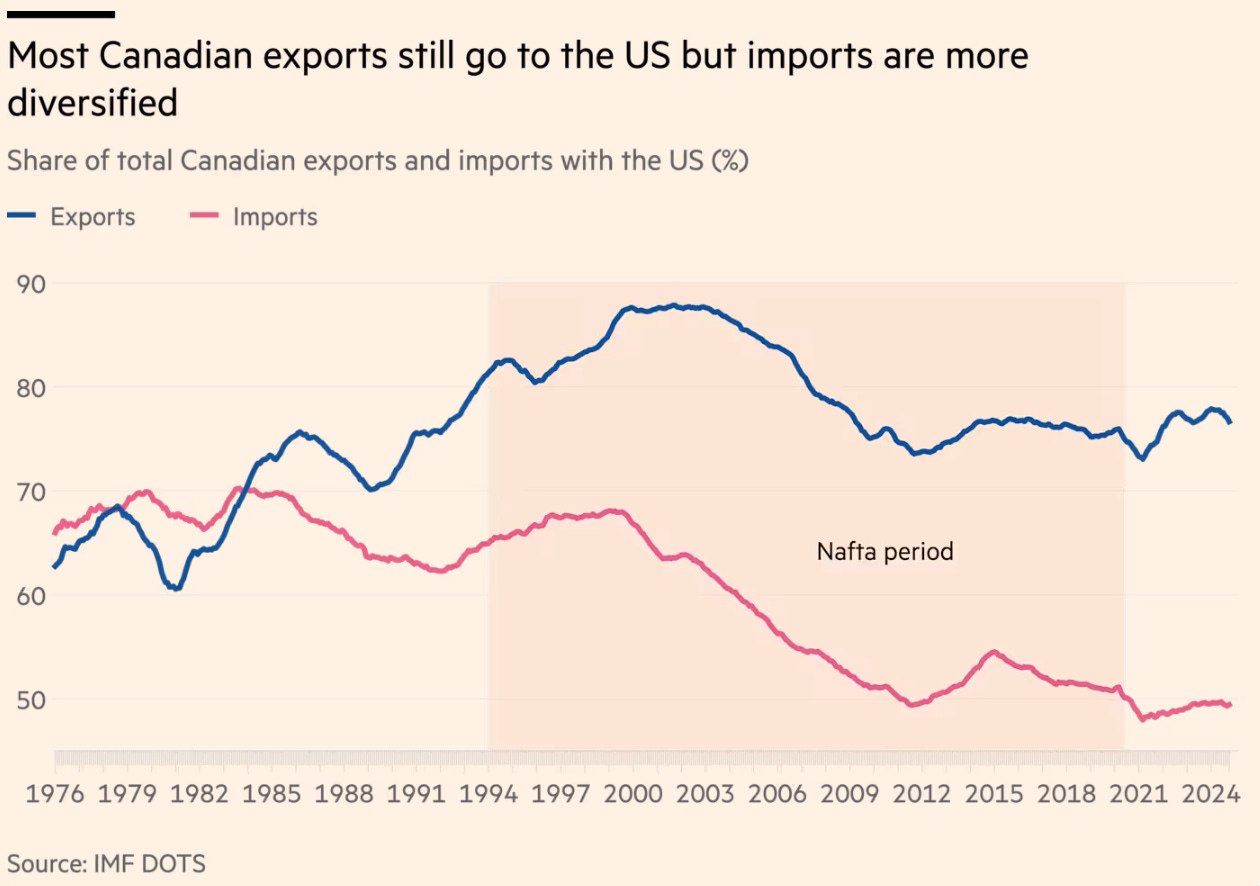
Canada’s top exports are fossil fuel-related products and motor vehicles. 90% of Canada’s oil is exported to the Untied States while 90% of Canadian-made cars are exported to the United States.
Last year, in a bid to smooth the ground for trade negotiations, Carney cancelled a digital services tax after Trump threatened to pull out of US-Canada trade talks. The DST, first announced in 2020, would have taxed US firms like Amazon and Meta (in addition to local Canadian businesses) that earned over $20mn in revenue in Canada.
The new tariffs will certainly impact Americans, but the real pain will be felt by Canadians. And with these new tariffs throwing uncertainty and instability into the mixer, Canadian small businesses are worried about what comes next.
With Canada’s abundance of critical minerals and Trump’s purported goal of developing a critical mineral supply chain independent of China (which has a stranglehold on refining and processing), one might expect Trump to welcome a bit of cross-border collaboration.
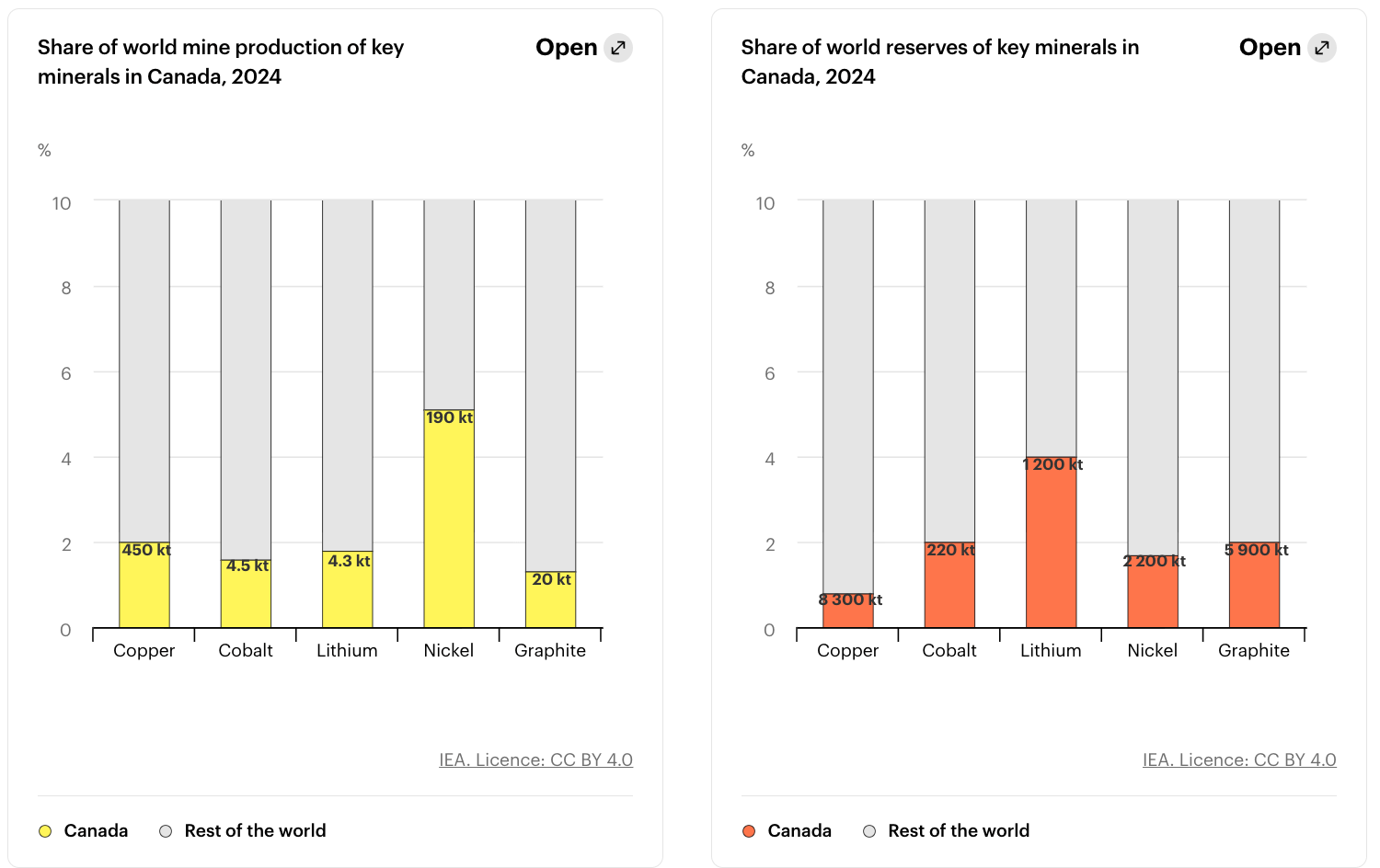
And yet, while Canada’s critical mineral exports increased by 3% in 2025 (to nearly CAD $50bn), the value of Canada’s exports to the US actually fell (CAD $30.7bn to 28.8bn). This is a function of a few factors, including the wide breadth of demand for non-China-controlled critical minerals and a proliferation of projects around the globe that have sought American support.
In fact, one area Canada does have leverage over the US is potash, a fertilizer. Canada’s potash exports account for ~40% of global exports, and the US buys more than half of Canada’s production. As Trump’s ambassador to Canada, Pete Hoekstra, pointed out earlier this year, “when the president says we don’t need this from Canada, or there’s nothing we need. America has a tremendous amount of things where we have a need…we need potash.”
Point of note: Potash, along with energy and “certain goods, such as fish or critical minerals” are exempt from Trump’s tariffs.
But as the fall-out from the failed negotiations made clear, the US cannot simply dictate terms to Canada and expect a pliant response. In a normal world of neighborly relations, the US and Canada would work together to develop this value chain. Unfortunately, that world is dead and gone.
Comments
Nothing yet. Say the first thing.
Sign in to join the conversation.