
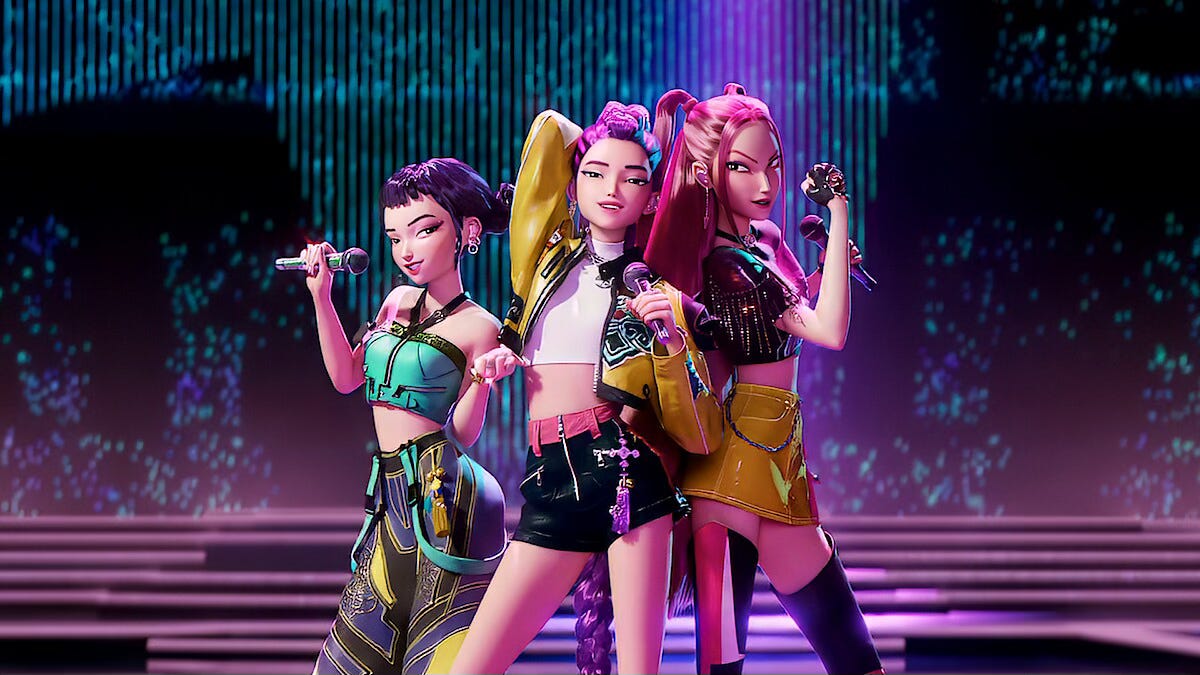
Let’s look at a fancy film school word: diegetic. In visual media this means something that exists in-world, something that characters in the story can perceive. It may be easiest to understand through contrast. Non-diegetic elements include visual titles (“A long time ago in a galaxy far, far away…”), scene transition effects, and those director commentary tracks you used to get on DVDs.
A film’s score perfectly illustrates this distinction. In Jaws, Brody can hear the Amity Island marching band, which is part of the fictional world, but not the famous two-note score leitmotif, which is meant to thrill the audience. And this is a good thing; we don’t want horror movie victims tipped off about their peril by tremolo strings or low-register synth drones.
In other words, a film score is non-diegetic music, whereas music that characters can hear is diegetic. (The latter is sometimes called source music when it comes from a visible source like a radio or musician.)
Musicals, on stage or screen, raise an interesting question. What about songs? Are they diegetic, non-diegetic, or something in between? To what extent are characters in musicals aware that someone is singing?
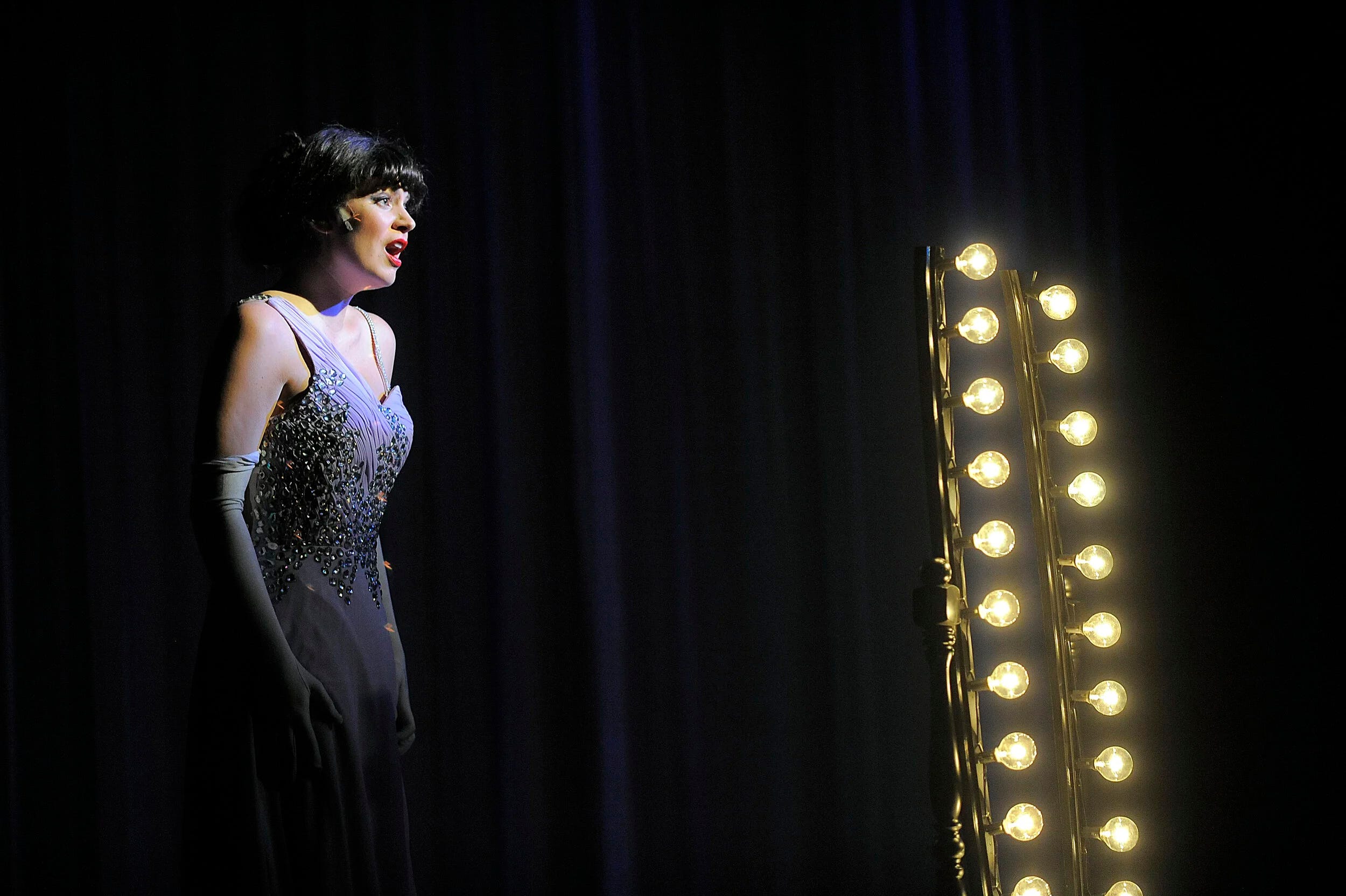
In Gypsy, “Let Me Entertain You” is a diegetic number, performed for audiences that exist in the show’s narrative. Those characters know that they’re listening to a song, can evaluate pitch and musicianship and vibrato and va-va-voom-ness. The same goes for “Over The Moon”, Maureen’s eccentric performance piece in Rent, and several songs from Cabaret. Diegetic songs are common in musicals about performers or musicians.
Yet we expect the majority of showtunes to be non-diegetic, which is to say not experienced as songs by the show’s characters. In Gypsy, “Rose’s Turn” is a private confession. In Rent, “La Vie Boheme” is a defiant speech in a cafe that sparks group sentiment. Carousel’s “If I Loved You” is an intimate romantic dialogue. The core premise of musical theater, its raison d’être, is the presentation of emotionally-infused moments like these to the audience in song form.
But unlike a film’s score, songs in a musical aren’t completely imperceptible in-world. Characters don’t hear melodies or piano intros, but they do hear (or internally feel) the sentiments expressed in the lyrics. After all, once Eva Perón wraps up “Don’t Cry For Me Argentina”, the crowd below doesn’t confusedly say, “Why is she just standing silently on the balcony?” They heard something; it just wasn’t a song.
In other words, the diegetic status of showtunes is less cut-and-dry than that of film scores. Characters are completely unaware of the latter, but have a modally altered perception of the former.
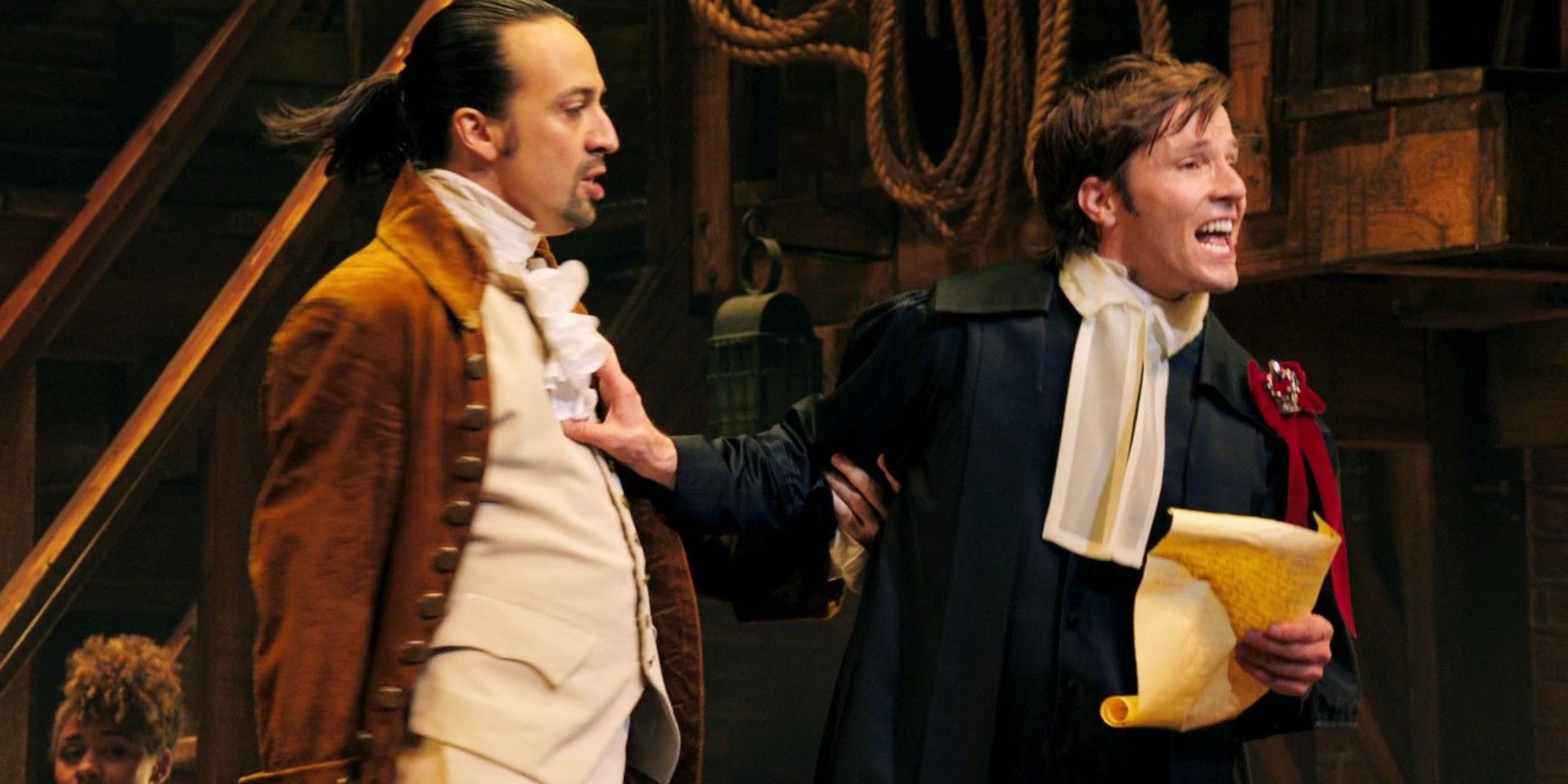
Some shows blur those already-blurry boundaries. In Hamilton’s “Farmer Refuted”, we understand the exchange between Alexander and the royalist to be a debate, a long-winded public address punctuated with barbed criticism. Yet Alexander playfully retorts, “Don't modulate the key then not debate with me.” This moment gets its endearing humor from breaking the fourth wall, and briefly defying theater’s convention of what songs represent.
A non-comedic example: In Waitress, “You Will Still Be Mine” begins as shared reminiscence between the controlling Earl and his wife Jenna. But it segues into an excerpt of a (diegetic) song from their younger days, whose once-romantic lyrics now feel ominous. It’s a diegetic number wrapped in a non-diegetic number.
Film and TV also have fun crossing diegetic/non-diegetic song boundaries. Consider Schmigadoon, or the “Once More With Feeling” episode of Buffy the Vampire Slayer, both of which have musical-theatre numbers that are perceived literally, due to (funny) magical forces. And speaking of musical films…
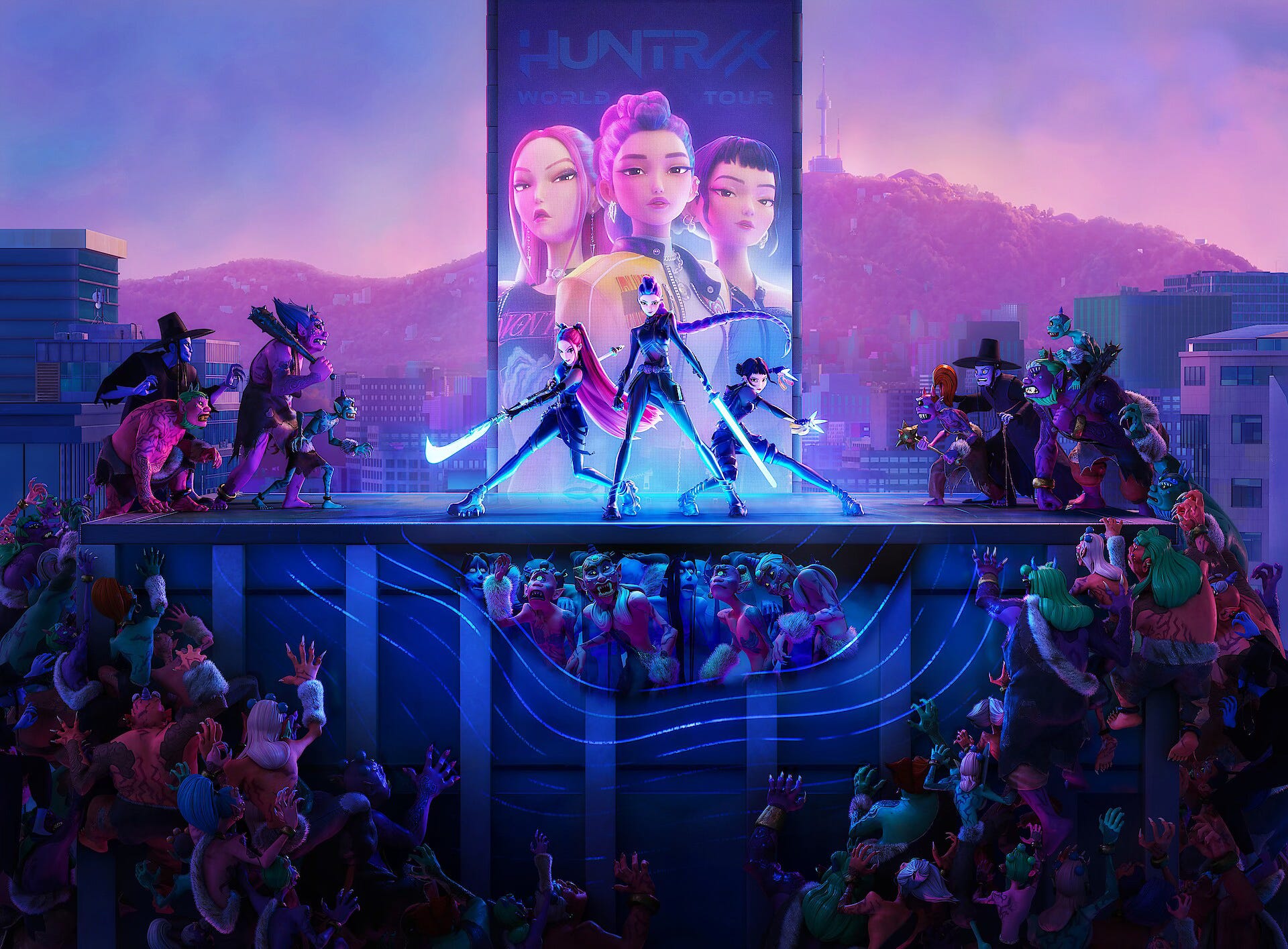
K-Pop Demon Hunters is about fictional Korean musical group Huntr/x, whose members secretly defend Earth from invading demons. Their lives as pop superstars are part of the story. We see them dazzle audiences at a stadium, shock fans with a surprise single, deal with vocal issues, and otherwise triumph and struggle as musical performers.
Diegetic tunes predominate the soundtrack. (Highly catchy ones at that.) In the story, fans swoon to Huntrix’s “Golden” and are lured to street performances of “Soda Pop” by rival (and secretly demonic) boy band Saja Boys. We see the Huntr/x girls composing the diss track “Takedown” — practicing it, rewriting lyrics, and debating the song’s ethics. All of these tunes exist in-world.
But when Huntr/x member Rumi parleys with Saja Boy leader Jinu, they share a romantic duet, “Free”. This is non-diegetic, a spontaneous moment of shared emotional connection. Pop trappings aside, it feels like a song from a traditional musical.
The climactic “What It Sounds Like” is another one of those numbers that blurs the categories. It’s performed in a concert setting in front of an audience, but is clearly spontaneous expression rather than something deliberately crafted and rehearsed like the other in-world songs. This is collective sentiment, like “La Vie Boheme”, presented as song for those of us watching the movie. But at the same time, demon bad guy Gwi-Ma protests it by crying “Stop this song!” — meaning that it’s become diegetic somewhere along the way.
There’s a debate to be had as to whether K-PDH is a real musical, since most of its songs are diegetic. I am sidestepping that debate for the moment, because it ties into the differences between traditional stage musicals and their on-screen cousins. (Screen musicals have expressive powers unavailable to stage productions — for example, the ability to show a close-up of a character’s face and thus their emotional state — and sometimes make do with sparser scores.)
For now I’ll say that musicals about performers, staged or onscreen, offer interesting opportunities to depict the performance of diegetic songs alongside non-diegetic ones — and to play with the overlap between them. I’ll also say that I really liked Derpy the tiger.
Comments
Nothing yet. Say the first thing.
Sign in to join the conversation.